
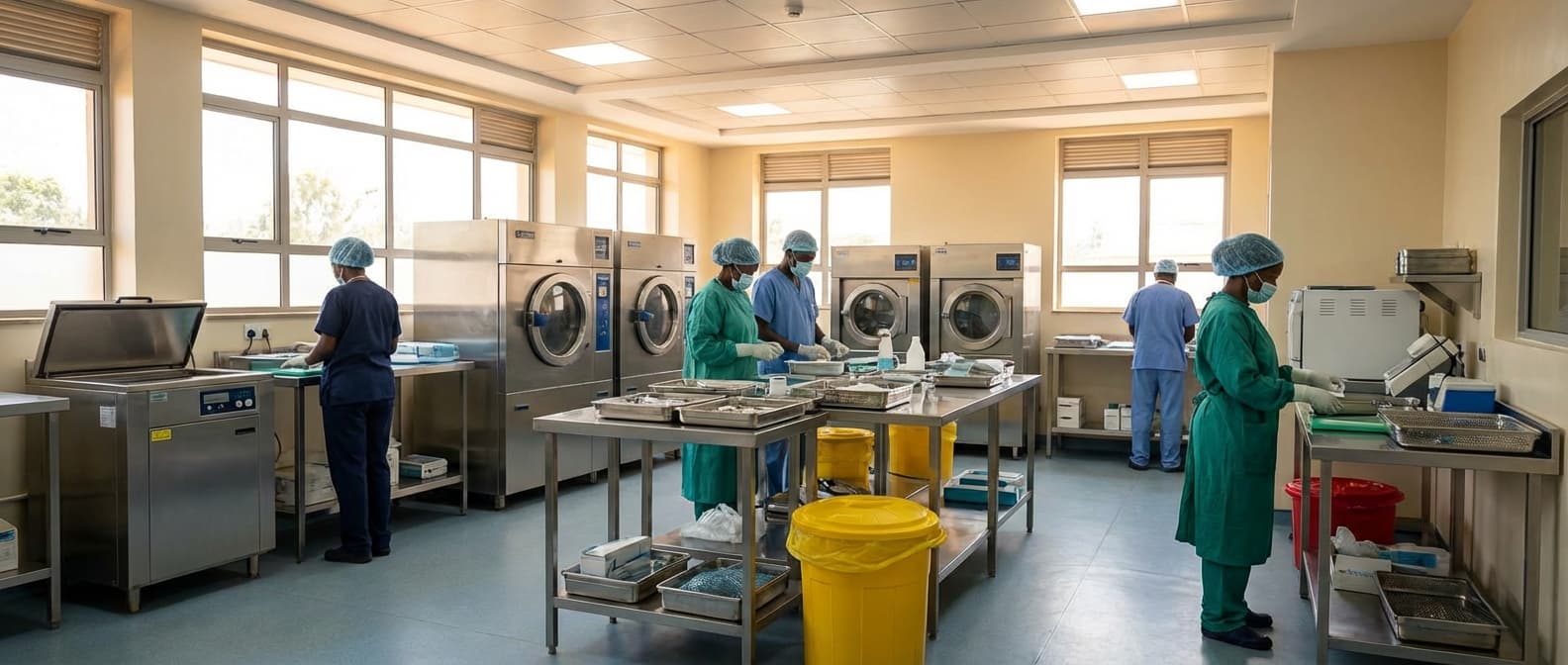
Autoclave Validation Support Service in Benin
Engineering Excellence & Technical Support
Autoclave Validation Support Service High-standard technical execution following OEM protocols and local regulatory frameworks.
Comprehensive Biological Indicator Testing
We provide rigorous biological indicator testing and analysis to confirm the efficacy of your autoclaves in Benin. Our advanced laboratory services ensure your sterilization cycles meet stringent regulatory requirements and guarantee patient safety.
Advanced Data Logging & Analysis
Leveraging state-of-the-art data loggers, we capture and meticulously analyze critical sterilization parameters (temperature, pressure, time). This detailed reporting provides irrefutable evidence of autoclave performance and supports your compliance efforts in Benin.
Expert Calibration & Performance Qualification
Our certified technicians offer expert calibration and performance qualification (PQ) for all makes and models of autoclaves in Benin. We ensure your equipment operates at peak efficiency, minimizing downtime and maximizing sterilization reliability.
What Is Autoclave Validation Support Service In Benin?
Autoclave validation support service in Benin refers to the provision of expert technical assistance and services to ensure that steam sterilization (autoclave) processes meet stringent regulatory requirements and achieve effective microbial inactivation for medical devices, laboratory equipment, and other critical items. This service is essential for organizations that rely on steam sterilization for the reprocessing of reusable medical instruments, sterilization of laboratory consumables, or manufacturing of sterile products. The validation process scientifically demonstrates that the autoclave cycle consistently achieves the desired level of sterilization, rendering it safe for its intended use and compliant with national and international standards (e.g., ISO 13485, ISO 17665).
| Who Needs Autoclave Validation Support Service? | Typical Use Cases |
|---|---|
| Hospitals and Healthcare Facilities (Operating Rooms, Central Sterile Supply Departments, Dental Clinics, Veterinary Clinics) | Sterilization of surgical instruments, dental instruments, anesthesia equipment, endoscopic devices, and other reusable medical devices. |
| Medical Device Manufacturers | Sterilization of finished sterile medical devices, or validation of in-house sterilization processes for component sterilization. |
| Pharmaceutical and Biotechnology Companies | Sterilization of laboratory equipment, glassware, media, and sterile components for drug manufacturing. |
| Research and Development Laboratories (Academic and Industrial) | Sterilization of laboratory consumables, culture media, and reusable laboratory apparatus. |
| Public Health Laboratories | Sterilization of diagnostic equipment and consumables for infectious disease testing. |
| Food and Beverage Industry | Sterilization of packaging materials or equipment in specific sterile processing applications. |
Key Components of Autoclave Validation Support Service:
- Installation Qualification (IQ): Verifying that the autoclave is installed correctly according to manufacturer specifications and regulatory requirements.
- Operational Qualification (OQ): Testing the autoclave's performance within its specified operating ranges, confirming that critical parameters (temperature, pressure, time, steam quality) are consistently met during empty and loaded cycles.
- Performance Qualification (PQ): Challenging the autoclave with actual or simulated loads under typical operating conditions to demonstrate consistent sterilization efficacy across all locations within the chamber. This often involves the use of biological and chemical indicators.
- Validation Protocol Development: Creating detailed, scientifically sound protocols outlining the validation methodology, acceptance criteria, and test procedures.
- Testing and Data Collection: Executing validation protocols, including the use of temperature probes, pressure transducers, chemical integrators, and biological indicators (BIs).
- Data Analysis and Reporting: Analyzing collected data to confirm that all acceptance criteria are met and generating a comprehensive validation report.
- Revalidation and Periodic Monitoring: Providing services for revalidation after equipment maintenance, modifications, or at predetermined intervals, as well as ongoing performance monitoring.
- Consultancy and Training: Offering expert advice on sterilization best practices, regulatory compliance, and providing training to in-house personnel.
Who Needs Autoclave Validation Support Service In Benin?
Autoclave validation support services are crucial for ensuring the proper functioning and efficacy of sterilization equipment, particularly in environments where sterile conditions are paramount. In Benin, several sectors and institutions rely heavily on autoclaves for disinfection and sterilization. These services guarantee that autoclaves are operating within defined parameters, producing validated sterile products or equipment, and complying with regulatory standards. This ultimately safeguards public health, patient safety, and the integrity of research or manufacturing processes.
| Customer Type | Key Departments/Applications within Benin |
|---|---|
| Hospitals and Healthcare Facilities | Central Sterile Supply Department (CSSD), Operating Theaters, Intensive Care Units (ICU), Emergency Departments, Dental Units, Outpatient Clinics |
| Dental Clinics and Laboratories | Sterilization of dental instruments, prosthetics, and laboratory equipment |
| Pharmaceutical Manufacturing Companies | Sterilization of raw materials, finished products, packaging materials, and laboratory equipment |
| Food and Beverage Processing Industries | Sterilization of packaging, ingredients, and processing equipment to ensure product safety and shelf-life |
| Research and Development Laboratories | Sterilization of glassware, media, equipment, and biological samples for experiments and analyses |
| Veterinary Clinics and Animal Research Facilities | Sterilization of surgical instruments, cages, and equipment for animal care and research |
| Cosmetic and Personal Care Product Manufacturers | Sterilization of equipment and packaging to ensure product safety and hygiene |
| Medical Device Manufacturers | Sterilization of medical devices and components before distribution and use |
Target Customers for Autoclave Validation Support Service in Benin
- Hospitals and Healthcare Facilities
- Dental Clinics and Laboratories
- Pharmaceutical Manufacturing Companies
- Food and Beverage Processing Industries
- Research and Development Laboratories
- Veterinary Clinics and Animal Research Facilities
- Cosmetic and Personal Care Product Manufacturers
- Medical Device Manufacturers
Autoclave Validation Support Service Process In Benin
This document outlines the workflow for the Autoclave Validation Support Service Process in Benin, detailing the steps from initial client inquiry to the final execution of validation services. This process is designed to ensure compliance with relevant standards and regulatory requirements for autoclaves used in healthcare and laboratory settings.
| Step | Description | Key Activities | Deliverables | Responsible Party |
|---|---|---|---|---|
| Initial contact from a client seeking autoclave validation services. | Client contacts service provider via phone, email, or website. Provider gathers information on autoclave type, capacity, usage, current status, and specific validation needs (e.g., IQ, OQ, PQ). | Understanding of client requirements, preliminary scope of work. | Client, Service Provider |
| Formal offer detailing the scope of services, timeline, and cost. | Service provider analyzes needs and develops a detailed proposal. Includes methodology, equipment to be used, standards to be followed (e.g., ISO 17025, local health regulations), personnel qualifications, estimated timeline, and a comprehensive quotation. | Formal proposal, detailed quotation. | Service Provider |
| Formal agreement and arrangement of service dates. | Client reviews and accepts the proposal. Service provider and client sign a service contract. Dates for on-site validation are scheduled, considering client operational constraints and service provider availability. | Signed service contract, confirmed service schedule. | Client, Service Provider |
| Ensuring the autoclave and facility are ready for validation. | Client ensures the autoclave is operational, clean, and has undergone routine maintenance. Service provider prepares validation protocols, calibration certificates for testing equipment (e.g., temperature probes, pressure gauges), and necessary consumables. | Approved validation protocols, calibrated test equipment, trained personnel. | Client, Service Provider |
| Performing the validation tests on-site. | Service provider's qualified technicians conduct Installation Qualification (IQ), Operational Qualification (OQ), and Performance Qualification (PQ) tests as per the approved protocols. This involves monitoring temperature, pressure, steam penetration, and other critical parameters during multiple cycles. | Raw validation data, executed test logs, observation notes. | Service Provider |
| Interpreting results and compiling the validation report. | Service provider analyzes the collected data against acceptance criteria. A comprehensive validation report is generated, including executive summary, methodology, equipment used, raw data, analysis, results, conclusions, and recommendations. The report is reviewed and approved by the service provider's technical manager. | Draft validation report, final approved validation report with certificates. | Service Provider |
| Addressing client queries and scheduling future re-validation. | Service provider presents the validation report to the client. Q&A session to clarify any points. Client implements recommendations if any. Service provider may offer ongoing support, recommendations for preventative maintenance, and reminders for scheduled re-validation (typically annually or bi-annually). | Client understanding of report, plan for corrective actions (if any), scheduled re-validation. | Client, Service Provider |
Autoclave Validation Support Service Process Workflow
- Inquiry and Needs Assessment
- Proposal Development and Quotation
- Contracting and Scheduling
- Pre-Validation Preparations
- On-Site Validation Execution
- Data Analysis and Reporting
- Post-Validation Support and Follow-up
Autoclave Validation Support Service Cost In Benin
Autoclave validation is a critical process for ensuring the efficacy of sterilization in healthcare and research facilities. In Benin, the cost of this service is influenced by several factors, leading to a range of pricing. Understanding these factors is crucial for budgeting and selecting the right service provider. Key determinants of cost include the number of autoclaves to be validated, the complexity of the validation process (e.g., IQ, OQ, PQ), the specific type and size of the autoclave, the geographical location within Benin (impacting travel and logistics), and the reputation and experience of the validation service provider. Higher levels of validation, such as full IQ/OQ/PQ, will naturally incur higher costs than a simple performance check. Furthermore, the need for specialized equipment or consumables by the service provider can also contribute to the overall price. It is advisable to obtain multiple quotes from reputable service providers to ensure competitive pricing and comprehensive service.
| Service Component/Scope | Estimated Cost Range (XOF - West African CFA franc) |
|---|---|
| Initial Consultation & Planning | 25,000 - 75,000 |
| Installation Qualification (IQ) per Autoclave | 75,000 - 150,000 |
| Operational Qualification (OQ) per Autoclave | 100,000 - 200,000 |
| Performance Qualification (PQ) per Autoclave (per cycle/load type) | 150,000 - 300,000 |
| Full Validation Package (IQ/OQ/PQ) per Autoclave | 300,000 - 750,000+ |
| Re-validation/Periodic Checks | 70,000 - 180,000 |
| Documentation & Reporting | Included in service, but complex reports may incur extra. |
| Travel & Accommodation (outside major cities) | Variable (dependent on distance and duration) |
Key Pricing Factors for Autoclave Validation Support Service in Benin
- Number of Autoclaves:
- Validation Scope (IQ, OQ, PQ):
- Autoclave Type and Size:
- Geographical Location within Benin:
- Service Provider Reputation and Experience:
- Need for Specialized Equipment/Consumables:
- Travel and Logistics Costs:
Affordable Autoclave Validation Support Service Options
Ensuring the efficacy of autoclaves through regular validation is crucial for sterile processing environments. This service helps healthcare facilities, laboratories, and manufacturing plants maintain compliance and operational safety. We offer flexible and affordable autoclave validation support services designed to meet diverse needs and budgets. Our approach focuses on providing clear value through bundled services and implementing cost-saving strategies for our clients.
| Value Bundle | Inclusions | Key Benefits | Target Audience | Approximate Price Range (Illustrative) |
|---|---|---|---|---|
| Basic Validation Package | Initial Qualification (IQ/OQ/PQ) for one autoclave, standard report generation. | Cost-effective for initial setup or single-unit validation. | Small clinics, labs with limited autoclaves. | $500 - $1,500 per autoclave |
| Standard Validation Bundle | IQ/OQ/PQ for up to 3 autoclaves, cycle log review, failure analysis (if applicable), comprehensive report. | Balanced cost and comprehensive validation for typical facilities. | Medium-sized hospitals, research labs, dental practices. | $1,200 - $3,500 per facility |
| Premium Validation Suite | IQ/OQ/PQ for multiple autoclaves, extended cycle testing, advanced data analysis, trend reporting, priority scheduling. | Maximizes confidence in complex sterilization processes and supports regulatory scrutiny. | Large hospitals, pharmaceutical manufacturers, high-risk sterile processing departments. | $2,500+ per facility (customized) |
| Annual Maintenance & Validation Contract | Includes bi-annual or annual validation cycles, calibration checks, basic preventative maintenance recommendations, discounted rates on repairs. | Proactive approach to maintenance and compliance, reducing unexpected downtime and costs. | Any facility requiring consistent compliance and operational efficiency. | Starts at $2,000 annually per facility (volume discounts apply) |
| On-Demand Validation Services | Urgent validation for new installations, after repairs, or for specific audit preparation. | Flexibility to address immediate needs without long-term commitment. | Facilities facing audits, post-repair validation, or new equipment installations. | Priced per service request, typically 10-20% higher than bundled rates. |
Our Affordable Autoclave Validation Support Service Options
- Basic Validation Package: Essential validation services for smaller operations or those with simpler sterilization needs.
- Standard Validation Bundle: A comprehensive package including full validation cycles and reporting, suitable for most standard applications.
- Premium Validation Suite: For high-volume or complex sterilization processes, this bundle offers extended support and advanced reporting.
- Annual Maintenance & Validation Contract: A cost-effective solution for ongoing compliance, bundling multiple validation events and preventative maintenance.
- On-Demand Validation Services: Flexible options for ad-hoc validation needs or urgent requirements.
Verified Providers In Benin
Navigating the healthcare landscape in Benin can be challenging, with numerous providers offering various services. Ensuring you are engaging with a reputable and qualified healthcare professional is paramount for your well-being. This is where the importance of verified providers and the credentials of Franance Health become evident. Franance Health stands out by rigorously vetting its network, ensuring that all listed providers meet stringent standards for qualifications, experience, and ethical practice. Their accreditation process goes beyond basic licensing, often including assessments of patient care quality, facility standards, and adherence to best practices. By choosing a provider vetted by Franance Health, you gain peace of mind knowing you are receiving care from a trusted and competent source. This verification process significantly reduces the risk of encountering unqualified practitioners and ensures a higher likelihood of positive health outcomes.
| Provider Type | Franance Health Verification Criteria | Benefits to Patients |
|---|---|---|
| General Practitioners | Valid medical license, at least 3 years of practice experience, clean disciplinary record, demonstrable patient satisfaction metrics. | Reliable primary care, accurate diagnosis, appropriate referrals, and continuity of care. |
| Specialist Doctors (e.g., Cardiologists, Pediatricians) | Board certification in their specialty, extensive experience within their field, evidence of advanced training, adherence to specialized treatment protocols. | Expert diagnosis and treatment for specific health conditions, access to advanced medical knowledge and technology. |
| Surgeons | Accredited surgical residency completion, proven track record of successful procedures, affiliation with reputable hospitals, adherence to strict surgical safety checklists. | Safe and effective surgical interventions, minimized risk of complications, and optimal recovery outcomes. |
| Diagnostic Laboratories | Accreditation by recognized national/international bodies, adherence to quality control standards, use of calibrated equipment, timely and accurate reporting of results. | Accurate and reliable diagnostic tests, crucial for informed treatment decisions. |
| Pharmacies | Valid operating license, stocking of genuine and unexpired medications, presence of licensed pharmacists, adherence to dispensing regulations. | Access to safe and effective medications, proper drug dispensing, and professional pharmaceutical advice. |
Why Franance Health Credentials Matter:
- Rigorous Vetting Process: Franance Health employs a multi-faceted approach to verify each provider, including checks on educational background, professional licenses, and specialist certifications.
- Commitment to Quality Care: Beyond basic qualifications, Franance Health assesses providers for their commitment to patient-centered care, ethical conduct, and continuous professional development.
- Enhanced Patient Safety: By partnering only with verified providers, Franance Health significantly contributes to patient safety and reduces the risk of medical errors or substandard treatment.
- Access to Trusted Professionals: Their network is a curated list of healthcare professionals who have demonstrated a high level of competence and reliability.
- Streamlined Healthcare Experience: Knowing you're choosing from a verified list simplifies your search for quality healthcare, allowing you to focus on your health needs.
Scope Of Work For Autoclave Validation Support Service
This Scope of Work (SOW) outlines the services to be provided by [Service Provider Name] (hereinafter referred to as the "Provider") to [Client Name] (hereinafter referred to as the "Client") for Autoclave Validation Support Services. The objective is to ensure the autoclave system consistently and reliably sterilizes materials according to established standards and regulatory requirements. This SOW details the technical deliverables, standard specifications, and associated responsibilities.
| Task | Description | Deliverables | Standard Specifications / Acceptance Criteria | Client Responsibilities | Provider Responsibilities |
|---|---|---|---|---|---|
| Creation of a detailed protocol outlining the validation approach, test methods, equipment, and acceptance criteria. | Approved Validation Protocol document. | Protocol to be reviewed and approved by Client's Quality Assurance (QA) and relevant stakeholders. Shall include: Objective, Scope, Responsibilities, Equipment List, Test Parameters (Temperature, Pressure, Time, Steam Quality, Air Removal), Load Configurations, Test Cycles, Sampling Plans, Data Analysis Methods, and Acceptance Criteria. | Review and approval of the Validation Protocol. Provide access to relevant SOPs and historical data. Identify key personnel for protocol review. | Develop and submit the Validation Protocol for Client review and approval. Ensure protocol aligns with regulatory requirements and Client's needs. |
| Verification that the autoclave is installed correctly according to manufacturer specifications and relevant standards. | Approved IQ Report. | Confirmation of correct installation, wiring, piping, and environmental conditions. Verification of equipment identification, serial numbers, and calibration status of critical instruments. Documentation of all installation-related checks. | Provide site access and necessary utilities (power, water). Ensure installation is complete and ready for testing. | Perform IQ tests, document results, and compile the IQ report for Client approval. |
| Testing to confirm that the autoclave operates within its defined operational parameters. | Approved OQ Report. | Demonstration of the autoclave's ability to perform within its specified operational range for critical parameters (e.g., temperature, pressure, time). Testing of alarm functionalities, interlocks, and safety features. Multiple test runs with varying loads and challenging conditions (if specified). | Provide representative test loads for OQ. Ensure autoclave is operational and available for testing. | Perform OQ tests, document results, and compile the OQ report for Client approval. |
| Demonstration that the autoclave consistently sterilizes the intended materials under normal operating conditions. | Approved PQ Report (including at least 3 successful consecutive cycles). | Successful sterilization of specified challenging loads across multiple validated cycles. Biological indicator (BI) and/or chemical indicator (CI) testing to confirm efficacy. D-value and Z-value determination (if applicable). Validation of steam penetration and air removal. Documentation of all PQ test runs and results. | Provide representative materials and challenging loads for PQ. Ensure autoclave is available for PQ testing. Provide personnel to assist with load preparation and unloading. | Perform PQ tests, analyze results, and compile the PQ report for Client approval. This includes executing the test cycles, taking measurements, and performing any required microbiological testing (in conjunction with Client's QC or designated lab). |
| Compilation of all validation data, analysis, and conclusions into a comprehensive report. | Final, approved Validation Report. | The report shall summarize IQ, OQ, and PQ findings, including raw data, deviations (if any), risk assessments, and a clear statement of validation status. It should be signed and dated by authorized personnel from both the Provider and the Client. | Provide access to all relevant internal documentation and personnel for report review. Review and approve the final validation report. | Compile all executed protocols, test data, and supporting documentation into a final validation report. Submit for Client review and approval. |
| Documentation and investigation of any deviations encountered during the validation process. | Deviation Reports, Investigation Reports, and CAPA recommendations (if applicable). | All deviations must be documented, investigated for root cause, and their impact on validation assessed. Proposed corrective and preventive actions (CAPAs) to be documented. | Participate in deviation investigations and provide necessary information. Review and approve proposed CAPAs. | Identify, document, and investigate any deviations. Propose CAPAs based on investigation findings. |
| Review of existing calibration and maintenance records for the autoclave. | Summary of findings and recommendations regarding calibration and maintenance. | Confirmation that critical instruments are within their calibration period and that the autoclave has been maintained according to manufacturer recommendations and internal SOPs. | Provide access to all calibration and maintenance records. | Review provided records and provide a summary of findings and any identified gaps. |
Project Objectives
- To demonstrate and document that the autoclave system is capable of achieving effective sterilization for specified load types.
- To ensure compliance with relevant regulatory guidelines (e.g., FDA, ISO, EU MDR) and internal company Standard Operating Procedures (SOPs).
- To provide a comprehensive validation report supporting the autoclave's qualification and operational performance.
- To identify any potential deviations or areas for improvement in the sterilization process.
Service Level Agreement For Autoclave Validation Support Service
This Service Level Agreement (SLA) outlines the guaranteed response times and uptime for the Autoclave Validation Support Service. It defines the expected performance standards and remedies for deviations.
| Incident Severity | Response Time Target | Resolution Time Target (During Service Hours) | Uptime Guarantee |
|---|---|---|---|
| Critical Incident | 1 Business Hour | 4 Business Hours | 99.5% |
| Major Incident | 2 Business Hours | 8 Business Hours | 99.5% |
| Minor Incident | 4 Business Hours | 2 Business Days | 99.5% |
Key Definitions
- Autoclave Validation Support Service: The service provided by [Your Company Name] to assist clients with the validation of their autoclaves, including but not limited to, protocol development, execution, data analysis, and reporting.
- Service Hours: The hours during which support is available, typically Monday to Friday, 9:00 AM to 5:00 PM [Client's Time Zone], excluding public holidays.
- Incident: Any event that causes or may cause an interruption to, or a reduction in, the quality of the Autoclave Validation Support Service.
- Response Time: The maximum time allowed for the support team to acknowledge and begin working on an reported Incident.
- Resolution Time: The maximum time allowed for the support team to resolve an Incident.
- Uptime: The percentage of time the Autoclave Validation Support Service is available and functioning as expected during Service Hours.
- Downtime: The percentage of time the Autoclave Validation Support Service is unavailable or not functioning as expected during Service Hours.
- Critical Incident: An Incident that renders the Autoclave Validation Support Service completely unusable or significantly impairs its core functionality, preventing the client from proceeding with critical validation activities.
- Major Incident: An Incident that significantly degrades the performance of the Autoclave Validation Support Service but does not render it completely unusable.
- Minor Incident: An Incident that has a minimal impact on the performance of the Autoclave Validation Support Service and does not prevent the client from performing essential tasks.
- Workaround: A temporary solution that allows the client to continue using the service despite an unresolved Incident.
Frequently Asked Questions

Ready when you are
Let's scope your Autoclave Validation Support Service in Benin project in Benin.

Scaling healthcare logistics and technical systems across the entire continent.