
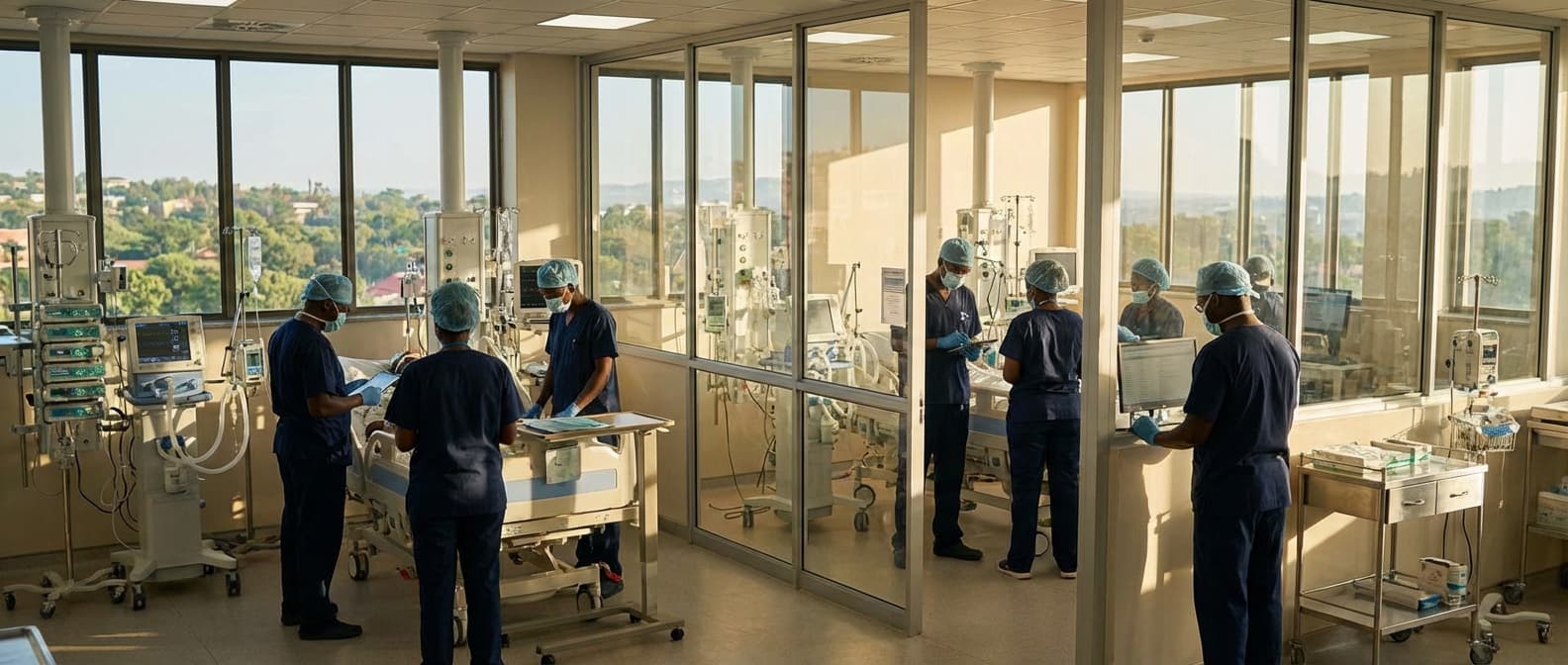
Ventilator Fleet Management & PM in Benin
Engineering Excellence & Technical Support
Preventive maintenance and fleet management for ICU ventilators High-standard technical execution following OEM protocols and local regulatory frameworks.
Centralized Ventilator Fleet Database
Implemented a robust, cloud-based database to centralize all ventilator asset information, including make, model, serial number, maintenance history, location, and current operational status. This provides real-time visibility across the entire fleet for efficient resource allocation and proactive decision-making.
Predictive Preventive Maintenance Scheduling
Leveraging data analytics on usage patterns, environmental factors, and historical repair logs, we've developed an intelligent scheduling system for preventive maintenance. This minimizes unscheduled downtime, extends equipment lifespan, and ensures optimal performance of critical life-support devices.
Performance Monitoring & Diagnostic Alerts
Integrated real-time performance monitoring with advanced diagnostic alerts. This system continuously tracks key ventilator parameters and automatically flags potential issues or deviations from optimal performance, enabling rapid intervention and preventing critical failures, especially in remote or resource-constrained settings.
What Is Ventilator Fleet Management & Pm In Benin?
Ventilator Fleet Management & Preventative Maintenance (PM) in Benin refers to the systematic and organized approach to maintaining, monitoring, and optimizing the performance and availability of mechanical ventilator devices within healthcare facilities and emergency response organizations. This service encompasses a suite of activities designed to ensure ventilators are operational, safe, and compliant with regulatory standards, thereby supporting critical patient care and preparedness. The objective is to maximize the lifespan of the equipment, minimize downtime, and control operational costs through proactive and reactive maintenance strategies. This is particularly relevant in a healthcare landscape where reliable access to advanced medical equipment is paramount for patient outcomes.
| Stakeholder/Entity | Need for Ventilator Fleet Management & PM | Typical Use Cases |
|---|---|---|
| Public Hospitals & Clinics (Benin): | Critical for continuous patient care, especially in intensive care units (ICUs) and emergency departments. Ensures availability of life-sustaining equipment. Addresses potential infrastructure limitations and reliance on external maintenance services. | Maintaining ventilator uptime for patients with respiratory failure, ARDS, post-operative recovery, and during public health emergencies (e.g., pandemics). Ensuring compliance with Ministry of Health directives. |
| Private Healthcare Providers (Benin): | To uphold quality of care, patient safety, and competitive advantage. Managing operational expenses and ensuring return on investment for expensive medical equipment. | Providing high-standard respiratory support in private ICUs, surgical centers, and critical care units. Offering advanced ventilation modes for specialized patient needs. |
| Non-Governmental Organizations (NGOs) & Humanitarian Organizations: | Essential for delivering critical healthcare services in resource-limited settings or during crisis situations. Ensuring the longevity and reliability of donated or procured equipment. | Deploying ventilators for mobile clinics, field hospitals, or in remote areas with limited access to technical support. Supporting disaster relief efforts and public health campaigns. |
| Government Health Agencies & Ministries of Health (Benin): | To ensure national healthcare system resilience, public health preparedness, and efficient allocation of resources. Mandating and overseeing equipment standards and maintenance protocols. | Developing national ventilator deployment strategies, establishing maintenance frameworks for public health facilities, and managing national medical equipment inventories. Responding to national health crises and pandemics. |
| Medical Equipment Suppliers & Service Providers: | Offering specialized technical expertise and support. Providing contracted maintenance services to healthcare facilities to ensure equipment reliability and compliance. | Executing manufacturer-recommended PM schedules, performing complex repairs, and providing technical training to in-house biomedical staff. Offering extended warranty and service agreements. |
Key Components of Ventilator Fleet Management & PM
- Inventory Management: Establishing and maintaining a comprehensive database of all ventilator units, including model, serial number, purchase date, warranty status, maintenance history, and location.
- Preventative Maintenance (PM): Executing scheduled maintenance tasks (e.g., calibration, filter replacement, functional checks, software updates) according to manufacturer recommendations and established protocols to identify and rectify potential issues before they lead to failure.
- Corrective Maintenance (CM): Responding to equipment malfunctions and breakdowns through timely diagnosis, repair, and replacement of faulty components. This includes on-demand service calls and emergency repairs.
- Performance Monitoring & Diagnostics: Implementing systems for remote or on-site monitoring of ventilator performance parameters. Utilizing diagnostic tools to assess operational efficiency and identify anomalies.
- Asset Lifecycle Management: Planning for the entire lifecycle of ventilator assets, from acquisition and deployment to eventual decommissioning and disposal. This includes assessing return on investment and planning for upgrades or replacements.
- Training & Competency Assurance: Ensuring that biomedical technicians and clinical staff are adequately trained on the operation, maintenance, and troubleshooting of the specific ventilator models within the fleet.
- Regulatory Compliance & Documentation: Adhering to all relevant national and international regulations regarding medical device maintenance, safety, and record-keeping. Maintaining meticulous records of all maintenance activities, inspections, and repairs.
- Budgeting & Cost Control: Developing and managing budgets for maintenance, repairs, parts, and service contracts. Analyzing maintenance costs to identify areas for efficiency improvements and cost savings.
- Risk Management: Identifying and mitigating risks associated with ventilator failure, such as patient safety incidents, prolonged downtime, and financial losses. Developing contingency plans for equipment shortages or major failures.
Who Needs Ventilator Fleet Management & Pm In Benin?
Ventilator fleet management and preventative maintenance (PM) are critical for ensuring the consistent availability and reliable performance of essential medical equipment in Benin. Without robust management and regular PM, the risk of equipment failure during critical patient care increases significantly, leading to adverse health outcomes and straining healthcare resources. This service is vital for any healthcare facility in Benin that utilizes ventilators, whether they are public or private, large or small, and plays a crucial role in maintaining the operational integrity of their life-support systems.
| Customer Type | Primary Departments Utilizing Ventilators | Key Needs Addressed by Fleet Management & PM | Potential Challenges in Benin |
|---|---|---|---|
| Public Hospitals | Intensive Care Units (ICUs), Emergency Departments (EDs), Operating Rooms (ORs), Neonatal Intensive Care Units (NICUs) | Ensuring consistent availability for critical care, cost-effective maintenance, extended equipment lifespan, compliance with national health standards. | Limited budget, scarcity of trained biomedical engineers, access to spare parts, logistical challenges for remote facilities. |
| Private Hospitals | ICUs, EDs, ORs, NICUs, Specialized Respiratory Units | Maintaining high service quality, patient safety, reputation, efficient resource allocation, minimizing downtime for revenue-generating procedures. | Higher expectations for rapid response times, potential for higher equipment investment, need for streamlined reporting. |
| Tertiary Referral Centers & University Teaching Hospitals | Advanced ICUs, specialized surgical units, research departments | Supporting complex patient care, ensuring equipment reliability for training and research, managing a diverse fleet, advanced diagnostics. | Managing large and varied equipment inventories, integrating with advanced IT systems, training medical staff on equipment use. |
| District Hospitals | EDs, general wards (if equipped) | Providing essential life support in less resourced settings, basic maintenance for critical equipment, extending the usability of aging equipment. | Significant infrastructure limitations, lack of on-site technical expertise, reliance on external support. |
| Specialized Clinics (e.g., Respiratory Care Centers) | Dedicated respiratory wards, pulmonary function testing labs | Ensuring optimal performance for specific diagnostic and therapeutic functions, calibration and accuracy of specialized ventilators. | Focus on specific ventilator types, need for specialized training for technicians. |
| NGO Healthcare Facilities | Various departments depending on the NGO's focus (e.g., maternal health, emergency response) | Cost-effective solutions, robust equipment for challenging environments, rapid deployment and maintenance for humanitarian efforts. | Varying levels of infrastructure, reliance on donations and grants, need for adaptable solutions. |
| EMS Providers | Ambulances, medical evacuation aircraft | Ensuring reliable function during transport, ruggedized equipment maintenance, quick turnaround times for readiness. | Mobile environments, vibration and environmental challenges, immediate response requirements. |
| Government Health Ministries/Agencies | Asset management, procurement, policy development | National inventory tracking, strategic planning for equipment replacement and upgrades, ensuring equitable access to functional ventilators, data for public health initiatives. | Centralized data management challenges, inter-departmental coordination, policy implementation and enforcement. |
Target Customers & Departments in Benin
- Public Hospitals
- Private Hospitals
- Tertiary Referral Centers
- University Teaching Hospitals
- District Hospitals
- Specialized Clinics (e.g., Respiratory Care Centers)
- Non-Governmental Organization (NGO) Healthcare Facilities
- Emergency Medical Services (EMS) Providers with On-board Ventilators
- Government Health Ministries/Agencies (for national asset management)
Ventilator Fleet Management & Pm Process In Benin
This document outlines the workflow for Ventilator Fleet Management and Preventive Maintenance (PM) processes in Benin, from initial inquiry to successful execution. It details the steps involved in ensuring the optimal functioning and longevity of the ventilator fleet.
| Stage | Description | Key Activities | Responsible Parties | Key Outputs/Deliverables |
|---|---|---|---|---|
| The process begins when a need for a new ventilator or a PM service is identified or requested. | Submit a formal request/inquiry, specify device type/service needed, provide location details. | Healthcare Facilities, Ministry of Health, NGOs, Equipment Users | Formal Request/Inquiry Document |
| The request is reviewed, and a detailed assessment of the requirement is conducted, followed by planning for the intervention. | Needs assessment, site survey, budget allocation, technical feasibility study, PM schedule creation. | Ministry of Health (Biomedical Engineering Department), Fleet Management Team, Procurement Department | Needs Assessment Report, Project Plan, Budget Approval, PM Schedule |
| This stage involves acquiring the necessary ventilators or parts and arranging for their transportation. | Vendor selection, quotation process, purchase order issuance, customs clearance, transportation arrangements. | Procurement Department, Ministry of Health, Logistics Team, Customs Authorities | Purchase Order, Invoices, Shipping Documents, Arrival Notifications |
| New ventilators are installed, tested, and put into operational service. | Unpacking, installation, calibration, functional testing, user training, official handover. | Biomedical Technicians, Vendor Support (if applicable), Healthcare Facility Staff | Installation Report, Commissioning Certificate, Training Records, Asset Registration |
| A systematic schedule is established for regular maintenance to prevent breakdowns. | Based on manufacturer recommendations, usage data, and regulatory requirements. Integrate into CMMS (Computerized Maintenance Management System). | Biomedical Engineering Department, Fleet Management Team | PM Schedule, Work Orders in CMMS |
| Scheduled preventive maintenance tasks are performed on the ventilators. | Visual inspection, cleaning, lubrication, calibration, testing of components, replacement of wear parts. | Biomedical Technicians, Authorized Service Providers | Completed Work Orders, PM Report |
| After PM, the ventilator's performance is verified, and a comprehensive report is generated. | Performance testing, diagnostic checks, documentation of all work done, root cause analysis (if applicable). | Biomedical Technicians, Quality Assurance Team | Post-PM Verification Report, Updated CMMS Records, Incident Reports (if any) |
| Ongoing monitoring of the entire ventilator fleet to identify trends and areas for improvement. | Data analysis (uptime, failure rates, cost per ventilator), identifying recurring issues, recommending upgrades or replacements. | Fleet Management Team, Biomedical Engineering Department | Performance Dashboards, Optimization Recommendations, Updated Asset Register |
| Ventilators reaching the end of their lifecycle are retired and replaced. | Assessment of end-of-life, disposal planning, procurement of replacements, transfer of data (if applicable). | Biomedical Engineering Department, Fleet Management Team, Ministry of Health | Decommissioning Report, Disposal Certificates, Procurement Plan for Replacements |
Ventilator Fleet Management & PM Process Workflow
- Inquiry and Request Initiation
- Assessment and Planning
- Procurement and Logistics
- Installation and Commissioning
- Preventive Maintenance (PM) Scheduling
- PM Execution
- Post-Maintenance Verification and Reporting
- Fleet Performance Monitoring and Optimization
- Decommissioning and Replacement
Ventilator Fleet Management & Pm Cost In Benin
Managing ventilator fleets in Benin, like in many developing economies, presents unique challenges and cost considerations. Effective fleet management is crucial for ensuring operational readiness, optimizing resource allocation, and ultimately, saving lives. Planned Preventive Maintenance (PPM) is a cornerstone of this, preventing costly breakdowns and extending the lifespan of these vital medical devices. This discussion will delve into the pricing factors and estimated cost ranges for ventilator fleet management and PPM services in Benin, denominated in the local currency, the West African CFA franc (XOF).
| Service Component | Estimated Annual Cost Range (XOF) Per Ventilator | Notes |
|---|---|---|
| Basic Preventive Maintenance (PM) | 80,000 - 250,000 | Includes routine checks, cleaning, calibration, filter replacement. Varies by ventilator complexity. |
| Comprehensive PM (including minor repairs & consumables) | 150,000 - 400,000 | Extends basic PM to include minor part replacements, essential consumables. Higher end for complex ICU ventilators. |
| Fleet Management (oversight, scheduling, inventory) | 50,000 - 150,000 | Cost for coordination, scheduling, tracking maintenance history, and basic inventory management of spare parts. Often a fixed fee or percentage of total maintenance cost. |
| Emergency Repair Call-out (per incident) | 40,000 - 120,000 (plus parts) | Covers technician travel, diagnosis, and initial troubleshooting. Excludes cost of major spare parts. |
| Major Spare Parts (estimated annual allocation) | 100,000 - 500,000+ | Highly variable. Depends on ventilator age, model, and failure rate. Can be significantly higher for critical component failures. |
| Annual Service Contract (fully comprehensive - PM, some repairs, management) | 250,000 - 750,000+ | This represents a bundled service offering for predictable budgeting. The higher end accounts for premium service levels and advanced ventilator models. |
Key Pricing Factors for Ventilator Fleet Management & PPM in Benin
- Type and Age of Ventilators: Different ventilator models (e.g., ICU ventilators, transport ventilators, neonatal ventilators) have varying maintenance requirements and spare part costs. Older machines may require more frequent servicing and harder-to-find parts.
- Fleet Size and Complexity: The total number of ventilators managed and the diversity of models within the fleet directly impact the scope of work, requiring more technicians, tools, and logistical support for larger and more complex fleets.
- Service Level Agreements (SLAs): The agreed-upon response times for emergency repairs, preventative maintenance schedules, and guaranteed uptime will significantly influence pricing. More comprehensive SLAs will command higher costs.
- Spare Parts Availability and Cost: The cost of genuine OEM (Original Equipment Manufacturer) parts versus third-party alternatives, as well as their availability within Benin or the need for importation, are major cost drivers.
- Technician Expertise and Training: The level of specialized training and experience of the maintenance technicians is critical. Highly skilled technicians, especially those with experience on specific advanced models, will have higher labor costs.
- Geographic Location and Accessibility: The physical location of the healthcare facilities within Benin can impact travel time and logistical costs for maintenance teams. Remote or difficult-to-access areas may incur additional charges.
- Contract Duration: Longer-term contracts often allow for better pricing due to economies of scale and predictable resource allocation for service providers.
- Included Services: Whether the PPM contract includes calibration, software updates, consumables (filters, tubing), or loaner equipment will affect the overall price.
- Regulatory Compliance and Documentation: Ensuring compliance with local and international medical device regulations, including proper documentation of all maintenance activities, adds to the service provider's overhead.
- Third-Party Service Providers vs. In-House Teams: The decision to outsource to a specialized third-party provider or maintain an in-house technical team will have distinct cost structures. Outsourcing can offer expertise but may have higher per-unit costs compared to building an internal capacity.
Affordable Ventilator Fleet Management & Pm Options
Optimizing ventilator fleet management is crucial for healthcare facilities to ensure patient safety, operational efficiency, and financial sustainability. This involves a proactive approach to maintenance, repair, and inventory control. Affordable solutions often revolve around smart investment in preventative maintenance (PM) programs and flexible service options, moving beyond reactive repairs. Value bundles and strategic cost-saving approaches are key to achieving this balance.
| Value Bundle Option | Description | Key Cost-Saving Strategies | Benefits |
|---|---|---|---|
| Basic PM & Repair Contract | Covers scheduled preventative maintenance and unscheduled repairs for a fixed annual fee or per-incident pricing. | Negotiate tiered service levels based on equipment criticality; bundle PM for multiple devices. | Predictable maintenance costs; reduced downtime; extended equipment lifespan. |
| Comprehensive Fleet Management Suite | Includes PM, repair, parts management, training, and potentially remote monitoring/diagnostics. | Economies of scale through bundled services; optimized parts inventory; reduced need for specialized external technicians. | Holistic fleet oversight; improved compliance; enhanced operational efficiency; data-driven decision-making. |
| Strategic Parts Sourcing & Management | Focuses on efficient procurement, stocking, and replacement of ventilator spare parts. | Bulk purchasing of common parts; consignment inventory agreements; forecasting demand to minimize obsolescence; exploring certified pre-owned parts. | Reduced parts costs; minimized stock-outs; faster repair turnaround times; lower inventory holding costs. |
| Hybrid Service Model (In-house + External) | Combines internal biomedical technician capabilities with external expert support for complex repairs or specialized PM. | Leverage in-house staff for routine tasks and basic PM; outsource complex or specialized services to ISOs for competitive rates. | Cost-effective utilization of internal resources; access to specialized expertise without full-time hire; flexible support. |
| Equipment Lifecycle Management & Upgrade Planning | Proactive planning for ventilator upgrades or replacements based on performance, cost of ownership, and technological advancements. | Negotiate trade-in programs; consider leasing options for newer technologies; factor in end-of-life costs during initial purchase. | Avoidance of costly end-of-life repairs; access to improved features and efficiencies; predictable capital expenditure. |
Key Considerations for Affordable Ventilator Fleet Management & PM
- Proactive Preventative Maintenance (PM) is more cost-effective than reactive repairs in the long run.
- Understanding Total Cost of Ownership (TCO) for each ventilator unit.
- Leveraging manufacturer-authorized service centers and independent service organizations (ISOs) for competitive pricing.
- Implementing robust inventory management for spare parts to avoid obsolescence and overstocking.
- Exploring extended warranty options and service contracts that offer predictable costs.
- Training in-house biomedical staff for basic troubleshooting and PM tasks.
Verified Providers In Benin
Ensuring access to quality healthcare is paramount, and in Benin, identifying Verified Providers is crucial for patient safety and effective treatment. Franance Health stands out as a leading organization dedicated to credentialing and verifying healthcare professionals, guaranteeing a superior standard of care. This verification process is not merely a formality; it's a rigorous evaluation that ensures practitioners meet stringent criteria for education, experience, ethical conduct, and ongoing professional development. By choosing Franance Health-credentialed providers, individuals are making an informed decision that prioritizes their well-being. Their commitment to transparency and excellence makes them the best choice for navigating Benin's healthcare landscape.
| Credentialed Provider Type | Key Verification Criteria | Benefits for Patients |
|---|---|---|
| Doctors (General Practitioners & Specialists) | Medical School Graduation, Licensure, Board Certifications, Continuing Medical Education (CME) | Accurate diagnosis, effective treatment plans, access to specialized care. |
| Nurses (RNs, LPNs) | Nursing School Diploma/Degree, Licensure, Certification in specific areas (e.g., critical care) | Competent patient care, medication administration, health education, support during recovery. |
| Pharmacists | Pharmacy Degree, Licensure, Knowledge of drug interactions and safe dispensing practices | Safe and accurate prescription fulfillment, medication counseling, drug interaction management. |
| Therapists (Physical, Occupational, Speech) | Degree in respective therapy, Licensure, Certification in specialized techniques | Rehabilitation, recovery of function, improvement in communication and daily living skills. |
| Medical Technologists/Lab Technicians | Relevant Degree/Diploma, Certification, Proficiency in laboratory procedures | Accurate diagnostic testing, reliable lab results to inform medical decisions. |
Why Franance Health Credentials Represent the Best Choice:
- Rigorous Vetting Process: Franance Health employs a comprehensive verification system that meticulously checks academic qualifications, professional licenses, and past performance of healthcare providers.
- Commitment to Ethical Standards: Credentials signify adherence to a strict code of ethics, ensuring patient-centered care and professional integrity.
- Enhanced Patient Safety: By verifying credentials, Franance Health significantly reduces the risk of patients encountering unqualified or fraudulent practitioners.
- Access to Competent Professionals: Patients can be confident that Franance Health-verified providers possess the necessary skills, knowledge, and experience for effective medical treatment.
- Promotion of Continuous Improvement: The credentialing process often includes requirements for ongoing professional development, ensuring providers stay updated with the latest medical advancements.
- Building Trust and Confidence: Franance Health's mark of verification provides patients with peace of mind and fosters trust in the healthcare system.
- Streamlined Healthcare Navigation: A clear and recognizable credentialing system makes it easier for individuals to identify and select reliable healthcare professionals.
Scope Of Work For Ventilator Fleet Management & Pm
This Scope of Work (SOW) outlines the requirements for comprehensive Ventilator Fleet Management and Preventive Maintenance (PM) services. The objective is to ensure optimal performance, reliability, and safety of the ventilator fleet, minimizing downtime and associated costs. This SOW details the technical deliverables, standard specifications, and service expectations. The management of the ventilator fleet will encompass inventory tracking, asset lifecycle management, and compliance with regulatory standards. Preventive maintenance activities will include scheduled inspections, testing, calibration, and minor repairs to proactively address potential issues and extend equipment lifespan. Spare parts management, technical support, and reporting are also key components of this SOW.
| Specification Category | Standard/Requirement | Details/Notes |
|---|---|---|
| Preventive Maintenance Frequency | Manufacturer Recommended Intervals (or as per clinical risk assessment) | Based on model, usage, and environmental factors. Typically semi-annually or annually. |
| Calibration Accuracy | Within manufacturer specifications and/or applicable regulatory standards | Tolerance limits for flow, pressure, volume, FiO2, and alarm parameters. |
| Performance Testing | Full functional test of all modes, safety features, and alarms | Includes pre- and post-maintenance verification. |
| Parts Replacement | Use of genuine OEM parts or equivalent approved parts | Parts must meet or exceed OEM specifications and be accompanied by warranty information. |
| Technician Qualifications | Certified Biomedical Technicians (BMET) or equivalent with specialized ventilator training | Demonstrated experience with the specific ventilator models in the fleet. |
| Reporting Timeliness | Service reports within 7 business days of service completion | Incident reports within 24 hours of identification. |
| Data Management | Secure, encrypted, and regularly backed-up digital platform | HIPAA compliance if applicable to patient data linkage. |
| Warranty Tracking | Proactive tracking and management of all equipment warranties | Ensures services covered under warranty are utilized. |
| Obsolescence Management | Regular review of fleet for end-of-life or obsolete models | Recommendations for replacement or upgrade strategies. |
| Regulatory Compliance | Adherence to FDA, ISO, and local healthcare regulations | Documentation for audits and inspections. |
| Response Time (Emergency) | Within 4 business hours of notification | For critical equipment failures impacting patient care. |
| Response Time (Routine PM) | Scheduled according to agreed-upon timelines | Minimize disruption to clinical operations. |
Key Technical Deliverables and Standard Specifications
- Detailed Inventory and Asset Register: A comprehensive digital database of all ventilators, including serial numbers, manufacturer, model, acquisition date, location, service history, and warranty status.
- Preventive Maintenance (PM) Schedule: A documented and approved PM schedule for each ventilator model, adhering to manufacturer recommendations and regulatory requirements.
- PM Checklists and Procedures: Standardized, detailed checklists and procedures for all PM tasks, ensuring consistency and thoroughness.
- Calibration Certificates: Calibration records for all tested and calibrated equipment, traceable to national or international standards.
- Service Reports: Detailed reports for each PM service, including dates, technician name, tasks performed, findings, measurements, adjustments made, parts replaced, and recommendations.
- Performance Test Results: Documentation of all performance tests conducted, including pre- and post-maintenance results.
- Spare Parts Inventory Management: A system for managing spare parts, including minimum/maximum stock levels, part numbers, lead times, and cost tracking.
- Technical Training Materials: Provision of training materials or sessions for in-house biomedical staff on routine maintenance and troubleshooting.
- Incident/Failure Reports: Standardized format for reporting any equipment failures or incidents, including root cause analysis.
- Compliance Documentation: Records demonstrating adherence to relevant regulatory standards (e.g., FDA, local health authorities) and accreditation requirements.
- Asset Lifecycle Management Plan: A strategy for managing ventilators from acquisition to disposal, including evaluation of obsolescence and upgrade opportunities.
- Performance Metrics and KPIs: Agreed-upon Key Performance Indicators (KPIs) for fleet management and PM services, with regular reporting.
- Software/Firmware Updates: Management and application of approved software and firmware updates as released by the manufacturer.
- Decontamination Procedures: Adherence to approved decontamination protocols for equipment during service.
- Emergency Service Response Plan: A documented plan for responding to urgent service requests or critical equipment failures.
Service Level Agreement For Ventilator Fleet Management & Pm
This Service Level Agreement (SLA) outlines the performance standards and guarantees for Ventilator Fleet Management & Preventative Maintenance (PM) services provided by [Provider Name] to [Client Name]. The objective of this SLA is to ensure the optimal performance, availability, and reliability of the client's ventilator fleet.
| Service Level | Metric | Target | Measurement Frequency | Reporting |
|---|---|---|---|---|
| Fleet Uptime | Percentage of time ventilators are operational and available for use | = 98% | Monthly | Monthly report detailing fleet uptime percentage. |
| Critical Issue Response | Time from notification to initial response (diagnosis/action) | <= 1 hour | Per incident | Incident log with timestamps. |
| Non-Critical Issue Response | Time from notification to initial response | <= 4 business hours | Per incident | Incident log with timestamps. |
| Preventative Maintenance (PM) Completion | Percentage of PM tasks completed within scheduled window | 100% | Monthly | Monthly report of completed PM tasks against schedule. |
| Parts Availability (Critical) | Time to source critical spare parts | <= 24 hours | As needed | Internal tracking, reportable upon request for specific incidents. |
Key Performance Indicators (KPIs) & Guarantees
- Uptime Guarantee: The provider guarantees a minimum of 98% uptime for the entire ventilator fleet, excluding scheduled maintenance and authorized downtime.
- Response Time for Critical Issues: For critical equipment malfunctions (e.g., ventilator failure impacting patient care), a response time of 1 hour for initial diagnosis and initiation of repair is guaranteed.
- Response Time for Non-Critical Issues: For non-critical issues or routine inquiries, a response time of 4 business hours is guaranteed.
- Preventative Maintenance (PM) Completion: 100% of scheduled PM tasks will be completed within the agreed-upon timeframe as per the PM schedule.
- Parts Availability: Critical spare parts for commonly used ventilator models will be maintained in stock to ensure timely repairs, with a commitment to sourcing necessary parts within 24 hours.
- Technician Availability: On-call technicians will be available 24/7/365 to address critical issues.
Frequently Asked Questions

Ready when you are
Let's scope your Ventilator Fleet Management & PM in Benin project in Benin.

Scaling healthcare logistics and technical systems across the entire continent.