
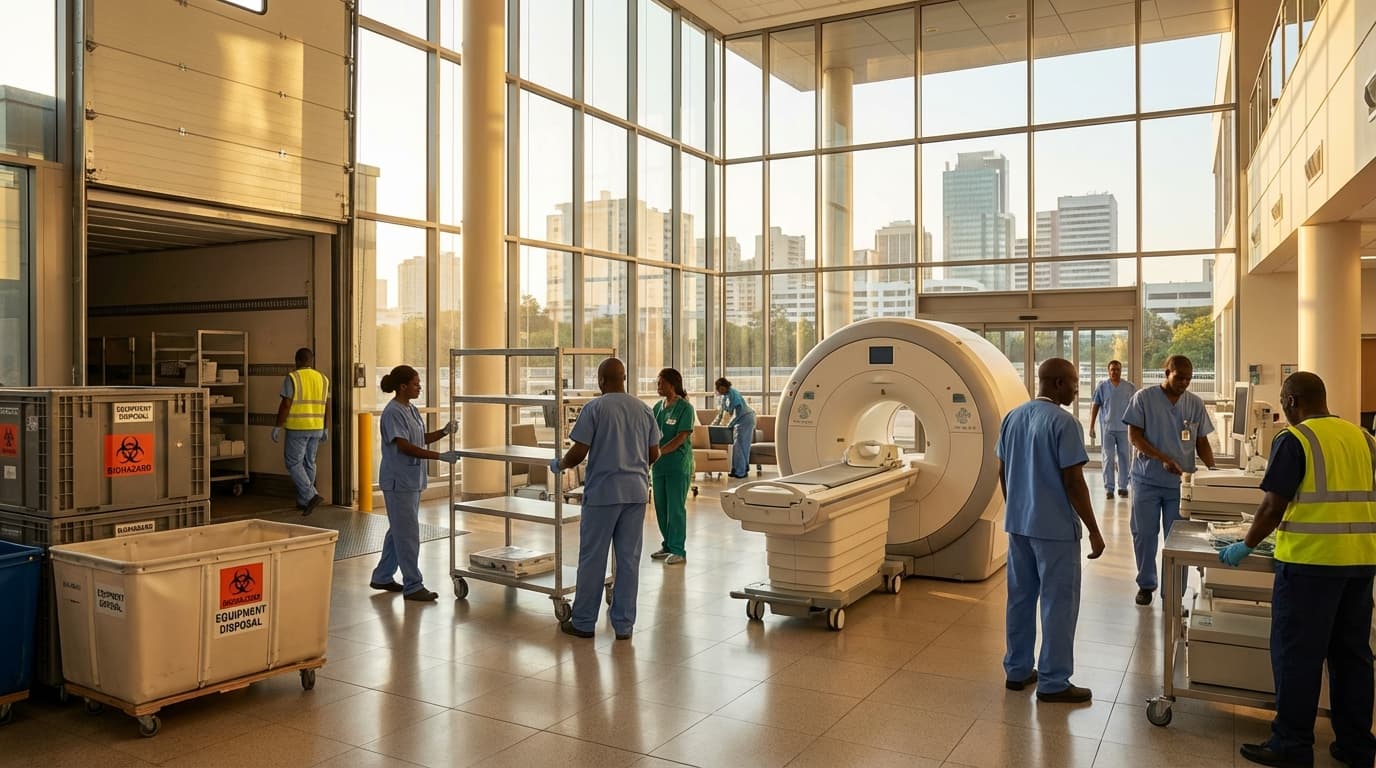
Site Restoration Service After Equipment Removal in Benin
Engineering Excellence & Technical Support
Site Restoration Service After Equipment Removal High-standard technical execution following OEM protocols and local regulatory frameworks.
Advanced Remediation Techniques
Deployment of specialized soil and water remediation technologies to neutralize any residual contaminants from equipment use, ensuring environmental safety and compliance with Benin's ecological regulations.
Precision Demolition and Debris Management
Expert handling of dismantled equipment through controlled demolition and efficient, eco-friendly debris removal, minimizing site disruption and adhering to strict waste disposal protocols in Benin.
Biodiversity Restoration and Landscaping
Implementation of native planting strategies and habitat reconstruction plans to restore the site's natural biodiversity, promoting ecological resilience and aesthetic reintegration with the Benin landscape.
What Is Site Restoration Service After Equipment Removal In Benin?
Site restoration service following equipment removal in Benin is a specialized process that aims to return a site to its pre-operational or a pre-defined environmental state after industrial or construction equipment has been decommissioned and removed. This service is crucial for environmental compliance, land rehabilitation, and preparing the site for subsequent land use. It encompasses a range of activities designed to mitigate the impacts of industrial operations and ensure the ecological integrity of the affected area.
| Who Needs Site Restoration Service? | Typical Use Cases in Benin | ||
|---|---|---|---|
| Industrial Companies (Oil & Gas, Mining, Manufacturing) | Decommissioning of drilling rigs, processing plants, and storage facilities. | Closure of mining sites and quarries. | Relocation or cessation of manufacturing operations. |
| Construction Companies | Removal of heavy machinery and temporary structures after large-scale infrastructure projects (e.g., dams, ports, roads). | Demolition of temporary construction camps and facilities. | |
| Government Agencies and Municipalities | Restoration of brownfield sites previously used for industrial purposes. | Rehabilitation of land used for temporary government infrastructure. | Management of legacy contaminated sites. |
| Landowners and Developers | Preparation of land for agricultural use, residential development, or commercial ventures following the removal of industrial equipment. | ||
| Environmental Consulting Firms (acting on behalf of clients) | Management of the entire restoration process, including planning, execution, and compliance assurance. |
Key Components of Site Restoration Service:
- Decontamination: Removal of hazardous materials, chemical spills, and residues left by equipment operation. This can involve soil and groundwater remediation.
- Demolition and Debris Removal: Dismantling of any remaining infrastructure associated with the equipment (e.g., foundations, support structures) and proper disposal or recycling of demolition waste.
- Soil Remediation and Re-profiling: Addressing soil contamination, compaction, and erosion. This may include excavation, capping, or biological treatments to restore soil quality. Re-contouring the land to its original or a stable topography.
- Revegetation and Habitat Restoration: Planting native vegetation, re-establishing ecosystems, and restoring wildlife habitats to promote biodiversity and ecological functionality.
- Water Body Restoration: If water bodies were impacted, this involves clearing pollution, restoring flow, and rehabilitating aquatic ecosystems.
- Monitoring and Verification: Post-restoration monitoring to ensure the site meets regulatory standards and ecological objectives, often involving soil, water, and air quality testing.
Who Needs Site Restoration Service After Equipment Removal In Benin?
When large-scale equipment is removed from industrial sites, agricultural lands, or construction zones in Benin, it often leaves behind a damaged landscape. This is where Site Restoration Services become crucial. These services are essential for repairing the environmental and structural impact of equipment removal, ensuring the land can be safely and productively reused. The need for these services spans various sectors and organizations within Benin, each with specific requirements.
| Customer Type | Relevant Departments/Roles | Primary Need for Restoration |
|---|---|---|
| Industrial Companies (Mining, Oil & Gas, Manufacturing) | Operations Management, Environmental Health & Safety (EHS), Asset Management, Legal/Compliance, Facility Management | Compliance with environmental regulations, site safety, land repurposing for sale or new operations, legacy site management. |
| Large-Scale Agricultural Enterprises | Farm Management, Agronomy, Operations, Land Management, Finance | Soil remediation, re-establishment of agricultural productivity, land sales or leasing, compliance with land use regulations. |
| Construction & Infrastructure Companies | Project Management, Site Supervisors, Environmental Officers, Procurement, Engineering | Site rehabilitation post-construction, meeting contractual obligations for land return, environmental impact mitigation. |
| Government Agencies (e.g., Ministry of Environment, Land Management Authorities) | Environmental Protection Units, Land Reclamation Departments, Public Works Departments, Urban Planning | Reclaiming degraded land for public use, enforcing environmental standards, managing state assets, public health and safety. |
| Real Estate Developers | Acquisition Teams, Development Managers, Planning Departments, Legal Counsel | Preparing land for sale or development, increasing property value, environmental due diligence, compliance with zoning laws. |
| NGOs & Environmental Organizations | Program Managers, Project Coordinators, Research & Advocacy Teams | Ecological restoration, biodiversity conservation, community engagement, advocating for sustainable land practices. |
Target Customers and Departments for Site Restoration Services in Benin After Equipment Removal
- {"title":"Industrial Sector","description":"Companies that have operated factories, processing plants, or heavy manufacturing facilities and are decommissioning or relocating equipment. This includes entities involved in mining, oil and gas extraction, and large-scale manufacturing."}
- {"title":"Agricultural Sector","description":"Large commercial farms or agricultural cooperatives that have utilized heavy machinery for cultivation, harvesting, or land management and are now removing it, potentially due to modernization, land sale, or operational changes. This could also apply to projects involving large-scale irrigation or land reclamation."}
- {"title":"Construction and Infrastructure Development","description":"Companies involved in major construction projects (e.g., dams, bridges, roads, power plants) that have brought in and subsequently removed heavy construction equipment. This also includes project developers and government agencies overseeing infrastructure."}
- {"title":"Government Agencies and Municipalities","description":"Public sector bodies responsible for managing state-owned land, abandoned industrial sites, or areas affected by large public works projects. They may commission restoration services to reclaim land for public use or environmental protection."}
- {"title":"Real Estate Developers and Landowners","description":"Private entities acquiring land that previously housed industrial operations or had extensive agricultural machinery use. They require restoration to make the land suitable for new development, residential, commercial, or re-agricultural purposes."}
- {"title":"Environmental Organizations and NGOs","description":"Groups focused on land remediation and ecological restoration may partner with or advocate for site restoration services, especially for sites with significant environmental damage."}
Site Restoration Service After Equipment Removal Process In Benin
This document outlines the comprehensive workflow for site restoration services following equipment removal in Benin. Our process is designed to ensure a smooth transition from initial inquiry to final execution, guaranteeing a safe, compliant, and environmentally responsible outcome for your site.
| Phase | Key Activities | Description | Deliverables | Timeline (Indicative) |
|---|---|---|---|---|
| Phase 1: Inquiry & Initial Assessment | Initial Contact, Site Visit, Needs Identification | Upon receiving your inquiry, our team will schedule an initial consultation and a site visit to understand the scope of equipment removed, the condition of the site, and your specific restoration objectives. We will identify potential hazards, environmental concerns, and regulatory requirements. | Initial Site Assessment Report, Preliminary Needs Analysis | 1-3 Business Days |
| Phase 2: Planning & Proposal Development | Detailed Site Survey, Risk Assessment, Restoration Plan, Cost Estimation, Proposal Submission | Based on the initial assessment, a detailed site survey will be conducted. A comprehensive restoration plan will be developed, outlining methodologies, timelines, resource allocation, and safety protocols. This will be accompanied by a detailed cost proposal. | Detailed Restoration Plan, Risk Management Plan, Project Proposal with Budget and Timeline | 3-7 Business Days |
| Phase 3: Permitting & Approvals | Application for Necessary Permits, Liaising with Authorities | We will identify and secure all required permits and approvals from relevant Beninese authorities (environmental agencies, local government, etc.) before commencing any restoration work. This includes navigating local regulations and ensuring full compliance. | Obtained Permits and Approvals | Variable (dependent on regulatory processes) |
| Phase 4: Execution & Restoration | Site Preparation, Decommissioning (if applicable), Remediation, Landscaping, Waste Management, Safety Monitoring | This is the core execution phase. Our experienced team will implement the approved restoration plan. Activities may include soil remediation, vegetation replanting, grading, removal of any remaining debris, and ensuring the site is safe and aesthetically acceptable. | Restored Site, Waste Disposal Certificates, Progress Reports | Variable (dependent on scope of work) |
| Phase 5: Site Handover & Post-Restoration Monitoring | Final Site Inspection, Client Sign-off, Post-Restoration Report, Monitoring (if required) | Upon completion, a final inspection will be conducted with your representative for formal sign-off. A comprehensive post-restoration report will be provided. If specified, we will also offer ongoing monitoring services to ensure long-term site stability and ecological health. | Final Restoration Report, Site Handover Documentation, Monitoring Reports (if applicable) | 1-5 Business Days (plus monitoring period if agreed) |
Site Restoration Workflow Overview
- Phase 1: Inquiry & Initial Assessment
- Phase 2: Planning & Proposal Development
- Phase 3: Permitting & Approvals
- Phase 4: Execution & Restoration
- Phase 5: Site Handover & Post-Restoration Monitoring
Site Restoration Service After Equipment Removal Cost In Benin
The cost of site restoration services in Benin after equipment removal can vary significantly based on several factors. These factors influence the complexity of the work required, the types of materials used, and the labor involved. Understanding these elements is crucial for obtaining accurate quotes and budgeting effectively. Factors include the size and condition of the site, the nature of the equipment removed, the presence of hazardous materials, the level of decontamination needed, and the desired end state of the site. Local regulations regarding environmental protection and waste disposal also play a role in determining the overall expense.
| Service Component | Estimated Cost Range (XOF) | Notes |
|---|---|---|
| Site Assessment and Planning | 50,000 - 200,000 | Initial survey to determine scope of work. |
| Debris Removal and Haulage (General) | 10,000 - 50,000 per cubic meter | Depends on volume and type of material. |
| Hazardous Material Abatement (e.g., Asbestos, Lead) | 100,000 - 1,000,000+ per incident | Highly variable based on material type and quantity. Requires specialized contractors. |
| Soil Remediation (Light Contamination) | 20,000 - 150,000 per cubic meter | Includes excavation and disposal/treatment. Heavier contamination costs more. |
| Groundwater Remediation | 500,000 - 5,000,000+ | Complex and site-specific, can involve pumping, treatment, and monitoring. |
| Demolition and Site Clearance (Minor Structures) | 50,000 - 300,000 | For small concrete pads, fences, etc. |
| Re-grading and Landscaping (Basic) | 30,000 - 100,000 | Leveling and seeding the ground. |
| Specialized Vegetation/Ecological Restoration | 100,000 - 1,000,000+ | Planting native species, habitat creation. |
| Waste Disposal Fees | Variable (depends on landfill/treatment facility rates) | Charged per tonne or cubic meter. |
| Permits and Approvals | 20,000 - 150,000 | Varies by local authority and project scope. |
| Project Management and Supervision | 10% - 20% of total project cost | For professional oversight. |
Key Pricing Factors for Site Restoration in Benin:
- Site Size and Accessibility: Larger or more remote sites generally incur higher costs due to increased labor and logistical requirements.
- Type and Scale of Equipment Removed: Removing heavy industrial machinery will likely be more complex and expensive than dismantling smaller units.
- Decontamination Needs: If the equipment or site contains hazardous materials (oils, chemicals, asbestos), specialized decontamination procedures will significantly increase costs.
- Soil and Groundwater Remediation: Contamination of the soil or groundwater necessitates specialized remediation efforts, which are a major cost driver.
- Reinstatement Requirements: The desired final state of the site (e.g., natural vegetation, re-grading, new construction foundation) dictates the scope of work and associated costs.
- Waste Disposal and Recycling: The volume and type of waste generated will affect disposal fees. Recycling of materials can sometimes offset costs.
- Labor Costs: The availability and cost of skilled labor in the specific region of Benin where the restoration is taking place.
- Permits and Regulatory Compliance: Obtaining necessary permits and adhering to local environmental regulations can add to the overall expense.
- Geographic Location: Costs can vary between urban and rural areas, as well as between different regions within Benin, due to differences in resource availability and transportation.
- Time Sensitivity: Urgent restoration projects may incur premium charges.
Affordable Site Restoration Service After Equipment Removal Options
Removing heavy equipment from a site can leave behind a disturbed landscape, requiring careful restoration. Our affordable site restoration service focuses on providing effective solutions that minimize costs without compromising on quality. We offer value bundles and implement smart cost-saving strategies to ensure you get the best possible outcome for your investment. Our goal is to return your site to its pre-operation condition or a specified end-use with minimal disruption and expense.
| Strategy | Description | Cost-Saving Benefit |
|---|---|---|
| Phased Restoration | Breaking down the restoration process into manageable stages, allowing for flexibility in budgeting and execution. | Spreads out costs over time, potentially allowing for better cash flow management. Can adapt to changing project priorities. |
| Material Sourcing | Utilizing locally sourced and recycled materials whenever possible for grading, fill, and mulch. | Reduces transportation costs and the expense associated with virgin materials. Supports sustainable practices. |
| Efficient Equipment Use | Optimizing the use of machinery for restoration tasks to minimize operating hours and fuel consumption. | Lower fuel and maintenance expenses. Reduced overall project timeline. |
| Native & Drought-Tolerant Planting | Selecting plant species that are indigenous to the area and require less water and maintenance. | Significantly reduces irrigation costs and the need for ongoing care and replacement plants. |
| Preventative Erosion Control | Implementing cost-effective erosion control measures early in the process to prevent costly damage later. | Avoids expensive repairs due to soil loss and water damage. Protects the integrity of the restored area. |
| Bundle Discounts | Offering discounted pricing when multiple restoration services are combined into a package. | Direct reduction in the overall cost of comprehensive site restoration. |
| In-House Expertise | Utilizing our experienced team for planning and execution, reducing reliance on external consultants. | Minimizes subcontracting fees and ensures efficient project management. |
Our Value Bundles for Site Restoration
- Basic Restoration Bundle: Includes essential tasks like grading, topsoil replacement, and basic seeding. Ideal for minimal disturbance scenarios.
- Standard Restoration Bundle: Builds upon the basic bundle with enhanced erosion control measures, a wider selection of seed mixes for specific climates, and initial mulching.
- Premium Restoration Bundle: Our most comprehensive package, featuring advanced stabilization techniques, native planting options, irrigation system installation (if required), and long-term monitoring.
- Customizable Bundles: We understand that every site is unique. Work with our experts to tailor a bundle that perfectly fits your specific needs and budget.
Verified Providers In Benin
In Benin's burgeoning healthcare landscape, identifying reliable and credentialed providers is paramount. Franance Health stands out as a beacon of quality and trust, offering a comprehensive network of verified medical professionals and institutions. This document outlines the rigorous credentialing process employed by Franance Health and explains why their verified providers represent the best choice for individuals seeking exceptional healthcare services in Benin.
| Why Choose Franance Health Verified Providers? | Benefits for Patients |
|---|---|
| Unwavering Commitment to Quality: Franance Health's stringent vetting process ensures that only highly qualified and ethical practitioners are part of their network. | Peace of Mind: Patients can be confident that they are receiving care from legitimate and competent healthcare professionals. |
| Access to Specialized Expertise: The network encompasses a wide range of medical specialties, ensuring access to the right expert for specific health needs. | Targeted and Effective Treatment: Receiving care from a specialist increases the likelihood of accurate diagnosis and effective treatment plans. |
| Enhanced Patient Safety: Rigorous checks on licenses, certifications, and ethical conduct directly contribute to a safer healthcare experience. | Reduced Risk of Medical Errors: Working with verified providers minimizes the risk of encountering unqualified or unethical practitioners. |
| Transparency and Trust: The clear credentialing process fosters transparency and builds trust between patients and providers. | Informed Decision-Making: Patients can make informed choices about their healthcare providers, knowing they have been thoroughly vetted. |
| Continuous Improvement: Franance Health's ongoing monitoring and feedback mechanisms contribute to the sustained high standards of their network. | Consistently High-Quality Care: Patients benefit from a network that is committed to maintaining and improving the quality of healthcare services. |
Franance Health Credentialing Process: Ensuring Excellence
- Comprehensive Background Checks: Franance Health conducts thorough background checks on all potential providers, verifying their academic qualifications, professional licenses, and previous employment history.
- Verification of Diplomas and Certifications: All educational degrees, specialized certifications, and training completion records are meticulously cross-referenced with issuing institutions to confirm their authenticity.
- License and Registration Status: Active and valid medical licenses and registrations with relevant Beninese authorities are a non-negotiable requirement. Franance Health continuously monitors these statuses.
- Professional References and Peer Reviews: Input from respected peers and professional references is sought to assess a provider's clinical competence, ethical conduct, and reputation within the medical community.
- Adherence to Ethical Standards: Providers are screened for their commitment to ethical medical practices, patient confidentiality, and adherence to national and international medical codes of conduct.
- Continuous Professional Development (CPD) Verification: Franance Health encourages and verifies ongoing engagement in CPD activities, ensuring providers remain up-to-date with the latest medical advancements and best practices.
- Patient Feedback and Satisfaction Monitoring: While not solely a credentialing factor, Franance Health utilizes aggregated patient feedback to identify areas of consistent excellence and potential concern among its network.
Scope Of Work For Site Restoration Service After Equipment Removal
This Scope of Work (SOW) outlines the services required for the restoration of a site following the removal of industrial equipment. The objective is to return the site to a safe, clean, and environmentally sound condition as per industry best practices and regulatory requirements. This includes debris removal, surface remediation, grading, and landscaping where applicable. Technical deliverables will ensure successful project completion and client satisfaction. Standard specifications will guide the execution of all tasks to maintain quality and safety.
| Task | Description | Technical Deliverables | Standard Specifications |
|---|---|---|---|
| Site Assessment and Planning | Initial survey to identify all impacted areas, types of debris, potential contaminants, and pre-existing conditions. Development of a detailed restoration plan. | Site Assessment Report, Restoration Plan, Risk Assessment | ASTM E1527 (Phase I ESA), OSHA HAZWOPER (for hazardous materials identification), Client-specific site plans. |
| Debris and Contaminant Removal | Removal of all equipment remnants, packaging materials, oils, lubricants, chemicals, and any other waste generated during equipment removal. Segregation and proper disposal of hazardous materials. | Waste Manifests, Hazardous Waste Disposal Certificates, Photographic Documentation | RCRA (Resource Conservation and Recovery Act) regulations for hazardous waste, local landfill acceptance criteria, appropriate PPE standards (OSHA 29 CFR 1910.120). |
| Surface Repair and Remediation | Repairing damaged surfaces (e.g., concrete, asphalt, soil) caused by equipment installation or removal. Remediation of any soil or groundwater contamination identified during the assessment phase. | Soil Testing Reports (pre and post remediation), Concrete/Asphalt Repair Specifications, As-Built Drawings | ASTM D5088 (Soil sampling), EPA approved remediation technologies, ACI (American Concrete Institute) standards for concrete repair, ASTM D2726 (Asphalt sampling). |
| Grading and Drainage | Restoring the site's natural contours or specified grades to ensure proper drainage and prevent water pooling. This may involve adding or removing soil. | Topographical Survey (post-restoration), Drainage Plan Verification | Local grading ordinances, FEMA flood zone regulations, principles of civil engineering for stormwater management. |
| Vegetation and Landscaping (if applicable) | Re-establishing vegetation as per the approved restoration plan. This might include seeding, sodding, or planting shrubs and trees. | Seed/Sod/Planting Material Certificates, Watering Schedule | Native species recommendations for the region, horticultural best practices, local environmental regulations. |
| Final Inspection and Reporting | A comprehensive inspection of the restored site to ensure all work meets the SOW requirements and specifications. Submission of a final report documenting all activities and outcomes. | Final Restoration Report, Photographic Documentation (before, during, after), Certificate of Completion | Client-specific acceptance criteria, regulatory compliance documentation, professional engineer's certification (if required). |
Key Stages of Site Restoration
- Site Assessment and Planning
- Debris and Contaminant Removal
- Surface Repair and Remediation
- Grading and Drainage
- Vegetation and Landscaping (if applicable)
- Final Inspection and Reporting
Service Level Agreement For Site Restoration Service After Equipment Removal
This Service Level Agreement (SLA) outlines the response times and uptime guarantees for site restoration services provided after the removal of equipment. This agreement ensures a structured and timely approach to restoring the site to its agreed-upon condition, minimizing disruption and maintaining operational continuity.
| Service Level | Response Time Target | Uptime Guarantee | Notes |
|---|---|---|---|
| Standard Restoration (Minor damage, routine removal) | 4 Business Hours | 99.9% Availability of the restored site (after restoration completion) | Applies to straightforward restoration tasks with minimal impact. |
| Expedited Restoration (Moderate damage, complex removal) | 2 Business Hours | 99.5% Availability of the restored site (after restoration completion) | Requires prior notification or pre-defined triggers for expedited service. May incur additional charges. |
| Emergency Restoration (Significant damage, safety critical) | 1 Business Hour | 99.0% Availability of the restored site (after restoration completion) | Triggered by events posing immediate safety risks or significant operational disruption. Highest priority. |
Key Definitions
- Equipment Removal: The physical extraction and transportation of installed equipment from the designated site.
- Site Restoration: The process of returning the site to its pre-installation or agreed-upon post-removal condition, including but not limited to, repairing structural damage, removing debris, re-landscaping, and ensuring safety.
- Downtime: Any period during which the site is inaccessible or unusable for its intended purpose due to restoration activities, excluding scheduled maintenance or planned interruptions communicated in advance.
- Response Time: The maximum time allowed from the initiation of a restoration request (e.g., via agreed-upon communication channel) until a qualified technician is actively engaged with the issue on-site.
- Resolution Time: The maximum time allowed from the initiation of a restoration request until the site is fully restored to its agreed-upon condition.
Frequently Asked Questions

Ready when you are
Let's scope your Site Restoration Service After Equipment Removal in Benin project in Benin.

Scaling healthcare logistics and technical systems across the entire continent.