
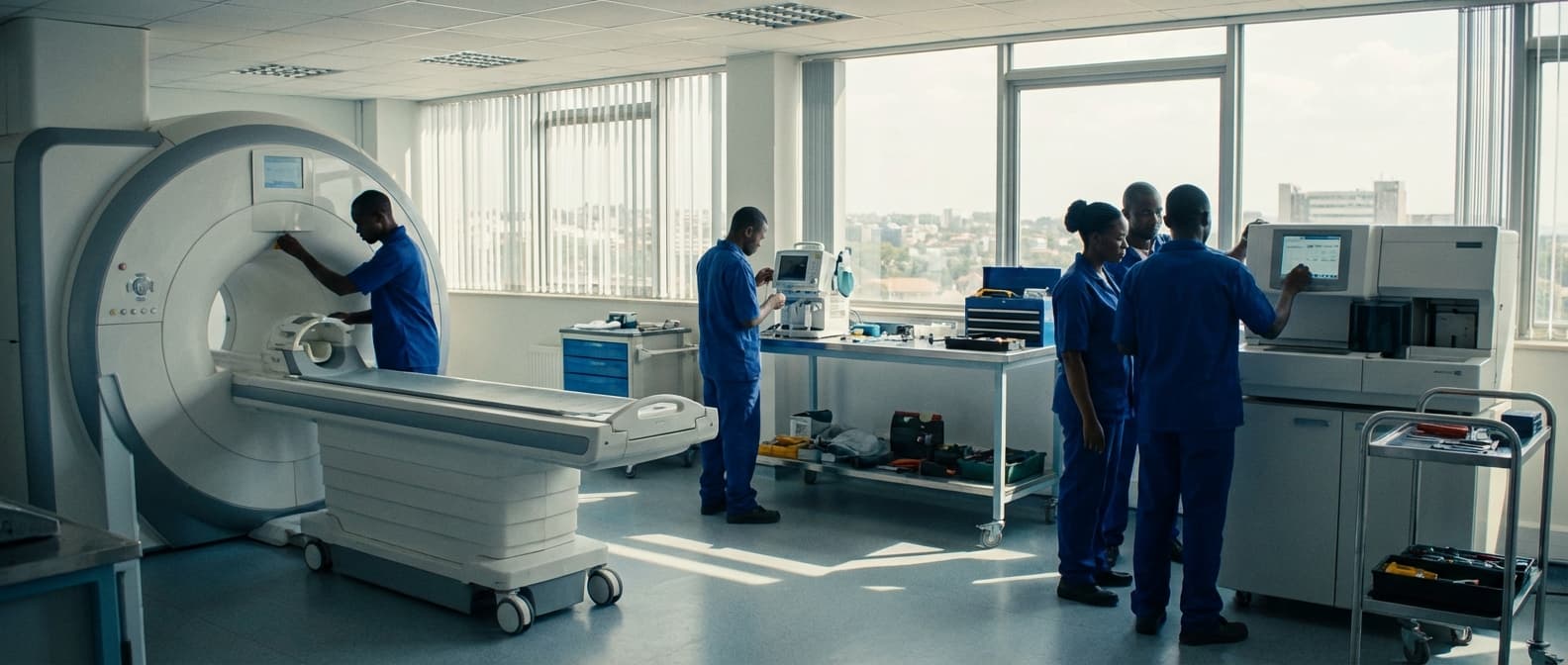
Preventive Maintenance Visit Service (On-Demand) in Benin
Engineering Excellence & Technical Support
Preventive Maintenance Visit Service (On-Demand) High-standard technical execution following OEM protocols and local regulatory frameworks.
Proactive Equipment Care & Uptime Maximization
Our on-demand preventive maintenance visits in Benin are designed to identify and address potential equipment issues *before* they cause costly breakdowns. We leverage advanced diagnostic tools and experienced technicians to perform thorough inspections, lubrication, calibration, and component wear analysis, ensuring your critical assets operate at peak efficiency and minimize unplanned downtime.
Certified Benin-Based Technicians & Localized Expertise
Gain peace of mind with our team of highly skilled and certified technicians located within Benin. They possess deep knowledge of local operating conditions, environmental factors, and specific equipment prevalent in the region. This localized expertise ensures that our preventive maintenance strategies are perfectly tailored to your specific needs, maximizing effectiveness and compliance.
Flexible Scheduling & Optimized Maintenance Planning
Our on-demand service offers unparalleled flexibility. Schedule your preventive maintenance visits precisely when it suits your operational workflow, minimizing disruption. We provide detailed reports and recommendations after each visit, helping you optimize your future maintenance schedules, predict future needs, and allocate resources efficiently for long-term operational excellence in Benin.
What Is Preventive Maintenance Visit Service (On-demand) In Benin?
Preventive Maintenance Visit Service (On-Demand) in Benin refers to a proactive, scheduled service engagement undertaken by qualified technicians to inspect, service, and potentially repair critical equipment or infrastructure before a failure occurs. Unlike scheduled preventive maintenance that adheres to a fixed calendar, the 'on-demand' aspect signifies that these visits are triggered by specific criteria, such as reaching a predetermined operational threshold, environmental monitoring alerts, or performance degradation indicators, rather than solely by time intervals. The primary objective is to minimize unscheduled downtime, extend equipment lifespan, ensure operational efficiency, and mitigate safety risks.
| Who Needs This Service | Typical Use Cases | ||||||
|---|---|---|---|---|---|---|---|
| Industrial Facilities: Manufacturers, processing plants, and any facility relying on heavy machinery and complex production lines. | Critical Infrastructure: Power generation plants, water treatment facilities, telecommunication networks, transportation systems (e.g., airport ground support equipment, rail systems). | Commercial Buildings: Large office complexes, shopping malls, hospitals, and hotels with HVAC systems, elevators, generators, and fire safety equipment. | Agricultural Operations: Farms utilizing advanced machinery, irrigation systems, and storage facilities where downtime can lead to significant losses. | IT & Data Centers: Server racks, cooling systems, Uninterruptible Power Supplies (UPS), and network hardware. | Energy Sector: Oil and gas exploration, renewable energy installations (solar farms, wind turbines), and power distribution networks. | Automotive & Logistics: Large fleets of vehicles, warehousing equipment, and automated material handling systems. | |
| Production Line Optimization: Ensuring continuous operation of assembly lines to meet output targets and avoid penalties for late delivery. | Power Outage Mitigation: Proactively servicing generators and UPS systems to guarantee uninterrupted power supply for critical operations. | HVAC System Efficiency: Maintaining heating, ventilation, and air conditioning units to ensure optimal comfort, air quality, and energy efficiency in commercial spaces. | Irrigation System Reliability: Preventing failures in irrigation pumps and distribution networks during crucial crop growth periods. | Data Integrity & Availability: Ensuring the reliability of IT infrastructure to prevent data loss or service disruption. | Safety Compliance: Verifying the functionality of safety-critical equipment, such as fire suppression systems and emergency lighting. | Equipment Longevity: Reducing the rate of component wear and tear to maximize the operational lifespan of expensive assets. | Environmental Monitoring Alerts: Responding to sensor readings indicating abnormal operating conditions (e.g., overheating, unusual vibrations, pressure fluctuations) before a catastrophic failure. |
Key Aspects of Preventive Maintenance Visit Service (On-Demand):
- Inspection: Comprehensive visual and instrumental checks of components, connections, and operational parameters.
- Lubrication & Cleaning: Application of appropriate lubricants to moving parts and removal of accumulated dust, debris, or contaminants.
- Adjustment & Calibration: Fine-tuning of settings, sensors, and actuators to maintain optimal performance within specified tolerances.
- Minor Repairs & Replacements: Addressing minor wear and tear, replacing consumable parts (e.g., filters, seals), and rectifying small defects identified during inspection.
- Performance Monitoring & Data Logging: Recording key performance indicators (KPIs) and operational data to establish baseline performance and detect deviations.
- System Diagnostics: Utilizing specialized tools and software to identify potential issues within integrated systems.
- Reporting: Documenting all activities performed, findings, recommendations, and any parts replaced or repairs conducted.
Who Needs Preventive Maintenance Visit Service (On-demand) In Benin?
Preventive maintenance is crucial for ensuring the optimal performance, longevity, and safety of equipment and infrastructure. In Benin, on-demand preventive maintenance visit services are particularly valuable for a diverse range of customers and departments who may not have the resources or expertise for in-house maintenance. These services help minimize unexpected breakdowns, reduce costly emergency repairs, and ensure business continuity. The focus is on proactive care to prevent issues before they escalate, thereby saving time, money, and operational disruption.
| Customer Type | Typical Departments Requiring Service | Examples of Equipment/Infrastructure Maintained |
|---|---|---|
| SMEs | Operations, Facilities Management, IT | Office equipment, IT infrastructure, small machinery, HVAC systems |
| Manufacturing Plants | Production, Maintenance, Engineering | Production machinery, assembly lines, pumps, generators, electrical systems, HVAC |
| Hospitality Sector | Engineering, Facilities Management, Operations | HVAC systems, kitchen equipment, elevators, plumbing, electrical systems, lighting |
| Healthcare Facilities | Biomedical Engineering, Facilities Management, IT | Medical equipment, diagnostic machines, HVAC systems, backup generators, IT networks |
| Agricultural Businesses | Farm Operations, Maintenance | Tractors, harvesters, irrigation systems, processing machinery, generators |
| Telecommunication Providers | Network Operations, Infrastructure Maintenance | Base stations, power systems, cooling systems, fiber optic equipment |
| Transportation Companies | Fleet Management, Maintenance | Vehicles, warehousing equipment, logistics systems, forklifts |
| Construction Companies | Site Management, Equipment Maintenance | Construction machinery, heavy equipment, generators, safety equipment |
| Educational Institutions | Campus Operations, IT, Facilities Management | Classroom technology, HVAC systems, laboratory equipment, generators, IT infrastructure |
| Government Agencies | Public Works, IT, Facilities Management | Office equipment, IT infrastructure, vehicles, building systems, water treatment facilities |
| Energy and Utilities | Operations, Maintenance | Power generators, transformers, distribution networks, substations, pumps |
| Financial Institutions | IT, Facilities Management | ATMs, IT servers, cooling systems, security systems, office equipment |
| Retail Chains | Store Operations, Facilities Management | Refrigeration units, HVAC, POS systems, lighting, security systems |
| Event Organizers | Operations, Technical Support | Sound systems, lighting equipment, generators, staging equipment |
Target Customers for On-Demand Preventive Maintenance Visits in Benin
- Small and Medium-sized Enterprises (SMEs)
- Manufacturing and Industrial Plants
- Hospitality Sector (Hotels, Resorts)
- Healthcare Facilities (Hospitals, Clinics)
- Agricultural Businesses
- Telecommunication Providers
- Transportation and Logistics Companies
- Construction and Real Estate Developers
- Educational Institutions (Universities, Schools)
- Government Agencies and Public Services
- Energy and Utilities Companies
- Financial Institutions (Banks, Offices)
- Retail Chains and Large Stores
- Event Organizers and Stadiums
Preventive Maintenance Visit Service (On-demand) Process In Benin
This document outlines the workflow for an on-demand Preventive Maintenance Visit Service in Benin, detailing the process from initial customer inquiry to the successful execution of the maintenance tasks. The process is designed to be efficient, transparent, and customer-centric, ensuring timely and effective maintenance of equipment and systems.
| Phase | Step | Description | Key Actions | Responsible Party | Outcome |
|---|---|---|---|---|---|
| Phase 1: Inquiry and Initial Assessment | 1.1 Customer Inquiry | The customer contacts the service provider to request a preventive maintenance visit for their equipment or system. | Receive inquiry via phone, email, website form, or in-person. Gather initial details: customer name, contact information, equipment type, location, nature of concern (if any, though ideally preventive). | Customer, Service Provider (Customer Service/Sales) | Initial record of customer request and basic information. |
| 1.2 Needs Assessment & Information Gathering | Understanding the customer's specific needs and the details of the equipment requiring maintenance. | Ask clarifying questions about the equipment (make, model, age, previous maintenance history). Understand service expectations. If possible, review previous service records. | Service Provider (Technical Sales/Support) | Clear understanding of the maintenance scope and customer requirements. | |
| Phase 2: Service Scheduling and Quotation | 2.1 Site Visit Feasibility & Technician Assignment | Determining the earliest possible date and assigning a qualified technician. | Check technician availability, consider geographical location of the customer and technician's current assignments. Factor in travel time. Assign technician based on equipment expertise. | Service Provider (Dispatch/Scheduling) | Feasible service date identified, technician assigned. |
| 2.2 Quotation Preparation | Developing a detailed quote for the preventive maintenance service. | Based on the needs assessment, estimate labor hours, required parts/consumables, travel costs, and any applicable fees. Document the scope of work clearly. Create a formal quotation document. | Service Provider (Estimating/Technical Dept.) | Formal quotation for customer review. | |
| 2.3 Quotation Submission & Approval | Presenting the quotation to the customer and obtaining their approval. | Submit quotation to the customer. Address any questions or concerns. Obtain written or verbal (followed by written confirmation) approval to proceed. | Service Provider (Sales/Customer Service), Customer | Approved work order or agreement to proceed. | |
| Phase 3: Pre-Visit Preparation | 3.1 Work Order Generation | Creating a formal work order for the assigned technician. | Generate a detailed work order including customer information, equipment details, scope of work, scheduled date/time, required tools, safety procedures, and any special instructions. | Service Provider (Dispatch/Operations) | Comprehensive work order for the technician. |
| 3.2 Parts & Material Procurement | Ensuring all necessary parts, consumables, and tools are ready for the visit. | Technician or dispatch team checks for required parts against the work order. Procure or gather parts from inventory. Confirm availability of specialized tools. | Service Provider (Technician/Warehouse/Dispatch) | All required materials and tools are ready. | |
| 3.3 Pre-Visit Communication | Confirming the appointment and providing any pre-visit instructions to the customer. | Contact customer to reconfirm the scheduled date and time. Inform them of the technician's expected arrival window. Advise on any site access requirements or preparations needed. | Service Provider (Dispatch/Technician) | Customer informed and prepared for the visit. | |
| Phase 4: On-Site Execution | 4.1 Arrival & Site Introduction | Technician arrives at the customer's site and introduces themselves. | Arrive on time. Introduce yourself to the designated contact person. Briefly review the work order and scope of work. | Service Provider (Technician) | Professional arrival and initial site engagement. |
| 4.2 Equipment Inspection & Diagnostic Check | Performing a thorough inspection and diagnostic tests on the equipment. | Visually inspect all components. Conduct functional tests. Check for any unusual noises, vibrations, or performance issues. Record all findings. | Service Provider (Technician) | Detailed assessment of equipment condition. | |
| 4.3 Preventive Maintenance Tasks | Executing the scheduled preventive maintenance procedures. | Perform cleaning, lubrication, adjustments, filter replacements, calibration, tightening of connections, and other scheduled maintenance tasks as per the manufacturer's guidelines and the work order. Document each task completed. | Service Provider (Technician) | Completion of all specified preventive maintenance actions. | |
| 4.4 Identifying & Addressing Minor Issues | Addressing any minor issues found during the inspection that can be resolved during the visit. | If minor repairs or adjustments are identified and fall within the scope or can be performed with minimal extra time, address them. Document any additional work performed. | Service Provider (Technician) | Minor issues resolved, improving equipment reliability. | |
| 4.5 Test Run & Verification | Testing the equipment after maintenance to ensure it's functioning correctly. | Start the equipment and run it through its operational cycle. Verify that all maintenance tasks have resolved any initial concerns and that performance is optimal. Conduct final checks. | Service Provider (Technician) | Confirmation of successful maintenance and proper equipment function. | |
| 4.6 Reporting & Customer Sign-off | Documenting the work done and obtaining customer confirmation. | Complete the work order with all details of tasks performed, parts used, and any observations. Present a summary of the work to the customer. Obtain customer signature on the work order or a service report. | Service Provider (Technician), Customer | Documented record of work completed and customer acceptance. | |
| Phase 5: Post-Visit Follow-up and Closure | 5.1 Work Order Completion & Submission | Submitting the completed work order for processing. | Technician submits the signed work order and any related reports to the office for billing and record-keeping. | Service Provider (Technician) | Completed work order entered into the system. |
| 5.2 Invoicing & Payment | Generating and sending the invoice to the customer. | Process the work order to generate an invoice based on the agreed quotation. Send the invoice to the customer. Follow up on payment as per terms. | Service Provider (Finance/Accounts) | Customer receives invoice, payment process initiated. | |
| 5.3 Service Report & Recommendations | Providing a comprehensive service report and potential recommendations. | Generate a detailed service report for the customer summarizing the work, findings, and any recommendations for future maintenance or potential upgrades. This may be provided with the invoice or as a separate document. | Service Provider (Administration/Technical) | Customer receives detailed service report. | |
| 5.4 Customer Feedback & Relationship Management | Gathering feedback to improve service quality and maintain customer relationships. | Follow up with the customer (e.g., via email or phone) to solicit feedback on the service experience. Address any outstanding issues. Maintain a positive customer relationship for future service needs. | Service Provider (Customer Service/Sales) | Customer satisfaction assessed, relationship strengthened. |
Preventive Maintenance Visit Service (On-Demand) Workflow in Benin
- Phase 1: Inquiry and Initial Assessment
- Phase 2: Service Scheduling and Quotation
- Phase 3: Pre-Visit Preparation
- Phase 4: On-Site Execution
- Phase 5: Post-Visit Follow-up and Closure
Preventive Maintenance Visit Service (On-demand) Cost In Benin
On-demand preventive maintenance visits for services in Benin can vary significantly in cost due to several factors. These factors influence the overall price, from basic inspections to more complex tune-ups. Understanding these elements is crucial for budgeting and selecting the right service provider.
The pricing is typically structured around the scope of work required, the complexity of the equipment or system being maintained, the urgency of the request, and the reputation and operational costs of the service provider. For instance, a simple cleaning and diagnostic of a household appliance will be considerably less expensive than a comprehensive inspection and servicing of industrial machinery. Travel time and distance to the client's location also play a role, especially in rural or less accessible areas.
The expertise and specialization of the technician are also key determinants. A highly skilled technician with specialized knowledge for complex systems will command a higher rate than a general maintenance worker. The quality of spare parts used, if replacement is necessary, will also add to the final cost, with original manufacturer parts generally being more expensive than aftermarket alternatives.
Emergency or same-day service requests will almost always incur a premium compared to scheduled, planned maintenance. Service providers often have tiered pricing structures that reflect the urgency of the call-out. Furthermore, the brand and type of equipment or system being serviced can influence pricing. Some brands may have proprietary diagnostic tools or require specific expertise, leading to higher service fees. Finally, the overhead costs of the service company, including insurance, tools, training, and administrative expenses, are factored into their pricing models.
| Service Type/Scope | Estimated Price Range (XOF - West African CFA franc) |
|---|---|
| Basic Inspection/Cleaning (e.g., household appliance) | 15,000 - 35,000 |
| Routine Maintenance (e.g., vehicle oil change & check-up) | 25,000 - 60,000 |
| Complex System Check (e.g., basic AC unit servicing) | 30,000 - 70,000 |
| Industrial Equipment Diagnostic (non-emergency) | 50,000 - 150,000+ |
| Emergency Call-Out Fee (added to service cost) | 10,000 - 30,000+ |
| Specialized Equipment Maintenance (e.g., medical, high-tech) | 100,000 - 500,000+ |
Key Pricing Factors for On-Demand Preventive Maintenance Services in Benin
- Scope of Work: The extent of the maintenance tasks (e.g., inspection, cleaning, lubrication, calibration, minor repairs).
- Equipment/System Complexity: The intricacy and type of machinery or system requiring maintenance (e.g., household appliances, vehicles, industrial equipment, HVAC systems).
- Urgency of Service: Whether the visit is scheduled, same-day, or an emergency call-out.
- Technician Expertise & Specialization: The skill level, experience, and specific certifications of the service personnel.
- Travel Distance & Accessibility: The geographical location of the client and the ease of access to the site.
- Brand/Manufacturer of Equipment: Specific requirements or proprietary tools needed for certain brands.
- Replacement Parts: The cost and type of any parts that need to be replaced (original vs. aftermarket).
- Service Provider Overhead: The operational costs of the maintenance company.
- Warranty/Service Packages: Whether the service is part of a larger contract or a one-off call.
Affordable Preventive Maintenance Visit Service (On-demand) Options
Regular preventive maintenance is crucial for extending the lifespan of your equipment, preventing costly breakdowns, and ensuring optimal performance. Our on-demand service offers flexible and affordable solutions tailored to your needs. We understand that budget is a key consideration, so we've designed our offerings with value and cost-savings in mind.
| Service Tier | Description | Key Inclusions | Base Cost Per Visit (USD) | Value Bundles (Discounted) |
|---|---|---|---|---|
| Basic Check-up | Essential inspection and cleaning for standard equipment. | Visual inspection, lubrication, basic cleaning, operational check. | 150 | 3 Visits: 420 (10% off) |
| Standard Maintenance | Comprehensive check-up with minor adjustments and part inspections. | All Basic Check-up items + filter replacement (if applicable), calibration, minor part inspection, safety check. | 250 | 3 Visits: 700 (12% off) |
| Premium Service | In-depth maintenance for critical or complex equipment, including diagnostic scans. | All Standard Maintenance items + diagnostic scans, detailed component wear assessment, preventative part replacement recommendations. | 400 | 3 Visits: 1120 (15% off) |
Our Affordable Preventive Maintenance Visit Options
- On-Demand Service: Schedule maintenance visits whenever you need them, without long-term contracts.
- Expert Technicians: Our certified professionals have the knowledge and experience to perform thorough checks and identify potential issues early.
- Reduced Downtime: Proactive maintenance minimizes unexpected equipment failures, keeping your operations running smoothly.
- Extended Equipment Life: Regular care prevents wear and tear, significantly increasing the lifespan of your valuable assets.
- Improved Efficiency: Well-maintained equipment operates at peak efficiency, saving energy and resources.
Verified Providers In Benin
Ensuring access to quality healthcare is paramount, and in Benin, identifying Verified Providers is crucial for patient safety and effective treatment. Franance Health stands out as a leader in this regard, offering a robust system for credentialing and verification that assures patients they are receiving care from qualified and trustworthy professionals. Their commitment to rigorous standards means that when you choose a Franance Health verified provider, you are choosing excellence in healthcare. This verification process not only builds trust but also contributes to a more transparent and reliable healthcare ecosystem in Benin.
| Provider Type | Franance Health Verification Status | Key Benefits of Verification |
|---|---|---|
| General Practitioners | Verified | Ensured foundational medical knowledge, adherence to ethical practices, and current licensing. |
| Specialist Physicians (e.g., Cardiologists, Pediatricians) | Verified | Confirmation of advanced training, specialized certifications, and proven experience in their respective fields. |
| Nurses and Midwives | Verified | Validation of nursing qualifications, practical skills, and commitment to patient care and safety. |
| Pharmacists | Verified | Assurance of pharmaceutical knowledge, proper dispensing practices, and adherence to medication safety regulations. |
| Diagnostic Laboratories | Verified | Confirmation of adherence to quality control standards, accurate testing procedures, and reliable reporting of results. |
Why Franance Health Credentials Matter
- Rigorous Vetting Process: Franance Health employs a multi-faceted approach to verify the qualifications, licenses, and experience of healthcare professionals.
- Patient Safety Focus: The primary goal of their verification is to protect patients by ensuring they are treated by competent and ethical practitioners.
- Enhanced Trust and Transparency: Verified credentials offer patients peace of mind and allow for informed decision-making when selecting a healthcare provider.
- Commitment to Excellence: Franance Health champions high standards within the healthcare industry, promoting continuous improvement among its network.
- Accessibility to Quality Care: By identifying verified providers, Franance Health facilitates easier access to reliable and effective medical services for the Beninese population.
Scope Of Work For Preventive Maintenance Visit Service (On-demand)
This Scope of Work (SOW) outlines the details for an on-demand preventive maintenance (PM) service visit for [Asset/Equipment Name]. The objective of this service is to ensure optimal performance, minimize downtime, and extend the lifespan of the equipment through proactive inspection, cleaning, lubrication, and minor adjustments. This SOW details the technical deliverables, standard specifications, and the process for execution.
| Section | Description | Technical Deliverables | Standard Specifications |
|---|---|---|---|
| Arrival of qualified technician(s) at the client's site to assess the current state of the [Asset/Equipment Name] and prepare for maintenance activities. |
|
|
| Thorough visual and functional inspection of all critical components of the [Asset/Equipment Name] to identify wear, damage, or signs of impending failure. |
|
|
| Comprehensive cleaning of the equipment to remove dust, debris, and contaminants, followed by application of appropriate lubricants to reduce friction and wear. |
|
|
| Performing minor adjustments and tightening of fasteners to ensure proper alignment and secure operation of all components. |
|
|
| Post-maintenance testing to verify that the [Asset/Equipment Name] is operating correctly and performing as expected. |
|
|
| Provision of a comprehensive report detailing all maintenance activities performed, findings, and recommendations. |
|
|
| The service provider is responsible for bringing all necessary tools and equipment required for the PM visit. |
|
|
| The technician(s) performing the service must possess the necessary skills and experience. |
|
|
Key Service Objectives
- Proactive identification and mitigation of potential equipment failures.
- Ensuring equipment operates within specified performance parameters.
- Maximizing equipment uptime and reliability.
- Compliance with manufacturer's recommended maintenance schedules.
- Providing detailed reports on equipment condition and maintenance performed.
Service Level Agreement For Preventive Maintenance Visit Service (On-demand)
This Service Level Agreement (SLA) outlines the guaranteed response times and uptime for on-demand Preventive Maintenance Visit services provided by [Your Company Name] (hereinafter referred to as 'Provider') to [Client Name] (hereinafter referred to as 'Client'). This SLA is an addendum to the Master Service Agreement (MSA) between the parties.
| Service Level | Definition | Response Time Guarantee | Resolution Time Guarantee (for scheduled visits) | Uptime Guarantee |
|---|---|---|---|---|
| Standard Preventive Maintenance Visit (On-Demand) | Client requests a preventive maintenance visit for routine tasks that are not immediately critical. These visits are typically scheduled in advance. | 24 business hours for acknowledgment and scheduling confirmation. | Within 5 business days of agreed-upon appointment, depending on complexity and parts availability. | N/A (This refers to response/resolution for specific visits, not continuous system uptime. Uptime for critical systems is covered in a separate SLA if applicable). |
| Priority Preventive Maintenance Visit (On-Demand) | Client requests a preventive maintenance visit for tasks that are recommended to be addressed within a shorter timeframe to prevent potential future disruptions. | 8 business hours for acknowledgment and scheduling confirmation. | Within 2 business days of agreed-upon appointment, depending on complexity and parts availability. | N/A |
Definitions
- Scheduled Maintenance Window: A pre-defined period during which scheduled maintenance can be performed without impacting critical operations. Typically agreed upon by both parties.
- Emergency Maintenance Window: A period outside of the Scheduled Maintenance Window, typically during off-peak hours or weekends, when urgent maintenance may be required.
- Downtime: Any period during which the Client's systems or equipment covered by this SLA are unavailable for their intended use due to the need for preventive maintenance, excluding scheduled maintenance windows.
- Response Time: The maximum time elapsed from the Client's initiation of a request for preventive maintenance (via agreed-upon channels) to the Provider's acknowledgment and initial engagement with the request.
- Resolution Time: The maximum time elapsed from the Provider's acknowledgment of the request to the completion of the preventive maintenance task and restoration of normal operation.
- Preventive Maintenance Visit Service (On-Demand): A scheduled or unscheduled visit by Provider's technicians to perform routine maintenance, inspections, and minor adjustments on Client's designated equipment or systems to prevent future issues.
Frequently Asked Questions

Ready when you are
Let's scope your Preventive Maintenance Visit Service (On-Demand) in Benin project in Benin.

Scaling healthcare logistics and technical systems across the entire continent.