
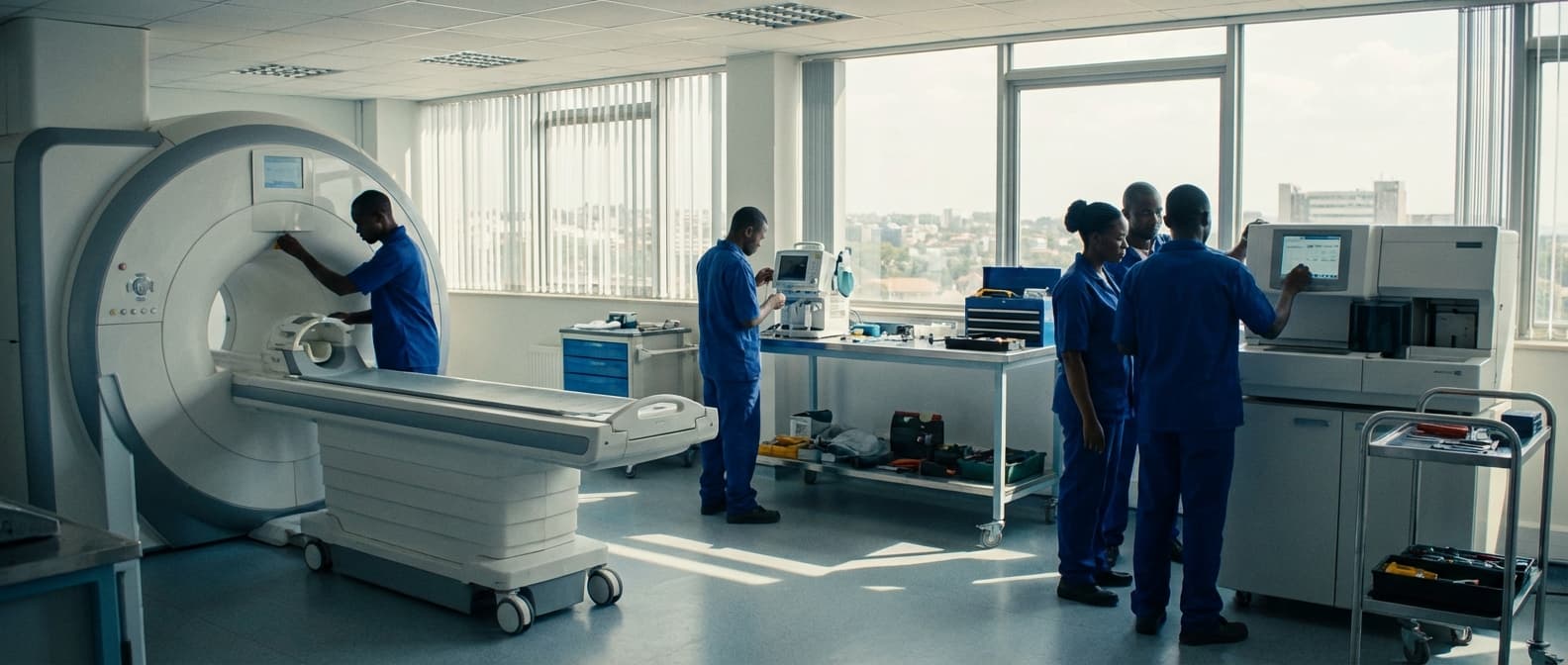
Planned Shutdown Coordination Service for Critical Equipment in Benin
Engineering Excellence & Technical Support
Planned Shutdown Coordination Service for Critical Equipment High-standard technical execution following OEM protocols and local regulatory frameworks.
Proactive Scheduling & Risk Mitigation
Our service offers meticulous planning and scheduling of critical equipment shutdowns in Benin, prioritizing minimal disruption. We conduct thorough risk assessments to identify potential bottlenecks and develop robust contingency plans, ensuring safe and efficient maintenance execution while safeguarding operational continuity.
Data-Driven Optimization & Performance Tracking
Leveraging advanced analytics, we optimize shutdown windows based on production cycles, historical data, and predicted equipment wear. Comprehensive post-shutdown performance tracking ensures that maintenance objectives are met and provides valuable insights for future operational improvements and predictive maintenance strategies.
Stakeholder Collaboration & Regulatory Compliance
We facilitate seamless coordination between internal teams, external vendors, and regulatory bodies in Benin. Our expertise in local regulations ensures all shutdown activities adhere to compliance standards, while transparent communication and collaborative planning guarantee buy-in and successful project delivery.
What Is Planned Shutdown Coordination Service For Critical Equipment In Benin?
The Planned Shutdown Coordination Service for Critical Equipment in Benin refers to a specialized operational management offering designed to orchestrate and execute the scheduled deactivation of essential machinery and systems within industrial, utility, or infrastructure facilities. This service is predicated on the proactive identification of maintenance, upgrade, or decommissioning requirements for critical assets, thereby minimizing disruption to operational continuity and ensuring the integrity of interconnected systems. The service encompasses meticulous planning, precise scheduling, resource allocation, risk mitigation, and post-shutdown verification to guarantee that planned downtime is efficient, safe, and aligned with broader organizational objectives. It addresses the inherent complexity of synchronizing multiple stakeholders, technical disciplines, and logistical requirements during periods of enforced cessation of critical functions.
| Who Needs This Service? | Typical Use Cases | |||||
|---|---|---|---|---|---|---|
| Industrial Facilities: Power generation plants (thermal, hydro, nuclear), oil and gas refineries, petrochemical complexes, manufacturing plants (automotive, heavy machinery, electronics), cement plants, mining operations. | Infrastructure Operators: Water treatment and distribution facilities, wastewater management systems, transportation networks (railways, ports), telecommunications infrastructure. | Critical Utility Providers: Electricity transmission and distribution grids, gas supply networks. | Large-Scale Agricultural Operations: Processing plants for food and beverage, large-scale irrigation systems. | Government and Municipal Entities: Management of critical public services and infrastructure. | ||
| Scheduled Maintenance and Overhauls: Performing routine or major maintenance on turbines, boilers, pumps, compressors, electrical substations, and other rotating or static equipment. | Component Replacements and Upgrades: Replacing aging or obsolete components, installing new technologies or improved systems, and integrating upgraded control systems. | Refurbishment and Modernization Projects: Comprehensive refurbishment of entire plant sections or key operational units. | Asset Decommissioning: Safely and systematically dismantling retired critical equipment and facilities. | Regulatory Compliance Upgrades: Implementing modifications required by new safety or environmental regulations. | Integration of New Assets: Connecting and testing new equipment or systems within an existing operational environment. | Emergency Preparedness Drills and Testing: Simulating shutdown scenarios to test response and recovery protocols. |
Key Components of Planned Shutdown Coordination Service:
- Scope Definition and Asset Identification: Precisely identifying the critical equipment requiring shutdown and defining the boundaries of the maintenance or upgrade activities.
- Risk Assessment and Mitigation: Conducting thorough hazard identification and developing robust mitigation strategies to address safety, environmental, and operational risks.
- Detailed Work Planning: Developing granular work packages for each task, including procedures, required personnel, materials, and specialized tools.
- Resource Mobilization and Management: Coordinating the availability and deployment of skilled labor, specialized contractors, equipment, and necessary consumables.
- Logistical Coordination: Managing the movement of personnel, equipment, and materials to and from the site, as well as site access protocols.
- Permitting and Regulatory Compliance: Ensuring all necessary permits, licenses, and regulatory approvals are obtained and adhered to.
- Stakeholder Communication and Management: Establishing clear communication channels and protocols for all involved parties, including internal departments, external vendors, and regulatory bodies.
- Schedule Development and Optimization: Creating a detailed, integrated project schedule, identifying critical paths, and implementing strategies for schedule compression where feasible.
- Execution Oversight and Monitoring: Providing on-site supervision and real-time monitoring of work progress against the plan, with mechanisms for deviation management.
- Quality Assurance and Control: Implementing rigorous QA/QC procedures to verify the completion of work according to specifications and industry standards.
- Safety Management: Enforcing strict adherence to safety regulations and protocols throughout the shutdown period.
- Post-Shutdown Verification and Recommissioning: Conducting thorough testing and verification of all modified or maintained equipment before returning it to service.
- Documentation and Reporting: Maintaining comprehensive records of all activities, decisions, and outcomes, and producing detailed post-shutdown reports.
Who Needs Planned Shutdown Coordination Service For Critical Equipment In Benin?
In Benin, the effective and safe operation of critical equipment is paramount for industries. Planned shutdown coordination services are essential for ensuring minimal disruption, optimizing maintenance activities, and maintaining compliance with safety regulations. This service is specifically designed for organizations that rely heavily on their critical machinery and infrastructure.
| Industry Sector | Typical Critical Equipment | Relevant Departments |
|---|---|---|
| Oil and Gas (Upstream, Midstream, Downstream) | Refining units, pumps, compressors, turbines, pipelines, offshore platforms | Operations, Maintenance, Engineering, Safety, Environmental, Turnaround Planning |
| Power Generation (Thermal, Hydro, Renewable) | Turbines, generators, boilers, transformers, switchgear, dams | Operations, Maintenance, Engineering, Safety, Grid Management |
| Manufacturing (Heavy Industry, FMCG) | Production lines, heavy machinery, automated systems, boilers, large presses | Production, Maintenance, Engineering, Quality Control, Health & Safety |
| Mining and Extractive Industries | Crushers, conveyor belts, processing plants, heavy haul trucks, ventilation systems | Operations, Maintenance, Engineering, Safety, Environmental |
| Telecommunications | Base stations, data centers, transmission equipment, power backup systems | Network Operations, Maintenance, Engineering, Infrastructure Management |
| Water and Wastewater Treatment | Pumps, filtration systems, treatment reactors, generators, control systems | Operations, Maintenance, Engineering, Environmental Services, Public Health |
| Transportation and Logistics | Port cranes, railway signaling systems, airport control towers, large cargo handling equipment | Operations, Maintenance, Engineering, Safety, Infrastructure Management |
| Agro-processing | Processing machinery, packaging lines, refrigeration units, storage silos | Production, Maintenance, Engineering, Quality Assurance |
Target Customers and Departments in Benin Requiring Planned Shutdown Coordination Service for Critical Equipment:
- Industries with High Dependency on Continuous Operations: Companies where unexpected downtime translates into significant financial losses, production halts, or service interruptions.
- Industries with Complex and Interconnected Equipment: Facilities where the shutdown of one piece of equipment can impact multiple other systems or processes.
- Industries with Stringent Safety and Environmental Regulations: Organizations that must adhere to strict protocols during maintenance to prevent accidents, spills, or environmental damage.
- Organizations Undertaking Major Upgrades or Modernization Projects: Businesses that are introducing new technologies or significantly altering their existing infrastructure.
- Companies Seeking to Optimize Maintenance Budgets: Facilities aiming to achieve cost savings through efficient scheduling, resource allocation, and reduced overtime.
- Companies Experiencing Aging Infrastructure: Organizations with older equipment that requires more frequent and complex maintenance interventions.
- Government Agencies Operating Critical Infrastructure: Public sector entities responsible for essential services like power generation, water treatment, and transportation.
Planned Shutdown Coordination Service For Critical Equipment Process In Benin
The Planned Shutdown Coordination Service for Critical Equipment Process in Benin is a comprehensive workflow designed to ensure the safe, efficient, and timely execution of planned maintenance, repairs, or upgrades on vital industrial equipment. This service aims to minimize disruption to operations and maximize equipment reliability by meticulously planning and coordinating all aspects of the shutdown.
| Stage | Description | Key Activities | Key Stakeholders | Deliverables/Outcomes |
|---|---|---|---|---|
| Inquiry & Initial Assessment | The client (e.g., an industrial facility in Benin) expresses the need for a planned shutdown of critical equipment. | Receive and review client's request, understand scope and urgency, conduct preliminary site visit (if necessary), identify critical equipment and systems involved. | Client's Operations Manager, Maintenance Manager, Engineering Department, Service Provider's Business Development/Project Manager. | Confirmation of service engagement, high-level understanding of shutdown requirements, initial scope definition. |
| Planning & Scheduling | Detailed planning and scheduling of the shutdown to minimize operational impact and ensure all necessary tasks are accounted for. | Develop detailed shutdown scope, identify interdependencies, create a phased work breakdown structure (WBS), generate a master schedule with critical path analysis, define key milestones, risk assessment and mitigation planning. | Service Provider's Project Manager, Lead Engineers, Client's Maintenance & Operations Teams, Safety Officers. | Detailed shutdown plan, Gantt chart schedule, risk register, safety plan. |
| Resource Allocation & Procurement | Ensuring all necessary personnel, materials, and equipment are available and procured on time. | Identify and assign skilled labor (internal and external), procure specialized tools and equipment, source spare parts and consumables, arrange for necessary permits and licenses, coordinate with third-party vendors. | Service Provider's Procurement Team, Project Manager, Client's Purchasing Department, Vendors. | Resource mobilization plan, confirmed vendor contracts, procured materials and equipment list. |
| Pre-Shutdown Preparations | Tasks undertaken before the actual shutdown begins to ensure a smooth transition. | Pre-shutdown inspections of equipment, safety briefings and inductions for all personnel, site preparation (barricading, signage), confirmation of isolation procedures, pre-assembly of components (if applicable), final review of work permits. | Service Provider's Site Supervisor, Safety Officer, Client's Operations & Maintenance Staff, all involved personnel. | Ready for shutdown status, signed work permits, completed safety inductions. |
| Execution Phase | The core phase where planned activities are performed on the critical equipment. | Safe isolation and lockout/tagout of equipment, execution of planned maintenance/repair/upgrade tasks as per schedule, regular progress reporting, continuous safety monitoring, immediate troubleshooting of unforeseen issues, quality control checks. | Service Provider's Site Team (Engineers, Technicians), Client's Operations & Maintenance Staff, Safety Officers, Supervisors. | Completed maintenance/repair/upgrade tasks, documented work progress, resolved immediate issues, adherence to safety protocols. |
| Post-Shutdown Activities | Tasks performed after the completion of the planned work to return the equipment to service. | Functional testing and commissioning of equipment, final quality inspections, comprehensive documentation of all work performed, cleaning and restoration of the work area, handover of equipment to operations. | Service Provider's Commissioning Team, Client's Operations & Engineering Teams, Quality Assurance Personnel. | Commissioned and tested equipment, final work reports, signed handover documents. |
| Review & Continuous Improvement | Evaluating the success of the shutdown and identifying lessons learned for future events. | Conducting a post-shutdown review meeting with all stakeholders, analyzing performance against schedule and budget, identifying successes and areas for improvement, updating procedures and best practices, creating a lessons learned report. | Service Provider's Project Manager, Senior Management, Client's Management and Technical Teams. | Post-shutdown review report, updated procedures, action plan for future shutdowns. |
Workflow Stages
- Inquiry & Initial Assessment
- Planning & Scheduling
- Resource Allocation & Procurement
- Pre-Shutdown Preparations
- Execution Phase
- Post-Shutdown Activities
- Review & Continuous Improvement
Planned Shutdown Coordination Service For Critical Equipment Cost In Benin
The cost of a Planned Shutdown Coordination Service for Critical Equipment in Benin is influenced by several factors. These include the complexity and scale of the shutdown, the type and number of critical equipment involved, the duration of the shutdown, the level of expertise and experience required from the coordination team, and the specific scope of services provided (e.g., planning, scheduling, resource management, safety oversight, risk assessment, stakeholder communication, post-shutdown analysis). Travel and accommodation for specialized personnel can also add to the cost. The service provider's reputation and track record in Benin's industrial landscape will also play a role. Prices are typically negotiated on a project-by-project basis, but general ranges can be estimated.
| Service Level/Complexity | Estimated Price Range (XOF) | Typical Duration | Key Inclusions |
|---|---|---|---|
| Basic Planning & Scheduling | 1,500,000 - 4,000,000 | 1-2 Weeks (planning) | Initial schedule development, basic resource identification, communication framework. |
| Standard Coordination (Multiple Equipment) | 4,000,000 - 10,000,000 | 2-4 Weeks (planning) | Detailed planning, resource allocation, risk assessment, safety protocols, vendor management, on-site supervision (limited). |
| Comprehensive & Advanced Coordination (Large Scale/High Risk) | 10,000,000 - 30,000,000+ | 4+ Weeks (planning) | Full project management, advanced risk and safety management, specialized technical expertise integration, extensive stakeholder engagement, real-time monitoring, post-shutdown reporting. |
| Consulting & Advisory (Short-Term) | 500,000 - 2,000,000 per week | Variable | Expert advice on specific planning aspects, risk mitigation strategies, or best practices. |
Key Pricing Factors for Planned Shutdown Coordination Services in Benin
- Complexity and Scale of the Shutdown
- Type and Number of Critical Equipment
- Duration of the Shutdown
- Required Expertise and Experience of the Coordination Team
- Scope of Services (e.g., planning, scheduling, safety, risk, communication)
- Travel and Accommodation for Personnel
- Provider's Reputation and Local Experience
- Urgency and Lead Time for Planning
Affordable Planned Shutdown Coordination Service For Critical Equipment Options
Our Affordable Planned Shutdown Coordination Service is designed to minimize downtime and maximize efficiency for your critical equipment maintenance. We understand the financial impact of unplanned outages and offer cost-effective solutions to ensure your planned shutdowns are executed smoothly and within budget. This service focuses on meticulous planning, resource optimization, and proactive risk mitigation, ensuring your operations experience minimal disruption and achieve optimal outcomes from scheduled maintenance activities.
| Value Bundle Option | Description | Key Features | Cost-Saving Strategy |
|---|---|---|---|
| Basic Coordination | Essential planning and communication for standard shutdowns. | Shutdown timeline development, stakeholder communication, basic risk assessment. | Prevents minor delays and miscommunications, reducing overtime costs. |
| Proactive Planning Bundle | Includes advanced planning and pre-shutdown preparation. | Detailed work package creation, resource scheduling, critical path analysis, supplier coordination. | Minimizes on-site surprises, optimizes material delivery, and reduces the likelihood of needing expedited services. |
| Integrated Optimization Package | Comprehensive service encompassing planning, execution oversight, and post-shutdown analysis. | All features of Proactive Planning Bundle, plus on-site coordination support, real-time progress tracking, lessons learned documentation. | Maximizes efficiency during the shutdown, identifies opportunities for future cost reductions, and ensures optimal return on maintenance investment. |
| Customizable Solutions | Tailored packages to meet your specific equipment and operational needs. | Flexible scope based on client requirements, integration with existing maintenance systems. | Ensures you only pay for the services you need, preventing overspending on unnecessary components. |
Key Benefits of Our Service
- Reduced Unplanned Downtime: Proactive scheduling and coordination prevent costly emergencies.
- Optimized Resource Allocation: Efficient deployment of personnel, equipment, and materials.
- Enhanced Safety Compliance: Adherence to all relevant safety regulations and best practices.
- Extended Equipment Lifespan: Timely and thorough maintenance prevents premature wear and tear.
- Predictable Budgeting: Transparent pricing and detailed cost breakdowns for planned activities.
- Streamlined Communication: Centralized coordination ensures all stakeholders are informed and aligned.
Verified Providers In Benin
Navigating the healthcare landscape in Benin requires access to reliable and trustworthy providers. Franance Health stands out as a leading credentialing body, rigorously vetting medical professionals and facilities to ensure the highest standards of care. Their commitment to verification means that when you choose a provider recognized by Franance Health, you are choosing quality, safety, and excellence.
| Benefit Category | Description | Impact on Patient |
|---|---|---|
| Rigorous Vetting | Franance Health employs a comprehensive screening process that examines qualifications, experience, ethical standing, and adherence to medical standards. | Guarantees access to highly skilled and reputable healthcare providers. |
| Continuous Monitoring | Credentials are not static; Franance Health actively monitors providers for ongoing compliance and adherence to evolving healthcare regulations and best practices. | Ensures that the quality of care remains consistently high and up-to-date. |
| Specialty Recognition | Franance Health certifies expertise in various medical specialties, allowing patients to identify providers with specific knowledge and experience relevant to their needs. | Facilitates finding the most appropriate specialist for complex medical conditions. |
| Ethical Standards | A core component of Franance Health's credentialing involves assessing and upholding high ethical conduct among healthcare professionals. | Promotes a patient-centered approach and protects against malpractice and unethical practices. |
| Improved Healthcare Outcomes | By ensuring that only qualified and competent providers are credentialed, Franance Health contributes to better patient diagnoses, treatments, and overall health outcomes. | Leads to more effective and successful medical interventions. |
Why Franance Health Credentials Matter:
- Patient Safety Assurance
- Commitment to Best Practices
- Enhanced Trust and Confidence
- Access to Competent Professionals
- Regulatory Compliance
Scope Of Work For Planned Shutdown Coordination Service For Critical Equipment
This Scope of Work (SOW) outlines the services required for the coordination of planned shutdowns for critical equipment at [Client Name/Facility Name]. The objective is to ensure minimal disruption to operations, optimize resource allocation, and maintain safety standards throughout the shutdown process. This SOW details the technical deliverables and standard specifications that will guide the coordination service provider in executing their responsibilities.
| Section | Technical Deliverable | Standard Specification / Requirement | Description |
|---|---|---|---|
| Shutdown Master Schedule | Integrated Project Schedule (e.g., Primavera P6, MS Project) | A comprehensive, integrated schedule detailing all phases of the shutdown, including pre-shutdown, shutdown execution, and post-shutdown activities. Must include task dependencies, critical path analysis, and resource allocation. |
| Scope Definition Document | Client-approved Work Breakdown Structure (WBS) | Detailed breakdown of all maintenance, inspection, and modification tasks to be performed during the shutdown. Must align with equipment criticality and operational needs. |
| Risk Assessment and Mitigation Plan | HAZOP, JSA, or equivalent risk assessment methodology | Identification of potential hazards and risks associated with shutdown activities, along with defined mitigation strategies and contingency plans. |
| Resource Plan | Manpower, equipment, and material forecast | Detailed plan outlining the required personnel (internal and external), specialized equipment, and materials needed for each phase of the shutdown. |
| Daily Progress Reports | Standardized report template with key performance indicators (KPIs) | Daily updates on work progress, any deviations from the schedule, encountered issues, and planned activities for the next 24 hours. Must include safety incidents and near misses. |
| Work Permit Management System | Compliance with client's permit-to-work procedures | Ensuring all work activities are performed under valid work permits, and all permit conditions are met. Includes tracking of permit issuance, closure, and compliance checks. |
| Site Coordination Meetings Minutes | Documented meeting minutes with action items | Records of daily or pre-shift coordination meetings, capturing discussions, decisions, action items, and responsible parties. |
| Isolation and Reinstatement Verification Records | Lockout/Tagout (LOTO) procedures and verification checklists | Documentation confirming safe isolation of equipment before work commences and successful reinstatement of equipment after work completion, adhering to LOTO protocols. |
| Shutdown Completion Report | Comprehensive report including a summary of activities, performance against schedule, cost analysis, lessons learned | A final report detailing the overall execution of the shutdown, highlighting achievements, challenges, deviations, and recommendations for future shutdowns. |
| Equipment Performance Verification Reports | Manufacturer's specifications or client's performance criteria | Documentation confirming that critical equipment has been successfully tested and is operating within acceptable performance parameters post-maintenance. |
| As-Built Documentation Updates | In accordance with client's documentation standards | Updates to drawings, schematics, and manuals reflecting any modifications made to equipment or systems during the shutdown. |
| Lessons Learned Register | Structured format for capturing feedback and recommendations | A consolidated document of insights gained from the shutdown to improve planning and execution of future shutdowns. |
| Quality Assurance/Quality Control (QA/QC) Plan | Adherence to industry best practices and client QA/QC standards | Outline of procedures and responsibilities for ensuring the quality of all maintenance and repair activities performed. |
| Safety Management Plan | Compliance with client's HSE policies and relevant regulations (e.g., OSHA, local regulations) | Detailed plan for ensuring the health and safety of all personnel involved in the shutdown. Includes incident reporting, emergency response, and safety audits. |
| Incident and Near-Miss Reports | Client's incident reporting format | Documentation and investigation of all safety incidents and near misses, with corrective actions identified. |
Objectives of the Planned Shutdown Coordination Service
- Minimize operational downtime and associated financial losses.
- Ensure a safe and controlled shutdown, maintenance, and restart process.
- Optimize the scheduling and execution of all planned shutdown activities.
- Facilitate effective communication and coordination among all stakeholders.
- Ensure all maintenance and repair activities meet required quality and technical standards.
- Provide comprehensive documentation and reporting of the shutdown process.
- Identify and mitigate potential risks and interdependencies.
Service Level Agreement For Planned Shutdown Coordination Service For Critical Equipment
This Service Level Agreement (SLA) outlines the service commitments for the Planned Shutdown Coordination Service, focusing on response times for coordination requests and uptime guarantees for the communication channels and coordination platform used.
| Service Metric | Target | Measurement Period | Escalation Procedure |
|---|---|---|---|
| Response Time for Coordination Requests (During Business Hours) | Within 1 business hour | Per Request | If not acknowledged within 1 hour, the request is automatically escalated to the Senior Coordinator. If no acknowledgment within 2 hours, escalate to Service Manager. |
| Response Time for Coordination Requests (Outside Business Hours - Urgent) | Within 30 minutes | Per Request | If not acknowledged within 30 minutes, the request is automatically escalated to the On-Call Senior Coordinator. If no acknowledgment within 1 hour, escalate to Service Manager on call. |
| Uptime Guarantee for Coordination Platform & Communication Channels | 99.9% | Monthly | Downtime exceeding 1 hour triggers a review. Persistent downtime exceeding 2 hours requires a root cause analysis and corrective action plan. Exceeding 4 hours of cumulative downtime in a month may result in service credits (details in Appendix A). |
| Resolution Time (Target) | Varies (dependent on shutdown complexity, typically within 4 business hours for standard shutdowns) | Per Planned Shutdown Event | Not applicable for Resolution Time; focus is on initial response and ongoing coordination updates. Service will provide estimated resolution timelines upon initial acknowledgment. |
Key Service Metrics and Guarantees
- Purpose: To ensure efficient and timely coordination of planned shutdowns for critical equipment, minimizing operational disruption and safety risks.
- Scope: This SLA covers the coordination activities performed by the Planned Shutdown Coordination Service for all identified critical equipment. This includes, but is not limited to, scheduling, communication dissemination, resource allocation confirmation, and post-shutdown reporting initiation.
- Service Hours: The Planned Shutdown Coordination Service operates 24x7x365 for critical event coordination. Standard response times apply during business hours, with expedited responses for urgent requests outside of business hours.
- Definitions:
- Critical Equipment: Equipment designated as essential for core business operations, where unplanned downtime or extended planned downtime has significant financial, safety, or regulatory impact.
- Planned Shutdown: A scheduled period where critical equipment is intentionally taken offline for maintenance, upgrades, or inspections.
- Coordination Request: A formal request submitted to the Planned Shutdown Coordination Service to initiate or modify a planned shutdown.
- Business Hours: Monday to Friday, 9:00 AM to 5:00 PM Local Time, excluding national holidays.
- Response Time: The time elapsed between the submission of a valid Coordination Request and the initial acknowledgment by the Planned Shutdown Coordination Service.
- Resolution Time: The time elapsed between the initial acknowledgment of a Coordination Request and the successful completion of the primary coordination tasks (e.g., confirmation of schedule, dissemination of initial communication). This will vary based on the complexity of the shutdown.
- Uptime Guarantee: The percentage of time the communication channels and coordination platform are available and functional.
- Downtime: A period when the Planned Shutdown Coordination Service or its associated communication channels are unavailable or not functioning as intended.
- Force Majeure: Events beyond the reasonable control of either party, including but not limited to acts of God, war, terrorism, natural disasters, pandemics, or widespread utility failures.
Frequently Asked Questions

Ready when you are
Let's scope your Planned Shutdown Coordination Service for Critical Equipment in Benin project in Benin.

Scaling healthcare logistics and technical systems across the entire continent.