
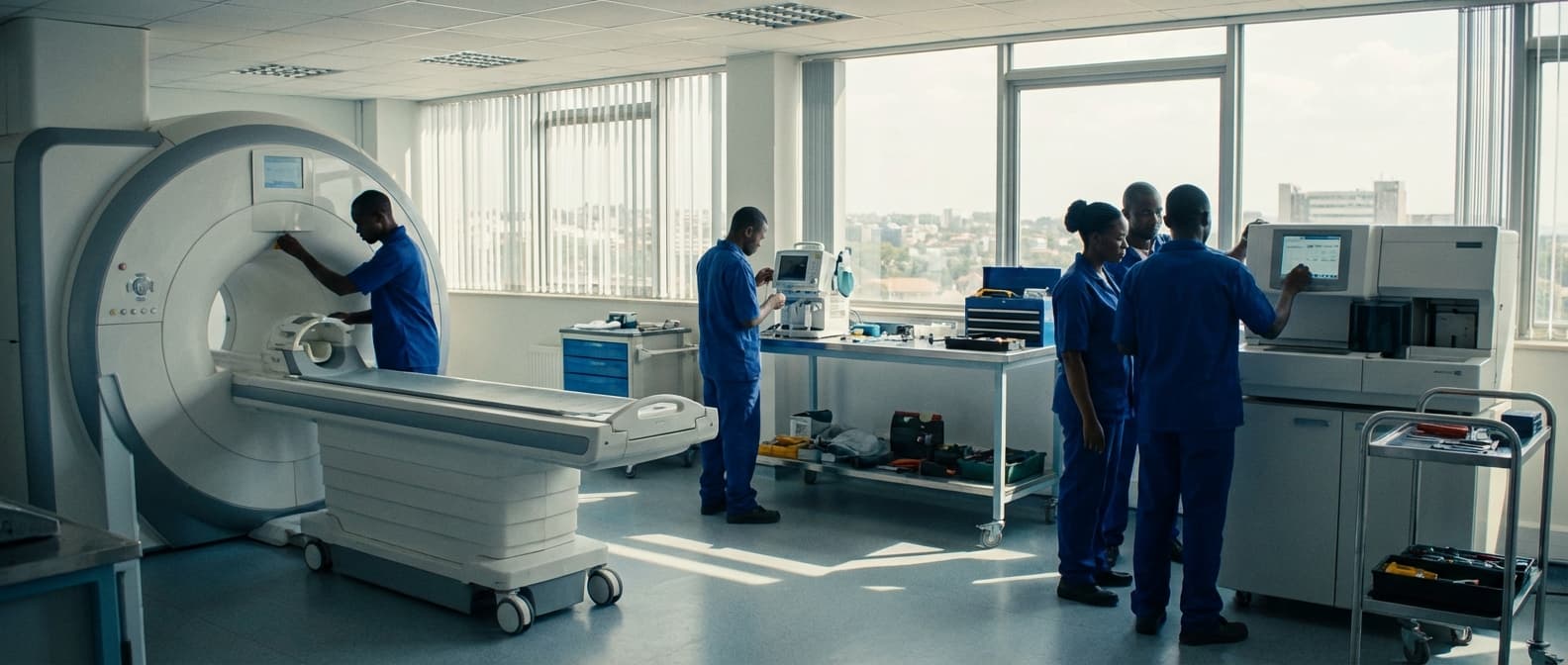
Comprehensive Maintenance Contract (CMC) Management Service (Parts & Labor) in Benin
Engineering Excellence & Technical Support
Comprehensive Maintenance Contract (CMC) Management Service (Parts & Labor) High-standard technical execution following OEM protocols and local regulatory frameworks.
Proactive Parts Procurement & Inventory Optimization
Leverage our advanced predictive analytics to forecast component needs, ensuring optimal stock levels of critical spare parts. This minimizes downtime by guaranteeing availability and reduces holding costs through efficient inventory management tailored to Benin's logistical landscape.
On-Demand Certified Technicians & Localized Expertise
Access a network of highly skilled and certified technicians strategically positioned across Benin. Our service guarantees rapid response times for all planned and unplanned labor needs, coupled with deep understanding of local operational environments and regulatory compliance.
Performance-Based Service Level Agreements (SLAs) & Cost Control
Benefit from transparent, performance-driven SLAs that align service delivery with your business objectives. Our CMC ensures predictable maintenance costs through bundled parts and labor, offering substantial savings and enhanced operational efficiency compared to ad-hoc solutions.
What Is Comprehensive Maintenance Contract (Cmc) Management Service (Parts & Labor) In Benin?
Comprehensive Maintenance Contract (CMC) Management Service (Parts & Labor) in Benin refers to a specialized service that oversees and executes maintenance operations for assets, encompassing both the provision of necessary spare parts and the labor required for their installation, repair, and upkeep. This service is designed to ensure the continuous functionality, optimal performance, and extended lifespan of various equipment and systems. It involves proactive and reactive maintenance strategies, inventory management of critical components, and skilled technical execution. The service aims to mitigate operational disruptions, control maintenance expenditures through predictable budgeting, and ensure compliance with manufacturers' specifications and regulatory standards. In Benin, this service is particularly relevant for organizations operating critical infrastructure, specialized machinery, or essential operational assets where downtime can have significant economic or safety implications.
| Who Needs CMC Management Service (Parts & Labor) in Benin? | Typical Use Cases |
|---|---|
| Industrial Manufacturing Facilities: Companies operating production lines, heavy machinery, and automation systems. | Maintenance of assembly lines, CNC machines, industrial boilers, and HVAC systems. |
| Energy & Utilities Sector: Power generation plants, water treatment facilities, and distribution networks. | Upkeep of turbines, generators, pumps, transformers, and control systems. |
| Telecommunications Infrastructure: Mobile network operators and internet service providers. | Maintenance of base stations, data centers, switching equipment, and transmission lines. |
| Healthcare Institutions: Hospitals and clinics with complex medical equipment. | Servicing of MRI machines, CT scanners, X-ray equipment, laboratory analyzers, and life support systems. |
| Transportation & Logistics: Airports, ports, and large fleet operators. | Maintenance of aircraft ground support equipment, cargo handling systems, and specialized vehicles. |
| Commercial & Residential Real Estate: Large building complexes and facilities management companies. | Upkeep of elevators, escalators, central air conditioning units, electrical systems, and plumbing. |
| Oil & Gas Sector: Exploration, production, and refining operations. | Maintenance of drilling equipment, pumps, pipelines, and processing units. |
| Government & Public Services: Municipal infrastructure, defense equipment, and public buildings. | Servicing of water distribution systems, waste management facilities, and specialized government assets. |
Key Components of CMC Management Service (Parts & Labor) in Benin:
- Preventive Maintenance: Scheduled inspections, servicing, and minor repairs to avert potential failures.
- Corrective Maintenance: Unscheduled repairs and troubleshooting to address immediate breakdowns and malfunctions.
- Spare Parts Management: Procurement, inventory control, warehousing, and logistics for all required spare parts, ensuring availability and quality.
- Labor Provision: Deployment of qualified and certified technicians, engineers, and support staff for all maintenance activities.
- Technical Support & Diagnostics: On-site and remote technical assistance, fault diagnosis, and root cause analysis.
- Performance Monitoring & Reporting: Tracking equipment performance, maintenance history, and generating detailed reports for analysis and decision-making.
- Warranty Management: Overseeing manufacturer warranties for both equipment and parts.
- Compliance & Safety: Ensuring all maintenance activities adhere to local regulations, industry standards, and safety protocols.
- Asset Lifecycle Management: Contributing to the overall management and optimization of the asset's operational life.
Who Needs Comprehensive Maintenance Contract (Cmc) Management Service (Parts & Labor) In Benin?
Comprehensive Maintenance Contract (CMC) Management Services, encompassing both parts and labor, are crucial for organizations in Benin that rely heavily on specialized equipment and machinery. These services ensure that critical assets are kept in optimal working condition, minimizing downtime, extending lifespan, and maintaining operational efficiency. The primary goal is to proactively manage all aspects of equipment maintenance, from routine checks and preventative measures to emergency repairs and the sourcing of necessary spare parts.
| Customer Type | Key Departments Requiring CMC Management | Why CMC Management is Crucial |
|---|---|---|
| Industrial Manufacturing Plants | Production, Operations, Engineering, Maintenance | Ensures continuous production, reduces costly breakdowns, optimizes machinery performance, and manages spare parts inventory efficiently. |
| Telecommunications Companies | Network Operations, Infrastructure Management, Technical Services | Guarantees network uptime and reliability, minimizes service disruptions for customers, and manages specialized communication equipment. |
| Power Generation and Distribution Utilities | Operations, Engineering, Maintenance, Grid Management | Critical for ensuring a stable and reliable power supply, preventing blackouts, and maintaining the longevity of power infrastructure. |
| Oil and Gas Exploration and Production | Operations, Technical Services, Field Maintenance, Supply Chain | Essential for the safe and efficient operation of complex and high-risk equipment, minimizing downtime in remote locations, and managing specialized parts. |
| Hospitals and Healthcare Facilities | Biomedical Engineering, Facilities Management, IT Department | Ensures the continuous availability of life-saving medical equipment, reduces patient care disruptions, and maintains regulatory compliance. |
| Commercial Real Estate | Facilities Management, Property Management, Technical Services | Maintains the functionality and appeal of buildings, ensures tenant satisfaction, and optimizes the performance of HVAC, elevators, and other critical systems. |
| Agricultural Cooperatives/Large Farms | Operations, Farm Management, Mechanical Maintenance | Ensures the readiness of agricultural machinery for planting and harvesting, reduces crop loss due to equipment failure, and manages specialized farming equipment. |
| Logistics and Transportation | Fleet Management, Operations, Maintenance | Maximizes vehicle uptime, reduces operational costs, ensures timely delivery, and manages the maintenance of specialized transport equipment. |
| Government Agencies | Infrastructure Management, Public Works, IT Services | Maintains essential public services, ensures the operational readiness of critical infrastructure, and optimizes the use of taxpayer-funded assets. |
| Educational Institutions | IT Department, Laboratories, Facilities Management | Ensures the functionality of advanced teaching and research equipment, supports academic activities, and maintains a safe learning environment. |
Target Customers for CMC Management Services in Benin
- Large Industrial Manufacturing Plants
- Telecommunications Companies
- Power Generation and Distribution Utilities
- Oil and Gas Exploration and Production Companies
- Hospitals and Large Healthcare Facilities
- Commercial Real Estate Developers and Operators
- Agricultural Cooperatives and Large-Scale Farms
- Logistics and Transportation Companies with Specialized Fleets
- Government Agencies with Critical Infrastructure
- Educational Institutions with Advanced Laboratories
Comprehensive Maintenance Contract (Cmc) Management Service (Parts & Labor) Process In Benin
This document outlines the comprehensive workflow for managing Comprehensive Maintenance Contracts (CMCs), encompassing both parts and labor, within the Beninese context. The service aims to provide seamless support for clients, ensuring their equipment remains operational and well-maintained throughout the contract period. The process is designed to be transparent, efficient, and customer-centric, from the initial inquiry to the final execution and closure of any maintenance activities.
| Stage Number | Stage Name | Description | Key Activities | Responsible Party | Output/Outcome |
|---|---|---|---|---|---|
| 1 | Inquiry and Initial Consultation | The process begins with a potential client expressing interest in CMC services. | Receive and document client inquiry, understand client's equipment, maintenance needs, and budget. Conduct initial assessment of client's site and existing equipment (if applicable). | Sales Team, Technical Sales Representative | Understanding of client's requirements, preliminary feasibility assessment. |
| 2 | Proposal Development and Negotiation | Based on the consultation, a tailored CMC proposal is created. | Define scope of services (preventive, corrective maintenance, spare parts coverage), service level agreements (SLAs), response times, pricing structure, and contract duration. Present proposal to client and address any queries. Negotiate terms and conditions. | Sales Team, Technical Experts, Legal Department | Agreed-upon proposal outlining CMC terms and conditions. |
| 3 | Contract Finalization and Signing | Formalizing the agreement between the service provider and the client. | Draft the official CMC agreement incorporating negotiated terms. Legal review of the contract. Obtain signatures from both parties. | Legal Department, Management, Client Representatives | Signed and executed Comprehensive Maintenance Contract. |
| 4 | Equipment Registration and Baseline Assessment | Documenting all equipment covered under the CMC. | Create a detailed inventory of client's equipment, including model numbers, serial numbers, purchase dates, and current condition. Conduct a thorough baseline assessment to identify any pre-existing issues. | Technical Team, Service Engineers | Comprehensive equipment register, baseline assessment report. |
| 5 | Preventive Maintenance Scheduling and Execution | Proactive maintenance to prevent breakdowns. | Develop a preventive maintenance schedule based on equipment manufacturer recommendations and usage patterns. Communicate schedule to client. Conduct scheduled inspections, cleaning, lubrication, and minor repairs. Provide detailed reports. | Service Engineers, Maintenance Technicians | Scheduled preventive maintenance completed, maintenance reports, reduced risk of breakdowns. |
| 6 | Corrective Maintenance (Breakdown) Management | Responding to equipment failures and issues. | Receive and log client's breakdown report. Dispatch technicians based on SLA. Diagnose the issue. Plan and execute repairs. Document all activities and parts used. Ensure client sign-off on completed repairs. | Service Dispatch, Technical Team, Service Engineers | Equipment repaired and returned to operational status, service completion reports. |
| 7 | Parts Procurement and Inventory Management | Ensuring availability of necessary spare parts. | Maintain an inventory of commonly used spare parts. Procure parts from authorized suppliers based on demand and contract scope. Manage stock levels to minimize downtime. Track part usage and costs. | Procurement Department, Inventory Manager, Service Technicians | Sufficient spare parts available, cost-effective procurement, reduced lead times. |
| 8 | Labor Resource Allocation and Deployment | Assigning qualified personnel for maintenance tasks. | Maintain a roster of skilled and certified technicians. Assign technicians based on expertise, availability, and location for preventive and corrective maintenance. Ensure adequate training and supervision. | Service Manager, Team Leads | Qualified technicians deployed efficiently, timely service delivery. |
| 9 | Service Reporting and Documentation | Maintaining accurate records of all maintenance activities. | Generate detailed reports for each maintenance activity (preventive and corrective). Include details of work performed, parts used, technician involved, time taken, and client feedback. Maintain an electronic record of all service history. | Service Engineers, Administrative Staff | Comprehensive service history, audit trail, performance tracking documentation. |
| 10 | Invoicing and Payment Processing | Managing the financial aspects of the contract. | Generate invoices based on contract terms (e.g., monthly, quarterly, per service). Process payments received from clients. Reconcile invoices with payments. | Finance Department, Accounts Receivable | Accurate invoicing, timely payments received, financial records maintained. |
| 11 | Contract Review and Renewal | Evaluating contract performance and planning for the future. | Conduct periodic reviews of contract performance against SLAs. Discuss any changes in client's needs or equipment. Propose renewal terms and negotiate new contract if applicable. | Account Manager, Sales Team, Management | Contract performance review, renewed or amended contract, customer retention. |
| 12 | Customer Feedback and Performance Evaluation | Gathering feedback to improve services. | Solicit feedback from clients on service quality and satisfaction. Analyze feedback to identify areas for improvement. Implement corrective actions to enhance service delivery and customer experience. | Customer Service, Management | Customer satisfaction data, service improvement initiatives, enhanced client relationships. |
Key Stages of CMC Management Service (Parts & Labor) in Benin
- Inquiry and Initial Consultation
- Proposal Development and Negotiation
- Contract Finalization and Signing
- Equipment Registration and Baseline Assessment
- Preventive Maintenance Scheduling and Execution
- Corrective Maintenance (Breakdown) Management
- Parts Procurement and Inventory Management
- Labor Resource Allocation and Deployment
- Service Reporting and Documentation
- Invoicing and Payment Processing
- Contract Review and Renewal
- Customer Feedback and Performance Evaluation
Comprehensive Maintenance Contract (Cmc) Management Service (Parts & Labor) Cost In Benin
Managing Comprehensive Maintenance Contracts (CMC) for parts and labor in Benin involves a range of costs influenced by several critical factors. These contracts are essential for ensuring the longevity and optimal performance of equipment and infrastructure. The pricing is not static and can vary significantly based on the complexity of the equipment, the duration of the contract, the level of service required, and the vendor's expertise and reputation.
| Equipment Category (Examples) | Estimated Annual Cost Range (CFA Francs BCEAO - XOF) | Notes |
|---|---|---|
| Standard Office Equipment (Printers, Photocopiers, PCs) | 150,000 - 500,000 XOF | Basic preventive maintenance and on-call repairs. Parts may be an additional cost for significant failures. |
| Mid-Range IT Infrastructure (Servers, Network Devices) | 300,000 - 1,500,000 XOF | Includes preventive checks, firmware updates, and on-site support. May or may not include replacement parts depending on the SLA. |
| Industrial Machinery (Generators, Manufacturing Equipment) | 1,000,000 - 10,000,000+ XOF | Highly dependent on machine complexity, criticality, and required downtime. Often includes extensive preventive maintenance, priority repairs, and critical spare parts. |
| Medical Equipment (Diagnostic Machines, Imaging Devices) | 800,000 - 5,000,000+ XOF | Requires specialized technicians and strict adherence to calibration and safety standards. Parts can be very expensive and have long lead times. |
| Vehicles (Fleet Maintenance - Trucks, Buses) | 200,000 - 800,000 XOF per vehicle | Covers routine servicing, inspections, and some repair labor. Parts are often negotiated separately or on a per-incident basis, depending on the contract. |
Key Pricing Factors for CMC (Parts & Labor) in Benin
- Type and Complexity of Equipment: Specialized, high-tech, or industrial machinery will naturally command higher CMC costs than simpler, more common equipment. The availability and cost of replacement parts in Benin also play a significant role.
- Duration of the Contract: Longer-term contracts often come with slightly reduced annual rates compared to shorter ones. This reflects the vendor's commitment and the reduced administrative overhead over time.
- Scope of Services: The extent of coverage is a primary driver. Will the CMC include preventive maintenance only, or will it cover both preventive and corrective maintenance (i.e., repairs)? What is the response time for service calls? Is 24/7 support included?
- Level of Technician Expertise: Contracts requiring highly specialized technicians with advanced certifications or specific training will be priced higher.
- Geographic Location and Accessibility: For sites located in remote or less accessible areas of Benin, transportation costs for technicians and parts will increase the overall price.
- Downtime Penalties/Service Level Agreements (SLAs): Contracts with stringent SLAs and penalties for downtime will typically have higher upfront costs to reflect the vendor's increased risk and commitment.
- Inclusions (Parts vs. Exclusions): Clearly defining whether all parts are covered, or if certain high-wear items are excluded, is crucial. The cost of importing specialized parts can also be a factor.
- Vendor's Reputation and Experience: Established vendors with a proven track record and strong client testimonials may command premium pricing.
- Volume of Equipment: For clients with a large number of similar equipment, bulk discounts might be negotiable.
- Annual Inflation and Exchange Rates: For contracts denominated in foreign currencies or with clauses for adjustments, inflation and fluctuating exchange rates will impact the final cost in local currency (CFA Franc BCEAO - XOF).
Affordable Comprehensive Maintenance Contract (Cmc) Management Service (Parts & Labor) Options
Managing maintenance contracts for your equipment can be a complex and costly endeavor. Our Affordable Comprehensive Maintenance Contract (CMC) Management Service offers a streamlined solution to ensure your assets are well-maintained, minimizing downtime and maximizing their lifespan, all while keeping costs in check. We provide a robust platform for managing all aspects of your CMCs, including parts and labor coverage, offering flexible value bundles and implementing effective cost-saving strategies.
| Value Bundle Tier | Included Services | Typical Equipment Scope | Cost-Saving Strategies Highlighted | Estimated Cost Savings Potential (Annual) |
|---|---|---|---|---|
| Bronze Essentials | Basic PM, Reactive Repair Management, Contract Renewal Reminders | Lower-value/standard equipment, non-critical assets | Bulk purchasing discounts (negotiated with vendors), preventative maintenance scheduling to avoid emergency repairs | 5-10% |
| Silver Standard | Bronze + Advanced PM, Vendor Performance Tracking, Basic Parts Inventory | Mid-range equipment, moderately critical assets | Optimized spare parts inventory, multi-year contract negotiation, standardized repair procedures | 10-15% |
| Gold Premium | Silver + Proactive Maintenance Analytics, Full Parts & Labor Oversight, Cost Trend Analysis, SLA Enforcement | High-value/critical equipment, mission-critical assets | Predictive maintenance integration, strategic vendor partnerships, lifecycle cost analysis, service level agreement (SLA) penalties for underperformance | 15-25%+ |
| Custom Solutions | Tailored to specific client needs, can include any combination of services | All equipment types and criticality levels | Flexible, client-driven cost optimization based on unique operational requirements and risk tolerance | Varies based on customization |
Key Features and Benefits
- Centralized Contract Management: Consolidate all your CMC agreements into a single, easy-to-access platform.
- Proactive Maintenance Scheduling: Preventative maintenance to avoid costly breakdowns.
- Vendor Performance Monitoring: Ensure service providers meet agreed-upon SLAs.
- Cost Analysis & Optimization: Identify areas for potential savings and negotiate better terms.
- Inventory Management: Track spare parts and optimize stock levels.
- Downtime Reduction: Minimize disruptions to your operations.
- Extended Equipment Lifespan: Proper maintenance safeguards your investments.
- Compliance Assurance: Maintain adherence to manufacturer recommendations and regulatory requirements.
- Parts & Labor Coverage: Comprehensive protection against repair and replacement costs.
- Dedicated Account Management: Expert support to guide you through the process.
Verified Providers In Benin
When seeking reliable healthcare services in Benin, identifying verified providers is paramount. Franance Health stands out as a premier choice due to its stringent credentialing process and commitment to quality. This verification ensures that healthcare professionals and facilities meet high standards of education, training, and ethical practice, providing patients with peace of mind and access to exceptional care.
| Provider Type | Franance Health Verification Criteria | Benefits to Patients |
|---|---|---|
| Doctors (General Practitioners & Specialists) | Valid medical license, recognized medical degree, board certification (where applicable), clean disciplinary record, peer review assessment. | Accurate diagnosis, effective treatment plans, access to specialized medical knowledge, safe medical procedures. |
| Nurses | Registered Nurse (RN) or equivalent license, relevant training and certifications, background checks. | Compassionate care, skilled assistance with medical treatments, patient education, monitoring of health status. |
| Hospitals & Clinics | Accreditation by recognized health bodies, compliance with safety regulations, availability of essential equipment and facilities, qualified medical staff. | Comprehensive medical services, a safe and hygienic environment, access to advanced diagnostic and treatment technologies, coordinated care. |
| Laboratories & Diagnostic Centers | Licensing and permits, quality control measures, qualified technicians and pathologists, adherence to testing protocols. | Accurate and reliable test results, timely diagnosis, effective disease management. |
Why Franance Health Credentials Matter:
- Rigorous Vetting: Franance Health employs a comprehensive vetting process for all affiliated providers, scrutinizing educational backgrounds, licenses, and professional experience.
- Commitment to Quality: Verified providers are dedicated to upholding the highest standards of medical care, patient safety, and ethical conduct.
- Enhanced Patient Trust: The Franance Health credential signifies a provider who has met established benchmarks, fostering greater trust and confidence among patients.
- Access to Expertise: By partnering with verified professionals, Franance Health ensures its network comprises skilled and knowledgeable healthcare practitioners across various specialties.
- Continuous Improvement: Franance Health encourages and supports its providers in ongoing professional development and adherence to evolving best practices.
Scope Of Work For Comprehensive Maintenance Contract (Cmc) Management Service (Parts & Labor)
This document outlines the Scope of Work (SOW) for a Comprehensive Maintenance Contract (CMC) Management Service. This service includes the management of all aspects related to maintaining critical equipment and infrastructure, encompassing both the procurement and management of spare parts and the oversight of labor services. The objective is to ensure optimal equipment uptime, longevity, and performance through proactive and reactive maintenance strategies, while adhering to established technical deliverables and standard specifications.
| Category | Description | Technical Deliverables | Standard Specifications | |||||
|---|---|---|---|---|---|---|---|---|
| Parts Management | Procurement, inventory, stocking, and management of spare parts for covered equipment. Includes identification of critical spares, setting reorder points, and managing obsolescence. | Accurate parts inventory records (digital/physical). | Minimum stock levels defined for critical spares. | Just-in-Time (JIT) delivery for non-critical spares. | Compliance with manufacturer part numbers and specifications. | Certified genuine parts or equivalent with documented approval. | Traceability of part origin and batch numbers. | Proper storage conditions (temperature, humidity, ESD protection). |
| Labor Management | Oversight of internal and external labor resources for maintenance activities. Includes scheduling, supervision, performance evaluation, and training. | Qualified and certified technicians for specific equipment types. | Defined response times for planned and unplanned maintenance. | Scheduled preventive maintenance (PM) tasks completed on time. | Root Cause Analysis (RCA) reports for recurring failures. | Labor hour tracking and reporting per task. | Adherence to established safety protocols and work permits. | Performance metrics for labor efficiency and effectiveness. |
| Preventive Maintenance (PM) | Execution of scheduled maintenance tasks to prevent failures and ensure optimal performance. Includes inspections, lubrication, cleaning, adjustments, and calibration. | Completed PM checklists with date, technician, and findings. | Manufacturer's recommended PM schedule adherence (e.g., hourly, daily, weekly, monthly, annually). | Calibration certificates for measuring instruments. | Lubrication schedules and material usage records. | Visual inspection reports. | Functional testing reports post-PM. | |
| Corrective Maintenance (CM) | Response to equipment breakdowns and failures. Includes troubleshooting, diagnosis, repair, and testing. | Defined Mean Time To Repair (MTTR) targets. | 24/7 availability for critical equipment failures. | Detailed incident reports including fault description, diagnosis, repair actions, and resolution time. | Use of approved diagnostic tools and procedures. | Testing and validation of repairs. | Post-repair performance verification. | |
| Predictive Maintenance (PdM) & Condition Monitoring | Proactive monitoring of equipment health to predict potential failures. Includes vibration analysis, thermal imaging, oil analysis, etc. | Regularly scheduled condition monitoring activities. | Trend analysis reports of equipment parameters. | Early warning notifications for potential failures. | Actionable recommendations based on PdM data. | Integration of PdM data with CMMS for proactive planning. | ||
| Reporting & Documentation | Regular reporting on maintenance activities, costs, equipment status, and performance metrics. Includes maintaining comprehensive maintenance records. | Monthly/Quarterly/Annual maintenance reports. | Equipment history logs (maintenance, repairs, parts used). | Cost analysis reports (parts, labor, external services). | Uptime/Downtime reports. | Compliance reports (safety, regulatory). | Asset register management. | Service Level Agreement (SLA) performance reports. |
| Vendor Management | Selection, contracting, and performance management of third-party service providers for maintenance and parts supply. | Approved vendor list with performance evaluations. | Clear scope of work and service level agreements with vendors. | Regular vendor performance reviews. | Invoice verification and payment processing. | Contract renewals and renegotiations. | ||
| Safety & Compliance | Ensuring all maintenance activities are performed in a safe and compliant manner, adhering to relevant regulations and standards. | Implementation and enforcement of safety policies and procedures. | Regular safety training for maintenance personnel. | Work permit system in place. | Compliance with industry-specific regulations (e.g., electrical, mechanical, environmental). | Accident and incident investigation reports. | Fire safety and emergency preparedness checks. | |
| Continuous Improvement | Proactive identification of opportunities to improve maintenance processes, reduce costs, and enhance equipment reliability. | Regular review of maintenance performance data. | Implementation of lessons learned from incidents. | Benchmarking against industry best practices. | Feedback mechanisms for end-users and technicians. | Kaizen or Lean initiatives applied to maintenance operations. |
Key Objectives of CMC Management Service
- Minimize equipment downtime and maximize operational availability.
- Ensure compliance with manufacturer's recommended maintenance schedules and procedures.
- Control maintenance costs through efficient parts inventory management and labor resource allocation.
- Enhance equipment reliability and lifespan through preventive and predictive maintenance.
- Maintain a safe working environment by ensuring all maintenance activities adhere to safety standards.
- Provide clear and regular reporting on maintenance activities, costs, and equipment performance.
- Facilitate timely resolution of equipment failures and performance issues.
- Manage vendor performance and ensure adherence to contractual obligations.
Service Level Agreement For Comprehensive Maintenance Contract (Cmc) Management Service (Parts & Labor)
This Service Level Agreement (SLA) outlines the response times and uptime guarantees for the Comprehensive Maintenance Contract (CMC) Management Service, encompassing both parts and labor. This SLA is an integral part of the overall CMC Management Service contract between [Your Company Name] ('Service Provider') and [Client Company Name] ('Client').
| Incident Severity | Response Time (Acknowledgement) | Resolution Target | Uptime Guarantee |
|---|---|---|---|
| Critical Incident | 1 Hour (during Service Hours) | 4 Business Hours (for Workaround) | 99.5% (Monthly) |
| Major Incident | 2 Business Hours (during Service Hours) | 8 Business Hours (for Resolution) | 99.7% (Monthly) |
| Minor Incident | 4 Business Hours (during Service Hours) | 2 Business Days (for Resolution) | 99.9% (Monthly) |
Key Definitions
- Service Hours: The hours during which support and maintenance services are available, typically Monday to Friday, 9:00 AM to 5:00 PM [Client's Time Zone], excluding national holidays.
- Critical Incident: An event that renders the covered equipment/system entirely inoperable, causing a complete loss of essential functionality and significant business impact.
- Major Incident: An event that significantly degrades the performance or functionality of the covered equipment/system, impacting a substantial portion of its intended use but not rendering it entirely inoperable.
- Minor Incident: An event that causes minor functional issues or cosmetic defects with the covered equipment/system, with limited impact on overall operational efficiency.
- Resolution: The successful restoration of the covered equipment/system to its agreed-upon operating condition, resolving the reported incident.
- Workaround: A temporary solution that allows the covered equipment/system to resume partial functionality while a permanent resolution is developed.
- Uptime: The percentage of time the covered equipment/system is operational and accessible to the Client, as measured against agreed-upon operating hours.
- Downtime: The percentage of time the covered equipment/system is not operational or accessible, excluding scheduled maintenance.
Frequently Asked Questions

Ready when you are
Let's scope your Comprehensive Maintenance Contract (CMC) Management Service (Parts & Labor) in Benin project in Benin.

Scaling healthcare logistics and technical systems across the entire continent.