
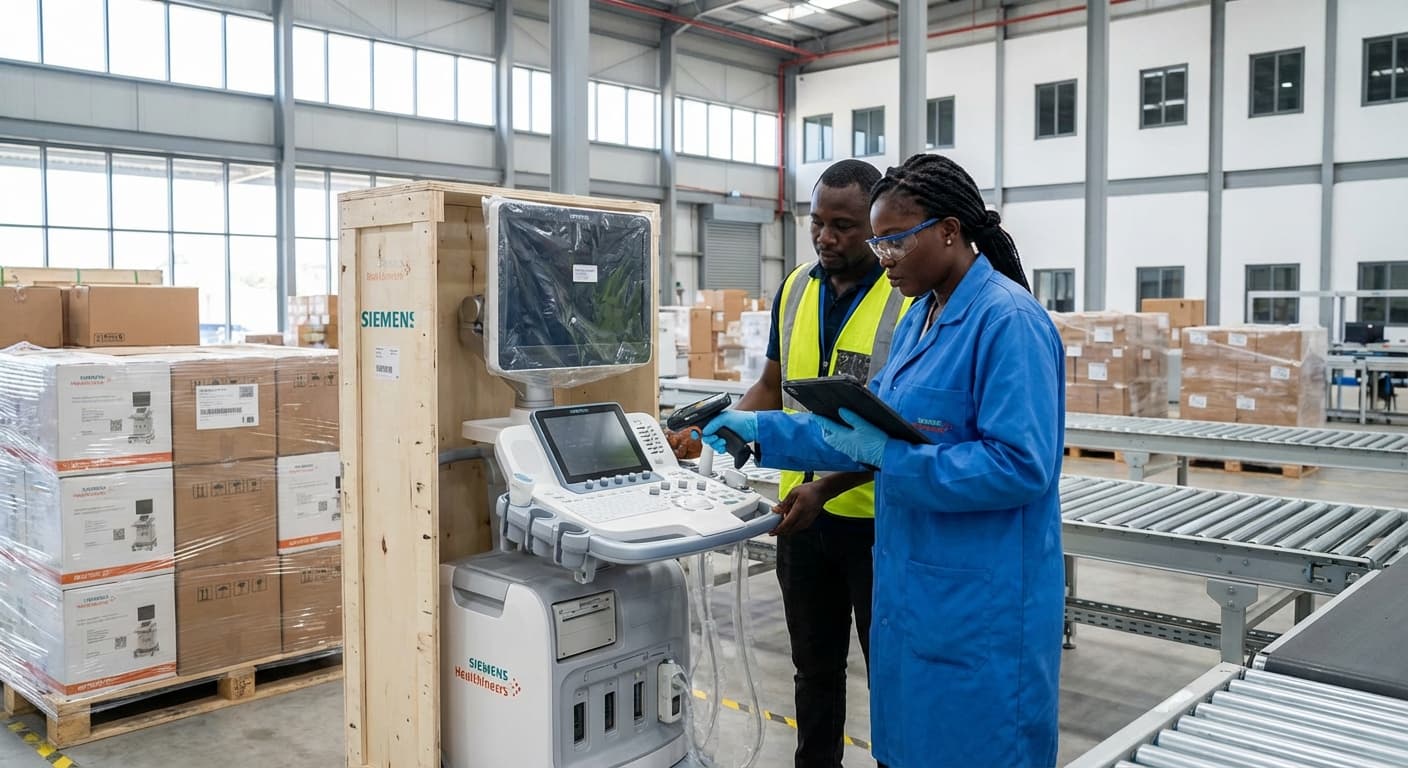
Warehouse Receiving Inspection Service (Medical Equipment) in Benin
Engineering Excellence & Technical Support
Warehouse Receiving Inspection Service (Medical Equipment) High-standard technical execution following OEM protocols and local regulatory frameworks.
Advanced Quality Control & Compliance
Leveraging stringent, multi-point inspection protocols aligned with international medical equipment standards, our service ensures every item arriving in Benin meets rigorous quality benchmarks and regulatory compliance requirements before entering your inventory. This minimizes risk and upholds patient safety.
Real-time Supply Chain Visibility
Gain immediate insights into your medical equipment shipments from origin to our receiving bay. Our integrated tracking system provides real-time updates, detailed inspection reports, and photographic evidence, empowering informed decision-making and efficient inventory management in Benin.
Specialized Medical Equipment Expertise
Our team comprises certified technicians and inspectors with extensive experience in handling and scrutinizing a wide range of medical equipment. We possess the technical acumen to identify subtle defects, verify calibration, and confirm functional integrity, safeguarding the quality of critical healthcare assets in Benin.
What Is Warehouse Receiving Inspection Service (Medical Equipment) In Benin?
Warehouse Receiving Inspection Service (Medical Equipment) in Benin refers to a critical quality control process undertaken upon the arrival of medical equipment at a designated warehouse or distribution center within Benin. This service is designed to verify that received medical equipment conforms to predetermined specifications, regulatory requirements, and contractual agreements before it is accepted into inventory and subsequently distributed. The inspection process aims to mitigate risks associated with defective, damaged, counterfeit, or non-compliant medical devices, thereby safeguarding public health and ensuring operational efficiency of healthcare facilities. It plays a pivotal role in supply chain integrity within the healthcare sector of Benin.
| Who Needs the Service | Typical Use Cases | ||||
|---|---|---|---|---|---|
| Healthcare Providers: Hospitals, clinics, diagnostic centers, and other healthcare facilities that procure medical equipment directly or through government tenders. | Medical Equipment Importers/Distributors: Companies that import medical devices into Benin for subsequent sale and distribution to end-users. | Government Procurement Agencies: Ministries of Health, public health institutions, and other government bodies responsible for the acquisition and distribution of medical equipment for public healthcare infrastructure. | Non-Governmental Organizations (NGOs) and International Aid Agencies: Organizations involved in providing medical equipment to Benin through donations, aid programs, or project-based initiatives. | Manufacturers' Representatives and Agents: Entities acting on behalf of international medical equipment manufacturers within Benin. | |
| Importation of new medical devices: Ensuring that all imported medical equipment meets quality standards and regulatory requirements before entering the national healthcare system. | Procurement of high-value or critical medical equipment: Implementing rigorous inspection for life-support systems, diagnostic imaging equipment, surgical instruments, and other sensitive devices. | Receiving equipment from government tenders or bulk purchases: Verifying the integrity and conformity of large consignments of medical supplies. | Acceptance of donated medical equipment: Ensuring that donated items are functional, safe, and appropriate for the intended use. | Post-shipment damage assessment: Documenting any damage that may have occurred during transit for insurance claims or supplier recourse. | Maintaining supply chain integrity and preventing the entry of substandard or counterfeit medical products: Upholding the safety and efficacy of medical interventions. |
Key Components of Warehouse Receiving Inspection Service (Medical Equipment) in Benin
- Documentation Verification: Scrutiny of accompanying documentation, including purchase orders, invoices, packing lists, certificates of origin, quality certificates (e.g., CE marking, ISO certifications), and import permits. This ensures that the delivered goods match the ordered specifications and are legally permissible for import and use.
- Physical Inspection: A thorough visual examination of the packaging and the equipment itself. This includes checking for signs of damage incurred during transit (e.g., crushed boxes, torn packaging), tamper-evident seals, and the overall physical integrity of the equipment. For unpackaged items, direct examination of the equipment's surface, components, and build quality is performed.
- Identification and Labeling Verification: Confirming that the equipment's labeling, including model numbers, serial numbers, manufacturer details, and regulatory markings, accurately corresponds to the documentation and the product itself. This is crucial for traceability and recall management.
- Quantity and Lot/Batch Number Verification: Cross-referencing the received quantities against the packing list and purchase order. Verification of lot or batch numbers is essential for tracking and in the event of recalls or quality issues.
- Basic Functional Testing (where applicable): For certain types of equipment, a preliminary functional check might be performed to ensure the device powers on, basic operations are feasible, and no immediate malfunctions are apparent. This is typically limited in scope at the receiving stage and may be followed by more comprehensive validation testing.
- Compliance Check: Assessing adherence to any specific Benin-mandated standards, regulations, or guidelines pertaining to medical equipment, including those issued by the Ministry of Health or relevant regulatory bodies.
- Environmental Condition Assessment: Evaluating the conditions under which the equipment was stored or transported, if visible, to ensure it was not exposed to extreme temperatures, humidity, or other factors that could compromise its integrity or performance.
Who Needs Warehouse Receiving Inspection Service (Medical Equipment) In Benin?
Warehouse receiving inspection service for medical equipment in Benin is crucial for ensuring the quality, safety, and compliance of incoming medical devices. This service plays a vital role in protecting public health and optimizing healthcare infrastructure within the country. By verifying that medical equipment meets specified standards, functions correctly, and arrives in good condition, these services mitigate risks associated with faulty or substandard equipment, which can have severe consequences in a healthcare setting. The service is particularly important given the increasing demand for medical equipment in Benin and the need to maintain trust in the healthcare system.
| Customer Type | Specific Needs & Benefits of Inspection Service | Key Departments Involved |
|---|---|---|
| Hospitals (Public & Private) | Ensuring patient safety, preventing equipment failures during critical procedures, compliance with international standards, extended equipment lifespan, reduced repair costs. Prevents costly recalls or replacement of faulty equipment. | Biomedical Engineering, Procurement, Quality Assurance, Clinical Departments |
| Clinics and Health Centers | Access to reliable and safe diagnostic and treatment tools, cost-effectiveness through early detection of defects, improved service delivery, compliance with national health regulations. | Management, Procurement, Technical Staff |
| Medical Equipment Distributors & Suppliers | Verification of imported goods against purchase orders, ensuring product integrity during transit, building trust with clients, fulfilling contractual obligations, minimizing warranty claims due to shipping damage. | Logistics, Quality Control, Sales, Warehouse Management |
| Government Procurement Agencies (Ministry of Health) | Ensuring public funds are used for quality equipment, safeguarding public health, compliance with national and international procurement laws, preventing corruption or substandard acquisitions, establishing a reliable national medical inventory. | Procurement Department, Technical Evaluation Committees, Quality Assurance Unit |
| NGOs & International Aid Organizations | Maximizing the impact of donated or purchased equipment in underserved areas, ensuring the longevity and effectiveness of medical aid, accountability for donor funds, compliance with project specifications and grant requirements. | Program Management, Logistics, Procurement, Field Operations |
| Research & Diagnostic Laboratories | Guaranteeing the accuracy and reliability of diagnostic results, ensuring the proper functioning of sophisticated scientific equipment, compliance with research protocols and quality standards. | Laboratory Management, Procurement, Technical Staff |
Who Needs Warehouse Receiving Inspection Service (Medical Equipment) in Benin?
- {"items":["Hospitals (Public and Private)","Clinics and Health Centers","Medical Equipment Distributors and Suppliers","Government Procurement Agencies (Ministry of Health)","Non-Governmental Organizations (NGOs) involved in healthcare","International Aid Organizations","Research and Diagnostic Laboratories","Medical Training Institutions"],"title":"Target Customers"}
- {"items":["Procurement and Supply Chain Management","Medical Equipment Maintenance and Biomedical Engineering","Quality Assurance and Regulatory Affairs","Warehouse and Inventory Management","Clinical Departments (requiring specific equipment)","Finance and Budgeting (for cost control and loss prevention)"],"title":"Key Departments within Organizations"}
Warehouse Receiving Inspection Service (Medical Equipment) Process In Benin
This document outlines the workflow for the Warehouse Receiving Inspection Service of Medical Equipment in Benin, from initial inquiry to the successful execution of the inspection. The process is designed to ensure the quality, safety, and compliance of medical equipment upon arrival at the warehouse, adhering to relevant national and international standards.
| Stage | Activity | Responsible Party | Key Deliverables/Outcomes | Notes/Considerations |
|---|---|---|---|---|
| Client (e.g., importer, manufacturer, healthcare facility) submits an inquiry for warehouse receiving inspection of medical equipment. | Client, Inspection Service Provider | Detailed inquiry with equipment type, quantity, origin, shipping details, and expected arrival date; Provisional quotation based on inquiry. | Ensure clear understanding of client's specific needs and the scope of inspection. Initial communication should be prompt. |
| Inspection Service Provider reviews inquiry, confirms scope and requirements, and provides a formal quotation. Upon acceptance, an agreement or contract is signed. | Inspection Service Provider, Client | Formal quotation, Signed agreement/contract, Agreed inspection date and time. | Clearly define terms, conditions, fees, and liabilities. Confirm availability of inspection personnel and resources. |
| Inspection Service Provider assigns an inspection team, prepares inspection checklists based on equipment type and relevant standards (e.g., WHO, ISO, national regulations), and gathers necessary equipment (e.g., measurement tools, testing devices). | Inspection Service Provider | Assigned inspection team, Tailored inspection checklists, Calibrated inspection tools. | Thorough preparation is crucial for efficiency and accuracy. Ensure inspectors are familiar with the specific medical equipment being inspected. |
| Upon equipment arrival at the designated warehouse, the inspection team conducts the physical and technical inspection. | Inspection Team (from Inspection Service Provider), Warehouse Staff, Client Representative (optional) | Visual inspection (packaging, labeling, physical condition), Documentation review (certificates, manuals, invoices), Functional testing (if applicable), Quality checks, Identification of non-conformities. | Ensure safe access to the equipment. Maintain clear communication with warehouse staff. Document all findings meticulously with photographic evidence. |
| The inspection team compiles a comprehensive inspection report detailing all findings, including any non-conformities or deviations from specifications and standards. The report is reviewed and approved. | Inspection Team, Inspection Service Provider Management | Draft inspection report, Final approved inspection report with recommendations. | Reports should be objective, factual, and clearly state any identified issues. Recommendations should be actionable. Timely delivery of the report is important. |
| The Inspection Service Provider communicates the report to the client. If non-conformities are identified, follow-up inspections may be required after corrective actions are taken by the client. The service is formally closed upon client acceptance of the report. | Inspection Service Provider, Client | Report distribution, Resolution of non-conformities, Final confirmation of service completion. | Maintain good client relations. Offer guidance on addressing non-conformities. Ensure all administrative and financial aspects are settled. |
Key Stages of the Warehouse Receiving Inspection Service Process
- Inquiry and Quotation
- Agreement and Scheduling
- Pre-Inspection Preparation
- On-Site Inspection Execution
- Reporting and Documentation
- Follow-up and Closure
Warehouse Receiving Inspection Service (Medical Equipment) Cost In Benin
The cost of warehouse receiving inspection services for medical equipment in Benin can vary significantly due to several influencing factors. These services are crucial to ensure the quality, safety, and compliance of incoming medical devices before they enter a healthcare facility's inventory. The pricing typically depends on the scope of the inspection, the type and complexity of the medical equipment, the volume of items, the location of the warehouse, and the reputation and experience of the inspection service provider.
Key Pricing Factors:
- Scope of Inspection: A basic visual inspection will be less expensive than a comprehensive inspection that includes functional testing, calibration checks, verification of accessories, documentation review (manuals, certificates), and verification of packaging integrity. Specialized tests for sensitive or high-risk equipment will also increase costs.
- Type and Complexity of Equipment: Inspecting simple consumables will be priced differently than inspecting complex diagnostic imaging machines, surgical robots, or intricate laboratory instruments. The need for specialized tools, expertise, and time for each item directly impacts the cost.
- Volume of Equipment: Inspection services often employ tiered pricing. A higher volume of equipment to be inspected may lead to a lower per-unit cost due to economies of scale. Conversely, inspecting a single, high-value item might involve a minimum service fee.
- Provider's Reputation and Expertise: Established inspection firms with a proven track record, certifications (e.g., ISO 9001), and specialized personnel in medical equipment will generally charge more than smaller, less experienced providers.
- Location of Warehouse: The geographical accessibility and remoteness of the warehouse can influence transportation costs for inspectors and the availability of specialized resources, potentially affecting the overall price.
- Urgency of Service: Expedited inspection services, requiring immediate deployment or work outside standard hours, will typically incur additional charges.
- Reporting Requirements: The level of detail and format of the inspection report can also be a factor. Detailed reports with photographic evidence, specific test results, and recommendations will be more comprehensive and potentially more costly.
Cost Ranges (Estimates in West African CFA Franc - XOF):
It's challenging to provide exact figures without a detailed scope, but general estimates for warehouse receiving inspection services for medical equipment in Benin can range from 25,000 XOF to 250,000 XOF or more per inspection or per batch, depending on the complexity and volume. For very large or specialized projects, costs can escalate significantly.
- Basic Visual Inspection (small items, low volume): 25,000 - 75,000 XOF
- Standard Inspection (moderate complexity, medium volume): 75,000 - 150,000 XOF
- Comprehensive/Specialized Inspection (complex equipment, high volume, critical items): 150,000 - 250,000+ XOF
It is highly recommended to obtain detailed quotes from multiple reputable inspection service providers in Benin, clearly outlining the scope of work, equipment details, and desired outcomes to ensure accurate pricing.
| Inspection Type / Scope | Estimated Cost Range (XOF) | Description |
|---|---|---|
| Basic Visual Inspection (Low Volume) | 25,000 - 75,000 | Focuses on external condition, identification, and basic packaging checks. |
| Standard Inspection (Moderate Volume/Complexity) | 75,000 - 150,000 | Includes visual checks, basic functional verification (if applicable), and documentation review. |
| Comprehensive/Specialized Inspection (High Volume/Complex Equipment) | 150,000 - 250,000+ | Involves detailed functional testing, calibration checks, critical component verification, and in-depth documentation review. Costs can escalate significantly for very complex or high-risk medical devices. |
Factors Influencing Warehouse Receiving Inspection Costs for Medical Equipment in Benin
- Scope of Inspection (Visual, Functional, Calibration, Documentation)
- Type and Complexity of Medical Equipment
- Volume of Equipment Being Inspected
- Reputation and Certifications of the Inspection Provider
- Location and Accessibility of the Warehouse
- Urgency and Turnaround Time Required
- Detailed Reporting Requirements
Affordable Warehouse Receiving Inspection Service (Medical Equipment) Options
This document outlines affordable warehouse receiving inspection services specifically for medical equipment. We understand the critical nature of these goods and the need for meticulous inspection without breaking the bank. This guide explores cost-effective options, highlights the benefits of value bundles, and provides actionable cost-saving strategies to ensure your medical equipment supply chain remains efficient and compliant.
| Service Tier | Typical Services Included | Value Proposition | Cost-Saving Strategies |
|---|---|---|---|
| Basic Inspection | Visual inspection for damage, verification of part numbers/quantities against shipping documents, basic functional checks (if applicable). | Ideal for standard, low-risk equipment or as a first-pass screening. | Bundle with other logistics services; negotiate volume discounts; utilize on-demand services for lower frequency needs. |
| Standard Inspection | Includes Basic Inspection plus detailed functional testing (where feasible), documentation review (certificates of conformity, etc.), and basic calibration checks. | Suitable for most medical devices and equipment requiring more thorough verification. | Pre-negotiate tiered pricing based on inspection complexity and volume; remote inspection support for less critical checks; cross-train internal staff for basic verification tasks. |
| Premium/Specialized Inspection | Includes Standard Inspection plus in-depth performance testing, specialized calibration, compatibility checks, review of sterilization records, and advanced documentation verification. | Essential for high-value, complex, or regulated medical equipment. | Establish long-term contracts with preferred vendors for consistent pricing; leverage technology for automated data capture and analysis; consider outsourcing only specialized inspections while performing routine checks internally. |
| Value Bundle: Integrated Supply Chain Assurance | Combines receiving inspection with warehousing, inventory management, and light assembly/kitting services. | Streamlines operations, reduces touchpoints, and creates efficiencies across the supply chain. | Significant discounts offered for bundled services; consolidated billing; improved operational synergy leading to indirect cost savings. |
| Value Bundle: Compliance & Quality Focus | Receiving inspection with a strong emphasis on regulatory compliance, detailed quality control reporting, and pre-shipment verification for outbound orders. | Ensures adherence to industry standards and minimizes costly recalls or compliance issues. | Reduced risk of non-compliance fines and associated legal costs; proactive identification of quality issues preventing downstream problems. |
Key Considerations for Affordable Medical Equipment Receiving Inspections
- Scalability: Services should adapt to your fluctuating inventory volumes.
- Expertise: Inspectors must be knowledgeable about medical equipment standards and regulations (e.g., FDA, ISO).
- Technology Integration: Utilization of mobile apps or software for real-time reporting and data management.
- Reporting Clarity: Detailed, easy-to-understand reports for quick decision-making and audit trails.
- Turnaround Time: Efficient inspection processes to minimize delays in your inventory management.
- Geographic Reach: Availability of services at your key warehouse locations.
- Customization: Ability to tailor inspection protocols to specific equipment types and your internal quality standards.
Verified Providers In Benin
In Benin's evolving healthcare landscape, identifying reliable and competent healthcare providers is paramount for individuals seeking quality medical services. Franance Health has emerged as a leading entity, distinguished by its rigorous credentialing process and commitment to excellence. This document outlines the verification standards employed by Franance Health and elucidates why their network represents the most dependable choice for healthcare consumers in Benin.
| Why Franance Health Providers Are the Best Choice | Key Benefits for Patients |
|---|---|
| Uncompromising Quality Assurance: Franance Health's stringent vetting process ensures that every provider on their network meets the highest standards of medical practice. | Access to trusted and highly skilled medical professionals. |
| Enhanced Patient Safety: Rigorous checks on ethical conduct and facility standards minimize risks and ensure a safe treatment environment. | Peace of mind knowing you are receiving care in a secure and professional setting. |
| Access to Specialized Care: Franance Health credentials specialists across various medical disciplines, ensuring access to expertise when needed. | Efficient referral to the right specialist for your specific medical needs. |
| Improved Health Outcomes: By partnering with competent and up-to-date providers, patients are more likely to experience successful treatments and better long-term health. | Greater confidence in achieving positive and lasting health improvements. |
| Transparent and Reliable Network: The verified credentials offer a transparent and dependable way to find healthcare services, reducing uncertainty and guesswork. | Simplified and trustworthy healthcare navigation. |
Franance Health Credentialing Pillars
- Professional Qualifications: Verifying medical licenses, academic degrees, and specialized training from accredited institutions.
- Experience and Competence: Assessing past performance, clinical outcomes, and peer reviews to ensure a high level of expertise.
- Ethical Conduct: Thorough background checks and adherence to strict professional codes of conduct and patient care standards.
- Facility Standards: Evaluating healthcare facilities for adherence to safety regulations, modern equipment, and hygienic practices.
- Continuous Professional Development: Requiring providers to engage in ongoing education and training to stay abreast of medical advancements.
Scope Of Work For Warehouse Receiving Inspection Service (Medical Equipment)
This Scope of Work (SOW) outlines the requirements for Warehouse Receiving Inspection Services for Medical Equipment. The objective is to ensure that all received medical equipment meets predefined quality, safety, and regulatory standards before being accepted into inventory. This includes verification of physical condition, documentation, and compliance with specifications.
| Service Component | Description | Standard Specifications / Deliverables | Frequency / Trigger |
|---|---|---|---|
| Pre-shipment Notification Review | Review of advance shipping notices (ASNs) and packing lists prior to or upon receipt of shipment. | Confirmation of ASN details against expected shipments. Identification of potential discrepancies. | Upon receipt of ASN or packing list. |
| Unloading and Staging | Supervision or performance of safe and organized unloading of medical equipment from transport vehicles. | Equipment staged in a designated receiving area. Prevention of damage during unloading. | Upon arrival of shipment. |
| Physical Inspection | Visual inspection of all received medical equipment for damage, defects, and completeness. | Identification of cosmetic damage (scratches, dents), structural damage, and missing components. Assessment of packaging integrity. | For every item received. |
| Documentation Verification | Verification of all accompanying documentation against purchase order requirements and manufacturer specifications. | Receipt and review of Certificates of Analysis (CoA), Certificates of Origin (CoO), User Manuals, Installation Guides, Warranty Information, Calibration Certificates, Material Safety Data Sheets (MSDS), and relevant regulatory compliance documents (e.g., FDA 510(k) clearance, CE marking). | For every item received. |
| Labeling and Identification Check | Verification of equipment labeling, including serial numbers, lot numbers, model numbers, and expiration dates (if applicable). | Match against PO, packing list, and manufacturer's specifications. Ensure labels are legible and intact. | For every item received. |
| Quantity Verification | Counting and verification of the quantity of each item received against the PO and packing list. | Accurate count of all received units. | For every item received. |
| Initial Functional Check (if applicable) | Basic operational check to confirm the equipment powers on and performs fundamental functions, without full calibration or complex testing. | Confirmation that basic functions operate as expected. Power on test, essential indicator lights, and basic movement/operation. (Scope to be defined for specific equipment types). | For select critical or complex equipment, as specified. |
| Non-Conformance Reporting | Detailed documentation and reporting of any identified discrepancies, damages, or non-conformities. | Generation of a Non-Conformance Report (NCR) including photographs of damage, description of discrepancy, affected item details, and recommended action. Immediate communication to relevant stakeholders. | As identified during inspection. |
| Data Entry / System Update | Recording of inspection results and acceptance/rejection status into the client's inventory management system or designated database. | Accurate and timely update of received quantities, inspection status, and any associated notes or NCR references. | Upon completion of inspection for each shipment. |
| Sampling and Testing (as required) | Execution of specific sampling plans and basic tests as per predefined protocols for certain equipment types. | Adherence to approved sampling plans and test procedures. Documentation of test results. | For specified equipment categories or batches. |
| Quarantine Management | Segregation and clear labeling of rejected or non-conforming items in a designated quarantine area. | Items clearly marked as 'Quarantined' or 'Rejected'. Prevention of accidental integration into inventory. | For rejected items. |
Key Objectives of Receiving Inspection
- To verify that the received medical equipment matches the purchase order (PO) and shipping documents in terms of quantity, item description, and manufacturer.
- To assess the physical condition of the equipment for any damage incurred during transit.
- To confirm the presence and accuracy of all required documentation, including certificates of analysis, user manuals, calibration certificates, and regulatory compliance documents.
- To ensure that the equipment meets specified technical and functional requirements as per purchase orders and contractual agreements.
- To identify and report any discrepancies, damages, or non-conformities promptly to facilitate timely resolution.
Service Level Agreement For Warehouse Receiving Inspection Service (Medical Equipment)
This Service Level Agreement (SLA) outlines the terms and conditions for the Warehouse Receiving Inspection Service for Medical Equipment, specifically focusing on response times for critical issues and guaranteed uptime for the inspection process. This SLA aims to ensure the integrity and readiness of medical equipment upon receipt and minimize any disruption to operations that depend on timely inspection.
| Service Component | Service Level Objective (SLO) | Measurement Metric | Remedy for Non-Compliance |
|---|---|---|---|
| Critical Issue Response Time (Equipment Failure impacting immediate use) | 99.5% of critical issues acknowledged within 1 hour of notification | Time from customer notification to acknowledgement by service provider | 10% discount on the monthly service fee for each instance of failure to meet SLO. |
| Routine Issue Response Time (Minor discrepancies, documentation errors) | 95% of routine issues acknowledged within 4 business hours of notification | Time from customer notification to acknowledgement by service provider | 5% discount on the monthly service fee for each instance of failure to meet SLO. |
| Inspection System Uptime | 99.9% uptime for the digital inspection platform and associated hardware | Percentage of scheduled operational time the inspection system is available | Pro-rata credit for downtime exceeding 0.1% of the monthly scheduled operational time. |
| Data Integrity Guarantee | 100% data accuracy for all recorded inspection findings | Rate of errors in recorded inspection data | Full re-inspection at no additional cost for any findings proven to be inaccurately recorded. |
Key Service Components
- Warehouse Receiving Inspection for Medical Equipment
- Response Times for Critical Issues
- Uptime Guarantees for Inspection Systems
Frequently Asked Questions

Ready when you are
Let's scope your Warehouse Receiving Inspection Service (Medical Equipment) in Benin project in Benin.

Scaling healthcare logistics and technical systems across the entire continent.