
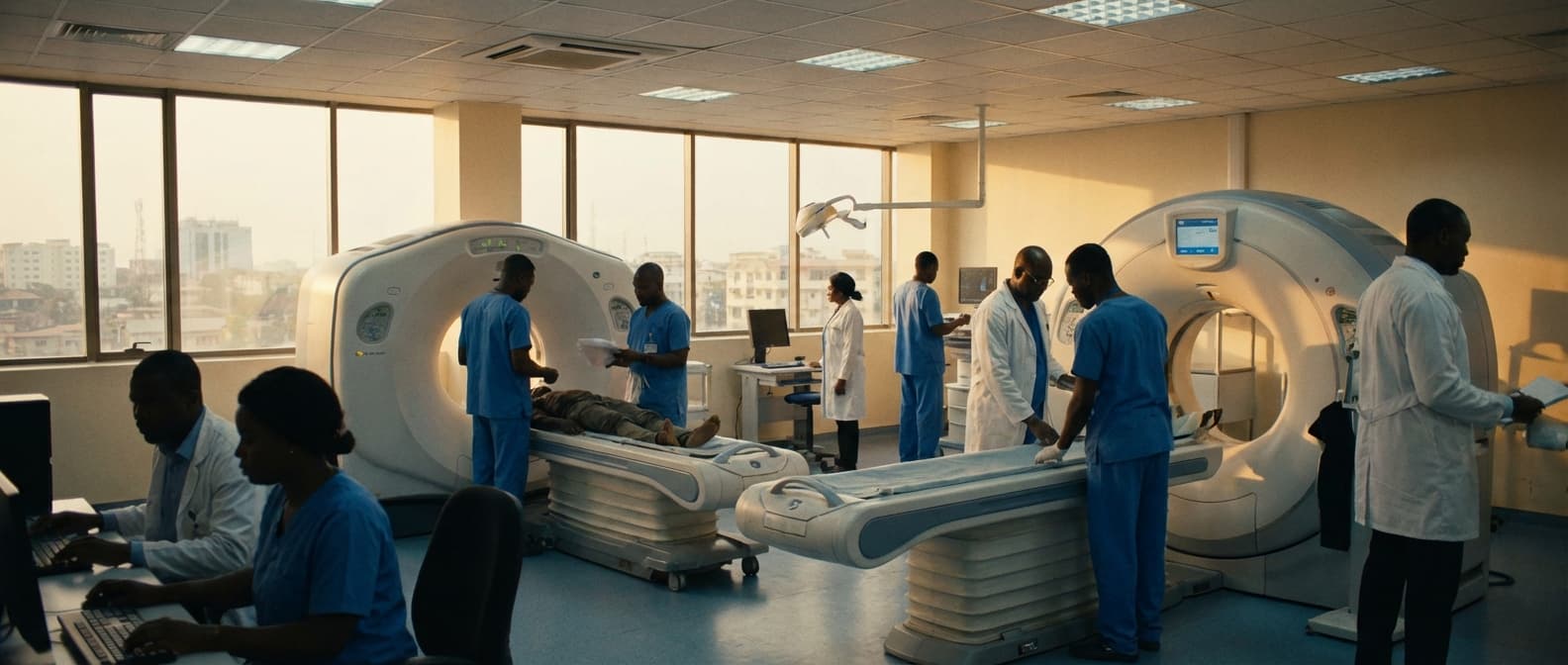
Imaging Acceptance Testing & QA in Benin
Engineering Excellence & Technical Support
Commissioning and periodic QA for CT/MRI/X‑ray/US/Mammo. High-standard technical execution following OEM protocols and local regulatory frameworks.
Advanced Image Quality Assessment Suite
Implemented a comprehensive suite of automated and manual image quality assessment tools, including resolution, contrast, noise, artifact detection, and color fidelity testing, ensuring adherence to international medical imaging standards for all deployed systems.
Rigorous Equipment Calibration & Verification Protocols
Established and executed stringent calibration and verification protocols for all imaging modalities (X-ray, CT, Ultrasound, MRI), utilizing certified phantoms and standardized procedures to guarantee diagnostic accuracy and patient safety across all healthcare facilities.
Data-Driven Performance Monitoring & Root Cause Analysis
Developed and deployed a data-driven framework for continuous imaging system performance monitoring, enabling proactive identification of deviations, in-depth root cause analysis of failures, and the implementation of corrective actions to minimize downtime and optimize diagnostic throughput.
What Is Imaging Acceptance Testing & Qa In Benin?
Imaging Acceptance Testing & QA in Benin refers to the systematic evaluation of medical imaging equipment and systems to ensure they meet predefined performance specifications, regulatory requirements, and clinical operational needs prior to their official deployment or continued use within healthcare facilities in Benin. This process is critical for verifying the functionality, accuracy, safety, and reliability of imaging modalities such as X-ray, CT scanners, MRI machines, ultrasound devices, and associated PACS (Picture Archiving and Communication Systems) and RIS (Radiology Information Systems). It encompasses a range of tests, from basic operational checks to complex image quality assessments, ensuring the integrity and diagnostic value of acquired images and the efficiency of the overall imaging workflow. The objective is to mitigate risks associated with equipment malfunction, misdiagnosis, patient safety concerns, and non-compliance with national and international standards.
| Who Needs Imaging Acceptance Testing & QA in Benin? | Typical Use Cases | ||||
|---|---|---|---|---|---|
| Hospitals and Clinics (Public & Private): All healthcare institutions operating medical imaging departments require regular QA and acceptance testing for new installations, upgrades, or routine maintenance of imaging equipment. | Government Health Ministries & Regulatory Bodies: Oversight of medical device quality and safety, ensuring compliance with national standards and licensing requirements. | Medical Imaging Equipment Manufacturers & Vendors: To demonstrate compliance with contractual obligations and regulatory standards during the sale and installation of new equipment. | Third-Party Service Providers: Companies specializing in medical equipment maintenance and QA, offering services to healthcare facilities. | Research Institutions: Ensuring the accuracy and reliability of imaging data for research purposes. | |
| New Equipment Installation: Comprehensive testing after the installation of any new imaging modality (e.g., CT scanner, MRI machine, digital radiography system) to confirm correct setup and functionality. | System Upgrades & Modifications: Testing following software updates, hardware component replacements, or significant system configuration changes. | Routine Quality Assurance (QA): Periodic testing (daily, weekly, monthly) to monitor image quality, radiation output, and system performance, identifying any drift or degradation over time. | Post-Maintenance Verification: Testing after repairs or servicing to ensure the equipment has been restored to its optimal operational state and safety parameters. | Vendor-Independent Performance Evaluation: Independent assessment to verify that equipment meets advertised performance claims and clinical expectations. | Accreditation and Certification Processes: Meeting requirements for national or international accreditation bodies by demonstrating robust QA programs. |
Key Components of Imaging Acceptance Testing & QA in Benin
- Equipment Functionality Verification: Ensuring all hardware components (e.g., gantry, detectors, console, patient table) operate as intended, including mechanical movements, power functions, and user interface responsiveness.
- Image Quality Assessment: Evaluating image resolution, contrast, signal-to-noise ratio (SNR), artifact levels, geometric accuracy, and spatial uniformity according to established phantoms and established benchmarks. This includes testing for dose optimization and radiation safety.
- Performance Parameter Validation: Verifying critical parameters such as scan times, image acquisition rates, reconstruction speeds, and data transfer speeds against manufacturer specifications and clinical requirements.
- System Integration Testing: Confirming seamless communication and data flow between imaging devices, PACS, RIS, and other networked healthcare information systems, including DICOM compliance.
- Safety and Radiation Protection Checks: Verifying adherence to radiation safety regulations, including dose monitoring, interlock systems, and shielding efficacy, as mandated by Benin's nuclear regulatory authorities.
- User Interface and Workflow Validation: Assessing the usability of the system interface and validating that the workflow aligns with clinical protocols and user proficiency.
- Documentation Review: Verifying the availability and accuracy of all relevant documentation, including user manuals, service records, calibration certificates, and regulatory approvals.
- Reporting and Sign-off: Documenting all test results, identifying discrepancies, and providing a formal sign-off upon successful completion, indicating the system's readiness for clinical use.
Who Needs Imaging Acceptance Testing & Qa In Benin?
Imaging Acceptance Testing & QA are critical for ensuring the quality, reliability, and performance of medical imaging systems in Benin. This rigorous process verifies that imaging equipment and software function as intended, meet regulatory standards, and produce accurate diagnostic information. Without proper testing and quality assurance, healthcare providers risk misdiagnoses, inefficient workflows, and ultimately, compromised patient care. This is particularly important in a developing healthcare landscape like Benin, where optimizing resources and ensuring the efficacy of technology are paramount.
| Target Customer/Department | Specific Needs & Benefits | Key Departments Involved |
|---|---|---|
| Hospitals (Public and Private) | Ensuring diagnostic accuracy of X-ray, CT, MRI, Ultrasound, etc.; validating new equipment installations; optimizing image quality for better patient outcomes; reducing downtime and maintenance costs; complying with national healthcare standards. | Radiology Department, IT Department, Biomedical Engineering, Quality Assurance Department, Procurement Department |
| Clinics and Diagnostic Centers | Guaranteeing the reliability of imaging devices for routine diagnostics; ensuring consistent image quality for outsourced analysis; maintaining patient trust through accurate results; cost-effective operation of imaging services. | Radiology Department, Operations Management, Technical Staff |
| Radiology Departments | Validating image acquisition parameters; verifying image processing and post-processing functionalities; ensuring accurate measurements and annotations; optimizing workflow efficiency; training staff on new system features and performance. | Radiologists, Radiographers, Technologists, PACS Administrators, IT Support |
| Medical Imaging Equipment Vendors and Installers | Confirming successful installation and calibration of new systems; demonstrating compliance with contractual specifications; ensuring seamless integration with existing hospital IT infrastructure; providing evidence of system readiness for clinical use. | Field Service Engineers, Technical Support Teams, Sales Representatives |
| Government Health Agencies | Setting and enforcing quality standards for medical imaging services; evaluating the performance of publicly funded healthcare facilities; ensuring efficient allocation of healthcare resources; protecting public health through reliable diagnostic tools. | Ministry of Health, National Health Regulatory Bodies, Public Health Departments |
| Healthcare Financing Institutions (e.g., Insurance Providers, Funding Agencies) | Verifying the quality of services for reimbursement purposes; ensuring that investments in medical equipment yield reliable diagnostic outcomes; mitigating risks associated with sub-standard imaging. | Claims Processing Departments, Quality Control Units, Investment Oversight Teams |
Who Needs Imaging Acceptance Testing & QA in Benin?
- Hospitals (Public and Private)
- Clinics and Diagnostic Centers
- Radiology Departments
- Medical Imaging Equipment Vendors and Installers
- Government Health Agencies
- Healthcare Financing Institutions
Imaging Acceptance Testing & Qa Process In Benin
This document outlines the Imaging Acceptance Testing and Quality Assurance (QA) process implemented in Benin, detailing the workflow from initial inquiry to final execution. This structured approach ensures that imaging systems and their associated software meet predefined standards and are fit for purpose within the Beninese healthcare context. The process emphasizes collaboration between stakeholders, comprehensive testing, and thorough documentation.
| Stage | Description | Key Activities | Responsible Parties | Deliverables/Outcomes |
|---|---|---|---|---|
| Inquiry and Requirement Gathering | Initial identification of the need for imaging systems and detailed understanding of functional, technical, and operational requirements. | Needs assessment, stakeholder consultations (clinicians, IT, administration), defining use cases, and documenting functional specifications. | Healthcare Facility Management, IT Department, Clinical End-Users. | Detailed Requirements Document, Use Case Scenarios. |
| System Specification and Vendor Selection | Translating requirements into technical specifications and selecting appropriate vendors/systems through a procurement process. | Developing Request for Proposals (RFPs), evaluating vendor proposals, technical evaluations, site visits (if applicable), and contract negotiation. | Procurement Committee, IT Department, Clinical Representatives, Legal Department. | Approved System Specifications, Selected Vendor Contract. |
| Test Plan Development | Creating a comprehensive plan outlining the scope, objectives, methodologies, resources, and schedule for testing. | Defining test objectives, identifying test cases, developing test scripts, allocating resources (personnel, equipment), and establishing a testing timeline. | QA Team, IT Department, Vendor Representatives. | Formal Test Plan Document. |
| Pre-Installation Checks | Verifying that the physical and technical environment is ready to receive and operate the imaging system. | Assessing site readiness (power, network, physical space), ensuring compatibility with existing infrastructure, and confirming delivery of all components. | IT Department, Facilities Management, Vendor. | Site Readiness Report. |
| Installation and Initial Configuration | Physically installing the imaging hardware and software, and performing initial setup and configuration according to specifications. | Hardware installation, software deployment, network configuration, initial system settings, and basic system checks. | Vendor Technicians, IT Department. | Installed and Configured Imaging System. |
| Functional Testing | Verifying that all individual functions and features of the imaging system operate as expected according to the requirements. | Executing test cases for image acquisition, processing, storage, retrieval, display, reporting, and any specific application functionalities. | QA Team, Clinical End-Users. | Test Case Execution Reports, Defect Logs. |
| Performance Testing | Assessing the system's speed, responsiveness, and stability under various load conditions. | Measuring image acquisition/processing times, system boot-up times, concurrent user access performance, and stress testing. | IT Department, QA Team. | Performance Test Reports, Bottleneck Analysis. |
| Usability Testing | Evaluating how easy and intuitive the system is for end-users to operate. | Observing users performing typical tasks, gathering feedback on user interface design, workflow efficiency, and ease of learning. | Clinical End-Users, QA Team, User Experience (UX) Specialist (if available). | Usability Feedback Report, User Satisfaction Scores. |
| Security Testing | Ensuring the system protects patient data and is secure against unauthorized access and cyber threats. | Testing user authentication, authorization, data encryption, audit trails, and vulnerability assessments. | IT Security Team, QA Team. | Security Assessment Report, Compliance Verification. |
| Integration Testing | Verifying seamless interaction between the imaging system and other connected systems (e.g., EMR/EHR, PACS, RIS). | Testing data exchange protocols (HL7, DICOM), interoperability of image transfer, and reporting integration. | IT Department, QA Team, Vendor Representatives. | Integration Test Results, Interoperability Matrix. |
| User Acceptance Testing (UAT) | The final stage where end-users validate that the system meets their operational needs and business requirements. | End-users perform real-world scenarios, confirm system functionality, and provide formal acceptance or rejection. | Clinical End-Users, Department Heads. | UAT Sign-off Document, List of Final Minor Adjustments. |
| Documentation Review | Ensuring all system documentation (user manuals, technical guides, training materials) is accurate, complete, and accessible. | Reviewing training materials, operator manuals, troubleshooting guides, and administrative documentation. | QA Team, Training Department, Vendor. | Reviewed and Approved Documentation. |
| Final Sign-off and Deployment | Formal acceptance of the system after all testing is successfully completed and all issues are resolved. | Formal sign-off by all key stakeholders, final deployment to the production environment, and official handover to operations. | Project Steering Committee, Key Stakeholders. | Final Project Acceptance Document, Live System Deployment. |
| Post-Deployment Monitoring and Ongoing QA | Continuous monitoring of system performance and regular quality checks after deployment to ensure sustained functionality and identify potential issues. | System performance monitoring, periodic audits, user feedback collection, and implementing updates/patches. | IT Operations Team, QA Team. | Performance Monitoring Reports, Audit Logs, Improvement Plans. |
Key Stages of the Imaging Acceptance Testing & QA Process in Benin
- Inquiry and Requirement Gathering
- System Specification and Vendor Selection
- Test Plan Development
- Pre-Installation Checks
- Installation and Initial Configuration
- Functional Testing
- Performance Testing
- Usability Testing
- Security Testing
- Integration Testing
- User Acceptance Testing (UAT)
- Documentation Review
- Final Sign-off and Deployment
- Post-Deployment Monitoring and Ongoing QA
Imaging Acceptance Testing & Qa Cost In Benin
Imaging acceptance testing and Quality Assurance (QA) are critical for ensuring the reliability and functionality of medical imaging equipment before it's deployed in healthcare facilities in Benin. The costs associated with these services are influenced by several factors, making it important to understand the pricing landscape. This discussion outlines the key pricing determinants and provides estimated cost ranges in the local currency, the West African CFA franc (XOF).
| Imaging Modality | Estimated Cost Range (XOF) |
|---|---|
| Basic X-ray Unit | 150,000 - 300,000 XOF |
| Portable Ultrasound | 180,000 - 350,000 XOF |
| Standard Ultrasound (e.g., Abdominal, Cardiac) | 250,000 - 500,000 XOF |
| Digital X-ray (DR/CR) | 300,000 - 600,000 XOF |
| CT Scanner (Basic) | 500,000 - 1,000,000 XOF |
| MRI Scanner (Basic) | 700,000 - 1,500,000 XOF |
| Advanced Imaging Systems (e.g., PET-CT, Interventional) | 1,000,000+ XOF (highly variable) |
Key Pricing Factors for Imaging Acceptance Testing & QA in Benin:
- Complexity of the Imaging Modality: More sophisticated systems (e.g., MRI, CT scanners, advanced ultrasound) require more in-depth testing and specialized expertise, leading to higher costs compared to simpler equipment (e.g., basic X-ray units, portable ultrasound).
- Scope of Testing: The extent of the acceptance testing is a major driver. This can range from basic functional checks and safety compliance to comprehensive performance evaluations, image quality assessments, and integration testing with Picture Archiving and Communication Systems (PACS) or Hospital Information Systems (HIS).
- Service Provider's Expertise and Reputation: Established companies with a proven track record, certified technicians, and specialized diagnostic tools often command higher fees. Local providers may offer more competitive pricing but require careful vetting for quality and adherence to international standards.
- Geographic Location: While less impactful than other factors in Benin compared to larger, more diverse countries, travel and logistics costs for technicians to reach remote or less accessible healthcare facilities can add to the overall price.
- Reporting and Documentation Requirements: The level of detail and formality in the acceptance report can influence cost. Detailed reports with extensive data, analysis, and recommendations will naturally be more expensive than a basic sign-off document.
- Inclusion of Training/Calibration: Some acceptance testing packages may include initial user training or baseline calibration of the equipment, which will increase the overall price.
- Urgency of Service: Expedited testing or immediate response to urgent requests might incur premium charges.
- Manufacturer vs. Third-Party Service: Costs can vary depending on whether the testing is performed by the original equipment manufacturer (OEM) or an independent third-party service provider. OEMs often have proprietary knowledge and tools but may be more expensive.
Affordable Imaging Acceptance Testing & Qa Options
Ensuring the accuracy, reliability, and compliance of imaging systems is paramount for any healthcare organization. Acceptance Testing (AT) and Quality Assurance (QA) are critical processes to achieve this. However, the perception of high costs can be a barrier. This document outlines affordable imaging AT & QA options, focusing on value bundles and cost-saving strategies.
| Strategy | Description | Cost-Saving Benefit | Value Bundle Example |
|---|---|---|---|
| Phased Testing Approach | Break down comprehensive AT/QA into smaller, manageable phases. Prioritize critical functionalities and workflows first. | Reduces upfront investment, allows for iterative improvements and budget allocation. | Basic system validation (imaging modality, PACS connectivity) followed by advanced features (AI integration, advanced visualization) in subsequent phases. |
| Leverage Internal Expertise | Train and empower existing IT or biomedical engineering staff to perform certain AT/QA tasks under expert guidance. | Significantly reduces external consultant fees. Builds internal capacity. | Developing internal checklists and basic test scripts for routine QA checks, with external support for complex AT. |
| Standardized Test Suites | Develop or acquire pre-defined, comprehensive test scripts and checklists for common imaging modalities and workflows. | Reduces time spent on test design, ensures consistency and thoroughness. | A bundled package of AT/QA templates for MRI, CT, X-ray, and mammography systems. |
| Remote/Virtual Testing Options | Utilize remote access and virtual environments for initial testing and validation where feasible. | Minimizes travel expenses for external vendors or specialized personnel. | Remote validation of PACS archiving, image retrieval, and basic DICOM conformance. |
| Outsourced Specialized Testing | Engage specialized third-party vendors for complex or niche AT/QA tasks (e.g., AI algorithm validation, cybersecurity testing). | Cost-effective compared to hiring full-time specialists. Access to cutting-edge tools and expertise. | A bundled service for AI-powered image analysis performance validation and reporting. |
| Subscription-Based QA Software | Utilize cloud-based QA software that offers a subscription model for ongoing quality monitoring and reporting. | Predictable monthly/annual costs. Eliminates large upfront software investment. Scalable. | A software subscription for automated QA checks of PACS, RIS, and modality performance, including trend analysis. |
| Collaborative Purchasing & Partnerships | Join purchasing groups or form partnerships with other healthcare organizations to share resources and negotiate bulk discounts on AT/QA services or equipment. | Lower per-unit costs through collective bargaining power. | A regional consortium pooling resources for vendor-neutral PACS testing services. |
| Risk-Based Testing Prioritization | Focus AT/QA efforts on areas with the highest potential impact on patient safety, clinical outcomes, and regulatory compliance. | Optimizes resource allocation by concentrating on critical risks. | Prioritizing testing of diagnostic accuracy pathways and data integrity for critical imaging studies. |
| Bundled Implementation & AT/QA Packages | Negotiate AT/QA services as part of the initial system procurement contract with vendors. | Often more cost-effective than procuring AT/QA separately. Streamlines the implementation process. | A comprehensive vendor package that includes initial installation, configuration, acceptance testing, and basic training for a new MRI system. |
Understanding Imaging AT & QA Costs
- Direct Costs: Hardware, software, specialized equipment, personnel salaries (internal or external), travel.
- Indirect Costs: Downtime during testing, potential delays in system deployment, remediation efforts, risk of non-compliance.
- Opportunity Costs: Staff time diverted from core clinical duties, delayed patient care pathways.
- The Value Proposition: While AT/QA has upfront costs, the long-term benefits (patient safety, operational efficiency, regulatory compliance, reduced rework) far outweigh the investment.
Verified Providers In Benin
When seeking healthcare in Benin, the credibility and expertise of providers are paramount. Franance Health stands out as a trusted network, meticulously vetting its medical professionals to ensure the highest standards of care. This rigorous credentialing process guarantees that patients are connected with experienced, qualified, and ethical healthcare practitioners, offering peace of mind and superior health outcomes. Choosing a verified provider through Franance Health means prioritizing safety, efficacy, and patient-centered service.
| Credentialing Aspect | Franance Health Verification Standard | Patient Benefit |
|---|---|---|
| Medical License and Registration | Verification of current and valid national/international medical licenses. | Ensures providers are legally permitted to practice medicine and meet regulatory requirements. |
| Educational Qualifications | Validation of diplomas, degrees, and postgraduate certifications from accredited institutions. | Guarantees a strong foundation of medical knowledge and specialized training. |
| Professional Experience | Thorough review of past practice history, including surgical credentials and specialty affiliations. | Confirms practical expertise and a track record of successful patient care. |
| Continuous Professional Development (CPD) | Assessment of ongoing training and participation in educational programs. | Ensures providers stay current with the latest medical advancements and treatments. |
| Reputation and Disciplinary History | Background checks and inquiry into any past disciplinary actions or malpractice claims. | Protects patients from potentially problematic practitioners and promotes ethical conduct. |
| Specialty Certifications | Verification of board certifications in relevant medical specialties. | Confirms a high level of proficiency and expertise in a specific area of medicine. |
Why Franance Health Verified Providers are the Best Choice:
- Rigorous Vetting Process: Franance Health employs a comprehensive credentialing system that scrutinizes the educational background, licenses, certifications, and professional history of all affiliated providers.
- Commitment to Quality: Verified providers adhere to stringent quality of care protocols, ensuring up-to-date medical knowledge and best practices are consistently applied.
- Patient Safety Focus: A core tenet of Franance Health's verification is the unwavering commitment to patient safety, minimizing risks and promoting positive health experiences.
- Ethical Practice Standards: All verified providers are held to high ethical standards, guaranteeing transparency, respect, and patient confidentiality.
- Access to Expertise: Franance Health connects you with specialists and general practitioners who possess proven expertise in their respective fields, leading to more accurate diagnoses and effective treatments.
- Enhanced Trust and Reliability: By choosing a Franance Health verified provider, you are assured of engaging with a healthcare professional who has met rigorous standards, fostering a trusting patient-provider relationship.
- Streamlined Access to Care: The network facilitates easier access to a curated list of dependable healthcare professionals, simplifying your search for quality medical services in Benin.
Scope Of Work For Imaging Acceptance Testing & Qa
This document outlines the Scope of Work (SOW) for Imaging Acceptance Testing (AT) and Quality Assurance (QA). It details the technical deliverables and the standard specifications against which the imaging system will be evaluated. The objective is to ensure the imaging system meets all functional, performance, and quality requirements prior to full deployment and operation.
| Testing Phase | Description | Technical Deliverables | Standard Specifications / Criteria |
|---|---|---|---|
| Unit Testing | Testing individual components and modules of the imaging system. | Test scripts, unit test reports, defect logs. | Component-level functional correctness, adherence to API specifications. |
| Integration Testing | Verifying the interaction and data flow between different components of the imaging system and integrated external systems. | Integration test plans, integration test reports, cross-system data validation reports. | Successful data exchange, seamless workflow transitions, inter-system functional validation. |
| System Testing | Comprehensive testing of the entire imaging system as a whole, simulating real-world scenarios. | System test cases, comprehensive system test reports, performance benchmark reports, security audit reports. | End-to-end functional validation, performance metrics (throughput, latency), system stability, compliance with security policies. |
| User Acceptance Testing (UAT) | Testing by end-users to confirm the system meets their operational needs and is user-friendly. | UAT test scripts, UAT sign-off reports, user feedback documentation. | Usability, workflow efficiency, adherence to user requirements, operational readiness. |
| Performance Testing | Evaluating the system's responsiveness, stability, and resource utilization under various load conditions. | Load test plans, stress test reports, endurance test reports, performance tuning recommendations. | Response times, throughput, system availability, scalability. |
| Security Testing | Assessing the system's vulnerability to unauthorized access, data breaches, and other security threats. | Vulnerability assessment reports, penetration testing reports, security compliance checklists. | Adherence to security standards (e.g., HIPAA, GDPR), authentication/authorization effectiveness, data encryption validation. |
| Image Quality Assurance (IQA) | Assessing the visual and quantitative quality of captured images. | Image quality assessment reports, MTF curves, noise analysis, artifact identification. | Resolution, contrast, signal-to-noise ratio (SNR), absence of artifacts, diagnostic utility. |
Key Objectives of Imaging Acceptance Testing & QA
- Verify that the imaging system meets all specified functional requirements.
- Assess and confirm the performance benchmarks defined in the system specifications.
- Ensure the quality and integrity of the captured images meet diagnostic and archival standards.
- Validate the system's reliability, usability, and security features.
- Confirm successful integration with existing IT infrastructure and workflows.
Service Level Agreement For Imaging Acceptance Testing & Qa
This Service Level Agreement (SLA) defines the performance standards for Imaging Acceptance Testing and Quality Assurance (QA) services provided by [Provider Name] to [Client Name]. It outlines the agreed-upon response times for critical issues and guarantees a minimum uptime for the testing environment and related services.
| Issue Severity | Response Time Guarantee | Uptime Guarantee |
|---|---|---|
| Critical Issue | 1 hour | 99.9% per calendar month (excluding scheduled maintenance) |
| High Priority Issue | 4 business hours | 99.5% per calendar month (excluding scheduled maintenance) |
| Normal Priority Issue | 8 business hours | Not guaranteed, best effort to resolve |
Definitions
- Imaging Data: Digital images used for diagnostic purposes, including but not limited to X-ray, CT, MRI, Ultrasound, and Mammography.
- Acceptance Testing: The process of verifying that imaging systems, software, and workflows meet predefined requirements and are ready for production use.
- Quality Assurance (QA): Ongoing processes and activities to ensure the consistent quality and reliability of imaging data and related services.
- Testing Environment: The dedicated infrastructure, software, and tools used for performing acceptance testing and QA.
- Critical Issue: A problem that significantly impairs the ability to perform essential imaging acceptance testing or QA, resulting in a complete or partial outage of critical functionalities.
- High Priority Issue: A problem that negatively impacts testing efficiency or the quality of results, but does not completely prevent essential testing activities.
- Normal Priority Issue: A problem that does not significantly impact testing efficiency or quality, or a general inquiry.
- Response Time: The maximum time allowed for [Provider Name] to acknowledge and begin working on a reported issue after it has been officially logged.
- Resolution Time: The maximum time allowed for [Provider Name] to resolve an issue to the satisfaction of [Client Name]. (Note: This may be defined separately or included within response time categories for simplicity in this SLA).
Frequently Asked Questions

Ready when you are
Let's scope your Imaging Acceptance Testing & QA in Benin project in Benin.

Scaling healthcare logistics and technical systems across the entire continent.