
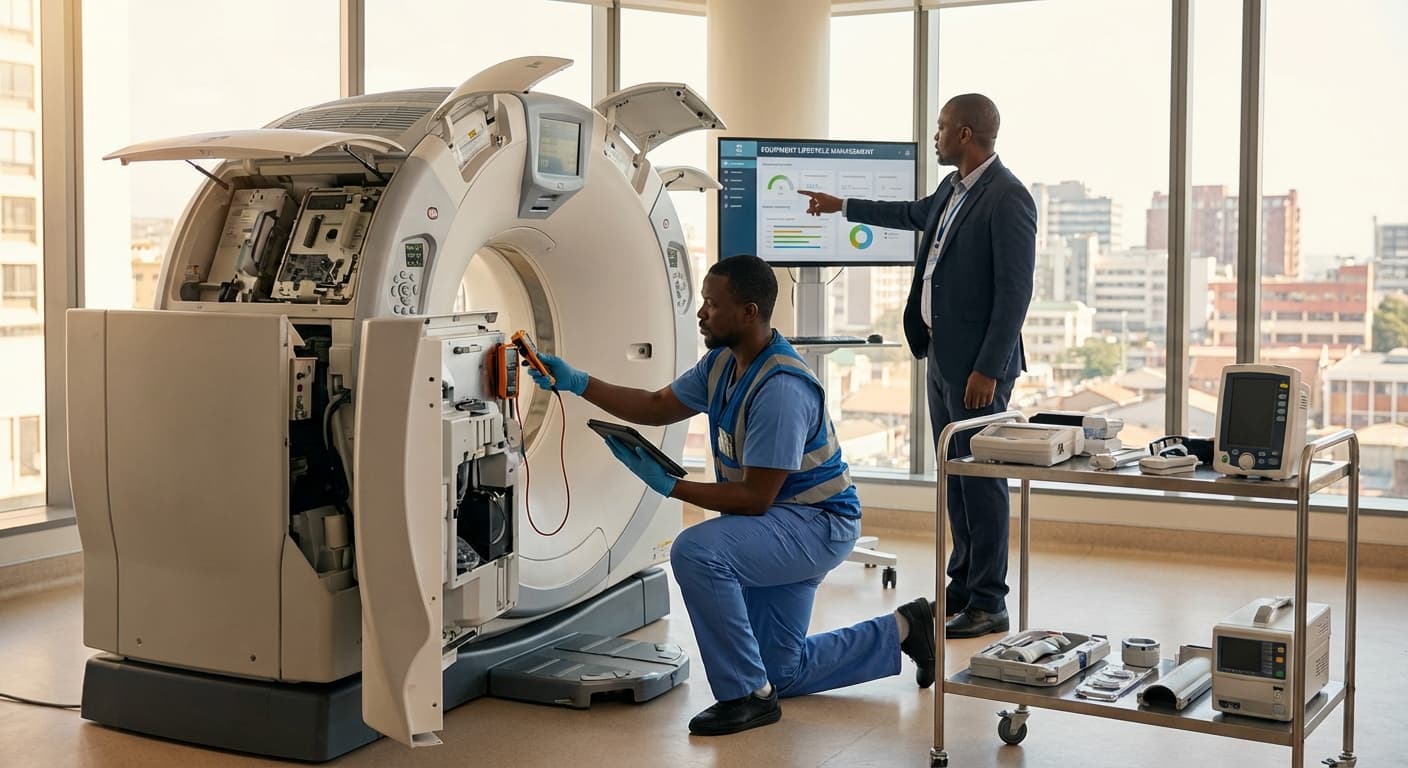
Equipment Replacement Planning & Obsolescence Strategy Service in Benin
Engineering Excellence & Technical Support
Equipment Replacement Planning & Obsolescence Strategy Service High-standard technical execution following OEM protocols and local regulatory frameworks.
Proactive Replacement & Lifecycle Management
Leverage our advanced analytics to forecast equipment failure, optimize replacement schedules, and minimize costly downtime in Benin's dynamic industrial landscape. We go beyond reactive repairs, implementing a strategic approach to asset lifecycle management.
Obsolescence Mitigation & Technology Roadmapping
Navigate the challenges of aging equipment and evolving technologies. Our service identifies at-risk assets due to obsolescence, provides alternative sourcing strategies, and develops tailored technology roadmaps to ensure your operations in Benin remain competitive and compliant.
Cost Optimization & ROI Maximization
Unlock significant cost savings by making informed equipment replacement decisions. Our data-driven approach ensures optimal resource allocation, reduces unexpected maintenance expenses, and maximizes the return on investment for your critical infrastructure in Benin.
What Is Equipment Replacement Planning & Obsolescence Strategy Service In Benin?
Equipment Replacement Planning & Obsolescence Strategy Service in Benin refers to a comprehensive approach to managing the lifecycle of industrial and technological assets. It involves a systematic process of evaluating the current state of equipment, predicting its future performance and reliability, and developing strategic plans for its replacement or retirement. This service is critical for organizations to mitigate the risks associated with aging, inefficient, or obsolete equipment, thereby ensuring operational continuity, optimizing capital expenditure, and maintaining a competitive edge. The service encompasses risk assessment, financial forecasting, technological trend analysis, and the development of phased implementation plans.
| Who Needs This Service? | Typical Use Cases | ||||||
|---|---|---|---|---|---|---|---|
| Manufacturing industries (e.g., textiles, food processing, automotive, heavy industry) | Energy and utilities sectors (e.g., power generation, oil & gas, water treatment) | Telecommunications providers | Transportation and logistics companies | Mining and quarrying operations | Large-scale agricultural enterprises | Public sector infrastructure management (e.g., water, waste management) | Any organization with significant capital investment in physical or technological assets. |
| Proactive Replacement Scheduling: Optimizing the timing of equipment upgrades to avoid costly breakdowns and production downtime. For example, a textile factory replacing aging looms before they reach a critical failure point. | Mitigating Obsolescence Risks: Identifying and addressing equipment that is no longer supported by manufacturers, lacks essential features, or has become energy-inefficient. A telecom company migrating from older network infrastructure to newer, more capable technologies. | Capital Expenditure Optimization: Developing data-driven justifications for capital investment in new equipment, ensuring alignment with strategic objectives and maximizing ROI. A mining company planning the acquisition of new drilling machinery based on projected operational needs and lifespan. | Ensuring Regulatory Compliance: Replacing equipment that may no longer meet current environmental, safety, or industry-specific regulations. A food processing plant updating machinery to comply with new food safety standards. | Improving Operational Efficiency and Productivity: Investing in modern, high-performance equipment that can reduce operating costs, increase throughput, and improve product quality. A cement plant upgrading its grinding mills to achieve higher output and lower energy consumption. | Risk Management and Business Continuity: Developing contingency plans for critical equipment failures, including identifying alternative suppliers or refurbishment options. A power utility assessing the vulnerability of aging turbines and developing a maintenance and replacement strategy. | Strategic Technology Adoption: Integrating new technologies into existing operational frameworks, ensuring compatibility and maximizing the benefits of innovation. A logistics company evaluating the integration of automated guided vehicles (AGVs) into its warehouse operations. |
Key Components of Equipment Replacement Planning & Obsolescence Strategy Service
- Asset Inventory and Condition Assessment
- Performance and Reliability Analysis
- Obsolescence Risk Identification (Technical, Functional, Economic)
- Remaining Useful Life (RUL) Estimation
- Total Cost of Ownership (TCO) Analysis
- Replacement Cost Forecasting and Budgeting
- Technology Trend Monitoring and Future-Proofing
- Risk Mitigation Strategies (e.g., upgrade, refurbishment, standardization)
- Phased Implementation and Project Management
- Documentation and Knowledge Transfer
Who Needs Equipment Replacement Planning & Obsolescence Strategy Service In Benin?
In Benin, a comprehensive Equipment Replacement Planning & Obsolescence Strategy Service is crucial for organizations aiming to optimize their operational efficiency, minimize downtime, and mitigate the risks associated with aging or outdated equipment. This service helps businesses make informed decisions about when and how to replace or upgrade their assets, ensuring they remain competitive and compliant with industry standards. Proactive planning prevents costly emergency repairs, lost productivity, and the potential for safety hazards. Furthermore, it enables better budget forecasting and resource allocation, contributing to overall financial health and strategic growth.
| Target Customers | Relevant Departments |
|---|---|
| Manufacturing Companies | Operations, Maintenance, Engineering, Finance, Procurement |
| Telecommunications Providers | Network Operations, IT Infrastructure, Engineering, Finance, Procurement |
| Energy & Utilities (Oil, Gas, Power Generation) | Operations, Maintenance, Engineering, Asset Management, HSE (Health, Safety, Environment), Finance |
| Transportation & Logistics Companies | Fleet Management, Operations, Maintenance, Finance, Procurement |
| Healthcare Institutions (Hospitals, Clinics) | Biomedical Engineering, Facilities Management, IT, Procurement, Finance |
| Agricultural Businesses (Large-scale farms, Agribusinesses) | Farm Management, Operations, Maintenance, Procurement, Finance |
| Construction Companies | Fleet Management, Plant & Equipment Management, Operations, Procurement, Finance |
| Mining Operations | Mine Operations, Maintenance, Engineering, Procurement, HSE, Finance |
| Government Agencies (Infrastructure, Defense, Public Services) | Public Works, Defense Procurement, IT Departments, Asset Management, Finance |
| Financial Institutions (for IT infrastructure) | IT Operations, Infrastructure Management, Security, Procurement, Finance |
Who Needs Equipment Replacement Planning & Obsolescence Strategy Service in Benin?
- Organizations with significant capital investments in machinery, vehicles, IT infrastructure, or specialized equipment.
- Businesses operating in sectors with rapid technological advancements or strict regulatory requirements.
- Companies aiming to reduce operational costs through preventative maintenance and optimized asset lifecycle management.
- Entities seeking to improve their environmental sustainability by managing the disposal and replacement of equipment responsibly.
- Government agencies and public utilities responsible for maintaining critical infrastructure and public services.
Equipment Replacement Planning & Obsolescence Strategy Service Process In Benin
This document outlines the Equipment Replacement Planning & Obsolescence Strategy Service Process in Benin, detailing the workflow from initial inquiry to final execution. The service aims to assist organizations in Benin by proactively managing their equipment lifecycle, mitigating risks associated with obsolescence, and ensuring optimal investment in new assets. The process is designed to be transparent, collaborative, and tailored to the specific needs of each client.
| Phase | Description | Key Activities | Deliverables | Timeline (Indicative) |
|---|---|---|---|---|
| 1: Inquiry & Initial Consultation | The client expresses interest in the Equipment Replacement Planning & Obsolescence Strategy Service. | Initial contact (phone, email, website form), scheduling a meeting, understanding basic client needs and objectives. | Understanding of client's general requirements, confirmation of service applicability. | 1-3 Business Days |
| 2: Needs Assessment & Data Gathering | A detailed understanding of the client's current equipment inventory, operational context, and strategic goals is established. | On-site or remote meetings, interviews with key stakeholders (operations, maintenance, finance, IT), collection of equipment data (age, condition, maintenance history, acquisition cost, expected lifespan, criticality, current market value, vendor support status, regulatory compliance). | Detailed inventory of existing equipment, documented operational requirements, stakeholder input summary. | 1-2 Weeks |
| 3: Analysis & Strategy Development | Collected data is analyzed to identify obsolescence risks, assess replacement needs, and forecast future requirements. | Data analysis (lifespan projections, cost-benefit analysis of replacement vs. repair, risk assessment for critical equipment, technology trend analysis), identification of obsolescence hotspots, development of replacement criteria, forecasting of future demand. | Obsolescence risk assessment report, equipment criticality matrix, preliminary replacement recommendations, identification of potential technology advancements. | 2-4 Weeks |
| 4: Solution Design & Proposal | Tailored replacement plans and obsolescence mitigation strategies are designed and presented to the client. | Development of phased replacement schedules, identification of potential replacement technologies/vendors, cost-benefit analysis of proposed solutions, financial modeling (ROI, TCO), risk mitigation strategies, proposed contract structure. | Comprehensive Equipment Replacement Plan, Obsolescence Strategy Document, Detailed Cost Proposal, Implementation Roadmap. | 2-3 Weeks |
| 5: Approval & Contract Finalization | The client reviews and approves the proposed strategy and solution, leading to formal agreement. | Presentation of proposal to client stakeholders, Q&A sessions, negotiation of terms, finalization of contract, signing of agreement. | Signed Service Agreement/Contract. | 1-2 Weeks |
| 6: Implementation & Execution | The agreed-upon replacement and obsolescence management plan is put into action. | Procurement of new equipment, management of decommissioning and disposal of old equipment, installation and integration of new assets, training of personnel, execution of obsolescence mitigation actions (e.g., component sourcing, firmware updates). | Installation of new equipment, successful integration, operational readiness of new assets, documented decommissioning of old assets, training completion records. | Varies significantly based on scope (Weeks to Months) |
| 7: Monitoring & Ongoing Support | The implemented strategy is monitored, and ongoing support is provided to ensure continued effectiveness. | Regular performance reviews, tracking of equipment lifecycle, identification of new obsolescence risks, recommendations for future planning, post-implementation support, knowledge transfer. | Periodic Performance Reports, Updated Equipment Register, Recommendations for future cycles, Ongoing technical/strategic support. | Ongoing (as per contract terms) |
Service Workflow Phases
- Phase 1: Inquiry & Initial Consultation
- Phase 2: Needs Assessment & Data Gathering
- Phase 3: Analysis & Strategy Development
- Phase 4: Solution Design & Proposal
- Phase 5: Approval & Contract Finalization
- Phase 6: Implementation & Execution
- Phase 7: Monitoring & Ongoing Support
Equipment Replacement Planning & Obsolescence Strategy Service Cost In Benin
Planning for equipment replacement and developing obsolescence strategies are crucial for businesses in Benin to maintain operational efficiency, minimize downtime, and avoid costly emergency replacements. The cost of such services can vary significantly based on several factors. This service helps organizations proactively manage their asset lifecycle, forecast future needs, and implement effective strategies to mitigate the risks associated with aging or outdated equipment. Factors influencing cost include the complexity of the existing equipment inventory, the depth of the analysis required, the level of detail in the obsolescence forecasting, and the chosen service provider's experience and reputation.
| Service Component | Typical Cost Range (XOF - West African CFA Franc) | Notes |
|---|---|---|
| Initial Consultation & Scope Definition | 50,000 - 150,000 | Covers initial meetings, understanding client needs, and outlining project scope. |
| Inventory Assessment & Data Collection | 100,000 - 500,000+ | Dependent on the size and complexity of the equipment inventory. May include site visits. |
| Condition Assessment & Performance Analysis | 150,000 - 750,000+ | Detailed technical evaluation of each piece of equipment. Higher for specialized machinery. |
| Obsolescence Forecasting & Risk Assessment | 200,000 - 1,000,000+ | Involves market research, technological trend analysis, and vendor lifecycle tracking. Complexity drives cost. |
| Replacement Strategy Development | 250,000 - 1,200,000+ | Formulating short-term and long-term replacement plans, including budget forecasts and phased implementation. |
| Documentation & Reporting | 50,000 - 300,000 | Creation of comprehensive reports, presentations, and strategic roadmaps. |
| Project Management Fee (if applicable) | 10% - 20% of total project cost | For larger, more complex projects managed by the service provider. |
| Comprehensive Service Package (Small to Medium Business) | 750,000 - 3,000,000 | Includes a combination of the above for a typical SMB with moderate equipment needs. |
| Comprehensive Service Package (Large Enterprise) | 3,000,000 - 10,000,000+ | For large organizations with extensive and diverse equipment portfolios. |
Key Pricing Factors for Equipment Replacement Planning & Obsolescence Strategy Services in Benin
- Scope of Inventory: The number and types of equipment to be assessed. A larger and more diverse inventory will naturally increase costs.
- Complexity of Equipment: Highly specialized or technologically advanced equipment may require more expertise and time for analysis, thus increasing costs.
- Depth of Analysis: The extent of the assessment, including detailed condition assessments, performance benchmarking, and comprehensive obsolescence forecasting.
- Data Availability and Quality: The ease of accessing and verifying data related to equipment age, maintenance history, and performance. Poor data quality may require more investigative work.
- Level of Obsolescence Forecasting Detail: Whether the strategy focuses on simple replacement cycles or includes advanced predictive analytics for obsolescence.
- Integration with Existing Systems: The need to integrate the planning and strategy with existing IT infrastructure or asset management systems.
- Consultant Experience and Reputation: More experienced and reputable firms or individual consultants often command higher fees.
- Project Timeline: Expedited projects may incur additional charges.
- Reporting and Deliverables: The format and comprehensiveness of the final reports, recommendations, and strategic documents.
- Geographic Location within Benin: While less significant, localized travel or logistical considerations for on-site assessments can play a minor role.
Affordable Equipment Replacement Planning & Obsolescence Strategy Service Options
Our Affordable Equipment Replacement Planning & Obsolescence Strategy Service offers comprehensive solutions designed to minimize costs and maximize the lifespan of your critical assets. We understand that unplanned equipment failures and outdated technology can lead to significant operational disruptions and financial strain. Our service focuses on proactive planning, intelligent forecasting, and strategic decision-making to ensure your business remains efficient, competitive, and financially resilient.
| Value Bundle | Description | Key Benefits | Target Audience | Estimated Cost Savings |
|---|---|---|---|---|
| Foundation Planning | Covers essential asset inventory, condition assessment, and initial obsolescence risk identification. | Establishes a baseline understanding of your asset portfolio. Identifies immediate high-risk equipment. | Small to medium-sized businesses with limited existing asset management processes. | 5-10% reduction in unplanned downtime and emergency replacement costs. |
| Strategic Optimization | Includes Foundation Planning plus predictive maintenance recommendations, basic lifecycle management, and initial replacement cost forecasting. | Enables proactive maintenance, extending equipment life. Provides early financial planning for replacements. | Growing businesses seeking to optimize asset performance and budget for future needs. | 10-20% reduction in operational costs and capital expenditure through optimized lifecycles. |
| Comprehensive Lifecycle Management | Encompasses Strategic Optimization with advanced obsolescence analysis, detailed replacement budgeting, technology scouting, and disposal strategy planning. | Maximizes asset lifespan, minimizes total cost of ownership, and ensures future-proof technology integration. Facilitates responsible asset disposal. | Larger enterprises or organizations with complex and critical asset portfolios. | 15-30% reduction in total cost of ownership, including maintenance, replacement, and disposal. |
Key Service Components
- Asset Inventory & Condition Assessment: A thorough cataloging of your existing equipment, including age, condition, maintenance history, and performance data.
- Obsolescence Risk Analysis: Identifying equipment at high risk of becoming obsolete due to technological advancements, diminishing support, or regulatory changes.
- Predictive Maintenance & Lifecycle Management: Implementing strategies to extend the operational life of existing equipment through optimized maintenance and repair.
- Replacement Cost Forecasting: Developing realistic projections for the cost of acquiring new equipment, including installation, training, and integration.
- Budgetary Planning & Phased Implementation: Creating flexible replacement schedules aligned with your financial capacity and operational needs.
- Technology Scouting & Vendor Evaluation: Identifying emerging technologies and evaluating potential vendors for new equipment procurement.
- Disposal & Recycling Strategies: Planning for the environmentally responsible and cost-effective disposal or recycling of retired assets.
Verified Providers In Benin
Finding trusted healthcare providers is paramount for well-being, and in Benin, Franance Health stands out as a leading name in ensuring access to verified and high-quality medical services. Their rigorous credentialing process goes beyond mere registration, focusing on a comprehensive evaluation of medical professionals and facilities. This dedication to verification instills confidence in patients, assuring them that they are receiving care from qualified and competent practitioners. Franance Health's commitment to excellence, coupled with their extensive network, makes them the premier choice for anyone seeking reliable healthcare solutions in Benin.
| Credentialing Aspect | Franance Health's Standard | Patient Benefit |
|---|---|---|
| Medical License Verification | Thorough cross-referencing with official medical boards. | Ensures providers are legally qualified and authorized to practice. |
| Professional Qualifications & Specialization | Verification of academic degrees, certifications, and post-graduate training. | Guarantees that providers possess the specific expertise required for a patient's condition. |
| Experience and Track Record | Review of practice history, professional affiliations, and any disciplinary actions. | Provides assurance of practical experience and ethical conduct. |
| Facility Standards (if applicable) | Assessment of hygiene, equipment, and operational compliance. | Ensures a safe and well-equipped environment for treatment. |
| Patient Feedback and Reviews | Systematic collection and analysis of patient experiences. | Offers real-world insights into provider patient care and satisfaction. |
Why Franance Health is the Best Choice for Verified Providers in Benin:
- Rigorous Credentialing Process: Franance Health employs a multi-faceted approach to vet all listed providers, ensuring they meet stringent quality and ethical standards.
- Focus on Patient Safety and Quality: Their primary objective is to safeguard patient well-being by partnering with only the most competent and trustworthy medical professionals and institutions.
- Extensive Network: Franance Health boasts a wide network of verified doctors, specialists, and healthcare facilities across Benin, offering diverse options for various medical needs.
- Transparency and Information: Patients can access detailed information about providers' qualifications, specializations, and patient reviews, empowering informed decision-making.
- Commitment to Continuous Improvement: Franance Health actively monitors provider performance and patient feedback to maintain the highest levels of healthcare service.
- Ease of Access and Convenience: Through their platform, finding and booking appointments with verified providers becomes a streamlined and stress-free experience.
Scope Of Work For Equipment Replacement Planning & Obsolescence Strategy Service
This Scope of Work (SOW) outlines the services to be provided for Equipment Replacement Planning and Obsolescence Strategy. The objective is to develop a comprehensive and proactive strategy for managing the lifecycle of critical equipment, ensuring operational continuity, minimizing risks associated with obsolescence, and optimizing replacement investments. This SOW details the tasks, deliverables, and associated specifications for this engagement.
| Phase | Task Description | Key Activities | Technical Deliverables | Standard Specifications / Requirements |
|---|---|---|---|---|
| Define project scope, objectives, and stakeholder alignment. Collect all relevant equipment data. | Conduct stakeholder interviews, review existing documentation (maintenance records, asset registers, depreciation schedules, procurement history), identify data sources and gaps. | Project Charter, Stakeholder Register, Raw Equipment Data Set (e.g., CSV, Excel), Data Collection Plan | Data completeness, accuracy, and consistency. Secure access to relevant systems and databases. Defined data privacy and security protocols. |
| Catalog all relevant equipment and assess its criticality to business operations. | Populate a comprehensive equipment inventory. Develop and apply a criticality matrix (e.g., based on operational impact, safety, regulatory compliance, cost of failure). | Detailed Equipment Inventory Database (including manufacturer, model, serial number, installation date, purchase cost, current condition, maintenance history), Criticality Assessment Report & Matrix | Standardized data fields for inventory. Clearly defined criticality criteria and scoring methodology. Alignment with operational and business objectives. |
| Analyze the current and future obsolescence risks for each piece of equipment. | Research manufacturer end-of-life (EOL) policies, service and spare parts availability, technological advancements, and potential replacement alternatives. Project future obsolescence timelines. | Obsolescence Risk Assessment Report (including obsolescence score, risk level, projected EOL dates), Identification of High-Risk Equipment | Utilize reputable industry sources for obsolescence data. Consistent methodology for risk scoring. Defined thresholds for 'high risk'. |
| Develop a phased approach to equipment replacement based on criticality and obsolescence risk. | Model replacement scenarios, consider interdependencies between equipment, forecast budget requirements, and develop a prioritized replacement roadmap. | Equipment Replacement Roadmap (5-10 year horizon), Prioritized Replacement List, Capital Expenditure (CAPEX) Forecasts for Replacements | Phased approach with clear justification for prioritization. Alignment with budget cycles and strategic initiatives. Consideration of lead times for new equipment procurement and installation. |
| Define strategies to mitigate the impact of obsolescence. | Explore options such as extended warranties, strategic spare parts stocking, refurbishment programs, alternative supplier identification, technology refresh planning, and reverse engineering (where applicable). | Obsolescence Mitigation Strategy Document (including specific recommendations for different risk levels), Action Plan for Mitigation Activities | Practical and cost-effective strategies. Clear ownership and timelines for mitigation actions. Consideration of intellectual property rights. |
| Define support and maintenance requirements for existing and new equipment. | Review current SLAs, identify gaps, and define optimal support structures and contract terms for critical and obsolete equipment. | Recommended SLA Framework, Support Requirements Matrix (for existing and future equipment) | Defined response times, resolution times, and scope of coverage. Cost-benefit analysis of different support models. |
| Establish a framework for ongoing monitoring and reporting of equipment status and obsolescence. | Define key performance indicators (KPIs), reporting frequencies, and governance structure for managing equipment lifecycle and obsolescence. | Equipment Management & Obsolescence Monitoring Dashboard (conceptual design), Recommended Governance Structure, Final Project Report with Recommendations | Measurable KPIs, clear roles and responsibilities, regular review cycles. Documentation of assumptions and limitations. |
Key Objectives
- Develop a robust framework for identifying and prioritizing equipment for replacement.
- Establish a proactive obsolescence management strategy.
- Provide data-driven insights to inform capital investment decisions for equipment.
- Mitigate risks associated with aging and obsolete equipment.
- Enhance operational reliability and reduce unplanned downtime.
- Optimize the total cost of ownership (TCO) for equipment assets.
Service Level Agreement For Equipment Replacement Planning & Obsolescence Strategy Service
This Service Level Agreement (SLA) outlines the performance standards, response times, and uptime guarantees for the Equipment Replacement Planning & Obsolescence Strategy Service. This service aims to proactively manage the lifecycle of your organization's equipment, ensuring optimal performance, cost-effectiveness, and mitigation of obsolescence risks.
The service encompasses strategic planning for equipment replacement cycles, identification and management of end-of-life (EOL) and end-of-support (EOS) dates, development of obsolescence mitigation strategies, and recommendations for technology refresh. This SLA defines our commitment to delivering these services effectively and reliably.
| Service Component | Response Time (Business Hours) | Resolution Target | Uptime Guarantee |
|---|---|---|---|
| Initial Consultation & Strategy Development | 2 Business Days | 10 Business Days (for initial plan draft) | N/A (Service is consultative) |
| Obsolescence Alert & Risk Assessment Notification | 1 Business Day (upon confirmed detection) | 3 Business Days (for initial assessment report) | N/A (Service is consultative) |
| Urgent Replacement Strategy Update (Critical EOL/EOS) | 4 Business Hours | 1 Business Day (for revised recommendation) | N/A (Service is consultative) |
| Regular Reporting (Quarterly Lifecycle Review) | 5 Business Days (before scheduled delivery) | N/A (Report delivery) | N/A (Service is consultative) |
| Platform/Tool Access (if applicable) | N/A | N/A | 99.5% |
Key Service Components
- Strategic equipment lifecycle planning.
- Obsolescence identification and risk assessment.
- Development of proactive replacement strategies.
- Recommendations for technology refresh and upgrades.
- Analysis of Total Cost of Ownership (TCO) for equipment.
- Vendor and manufacturer support status tracking.
Frequently Asked Questions

Ready when you are
Let's scope your Equipment Replacement Planning & Obsolescence Strategy Service in Benin project in Benin.

Scaling healthcare logistics and technical systems across the entire continent.