
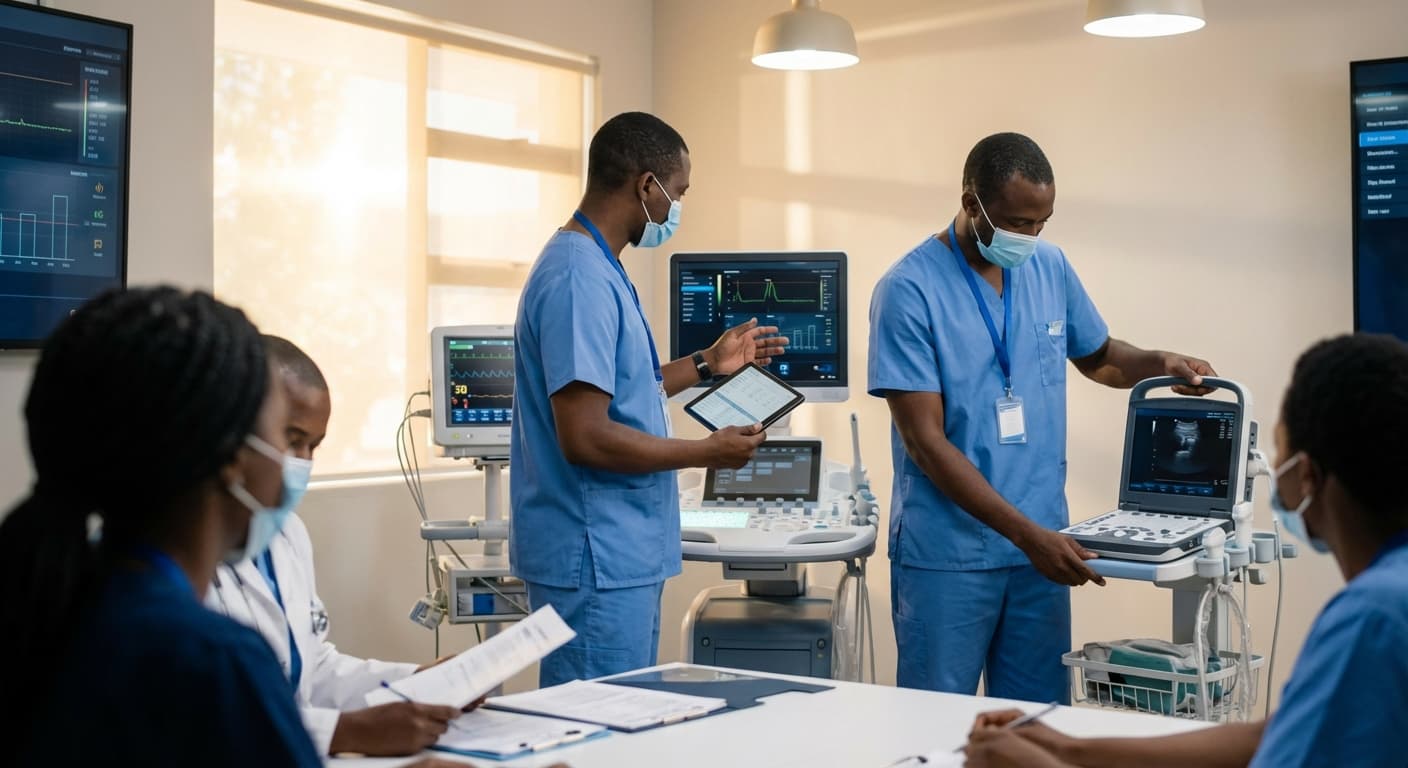
Clinical Needs Assessment for Medical Equipment in Benin
Engineering Excellence & Technical Support
Clinical Needs Assessment for Medical Equipment High-standard technical execution following OEM protocols and local regulatory frameworks.
Standardized Needs Assessment Framework
Developed and implemented a comprehensive, standardized framework for clinical needs assessment, ensuring consistency in data collection and analysis across all healthcare facilities in Benin. This framework includes detailed questionnaires, observational checklists, and stakeholder interview guides focused on identifying critical equipment gaps and their impact on patient care.
Data-Driven Prioritization Engine
Created a sophisticated data-driven prioritization engine that analyzes collected needs assessment data against predefined clinical impact metrics, cost-effectiveness models, and existing national health priorities. This ensures that limited resources are allocated to medical equipment that will yield the greatest improvement in health outcomes for the Beninese population.
Interoperable Needs Assessment Platform
Designed and deployed an interoperable digital platform for the clinical needs assessment process. This platform facilitates real-time data aggregation from diverse healthcare settings, enables seamless data sharing between regional and national health authorities, and integrates with existing health information systems for enhanced reporting and decision-making.
What Is Clinical Needs Assessment For Medical Equipment In Benin?
A Clinical Needs Assessment for Medical Equipment in Benin is a systematic process designed to identify, quantify, and prioritize the medical equipment requirements of healthcare facilities within the country. This service involves a comprehensive evaluation of existing infrastructure, current patient caseloads, prevalent disease burdens, available human resources (skilled personnel for operation and maintenance), and budgetary constraints to ensure that procured medical equipment aligns with clinical demands, enhances service delivery, and contributes to improved health outcomes. The assessment is crucial for informed decision-making in equipment procurement, resource allocation, and strategic healthcare planning.
| Stakeholder/Entity | Requirement/Rationale | Typical Use Case Scenario |
|---|---|---|
| Ministry of Public Health (Benin) | Strategic national health planning, resource allocation, development of national health infrastructure, disease control programs. | Prioritizing investment in diagnostic imaging equipment for remote regional hospitals facing high rates of infectious diseases. Establishing a national plan for upgrading essential surgical equipment in primary healthcare centers. |
| Regional Health Directorates | Regional health service planning, decentralized procurement, identification of specific regional needs, and monitoring of healthcare facility performance. | Assessing the need for maternal and child health equipment in areas with high infant mortality rates. Identifying critical laboratory equipment shortages in district hospitals. |
| Individual Healthcare Facilities (Hospitals, Health Centers) | Direct service delivery improvement, patient care enhancement, operational efficiency, addressing specific clinical gaps. | A district hospital identifying a need for a functional ultrasound machine to improve prenatal care and reduce referrals. A rural health center requiring basic emergency care equipment to manage road traffic accident victims. |
| Non-Governmental Organizations (NGOs) & International Donors | Targeted intervention planning, impact assessment of aid programs, identification of areas with greatest need for external support. | An NGO focusing on cardiovascular health identifying a need for ECG machines and basic cardiology diagnostic tools in underserved communities. A donor evaluating the effectiveness of previous equipment donations by assessing current needs. |
| Healthcare Equipment Manufacturers & Suppliers | Market analysis, product development, customized solution provision, sales and distribution strategy. | Understanding the demand for reliable, low-maintenance anesthesia machines in facilities with intermittent power supply. Identifying the need for specific types of personal protective equipment (PPE) during public health emergencies. |
| Healthcare Professionals (Clinicians, Technicians) | Improved diagnostic and therapeutic capabilities, enhanced patient safety, efficient workflow, professional development. | Surgeons identifying a need for laparoscopic surgical equipment to facilitate minimally invasive procedures. Laboratory technicians highlighting the requirement for automated hematology analyzers to increase sample throughput. |
Key Components of a Clinical Needs Assessment
- Facility Characterization: Detailed inventory of existing facilities, their geographical distribution, and current operational status.
- Demographic and Epidemiological Analysis: Understanding the population demographics, disease prevalence, and injury patterns relevant to the region.
- Clinical Service Audit: Evaluation of current and projected demand for various medical services (e.g., diagnostics, therapeutics, surgery, emergency care).
- Infrastructure and Utilities Assessment: Review of power availability, water supply, waste management, and building suitability for specific equipment.
- Human Resource Capacity Evaluation: Assessment of the availability of trained personnel for equipment operation, maintenance, and repair.
- Existing Equipment Inventory and Condition: Cataloging all currently available medical equipment, its age, functionality, and maintenance history.
- Technology Gap Analysis: Identification of disparities between current capabilities and required capabilities to meet clinical needs.
- Procurement and Financial Planning: Establishing realistic budgetary frameworks and procurement strategies.
- Maintenance and Support Strategy Development: Planning for the long-term sustainability of equipment through robust maintenance and repair systems.
- Training Needs Identification: Determining the necessary training for healthcare professionals to effectively utilize new equipment.
Who Needs Clinical Needs Assessment For Medical Equipment In Benin?
A comprehensive clinical needs assessment for medical equipment in Benin is crucial for optimizing healthcare delivery across various levels of the health system. This process ensures that available resources are aligned with the actual needs of healthcare providers and patients, leading to more effective diagnosis, treatment, and patient care. By systematically evaluating existing equipment, identifying gaps, and prioritizing future investments, the assessment directly impacts the quality and accessibility of healthcare services.
| Department/Unit | Key Needs Assessment Focus Areas | Examples of Equipment Needs |
|---|---|---|
| Primary Healthcare Centers (CSCOMs) | Basic diagnostic capabilities, essential treatment tools, maternal and child health equipment. | Blood pressure monitors, thermometers, stethoscopes, basic laboratory kits, weighing scales, infant incubators (where applicable). |
| District Hospitals | Intermediate diagnostic imaging, surgical support, emergency care, laboratory services. | X-ray machines, ultrasound devices, anesthesia machines, basic surgical instruments, ECG machines, hematology analyzers. |
| Referral Hospitals (Regional & National) | Advanced diagnostic imaging, specialized surgical equipment, intensive care units, comprehensive laboratory and pathology services. | CT scanners, MRI machines, advanced endoscopes, ventilators, defibrillators, advanced pathology equipment, dialysis machines. |
| Maternal and Child Health Departments | Equipment for antenatal care, labor and delivery, neonatal care, and pediatric treatment. | Ultrasound machines (obstetric), fetal dopplers, delivery tables, radiant warmers, phototherapy units, pediatric ventilators, nebulizers. |
| Surgical Departments | Instruments and equipment for various surgical specialties. | Laparoscopic sets, orthopedic surgical instruments, specialized surgical lights, electrosurgical units. |
| Emergency & Critical Care Units | Life-support equipment, rapid diagnostic tools, and patient monitoring systems. | Defibrillators, ventilators, infusion pumps, cardiac monitors, emergency trolleys. |
| Laboratory & Diagnostic Services | Equipment for a wide range of diagnostic tests, from basic to specialized. | Microscopes, centrifuges, automated analyzers (biochemistry, hematology, immunoassay), PCR machines, culture incubators. |
| Radiology & Imaging Departments | Diagnostic imaging modalities and associated equipment. | X-ray units, C-arms, ultrasound machines, CT scanners, MRI scanners, PACS systems. |
| Pharmacy Departments | Equipment for drug storage, dispensing, and quality control. | Refrigerators, laminar flow hoods, compounding equipment, barcode scanners. |
| Training & Education Institutions (Medical Schools, Nursing Schools) | Simulation equipment, anatomical models, and basic laboratory equipment for training future healthcare professionals. | Manikins for CPR training, surgical simulators, anatomical charts, basic lab equipment. |
Target Customers & Departments Requiring Clinical Needs Assessment
- Healthcare Facilities (Public & Private)
- Government Health Ministries & Agencies
- Non-Governmental Organizations (NGOs) involved in healthcare
- International Development Partners & Donors
- Medical Equipment Manufacturers & Suppliers (for understanding market needs)
Clinical Needs Assessment For Medical Equipment Process In Benin
This document outlines the workflow for a Clinical Needs Assessment for Medical Equipment process in Benin, detailing the journey from initial inquiry to the final execution and implementation of the assessment. The process is designed to ensure that medical equipment procured meets the actual clinical needs of healthcare facilities in Benin, thereby optimizing resource allocation and improving healthcare delivery.
| Stage | Description | Key Activities | Responsible Parties | Deliverables | Timeline (Indicative) |
|---|---|---|---|---|---|
| Inquiry and Initial Request | The process begins when a healthcare facility or a relevant government ministry identifies a need for medical equipment and formally requests a needs assessment. | Submission of formal request, outlining general equipment needs or areas of concern. Initial consultation to clarify the scope. | Healthcare Facility/Ministry of Health, Potential Funding Agency/NGO. | Formal request document, initial scope of work. | 1-2 Weeks |
| Needs Assessment Team Formation | A multidisciplinary team is assembled to conduct the assessment, ensuring a comprehensive and expert approach. | Identifying and selecting team members (clinicians, biomedical engineers, procurement specialists, public health experts). Defining team roles and responsibilities. | Ministry of Health, Project Management Unit, Funding Agency. | Team roster, clearly defined roles and responsibilities. | 1 Week |
| Data Collection and Analysis | This is the core of the assessment, involving gathering information on existing infrastructure, current equipment, user needs, and patient demographics. | Site visits to healthcare facilities, interviews with healthcare professionals, review of patient records and disease burden data, assessment of existing infrastructure and utilities (power, water). Analysis of collected data to identify gaps and priorities. | Needs Assessment Team, Healthcare Facility Staff. | Site visit reports, interview summaries, data analysis spreadsheets, preliminary findings report. | 4-8 Weeks |
| Report Generation and Validation | A comprehensive report is compiled, detailing the findings and recommendations, which is then reviewed and validated. | Drafting the needs assessment report, including detailed equipment recommendations, justification, and cost estimates. Presenting the draft report to stakeholders for feedback and validation. Finalizing the report based on feedback. | Needs Assessment Team, Ministry of Health, Healthcare Facilities, Funding Agency. | Draft Needs Assessment Report, Validated Needs Assessment Report. | 2-3 Weeks |
| Equipment Specification and Procurement Planning | Based on the validated report, detailed specifications for the required equipment are developed, and a procurement plan is created. | Developing technical specifications for each piece of equipment. Identifying preferred manufacturers/suppliers. Developing a procurement strategy (tender process, direct purchase). Estimating procurement timelines and budget. | Needs Assessment Team, Procurement Unit, Ministry of Health. | Detailed equipment specifications, Procurement plan. | 2-4 Weeks |
| Procurement and Installation | The actual acquisition, delivery, and installation of the medical equipment. | Executing the procurement process (tendering, evaluation, contract award). Overseeing delivery and customs clearance. Managing installation and initial setup. Conducting pre-installation checks and site readiness. | Procurement Unit, Ministry of Health, Suppliers, Installation Technicians. | Procured and installed medical equipment. | 8-16 Weeks (variable based on equipment and logistics) |
| Training and Maintenance Planning | Ensuring that healthcare professionals are trained to use the equipment and that a sustainable maintenance plan is in place. | Developing and delivering training programs for users and maintenance personnel. Establishing a preventive maintenance schedule. Procuring spare parts and establishing service agreements. | Training Providers, Biomedical Engineering Department, Healthcare Facility Staff. | Training materials, trained personnel, maintenance plan, spare parts inventory. | 2-4 Weeks (concurrent with or following installation) |
| Monitoring and Evaluation | Ongoing assessment of the equipment's utilization, functionality, and impact on healthcare delivery. | Regular monitoring of equipment performance and usage. Periodic evaluation of the impact on patient care and health outcomes. Feedback mechanism for users. Review and update of maintenance plans. | Ministry of Health, Healthcare Facilities, Monitoring & Evaluation Unit. | Monitoring reports, evaluation studies, updated maintenance records. | Ongoing (e.g., quarterly, annually) |
Workflow Stages for Clinical Needs Assessment for Medical Equipment in Benin
- Inquiry and Initial Request
- Needs Assessment Team Formation
- Data Collection and Analysis
- Report Generation and Validation
- Equipment Specification and Procurement Planning
- Procurement and Installation
- Training and Maintenance Planning
- Monitoring and Evaluation
Clinical Needs Assessment For Medical Equipment Cost In Benin
A thorough clinical needs assessment for medical equipment in Benin is crucial to ensure that procured devices are appropriate for the healthcare setting, sustainable, and cost-effective. Understanding the pricing factors and ranges in local currency (CFA Franc BEAC - XOF) is a fundamental step in this process. Several factors influence the cost of medical equipment in Benin, including import duties and taxes, shipping and logistics, supplier markups, currency fluctuations, availability of local distributors, and the specific technological complexity and brand reputation of the equipment. The market for medical equipment in Benin is diverse, ranging from basic diagnostic tools to advanced imaging systems. Pricing can vary significantly based on whether equipment is new, refurbished, or even donated, although the latter often comes with associated maintenance and training costs. Engaging with local healthcare providers, procurement specialists, and reputable suppliers is essential to gather accurate and up-to-date pricing information for a realistic budget. Specialized equipment, particularly for critical care or advanced diagnostics, will naturally command higher prices. Furthermore, the availability of after-sales service and spare parts can also impact the total cost of ownership and should be factored into the assessment.
| Equipment Category | Estimated Price Range (XOF) | Notes on Pricing |
|---|---|---|
| Basic Diagnostic Tools (e.g., Stethoscope, Sphygmomanometer, Thermometer) | 15,000 - 100,000 | Prices vary by brand and quality. Local and imported options available. |
| Diagnostic Reagents (per test) | 500 - 5,000 | Depends on the type of test and volume purchased. Bulk discounts are common. |
| Basic Laboratory Equipment (e.g., Centrifuge, Microscope) | 200,000 - 1,500,000 | Digital microscopes and advanced centrifuges will be at the higher end. Availability of spare parts is key. |
| Imaging Equipment (e.g., Portable Ultrasound) | 3,000,000 - 25,000,000 | Depends heavily on brand, features (e.g., doppler), and age (new vs. refurbished). Training is usually additional. |
| Sterilization Equipment (e.g., Autoclave - small to medium) | 1,000,000 - 8,000,000 | Steam autoclaves are common. Electric vs. gas models, capacity, and safety features influence price. |
| Surgical Instruments (Basic Set) | 50,000 - 500,000 | Depends on the number and type of instruments in the set and the material quality. |
| Patient Monitors (basic vital signs) | 500,000 - 3,000,000 | Number of parameters monitored (ECG, SpO2, NIBP, etc.) and brand are key differentiators. |
| Hospital Beds (Manual) | 150,000 - 700,000 | Adjustable features and build quality impact price. |
| Defibrillators (Manual/AED) | 1,500,000 - 10,000,000 | AEDs are generally less expensive than manual defibrillators. Training for AED use is essential. |
| Dental Chairs (basic) | 2,000,000 - 15,000,000 | Includes unit, chair, and basic instruments. Advanced features will increase cost. |
| X-ray Machines (basic fixed) | 10,000,000 - 50,000,000+ | High capital investment. Consider maintenance, power requirements, and radiation shielding. |
Key Pricing Factors for Medical Equipment in Benin
- Import Duties and Taxes: Benin's tax structure on imported goods significantly impacts final prices.
- Shipping and Logistics: Costs associated with transportation from origin to Benin, including insurance and customs clearance.
- Supplier Markups: Local distributors and retailers add their profit margins.
- Currency Fluctuations: The XOF's exchange rate against major international currencies (USD, EUR) can affect pricing.
- Local Distribution Network: Limited availability of local distributors for certain brands can lead to higher prices due to less competition.
- Technological Complexity and Features: More advanced and feature-rich equipment is inherently more expensive.
- Brand Reputation and Quality: Well-established international brands often carry a premium.
- New vs. Refurbished/Used Equipment: Refurbished equipment offers a lower upfront cost but may have shorter lifespans or higher maintenance needs.
- After-Sales Service and Support: The availability and cost of maintenance, repairs, and training are critical for total cost of ownership.
- Warranty and Guarantees: The length and scope of warranties can influence initial pricing.
Affordable Clinical Needs Assessment For Medical Equipment Options
This document outlines affordable strategies for conducting a clinical needs assessment for medical equipment, focusing on understanding value bundles and implementing cost-saving measures to optimize resource allocation. A thorough needs assessment ensures that procured equipment directly addresses clinical requirements, improves patient care, and offers the best return on investment. By strategically evaluating options and leveraging value-based purchasing, healthcare facilities can achieve significant cost efficiencies.
| Value Bundle Components | Cost-Saving Strategies | Explanation/Benefit |
|---|---|---|
| Bundled Equipment Packages | Negotiate comprehensive packages for multiple related devices or systems. | Leverage volume discounts and streamline procurement processes. Reduces administrative overhead and often includes integrated training/support. |
| Service and Maintenance Contracts | Include extended warranty or preventative maintenance in the initial purchase agreement. | Predictable maintenance costs, reduced downtime, and potential for discounted service rates compared to ad-hoc repairs. |
| Consumables and Accessories | Seek bundled pricing for essential consumables required by the equipment. | Ensures availability of critical supplies at a competitive price, preventing supply chain disruptions. |
| Training and Education Programs | Inquire about integrated training modules or on-site training as part of the package. | Reduces external training expenses and ensures staff are proficient with new equipment from day one, improving safety and efficiency. |
| Software Licenses and Upgrades | Negotiate terms for initial software and potential future upgrade pathways. | Provides clarity on software costs and avoids unexpected expenses for essential system functionality. |
| Leasing vs. Purchasing Analysis | Evaluate leasing options for high-cost equipment with rapid technological advancement. | Lower upfront capital expenditure, flexibility to upgrade, and predictable monthly costs. Often includes maintenance in lease payments. |
| Refurbished or Pre-owned Equipment | Consider certified refurbished equipment for non-critical or less complex needs. | Significant cost reduction compared to new equipment without compromising quality or reliability, especially with vendor warranties. |
| Standardization of Equipment | Prioritize standardizing on specific models or manufacturers across departments. | Simplifies training, maintenance, and inventory management, leading to bulk purchasing discounts and reduced spare parts stock. |
| Group Purchasing Organizations (GPOs) | Leverage contracts and negotiated pricing through GPOs. | Access to pre-negotiated discounts and favorable terms from a wide range of suppliers, benefiting from collective bargaining power. |
| Phased Implementation | Introduce new equipment in stages based on departmental priorities and budget constraints. | Allows for gradual financial impact and provides opportunities to learn from initial deployments before full-scale rollout. |
Key Components of an Affordable Clinical Needs Assessment
- Define Clear Clinical Objectives: Precisely identify the patient populations, procedures, and diagnostic/therapeutic goals the equipment will support.
- Inventory Existing Equipment: Document current assets, their condition, utilization rates, and maintenance costs to avoid redundancy.
- Engage Stakeholders: Include clinicians, biomedical engineers, IT departments, finance, and procurement in the assessment process for comprehensive input.
- Research Market Trends and Innovations: Stay informed about emerging technologies and evolving equipment capabilities.
- Assess Infrastructure Requirements: Determine necessary facility modifications, power, networking, and environmental controls.
- Evaluate Training and Support Needs: Factor in the cost and availability of user training, technical support, and maintenance services.
- Consider Total Cost of Ownership (TCO): Go beyond initial purchase price to include ongoing operational, maintenance, and disposal costs.
Verified Providers In Benin
Finding reliable and trustworthy healthcare providers is paramount for ensuring your well-being. In Benin, Franance Health has emerged as a leading entity, offering a rigorously vetted network of healthcare professionals and facilities. Their commitment to quality assurance and patient safety makes them the premier choice for those seeking exceptional medical care. This document outlines Franance Health's credentials and details why their verified providers stand out as the best option in Benin.
| Provider Type | Franance Health Verification | Benefits of Choosing Franance Health Verified Providers |
|---|---|---|
| Doctors (General Practitioners & Specialists) | Verified medical licenses, certifications, and proven track record. Specialty verification confirmed. | Access to highly qualified professionals with verified expertise. Reduced risk of receiving suboptimal care. Improved diagnostic accuracy and treatment outcomes. |
| Hospitals & Clinics | Accreditation status, adherence to safety protocols, and availability of essential medical equipment. Facility inspections conducted. | Safe and well-equipped medical environments. Ensured compliance with hygiene and sterilization standards. Access to necessary resources for comprehensive treatment. |
| Laboratories & Diagnostic Centers | Validation of equipment calibration, quality control measures, and qualified laboratory personnel. | Reliable and accurate diagnostic results. Trustworthy test outcomes for effective treatment planning. Minimized chances of misdiagnosis due to faulty equipment or procedures. |
| Pharmacies | Verification of pharmaceutical licenses, secure storage of medications, and trained dispensing staff. | Access to genuine and safely stored medications. Assurance of correct dispensing and dosage information. Protection against counterfeit or substandard drugs. |
Franance Health's Commitment to Excellence: Key Credentials
- Rigorous Vetting Process: Franance Health employs a comprehensive and multi-stage vetting process for all affiliated providers. This includes thorough background checks, verification of medical licenses and certifications, and assessment of clinical experience and specialization.
- Quality Assurance Framework: A robust quality assurance framework is in place, continuously monitoring the performance and patient feedback of their network. This ensures that high standards of care are consistently maintained.
- Adherence to International Standards: Franance Health aligns its operational procedures and provider requirements with internationally recognized healthcare best practices and ethical guidelines.
- Patient-Centric Approach: The organization prioritizes a patient-centric model, focusing on accessibility, affordability, and a compassionate approach to healthcare delivery.
- Continuous Professional Development: Franance Health encourages and supports continuous professional development for its network, ensuring providers remain updated on the latest medical advancements and techniques.
Scope Of Work For Clinical Needs Assessment For Medical Equipment
This Scope of Work (SOW) outlines the requirements for conducting a comprehensive clinical needs assessment for medical equipment. The objective is to identify, prioritize, and specify the medical equipment required to meet the current and future clinical needs of [Healthcare Facility Name]. This assessment will form the basis for procurement, deployment, and integration of new or upgraded medical technologies, ensuring alignment with clinical workflows, patient care standards, and strategic objectives. The project will involve stakeholder engagement, data analysis, and the development of detailed technical specifications.
The scope includes:
- Phase 1: Project Initiation and Planning
* Define project objectives, scope, and success criteria.
* Establish project team and governance structure.
* Develop detailed project plan, timeline, and communication strategy.
* Identify and engage key stakeholders (clinical staff, IT, facilities, finance, administration, procurement).
- Phase 2: Current State Analysis
* Review existing medical equipment inventory, usage patterns, and maintenance records.
* Assess current clinical workflows, patient demographics, and service lines.
* Identify existing equipment gaps, redundancies, and obsolescence.
* Gather feedback from clinical end-users on current equipment performance and unmet needs.
- Phase 3: Future State Needs Identification
* Analyze projected patient volumes, service line expansions, and technological advancements.
* Identify new clinical requirements driven by evolving medical practices and patient care models.
* Benchmark against industry best practices and comparable healthcare facilities.
* Conduct gap analysis to determine the equipment required to meet future needs.
- Phase 4: Equipment Prioritization and Selection Criteria Development
* Develop a robust prioritization framework based on clinical impact, patient safety, cost-effectiveness, regulatory compliance, and strategic alignment.
* Define key selection criteria for different equipment categories.
- Phase 5: Technical Specification Development
* For each identified critical equipment item, develop detailed technical specifications. This includes:
* **Functional Requirements:** What the equipment must do.
* **Performance Requirements:** How well it must perform (e.g., accuracy, speed, capacity).
* **Technical Specifications:** Detailed technical parameters (e.g., power, dimensions, connectivity, software features).
* **Interoperability Requirements:** Integration needs with existing IT infrastructure (e.g., EHR, PACS).
* **Safety and Regulatory Compliance:** Adherence to relevant standards and certifications.
* **Usability and Ergonomics:** Ease of use for clinical staff.
* **Maintenance and Support:** Requirements for service, training, and spare parts.
- Phase 6: Reporting and Documentation
* Compile a comprehensive clinical needs assessment report.
* Present findings and recommendations to stakeholders.
* Develop a prioritized list of medical equipment with detailed specifications.
* Provide a roadmap for future equipment acquisition and lifecycle management.
| Equipment Category | Current Gaps Identified | Future Needs Identified | Priority Level (High/Medium/Low) | Key Performance Indicators (KPIs) | Interoperability Requirements | Regulatory Compliance |
|---|---|---|---|---|---|---|
| Diagnostic Imaging (e.g., MRI, CT) | Limited resolution, outdated software | Increased patient throughput, AI-driven image analysis | High | Scan time, image quality (SNR, CNR), radiation dose reduction | EHR integration, PACS compatibility, DICOM standards | FDA clearance, CE marking, ACR guidelines |
| Critical Care Monitoring | Lack of advanced parameter monitoring, limited connectivity | Continuous remote patient monitoring, predictive analytics | High | Accuracy of vital signs, sampling rate, data transmission speed | EHR integration, HL7 standards, bedside console connectivity | FDA clearance, IEC 60601 standards |
| Surgical Equipment (e.g., Endoscopes, Robotic Systems) | Limited visualization, manual instrument control | 4K imaging, advanced robotic capabilities, minimally invasive tools | Medium | Image clarity, instrument articulation, system latency | PACS integration, surgical planning software compatibility | FDA clearance, ISO 13485 certified manufacturers |
| Laboratory Analyzers | Slow turnaround time, limited test menu | High-throughput testing, point-of-care integration, automated sample handling | Medium | Assay sensitivity and specificity, throughput (tests/hour), QC performance | LIS integration, EHR integration, barcode scanning | FDA clearance (for IVD), CLIA compliance |
Key Deliverables
- Project Initiation Document (PID)
- Stakeholder Engagement Plan
- Current State Assessment Report
- Future State Needs Analysis Report
- Prioritization Framework and Methodology Document
- Detailed Technical Specifications for Prioritized Medical Equipment
- Clinical Needs Assessment Final Report
- Equipment Acquisition Roadmap
Service Level Agreement For Clinical Needs Assessment For Medical Equipment
This Service Level Agreement (SLA) outlines the performance standards for the Clinical Needs Assessment service for Medical Equipment, specifically focusing on response times for critical incidents and uptime guarantees for related systems. This agreement is between [Provider Name] and [Client Name].
| Service Component | Priority Level | Response Time Target | Resolution Time Target | Uptime Guarantee |
|---|---|---|---|---|
| Clinical Needs Assessment (Critical Incident) | Critical | 15 minutes (acknowledgement) | 4 business hours (restoration/interim solution) | N/A (focus on rapid response) |
| Clinical Needs Assessment (Routine) | Standard | 2 business hours (acknowledgement) | 8 business hours (completion) | N/A (focus on timely scheduling) |
| Assessment Software Platform | N/A | N/A | N/A | 99.5% |
| Communication Channels (e.g., secure messaging, dedicated phone line) | N/A | N/A | N/A | 99.8% |
Key Performance Indicators (KPIs) and Guarantees
- Definition of Critical Incident: A failure or degradation of medical equipment that directly impacts patient care or safety, requiring immediate attention.
- Definition of Routine Assessment: A scheduled or requested assessment of medical equipment that does not pose an immediate threat to patient care or safety.
- Definition of Response Time: The time elapsed from the moment a support request is logged and acknowledged by the provider to the initiation of troubleshooting or assessment activities by a qualified technician.
- Definition of Resolution Time: The time elapsed from the initiation of troubleshooting to the restoration of the medical equipment to its intended operational state, or a mutually agreed-upon temporary solution.
- Definition of Uptime: The percentage of time that critical systems supporting the clinical needs assessment process (e.g., assessment software, communication platforms) are available and functional.
- Service Credits: In the event of failure to meet the agreed-upon KPIs, the provider will issue service credits as detailed in the 'Service Credit Policy' section.
Frequently Asked Questions

Ready when you are
Let's scope your Clinical Needs Assessment for Medical Equipment in Benin project in Benin.

Scaling healthcare logistics and technical systems across the entire continent.