
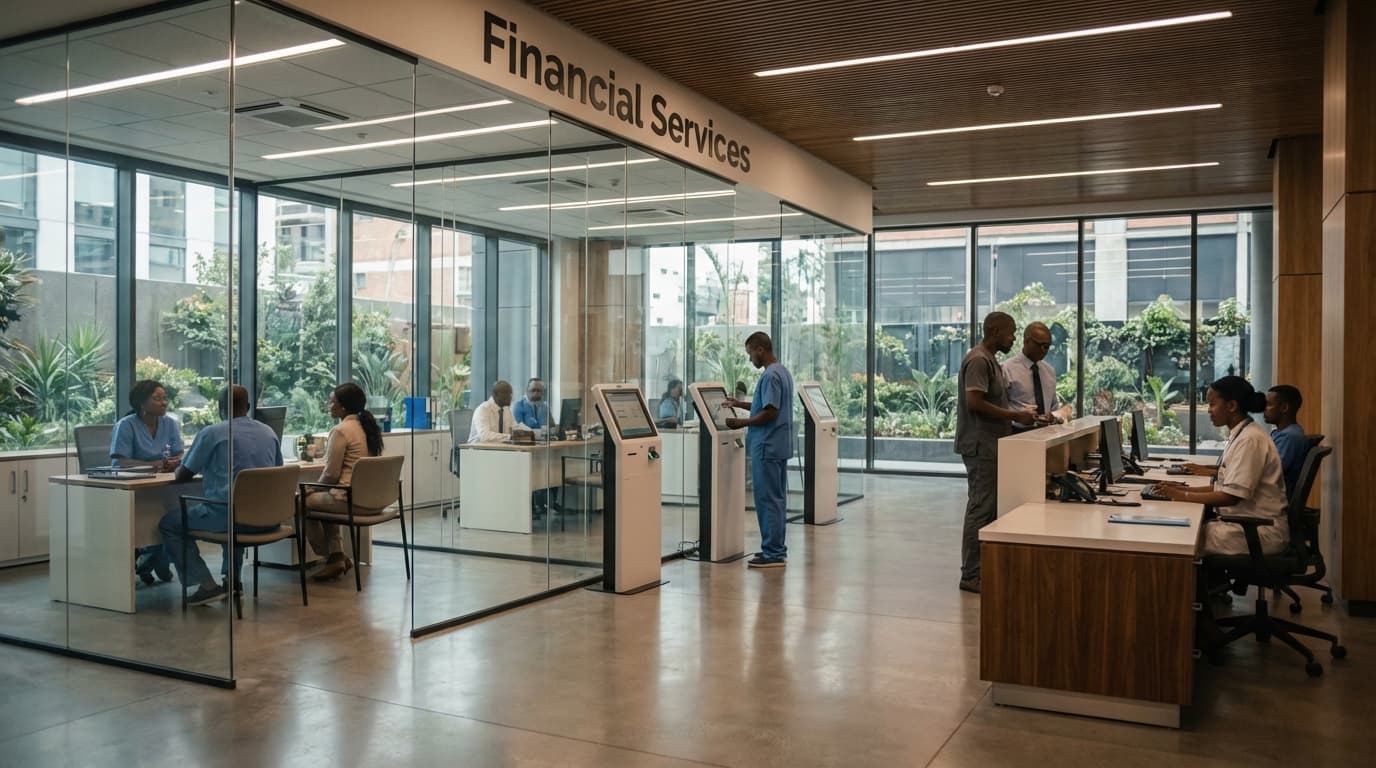
Medical Equipment Financing in Benin
Engineering Excellence & Technical Support
Leasing and financing solutions for medical equipment High-standard technical execution following OEM protocols and local regulatory frameworks.
Tailored Financing for Advanced Medical Technology
Access specialized financing solutions designed to acquire the latest medical equipment in Benin, from diagnostic imaging to surgical instruments, ensuring your healthcare facility remains at the forefront of patient care.
Flexible Repayment Structures & Competitive Rates
Benefit from adaptable repayment plans and attractive interest rates, meticulously structured to align with the revenue cycles of healthcare providers in Benin, facilitating sustainable operational growth.
Expedited Approval for Critical Equipment Needs
Receive swift processing and approval for your medical equipment financing applications, enabling timely acquisition of essential devices that directly impact patient outcomes and expand your service offerings in Benin.
What Is Medical Equipment Financing In Benin?
Medical Equipment Financing in Benin refers to a suite of financial instruments and services designed to facilitate the acquisition, upgrade, or maintenance of medical and healthcare infrastructure by healthcare providers and institutions within the Republic of Benin. This process involves structured debt, leasing, or equity-based solutions that enable access to essential medical technology and capital-intensive assets, thereby enhancing diagnostic capabilities, treatment efficacy, and overall patient care quality. The objective is to mitigate the substantial upfront capital expenditure typically associated with purchasing sophisticated medical apparatus.
| Who Needs Medical Equipment Financing? | Typical Use Cases | ||||
|---|---|---|---|---|---|
| Hospitals (Public and Private): Requiring new diagnostic imaging equipment (MRI, CT scanners), surgical suites, intensive care units, or general ward equipment. | Clinics and Medical Centers: Seeking to expand service offerings with specialized equipment like ultrasound machines, dental chairs, or laboratory analysis systems. | Diagnostic Laboratories: Needing to invest in advanced analytical instruments for pathology, biochemistry, or microbiology. | Specialist Medical Practices: Such as cardiology, ophthalmology, or dermatology, requiring specific high-value diagnostic and therapeutic devices. | Non-Governmental Organizations (NGOs) and Healthcare Initiatives: Focused on improving public health infrastructure in underserved regions. | Emerging Healthcare Entrepreneurs: Establishing new healthcare facilities or expanding existing ones. |
| Acquisition of New Technology: To enhance diagnostic accuracy, improve treatment outcomes, and remain competitive. | Replacement of Obsolete Equipment: To ensure reliability, safety, and compliance with current medical standards. | Expansion of Service Capacity: To meet growing patient demand or introduce new medical specialties. | Refurbishment and Upgrade Projects: To modernize existing facilities and integrate new functionalities into existing systems. | Fleet Management of Medical Vehicles: Such as ambulances equipped with advanced life support systems. | Implementation of Telemedicine Infrastructure: Requiring specialized communication and diagnostic devices. |
Key Aspects of Medical Equipment Financing in Benin
- Definition: A financial mechanism that provides capital for acquiring, leasing, or upgrading medical equipment in Benin.
- Objective: To overcome the barrier of high initial investment for healthcare providers, enabling them to access modern medical technology.
- Scope: Encompasses a broad range of medical devices, from basic diagnostic tools to advanced surgical machinery and hospital infrastructure components.
- Providers: Typically offered by commercial banks, specialized leasing companies, development finance institutions, and sometimes through government initiatives or grants.
- Structure: Can include term loans, operating leases, finance leases, or vendor financing programs.
Who Needs Medical Equipment Financing In Benin?
Medical equipment financing in Benin is a critical need for a wide range of healthcare providers and institutions aiming to enhance their diagnostic, treatment, and patient care capabilities. Access to modern and well-maintained medical technology is essential for accurate diagnoses, effective treatments, and ultimately, improved health outcomes for the Beninese population. Financing solutions bridge the gap between the need for advanced equipment and the often-limited capital resources available to healthcare entities.
| Target Customer Type | Key Departments/Equipment Needs | Reason for Financing |
|---|---|---|
| Public Hospitals & Clinics | Radiology (X-ray, CT scanners), Cardiology (ECG, echo), General Surgery, Maternity, Laboratory, Primary Care Equipment | Upgrade outdated equipment, expand service offerings, meet rising patient demand, improve diagnostic accuracy |
| Private Hospitals & Clinics | Advanced imaging (MRI, PET scanners), Surgical suites (laparoscopic equipment), Intensive Care Units (ventilators, monitors), Specialized diagnostic equipment (endoscopes, colposcopes), Aesthetics and cosmetic surgery equipment | Offer specialized services, enhance competitive advantage, attract higher-paying clientele, invest in cutting-edge technology |
| Specialty Medical Centers | Oncology (radiation therapy machines, chemotherapy pumps), Cardiology (catheterization labs, pacemakers), Ophthalmology (lasers, diagnostic imaging), Neurology (EEG, EMG machines), Dialysis centers (dialysis machines) | Acquire highly specialized equipment, provide advanced treatment options, cater to specific patient populations |
| Diagnostic Laboratories | Automated blood analyzers, PCR machines, DNA sequencers, Microbiology equipment, Histopathology equipment, Point-of-care testing devices | Increase testing volume and efficiency, expand diagnostic capabilities, adopt new testing technologies, ensure accuracy and reliability |
| Medical Training & Research Institutions | Anatomy labs, Simulation equipment, Advanced microscopes, Research-grade analyzers, Equipment for teaching hospitals | Provide hands-on training for students, facilitate groundbreaking research, equip teaching hospitals with modern facilities |
| NGOs & Charities | Basic diagnostic tools, Mobile clinic equipment, Ultrasound machines, Minor surgical instruments, Water purification and sanitation equipment for health facilities | Serve underserved communities, deliver essential healthcare services in remote areas, improve public health initiatives |
| Individual Practitioners & Small Practices | Ultrasound machines, ECG machines, Dental chairs and equipment, Minor surgical instruments, Specialized diagnostic kits | Enhance diagnostic capabilities, offer a wider range of services, improve patient convenience and outcomes |
Target Customers and Departments for Medical Equipment Financing in Benin
- {"title":"Public Hospitals and Clinics","description":"Government-funded healthcare facilities are primary beneficiaries, often facing budget constraints that hinder their ability to acquire the latest medical technology. Financing allows them to upgrade outdated equipment or expand their capacity to serve a larger patient base. This includes rural health centers as well as larger urban hospitals."}
- {"title":"Private Hospitals and Clinics","description":"As Benin's private healthcare sector grows, these institutions are keen to offer competitive and specialized services. Financing enables them to invest in state-of-the-art equipment to attract patients and differentiate themselves from competitors."}
- {"title":"Specialty Medical Centers","description":"Facilities focusing on specific medical disciplines, such as cardiology, oncology, ophthalmology, radiology, or dental care, require specialized and often expensive equipment. Financing makes these targeted investments achievable."}
- {"title":"Diagnostic Laboratories","description":"These centers rely heavily on advanced laboratory equipment for various tests, from routine blood work to sophisticated genetic analysis. Financing allows them to acquire new machines, maintain existing ones, and expand their testing repertoire."}
- {"title":"Medical Training and Research Institutions","description":"Universities and research centers with medical programs need modern equipment for teaching, training future healthcare professionals, and conducting vital medical research. Financing supports their educational and scientific missions."}
- {"title":"Non-Governmental Organizations (NGOs) and Charities","description":"Many NGOs operate healthcare programs in Benin, often in underserved areas. Equipment financing allows them to equip their clinics, mobile units, and outreach programs with essential medical tools."}
- {"title":"Individual Medical Practitioners and Small Practices","description":"Even individual doctors or small group practices can benefit from financing to acquire specific diagnostic tools or treatment machines that enhance their service offerings and patient care quality."}
Medical Equipment Financing Process In Benin
This document outlines the typical workflow for medical equipment financing in Benin, from the initial inquiry to the final execution of the financing agreement. The process involves several key stages, requiring coordination between the healthcare provider (the applicant), the equipment supplier, and the financing institution.
| Stage | Description | Key Actors Involved | Typical Documentation/Outputs |
|---|---|---|---|
| The healthcare provider identifies a need for specific medical equipment. They contact potential financing institutions to understand available financing options, terms, and eligibility criteria. This stage involves understanding the specific equipment, its cost, and the provider's financial capacity. | Healthcare Provider, Financing Institution (Bank, Leasing Company, etc.) | Preliminary discussion, Request for information on financing products, Initial needs assessment |
| The healthcare provider formally applies for financing. This involves completing application forms and submitting supporting documents, which typically include financial statements, business plans, legal registration documents, and details of the proposed equipment. | Healthcare Provider, Financing Institution | Completed loan/lease application form, Financial statements (audited if possible), Business plan, Proof of legal registration, Pro forma invoice from equipment supplier, Equipment specifications |
| The financing institution assesses the applicant's creditworthiness and the viability of the financing request. This includes analyzing financial health, repayment capacity, market position, and conducting background checks. The institution may also verify the legitimacy and value of the proposed equipment. | Financing Institution (Credit Department, Risk Management) | Financial analysis reports, Credit history checks, Site visits (sometimes), Valuation of equipment (if applicable), Legal due diligence on the applicant |
| Based on the due diligence, the financing institution prepares a financing proposal outlining the terms and conditions, including interest rates, repayment schedules, collateral requirements, and any covenants. The applicant reviews and negotiates these terms. | Financing Institution, Healthcare Provider | Financing proposal/offer letter, Negotiation of terms (interest rate, tenure, collateral, etc.) |
| Once terms are agreed upon, legal agreements are drafted and signed. This includes loan agreements, lease agreements, security agreements (if applicable), and any other legally binding documents. | Financing Institution, Healthcare Provider, Legal Counsel (for both parties) | Loan agreement, Lease agreement, Security/collateral documents, Guarantees (if any), Notarization of documents |
| The financing institution may facilitate or directly manage the procurement of the equipment from the approved supplier. The equipment is then delivered to the healthcare facility. This stage often involves verification of delivery and installation. | Financing Institution, Equipment Supplier, Healthcare Provider | Purchase order, Delivery confirmation note, Installation report, Acceptance certificate from the healthcare provider |
| Upon successful delivery and acceptance of the equipment, the financing institution disburses the approved funds to the equipment supplier or as otherwise agreed in the contract. This marks the activation of the financing. | Financing Institution, Equipment Supplier, Healthcare Provider | Disbursement instruction, Proof of payment to supplier |
| The financing institution monitors the repayment schedule and the ongoing status of the financed equipment. The healthcare provider makes regular payments as per the agreement. This stage involves ongoing communication and compliance checks. | Financing Institution, Healthcare Provider | Regular repayment installments, Periodic financial reports from the provider (if required), Equipment maintenance reports (sometimes) |
Medical Equipment Financing Workflow in Benin
- Inquiry & Needs Assessment
- Application Submission
- Credit Assessment & Due Diligence
- Proposal & Terms Negotiation
- Legal Documentation & Agreement
- Equipment Procurement & Delivery
- Disbursement of Funds
- Post-Disbursement Monitoring & Repayment
Medical Equipment Financing Cost In Benin
Financing medical equipment in Benin involves a range of costs influenced by several key factors. These include the type and complexity of the equipment, its brand and newness, the loan tenure, the financial institution's risk assessment, and prevailing market interest rates. Purchasing brand-new, high-tech diagnostic machines will naturally incur higher financing costs than acquiring refurbished, less sophisticated equipment. The duration of the loan significantly impacts the total cost, with longer tenures leading to higher aggregate interest payments. Local banks and specialized financing companies are the primary sources, each with their own lending criteria and fee structures. It's crucial for healthcare providers to shop around and compare offers to secure the most favorable terms.
| Equipment Category | Typical Financing Range (XOF per month, approximate) | Notes |
|---|---|---|
| Basic Diagnostic Equipment (e.g., Stethoscopes, BP Monitors) | 5,000 - 25,000 | Lower cost, shorter loan terms often available. |
| Mid-Range Diagnostic Equipment (e.g., Basic Ultrasound, ECG Machines) | 50,000 - 250,000 | Costs increase with features and brand. Interest rates are a significant component. |
| Advanced Imaging Equipment (e.g., CT Scanners, MRI Machines) | 500,000 - 5,000,000+ | Substantial financing required. Often involves longer tenures and potentially higher interest rates due to asset value and risk. |
| Surgical Instruments and Devices | 20,000 - 300,000 | Varies greatly depending on the complexity and number of instruments financed. |
| Laboratory Equipment (e.g., Analyzers, Microscopes) | 30,000 - 400,000 | Financing is dependent on the automation and capacity of the equipment. |
| Hospital Beds and Furniture | 10,000 - 100,000 | Generally lower financing costs compared to high-tech medical devices. |
Key Pricing Factors for Medical Equipment Financing in Benin:
- Equipment Type and Sophistication
- Equipment Brand and Condition (New vs. Refurbished)
- Loan Tenure (Duration of Repayment)
- Financial Institution's Risk Assessment and Policies
- Current Market Interest Rates
- Down Payment Amount
- Administrative and Processing Fees
Affordable Medical Equipment Financing Options
Securing affordable medical equipment is crucial for healthcare providers of all sizes. Beyond traditional loans, exploring value bundles and implementing cost-saving strategies can significantly reduce the financial burden. Value bundles offer a package of services or equipment at a reduced price, while strategic purchasing, leasing, and maintenance plans contribute to long-term savings.
| Strategy/Concept | Description | Benefits | Considerations |
|---|---|---|---|
| Value Bundles | A package deal that combines multiple pieces of equipment, software, or related services (e.g., installation, training, maintenance) at a discounted price compared to purchasing each item individually. | Significant cost reduction, streamlined procurement, integrated solutions, often includes preferential support. | Ensure the bundled items meet your specific needs; assess if you need all components; compare bundle price to individual item costs if purchased separately. |
| Equipment Leasing | Acquiring the use of equipment for a fixed period through regular payments, without ownership. | Lower upfront costs, predictable monthly expenses, access to the latest technology, easier upgrades, off-balance-sheet financing. | Total cost over the lease term may exceed purchase price; lease agreements can be complex; penalties for early termination; wear and tear clauses. |
| Refurbished/Pre-owned Equipment | Purchasing medical equipment that has been previously used, inspected, repaired, and certified to be in good working condition. | Substantially lower purchase price compared to new equipment, still offers reliable performance. | Warranty period may be shorter; limited availability of specific models; ensure reputable seller and certification process. |
| Bulk Purchasing/Group Purchasing Organizations (GPOs) | Buying in larger quantities to receive discounts, or joining a GPO that leverages collective buying power to negotiate favorable prices with suppliers. | Economies of scale lead to lower per-unit costs; access to better pricing than individual providers. | Requires commitment to specific volumes or GPO membership; ensure the GPO's offerings align with your needs. |
| Preventive Maintenance Contracts | Agreements with manufacturers or third-party providers to perform regular maintenance and servicing on equipment. | Reduces the likelihood of costly breakdowns, extends equipment lifespan, ensures optimal performance, may include priority repair services. | Ongoing cost; ensure contract terms cover all necessary services and response times; compare costs with in-house maintenance capabilities. |
| Negotiation and Discounting | Actively engaging with vendors to negotiate prices, payment terms, and included services. | Potential for direct cost savings, customized solutions, better vendor relationships. | Requires market knowledge, strong negotiation skills, and willingness to walk away from unfavorable deals. |
Key Strategies for Affordable Medical Equipment
- Understanding Value Bundles: What they are and how they work.
- Cost-Saving Strategies: Practical approaches for reducing expenditure.
- Financing Options Beyond Traditional Loans: Exploring alternatives.
- Negotiation and Due Diligence: Ensuring the best possible deal.
Verified Providers In Benin
Navigating the healthcare landscape in Benin can be challenging, with many providers to choose from. However, when it comes to trusted and effective medical care, Franance Health credentials stand out as a hallmark of quality and reliability. This document outlines why a healthcare provider with Franance Health credentials represents the best choice for your medical needs in Benin.
| Benefit of Choosing a Franance Health Certified Provider | Why it Matters for Your Health |
|---|---|
| Guaranteed Quality of Care | You can be assured of receiving medical services that meet high standards, reducing the risk of errors and suboptimal outcomes. |
| Enhanced Patient Safety | Accredited facilities have robust safety protocols in place, minimizing risks associated with medical procedures and treatments. |
| Access to Experienced Professionals | Franance Health certification often implies that the medical staff has undergone extensive training and possesses significant expertise in their respective fields. |
| Trust and Reliability | The accreditation provides a strong basis of trust, allowing you to make informed decisions about your healthcare with confidence. |
| Modern Facilities and Technology | Certified providers are typically equipped with up-to-date medical technology and maintain modern facilities to support effective diagnosis and treatment. |
| Improved Patient Experience | Expect a more organized, responsive, and patient-focused approach to your healthcare journey, from initial consultation to post-treatment care. |
What are Franance Health Credentials?
- Rigorous Accreditation: Franance Health is a recognized body that subjects healthcare facilities and professionals to stringent evaluation processes. This includes assessing infrastructure, equipment, medical expertise, patient safety protocols, and adherence to international best practices.
- Commitment to Excellence: Providers who achieve Franance Health credentials have demonstrated a consistent commitment to delivering high-quality medical services. This involves ongoing training for staff, continuous improvement in patient care, and the adoption of advanced medical technologies.
- Patient-Centric Approach: A core tenet of Franance Health is a focus on patient well-being and satisfaction. Certified providers prioritize clear communication, ethical treatment, and a positive patient experience.
- Transparency and Accountability: Franance Health promotes transparency in healthcare. Providers under their accreditation are held accountable for their performance, ensuring that patients receive the care they expect and deserve.
- Specialized Expertise: Depending on the specific accreditation, Franance Health can also signify specialized expertise in various medical fields. This means a provider might be recognized for excellence in areas like cardiology, obstetrics, surgery, or diagnostics.
Scope Of Work For Medical Equipment Financing
This Scope of Work outlines the technical deliverables and standard specifications required for medical equipment financing. The objective is to ensure that all financed medical equipment meets industry best practices, regulatory requirements, and the specific operational needs of the healthcare facility. This includes defining the technical capabilities, quality standards, and documentation necessary for successful acquisition, installation, and ongoing use of the equipment.
| Equipment Category | Key Technical Specifications/Features | Standard Compliance | Performance Criteria |
|---|---|---|---|
| Imaging Equipment (e.g., MRI, CT Scanner) | Spatial resolution, signal-to-noise ratio (SNR), scan time, radiation dose management, image processing capabilities, patient comfort features. | IEC 60601 series, local regulatory body approvals (e.g., FDA, CE). | Diagnostic accuracy, throughput, uptime percentage, image quality benchmarks. |
| Diagnostic/Therapeutic Lasers | Wavelength, power output, pulse duration, spot size, safety interlocks, cooling system efficiency. | IEC 60825 series, Class II/IIIb/IV laser classifications. | Treatment efficacy, patient safety, consistency of energy delivery. |
| Patient Monitoring Systems | Parameter accuracy (ECG, SpO2, BP, etc.), alarm management capabilities, data logging and retrieval, interoperability (e.g., HL7), network connectivity. | IEC 60601 series, AAMI standards. | Real-time data accuracy, reliability of alarms, ease of data integration. |
| Surgical Instruments (e.g., Robotic Surgery Systems) | Precision, dexterity, ergonomics, imaging integration, sterile processing compatibility, haptic feedback, safety features. | ISO 13485, specific device standards. | Surgical precision, reduction in invasiveness, surgeon comfort, ease of disinfection. |
| Laboratory Analyzers | Throughput, accuracy, precision, linearity, detection limits, sample handling automation, reagent compatibility. | ISO 15189, CLIA, relevant ASTM standards. | Test result accuracy, turnaround time, cost per test, reliability of automated processes. |
| Sterilization Equipment (e.g., Autoclaves) | Cycle validation, temperature and pressure control, cycle time, chamber volume, safety features, energy efficiency. | EN 285, AAMI TIR12, relevant ISO standards. | Sterilization efficacy, cycle repeatability, energy consumption, equipment lifespan. |
Key Technical Deliverables
- Detailed technical specifications for each medical equipment item.
- Manufacturer's compliance certificates (e.g., CE marking, FDA clearance).
- Proof of warranty and service agreements.
- User manuals and technical documentation (in English).
- Installation and commissioning reports.
- Training materials for end-users and technical staff.
- Maintenance and calibration schedules.
- Software licenses and update policies.
- Cybersecurity compliance documentation (where applicable).
- Environmental impact and safety certifications.
Service Level Agreement For Medical Equipment Financing
This Service Level Agreement (SLA) outlines the response times and uptime guarantees for medical equipment financing services provided by [Your Company Name] (hereinafter referred to as 'Provider') to [Client Name] (hereinafter referred to as 'Client'). This SLA aims to ensure the operational continuity and reliability of the financed medical equipment for the Client.
| Service Component | Criticality Level | Response Time Target | Resolution Time Target | Uptime Guarantee |
|---|---|---|---|---|
| Financing Application Processing | High | 2 business days for initial review | 5-7 business days for approval/rejection | N/A |
| Equipment Performance Issues (affecting patient care) | Critical | 1 hour acknowledgement, 2 hours initial diagnosis | 8 business hours for resolution or temporary workaround | 99.5% |
| Equipment Performance Issues (minor disruption) | Medium | 4 business hours acknowledgement, 8 business hours initial diagnosis | 3 business days for resolution | 98.0% |
| Maintenance Scheduling and Coordination | High | 1 business day for scheduling request acknowledgement | 2 business days for confirmed schedule | N/A |
| Billing and Invoicing Inquiries | Low | 1 business day acknowledgement | 3 business days for resolution | N/A |
| Contractual Document Access | Medium | 2 business hours acknowledgement | 1 business day for document provision | N/A |
Key Service Level Objectives
- Response Time: The maximum time allowed for the Provider to acknowledge and begin addressing a reported issue.
- Resolution Time: The maximum time allowed for the Provider to resolve a reported issue to a satisfactory level for the Client.
- Uptime Guarantee: The minimum percentage of time the financed medical equipment is expected to be operational and available for use.
- Reporting: Regular reporting on equipment performance, maintenance, and adherence to SLA metrics.
Frequently Asked Questions

Ready when you are
Let's scope your Medical Equipment Financing in Benin project in Benin.

Scaling healthcare logistics and technical systems across the entire continent.