
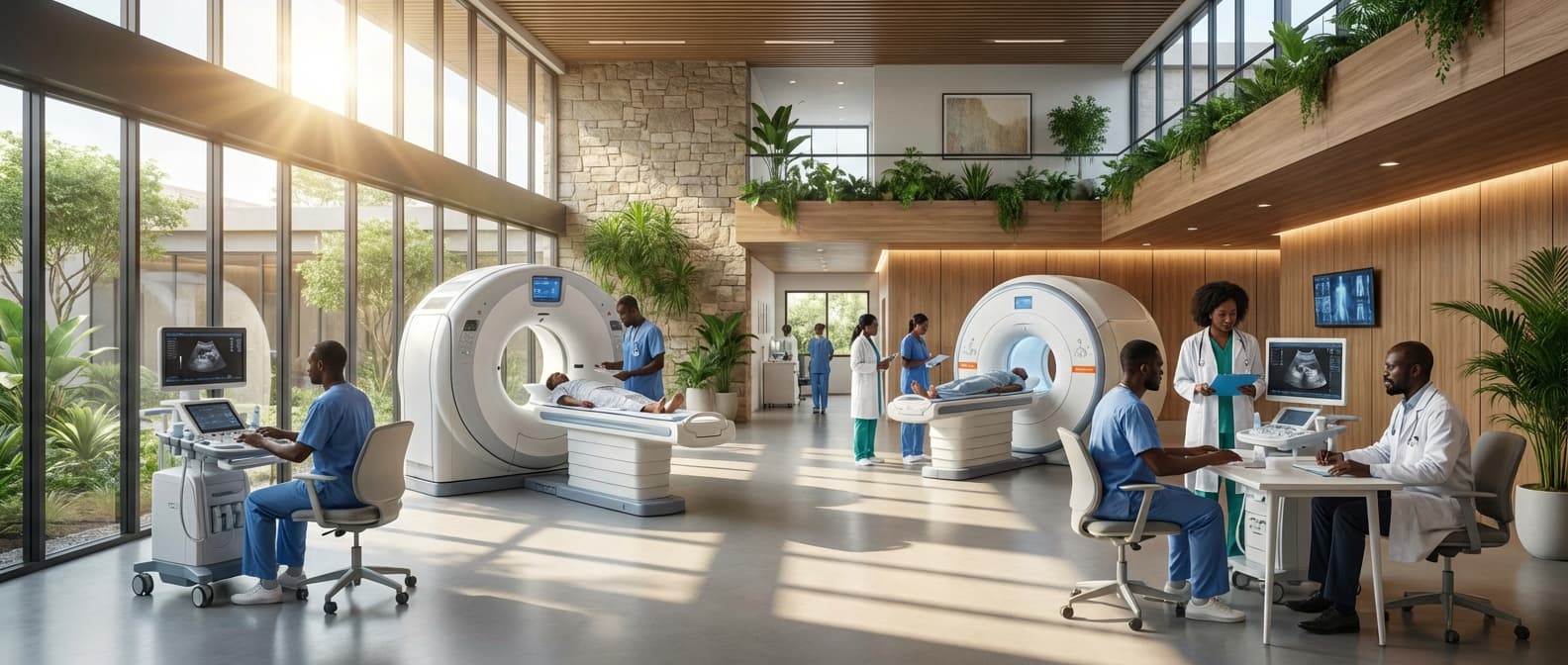
Diagnostic Imaging in Benin
Engineering Excellence & Technical Support
High-resolution imaging systems including CT scanners, MRI, X-ray, and ultrasound technology for accurate clinical diagnosis. High-standard technical execution following OEM protocols and local regulatory frameworks.
Mobile X-ray Units for Remote Access
Deployment of advanced mobile X-ray units equipped with digital radiography to extend diagnostic imaging services to underserved rural communities, drastically reducing travel time and improving early detection rates for prevalent conditions like tuberculosis and fractures.
Upgraded CT Scanner Capabilities
Installation of a new generation CT scanner with enhanced resolution and faster scan times at the National Hospital. This upgrade significantly improves the accuracy and speed of diagnosing complex neurological conditions, trauma, and oncological pathologies, leading to more targeted and effective treatment planning.
AI-Powered Ultrasound for Maternal Health
Integration of Artificial Intelligence (AI) algorithms into portable ultrasound devices used in prenatal clinics. This technology assists healthcare professionals in accurately identifying fetal abnormalities and monitoring high-risk pregnancies, thereby enhancing maternal and infant survival rates and reducing preventable birth complications.
What Is Diagnostic Imaging In Benin?
Diagnostic imaging in Benin refers to the use of various medical imaging technologies to visualize the internal structures of the human body for the purpose of diagnosing, monitoring, and guiding the treatment of diseases and injuries. This service encompasses a range of modalities, each employing different physical principles to generate images. The demand for diagnostic imaging in Benin is driven by the need for accurate and timely medical assessments across diverse clinical specialties. Individuals requiring diagnostic imaging are those presenting with symptoms suggestive of underlying pathology, as well as those requiring follow-up examinations to assess treatment efficacy or disease progression. The typical use cases span a broad spectrum of medical conditions, from acute trauma to chronic diseases, and are crucial for both primary diagnosis and advanced clinical decision-making.
| Clinical Indication | Primary Imaging Modality | Typical Findings/Purpose |
|---|---|---|
| Suspected bone fracture | X-ray | Identification of bone discontinuity, displacement, and angulation |
| Abdominal pain (e.g., appendicitis, cholecystitis) | Ultrasound, CT Scan | Visualization of organs (appendix, gallbladder, liver, kidneys), detection of inflammation, stones, or masses |
| Suspected stroke or head trauma | CT Scan, MRI | Assessment of intracranial hemorrhage, ischemic infarcts, contusions, and edema |
| Respiratory symptoms (e.g., pneumonia, tuberculosis) | X-ray (Chest), CT Scan (Chest) | Detection of infiltrates, consolidation, nodules, and pleural effusions |
| Obstetric monitoring (fetal growth, anomaly screening) | Ultrasound | Assessment of fetal development, amniotic fluid volume, placental position, and detection of congenital abnormalities |
| Suspected breast malignancy | Mammography, Ultrasound | Detection of microcalcifications, masses, and architectural distortions suggestive of cancer |
| Musculoskeletal pain (e.g., ligament tears, joint pathology) | MRI, X-ray, Ultrasound | Detailed visualization of soft tissues, cartilage, and bone abnormalities |
Key Modalities of Diagnostic Imaging in Benin
- X-ray (Radiography): Utilizes electromagnetic radiation to produce two-dimensional images of bones, soft tissues, and organs. Widely used for skeletal fractures, pneumonia, and foreign body detection.
- Computed Tomography (CT) Scan: Employs X-rays from multiple angles to create cross-sectional images (slices) of the body. Essential for detailed visualization of organs, blood vessels, and complex anatomical structures, particularly in trauma, stroke, and cancer staging.
- Ultrasound (Sonography): Employs high-frequency sound waves to generate real-time images. Non-invasive and safe, it is commonly used in obstetrics and gynecology, abdominal assessments, and vascular studies.
- Magnetic Resonance Imaging (MRI): Uses strong magnetic fields and radio waves to produce highly detailed images of soft tissues. Indispensable for neurological assessments, musculoskeletal injuries, and certain oncological evaluations.
- Mammography: A specialized X-ray technique for breast imaging, primarily used for the early detection of breast cancer.
Who Needs Diagnostic Imaging In Benin?
Diagnostic imaging plays a crucial role in modern healthcare by providing non-invasive visualization of internal body structures. In Benin, its application is vital for accurate diagnosis, treatment planning, and monitoring of various health conditions across different patient populations and healthcare settings. Identifying who needs diagnostic imaging and in which departments it is most utilized allows for targeted resource allocation and strategic development of radiology services.
| Department | Key Applications of Diagnostic Imaging | Common Imaging Modalities Used |
|---|---|---|
| Emergency Department (ED) | Trauma assessment (fractures, internal bleeding), stroke diagnosis, acute abdominal pain evaluation, chest pain investigation | X-ray, CT scan, Ultrasound |
| Internal Medicine | Diagnosis and management of pneumonia, heart failure, kidney disease, gastrointestinal disorders, neurological conditions | X-ray, Ultrasound, CT scan, MRI (where available) |
| Surgery (General, Orthopedic, Neurosurgery, etc.) | Pre-operative planning, post-operative monitoring, assessment of surgical complications, fracture management, tumor localization | X-ray, CT scan, MRI, Ultrasound |
| Pediatrics | Diagnosis of congenital abnormalities, infections, trauma, developmental disorders, appendicitis | X-ray, Ultrasound, CT scan (with reduced dose protocols) |
| Obstetrics & Gynecology | Fetal assessment, monitoring pregnancy complications (e.g., placenta previa, ectopic pregnancy), pelvic pain evaluation, gynecological masses | Ultrasound, MRI (for specific indications) |
| Oncology | Tumor staging, treatment response assessment, detection of metastasis, biopsy guidance | CT scan, MRI, PET-CT (if available), Ultrasound |
| Cardiology | Assessment of cardiac structures, blood flow, and function; detection of coronary artery disease (in conjunction with other tests) | Echocardiography (Ultrasound), CT angiography, MRI (for specialized assessments) |
| Radiology Department | Central hub for all imaging procedures, interpretation, and reporting, often serving multiple clinical departments. | All available modalities |
Target Customers for Diagnostic Imaging in Benin
- Patients presenting with acute symptoms (e.g., trauma, suspected stroke, severe pain)
- Patients with chronic diseases requiring ongoing monitoring (e.g., cancer, cardiovascular diseases, diabetes-related complications)
- Patients referred for pre-operative assessment
- Patients requiring follow-up imaging to assess treatment efficacy or disease progression
- Individuals undergoing routine health screenings (where applicable and cost-effective)
- Specialized patient groups (e.g., pregnant women for specific indications, pediatric patients)
- Patients in remote or underserved areas who may require imaging services through mobile units or referral systems
Diagnostic Imaging Process In Benin
The diagnostic imaging process in Benin, like in many healthcare systems, follows a structured workflow to ensure accurate and timely diagnoses. This process typically begins with a physician's inquiry and culminates in the interpretation and reporting of imaging results. The workflow is designed to be efficient, from patient referral to the final report, incorporating various stages of patient preparation, image acquisition, and expert analysis.
| Stage | Key Actors | Primary Activities | Key Deliverables |
|---|---|---|---|
| Inquiry/Referral | Referring Physician | Clinical assessment, Identification of imaging need, Referral creation | Imaging Request Form |
| Scheduling/Preparation | Imaging Department Staff, Patient | Appointment booking, Patient education, Pre-procedure instructions | Scheduled Appointment, Prepared Patient |
| Registration | Administrative Staff, Patient | Patient identification, Data verification, Workflow initiation | Patient Record Updated |
| Acquisition | Radiographer/Technician | Patient positioning, Image capture, Protocol adherence | Raw Imaging Data |
| Processing/QC | Radiographer/Technician | Image enhancement, Artifact reduction, Quality assurance | Processed Images |
| Interpretation | Radiologist | Image analysis, Diagnosis formulation, Clinical correlation | Interpreted Images |
| Reporting | Radiologist | Report drafting, Dictation/Writing, Finalizing findings | Radiology Report |
| Distribution | Imaging Department Staff | Report transmission, Image sharing | Final Report and Images to Referring Physician |
| Management | Referring Physician | Treatment planning, Clinical decision-making | Patient Care Plan |
Diagnostic Imaging Workflow in Benin
- {"title":"Physician Inquiry/Referral","description":"A healthcare provider (doctor, specialist) identifies the need for diagnostic imaging based on a patient's symptoms, medical history, or follow-up care. A formal request or referral is initiated, specifying the type of imaging required (e.g., X-ray, Ultrasound, CT scan, MRI) and the clinical indication."}
- {"title":"Patient Scheduling and Preparation","description":"The imaging department or facility schedules an appointment for the patient. Instructions regarding preparation are provided, which may include fasting, avoiding certain medications, wearing specific clothing, or undergoing contrast agent administration, depending on the imaging modality and the area being examined."}
- {"title":"Patient Registration and Check-in","description":"Upon arrival at the imaging facility, the patient is registered, and their details are verified. This usually involves confirming identity, insurance information, and reviewing the physician's request."}
- {"title":"Image Acquisition (Scanning)","description":"A qualified radiographer or technician performs the imaging procedure. The patient is positioned appropriately, and the imaging equipment (X-ray machine, ultrasound probe, CT scanner, MRI scanner) is used to capture the required images according to established protocols."}
- {"title":"Image Processing and Quality Control","description":"The acquired images are processed. For digital systems, this involves image enhancement and optimization. Radiographers perform initial quality checks to ensure the images are clear, free of artifacts, and diagnostically useful."}
- {"title":"Radiologist Interpretation","description":"A board-certified radiologist reviews the processed images. They analyze the findings, correlate them with the patient's clinical information, and identify any abnormalities or significant findings."}
- {"title":"Report Generation","description":"The radiologist dictates or writes a detailed report summarizing their findings, including normal observations and any pathology detected. The report often includes recommendations for further investigation or management."}
- {"title":"Report Distribution","description":"The final imaging report, along with the images (usually digital), is sent back to the referring physician. In some cases, electronic transfer is used, while in others, a physical copy may be provided."}
- {"title":"Clinical Correlation and Patient Management","description":"The referring physician uses the imaging report and images to confirm a diagnosis, plan treatment, or monitor disease progression for the patient. This forms the basis for further clinical decisions."}
Diagnostic Imaging Cost In Benin
Diagnostic imaging plays a crucial role in modern healthcare, enabling accurate diagnosis and guiding treatment. In Benin, like in many developing nations, the cost of these services can be a significant barrier for a substantial portion of the population. Several factors influence the pricing of diagnostic imaging in Benin, leading to a range of costs across different facilities and procedures.
Key Pricing Factors in Benin:
- Type of Imaging Modality: Different imaging techniques have vastly different operational and equipment costs. For instance, an X-ray is generally less expensive than an MRI or CT scan due to the complexity and cost of the machinery, maintenance, and specialized personnel required.
- Facility Type and Location: Public hospitals and clinics often have subsidized rates compared to private diagnostic centers. Facilities located in major urban centers like Cotonou or Porto-Novo might have slightly higher overheads, which can be reflected in their pricing, though competition can also play a role.
- Equipment Age and Technology: Older, less sophisticated equipment may lead to lower prices, but potentially at the expense of image quality and diagnostic accuracy. Newer, advanced equipment, often found in well-funded private facilities, comes with higher upfront and maintenance costs, translating to more expensive services.
- Reagent and Consumable Costs: Certain imaging procedures, like contrast-enhanced CT or MRI scans, require specialized contrast agents. The availability and cost of these consumables in Benin directly impact the final price.
- Specialist Radiologist Expertise: The involvement of highly specialized radiologists for interpretation can add to the cost, especially for complex cases requiring sub-specialty expertise.
- Operational Costs: Electricity, rent, staffing (radiographers, technicians, administrative staff), and administrative overheads contribute to the overall cost structure of any diagnostic imaging service.
- Government Subsidies and Insurance: While the penetration of health insurance in Benin is relatively low, any existing government subsidies or insurance schemes for specific procedures or patient groups can influence out-of-pocket expenses.
- Demand and Competition: In areas with a high concentration of diagnostic centers, competitive pricing might be observed. Conversely, in underserved regions, prices might be higher due to limited options.
| Imaging Modality | Estimated Price Range (XOF) | Notes |
|---|---|---|
| X-ray (e.g., Chest, Limb) | 10,000 - 30,000 | Price varies based on number of views and body part. Basic X-rays are the most affordable. |
| Ultrasound (e.g., Abdominal, Pelvic, Obstetric) | 15,000 - 40,000 | Cost can increase for specialized ultrasounds (e.g., Doppler) or if a contrast agent is used. |
| CT Scan (e.g., Head, Abdomen, Chest) | 50,000 - 150,000+ | Significantly higher than X-ray due to advanced technology. Price increases substantially for contrast-enhanced scans or specialized protocols. |
| MRI Scan (e.g., Brain, Spine, Joints) | 80,000 - 300,000+ | Generally the most expensive modality. Prices are heavily influenced by the specific body part, contrast use, and scan duration. Limited availability of MRI machines in Benin. |
Common Diagnostic Imaging Procedures and Estimated Cost Ranges in Benin (CFA Francs - XOF)
- X-ray (Standard Radiography)
- Ultrasound (Sonography)
- CT Scan (Computed Tomography)
- MRI Scan (Magnetic Resonance Imaging)
Affordable Diagnostic Imaging Options
Navigating the healthcare system for diagnostic imaging can be a significant financial concern. Fortunately, there are increasing options for affordable diagnostic imaging. Understanding concepts like "value bundles" and implementing proactive cost-saving strategies can make a substantial difference in your out-of-pocket expenses. Value bundles, also known as "all-inclusive" or "package deals," combine the imaging service with related pre- and post-procedure care at a fixed price. This can offer predictability and often a lower overall cost compared to paying for each component separately. Cost-saving strategies involve being an informed patient, exploring different providers, and understanding your insurance coverage.
| Provider Type | Potential Cost Savings | Considerations |
|---|---|---|
| Independent Imaging Centers | Often lower than hospitals | May not always have the latest technology, but usually sufficient for common scans. |
| Hospital-Based Imaging Departments | Can be higher, but may be required for complex cases or by insurance networks | Access to cutting-edge technology and specialists, often more convenient if already at the hospital. |
| Outpatient Surgical Centers | Can offer competitive pricing for certain procedures | Varying availability for diagnostic imaging services. |
| "Price Transparency" Websites/Apps | Allows for direct comparison of costs | Accuracy and comprehensiveness can vary; always confirm directly with the provider. |
Key Strategies for Affordable Diagnostic Imaging
- {"title":"Understand Value Bundles","description":"These packages often include the scan itself, radiologist interpretation, and sometimes follow-up consultations or basic treatments. They provide a transparent, upfront cost."}
- {"title":"Shop Around for Providers","description":"Prices for the same imaging procedure can vary significantly between hospitals, independent imaging centers, and specialized clinics. Obtain quotes from multiple facilities."}
- {"title":"Inquire About Cash Discounts","description":"If you don't have insurance or your insurance has high deductibles, many imaging centers offer discounted rates for patients paying out-of-pocket."}
- {"title":"Negotiate Prices","description":"Don't be afraid to ask if there's room for negotiation, especially if you're paying upfront or facing a large bill."}
- {"title":"Understand Your Insurance Benefits","description":"Know your deductible, co-pays, co-insurance, and out-of-pocket maximum. Confirm if the imaging facility is in-network to avoid higher out-of-network costs."}
- {"title":"Ask About Generic or Alternative Imaging","description":"In some cases, less expensive imaging techniques might be suitable. Discuss with your doctor if an alternative imaging modality could provide the necessary diagnostic information."}
- {"title":"Utilize Health Savings Accounts (HSAs) or Flexible Spending Accounts (FSAs)","description":"These pre-tax accounts can significantly reduce the net cost of imaging services if you have one through your employer or a personal plan."}
- {"title":"Seek Second Opinions (When Appropriate)","description":"While not directly a cost-saving strategy for the imaging itself, a second opinion from a physician on the necessity of the scan can prevent unnecessary procedures and associated costs."}
Verified Providers In Benin
In Benin's burgeoning healthcare sector, identifying truly verified and competent providers is paramount for ensuring quality care. Franance Health stands out as a leading organization dedicated to credentialing and recognizing healthcare professionals and facilities. Their rigorous verification process ensures that all accredited entities meet stringent standards for medical expertise, ethical practice, and patient safety. Choosing Franance Health-verified providers means opting for reliability, professionalism, and peace of mind, knowing you are in the hands of the best.
| Franance Health Credentialing Criteria | Benefits for Patients | Examples of Verified Providers |
|---|---|---|
| Medical Education and Training | Assurance of qualified medical professionals | Hospitals, Clinics, Specialist Centers |
| Professional Licenses and Certifications | Confirmation of legal and ethical practice | Individual Doctors, Surgeons, Nurses |
| Experience and Competence Assessment | Access to experienced and skilled practitioners | Diagnostic Laboratories, Pharmacies |
| Adherence to Ethical Standards | Trustworthy and patient-centric care | Rehabilitation Centers, Public Health Initiatives |
| Facility Infrastructure and Equipment | Access to modern and safe healthcare facilities | Dental Clinics, Mental Health Services |
Why Choose Franance Health Verified Providers?
- Rigorous Verification Process
- Commitment to Quality and Safety
- Enhanced Patient Trust and Confidence
- Access to Skilled and Ethical Professionals
- Recognition of Excellence in Healthcare
Scope Of Work For Diagnostic Imaging
This document outlines the Scope of Work (SOW) for diagnostic imaging services, detailing the technical deliverables and standard specifications required for the provision of these services. The objective is to ensure high-quality, accurate, and timely diagnostic imaging to support patient care and clinical decision-making. This SOW encompasses all aspects of diagnostic imaging, from equipment and personnel to image acquisition, interpretation, reporting, and data management.
| Section | Description | Technical Deliverables | Standard Specifications |
|---|---|---|---|
| Modalities | Range of imaging techniques offered. | X-ray, CT, MRI, Ultrasound, Mammography, Nuclear Medicine. | Compliance with ACR, AAPM, and other relevant accreditation bodies. Specific technical parameters for each modality (e.g., kVp, mAs, slice thickness, field of view, contrast administration protocols). |
| Equipment | Imaging hardware and software. | State-of-the-art imaging equipment, PACS, RIS, DICOM compliance. | Regular maintenance and calibration logs. Equipment performance monitoring. Latest software versions. Secure network infrastructure. |
| Personnel | Qualifications and expertise of imaging staff. | Board-certified Radiologists, certified Technologists, skilled support staff. | Licensing and certification verification. Continuing education requirements. Staff-to-patient ratios. Performance evaluations. |
| Image Acquisition | Procedures for capturing diagnostic images. | Standardized protocols for each exam type, patient positioning, radiation safety measures. | Adherence to ALARA principle. Protocol optimization for image quality and dose reduction. Quality control checks during acquisition. |
| Image Interpretation | Analysis of acquired images by radiologists. | Accurate and comprehensive interpretation of all imaging studies. | Timeliness of interpretation (e.g., STAT reads within X minutes, routine reads within Y hours). Radiologist peer review process. |
| Reporting | Generation of diagnostic reports. | Clear, concise, and clinically relevant reports, including findings, impressions, and recommendations. Standardized report templates. | Electronic reporting system with dictation capabilities. Secure report distribution. Report sign-off by authorized radiologists. |
| Data Management & Archiving | Storage and retrieval of imaging data. | PACS for image storage and retrieval, RIS for workflow management, long-term archiving solution. | DICOM compliance. HIPAA compliance. Data integrity and security measures. Retrieval times for archived studies. Data backup and disaster recovery plan. |
| Quality Assurance | Processes to ensure consistent quality. | Regular quality control checks on equipment and procedures, ongoing training, patient feedback mechanisms. | Defined QA metrics and performance benchmarks. Regular audits of imaging procedures and reports. Incident reporting and root cause analysis. |
| Patient Safety | Measures to protect patient well-being. | Radiation dose monitoring and optimization, contrast media safety protocols, patient identification procedures, emergency preparedness. | Compliance with regulatory requirements for radiation safety. Contrast reaction protocols. Patient screening procedures. Trained personnel in emergency response. |
| Turnaround Times | Timeframes for image acquisition, interpretation, and reporting. | Defined turnaround times for different urgency levels (e.g., STAT, urgent, routine). | Performance tracking against established turnaround time targets. Escalation procedures for delayed reports. |
Key Objectives
- Provide comprehensive diagnostic imaging services across various modalities.
- Ensure the highest quality of image acquisition and interpretation.
- Maintain patient safety and comfort during imaging procedures.
- Deliver timely and accurate diagnostic reports to referring physicians.
- Adhere to all relevant regulatory standards and best practices.
- Implement robust data management and archiving systems.
Service Level Agreement For Diagnostic Imaging
This Service Level Agreement (SLA) outlines the performance standards and guarantees for diagnostic imaging services provided by [Provider Name] to [Client Name]. It specifically addresses response times for critical and routine imaging requests and establishes uptime guarantees for imaging equipment and associated IT systems.
| Service Component | Metric | Target | Measurement Period | Remedy for Failure |
|---|---|---|---|---|
| Diagnostic Imaging Services | Response Time (Critical Request - e.g., Stroke, Trauma) | Within 30 minutes of request receipt | 24x7 | 10% discount on the next invoice for each instance exceeding the target. |
| Diagnostic Imaging Services | Response Time (Urgent Request - e.g., Suspected fracture, acute abdominal pain) | Within 60 minutes of request receipt | 24x7 | 5% discount on the next invoice for each instance exceeding the target. |
| Diagnostic Imaging Services | Response Time (Routine Request - e.g., Follow-up scan) | Within 4 hours of request receipt | Business Hours (8 AM - 5 PM, Mon-Fri) | 2% discount on the next invoice for each instance exceeding the target. |
| Imaging Equipment & IT Systems | Uptime Guarantee (PACS, RIS, Imaging Modalities) | 99.8% Uptime | Monthly | Service credits equivalent to 1 day of service for every 0.2% downtime below 99.8% in a given month. |
| Imaging Equipment & IT Systems | Scheduled Maintenance Downtime Notification | Minimum 48 hours advance notice | N/A | No direct remedy, but considered a breach if notice is not provided. |
Key Performance Indicators (KPIs)
- Diagnostic Imaging Services
- Response Times
- Uptime Guarantees
- Reporting and Escalation
Frequently Asked Questions

Ready when you are
Let's scope your Diagnostic Imaging in Benin project in Benin.

Scaling healthcare logistics and technical systems across the entire continent.