
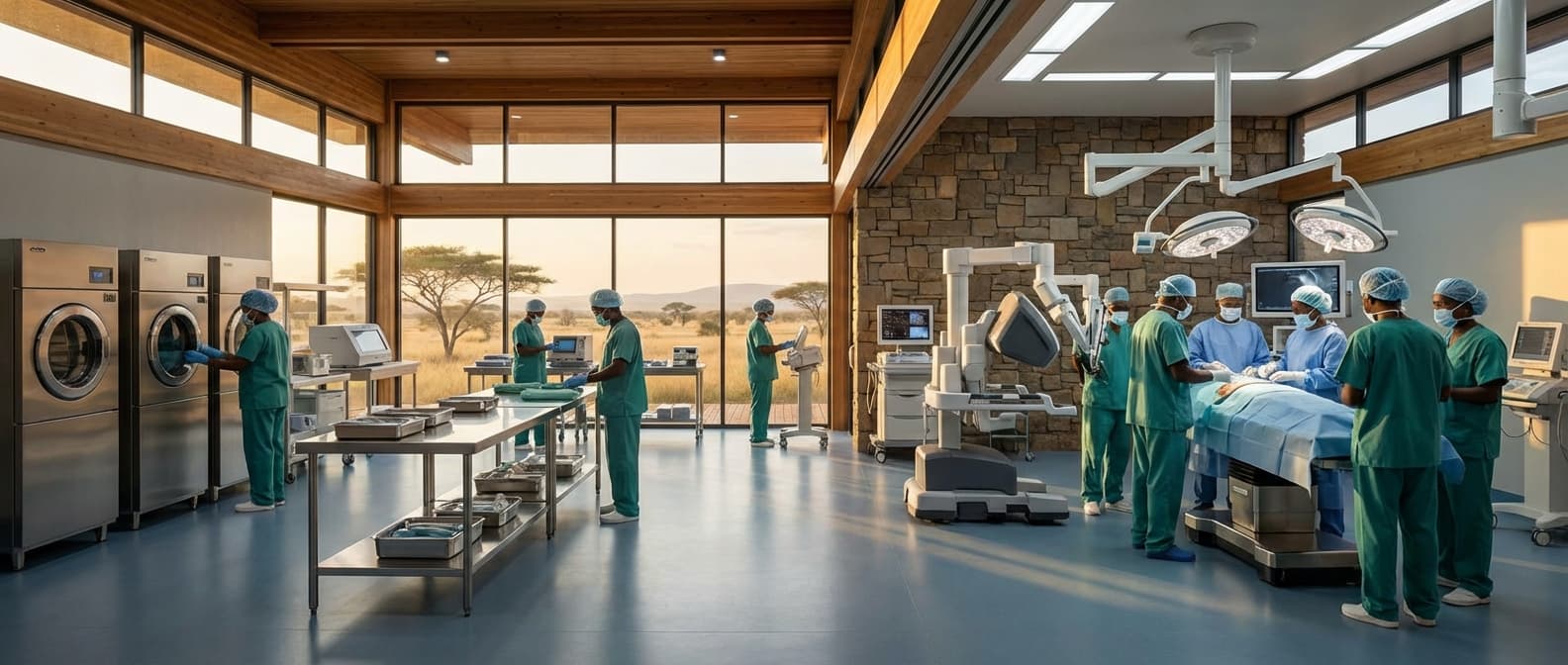
CSSD Design & Validation in Benin
Engineering Excellence & Technical Support
CSSD workflow design, validation and process development High-standard technical execution following OEM protocols and local regulatory frameworks.
Optimized Sterilization Workflow Design
Leveraging advanced CAD and simulation tools, we design CSSD layouts in Benin that minimize cross-contamination risks and maximize instrument turnaround time. Our designs adhere to international standards (e.g., ISO 13485) and are tailored to local resource availability and clinical needs.
Rigorous Sterilization Validation Protocols
We develop and execute comprehensive validation protocols for all sterilization processes (steam, low-temperature, etc.) in Benin's healthcare facilities. This includes equipment qualification (IQ, OQ, PQ), process validation, and ongoing performance monitoring to ensure consistent microbial inactivation and instrument safety.
Localized Training & Compliance Support
Beyond design and validation, we provide hands-on training for CSSD personnel in Benin on best practices, infection control, and the proper operation and maintenance of sterilization equipment. Our ongoing support ensures sustained compliance with regulatory requirements and a high standard of patient safety.
What Is Cssd Design & Validation In Benin?
CSSD (Central Sterile Services Department) design and validation in Benin refers to the systematic process of planning, configuring, and subsequently verifying that a CSSD facility meets established standards for infection prevention and control, operational efficiency, and regulatory compliance within the Beninese healthcare context. This service is critical for healthcare institutions that perform sterilization of medical devices, ensuring patient safety through the elimination of microbial contamination.
| Who Needs CSSD Design & Validation in Benin? | Typical Use Cases |
|---|---|
| Hospitals (Public and Private) | Processing of surgical instruments for operating theaters. |
| Clinics and Medical Centers performing invasive procedures | Sterilization of endoscopes and other delicate medical devices. |
| Dental Clinics | Ensuring the sterility of dental instruments (drills, probes, etc.). |
| Veterinary Clinics | Sterilization of surgical equipment for animal care. |
| Specialty Healthcare Facilities (e.g., Dialysis Centers, Diagnostic Laboratories) | Validation of reprocessing protocols for reusable medical equipment. |
| Manufacturers of Sterilization Equipment and Consumables | Demonstrating the efficacy and compliance of their products within a functional CSSD setting. |
Key Aspects of CSSD Design & Validation in Benin:
- Design Phase: This involves the architectural planning, layout optimization, and selection of appropriate equipment for the CSSD. Considerations include workflow analysis (decontamination, packing, sterilization, storage, distribution), material flow, air handling and pressure differentials, waste management, and compliance with relevant national and international guidelines (e.g., ISO standards, WHO recommendations, Benin's Ministry of Health directives).
- Equipment Specification & Selection: Detailed requirements for sterilizers (steam, ethylene oxide, low-temperature plasma), washer-disinfectors, ultrasonic cleaners, drying cabinets, packaging materials, and monitoring devices are defined. Selection prioritizes efficacy, safety, energy efficiency, and ease of maintenance within the local context.
- Validation Phase: This is a documented process of establishing that the CSSD design and installed equipment perform as intended and meet predefined specifications. It encompasses several stages:
- Installation Qualification (IQ): Verifying that all equipment and ancillary systems are installed correctly according to manufacturer specifications and design plans.
- Operational Qualification (OQ): Confirming that the installed equipment operates within its defined operational parameters and limits across its intended range.
- Performance Qualification (PQ): Demonstrating that the CSSD, as a whole system, consistently produces sterile products meeting predefined quality attributes under normal operating conditions. This often involves testing with challenging loads and biological indicators.
- Regulatory Compliance: Ensuring adherence to specific regulations, standards, and guidelines mandated by the Beninese Ministry of Health and any other relevant national or international bodies governing medical device sterilization and healthcare facility operations.
- Training & Documentation: Developing comprehensive standard operating procedures (SOPs) and providing training to CSSD personnel on proper operation, maintenance, and quality control, coupled with meticulous record-keeping for traceability and auditing.
Who Needs Cssd Design & Validation In Benin?
Central Sterile Supply Departments (CSSDs) are critical to preventing healthcare-associated infections (HAIs) and ensuring patient safety. Effective CSSD design and rigorous validation processes are essential for any healthcare facility aiming to meet international standards of sterility and operational efficiency. In Benin, as the healthcare sector continues to develop and modernize, the demand for expertly designed and validated CSSDs is growing significantly among various institutions.
| Target Customer Group | Key Departments/Areas Involved | Primary Needs/Benefits |
|---|---|---|
| Public Hospitals | Operating Theaters, Intensive Care Units (ICUs), Emergency Departments, Outpatient Clinics, Infection Control Department, Administration | Improved patient safety, reduced HAIs, efficient instrument reprocessing, compliance with national health standards, enhanced staff confidence. |
| Private Hospitals & Clinics | Surgical Suites, Dental Clinics, Endoscopy Units, Pharmacy (for sterile preparations), Quality Assurance Department | Competitive advantage through superior infection control, patient trust, optimized workflow, potential for accreditation, cost-effectiveness through efficient resource utilization. |
| Specialty Medical Centers | Surgical wards, Procedure rooms, Diagnostic imaging (for sterile supplies), Infection Control Committee | Ensuring the highest level of sterility for specialized instruments, minimizing risks associated with invasive procedures, meeting specific regulatory requirements for their specialty. |
| Tertiary and Teaching Hospitals | All patient care units, Research departments, Simulation labs, Medical education departments | Serving as a center of excellence for sterile processing, educating medical students and residents on best practices, supporting advanced medical research, maintaining high standards for complex procedures. |
| NGO Healthcare Facilities | Maternity wards, General treatment areas, Outreach clinics, Program management | Maximizing impact with limited resources, ensuring safe delivery of care in various settings, reducing preventable infections, strengthening healthcare infrastructure. |
| Government Health Ministries & Regulatory Bodies | Public Health Directorate, National Infection Prevention and Control Program, Hospital Inspection Units, Policy Development | Establishing and enforcing national infection control guidelines, setting benchmarks for healthcare quality, facilitating the adoption of international standards, monitoring compliance across the healthcare system. |
Target Customers & Departments in Benin Requiring CSSD Design & Validation:
- Public Hospitals: These are often the largest healthcare providers, serving a wide population. Investing in proper CSSD infrastructure is vital for public health and reducing the burden of infections.
- Private Hospitals & Clinics: As private healthcare expands, these facilities often aim to offer high-quality services and attract patients by adhering to best practices in infection control.
- Specialty Medical Centers: Facilities focusing on surgery, ophthalmology, dentistry, or other procedures requiring sterile instruments have a particularly high reliance on robust CSSD operations.
- Tertiary and Teaching Hospitals: These institutions not only provide advanced patient care but also train future healthcare professionals. Their CSSDs serve as models for best practices.
- Non-Governmental Organization (NGO) Healthcare Facilities: NGOs operating clinics and hospitals, especially in underserved areas, can benefit from optimized CSSD designs for efficiency and impact.
- Government Health Ministries & Regulatory Bodies: While not direct users, these entities are key stakeholders who mandate and oversee infection control standards, thus influencing the need for CSSD design and validation services to ensure compliance.
Cssd Design & Validation Process In Benin
This document outlines the typical workflow for a Central Sterile Supply Department (CSSD) design and validation process in Benin, from the initial inquiry to the final execution and handover. This process ensures that the CSSD is designed, built, equipped, and validated according to international standards and local regulations, guaranteeing safe and effective sterilization of medical devices.
| Phase | Key Activities | Deliverables | Responsible Parties |
|---|---|---|---|
| Phase 1: Inquiry and Planning | Needs assessment, Feasibility study, Conceptual design, Budgeting, Consultant selection | Needs assessment report, Feasibility study report, Conceptual design drawings, Budget proposal, Consultant contract | Healthcare Facility Management, CSSD Project Team, Consultants |
| Phase 2: Detailed Design | Architectural design, Engineering design, Equipment specification, Regulatory review | Detailed architectural plans, MEP & HVAC designs, Equipment specifications, Material lists, Design approval document | Architects, Engineers, Consultants, Healthcare Facility (for approval) |
| Phase 3: Procurement and Construction | Tendering, Supplier selection, Construction, Equipment delivery | Awarded contracts (construction & equipment), Site progress reports, Delivered equipment | Procurement Department, Contractors, Suppliers, Project Management Team |
| Phase 4: Installation and Commissioning | Equipment installation, Utility connections, Pre-commissioning, FPT, Integration testing | Installed equipment, Connected utilities, FPT reports, Integration test reports | Equipment Suppliers, Installation Technicians, Project Management Team, Biomedical Engineers |
| Phase 5: Validation | IQ, OQ, PQ execution, Protocol development, Report generation | IQ reports, OQ reports, PQ reports, Validation Master Plan | Validation Team (internal/external), Biomedical Engineers, Quality Assurance |
| Phase 6: Training and Handover | Staff training, SOP development, Documentation handover, Project close-out | Trained staff, Approved SOPs, Complete documentation package, Project close-out report | Training Department, CSSD Staff, Project Management Team, Healthcare Facility Management |
| Phase 7: Ongoing Monitoring and Maintenance | Routine monitoring, Preventive maintenance, Recalibration, Revalidation | Maintenance logs, Calibration certificates, Revalidation reports, Audit findings | CSSD Staff, Biomedical Engineering Department, Maintenance Technicians |
CSSD Design & Validation Process Workflow
- Phase 1: Inquiry and Planning
- Initial Inquiry: Healthcare facility expresses interest in establishing or upgrading a CSSD.
- Needs Assessment: Comprehensive evaluation of the facility's current sterilization needs, volume of instruments, types of procedures, and existing infrastructure.
- Feasibility Study: Assessment of technical, financial, and operational feasibility of the proposed CSSD project.
- Conceptual Design & Budgeting: Development of preliminary layouts, equipment lists, and estimated project costs.
- Consultant/Designer Selection: Engaging specialized CSSD design consultants and engineers.
- Project Kick-off Meeting: Formal initiation of the project with all stakeholders.
- Phase 2: Detailed Design
- Architectural Design: Development of detailed architectural plans, including space allocation, workflow diagrams, and utility provisions (water, electricity, ventilation, steam).
- Engineering Design: Detailed design of mechanical, electrical, plumbing (MEP), and HVAC systems tailored for CSSD requirements.
- Equipment Specification: Detailed technical specifications for all CSSD equipment (autoclaves, washer-disinfectors, ultrasonic cleaners, packaging machines, etc.).
- Material Selection: Specification of durable, easy-to-clean, and appropriate materials for flooring, walls, and work surfaces.
- Regulatory Compliance Review: Ensuring designs meet national health regulations, international standards (e.g., ISO 13485, AAMI ST), and building codes.
- Design Approval: Formal review and approval of all design documents by the healthcare facility and relevant authorities.
- Phase 3: Procurement and Construction
- Tender Process: Issuance of tenders for construction and equipment procurement.
- Supplier Selection: Evaluation of bids and selection of qualified contractors and equipment suppliers.
- Construction/Renovation: Building or renovating the CSSD space according to approved architectural and engineering designs.
- Equipment Procurement & Delivery: Ordering and delivery of CSSD equipment.
- Quality Control: Regular site inspections and quality checks during construction and equipment delivery.
- Phase 4: Installation and Commissioning
- Equipment Installation: Professional installation of all CSSD equipment by manufacturers or authorized technicians.
- Utility Connections: Connecting equipment to essential utilities (water, power, steam, drainage).
- Pre-commissioning Checks: Initial checks of equipment functionality, safety features, and utility connections.
- Functional Performance Testing (FPT): Testing of individual equipment units to ensure they operate according to manufacturer specifications.
- Integration Testing: Testing the combined functionality of various equipment within the workflow.
- Phase 5: Validation
- Installation Qualification (IQ): Documented verification that all equipment and systems are installed correctly and according to specifications.
- Operational Qualification (OQ): Documented verification that equipment and systems operate correctly within defined operating ranges and parameters under normal and abnormal conditions.
- Performance Qualification (PQ): Documented verification that the entire CSSD process, using the installed equipment and validated procedures, consistently produces sterile products meeting predefined quality attributes.
- Validation Master Plan (VMP): A comprehensive plan outlining the overall validation strategy.
- Validation Protocols: Detailed step-by-step procedures for conducting IQ, OQ, and PQ.
- Validation Reports: Comprehensive documentation of all validation activities, results, and conclusions.
- Phase 6: Training and Handover
- Staff Training: Comprehensive training for CSSD personnel on equipment operation, workflow procedures, infection control, and quality management.
- Standard Operating Procedures (SOPs) Development & Implementation: Creation and rollout of detailed SOPs for all CSSD processes.
- Documentation Handover: Provision of all design documents, as-built drawings, equipment manuals, warranty information, and validation reports to the healthcare facility.
- Project Close-out: Final review and formal acceptance of the completed CSSD project by the healthcare facility.
- Phase 7: Ongoing Monitoring and Maintenance
- Routine Performance Monitoring: Continuous monitoring of equipment performance and process parameters.
- Preventive Maintenance: Scheduled maintenance of all equipment to ensure optimal performance and longevity.
- Recalibration and Revalidation: Periodic recalibration of critical equipment and revalidation of processes as per regulatory requirements and manufacturer recommendations.
- Audits and Inspections: Regular internal and external audits to ensure ongoing compliance with standards and regulations.
Cssd Design & Validation Cost In Benin
Designing and validating a Central Sterile Services Department (CSSD) is a critical undertaking for any healthcare facility, especially in Benin. The cost is influenced by a multitude of factors, ranging from the scale of the facility to the complexity of the sterilization processes. Understanding these pricing factors is essential for accurate budgeting and resource allocation. The ranges provided are indicative and can fluctuate based on specific project requirements, supplier negotiations, and the prevailing economic conditions in Benin.
| Cost Component | Indicative Range (XOF) | Notes |
|---|---|---|
| CSSD Design (Architectural & Engineering) | 2,000,000 - 10,000,000+ | Varies significantly with facility size and complexity. May be a percentage of total project cost. |
| Sterilization Equipment (e.g., Autoclaves, Washer-Disinfectors) | 10,000,000 - 100,000,000+ | Per unit cost. Depends on size, capacity, technology, and brand. Multiple units are usually required. |
| Ancillary Equipment (e.g., Ultrasonic Cleaners, Sealing Machines, Trolleys) | 1,000,000 - 10,000,000 | Depends on the number and type of ancillary devices needed. |
| Installation & Commissioning | 2,000,000 - 15,000,000 | Includes setting up equipment, connecting utilities, and initial operational checks. Influenced by equipment complexity and site conditions. |
| Validation Services (IQ/OQ/PQ) | 3,000,000 - 20,000,000 | For a set of core equipment. May be higher for more complex validation or multiple equipment types. Can be per validation cycle. |
| HVAC & Plumbing Modifications/Installation | 5,000,000 - 30,000,000 | Crucial for proper airflow and sterile environments. Cost depends on existing infrastructure and design requirements. |
| Training of Staff | 1,000,000 - 5,000,000 | Covers operational, maintenance, and infection control training. Varies with the number of staff and training duration. |
| Project Management & Consultancy | 1,000,000 - 7,000,000 | Can be a fixed fee or a percentage of the total project cost. |
| Contingency (10-20%) | Highly variable, calculated as a percentage of subtotal costs. | Essential for managing unforeseen expenses. |
Key Pricing Factors for CSSD Design & Validation in Benin
- Facility Size and Scope: The overall size of the healthcare facility, the number of operating rooms, and the volume of surgical procedures directly impact the required capacity and thus the size and cost of the CSSD. Larger facilities with more specialized procedures will have higher design and validation expenses.
- Equipment Selection: The type, brand, and quantity of sterilization equipment (autoclaves, washer-disinfectors, ultrasonic cleaners, drying cabinets, packaging systems, etc.) are major cost drivers. High-end, technologically advanced equipment will be more expensive.
- Layout and Design Complexity: The architectural and engineering design of the CSSD, including workflow optimization, segregation of clean and dirty areas, ventilation systems (HVAC), plumbing, and electrical infrastructure, contributes significantly to costs. Complex layouts requiring custom solutions will increase expenses.
- Validation Services: This includes the cost of qualification (IQ - Installation Qualification, OQ - Operational Qualification, PQ - Performance Qualification) and re-validation processes. These are often performed by specialized third-party validation companies or trained in-house personnel and require specific testing protocols and equipment.
- Regulatory Compliance & Standards: Adherence to national and international standards (e.g., ISO, local health regulations) can influence design choices and the rigor of validation procedures, potentially adding to costs.
- Local Labor and Expertise: The cost of skilled labor for construction, installation, and validation, as well as the availability of specialized CSSD consultants and validation engineers in Benin, will affect pricing.
- Material and Construction Costs: The cost of building materials, interior finishing, and any necessary renovations or new construction for the CSSD space will vary based on local market prices.
- Project Management and Consultancy Fees: Engaging project managers and specialized consultants for the design and validation phases will incur fees.
- Training: Comprehensive training for CSSD staff on equipment operation, maintenance, and infection control protocols is a necessary expense.
- Contingency: It is prudent to include a contingency budget to account for unforeseen issues or scope changes during the project.
Affordable Cssd Design & Validation Options
Designing and validating a Central Sterile Services Department (CSSD) is crucial for infection control and patient safety. While often perceived as a significant investment, there are many affordable options and cost-saving strategies available. This guide outlines value bundles and practical approaches to keep your CSSD project within budget without compromising quality or compliance.
| Value Bundle | Description | Cost-Saving Strategy | Benefits |
|---|---|---|---|
| Basic Compliance Package | Focuses on essential equipment, layout, and initial validation to meet minimum regulatory requirements. | Prioritize essential sterilization and disinfection; use standard equipment; basic validation protocols. | Lowest initial investment; meets fundamental safety standards; scalable for future upgrades. |
| Optimized Workflow Bundle | Includes equipment and design elements that improve efficiency, reduce bottlenecks, and minimize manual handling. | Ergonomic layout; efficient instrument tracking system; integrated washer-disinfector/sterilizer units. | Reduced labor costs; improved turnaround times; enhanced staff safety; minimized risk of errors. |
| Sustainability & Long-Term Value Bundle | Incorporates energy-efficient equipment, durable materials, and advanced monitoring systems for operational cost reduction and longevity. | Energy-star rated equipment; durable, easy-to-clean surfaces; remote monitoring capabilities. | Lower utility bills; reduced maintenance and repair costs; extended equipment lifespan; improved environmental impact. |
| Comprehensive Validation & Training Bundle | Covers full process validation, initial and ongoing training for staff, and development of Standard Operating Procedures (SOPs). | Engage experienced validation engineers; blended learning approaches (online/in-person); mentorship programs. | Ensures sustained compliance; builds in-house expertise; reduces reliance on external consultants for routine validation. |
Key Considerations for Affordable CSSD Design & Validation
- Phased Implementation: Break down the project into manageable stages, prioritizing essential functions and upgrading over time.
- Modular Design: Utilize prefabricated modules or flexible layouts that can be adapted as needs evolve, reducing upfront construction costs.
- Standardization: Adopt industry-standard equipment and processes to leverage economies of scale and simplify training and maintenance.
- Used or Refurbished Equipment: Carefully sourced used or refurbished sterilizers, washer-disinfectors, and other equipment can offer substantial savings.
- In-House Expertise vs. Outsourcing: Evaluate the cost-effectiveness of training internal staff for certain validation tasks versus hiring external consultants.
- Technology Integration: Invest in smart technologies that optimize workflow, reduce manual handling, and improve tracking and traceability, leading to long-term efficiency gains.
- Energy Efficiency: Select energy-efficient equipment and implement sustainable design practices to reduce operational costs.
- Leveraging Existing Infrastructure: Maximize the use of existing building spaces and utilities where possible to minimize new construction.
Verified Providers In Benin
Ensuring access to reliable and qualified healthcare providers is paramount in Benin. Franance Health has emerged as a leading entity, distinguishing itself through its rigorous credentialing process and unwavering commitment to quality care. This document outlines why Franance Health credentials represent the best choice for both patients seeking medical services and healthcare professionals aiming to demonstrate their expertise and trustworthiness.
| Credentialing Component | Description | Benefit to Patients | Benefit to Providers |
|---|---|---|---|
| Academic and Professional Qualifications | Verification of all degrees, diplomas, and professional certifications from accredited institutions. | Assurance of foundational medical knowledge and specialized training. | Validation of expertise and educational achievements. |
| Clinical Experience | Thorough review of past and present clinical roles, including duration and scope of practice. | Confidence in the provider's practical application of medical knowledge and skills. | Demonstration of accumulated experience and patient care history. |
| Licensure and Regulatory Compliance | Confirmation of valid and current medical licenses with relevant national and regional bodies. | Guaranteed adherence to legal and ethical medical practice regulations. | Proof of regulatory compliance and good standing within the profession. |
| Professional References and Background Checks | Contacting previous employers and colleagues, and conducting background checks to assess ethical conduct and performance. | Reduced risk of encountering unethical or incompetent practitioners. | Positive endorsement from peers and a clean professional record. |
| Continuing Professional Development (CPD) | Assessment of participation in ongoing training, workshops, and medical education to stay abreast of advancements. | Access to healthcare professionals who are committed to staying current with medical innovations. | Recognition of dedication to lifelong learning and professional growth. |
Why Franance Health Credentials Stand Out:
- Comprehensive Vetting Process: Franance Health goes beyond basic checks, employing a multi-faceted approach to verify the qualifications, experience, and ethical standing of every provider.
- Commitment to Patient Safety: The core of Franance Health's mission is to ensure the safety and well-being of patients by only endorsing providers who meet the highest standards of practice.
- Enhanced Trust and Transparency: A Franance Health credential acts as a clear indicator of a provider's legitimacy and competence, fostering greater trust between patients and healthcare professionals.
- Professional Recognition and Development: For providers, holding a Franance Health credential signifies a dedication to professional excellence and can open doors to new opportunities and collaborations.
- Adherence to International Standards: Franance Health aligns its credentialing processes with best practices and international benchmarks for healthcare provider verification.
- Continuous Monitoring and Re-evaluation: The commitment to quality is ongoing. Franance Health regularly reviews and updates provider credentials to ensure continued compliance and excellence.
Scope Of Work For Cssd Design & Validation
This Scope of Work (SOW) outlines the design and validation services required for a new Central Sterile Supply Department (CSSD). The objective is to ensure the CSSD is designed to meet all relevant regulatory standards, operational efficiency, and patient safety requirements. This document details the technical deliverables, standard specifications, and validation protocols to be followed throughout the project lifecycle.
| Deliverable | Description | Standard/Specification Reference |
|---|---|---|
| CSSD Layout Drawings | Detailed floor plans including workflow, room adjacencies, and equipment placement. | HTM 01-01, ISO 13485, Local Health Authority Regulations |
| Equipment Schedules | Comprehensive list of all required CSSD equipment with technical specifications, quantities, and intended use. | Manufacturer Specifications, ISO 13485, Local Health Authority Regulations |
| Workflow Diagrams | Visual representation of the entire sterilization process from soiled to sterile storage. | HTM 01-01, AAMI ST58 |
| Ventilation & Airflow Design Report | Details on HVAC systems, airflow patterns (positive/negative pressure zones), and air changes per hour. | HTM 01-01, ASHRAE Standards |
| Water Quality Specifications | Requirements for purified water used in sterilization processes. | ISO 13485, AAMI ST58, Local Water Authority Standards |
| Electrical & Data Requirements | Specifications for power outlets, lighting, data connections, and emergency power. | Local Electrical Codes, Manufacturer Specifications |
| Validation Master Plan (VMP) | Outlines the overall validation strategy for the CSSD. | ISPE Baseline Guide: Commissioning and Qualification |
| Installation Qualification (IQ) Protocol | Verifies that equipment is installed according to manufacturer's specifications and design intent. | ISPE Baseline Guide: Commissioning and Qualification, Manufacturer Documentation |
| Operational Qualification (OQ) Protocol | Verifies that equipment operates within defined parameters and across its intended range. | ISPE Baseline Guide: Commissioning and Qualification, Manufacturer Documentation |
| Performance Qualification (PQ) Protocol | Verifies that equipment consistently performs as intended in the actual CSSD environment with representative loads. | ISPE Baseline Guide: Commissioning and Qualification, Manufacturer Documentation |
| Cleaning Validation Report | Demonstrates the effectiveness of cleaning processes for reusable medical devices. | ISO 13485, AAMI ST55 |
| Sterilization Validation Report | Confirms the effectiveness of sterilization cycles (e.g., steam, EtO, H2O2). | ISO 13485, AAMI ST79, ISO 17665, ISO 11135 |
| User Training Materials | Documentation and presentations for CSSD staff on equipment operation, workflows, and safety procedures. | Manufacturer Manuals, Best Practice Guidelines |
| As-Built Drawings | Updated drawings reflecting the final constructed state of the CSSD. | Project Documentation Standards |
| CSSD Operations Manual | Comprehensive guide to CSSD policies, procedures, and operational protocols. | HTM 01-01, ISO 13485 |
Key Project Phases
- Conceptual Design & Requirements Gathering
- Detailed Design & Engineering
- Equipment Specification & Procurement Support
- Construction & Installation Oversight
- Commissioning & Validation
- Training & Handover
Service Level Agreement For Cssd Design & Validation
This Service Level Agreement (SLA) outlines the response times and uptime guarantees for the design and validation services provided by [Your Company Name] for Central Sterile Supply Department (CSSD) operations. This SLA is an addendum to the Master Service Agreement (MSA) between [Your Company Name] and [Client Company Name].
| Service Component | Response Time (Business Hours) | Uptime Guarantee |
|---|---|---|
| Initial Consultation & Requirements Gathering | Within 2 business days | N/A (Consultation service) |
| Delivery of Conceptual Design Draft | Within 5 business days of requirements finalization | N/A (Project milestone) |
| Delivery of Detailed Design & Workflow Plan | Within 10 business days of conceptual design approval | N/A (Project milestone) |
| Development of Validation Protocols (IQ/OQ/PQ) | Within 7 business days of final design approval and equipment list confirmation | N/A (Deliverable) |
| Support during Validation Execution (Remote) | Within 4 business hours for critical issues | N/A (Support service) |
| Delivery of Validation Reports | Within 5 business days of completion of validation execution | N/A (Deliverable) |
| System Uptime (for remotely accessed design/validation software platforms, if applicable) | N/A | 99.5% during scheduled business hours (defined as Monday-Friday, 9:00 AM - 5:00 PM [Client Time Zone]) |
Scope of Services Covered
- CSSD Design Consultation and Conceptualization
- Detailed CSSD Layout and Workflow Planning
- Equipment Specification and Selection Support
- Validation Protocol Development (IQ/OQ/PQ)
- Validation Execution Support and Reporting
- Post-Implementation Review and Optimization
Frequently Asked Questions

Ready when you are
Let's scope your CSSD Design & Validation in Benin project in Benin.

Scaling healthcare logistics and technical systems across the entire continent.