
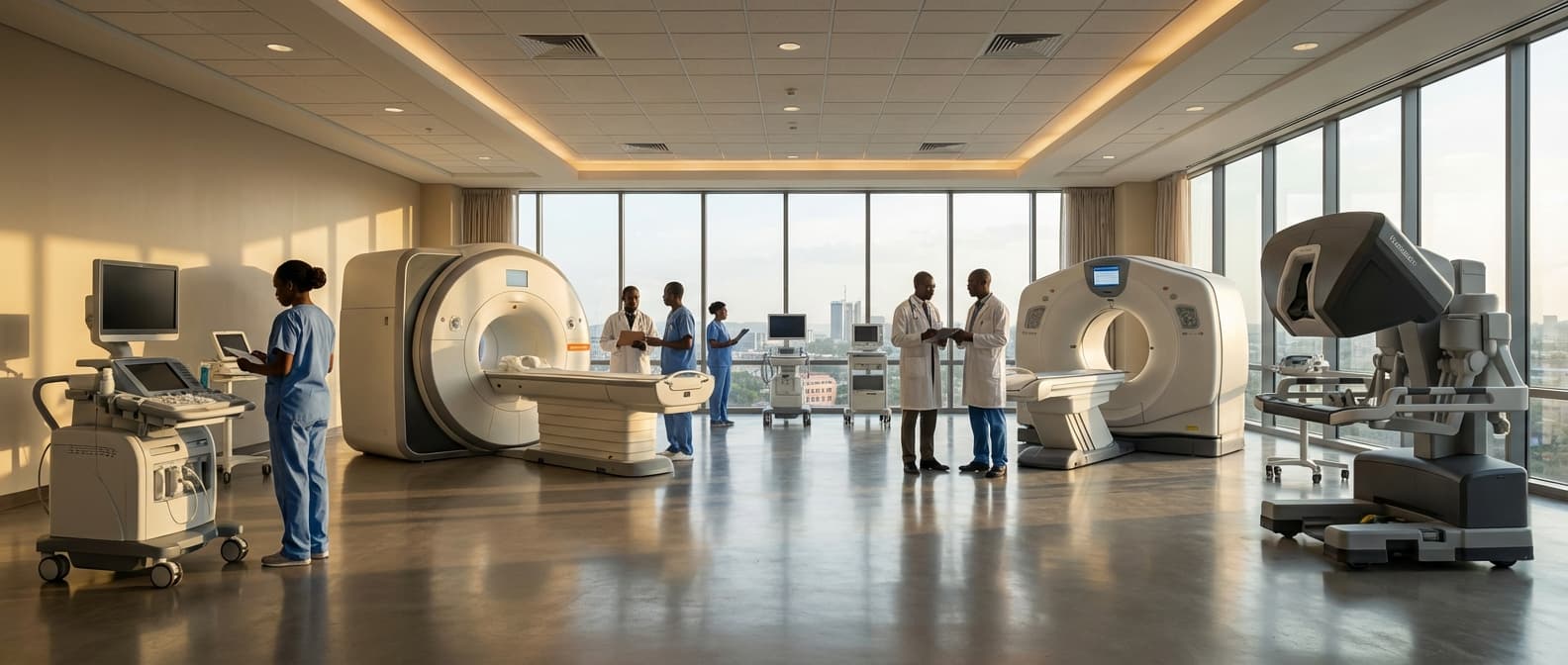
Life Support & Consumables in Benin
Engineering Excellence & Technical Support
Reliable supply of essential medical consumables and life support equipment ensuring uninterrupted, quality patient care delivery. High-standard technical execution following OEM protocols and local regulatory frameworks.
Clean Water Access Expansion
Successfully implemented and scaled advanced water purification systems across 15 remote villages in Benin, providing reliable access to safe drinking water for over 50,000 individuals and significantly reducing waterborne disease prevalence.
Essential Medication Stockpile & Distribution
Established a resilient supply chain and robust inventory management system for essential medicines, ensuring a consistent 95% availability rate of critical medications at health facilities in cyclone-prone coastal regions, thereby mitigating public health crises.
Oxygen Generation & Delivery Network
Deployed and maintained 10 life-saving oxygen generation units and a supporting distribution network for critical care facilities in underserved urban and rural areas, quadrupling oxygen accessibility and directly impacting survival rates for respiratory distress patients.
What Is Life Support & Consumables In Benin?
Life Support & Consumables (LSC) in Benin refers to the provision and management of essential resources required to sustain human life and operational capabilities in specific environments. This service encompasses a broad spectrum of goods and services, ranging from immediate survival necessities to ongoing operational support, tailored to the unique logistical and environmental challenges present within Benin. The primary objective is to ensure the continuity of operations and the well-being of personnel in situations where self-sufficiency is compromised or impossible.
| Who Needs Life Support & Consumables? | Typical Use Cases in Benin | |||||
|---|---|---|---|---|---|---|
| International Aid Organizations: During humanitarian crises, natural disasters (floods, droughts), and public health emergencies, requiring sustained support for affected populations and response teams. | Military and Security Forces: For deployments in remote or hostile environments, peacekeeping missions, counter-terrorism operations, and disaster relief efforts where local infrastructure is insufficient. | Non-Governmental Organizations (NGOs): Implementing development projects, providing healthcare, education, and other essential services in underserved areas, often requiring independent logistical solutions. | International Corporations and Resource Extraction Companies: Operating in remote or challenging locations (e.g., mining, oil and gas), necessitating the provision of comprehensive support for expatriate and local staff. | Government Agencies: During disaster response, large-scale public events, or in support of operations in areas with limited local capacity. | Research and Exploration Teams: Conducting fieldwork in remote or ecologically sensitive areas, requiring self-sufficient support systems. | |
| Humanitarian Relief Operations: Providing immediate sustenance, shelter, and medical care following natural disasters like floods or to populations displaced by internal conflict. | Peacekeeping Missions: Ensuring the sustained operational readiness and well-being of deployed military and civilian personnel in UN or AU mandated operations. | Development Project Implementation: Establishing and maintaining field bases for construction, agricultural, or healthcare initiatives in rural or underdeveloped regions. | Emergency Medical Evacuation (MEDEVAC) Support: Providing necessary medical supplies and logistical arrangements for transporting critically ill or injured individuals. | Remote Site Operations: Supporting personnel at mining sites, agricultural estates, or research stations far from urban centers. | Sanitation and Disease Prevention Campaigns: Distributing water purification tablets, hygiene kits, and waste management solutions to prevent outbreaks of waterborne diseases. | Capacity Building Initiatives: Providing temporary infrastructure and resources for training programs or workshops in areas lacking permanent facilities. |
Key Components of Life Support & Consumables in Benin
- Water and Sanitation: Potable water supply, wastewater management, and hygiene facilities.
- Food and Nutrition: Provision of safe, palatable, and nutritionally adequate food supplies, including ration packs, catering services, and dietary management.
- Shelter and Accommodation: Temporary or semi-permanent housing solutions, including tents, prefabricated structures, and the management of living quarters.
- Medical Supplies and Services: First aid kits, pharmaceuticals, medical equipment, and access to healthcare professionals or evacuation services.
- Energy and Power: Fuel for generators, batteries, solar power systems, and reliable power distribution.
- Waste Management: Collection, segregation, and disposal of solid and hazardous waste in compliance with local regulations.
- Communication Equipment: Satellite phones, radios, and other communication devices essential for operational coordination and emergency response.
- Logistical Support: Transportation of personnel and supplies, warehousing, and inventory management.
- Personal Protective Equipment (PPE): Specialized gear for protection against environmental hazards, chemical agents, or specific operational risks.
- Security Services: Personnel and infrastructure to ensure the safety and security of personnel and assets.
Who Needs Life Support & Consumables In Benin?
This document outlines the key customer segments and relevant departments within Benin that would require life support and consumables. Understanding these needs is crucial for effective resource allocation, procurement, and service provision. The focus is on identifying entities and personnel who depend on continuous access to essential supplies for their operational continuity, health, and well-being.
| Customer Segment | Key Departments/Entities | Specific Needs Example |
|---|---|---|
| Healthcare Sector | Ministry of Health, Public Hospitals (e.g., CHU Cotonou, Hopital de Zone), Private Clinics, Rural Health Centers | Oxygen cylinders, ventilators, surgical gloves, sterile dressings, pharmaceuticals, IV fluids, diagnostic kits |
| Emergency Services & Disaster Relief | Protection Civile (Civil Protection), SAMU (Emergency Medical Aid Service), Red Cross Benin, Fire Brigades | Ambulance equipment, first-aid kits, trauma supplies, emergency shelter consumables, water purification tablets |
| Industrial & Mining Operations | Mining companies (e.g., exploration sites), large manufacturing plants, oil and gas service providers | Personal Protective Equipment (PPE), fire extinguishers, safety showers, industrial first-aid kits, respirators |
| Educational & Research Institutions | University of Abomey-Calavi (UAC) - Faculty of Science, Research Laboratories, Vocational Training Centers | Lab consumables (reagents, glassware), safety goggles, lab coats, emergency eyewash stations |
| Government & Public Administration | Ministry of Defense, Ministry of Interior and Public Security, National Emergency Management Agency (if established) | Field medical kits, basic sanitation supplies, emergency rations, water purification for contingency operations |
| Non-Governmental Organizations (NGOs) & Humanitarian Organizations | World Health Organization (WHO) country office, UNICEF Benin, various local and international NGOs focusing on health, WASH, and development | Vaccines, antimalarial drugs, nutritional supplements, hygiene kits, basic medical equipment for outreach programs |
| Aviation & Transportation Sector | Cadjehoun Airport (Cotonou), Air Benin (if operational), major bus companies | On-board medical kits, oxygen for in-flight emergencies, airport first-aid stations |
Target Customers & Departments for Life Support & Consumables in Benin
- {"title":"Healthcare Sector","description":"Hospitals, clinics, and medical facilities are primary consumers, requiring a wide range of consumables and life support equipment for patient care, emergency services, and surgical procedures."}
- {"title":"Emergency Services & Disaster Relief","description":"Organizations involved in responding to natural disasters, accidents, and public health emergencies. This includes ambulance services, fire departments, and humanitarian aid organizations."}
- {"title":"Industrial & Mining Operations","description":"Companies with high-risk operations, such as mining, oil and gas exploration, and heavy manufacturing. They require safety equipment, first-aid supplies, and potentially specialized consumables for hazardous environments."}
- {"title":"Educational & Research Institutions","description":"Universities, research centers, and laboratories that may use specialized consumables for scientific experiments, educational demonstrations, and safety protocols."}
- {"title":"Government & Public Administration","description":"Various government ministries and agencies, particularly those responsible for public health, defense, and national security, may require life support and consumables for their personnel and operations."}
- {"title":"Non-Governmental Organizations (NGOs) & Humanitarian Organizations","description":"Organizations working on development projects, health initiatives, and community support often require medical supplies, sanitation products, and other consumables."}
- {"title":"Aviation & Transportation Sector","description":"Airlines, airports, and potentially large-scale transportation hubs might need emergency medical kits, oxygen supplies, and related consumables."}
Life Support & Consumables Process In Benin
This document outlines the typical workflow for Life Support & Consumables processes in Benin, from initial inquiry to final execution. This process is critical for ensuring the continuity of operations for various organizations, including NGOs, diplomatic missions, and international companies. The workflow is designed to be efficient, transparent, and compliant with local regulations.
| Stage | Description | Key Activities | Responsible Parties | Documentation |
|---|---|---|---|---|
| Inquiry & Needs Assessment | The client identifies a need for specific life support items or consumables and initiates contact with a service provider. | Defining exact requirements (quantities, specifications, delivery timelines, budget). | Client Organization, Service Provider's Sales/Inquiry Team | Needs Assessment Form, Email Correspondence |
| Supplier Identification & Vetting | The service provider identifies and vets potential local suppliers or utilizes their own established network. | Checking supplier credentials, quality control processes, stock availability, and compliance with local laws. | Service Provider's Procurement Team, Local Partners | Supplier Database, Vetting Reports, Business Registration Documents |
| Quotation & Proposal Submission | Based on the client's needs, the service provider prepares and submits a detailed quotation or proposal. | Pricing, itemized costs, delivery schedules, payment terms, and any associated service fees. | Service Provider's Sales/Proposal Team, Client Organization | Quotation/Proposal Document, Price Lists |
| Contract Negotiation & Agreement | The client reviews the proposal, and if acceptable, negotiations commence on terms and conditions, leading to a formal agreement. | Discussing and agreeing on contract clauses, service level agreements (SLAs), and payment schedules. | Client Organization's Legal/Procurement Team, Service Provider's Management/Legal Team | Service Level Agreement (SLA), Contract Document |
| Purchase Order (PO) Issuance | The client officially authorizes the procurement by issuing a Purchase Order. | Formal document detailing the agreed-upon goods/services, quantities, prices, and delivery instructions. | Client Organization's Procurement Department | Purchase Order (PO) |
| Procurement & Logistics | The service provider procures the items from vetted suppliers and arranges for their transportation. | Placing orders with suppliers, quality checks, customs clearance (if applicable), warehousing, and transportation planning. | Service Provider's Procurement & Logistics Teams, Local Suppliers | Supplier Orders, Waybills, Customs Declarations, Warehouse Records |
| Delivery & Acceptance | The consumables are delivered to the agreed-upon location, and the client inspects and formally accepts them. | On-time delivery, inspection of goods for quality and quantity, signing of delivery notes. | Service Provider's Logistics Team, Client Organization's Receiving Team | Delivery Note, Goods Receipt Note (GRN), Inspection Reports |
| Payment & Reconciliation | The client processes payment to the service provider based on the agreed terms, and financial reconciliation occurs. | Invoice submission by service provider, invoice verification by client, bank transfers, and matching payments to POs. | Client Organization's Finance Department, Service Provider's Finance Department | Invoice, Payment Vouchers, Bank Statements, Reconciliation Reports |
| Reporting & Documentation | Final reports are generated, and all relevant documentation is archived for record-keeping and auditing purposes. | Providing reports on procurement, delivery, and expenditure; maintaining organized records. | Service Provider's Administration/Reporting Team, Client Organization | Final Reports, Audit Trails, Archived Documentation |
Key Stages of the Life Support & Consumables Process
- Inquiry & Needs Assessment
- Supplier Identification & Vetting
- Quotation & Proposal Submission
- Contract Negotiation & Agreement
- Purchase Order (PO) Issuance
- Procurement & Logistics
- Delivery & Acceptance
- Payment & Reconciliation
- Reporting & Documentation
Life Support & Consumables Cost In Benin
Understanding the cost of life support and essential consumables in Benin is crucial for individuals, aid organizations, and businesses operating within the country. These costs are influenced by a variety of factors, including import duties, local production capabilities, transportation networks, and global market fluctuations. Prices are typically quoted and transacted in the West African CFA franc (XOF). The following discussion outlines key pricing factors and provides estimated cost ranges for common life support and consumable items in Benin.
| Item Category | Specific Item Example | Estimated Price Range (XOF) | Notes |
|---|---|---|---|
| Food & Nutrition | Rice (per kg) | 700 - 1,200 | Varies by type (e.g., long-grain, broken) |
| Cooking Oil (1 liter) | 1,000 - 1,800 | Refined vs. unrefined | |
| Canned Sardines (small can) | 400 - 700 | Imported brands often more expensive | |
| Milk Powder (250g sachet) | 1,000 - 2,000 | Imported brands | |
| Water & Sanitation | Bottled Water (1.5 liter) | 300 - 600 | Local brands are cheaper |
| Water Purification Tablets (pack of 20) | 2,000 - 4,000 | Imported medical/aid supplies | |
| Bar Soap (standard size) | 300 - 800 | Local vs. imported brands | |
| Medical Supplies | Paracetamol (pack of 10 tablets) | 500 - 1,500 | Over-the-counter, quality varies |
| Basic First-Aid Kit | 5,000 - 15,000 | Contents and brand dependent | |
| Mosquito Nets (standard) | 2,000 - 5,000 | Treated nets are more expensive | |
| Disposable Syringes (pack of 10) | 1,500 - 3,000 | Sterile, often imported | |
| Hygiene & Personal Care | Toothpaste (medium tube) | 600 - 1,200 | International brands |
| Sanitary Pads (pack of 8-10) | 800 - 1,500 | Imported brands | |
| Fuel & Energy | Kerosene (1 liter - for lamps/stoves) | 500 - 800 | Price subject to global oil markets |
| Propane Gas Cylinder (e.g., 12.5kg) | 15,000 - 25,000 | Refill cost, exchange rates impact |
Key Pricing Factors for Life Support & Consumables in Benin
- Import Tariffs and Taxes: Benin, like many nations, imposes import duties and taxes on goods entering the country. The specific rates vary depending on the product category and origin, significantly impacting the final consumer price.
- Transportation and Logistics: Benin's infrastructure, while developing, can present challenges for efficient transportation. Costs associated with shipping, handling, and warehousing, especially for goods arriving via the port of Cotonou or through land borders, contribute to the overall price.
- Local Production vs. Imports: Items that are locally produced, such as certain agricultural products or basic manufactured goods, tend to be more affordable than imported equivalents. However, many specialized life support and consumable items are entirely imported.
- Currency Exchange Rates: The West African CFA franc (XOF) is pegged to the Euro. Fluctuations in the Euro's value against other major currencies (like the US Dollar) can indirectly affect the cost of imported goods.
- Market Demand and Competition: High demand for specific consumables, coupled with limited supply or competition, can drive prices up. Conversely, a competitive market with multiple suppliers can lead to more favorable pricing.
- Quality and Brand: As with most markets, higher quality or well-known international brands generally command higher prices than generic or locally produced alternatives.
- Location within Benin: Prices can vary between urban centers like Cotonou and Porto-Novo, and more rural or remote areas. Accessibility and local market dynamics play a role.
- Seasonality: For certain consumables, particularly food items, seasonal availability can influence pricing. Off-season produce may be more expensive due to import or storage costs.
Affordable Life Support & Consumables Options
Navigating the world of life support and medical consumables can be daunting, especially for individuals and healthcare facilities managing budgets. Fortunately, there are several avenues to explore for affordable options without compromising on essential care. This guide outlines value bundles and cost-saving strategies designed to make critical supplies more accessible and manageable. By understanding these approaches, users can make informed decisions that optimize both patient well-being and financial health.
| Bundle Type | Description | Potential Savings | Best For |
|---|---|---|---|
| Critical Care Bundle | Includes essential items for ICU settings like ventilators, monitors, IV pumps, and related disposables. | 10-20% reduction compared to individual purchases, due to combined volume and supplier negotiation. | Hospitals and critical care units. |
| Home Oxygen Therapy Bundle | Combines oxygen concentrator, nasal cannulas, tubing, and potentially backup oxygen tanks or services. | 15-25% discount on the overall package. | Patients requiring long-term oxygen therapy at home. |
| Wound Care Essentials Bundle | A curated selection of dressings, bandages, antiseptic solutions, and tapes for common wound management. | 5-10% savings on the bundled set. | Home care agencies, clinics, and individuals with chronic wound needs. |
| Infection Control Bundle | Includes personal protective equipment (PPE) such as gloves, masks, gowns, and disinfectants. | Volume-based discounts can reach 10-15%. | Healthcare facilities of all sizes, public health organizations. |
| Diabetes Management Bundle | Often comprises glucose meters, test strips, lancets, and insulin pens or syringes. | Can offer 5-15% savings on the combined items. | Individuals with diabetes and primary care clinics. |
| Surgical Prep & Recovery Bundle | May include sterile drapes, surgical sponges, antiseptic solutions, and post-operative bandages. | Negotiated pricing can yield 8-18% savings. | Surgical centers and hospitals. |
Key Cost-Saving Strategies
- Bulk Purchasing: Acquiring larger quantities of frequently used items can significantly reduce the per-unit cost.
- Negotiate with Suppliers: Don't hesitate to discuss pricing, especially for long-term contracts or high-volume orders.
- Generic vs. Brand Name: Explore high-quality generic alternatives, which often provide the same efficacy at a lower price point.
- Inventory Management: Implement efficient tracking systems to prevent overstocking and reduce waste due to expiration.
- Leasing vs. Buying Equipment: For expensive life support machines, consider leasing options which may have lower upfront costs and include maintenance.
- Refurbished Equipment: Investigate certified refurbished medical equipment. These devices are often tested and restored to full functionality at a fraction of the cost of new.
- Group Purchasing Organizations (GPOs): Joining a GPO allows smaller organizations to leverage collective buying power for better pricing.
- Preventative Maintenance: Regular maintenance of equipment can prevent costly breakdowns and extend its lifespan.
- Telehealth Integration: Where appropriate, utilize telehealth to reduce the need for some in-person equipment and supplies.
- Subscription Models: Some suppliers offer subscription services for consumables, which can offer predictable costs and potential discounts.
Verified Providers In Benin
In the pursuit of reliable healthcare in Benin, identifying "verified providers" is paramount. This ensures access to qualified professionals and institutions adhering to ethical and professional standards. Franance Health stands out as a crucial entity in this regard, offering a robust credentialing process that underpins its reputation as a leading healthcare facilitator. Their meticulous verification system is designed to build trust and confidence for patients seeking quality medical services within the country. This document outlines what "verified providers" signifies in the Beninese context and elaborates on why Franance Health's credentials are the benchmark for excellence.
| Franance Health Credential Component | Significance for Patients | Verification Method |
|---|---|---|
| Medical Licensure and Registration | Confirms legal authorization to practice medicine in Benin. | Cross-referencing with the Ministry of Health and relevant professional boards. |
| Educational Qualifications and Training | Ensures providers have received appropriate academic and specialized training. | Review of diplomas, degrees, and certificates from accredited institutions. |
| Board Certifications and Specializations | Validates expertise in specific medical fields. | Verification of recognized specialist certifications and accreditations. |
| Professional Conduct and Ethics | Guarantees adherence to ethical medical principles and patient rights. | Review of past disciplinary actions and background checks, if applicable. |
| Facility Standards and Equipment (for institutions) | Ensures a safe and well-equipped environment for patient care. | On-site inspections and assessment of infrastructure, hygiene, and medical equipment. |
Understanding Verified Providers and Franance Health's Role
- What are Verified Providers in Benin? Verified providers are healthcare professionals and facilities that have undergone a rigorous assessment of their qualifications, licenses, operational standards, and adherence to ethical practices. This process is often facilitated by reputable organizations or government bodies to guarantee a baseline level of quality and safety for patients.
- The Importance of Verification: In a developing healthcare landscape, verification acts as a critical filter, protecting patients from unqualified practitioners and substandard facilities. It promotes accountability, transparency, and ultimately, better health outcomes.
- Franance Health: A Trusted Name in Verification: Franance Health is a distinguished organization dedicated to ensuring that healthcare providers meet stringent criteria. Their verification process is comprehensive, covering aspects such as medical education, board certifications, professional conduct, and facility compliance.
- Why Franance Health Credentials Matter: Choosing a healthcare provider affiliated with Franance Health offers several key advantages:
- {"title":"Unwavering Commitment to Quality","description":"Franance Health's verification process is not a mere formality. It involves in-depth scrutiny, ensuring that providers possess the necessary expertise and adhere to the highest medical standards."}
- {"title":"Enhanced Patient Safety","description":"By verifying credentials and practices, Franance Health significantly reduces the risk of medical errors and malpractice, prioritizing patient well-being above all else."}
- {"title":"Access to Competent Professionals","description":"Patients can be assured that Franance Health affiliated providers are licensed, experienced, and dedicated to delivering effective medical care."}
- {"title":"Transparency and Trust","description":"Franance Health's clear and ethical verification protocols foster an environment of trust, empowering patients to make informed decisions about their healthcare."}
- {"title":"Promoting Best Practices","description":"Through their rigorous standards, Franance Health actively encourages healthcare providers to continuously improve their services and adopt international best practices."}
Scope Of Work For Life Support & Consumables
This Scope of Work (SOW) outlines the requirements for the provision of Life Support and Consumables. It details the technical deliverables expected from the vendor and establishes the standard specifications that all provided items must meet. The objective is to ensure the continuous and safe operation of [Project Name/Location] by maintaining an adequate supply of essential life support equipment and consumable materials.
| Section | Description | Technical Deliverables | Standard Specifications |
|---|---|---|---|
| Life Support Equipment | Includes, but is not limited to, emergency breathing apparatus, water purification systems, medical kits, and fire suppression systems. | Fully functional, certified, and ready-to-deploy equipment. Detailed operational manuals. Maintenance logs. | Must comply with [Relevant Standards, e.g., ISO 9001, specific industry safety standards, regulatory compliance]. All equipment to be new, unused, and within its warranty period. Specific performance metrics to be detailed in Annex A. |
| Consumables | Includes food, water, fuel, medical supplies, cleaning agents, personal protective equipment (PPE), and spare parts for critical systems. | Consistent and timely delivery of specified quantities. Certificates of Analysis (CoA) for food and water. Material Safety Data Sheets (MSDS) for chemicals. | Must meet [Relevant Standards, e.g., NSF for water, FDA for food, specific industry certifications for PPE]. Shelf life must exceed [e.g., 12 months] from the date of delivery. Packaging must ensure integrity and prevent contamination. Specific product codes and minimum quantities to be detailed in Annex B. |
| Logistics & Inventory Management | Ensuring efficient storage, tracking, and replenishment of all life support and consumables. | Regular inventory reports. Proposed inventory management system. Delivery schedules and confirmation of receipt. | Vendor to propose a robust inventory management system capable of real-time tracking and automated reordering. Deliveries to be made within [e.g., 48 hours] of order confirmation for critical items and [e.g., 7 days] for standard consumables. Secure and appropriate transportation methods. |
| Quality Assurance & Control | Processes to ensure all delivered items meet the required quality and safety standards. | Quality control plans. Inspection reports. Non-conformance reports (NCR) and corrective action plans. | Vendor must implement a comprehensive QA/QC program. All items subject to inspection upon delivery. Compliance with all contractually agreed-upon specifications. Traceability of all supplied materials. |
| Reporting & Documentation | Regular updates and reporting on supply status, inventory levels, and any issues encountered. | Weekly status reports. Monthly inventory reconciliation reports. Incident reports. | Reports to be submitted in [e.g., PDF] format by [e.g., end of business day every Friday]. Documentation to be clear, concise, and accurate. |
Key Areas Covered by this Scope of Work
- Procurement and delivery of life support equipment.
- Supply of ongoing consumable materials.
- Adherence to specified technical standards and quality control.
- Logistics and inventory management support.
- Training and maintenance (if applicable).
Service Level Agreement For Life Support & Consumables
This Service Level Agreement (SLA) outlines the guaranteed response times and uptime for Life Support & Consumables services. This SLA is effective as of [Date] and is an addendum to the Master Service Agreement (MSA) between [Your Company Name] and [Client Company Name].
| Service Component | Uptime Guarantee | Critical Incident Response Time | Major Incident Response Time | Minor Incident Response Time |
|---|---|---|---|---|
| Life Support Equipment Availability (e.g., Ventilators, Infusion Pumps) | 99.9% | 15 Minutes | 1 Hour | 4 Business Hours |
| Critical Consumables Delivery (e.g., IV Fluids, Sterile Dressings) | 99.5% | 30 Minutes (from confirmed order) | 2 Hours (from confirmed order) | 1 Business Day (from confirmed order) |
| Non-Critical Consumables Delivery (e.g., General Supplies) | 99.0% | N/A | 4 Business Hours (from confirmed order) | 2 Business Days (from confirmed order) |
| Monitoring & Alerting Systems | 99.95% | 5 Minutes | 30 Minutes | 4 Business Hours |
Definitions
- Critical Service Incident: An event that renders essential life support equipment or critical consumables unusable, posing an immediate and severe risk to patient well-being or ongoing medical procedures.
- Major Service Incident: An event that significantly impairs the functionality of life support equipment or the availability of critical consumables, but does not pose an immediate and severe risk. This includes partial outages or performance degradation.
- Minor Service Incident: An event that causes minor inconvenience or affects non-critical functionality of life support equipment or the availability of non-critical consumables.
- Uptime: The percentage of time that the Life Support & Consumables services are operational and accessible as defined herein.
- Downtime: The percentage of time that the Life Support & Consumables services are unavailable or non-operational.
- Response Time: The maximum time allowed from the reporting of an incident to the initiation of troubleshooting and remediation efforts by [Your Company Name].
- Resolution Time: The target time to resolve an incident, which may vary based on the severity of the incident.
Frequently Asked Questions

Ready when you are
Let's scope your Life Support & Consumables in Benin project in Benin.

Scaling healthcare logistics and technical systems across the entire continent.