
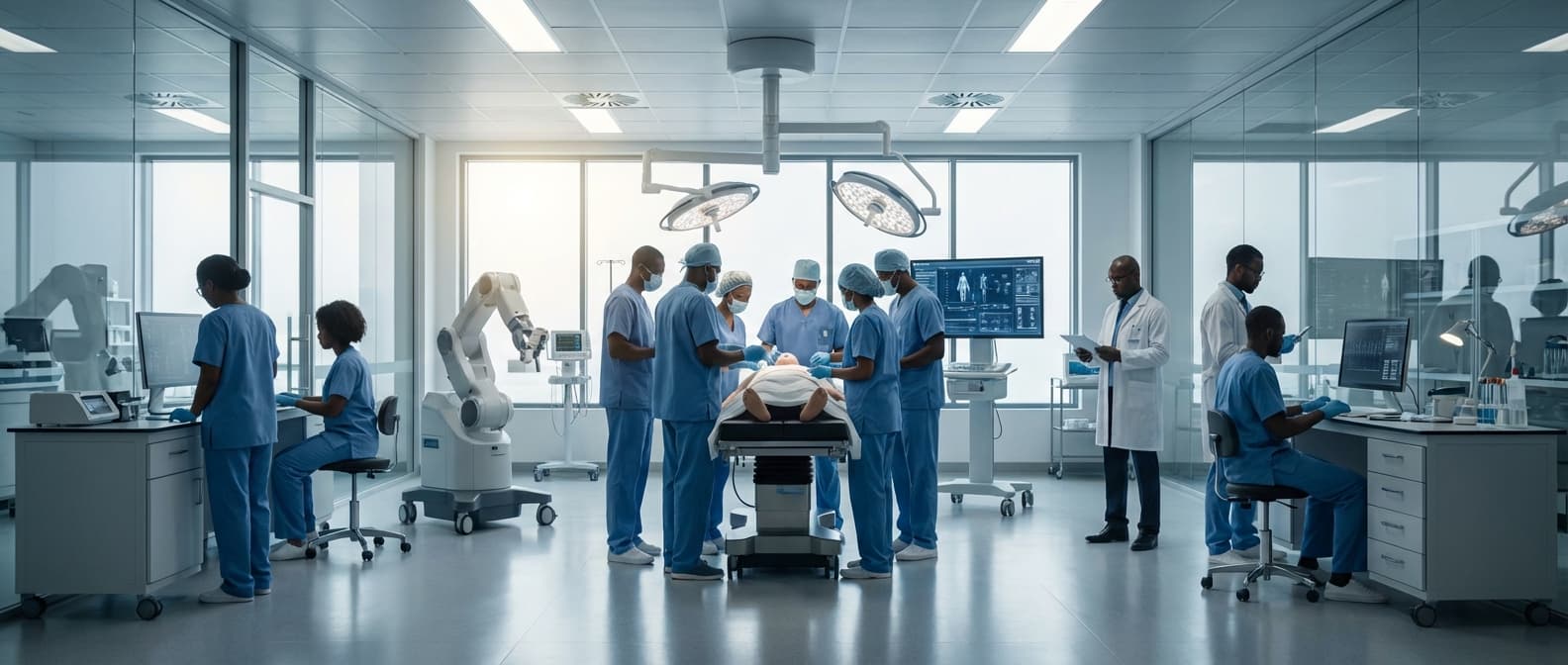
Managed Equipment Service (MES) in Benin
Engineering Excellence & Technical Support
Long‑term equipment provision with uptime SLAs and lifecycle management. High-standard technical execution following OEM protocols and local regulatory frameworks.
Remote Equipment Monitoring & Predictive Maintenance
Leveraging IoT sensors and AI analytics, we provide real-time, 24/7 monitoring of critical medical equipment across Benin. This enables proactive identification of potential failures and predictive maintenance, minimizing downtime and ensuring uninterrupted patient care.
On-Demand & Certified On-Site Technical Support
Our network of highly trained, locally-based technicians offers rapid on-demand on-site support for all managed equipment. With certified expertise and readily available spare parts, we guarantee swift resolution of issues, reducing repair times and optimizing operational efficiency for healthcare facilities in Benin.
Comprehensive Asset Management & Compliance Assurance
MES in Benin provides end-to-end lifecycle management for your medical equipment, from procurement and installation to maintenance and disposal. We ensure adherence to all local and international regulatory standards, offering robust reporting and audit trails for complete compliance and peace of mind.
What Is Managed Equipment Service (Mes) In Benin?
Managed Equipment Service (MES) in Benin refers to a comprehensive outsourcing model where a specialized third-party provider assumes the responsibility for the procurement, installation, maintenance, operation, and eventual decommissioning of critical equipment for client organizations. This service operates under a service level agreement (SLA) that defines performance metrics, uptime guarantees, and associated costs. MES aims to optimize equipment lifecycle management, reduce operational burdens on the client, and ensure the availability of functional and cost-effective assets.
| Who Needs MES? | Typical Use Cases in Benin |
|---|---|
| Healthcare Institutions: Hospitals, clinics, diagnostic centers requiring specialized medical equipment (e.g., imaging systems, laboratory analyzers, surgical instruments) where high uptime and reliability are paramount. | Industrial Manufacturing: Factories and production facilities needing robust machinery, automation systems, and specialized processing equipment. MES can ensure continuous production lines and optimize operational efficiency. |
| Telecommunications Companies: Providers requiring network infrastructure, base stations, and transmission equipment where uninterrupted service is critical for customer satisfaction and revenue. | Energy Sector: Power generation plants, oil and gas facilities, and renewable energy installations requiring complex and high-maintenance equipment. MES can ensure reliable energy supply and minimize operational risks. |
| Research & Development Laboratories: Institutions with sophisticated analytical instruments and specialized research equipment that require expert maintenance and calibration. | Public Sector & Government Agencies: Organizations managing fleets of vehicles, IT infrastructure, or specialized operational equipment that benefit from outsourced management and cost predictability. |
| Large Commercial Enterprises: Businesses with significant IT infrastructure, data centers, or specialized operational technology that can leverage MES for cost savings and risk mitigation. |
Key Components of MES in Benin:
- Equipment Sourcing & Procurement: Identifying, selecting, and acquiring necessary equipment, often leveraging the provider's purchasing power and expertise to secure optimal pricing and specifications.
- Installation & Commissioning: Professional installation, configuration, and testing of equipment to ensure it meets operational requirements and safety standards.
- Preventive & Corrective Maintenance: Scheduled maintenance to prevent failures and prompt repair services to address equipment breakdowns, minimizing downtime.
- Operations & Monitoring: Day-to-day operation of the equipment, including performance monitoring, data analysis, and optimization of usage patterns.
- Consumables & Spare Parts Management: Ensuring the availability of necessary consumables and a robust inventory of spare parts to support continuous operation and rapid repairs.
- Technical Support & Expertise: Providing access to skilled technicians and engineers for troubleshooting, guidance, and ongoing operational support.
- Decommissioning & Disposal: Responsible removal and environmentally sound disposal or recycling of equipment at the end of its lifecycle.
- Reporting & Analytics: Regular reporting on equipment performance, costs, uptime, and other key performance indicators (KPIs) to inform decision-making.
Who Needs Managed Equipment Service (Mes) In Benin?
Managed Equipment Service (MES) is a comprehensive outsourcing solution for medical equipment. It involves a third-party provider taking responsibility for the entire lifecycle of a healthcare facility's medical equipment, from procurement and installation to maintenance, repair, and eventual replacement. This service frees up healthcare providers to focus on patient care by alleviating the burden of managing complex and costly medical technology. While the specific needs can vary, certain institutions and departments in Benin would benefit most significantly from adopting MES.
| Target Customer/Department | Key Needs & Benefits of MES | Specific Equipment Examples |
|---|---|---|
| Public Hospitals (e.g., National Teaching Hospitals, Regional Hospitals) | Needs: Aging or insufficient equipment, limited budgets for capital expenditure and maintenance, lack of specialized technical personnel, need for reliable equipment uptime for patient services, desire to improve diagnostic and treatment capabilities. Benefits: Predictable operational costs, access to modern technology without large upfront investment, improved equipment availability and reduced downtime, extended equipment lifespan, enhanced patient outcomes, potential for training and capacity building of local staff. | X-ray machines, CT scanners, MRI scanners, Ultrasound machines, Anesthesia machines, Ventilators, Laboratory analyzers, Sterilizers. |
| Private Hospitals & Clinics | Benefits: Focus on core medical services and patient experience, competitive advantage through advanced technology, risk mitigation associated with equipment obsolescence and breakdowns, streamlined procurement and inventory management, access to expert technical support. | Endoscopic equipment, Dental chairs and equipment, Physiotherapy equipment, Dialysis machines, Surgical lights and tables. |
| Diagnostic Centers & Laboratories | Needs: High volume of tests, need for precision and accuracy, rapid turnaround times, maintenance of specialized laboratory equipment, calibration requirements. Benefits: Guaranteed equipment performance and accuracy, reduced risk of costly errors due to equipment malfunction, efficient workflow, access to the latest diagnostic technologies, adherence to international quality standards. | Automated hematology analyzers, Biochemistry analyzers, Immunoassay analyzers, PCR machines, Digital X-ray systems, ECG machines. |
| Government Health Agencies & Ministry of Health | Needs: Equipping and maintaining a network of public health facilities across the country, ensuring equitable access to quality healthcare, managing large-scale procurement and service contracts, optimizing resource allocation. Benefits: Standardized equipment across public facilities, better negotiation power for bulk purchasing, improved oversight and control of equipment assets, central management of maintenance and repair services, data for strategic planning and resource allocation. | Mobile clinics, Basic diagnostic kits, Maternal and child health equipment, Vaccine refrigerators, Emergency response medical equipment. |
| Specialty Departments (e.g., Cardiology, Oncology, Radiology, Surgery) | Needs: Highly specialized and complex equipment, continuous need for calibration and advanced servicing, integration with other hospital systems, specific training for equipment use. Benefits: Access to cutting-edge technology tailored to their specialty, ensured optimal performance of critical diagnostic and therapeutic devices, access to specialized engineers and technicians with expertise in their specific equipment. | Cardiac catheterization labs, Linear accelerators (radiotherapy), Endoscopic surgical systems, Advanced imaging modalities (PET scanners), Robotic surgery systems. |
Who Needs Managed Equipment Service (MES) in Benin?
- Hospitals (Public and Private)
- Specialty Clinics
- Diagnostic Centers
- Research Institutions
- Government Health Agencies (for public health facilities)
Managed Equipment Service (Mes) Process In Benin
The Managed Equipment Service (MES) process in Benin, as implemented by various providers, typically follows a structured workflow designed to ensure efficient and effective provision of specialized medical equipment and associated services to healthcare facilities. This workflow begins with an initial inquiry and culminates in the full execution and ongoing management of the service agreement.
| Stage | Description | Key Activities | Stakeholders Involved | Deliverables/Outcomes |
|---|---|---|---|---|
| Inquiry and Needs Assessment | The initial phase where a healthcare facility expresses interest in MES and the provider assesses their specific equipment needs and existing infrastructure. | Facility expresses interest, Provider conducts site visits, Discusses clinical needs, Reviews existing equipment and infrastructure, Identifies service gaps. | Healthcare Facility Management, Clinical Staff, MES Provider Representatives, Technical Experts. | Documented needs assessment report, Understanding of facility's requirements. |
| Proposal Development and Negotiation | Based on the needs assessment, the MES provider develops a tailored proposal outlining the scope of services, equipment, costs, and expected outcomes. This is followed by negotiation. | Provider drafts technical and financial proposal, Includes equipment specifications, service level agreements (SLAs), training plans, cost breakdown, Negotiation of terms, pricing, and SLAs. | MES Provider (Sales, Technical, Finance), Healthcare Facility Management, Procurement Department. | Formalized MES proposal, Agreed-upon terms and conditions. |
| Contracting and Financial Arrangements | A formal contract is signed, detailing the legal and financial obligations of both parties. This includes payment schedules and financing mechanisms. | Drafting of MES contract, Legal review by both parties, Signing of contract, Finalizing payment terms and schedules, Securing financing (if applicable). | MES Provider Legal Team, Healthcare Facility Legal Counsel, Finance Departments of both entities. | Signed MES contract, Defined payment structure, Financial commitment. |
| Equipment Procurement and Installation | The MES provider procures the agreed-upon equipment and manages its installation, calibration, and commissioning at the healthcare facility. | Procurement of medical equipment, Logistics and transportation, Site preparation, Equipment installation and setup, Calibration and testing, Commissioning and handover. | MES Provider (Procurement, Logistics, Technical Teams), Equipment Manufacturers/Suppliers, Healthcare Facility (for site preparation and access). | Fully installed and functional medical equipment, User manuals and documentation. |
| Training and Capacity Building | Comprehensive training is provided to the healthcare facility's staff on the operation, basic maintenance, and safe use of the new equipment. | Development of training curriculum, Delivery of hands-on training sessions, Assessment of staff competency, Provision of refresher courses. | MES Provider (Training Specialists, Clinical Applications Specialists), Healthcare Facility Clinical and Technical Staff. | Trained healthcare professionals, Increased staff confidence in equipment usage. |
| Ongoing Maintenance and Support | This is a core component of MES, involving scheduled preventive maintenance, reactive repairs, and remote technical support to ensure equipment uptime. | Routine preventive maintenance visits, Unscheduled repair services, 24/7 technical support hotline, Stocking of spare parts, Calibration checks. | MES Provider (Field Service Engineers, Technical Support Staff), Healthcare Facility Clinical and Biomedical Engineering Teams. | High equipment uptime, Minimized operational disruptions, Extended equipment lifespan. |
| Performance Monitoring and Reporting | The MES provider continuously monitors equipment performance, service delivery, and adherence to SLAs. Regular reports are shared with the healthcare facility. | Data collection on equipment usage and downtime, Tracking of maintenance activities, Analysis of performance metrics, Generation of periodic performance reports, Joint review meetings. | MES Provider (Operations, Management), Healthcare Facility Management. | Performance reports, Identification of areas for improvement, Accountability for service delivery. |
| Equipment Upgrade/Replacement | As technology advances or equipment reaches the end of its lifecycle, the MES contract may include provisions for upgrading or replacing equipment to maintain optimal service delivery. | Review of technological advancements, Assessment of equipment condition, Planning for upgrades or replacements, Negotiation of revised contract terms. | MES Provider (Product Management, Technical Experts), Healthcare Facility Management, Clinical Leaders. | Upgraded or replaced equipment, Continued access to modern medical technology. |
MES Workflow Stages in Benin
- Inquiry and Needs Assessment
- Proposal Development and Negotiation
- Contracting and Financial Arrangements
- Equipment Procurement and Installation
- Training and Capacity Building
- Ongoing Maintenance and Support
- Performance Monitoring and Reporting
- Equipment Upgrade/Replacement
Managed Equipment Service (Mes) Cost In Benin
Managed Equipment Service (MES) in Benin offers a comprehensive solution for healthcare facilities, encompassing the procurement, installation, maintenance, and upgrading of medical equipment. This service aims to reduce capital expenditure, improve equipment uptime, and ensure access to the latest technology. The cost of MES in Benin is influenced by a variety of factors, leading to a broad pricing range. Understanding these factors is crucial for healthcare providers when budgeting and negotiating MES contracts. The overall cost is typically calculated as a monthly or annual fee, which can be fixed or variable based on usage and service levels.
| Equipment Category (Examples) | Estimated Monthly MES Cost Range (XOF) | Notes |
|---|---|---|
| Basic Diagnostic Equipment (e.g., Blood Analyzers, ECG Machines) | 250,000 - 750,000 XOF | Covers routine maintenance, minor repairs, and parts. Assumes moderate usage. |
| Imaging Equipment (e.g., X-ray Machines, Ultrasound Units) | 750,000 - 2,500,000 XOF | Includes more complex maintenance, specialized parts, and potentially software updates. Higher end for more advanced units. |
| Surgical Equipment (e.g., Anesthesia Machines, Electrosurgical Units) | 500,000 - 1,800,000 XOF | Focus on calibration, sterilization compatibility, and safety checks. Varies with complexity and integration. |
| High-End Imaging (e.g., CT Scanners, MRI Machines) | 3,000,000 - 10,000,000+ XOF | Extensive maintenance requirements, specialized technicians, software upgrades, and high cost of proprietary parts. Can be significantly higher based on technology and usage. |
| Laboratory Equipment (e.g., PCR Machines, Incubators) | 300,000 - 1,200,000 XOF | Depends on the precision, automation, and volume of tests. Includes reagent management in some cases. |
| Comprehensive Hospital Package (Mix of equipment types) | Variable - tailored to facility size and needs | A holistic approach. Costs are highly individualized and negotiated based on the entire equipment portfolio. |
Key Pricing Factors for MES in Benin
- Type and Quantity of Equipment: The more sophisticated and numerous the medical devices included in the MES agreement, the higher the overall cost. High-value, specialized equipment like MRI scanners, CT scanners, and advanced surgical robots will significantly increase the pricing compared to basic laboratory equipment or diagnostic tools.
- Service Level Agreements (SLAs): The agreed-upon response times for maintenance, repair turnaround times, preventative maintenance schedules, and guaranteed uptime percentages directly impact cost. More stringent SLAs with faster response times and higher uptime guarantees will command higher fees.
- Technology Lifecycle and Upgrades: MES contracts often include provisions for equipment upgrades or replacements after a certain period. The anticipated frequency and cost of these upgrades are factored into the pricing. Contracts that include frequent technological advancements will be more expensive.
- Geographic Location and Accessibility: While Benin's urban centers might have more established service networks, remote or less accessible locations can incur higher logistical costs for maintenance and repairs, potentially increasing MES fees.
- Provider's Expertise and Reputation: Established MES providers with a proven track record, robust technical teams, and strong supplier relationships may charge a premium for their reliability and quality of service.
- Contract Duration: Longer-term MES contracts can sometimes offer economies of scale and may lead to lower per-unit costs over time, though the initial investment commitment is larger.
- Training and Support: The inclusion of comprehensive training for hospital staff on equipment operation and basic maintenance, as well as ongoing technical support, adds to the overall service offering and cost.
- Ancillary Services: Some MES agreements may include additional services such as IT integration, consumables management, or infrastructure support, which will naturally elevate the price.
- Market Competition: The presence of multiple MES providers in Benin can lead to competitive pricing. However, the market for highly specialized MES might be less saturated.
- Currency Fluctuations and Import Duties: As many medical devices are imported, fluctuations in the exchange rate of the CFA Franc (XOF) against major currencies can impact costs. Import duties and taxes on equipment also contribute to the overall pricing structure.
Affordable Managed Equipment Service (Mes) Options
Managed Equipment Service (MES) offers a cost-effective way for businesses to manage their IT assets without the burden of upfront capital expenditure. MES providers typically offer flexible contract terms, proactive maintenance, and replacement services, ensuring optimal equipment performance and minimizing downtime. Understanding value bundles and implementing smart cost-saving strategies are key to maximizing the benefits of an MES.
| Cost-Saving Strategy | Description | Impact on MES |
|---|---|---|
| Right-Sizing Equipment | Accurately assess your IT needs and avoid over-provisioning. Lease only the equipment you truly require. | Reduces monthly leasing costs and minimizes the risk of paying for underutilized assets. |
| Negotiate Contract Terms | Carefully review and negotiate contract duration, service level agreements (SLAs), and any potential hidden fees. | Secures more favorable pricing and ensures services align with your operational needs. |
| Leverage Bundled Services | Opt for comprehensive value bundles that include a wider range of services, as these often come at a discounted rate compared to purchasing services individually. | Improves overall value for money and simplifies IT management by consolidating vendors. |
| Optimize Equipment Lifespan | Work with your MES provider to establish an optimal equipment refresh cycle. Extending the life of equipment judiciously can save on frequent upgrade costs. | Balances the cost of new equipment against ongoing maintenance and potential performance degradation. |
| Utilize Preventative Maintenance | Embrace the proactive maintenance included in MES contracts to prevent costly breakdowns and extend equipment longevity. | Reduces unexpected repair costs, minimizes downtime, and improves asset lifespan. |
| Energy Efficiency Considerations | When selecting equipment, prioritize energy-efficient models. While upfront costs might be slightly higher, long-term energy savings can be significant. | Lowers operational expenses and contributes to environmental sustainability goals. |
| Consider Refurbished or Certified Pre-owned Equipment | For non-critical systems or less demanding workloads, explore options for high-quality refurbished or certified pre-owned equipment offered by some MES providers. | Significantly reduces capital expenditure for hardware. |
| Regular Performance Monitoring | Actively monitor the performance of your managed equipment. This helps identify potential issues early and ensures you are getting the most out of your investment. | Allows for proactive adjustments and prevents minor issues from escalating into costly problems. |
Understanding MES Value Bundles
- {"title":"Core Service Bundle","description":"This foundational bundle usually includes equipment leasing, basic installation, standard warranty, and routine preventative maintenance. It's the most common starting point for many businesses seeking reliable IT infrastructure."}
- {"title":"Enhanced Service Bundle","description":"Builds upon the Core Bundle by adding features like extended warranties, faster response times for support, on-site technician visits for repairs, and potentially remote monitoring and diagnostics."}
- {"title":"Premium/Comprehensive Bundle","description":"The most complete option, often incorporating all features of the Enhanced Bundle plus proactive lifecycle management (planning for upgrades and replacements), advanced security patching, software management, and dedicated account management. This bundle is ideal for organizations with complex IT needs and a strong focus on operational efficiency and risk mitigation."}
- {"title":"Customizable Bundles","description":"Many MES providers allow for tailored solutions, letting you pick and choose specific services to create a bundle that perfectly matches your unique business requirements and budget. This flexibility is crucial for optimizing cost."}
Verified Providers In Benin
Finding reliable and verified healthcare providers in Benin is crucial for ensuring quality care. Franance Health stands out as a premier choice, offering a network of credentialed professionals who adhere to rigorous standards. Their commitment to verification means patients can trust the expertise and ethical practices of their listed providers, leading to better health outcomes and peace of mind.
| Provider Type | Key Verification Points | Benefits of Choosing Franance Health Verified |
|---|---|---|
| General Practitioners | Medical Degree, License to Practice, Professional Experience, Good Standing | Accessible and reliable primary care, early diagnosis and treatment. |
| Specialists (e.g., Cardiologists, Pediatricians, Gynecologists) | Specialty Certifications, Advanced Training, Clinical Experience, Peer Reviews | Expert diagnosis and management of specific health conditions, access to advanced medical knowledge. |
| Surgeons | Surgical Board Certification, Extensive Surgical Training, Track Record of Successful Procedures, Hospital Affiliations | Safe and effective surgical interventions, improved recovery outcomes. |
| Dentists | Dental Degree, Dental License, Specializations (if any), Continuing Education | Comprehensive oral health care, preventative and restorative treatments. |
| Pharmacists | Pharmacy Degree, Pharmacy License, Knowledge of Drug Interactions and Dispensing | Accurate medication dispensing, expert advice on drug usage and safety. |
Why Choose Verified Providers with Franance Health?
- Guaranteed Credentials: Franance Health thoroughly vets all its providers, ensuring they possess legitimate medical licenses, certifications, and relevant experience.
- Quality Assurance: Our verification process includes checks on educational background, professional history, and adherence to ethical guidelines, guaranteeing a high standard of care.
- Patient Safety: By selecting Franance Health-verified providers, you are prioritizing your safety and well-being, knowing you are receiving care from qualified professionals.
- Access to Expertise: Our network comprises specialists and general practitioners across various medical fields, offering comprehensive healthcare solutions.
- Transparency and Trust: We believe in empowering patients with information. Our verified provider listings provide confidence and build trust in the healthcare system.
- Streamlined Access: Franance Health simplifies the process of finding and connecting with the right healthcare professional for your specific needs.
Scope Of Work For Managed Equipment Service (Mes)
This Scope of Work (SOW) outlines the requirements for a Managed Equipment Service (MES) for [Client Name]'s medical equipment fleet. The MES provider will be responsible for the comprehensive management, maintenance, and operational support of specified medical equipment to ensure optimal performance, patient safety, and cost-effectiveness.
| Category | Technical Deliverables | Standard Specifications / Requirements |
|---|---|---|
| Equipment Inventory and Management | Comprehensive and accurate asset registry. | Real-time tracking of all managed equipment, including location, status, maintenance history, and cost data. Adherence to ISO 13485 for medical device quality management. |
| Preventive Maintenance (PM) | Scheduled PM programs for all managed equipment. | Adherence to manufacturer's recommendations and industry best practices. PM schedules to be reviewed and approved by the Client. Timeliness of PM completion to be above 95%. |
| Corrective Maintenance (CM) / Repair | Rapid response to equipment failures and breakdowns. | Guaranteed response times based on equipment criticality (e.g., within 4 hours for critical, 8 hours for high-priority). Resolution times to be defined per equipment type and issue severity. Use of OEM-trained technicians or certified third-party technicians. |
| Calibration and Performance Verification | Regular calibration and performance verification of sensitive equipment. | Adherence to manufacturer's specifications and national/international standards (e.g., NIST, IEC 60601). Calibration certificates to be provided for each service. |
| Technology Refresh and Lifecycle Management | Proactive planning for equipment upgrades and replacements. | Recommendations for technology upgrades based on clinical needs and market advancements. Defined process for end-of-life equipment assessment and disposal. |
| Parts and Consumables Management | Management of spare parts inventory and procurement. | Ensuring availability of critical spare parts. Cost-effective procurement strategies. Tracking of parts usage for each repair. |
| Training and Competency | Training for clinical staff on proper equipment operation. | Delivery of standardized training modules. Competency assessments for staff. Training records to be maintained. |
| Risk Management and Safety Compliance | Identification and mitigation of equipment-related risks. | Compliance with all local, national, and international safety regulations (e.g., FDA, MDR). Regular safety audits and incident reporting. |
| Reporting and Analytics | Regular performance reports and data analytics. | Key Performance Indicators (KPIs) to include uptime, PM completion rates, CM resolution times, cost per device, etc. Monthly, quarterly, and annual reports. Access to a client portal for real-time data. |
| Service Level Agreements (SLAs) | Clearly defined service levels and penalties. | Agreed-upon uptime guarantees for critical equipment. Penalties for failure to meet defined SLAs. Performance review meetings to be held regularly (e.g., quarterly). |
Key Objectives of the MES
- Enhance equipment availability and reduce downtime.
- Ensure compliance with all relevant regulatory standards and accreditation requirements.
- Optimize equipment lifecycle management, including acquisition, deployment, maintenance, and disposal.
- Control and reduce overall equipment-related operational costs.
- Improve patient safety through proactive maintenance and calibration.
- Provide access to advanced medical technologies and service innovations.
- Streamline equipment management processes and reporting.
Service Level Agreement For Managed Equipment Service (Mes)
This Service Level Agreement (SLA) outlines the performance standards for Managed Equipment Service (MES) provided by [Your Company Name] to [Client Company Name]. It defines the response times for incidents and the uptime guarantees for the managed equipment.
| Service Level | Response Time (during Business Hours) | Response Time (outside Business Hours) | Uptime Guarantee |
|---|---|---|---|
| Critical Incident | 1 hour | 2 hours | 99.9% (excluding scheduled maintenance) |
| Major Incident | 2 hours | 4 hours | 99.5% (excluding scheduled maintenance) |
| Minor Incident | 4 business hours | Next business day | 99.0% (excluding scheduled maintenance) |
Key Definitions
- Managed Equipment Service (MES): The comprehensive service provided by [Your Company Name] for the proactive management, monitoring, maintenance, and repair of specified equipment at [Client Company Name]'s premises.
- Incident: Any event that disrupts or degrades the normal functioning of the managed equipment, affecting its availability or performance.
- Response Time: The maximum time allowed for [Your Company Name] to acknowledge an incident and begin diagnostic and/or remediation efforts after being notified by [Client Company Name].
- Uptime Guarantee: The percentage of time the managed equipment is expected to be operational and available for use.
- Scheduled Maintenance: Planned downtime for routine servicing, updates, or upgrades, agreed upon in advance with [Client Company Name].
- Critical Incident: An incident that renders essential equipment completely inoperable, causing significant business impact.
- Major Incident: An incident that degrades the performance or availability of essential equipment, causing moderate business impact.
- Minor Incident: An incident that causes a minor inconvenience or affects non-essential equipment, with minimal business impact.
- Business Hours: [Specify Business Hours, e.g., Monday to Friday, 9:00 AM to 5:00 PM local time, excluding public holidays].
Frequently Asked Questions

Ready when you are
Let's scope your Managed Equipment Service (MES) in Benin project in Benin.

Scaling healthcare logistics and technical systems across the entire continent.