
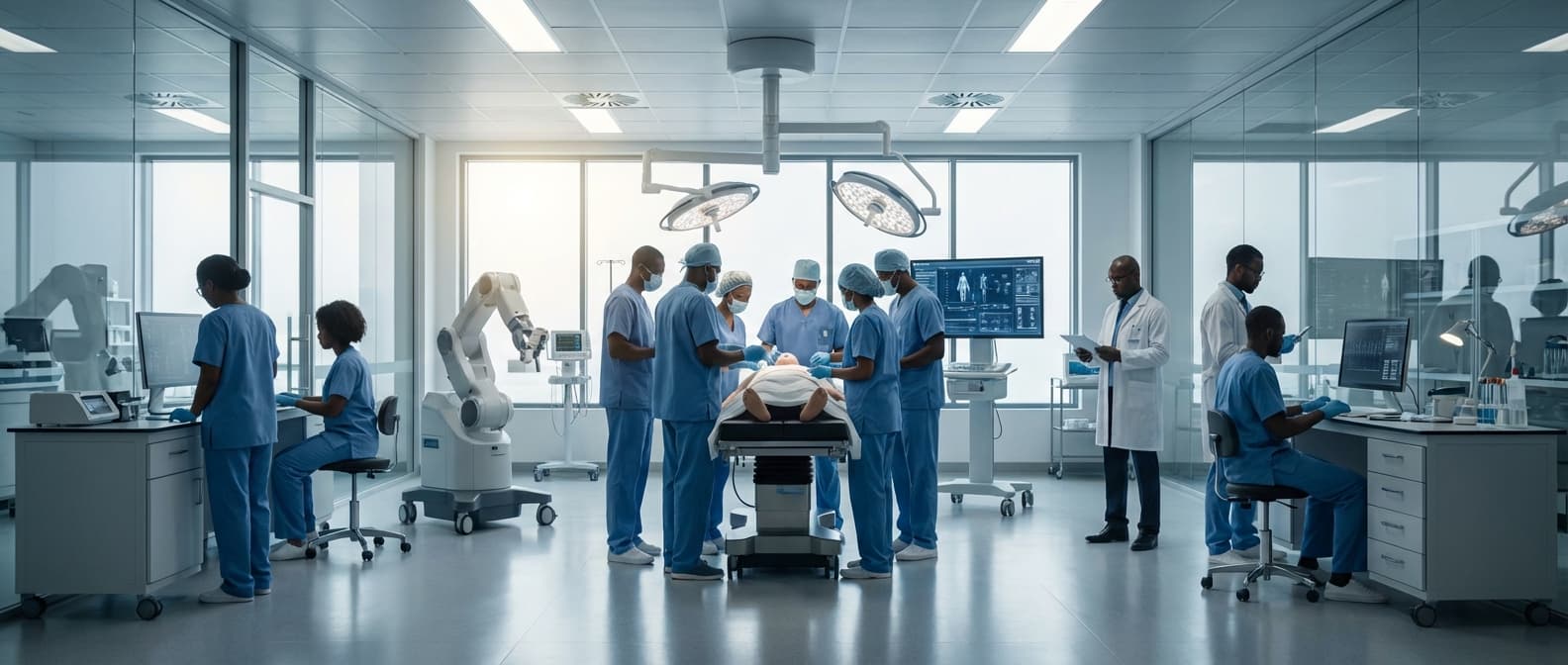
Calibration & Electrical Safety Testing in Benin
Engineering Excellence & Technical Support
Equipment calibration and IEC safety testing High-standard technical execution following OEM protocols and local regulatory frameworks.
Precision Calibration for Critical Infrastructure
Ensuring the accuracy and reliability of your measurement instruments through meticulous calibration services. We adhere to international standards to guarantee that your critical infrastructure operates within precise tolerances, preventing costly errors and downtime.
Comprehensive Electrical Safety Assessments
Proactively identify and mitigate electrical hazards with our expert safety testing. We conduct thorough inspections and tests to ensure compliance with national and international safety regulations, safeguarding your personnel and assets.
Certified Technicians & State-of-the-Art Equipment
Our team of highly trained and certified technicians utilizes the latest calibration and electrical safety testing equipment. This ensures accurate, efficient, and dependable results, providing you with peace of mind and verifiable documentation.
What Is Calibration & Electrical Safety Testing In Benin?
Calibration and electrical safety testing are critical services ensuring that measurement and testing equipment within Benin's industrial, healthcare, and research sectors functions accurately, reliably, and, most importantly, safely. Calibration involves the process of comparing a measuring instrument against a known standard of traceability to determine and document its accuracy. This process allows for the identification of deviations from the standard and the subsequent adjustment of the instrument to bring it within specified tolerances. Electrical safety testing, conversely, focuses on verifying the integrity of electrical systems and equipment to prevent hazards such as electric shock, fire, and equipment damage. This involves a suite of tests to assess insulation resistance, earth continuity, leakage currents, and the overall compliance with relevant national and international safety standards.
| Service Aspect | Definition | Purpose | Applicable Standards (Examples) | Typical Outcome |
|---|---|---|---|---|
| Calibration | Comparison of an instrument's output with a known, traceable standard to determine and record its accuracy. | To ensure that measurements are accurate, consistent, and reliable for decision-making, process control, and quality assurance. | ISO/IEC 17025 (for testing and calibration laboratories), specific manufacturer guidelines. | A calibration certificate detailing the instrument's performance, deviations, and uncertainty. |
| Electrical Safety Testing | A systematic evaluation of electrical equipment and installations to identify and mitigate potential electrical hazards. | To ensure the protection of personnel, property, and the environment from electrical dangers like shocks and fires. | IEC 60601 series (Medical Electrical Equipment), IEC 60950 (Information Technology Equipment), national electrical codes. | Pass/fail reports, recommendations for corrective actions, and certification of compliance. |
Key Aspects of Calibration and Electrical Safety Testing in Benin
- Calibration: Verifies the accuracy and traceability of measurement instruments.
- Electrical Safety Testing: Assesses the safety of electrical devices and systems against potential hazards.
- Traceability: Calibration ensures that measurements are traceable to national or international standards.
- Compliance: Both services ensure adherence to regulatory requirements and industry best practices.
- Risk Mitigation: Reduces the likelihood of equipment failure, inaccurate data, and electrical accidents.
- Cost-Effectiveness: Prevents costly rework, product recalls, and downtime due to faulty equipment.
- Asset Management: Contributes to effective management and maintenance of valuable equipment.
Who Needs Calibration & Electrical Safety Testing In Benin?
Regular calibration and electrical safety testing are crucial for a wide range of organizations in Benin to ensure the accuracy of their instruments, the reliability of their equipment, and the safety of their personnel and the public. These services are not a luxury but a necessity for maintaining operational integrity, complying with regulations, and preventing accidents. The demand for these services spans across various sectors, from manufacturing and healthcare to research and public utilities.
| Customer Type | Key Departments/Functions Needing Services |
|---|---|
| Manufacturing & Industrial | Quality Control, Production, Maintenance, R&D, Environmental Health & Safety (EHS) |
| Healthcare Facilities | Biomedical Engineering, Radiology, Laboratory Services, Operating Theatres, Anesthesiology |
| Research & Development Institutions | Laboratories, Scientific Instrumentation Departments, Engineering Faculties |
| Telecommunications Companies | Network Operations, Field Maintenance, Quality Assurance, Equipment Testing |
| Power Generation & Distribution | Operations & Maintenance, Grid Control, Safety & Compliance, Metering Departments |
| Food & Beverage Processing | Quality Assurance, Production, Sanitation, Research & Development |
| Government Agencies | Metrology Departments, Environmental Monitoring, Public Health, Infrastructure Management |
| Transportation & Logistics | Fleet Maintenance, Operations, Safety & Compliance, Weighbridge Operations |
| Construction & Engineering | Surveying, Quality Control, Site Management, Electrical Installation Teams |
| TIC Bodies | Calibration Laboratories, Inspection Teams, Certification Departments |
Target Customers and Departments for Calibration & Electrical Safety Testing in Benin
- {"item":"Manufacturing & Industrial Sector","description":"Facilities involved in production, processing, and quality control require precise measurements for product consistency and safety. This includes food and beverage, textiles, pharmaceuticals, chemicals, and heavy industry."}
- {"item":"Healthcare Facilities","description":"Hospitals, clinics, diagnostic laboratories, and medical device manufacturers rely heavily on calibrated medical equipment for accurate diagnoses, treatments, and patient safety. This ensures that life-saving equipment functions as intended."}
- {"item":"Research & Development Institutions","description":"Universities, research centers, and private R&D labs need to ensure the accuracy of their experimental equipment to achieve reliable and reproducible scientific results. This is vital for innovation and discovery."}
- {"item":"Telecommunications Companies","description":"Operators of communication networks require calibrated test equipment for network performance monitoring, signal integrity testing, and ensuring the reliability of their infrastructure."}
- {"item":"Power Generation & Distribution Utilities","description":"Companies responsible for electricity generation and supply need to calibrate and test equipment to ensure grid stability, efficient energy distribution, and the safety of their infrastructure and personnel."}
- {"item":"Food & Beverage Processing Plants","description":"Ensuring product quality, safety, and compliance with regulatory standards is paramount. Calibration of temperature, pressure, and measurement instruments is essential."}
- {"item":"Government Agencies & Public Services","description":"Various government bodies, including metrology institutes, environmental protection agencies, and public works departments, require calibrated equipment for their operations and regulatory enforcement."}
- {"item":"Transportation & Logistics","description":"Companies involved in shipping, aviation, and road transport may require calibration of weighing systems, fuel measurement devices, and electrical safety checks on operational equipment."}
- {"item":"Construction & Engineering Firms","description":"Accurate measurements for surveying, structural integrity testing, and the electrical safety of construction site equipment are critical for project success and safety."}
- {"item":"Testing, Inspection, and Certification (TIC) Bodies","description":"These organizations often require their own equipment to be calibrated to provide reliable and accredited services to other industries."}
Calibration & Electrical Safety Testing Process In Benin
This document outlines the typical workflow for Calibration and Electrical Safety Testing services in Benin, from initial inquiry to the completion of testing and issuance of reports. The process is designed to ensure that equipment meets required standards for accuracy, reliability, and safety, thereby preventing potential hazards and downtime.
| Stage | Description | Key Activities | Responsible Party |
|---|---|---|---|
| Inquiry | Client expresses need for services. | Contacting service provider, initial request. | Client |
| Quotation | Provider assesses needs and provides pricing. | Information exchange, site/equipment assessment, formal quote generation. | Service Provider |
| Agreement & Scheduling | Formalizing the service contract. | Contract signing, booking dates, defining scope. | Client & Service Provider |
| Preparation | Ensuring readiness for testing. | Site access confirmation, equipment readiness, logistics planning. | Client (on-site) / Client & Provider (off-site) |
| Execution (Testing) | Performing calibration and/or safety tests. | Visual inspection, running tests, data collection, adjustment (if calibration). | Service Provider |
| Reporting | Documenting test results and findings. | Generating reports, issuing certificates/stickers. | Service Provider |
| Resolution (if failed) | Addressing equipment that did not pass. | Notification of failure, discussing options (repair, re-test, replacement). | Client & Service Provider |
| Completion | Finalizing service delivery. | Equipment return, final invoicing, payment. | Client & Service Provider |
Calibration & Electrical Safety Testing Workflow in Benin
- Inquiry & Request: The process begins when a client (e.g., a manufacturing plant, laboratory, hospital, or any entity using electrical equipment) expresses interest in calibration and/or electrical safety testing.
- Information Gathering & Quotation: The service provider gathers detailed information about the equipment to be tested, including type, model, serial number, current calibration status (if any), and the specific tests required. Based on this, a detailed quotation outlining services, scope, pricing, and estimated turnaround time is provided.
- Agreement & Scheduling: Upon acceptance of the quotation, a formal agreement or service contract is established. Dates and times for the testing are scheduled, considering the client's operational needs and the service provider's availability.
- Site Preparation (if on-site testing): If the testing is to be performed on the client's premises, the client is responsible for ensuring safe access to the equipment and a suitable environment for testing (e.g., adequate lighting, power supply).
- Equipment Transport (if off-site testing): If the testing is conducted at the service provider's facility, the client arranges for the safe and secure transport of the equipment. The service provider may offer logistics support.
- Pre-Testing Checks & Documentation: Upon receipt of the equipment (or commencement of on-site testing), the service provider conducts initial visual inspections and verifies the equipment's identity against the agreed scope. Relevant documentation, such as previous calibration certificates or user manuals, is reviewed.
- Calibration Procedures: For calibration, the equipment is tested against traceable national or international standards using calibrated reference instruments. Adjustments are made to bring the equipment within specified tolerances if necessary.
- Electrical Safety Testing: For electrical safety testing, the equipment undergoes a series of tests designed to identify potential electrical hazards. Common tests include earth bond resistance, insulation resistance, leakage current, and dielectric strength tests.
- Data Recording & Analysis: All test results, measurements, and observations are meticulously recorded by the qualified technician. Data is analyzed to determine if the equipment meets the required specifications and safety standards.
- Reporting: A comprehensive report is generated for each piece of equipment tested. This report includes details of the tests performed, results obtained, standards applied, uncertainties (for calibration), pass/fail status, and recommendations.
- Calibration Stickers/Certificates: For successfully calibrated equipment, a calibration sticker is affixed to the equipment indicating the date of calibration and the next due date. A formal calibration certificate is also issued.
- Electrical Safety Test Reports/Certificates: For equipment that passes electrical safety tests, a certificate or report is issued confirming its compliance with relevant safety standards.
- Re-testing/Rectification: If equipment fails to meet the required standards, the client is notified. Depending on the nature of the failure and agreement, options for re-testing after repair or adjustments may be available, or recommendations for replacement may be provided.
- Equipment Return (if off-site testing): Equipment that was sent for off-site testing is returned to the client after successful completion of services, with all accompanying documentation.
- Invoicing & Payment: The final invoice is issued based on the agreed-upon services and any additional work performed. Payment terms are as per the initial agreement.
- Follow-up & Record Keeping: The service provider maintains detailed records of all testing performed for future reference and audits. They may also offer follow-up services or reminders for future calibration due dates.
Calibration & Electrical Safety Testing Cost In Benin
This document outlines the typical costs associated with calibration and electrical safety testing services in Benin, along with the key factors influencing these prices. Understanding these elements is crucial for businesses and individuals seeking to ensure their equipment is functioning accurately and safely, and to comply with relevant regulations.
Pricing Factors:
Several factors contribute to the overall cost of calibration and electrical safety testing in Benin:
- Type of Equipment: The complexity and nature of the equipment being tested significantly impact the price. Simple devices require less time and specialized knowledge than intricate industrial machinery or medical equipment.
- Number of Devices: Bulk testing often leads to economies of scale, with a lower per-unit cost for a larger number of items.
- Calibration Standards & Traceability: The required level of accuracy and whether traceability to national or international standards is needed will affect the cost. High-precision calibrations are generally more expensive.
- Urgency of Service: Expedited services or on-site testing outside of standard business hours typically incur additional charges.
- Location of Service: On-site testing requires travel, which adds to the cost, especially for remote locations within Benin. Services performed at the testing provider's facility might be more cost-effective if feasible.
- Accreditation & Certification: Testing performed by accredited laboratories or certified technicians may command higher fees due to their recognized expertise and adherence to stringent quality protocols.
- Complexity of Testing Procedures: Specialized tests or procedures that require unique equipment or extensive analysis will increase the overall cost.
- Scope of Work: The specific parameters to be calibrated or the extent of the electrical safety checks (e.g., insulation resistance, earth continuity, leakage current) will influence the testing duration and therefore the price.
Cost Ranges in Local Currency (XOF - West African CFA franc):
The following are estimated cost ranges. Actual prices can vary based on the specific provider and the factors mentioned above.
- Basic Electrical Safety Test (e.g., Portable Appliance Testing - PAT): Expect to pay between 5,000 XOF and 15,000 XOF per device.
- Standard Calibration for Common Instruments (e.g., Multimeter, Power Supply): Costs can range from 10,000 XOF to 30,000 XOF per instrument.
- Calibration for More Complex Industrial or Scientific Equipment: This can range from 30,000 XOF to 100,000 XOF or more, depending on the instrument's sophistication.
- On-site Testing (per visit/technician): An additional fee of 20,000 XOF to 50,000 XOF might be charged, on top of per-device costs, depending on travel distance and duration.
- Accredited Lab Calibration: May incur a premium of 15-30% on top of standard calibration costs.
It is highly recommended to obtain detailed quotes from multiple service providers in Benin to ensure competitive pricing and to clearly define the scope of work and the required standards.
| Service Type | Estimated Cost Range (XOF) | Notes |
|---|---|---|
| Basic Electrical Safety Test (e.g., PAT) | 5,000 - 15,000 | Per device |
| Standard Calibration (Common Instruments) | 10,000 - 30,000 | Per instrument |
| Complex Industrial/Scientific Equipment Calibration | 30,000 - 100,000+ | Varies significantly by equipment sophistication |
| On-site Testing (Additional) | 20,000 - 50,000 | Per visit/technician, depends on travel and duration |
| Accredited Lab Calibration Premium | +15% to +30% (on top of standard cost) | For recognized quality and traceability |
Key Factors Influencing Calibration & Electrical Safety Testing Costs in Benin
- Type of Equipment
- Number of Devices
- Calibration Standards & Traceability
- Urgency of Service
- Location of Service
- Accreditation & Certification of Provider
- Complexity of Testing Procedures
- Scope of Work
Affordable Calibration & Electrical Safety Testing Options
Ensuring the accuracy of your equipment through calibration and maintaining safety standards with electrical safety testing are crucial for operational efficiency, product quality, and compliance. We offer a range of affordable options to meet your needs without compromising on reliability. Explore our value bundles and cost-saving strategies designed to maximize your budget.
| Service | Standard Price (Per Unit) | Bundle Price (Example) | Savings |
|---|---|---|---|
| Calibration | $100 | $90 | 10% |
| Electrical Safety Test | $75 | $65 | 13% |
| Calibration & Safety Combo (2 units) | $350 | $300 | $50 (Approx. 14%) |
| Annual Calibration Contract (10 units) | $1000 | $850 | $150 (15%) |
Value Bundles to Maximize Savings
- Calibration & Safety Combo: Bundle your regular calibration services with periodic electrical safety testing for a discounted rate. This ensures both accuracy and compliance in one package.
- Volume Discounts: The more equipment you send for calibration or testing, the lower the per-unit cost. We offer tiered pricing to reward our loyal customers.
- Service Level Agreements (SLAs): For organizations with a continuous need for calibration and testing, our SLAs provide predictable budgeting, priority scheduling, and often include bundled discounts.
- Multi-Site Solutions: If you have multiple locations, we can develop customized bundles that cover all your sites, streamlining the process and offering consolidated savings.
Verified Providers In Benin
When seeking healthcare services in Benin, it's crucial to identify providers who offer not only quality care but also a commitment to ethical practices and patient well-being. Franance Health stands out as a leading credentialing body, ensuring that the healthcare providers they endorse meet rigorous standards. This commitment translates to a superior patient experience and reliable medical outcomes.
| Franance Health Credentialing Process | Key Aspects Verified |
|---|---|
| Comprehensive Background Checks | Professional licenses, board certifications, education verification, and work history. |
| Clinical Competency Evaluation | Assessment of medical knowledge, surgical skills (where applicable), and adherence to evidence-based medicine. |
| Professional Reputation and Peer Review | Gathering feedback from peers and previous employers to ensure a positive professional standing. |
| Adherence to Ethical Guidelines | Review of past conduct and commitment to patient privacy, informed consent, and non-discrimination. |
| Ongoing Monitoring and Re-credentialing | Regular reviews to ensure continued compliance with standards and professional development. |
Why Franance Health Credentials Matter for Patients in Benin
- Guaranteed Quality of Care: Franance Health's rigorous vetting process means that credentialed providers have demonstrated expertise, experience, and a commitment to best practices in their respective fields.
- Enhanced Patient Safety: Credentials often include checks on professional licenses, certifications, and a history of adherence to safety protocols, significantly reducing risks for patients.
- Ethical Practice Assurance: Franance Health scrutinizes providers for ethical conduct, ensuring a patient-centered approach and transparent communication.
- Access to Specialized Expertise: By identifying credentialed specialists, patients can be confident they are receiving care from the most qualified individuals for their specific needs.
- Peace of Mind: Knowing your healthcare provider is endorsed by a reputable organization like Franance Health offers invaluable peace of mind during potentially stressful health situations.
- Improved Patient Outcomes: The combination of skilled professionals, adherence to standards, and ethical practices directly contributes to more effective treatments and better health results.
Scope Of Work For Calibration & Electrical Safety Testing
This Scope of Work (SOW) outlines the requirements for calibration and electrical safety testing services for medical equipment. The objective is to ensure that all specified equipment is functioning within its designed parameters and meets all applicable safety standards. The contractor shall perform these services on-site at the client's facility or at an approved off-site laboratory, as specified. This SOW details the technical deliverables, standard specifications, and reporting requirements.
| Category | Description | Applicable Standards/Specifications | Deliverables |
|---|---|---|---|
| Calibration | Verification and adjustment of equipment performance characteristics to ensure they conform to specified values. | Manufacturer's Specifications, ISO 17025 (for accredited labs), relevant national/international metrology standards. | Calibrated equipment, Calibration certificates with "As Found" and "As Left" data, Calibration stickers affixed to equipment. |
| Electrical Safety Testing | Assessment of electrical characteristics to ensure compliance with safety regulations and standards, including leakage current, ground resistance, and dielectric strength. | IEC 60601-1, UL 60601-1, FDA 21 CFR Part 820, and other relevant local regulations. | Electrical safety test reports, Test results for each parameter, Pass/Fail indication. |
| Documentation & Reporting | Provision of comprehensive documentation for all services performed. | Client-specific reporting templates, ISO 9001 (for quality management systems). | Master equipment inventory with test status, Detailed test reports, Summary reports, Certificates of Compliance/Calibration. |
| Equipment List & Scheduling | Definition of the specific equipment to be serviced and the timeline for completion. | Appendix A: Equipment Inventory List (provided by client). | Agreed-upon testing schedule, Confirmation of equipment availability. |
Key Objectives
- To ensure accurate performance of medical equipment through calibration.
- To verify and document that medical equipment meets essential electrical safety standards.
- To minimize risks to patients and healthcare professionals associated with equipment malfunction or electrical hazards.
- To provide a traceable record of all calibration and safety testing activities.
- To support regulatory compliance and quality assurance programs.
Service Level Agreement For Calibration & Electrical Safety Testing
This Service Level Agreement (SLA) outlines the guaranteed response times and uptime for Calibration and Electrical Safety Testing services provided by [Your Company Name] to [Client Company Name]. This SLA is an integral part of the Master Service Agreement (MSA) between the parties.
| Service Type | Uptime Guarantee | Response Time (Initial Acknowledgment) | Resolution Target (for Critical Issues) |
|---|---|---|---|
| Calibration Services (On-site/Remote) | 99.5% | 2 Business Hours | 8 Business Hours |
| Electrical Safety Testing (On-site) | 99.5% | 4 Business Hours | 16 Business Hours |
| Report Generation & Documentation | N/A (Standard Turnaround) | 24 Business Hours (for initial delivery) | N/A |
Key Service Metrics
- Calibration Services: Ensuring instruments are accurate and within specified tolerances.
- Electrical Safety Testing: Verifying the safety and compliance of electrical equipment.
- Response Time: The maximum time allowed for [Your Company Name] to acknowledge and begin addressing a reported issue or request.
Frequently Asked Questions

Ready when you are
Let's scope your Calibration & Electrical Safety Testing in Benin project in Benin.

Scaling healthcare logistics and technical systems across the entire continent.