
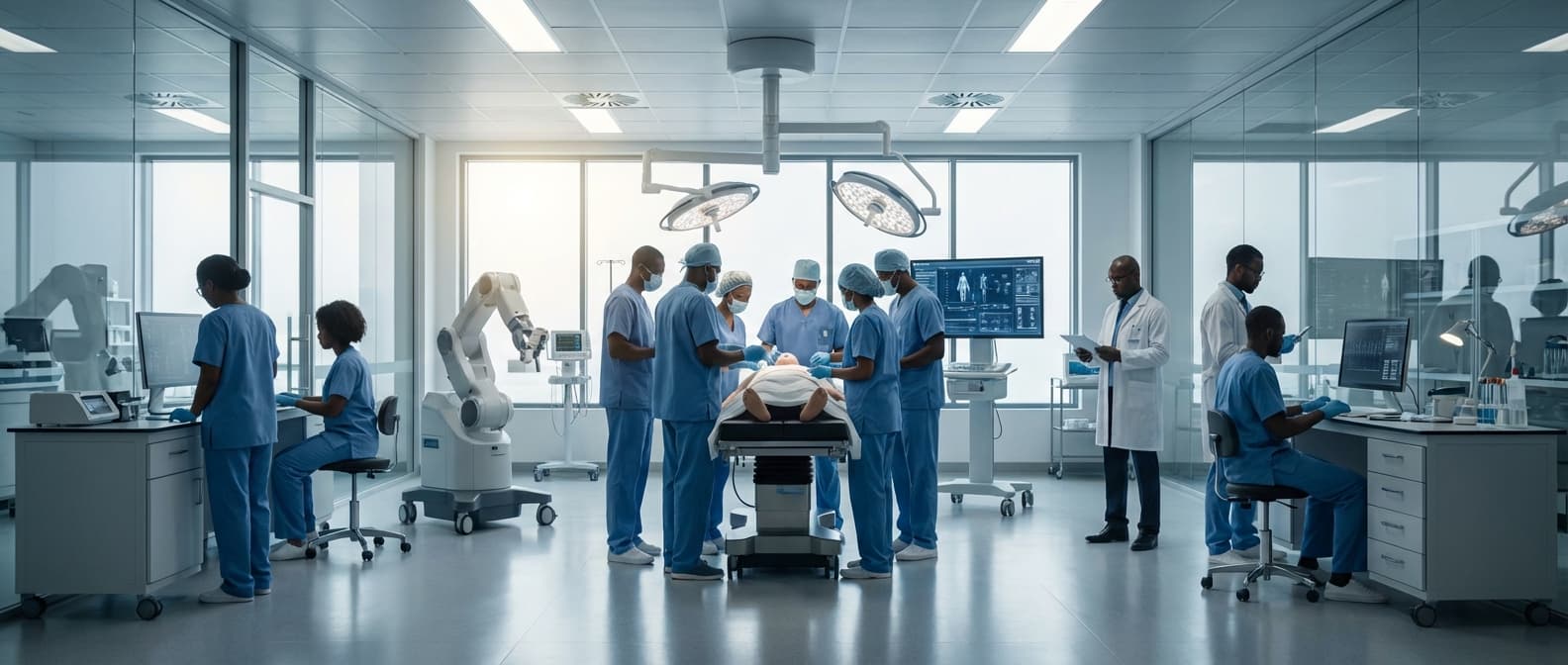
Biomedical Engineering Consulting in Benin
Engineering Excellence & Technical Support
Equipment selection, procurement and implementation consulting High-standard technical execution following OEM protocols and local regulatory frameworks.
Advanced Medical Device Integration & Validation
We specialize in the seamless integration and rigorous validation of cutting-edge medical devices within Benin's healthcare infrastructure. Our expertise ensures compliance with international standards and local regulations, optimizing patient care pathways and enhancing diagnostic accuracy.
Biomaterial Innovation & Application
Our consultants drive innovation in biomaterials, developing and adapting sustainable and cost-effective solutions for local manufacturing and clinical application. We focus on materials that address specific health challenges prevalent in Benin, fostering domestic production and reducing reliance on imports.
Health Informatics & Data-Driven Solutions
Leveraging data analytics and health informatics, we empower healthcare providers in Benin with actionable insights. Our solutions optimize resource allocation, predict disease outbreaks, and personalize patient treatment plans, leading to improved public health outcomes and operational efficiency.
What Is Biomedical Engineering Consulting In Benin?
Biomedical Engineering Consulting in Benin refers to the provision of specialized technical expertise and advisory services related to the design, development, implementation, maintenance, and regulatory compliance of medical devices, healthcare technologies, and related infrastructure within Benin's healthcare sector. This field bridges the disciplines of engineering and medicine to improve healthcare delivery, patient outcomes, and operational efficiency within the Beninese context. It encompasses a broad spectrum of activities, from strategic planning for healthcare facility modernization to the intricate technical aspects of equipment selection, validation, and lifecycle management. The service aims to optimize the utilization of biomedical technology, ensuring safety, efficacy, and cost-effectiveness in alignment with national health policies and international standards.
| Stakeholder Group | Why they need Biomedical Engineering Consulting | Typical Use Cases |
|---|---|---|
| Public and Private Hospitals/Clinics | To ensure optimal functionality, safety, and cost-effectiveness of their medical equipment and technological infrastructure; to comply with regulatory standards; and to improve patient care delivery. | Procurement of new imaging systems (e.g., X-ray, CT scanners), establishing a robust preventive maintenance program for surgical equipment, validating the performance of sterilization units, planning for the integration of a new Electronic Health Record (EHR) system. |
| Government Ministries of Health (e.g., Ministry of Public Health) | To develop national healthcare technology strategies, establish procurement frameworks for medical equipment, set standards for maintenance, and ensure equitable access to quality healthcare technology across the country. | Developing national guidelines for medical device management, creating tender documents for large-scale equipment acquisition for public health facilities, assessing the needs for specialized medical equipment in underserved regions, establishing a national medical device registry. |
| Medical Device Manufacturers and Distributors (Local and International) | To navigate local regulatory requirements, establish effective distribution and after-sales service networks, understand market needs, and ensure successful product deployment and support within Benin. | Assisting with the registration and import of new medical devices, developing a service and maintenance strategy for their product lines in Benin, providing technical training to local partners, conducting market feasibility studies for new technologies. |
| Non-Governmental Organizations (NGOs) and International Aid Agencies | To effectively manage and deploy donated or procured medical equipment in development projects, ensure sustainability of deployed technologies, and maximize the impact of their healthcare initiatives. | Assessing the suitability of donated equipment for local conditions, developing training programs for local healthcare workers on new technologies provided through aid, creating maintenance plans for equipment deployed in rural health centers, managing the lifecycle of medical equipment in project sites. |
| Academic and Research Institutions | To equip laboratories with state-of-the-art biomedical instrumentation, ensure proper operation and maintenance of research equipment, and advise on the technical aspects of biomedical research projects. | Selecting and installing advanced laboratory equipment for biological research, developing maintenance protocols for specialized analytical instruments, advising on the technical feasibility of research proposals involving novel technologies. |
Key Aspects of Biomedical Engineering Consulting in Benin
- Technical Assessment and Planning: Evaluating existing biomedical infrastructure, identifying needs for new equipment or technology upgrades, and developing strategic implementation plans.
- Equipment Selection and Procurement: Providing expert guidance on selecting appropriate medical devices and technologies based on clinical needs, budget constraints, and local supportability.
- Installation, Commissioning, and Validation: Overseeing the proper installation, calibration, and performance validation of new medical equipment to ensure it meets manufacturer specifications and clinical requirements.
- Maintenance and Repair Strategy: Developing proactive and reactive maintenance programs, including establishing in-house capabilities or managing external service providers for optimal equipment uptime and longevity.
- Regulatory Compliance and Quality Assurance: Advising on adherence to national and international regulations pertaining to medical devices, including registration, safety standards, and quality management systems.
- Technology Transfer and Training: Facilitating the successful adoption of new technologies by providing comprehensive training to clinical and technical staff, ensuring effective and safe utilization.
- Healthcare Facility Design and Optimization: Contributing engineering expertise to the design and renovation of healthcare facilities, focusing on optimal workflow, utility infrastructure, and integration of medical equipment.
- Risk Management and Patient Safety: Identifying potential risks associated with medical technology and developing strategies to mitigate them, thereby enhancing patient safety.
Who Needs Biomedical Engineering Consulting In Benin?
Biomedical Engineering (BME) consulting services are crucial for advancing healthcare and research infrastructure in Benin. These services can range from equipment procurement and maintenance to strategic planning for medical facilities and development of novel medical technologies. The demand for specialized BME expertise stems from the need to optimize existing healthcare systems, integrate new technologies, and ensure compliance with international standards.
| Customer Segment | Key Departments Requiring BME Consulting | Typical BME Needs |
|---|---|---|
| Government Ministries and Agencies | Ministry of Health, Ministry of Higher Education and Scientific Research, National Health Insurance Agency | National health infrastructure planning, medical equipment procurement strategy, regulatory framework development, telemedicine implementation. |
| Public and Private Hospitals | Biomedical Engineering Department, Hospital Administration, Procurement Department, IT Department, Clinical Departments (Surgery, Radiology, Cardiology) | Equipment selection and procurement, preventive maintenance programs, medical equipment calibration, facility design and expansion, infection control systems, PACS/RIS implementation, medical device integration. |
| Research Institutions and Universities | Research Centers, Medical Faculties, Laboratories, Procurement Offices | Laboratory design and equipment setup, acquisition of specialized research instruments, biosafety and biosecurity protocols, development of research prototypes, grant proposal support for technology-focused projects. |
| NGOs and International Aid Organizations | Program Management, Logistics and Procurement, Technical Support Teams | Needs assessment for medical equipment, donation management and distribution, training on equipment use and maintenance, impact assessment of technology interventions, establishing local repair networks. |
| Medical Equipment Manufacturers and Distributors | Sales and Marketing, Technical Support, Training Department, Regulatory Affairs | Market analysis and strategy, product localization and adaptation, installation and commissioning services, after-sales support and spare parts management, regulatory compliance in Benin, user training programs. |
| Health Technology Startups | Product Development, Engineering Team, Business Development, Regulatory Affairs | Product design and prototyping, clinical validation planning, intellectual property protection, navigating local regulatory pathways, securing investment through technical due diligence, market access strategy. |
Target Customers and Departments for Biomedical Engineering Consulting in Benin
- {"title":"Government Ministries and Agencies","description":"Responsible for national health policy, infrastructure development, and regulation. They often require expertise for large-scale projects and strategic planning."}
- {"title":"Public and Private Hospitals","description":"The primary users of medical equipment and facilities. They need BME consulting for equipment lifecycle management, facility upgrades, and technology adoption."}
- {"title":"Research Institutions and Universities","description":"Engaged in medical research and training. BME consulting can support the acquisition of specialized research equipment, laboratory design, and development of innovative medical solutions."}
- {"title":"Non-Governmental Organizations (NGOs) and International Aid Organizations","description":"Often involved in healthcare development projects, medical missions, and equipment donations. BME consultants can help them effectively deploy and manage medical resources."}
- {"title":"Medical Equipment Manufacturers and Distributors","description":"Require BME expertise for market entry, product adaptation, installation, training, and after-sales support within Benin."}
- {"title":"Health Technology Startups","description":"Emerging companies developing innovative medical devices or digital health solutions. BME consultants can provide guidance on product development, regulatory affairs, and market access."}
Biomedical Engineering Consulting Process In Benin
The biomedical engineering consulting process in Benin follows a structured workflow designed to address specific healthcare technology needs, from initial client engagement to the successful implementation and handover of solutions. This process emphasizes understanding the local context, adhering to regulatory frameworks, and ensuring sustainable outcomes.
| Phase | Key Activities in Benin | Deliverables/Outcomes |
|---|---|---|
| Client contact, site visits to hospitals/clinics, stakeholder interviews, review of existing infrastructure, understanding local healthcare challenges. | Needs assessment report, detailed understanding of client requirements and operational context. |
| Defining service scope, developing technical and financial proposals, presenting to client, iterative discussions and revisions. | Comprehensive project proposal, agreed-upon service scope and budget. |
| Drafting and signing service contract, ensuring compliance with Beninese contract law and regulations. | Signed service agreement/contract. |
| Developing detailed work plans, resource allocation, team formation, procurement of initial materials/tools. | Project management plan, mobilized project team and resources. |
| Procuring and installing equipment (navigating customs and import duties), developing maintenance plans, conducting training for local technicians and users, ensuring adherence to Ministry of Health guidelines. | Installed and functional equipment, operational maintenance systems, trained personnel, implemented standard operating procedures (SOPs). |
| Tracking project progress, quality control, risk management, submitting regular progress reports to the client and relevant authorities. | Progress reports, performance metrics, evaluation findings. |
| Finalizing all deliverables, conducting final inspections and testing, providing comprehensive documentation and training materials, formal client acceptance. | Final project report, handover documentation, client sign-off. |
| Providing troubleshooting, answering queries, conducting impact assessments (optional, per contract). | Continued client satisfaction, long-term project sustainability. |
Biomedical Engineering Consulting Workflow in Benin
- {"title":"1. Initial Inquiry and Needs Assessment","description":"The process begins with a client (e.g., hospital, clinic, government agency) reaching out with a specific need. This could involve equipment procurement, maintenance strategies, infrastructure planning, or training requirements. The consultant then conducts a thorough needs assessment, which may involve site visits, interviews with stakeholders, and a review of existing documentation to fully understand the scope, objectives, and constraints."}
- {"title":"2. Proposal Development and Negotiation","description":"Based on the needs assessment, the consultant develops a detailed proposal. This outlines the proposed services, methodology, timelines, deliverables, and associated costs. The proposal is then presented to the client for review and discussion. Negotiations may occur to refine the scope, budget, or timeline before a formal agreement is reached."}
- {"title":"3. Contractual Agreement","description":"Once both parties agree on the terms, a formal contract is signed. This legally binding document specifies the responsibilities of both the consultant and the client, payment schedules, intellectual property rights, confidentiality clauses, and dispute resolution mechanisms. It's crucial to ensure this contract aligns with Beninese legal requirements and industry best practices."}
- {"title":"4. Project Planning and Mobilization","description":"With the contract in place, a detailed project plan is created. This includes breaking down the project into manageable tasks, assigning resources (personnel, equipment), establishing communication protocols, and setting key performance indicators (KPIs). Mobilization involves gathering the necessary resources and team members to commence work."}
- {"title":"5. Execution and Implementation","description":"This is the core phase where the consultant actively carries out the agreed-upon services. This could involve: \n- Procurement Support: Identifying suitable medical equipment, managing tenders, and overseeing the purchasing process, ensuring compliance with Beninese import regulations and standards.\n- Installation and Commissioning: Overseeing the installation and proper functioning of new medical devices, including calibration and testing.\n- Maintenance and Repair Strategy Development: Creating preventative maintenance schedules, establishing spare parts management systems, and developing protocols for equipment repair.\n- Training and Capacity Building: Educating healthcare professionals and technical staff on the operation, maintenance, and troubleshooting of biomedical equipment.\n- Infrastructure Assessment and Planning: Evaluating existing healthcare facility infrastructure and recommending improvements for the integration of medical technology.\n- Regulatory Compliance: Ensuring all activities and equipment meet the standards set by the Ministry of Health and other relevant Beninese authorities."}
- {"title":"6. Monitoring, Evaluation, and Reporting","description":"Throughout the execution phase, the consultant continuously monitors progress against the project plan and KPIs. Regular reports are provided to the client, detailing achievements, challenges, and any necessary adjustments. This phase also involves evaluating the effectiveness of implemented solutions."}
- {"title":"7. Project Completion and Handover","description":"Upon successful completion of all project objectives, a formal handover takes place. This includes delivering all final deliverables (e.g., reports, manuals, training certificates), providing a comprehensive project summary, and ensuring the client has the necessary knowledge and resources to sustain the implemented solutions. A final project review and sign-off by the client mark the official closure."}
- {"title":"8. Post-Project Support and Follow-up","description":"Depending on the contract, the consultant may offer post-project support, addressing any unforeseen issues, providing ongoing advice, or conducting follow-up evaluations to assess the long-term impact of their services."}
Biomedical Engineering Consulting Cost In Benin
Biomedical engineering consulting costs in Benin can vary significantly based on several factors. These include the complexity and scope of the project, the experience and reputation of the consultant or firm, the duration of the engagement, and the specific services required. Local currency for consulting services in Benin is the West African CFA franc (XOF).
| Service Type / Project Scale | Estimated Cost Range (XOF) |
|---|---|
| Initial Consultation / Feasibility Study (Short-term, basic assessment) | 500,000 - 2,000,000 XOF |
| Equipment Selection & Procurement Assistance (Medium scope) | 1,500,000 - 5,000,000 XOF |
| Regulatory Affairs & Compliance Guidance (Per device/service) | 1,000,000 - 4,000,000 XOF |
| Project Management for Biomedical Infrastructure (e.g., hospital departments) | 5,000,000 - 20,000,000+ XOF (often a percentage of project value) |
| Training & Capacity Building (Workshop-based) | 800,000 - 3,000,000 XOF per workshop |
| Technical Due Diligence / Audits | 2,000,000 - 8,000,000 XOF |
| Specialized Design & Development Projects (Highly complex) | Negotiable, often significantly higher than other services, potentially tens of millions of XOF. |
Key Pricing Factors for Biomedical Engineering Consulting in Benin
- Project Scope and Complexity: Larger, more intricate projects requiring in-depth analysis, design, or implementation will naturally command higher fees.
- Consultant Expertise and Experience: Highly specialized consultants or established firms with a proven track record and extensive experience will charge more.
- Duration of Engagement: Whether the consultancy is for a short-term assessment or a long-term project management role will influence the overall cost.
- Specific Services: The nature of the services, such as market research, regulatory affairs, equipment selection and procurement, training, or validation, will have different associated costs.
- Travel and Expenses: If the consultant needs to travel within Benin or internationally, or incur specific operational expenses, these will be factored into the total cost.
- Urgency and Deadlines: Rush projects with tight deadlines may incur premium charges.
- Deliverables Required: The format and comprehensiveness of the final reports, presentations, or other deliverables can also affect pricing.
Affordable Biomedical Engineering Consulting Options
Biomedical engineering consulting can be a crucial resource for startups and established companies alike, offering specialized expertise in areas like product development, regulatory affairs, clinical trials, and market analysis. However, the perceived high cost can be a barrier. Fortunately, there are affordable options and strategies to maximize value while minimizing expenses. This guide explores how to leverage value bundles and implement cost-saving techniques in biomedical engineering consulting.
| Service Area | Typical Cost Driver | Cost-Saving Strategy | Value Bundle Example |
|---|---|---|---|
| Product Development | Design iterations, prototyping, testing | Phased development with clear milestones, leveraging off-the-shelf components where possible | Design & Prototyping Bundle: Includes initial concept development, preliminary design, and a single prototype iteration. |
| Regulatory Affairs | Dossier preparation, submission management, pre-submission meetings | Clear scope definition for submissions, using template-based approaches for common documents | FDA Submission Readiness Bundle: Covers pre-submission strategy, core dossier content review, and limited Q&A with regulatory experts. |
| Clinical Trials | Protocol development, site selection, data management | Early engagement with experienced clinical operations teams, utilizing existing data infrastructure | Clinical Trial Planning Bundle: Includes protocol outline, budget estimation, and site identification strategy. |
| Market Analysis & Strategy | Competitive landscape research, market sizing, pricing strategies | Leveraging publicly available data where possible, focusing on specific market segments | Go-to-Market Strategy Starter Pack: Includes target market identification, basic competitive analysis, and initial pricing recommendations. |
Understanding Value Bundles and Cost-Saving Strategies
- Value Bundles: These are packages of services offered by consulting firms, often at a discounted rate compared to purchasing individual services. Bundling can streamline projects and provide a comprehensive solution.
- Project-Based Fees: Instead of hourly rates, negotiate a fixed price for clearly defined project scopes. This provides budget certainty and incentivizes efficiency from the consultant.
- Retainer Agreements: For ongoing needs, a retainer offers consistent access to expertise at a predictable monthly cost. This is ideal for startups requiring regular guidance.
- Phased Engagements: Break down large projects into smaller, manageable phases. This allows for flexibility, controlled spending, and the ability to re-evaluate needs after each phase.
- Leveraging Junior Consultants or Specialized Teams: Some firms offer tiered pricing, with more junior consultants or specialized teams costing less. Their expertise can be sufficient for certain tasks.
- Remote Consulting: Utilizing video conferencing and digital collaboration tools significantly reduces travel and accommodation expenses, making remote consultations a more cost-effective option.
- Partnerships and Collaborations: Explore co-consulting opportunities with other companies or research institutions to share expertise and costs on specific projects.
- Focus on Core Needs: Clearly define the essential services required. Avoid unnecessary add-ons and focus on consultants who specialize in your specific domain.
- Utilize Freelance Platforms (with caution): For specific, well-defined tasks, freelance platforms can offer access to skilled biomedical engineers at competitive rates. Thorough vetting is essential.
- Internal Skill Development: Identify areas where internal teams can be trained to handle certain aspects of a project, reducing reliance on external consultants in the long run.
Verified Providers In Benin
In Benin's evolving healthcare landscape, identifying reliable and trustworthy medical professionals is paramount for individuals seeking quality care. Franance Health emerges as a leading platform dedicated to verifying healthcare providers, ensuring that patients connect with credentialed and skilled practitioners. This commitment to rigorous vetting is why Franance Health credentials represent the gold standard for selecting healthcare services in Benin.
| Provider Type | Franance Health Verification Focus | Benefits for Patients |
|---|---|---|
| Doctors (General Practitioners & Specialists) | Medical degree, specialization certification, licensing board registration, good standing with professional bodies. | Access to qualified specialists with validated expertise, ensuring accurate diagnosis and treatment. |
| Nurses (RNs, LPNs) | Nursing degree/diploma, relevant certifications, active nursing license. | Trustworthy and skilled nursing care, vital for patient recovery and ongoing health management. |
| Pharmacists | Pharmacy degree, dispensing license, regulatory compliance. | Reliable access to medications and expert advice on their use, ensuring safe and effective pharmaceutical care. |
| Therapists (Physiotherapists, Psychologists) | Relevant degree/certification in their field, professional licensing, adherence to ethical codes. | Effective rehabilitation and mental health support from qualified practitioners. |
| Medical Technicians & Lab Personnel | Technical certifications, competency assessments, adherence to lab standards. | Accurate and reliable diagnostic testing and medical support services. |
Why Franance Health Credentials Matter:
- Uncompromising Verification Process: Franance Health employs a multi-faceted verification system that goes beyond basic checks. This includes scrutinizing academic qualifications, professional licenses, ongoing training, and practice histories.
- Commitment to Patient Safety: The core mission of Franance Health is to safeguard patient well-being. By endorsing only verified providers, they significantly reduce the risk of encountering unqualified or fraudulent practitioners.
- Enhanced Transparency: Franance Health provides a transparent platform where patients can easily access verified information about healthcare professionals, including their specialties, experience, and accreditations.
- Building Trust and Confidence: The presence of a Franance Health credential on a provider's profile instills a sense of trust and confidence in potential patients, assuring them of a certain level of expertise and ethical practice.
- Promoting Excellence in Healthcare: By setting a high bar for verification, Franance Health incentivizes healthcare providers to maintain and elevate their professional standards, contributing to the overall improvement of healthcare services in Benin.
Scope Of Work For Biomedical Engineering Consulting
This Scope of Work (SOW) outlines the consulting services to be provided by [Consulting Firm Name] (hereinafter referred to as "Consultant") to [Client Name] (hereinafter referred to as "Client") for a biomedical engineering project. The project aims to [briefly describe project objective, e.g., design and prototype a novel diagnostic device, optimize a medical device manufacturing process, develop a regulatory submission strategy for a new implantable device]. This document details the technical deliverables, standard specifications, and the overall framework of the engagement.
| Deliverable | Description | Format | Associated Standards/Specifications |
|---|---|---|---|
| Project Plan | Detailed timeline, resource allocation, communication plan, risk management strategy. | Document (PDF/Word) | ISO 21500 (Project management), Client's internal project management guidelines. |
| Requirements Specification Document | Comprehensive documentation of functional, performance, safety, and usability requirements for the biomedical device/system. | Document (PDF/Word) | ISO 13485 (Quality management systems for medical devices), IEC 62304 (Software lifecycle processes), Usability standards (e.g., IEC 62366). |
| Conceptual Design Report | Exploration of multiple design concepts, trade-off analysis, preliminary risk assessment, and selection of preferred concept. | Document (PDF/Word) with preliminary schematics/block diagrams. | Biocompatibility standards (e.g., ISO 10993 series), Material selection guidelines. |
| Detailed Design Files | Complete set of engineering drawings, CAD models, schematics, bill of materials (BOM), and software code (if applicable). | CAD files (e.g., SolidWorks, AutoCAD), Document (PDF), Source code repository. | Geometric Dimensioning and Tolerancing (GD&T) standards (e.g., ASME Y14.5), Electrical/electronic design standards (e.g., IPC standards), Mechanical design best practices. |
| Prototype Build and Test Report | Documentation of prototype fabrication, assembly process, and initial functional testing results. | Document (PDF/Word), Photographs/videos of prototype. | Good Manufacturing Practices (GMP), Component sourcing specifications. |
| Verification and Validation (V&V) Plan | Detailed plan outlining the protocols, test methods, acceptance criteria, and responsibilities for V&V activities. | Document (PDF/Word) | ISO 13485, relevant performance standards for the device class. |
| V&V Test Reports | Comprehensive reports detailing the execution of V&V tests, results, deviations, and conclusions. | Document (PDF/Word) | As defined in the V&V Plan, relevant industry-specific test standards. |
| Risk Management File | Documentation of all identified hazards, risk assessments, risk control measures, and their effectiveness throughout the product lifecycle. | Document (PDF/Word) | ISO 14971 (Application of risk management to medical devices). |
| Regulatory Submission Documentation (Draft/Final) | Technical documentation prepared to support regulatory submissions (e.g., FDA 510(k), CE Mark Technical File). | Document (PDF/Word), Submission-ready formats. | Specific regulatory agency guidance documents (e.g., FDA, EMA), harmonized standards. |
| Final Project Report | Summary of project activities, key findings, lessons learned, and recommendations for future development or commercialization. | Document (PDF/Word) | Client's internal reporting requirements. |
| Technical Training Materials | Documentation for training Client personnel on the operation, maintenance, or troubleshooting of the developed technology/device. | Document (PDF/Word), Presentation slides. | Instructional design principles. |
Project Phases and Key Activities
- Phase 1: Project Initiation and Requirements Gathering
- Phase 2: Conceptual Design and Feasibility Study
- Phase 3: Detailed Design and Prototyping
- Phase 4: Verification and Validation Testing
- Phase 5: Regulatory Strategy and Documentation
- Phase 6: Project Closure and Knowledge Transfer
Service Level Agreement For Biomedical Engineering Consulting
This Service Level Agreement (SLA) outlines the commitment of [Your Company Name/Consultant Name] ('Provider') to its clients ('Client') regarding the provision of biomedical engineering consulting services. It specifically addresses response times for support requests and uptime guarantees for any software, systems, or platforms managed or provided by the Provider as part of the consulting engagement. This SLA is an integral part of the Master Service Agreement (MSA) between the Provider and the Client.
| Service Category/Severity | Response Time Target (During Business Hours) | Response Time Target (Outside Business Hours - if applicable) | Resolution Target (Initial Steps) | Uptime Guarantee |
|---|---|---|---|---|
| Emergency Support (e.g., critical system failure affecting patient care) | 1 hour | 2 hours | Initiate investigation and provide an estimated resolution time within 2 hours of acknowledgment. | 99.9% Monthly Uptime (excluding Scheduled Downtime) |
| High Priority Support (e.g., significant functional impairment impacting key operations) | 2 business hours | 4 business hours | Initiate investigation and provide an estimated resolution time within 4 business hours of acknowledgment. | 99.5% Monthly Uptime (excluding Scheduled Downtime) |
| Medium Priority Support (e.g., minor functional issues, performance degradation) | 4 business hours | Next Business Day | Initiate investigation and provide an estimated resolution time within 8 business hours of acknowledgment. | 99.0% Monthly Uptime (excluding Scheduled Downtime) |
| Low Priority Support (e.g., feature requests, general inquiries) | 1 business day | Next Business Day | Acknowledge and provide an estimated timeline for review/response within 2 business days of acknowledgment. | N/A (not applicable to service availability) |
| Software/Platform Uptime (if applicable, e.g., simulation software, data analysis platform) | N/A | N/A | N/A | 99.8% Monthly Uptime (excluding Scheduled Downtime) |
Key Definitions
- Business Hours: The period from [Start Time] to [End Time] ([Time Zone]) on [Days of the Week] (excluding [List of Holidays]).
- Emergency: A critical failure of a system or service that renders it completely unusable or severely impairs its functionality, posing a significant risk to patient safety, regulatory compliance, or core business operations.
- Non-Emergency: Any support request that does not meet the definition of an Emergency.
- Response Time: The maximum allowable time for the Provider to acknowledge a support request and initiate an investigation or resolution effort.
- Uptime: The percentage of time during a defined period that a specific service or system is available and operational.
- Scheduled Downtime: Pre-planned maintenance periods, announced in advance, during which services may be temporarily unavailable.
- Unscheduled Downtime: Any period of service unavailability that is not Scheduled Downtime.
Frequently Asked Questions

Ready when you are
Let's scope your Biomedical Engineering Consulting in Benin project in Benin.

Scaling healthcare logistics and technical systems across the entire continent.