
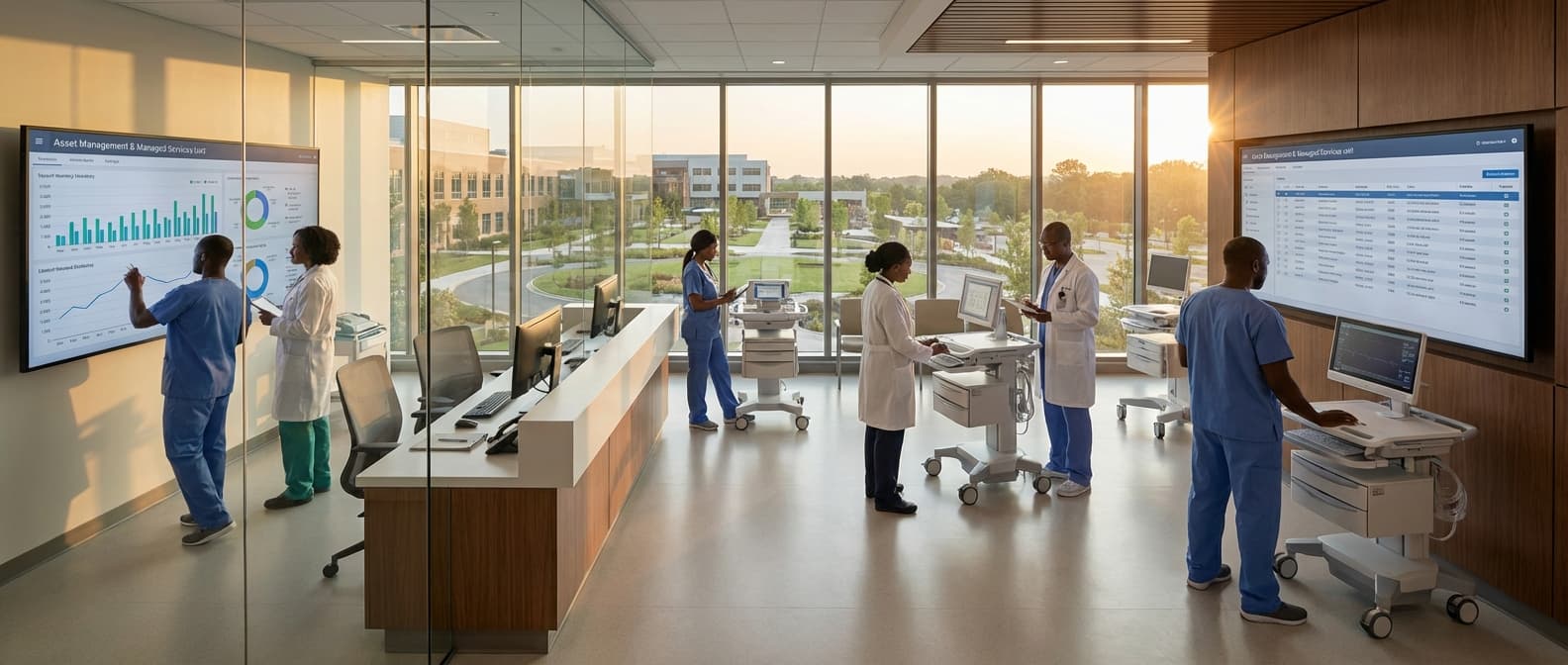
Equipment Fleet Standardization Consulting Service in Benin
Engineering Excellence & Technical Support
Equipment Fleet Standardization Consulting Service High-standard technical execution following OEM protocols and local regulatory frameworks.
Optimized Fleet Uptime & Reduced Operating Costs
Our standardization methodology in Benin leverages data-driven analysis to select the most reliable and cost-effective equipment for your specific operational needs. This minimizes unexpected breakdowns, reduces maintenance expenses, and ensures your fleet operates at peak performance, directly impacting your bottom line.
Streamlined Maintenance & Simplified Parts Management
By standardizing your equipment fleet in Benin, we create a uniform ecosystem. This significantly simplifies maintenance procedures, reduces the complexity of spare parts inventory, and allows for more efficient technician training, leading to faster repairs and improved overall fleet health.
Enhanced Operational Efficiency & Scalability
Standardizing your fleet in Benin with our expert consulting allows for predictable performance and simplified operational workflows. This increased efficiency directly supports your business growth by making fleet management more scalable, adaptable, and easier to integrate with new projects and market demands.
What Is Equipment Fleet Standardization Consulting Service In Benin?
Equipment Fleet Standardization Consulting Service in Benin refers to specialized advisory and implementation support aimed at optimizing the composition, management, and operational efficiency of an organization's fleet of equipment. This service focuses on achieving uniformity in equipment types, models, makes, and associated technologies across an enterprise, or significant segments thereof, within the Beninese operational context. The objective is to enhance operational synergy, reduce lifecycle costs, improve maintainability, facilitate training, and leverage economies of scale in procurement and support. Standardization, in this context, is not merely about purchasing identical units but encompasses the strategic alignment of equipment acquisition, deployment, maintenance, and end-of-life strategies.
| Who Needs This Service? | Typical Use Cases in Benin | ||||||
|---|---|---|---|---|---|---|---|
| Organizations with diverse and disparate equipment inventories: This includes companies operating in sectors with significant equipment dependency. | Construction and Infrastructure Development: Standardizing earthmoving equipment (excavators, bulldozers), concrete batching plants, and transportation vehicles to ensure interoperability, simplify maintenance, and reduce spare parts inventory. | Agricultural Enterprises: Standardizing tractors, harvesters, irrigation systems, and processing machinery for improved efficiency, shared maintenance resources, and easier operator training in rural areas. | Mining and Extractive Industries: Optimizing fleets of haul trucks, drilling rigs, loaders, and processing equipment for enhanced reliability, reduced downtime, and optimized fuel consumption in remote operational sites. | Logistics and Transportation Companies: Standardizing commercial vehicles (trucks, vans), material handling equipment (forklifts), and warehousing machinery to improve route optimization, streamline maintenance schedules, and enhance fleet utilization. | Public Sector and Municipalities: Standardizing municipal vehicles (waste management trucks, street sweepers), utility equipment, and emergency response vehicles for cost-effective procurement, efficient deployment, and simplified maintenance by public works departments. | Energy and Utilities Sector: Standardizing specialized vehicles for line maintenance, drilling equipment for exploration, and inspection drones to improve operational efficiency and safety. | Organizations undergoing expansion or modernization: Companies looking to integrate new acquisitions or upgrade existing fleets with a focus on long-term operational efficiency and cost reduction. |
Key Components of Equipment Fleet Standardization Consulting Service in Benin
- Fleet Audit and Assessment: Comprehensive analysis of the existing equipment inventory, including usage patterns, maintenance records, operational performance, and cost drivers.
- Needs Analysis and Gap Identification: Determining current and future operational requirements and identifying discrepancies between existing fleet capabilities and strategic objectives.
- Standardization Strategy Development: Formulating a roadmap for fleet standardization, including defining target equipment profiles, phased implementation plans, and vendor selection criteria.
- Technology Integration and Lifecycle Management: Advising on the selection and integration of compatible technologies, telematics, and maintenance management systems, as well as defining equipment replacement cycles.
- Procurement and Sourcing Optimization: Assisting in developing procurement strategies that leverage standardization for volume discounts, improved negotiation leverage, and streamlined acquisition processes.
- Maintenance and Repair Optimization: Developing standardized maintenance procedures, spare parts inventory management, and service provider contracts tailored to the standardized fleet.
- Training and Skill Development: Designing and implementing training programs for operators and maintenance personnel on standardized equipment and systems.
- Performance Monitoring and Continuous Improvement: Establishing key performance indicators (KPIs) to track the effectiveness of the standardization initiative and recommend ongoing adjustments.
Who Needs Equipment Fleet Standardization Consulting Service In Benin?
Equipment fleet standardization consulting services are crucial for organizations in Benin aiming to optimize their operations, reduce costs, and enhance efficiency. Standardization across a fleet of vehicles, machinery, or other equipment leads to streamlined maintenance, improved driver/operator training, simplified procurement processes, and better inventory management. This ultimately translates to increased uptime, lower operating expenses, and a more predictable asset lifecycle.
| Target Customer Type | Key Departments Benefiting from Standardization | Primary Challenges Addressed |
|---|---|---|
| Logistics and Transportation Companies | Fleet Management, Procurement, Maintenance & Repair, Operations | High fuel consumption, diverse maintenance needs, spare parts inventory complexity, driver training variations |
| Construction and Infrastructure Development Firms | Fleet Management, Project Management, Procurement, Maintenance & Repair, Site Operations | Equipment downtime impacting project timelines, high repair costs, difficulty in cross-site equipment deployment, inconsistent operator skills |
| Agricultural Cooperatives and Large-Scale Farms | Farm Management, Procurement, Maintenance & Repair, Operations | Seasonal equipment demands, specialized maintenance needs for diverse machinery, optimizing fuel efficiency for planting/harvesting, operator training for various implements |
| Mining and Extractive Industries | Fleet Management, Operations, Maintenance & Repair, Safety, Procurement | Heavy-duty equipment reliability, specialized parts sourcing, harsh operating environment wear-and-tear, ensuring operator competency for complex machinery, managing large capital expenditures |
| Government Agencies (Public Works, Defense, Emergency Services) | Procurement, Fleet Management, Operations, Maintenance & Repair, Budgeting | Managing diverse vehicle fleets for various services, ensuring interoperability, cost-effective procurement of specialized vehicles, standardized training for emergency responders, long-term asset management |
| Manufacturing and Industrial Plants | Operations, Maintenance & Repair, Procurement, Logistics | Internal material handling equipment (forklifts, etc.), on-site transportation, managing specialized machinery for production, optimizing uptime for continuous operations |
| Telecommunications and Utility Companies | Field Operations, Fleet Management, Procurement, Maintenance & Repair | Service vehicles for installations/repairs, specialized equipment for infrastructure maintenance, ensuring rapid response times, managing diverse equipment for different service types |
| Oil and Gas Exploration and Service Companies | Fleet Management, Operations, Maintenance & Repair, Safety, Procurement | Remote location operations, ruggedized equipment needs, specialized vehicles for exploration/drilling, stringent safety standards, managing complex supply chains for parts and fuel |
Target Customers for Equipment Fleet Standardization Consulting in Benin
- Logistics and Transportation Companies
- Construction and Infrastructure Development Firms
- Agricultural Cooperatives and Large-Scale Farms
- Mining and Extractive Industries
- Government Agencies (Public Works, Defense, Emergency Services)
- Manufacturing and Industrial Plants with On-site Fleets
- Telecommunications and Utility Companies
- Oil and Gas Exploration and Service Companies
Equipment Fleet Standardization Consulting Service Process In Benin
This document outlines the standard workflow for an Equipment Fleet Standardization Consulting Service in Benin. The process guides clients from their initial inquiry to the successful execution of a fleet standardization project, ensuring efficiency, cost-effectiveness, and operational excellence for their equipment assets. The workflow is designed to be comprehensive, transparent, and adaptable to the specific needs of each client.
| Phase | Description | Key Activities | Deliverables | Client Involvement |
|---|---|---|---|---|
| The client expresses interest in fleet standardization services. | Initial contact, understanding client's high-level needs, scheduling follow-up. | Meeting minutes, preliminary understanding of client objectives. | High. |
| Detailed understanding of the client's current fleet, operations, and challenges. | Site visits, interviews with stakeholders, review of existing documentation (fleet lists, maintenance records, operational data). | Detailed needs assessment report, defined project scope, identification of key performance indicators (KPIs). | High. |
| Crafting a tailored solution based on the needs assessment. | Developing a detailed project proposal outlining objectives, methodology, timeline, team, and pricing. Presenting the proposal to the client. | Comprehensive project proposal, presentation deck. | Medium. |
| Formalizing the agreement between the consulting firm and the client. | Reviewing and negotiating contract terms, signing of the service agreement. | Signed service contract. | High. |
| Initiating the project and establishing the project team. | Formal project kick-off meeting, introduction of the consulting team and client project team, establishing communication protocols. | Project charter, established communication plan. | High. |
| Gathering and analyzing all relevant fleet data. | Collecting detailed information on fleet size, types, age, usage, maintenance costs, operational efficiency, fuel consumption, safety records, etc. Analyzing this data to identify trends, inefficiencies, and standardization opportunities. | Raw data repository, comprehensive data analysis report with insights. | High. |
| Developing a roadmap for fleet standardization. | Defining optimal fleet mix, recommending specific equipment models, establishing procurement guidelines, developing maintenance strategies, proposing training programs. | Fleet standardization strategy document, recommended equipment list, procurement and maintenance guidelines. | Medium. |
| Creating a detailed plan for executing the standardization strategy. | Developing phased implementation plans, outlining procurement processes, detailing training schedules, defining change management strategies, risk assessment and mitigation plans. | Detailed implementation plan, training plan, change management plan. | Medium. |
| Putting the standardization strategy into action and managing organizational impact. | Overseeing equipment procurement, implementing new maintenance procedures, conducting training, communicating changes to all stakeholders, addressing resistance and ensuring adoption. | Procured standardized equipment, updated maintenance records, trained personnel, change management reports. | High. |
| Tracking progress and measuring the impact of standardization. | Regularly monitoring KPIs, collecting performance data, conducting periodic reviews, identifying and addressing any deviations from the plan. | Performance monitoring reports, impact assessment reports. | Medium. |
| Concluding the project and formally handing over responsibilities. | Final project review, documentation of lessons learned, final report preparation, handover of all project documentation and knowledge to the client's internal team. | Final project report, project documentation archive, lessons learned document. | High. |
| Providing ongoing assistance after project completion. | Offering technical support, answering queries, providing refresher training, assisting with ongoing optimization efforts as needed. | Ongoing support as per contract, performance optimization recommendations. | Medium. |
Equipment Fleet Standardization Consulting Service Process
- Inquiry & Initial Consultation
- Needs Assessment & Scoping
- Proposal Development & Presentation
- Contract Negotiation & Signing
- Project Kick-off & Team Formation
- Data Collection & Analysis
- Standardization Strategy Development
- Implementation Planning
- Execution & Change Management
- Monitoring & Evaluation
- Project Closure & Handover
- Post-Implementation Support
Equipment Fleet Standardization Consulting Service Cost In Benin
Consulting services for equipment fleet standardization in Benin can vary significantly in cost, influenced by a multitude of factors. These factors range from the complexity and scale of the fleet to the specific expertise and reputation of the consulting firm. Understanding these drivers is crucial for businesses seeking to optimize their equipment operations and achieve cost savings through standardization. The local economic climate, the level of competition among consultants, and the perceived value of the standardization effort itself all play a role in the final pricing.
| Service Component | Typical Cost Range (XOF - West African CFA Franc) | Notes |
|---|---|---|
| Initial Fleet Audit & Needs Assessment | 500,000 - 2,000,000 | Covers data collection, analysis of current fleet, and identification of standardization opportunities. |
| Development of Standardization Strategy & Recommendations | 750,000 - 3,000,000 | Includes outlining preferred equipment types, vendor strategies, and implementation roadmap. |
| Vendor Selection & Negotiation Support | 500,000 - 2,500,000 | Assisting in identifying, evaluating, and negotiating with equipment suppliers. |
| Implementation Planning & Project Management | 1,000,000 - 5,000,000+ | Developing detailed implementation plans and overseeing the rollout of new equipment or processes. |
| Training & Change Management | 300,000 - 1,500,000 | Training staff on new equipment, procedures, and fostering adoption of standardized practices. |
| Full Project Management (End-to-End) | 3,000,000 - 15,000,000+ | Comprehensive service covering all stages from initial assessment to successful implementation and post-implementation review. |
| Hourly/Daily Consulting Rates (for smaller engagements or specific tasks) | 50,000 - 200,000 per day | Varies significantly based on consultant experience and firm. |
Key Pricing Factors for Equipment Fleet Standardization Consulting in Benin
- Scope of the project: This includes the number of equipment types, the size of the fleet, and the geographical spread of operations.
- Complexity of existing fleet: A highly diverse and disparate fleet will require more in-depth analysis and planning.
- Desired level of standardization: Whether the goal is partial or full standardization will impact the effort involved.
- Consulting firm's reputation and expertise: Established firms with proven track records often command higher fees.
- Duration of the engagement: Longer-term projects will naturally incur higher overall costs.
- Specific services offered: This could include fleet audit, needs assessment, vendor selection, implementation support, training, and ongoing monitoring.
- Data availability and quality: Access to accurate and comprehensive fleet data streamlines the process.
- Client's internal resources: The extent to which the client can contribute internal personnel and data can influence consulting time.
- Market demand and competition: The number of available consultants and the perceived need for the service in Benin.
- Travel and accommodation expenses: If consultants need to travel extensively within Benin, these costs will be factored in.
Affordable Equipment Fleet Standardization Consulting Service Options
Our Affordable Equipment Fleet Standardization Consulting Service empowers businesses to optimize their operations and reduce costs through strategic fleet management. We offer tailored solutions that align with your budget and business objectives, focusing on maximizing efficiency and minimizing expenses. By standardizing your equipment fleet, you can achieve significant cost savings in areas such as maintenance, training, fuel consumption, and procurement. Our expertise lies in analyzing your current fleet, identifying standardization opportunities, and developing a phased implementation plan that delivers tangible ROI.
| Cost-Saving Strategy | Description | Impact | Example |
|---|---|---|---|
| Reduced Maintenance Costs | Standardizing on fewer makes/models simplifies parts inventory, technician training, and preventative maintenance schedules. | Up to 20% reduction in MRO (Maintenance, Repair, and Operations) spend. | Owning only one brand of forklifts reduces spare parts needs by 30%. |
| Lower Training Expenses | Fewer equipment types mean less time and resources spent training operators and maintenance staff. | Up to 25% reduction in training program costs. | Training a single type of excavators instead of three reduces operator certification costs. |
| Improved Fuel Efficiency | Selecting newer, more fuel-efficient models and optimizing usage patterns through standardization. | Potential for 5-15% fuel savings per vehicle. | Consolidating to energy-efficient hybrid vehicles for city deliveries. |
| Streamlined Procurement | Leveraging bulk purchasing power and negotiated fleet discounts from fewer vendors. | Up to 10% savings on new equipment acquisition. | Negotiating a fleet-wide discount for purchasing all light-duty vehicles from a single manufacturer. |
| Simplified Parts Management | Minimizing the variety of parts required across the fleet reduces inventory holding costs and search time. | Up to 15% reduction in inventory carrying costs. | Consolidating specialized hydraulic hoses to a universal type across all construction equipment. |
| Increased Resale Value | Well-maintained, standardized fleets are often more attractive to buyers, leading to higher resale values. | 5-10% increase in average resale value. | Selling a fleet of uniform, well-documented service history trucks. |
Value Bundles:
- {"title":"Bronze Fleet Tune-Up","features":["Fleet Assessment Report","Top 5 Standardization Recommendations","Basic Implementation Guidance"],"description":"Ideal for smaller fleets or those with basic standardization needs. Includes initial fleet assessment, identification of up to 5 key standardization opportunities, and a high-level implementation roadmap. Focuses on quick wins and immediate cost reductions."}
- {"title":"Silver Fleet Optimization","features":["Detailed Fleet Analysis","Standardization Plans for Multiple Categories","Training & Procurement Strategy","Medium-Term ROI Analysis"],"description":"A comprehensive package for medium-sized fleets seeking deeper efficiency gains. Builds upon the Bronze bundle with in-depth analysis, detailed standardization plans for multiple equipment categories, training recommendations, and procurement strategy advice. Includes a medium-term ROI projection."}
- {"title":"Gold Fleet Transformation","features":["Advanced Data Analytics","Predictive Maintenance Integration","Custom Training Program Development","Procurement Negotiation Support","Long-Term Performance Monitoring"],"description":"Our premium offering for large or complex fleets aiming for full operational transformation. Encompasses all Silver features, plus advanced data analytics, predictive maintenance integration, custom training program development, negotiation support for new equipment purchases, and ongoing performance monitoring. Delivers a long-term strategic vision and a robust ROI case."}
Verified Providers In Benin
In Benin's evolving healthcare landscape, discerning patients seek reliable and skilled medical professionals. Verified providers are crucial for ensuring quality care and patient safety. Franance Health has established itself as a leading platform for identifying and credentialing these top-tier healthcare practitioners.
| Provider Type | Key Credentials Verified | Benefits for Patients |
|---|---|---|
| Doctors (General Practitioners & Specialists) | Medical Degree (e.g., MD, MBBS), Specialized Residency/Fellowship, Medical License, Board Certification, Continuing Medical Education (CME) credits | Accurate diagnosis, effective treatment plans, access to specialized care, reduced risk of misdiagnosis or malpractice. |
| Nurses (RNs, ENs) | Nursing Diploma/Degree, Nursing License, Specialization Certifications (e.g., critical care, midwifery), CME credits | Skilled patient care, post-operative support, health education, medication administration, vital sign monitoring. |
| Pharmacists | Pharmacy Degree, Pharmacy License, Continuing Education credits | Accurate dispensing of medication, drug interaction checks, patient counseling on medication use and side effects. |
| Therapists (Physiotherapists, Occupational Therapists) | Relevant Degree/Diploma, Professional License, Specialization Certifications | Rehabilitation services, pain management, improvement of mobility and daily living skills, recovery from injuries. |
| Dentists | Dental Degree, Dental License, Specialization Certifications (e.g., orthodontics, periodontics) | Oral health assessment, preventive care, restorative treatments, cosmetic dentistry. |
Why Franance Health Credentials Matter
- Rigorous vetting process: Franance Health employs a comprehensive evaluation system to confirm the qualifications, experience, and ethical standing of every provider.
- Specialized expertise: Our network includes specialists across a wide range of medical fields, ensuring you find the right expert for your specific needs.
- Commitment to ongoing education: Franance Health encourages and verifies continuous professional development, keeping providers at the forefront of medical advancements.
- Patient-centric approach: Verified providers listed by Franance Health are committed to providing compassionate, transparent, and high-quality patient care.
Scope Of Work For Equipment Fleet Standardization Consulting Service
This Scope of Work (SOW) outlines the services to be provided by [Consulting Firm Name] (hereinafter referred to as "Consultant") to [Client Organization Name] (hereinafter referred to as "Client") for the purpose of developing and implementing an equipment fleet standardization strategy. The project aims to reduce operational costs, improve maintenance efficiency, enhance driver/operator safety, and optimize asset utilization through the standardization of equipment types, makes, and models across the Client's fleet. This SOW details the technical deliverables and standard specifications that will be developed and provided.
| Phase | Key Activities | Technical Deliverables | Standard Specifications | |||||
|---|---|---|---|---|---|---|---|---|
| Phase 1: Assessment & Analysis | Inventory current fleet (make, model, age, hours, cost, maintenance history). | Analyze operational data (usage patterns, fuel consumption, repair costs, downtime). | Identify core operational requirements for each equipment category. | Report on current fleet status and key performance indicators (KPIs). | Categorization of equipment needs. | Initial list of potential standardized equipment types and brands. | ||
| Phase 2: Strategy Development | Define standardization criteria (performance, reliability, cost of ownership, availability, driver/operator familiarity, safety features). | Evaluate potential equipment manufacturers and models against defined criteria. | Develop standardized equipment specifications for each category. | Create a phased implementation roadmap. | Cost-benefit analysis of standardization. | Standardized Equipment Specifications Document (per category). | Recommended Equipment Model List (with justifications). | Implementation Roadmap Report. |
| Phase 3: Specification Refinement & Implementation Planning | Validate standardized specifications with key stakeholders (operations, maintenance, procurement, safety). | Develop detailed technical specifications for procurement. | Define maintenance and repair protocols for standardized equipment. | Establish training requirements for operators and maintenance personnel. | Finalized Standardized Equipment Specifications (including technical drawings/diagrams where applicable). | Maintenance and Repair Protocol Guide. | Training Needs Assessment Report. | |
| Phase 4: Ongoing Management & Reporting | Develop a framework for ongoing fleet data collection and analysis. | Establish performance monitoring and reporting mechanisms. | Provide recommendations for continuous improvement. | Fleet Performance Monitoring Dashboard Template. | Continuous Improvement Recommendations Report. |
Project Objectives
- Identify current fleet composition and utilization patterns.
- Analyze operational requirements and performance data for all equipment categories.
- Develop standardized equipment specifications for each identified category.
- Recommend a phased approach for fleet standardization implementation.
- Establish a framework for ongoing fleet management and procurement.
- Quantify potential cost savings and ROI associated with standardization.
Service Level Agreement For Equipment Fleet Standardization Consulting Service
This Service Level Agreement (SLA) outlines the performance standards and guarantees for the Equipment Fleet Standardization Consulting Service provided by [Your Company Name] (hereinafter referred to as "Provider") to [Client Company Name] (hereinafter referred to as "Client"). This SLA is effective as of [Start Date] and remains in effect until [End Date].
| Service Component | Service Level Objective (SLO) | Measurement Method | Remedy/Credit |
|---|---|---|---|
| Initial Response Time (Critical Issues) | Within 2 Business Hours | Timestamp of support ticket creation vs. timestamp of first engagement acknowledgement | 10% discount on the next monthly invoice for each missed SLO. |
| Initial Response Time (Major Issues) | Within 4 Business Hours | Timestamp of support ticket creation vs. timestamp of first engagement acknowledgement | 5% discount on the next monthly invoice for each missed SLO. |
| Initial Response Time (Minor Issues) | Within 8 Business Hours | Timestamp of support ticket creation vs. timestamp of first engagement acknowledgement | No credit, but prompt action expected during business hours. |
| Uptime Guarantee for Consulting Services | 99.5% during Business Hours | Downtime logged via [Specify monitoring tool or method] during scheduled business hours, excluding scheduled maintenance. | For every 1% of downtime below the 99.5% guarantee in a given month, Client receives a credit equivalent to 5% of the monthly service fee. |
| Uptime Guarantee for Agreed-Upon Platforms (if applicable) | 99.0% during Business Hours | Downtime logged via [Specify monitoring tool or method] during scheduled business hours, excluding scheduled maintenance. | For every 1% of downtime below the 99.0% guarantee in a given month, Client receives a credit equivalent to 3% of the monthly service fee. |
| Scheduled Maintenance Notification | Minimum 48 hours' notice | Email notification to Client's designated contact | No credit, but adherence is mandatory. |
Key Service Definitions
- Consulting Hours: Defined as the time spent by Provider's consultants actively engaged in providing the agreed-upon services, including meetings, analysis, documentation, and remote support.
- Response Time: The maximum allowable time from the Client's initiation of a support request to the Provider's acknowledgment and commencement of work on the issue.
- Resolution Time: The maximum allowable time from the Provider's acknowledgment of a support request to the successful resolution or implementation of a workaround that restores functionality to an acceptable level.
- Uptime Guarantee: Refers to the guaranteed availability of the consulting services and any associated agreed-upon platforms or tools provided by the Provider.
- Business Hours: Defined as [Specify Business Hours, e.g., Monday to Friday, 9:00 AM to 5:00 PM] in [Specify Time Zone].
- Critical Issue: An issue that significantly impairs the Client's ability to proceed with fleet standardization efforts, causing substantial operational disruption or financial loss.
- Major Issue: An issue that impacts a significant portion of the fleet standardization project, causing delays or inefficiencies, but does not bring the entire project to a halt.
- Minor Issue: An issue that has a limited impact on the fleet standardization project and can be worked around with minimal disruption.
- Downtime: Any period during which the consulting services or associated agreed-upon platforms are unavailable to the Client.
Frequently Asked Questions

Ready when you are
Let's scope your Equipment Fleet Standardization Consulting Service in Benin project in Benin.

Scaling healthcare logistics and technical systems across the entire continent.