
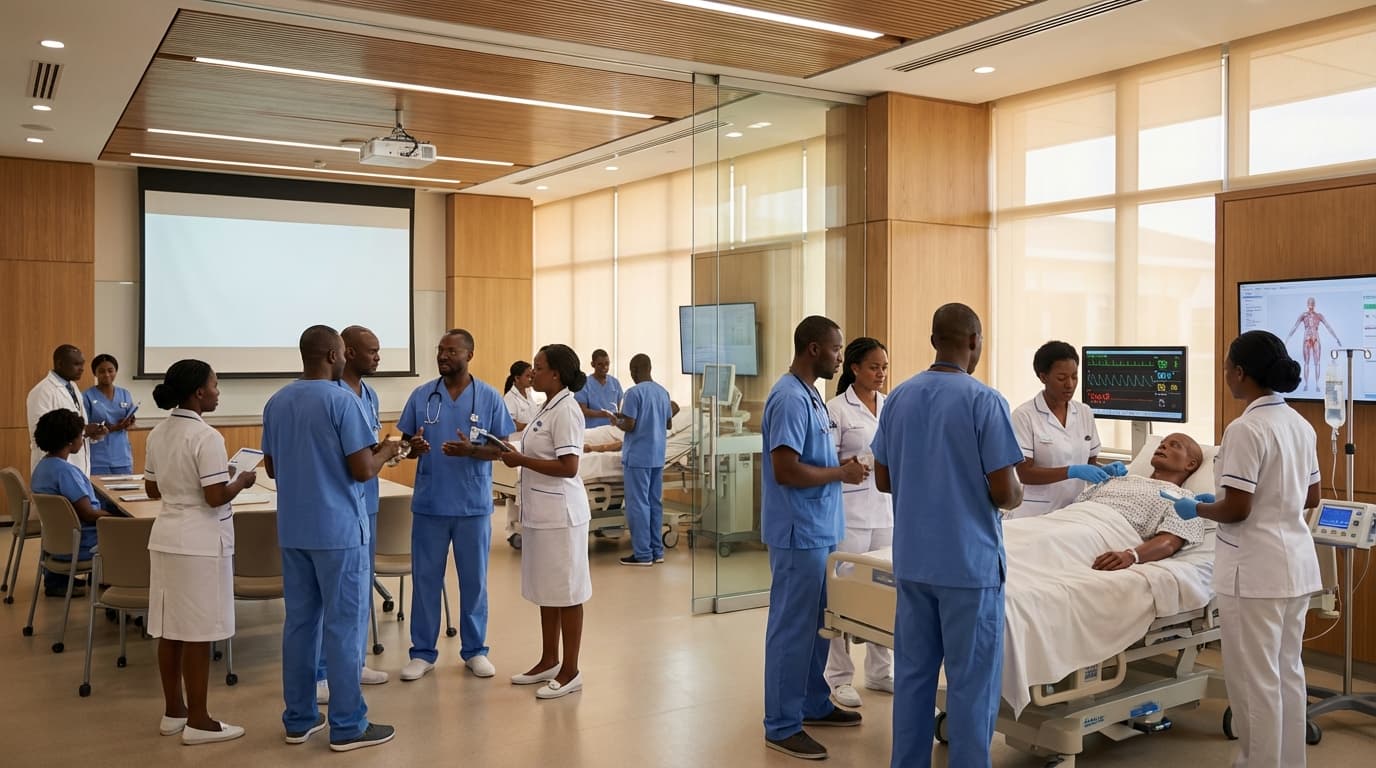
Equipment Training & Education in Angola
Engineering Excellence & Technical Support
Comprehensive equipment training and certification programs High-standard technical execution following OEM protocols and local regulatory frameworks.
Certified Medical Equipment Technicians
Empowering Angolan healthcare professionals with expert-led training on the safe operation, maintenance, and troubleshooting of critical medical devices, ensuring optimal patient care and equipment longevity.
Industrial Machinery Mastery Program
Delivering hands-on, competency-based training for Angola's industrial workforce on advanced machinery operation and preventive maintenance, boosting productivity, safety, and reducing downtime in key sectors.
Specialized Agricultural Equipment Workshops
Providing Angolan farmers and technicians with practical training on the efficient use and maintenance of modern agricultural machinery, from tractors to irrigation systems, to enhance crop yields and sustainable farming practices.
What Is Equipment Training & Education In Angola?
Equipment training and education in Angola refers to the structured process of imparting knowledge, skills, and competencies related to the safe, efficient, and compliant operation, maintenance, and troubleshooting of various types of equipment. This service is critical across numerous industrial and commercial sectors within the Angolan economy, aiming to enhance workforce productivity, minimize operational risks, and ensure adherence to relevant safety and environmental standards. The training programs are often tailored to specific equipment models and industry requirements, delivered through a combination of theoretical instruction, practical demonstrations, hands-on exercises, and ongoing assessment.
| Who Needs Equipment Training & Education in Angola? | Typical Use Cases and Industries | ||||||||||
|---|---|---|---|---|---|---|---|---|---|---|---|
| Industrial Operators & Technicians: Personnel directly responsible for the daily operation and minor maintenance of machinery. | Petroleum and Gas Sector: Training on drilling rigs, offshore platforms, refinery equipment, pipeline inspection tools, and support vehicles. This is a cornerstone industry in Angola requiring specialized and stringent training due to inherent risks and complexity. | Mining Sector: Education on heavy machinery (excavators, haul trucks, loaders), processing equipment (crushers, conveyors), and safety systems. Angola's mining industry, encompassing diamonds, iron ore, and other minerals, necessitates robust equipment proficiency. | Construction and Infrastructure: Training on cranes, earthmoving equipment, concrete mixers, and scaffolding. Development projects in Angola demand skilled operators for infrastructure expansion. | Logistics and Transportation: Drivers and handlers of specialized vehicles, forklifts, and cargo handling equipment. Efficient movement of goods is vital for Angola's economic activities. | Manufacturing and Processing: Machine operators, maintenance engineers, and quality control personnel in food processing, textiles, and other manufacturing plants. | Power Generation and Utilities: Operators and technicians for turbines, generators, transformers, and distribution equipment. | Agricultural Sector: Farmers and agricultural workers requiring training on tractors, harvesters, irrigation systems, and other farm machinery. | Healthcare Sector: Technicians and biomedical engineers operating and maintaining complex medical equipment (e.g., MRI machines, X-ray devices). | Emergency Services: Personnel trained on specialized vehicles and equipment used by fire departments, ambulance services, and disaster response teams. | Supervisors and Management: Individuals who oversee equipment operations and require a foundational understanding of safety, efficiency, and capability to make informed decisions and ensure compliance. | New Entrants to the Workforce: Graduates and individuals seeking employment in sectors heavily reliant on machinery. |
Key Components of Equipment Training & Education in Angola
- Operational Procedures: Instruction on the correct sequence of actions, control inputs, and functional checks for operating specific equipment.
- Safety Protocols: Comprehensive training on hazard identification, risk mitigation, personal protective equipment (PPE) usage, emergency procedures, and adherence to Angolan safety regulations.
- Maintenance and Troubleshooting: Education on routine inspection, preventive maintenance schedules, diagnostic techniques, and common fault resolution for equipment.
- Technical Documentation Interpretation: Training on understanding and utilizing equipment manuals, schematics, and technical specifications.
- Regulatory Compliance: Ensuring that trainees are aware of and can comply with Angolan legal and industry-specific standards related to equipment usage and environmental impact.
- Performance Optimization: Strategies and techniques for maximizing equipment efficiency, output, and lifespan.
- Hands-on Practical Application: Supervised practice sessions on actual equipment or realistic simulators to build muscle memory and practical proficiency.
Who Needs Equipment Training & Education In Angola?
In Angola, a rapidly developing nation with a burgeoning industrial sector, comprehensive equipment training and education are crucial for a wide range of individuals and organizations. This ensures operational efficiency, safety, compliance, and the adoption of advanced technologies. Identifying the specific target customers and departments is key to tailoring effective training programs that meet the unique needs of Angola's economy.
| Industry/Sector | Primary Departments Needing Training | Types of Equipment/Skills |
|---|---|---|
| Oil and Gas | Drilling, Production, Refining, Maintenance, HSE | Drilling rigs, pumps, valves, safety equipment, process control systems, analytical instruments, offshore equipment |
| Mining and Minerals | Extraction, Processing, Maintenance, Geology, HSE | Excavators, loaders, haul trucks, crushers, screens, conveyors, analytical equipment, mining safety gear |
| Construction and Infrastructure | Civil Engineering, Site Management, Heavy Machinery Operation, Safety | Cranes, excavators, bulldozers, concrete mixers, welding equipment, surveying tools, scaffolding |
| Manufacturing and Industrial Production | Production Lines, Quality Control, Maintenance, Automation | CNC machines, robotic arms, assembly lines, testing equipment, packaging machinery, forklifts |
| Agriculture and Agribusiness | Farm Operations, Equipment Maintenance, Processing | Tractors, harvesters, irrigation systems, processing machinery (e.g., for oil extraction, milling), animal husbandry equipment |
| Telecommunications | Installation, Maintenance, Network Operations | Fiber optic splicing equipment, network analyzers, antenna installation tools, diagnostic equipment |
| Power Generation and Utilities | Operations, Maintenance, Safety, Grid Management | Turbines, generators, transformers, control systems, high-voltage equipment, safety apparatus |
| Logistics and Transportation | Warehouse Operations, Fleet Management, Cargo Handling | Forklifts, conveyor systems, specialized loading/unloading equipment, fleet management software (and related equipment) |
Target Customers & Departments for Equipment Training & Education in Angola
- {"items":["Oil and Gas","Mining and Minerals","Construction and Infrastructure","Manufacturing and Industrial Production","Agriculture and Agribusiness","Telecommunications","Power Generation and Utilities","Logistics and Transportation"],"title":"Industries Requiring Training"}
- {"items":["Corporations and Large Enterprises","Small and Medium-sized Enterprises (SMEs)","Government Agencies and Parastatals","Vocational Training Institutions","Individual Professionals and Technicians"],"title":"Key Customer Segments"}
- {"items":["Operations and Production Departments","Maintenance and Engineering Departments","Health, Safety, and Environment (HSE) Departments","Logistics and Supply Chain Departments","Quality Control and Assurance Departments","Research and Development Departments","Supervisory and Management Roles","Entry-Level Operators and Technicians"],"title":"Key Departments/Roles Benefiting from Training"}
Equipment Training & Education Process In Angola
This document outlines the typical workflow for equipment training and education processes in Angola, from initial inquiry to successful execution. The process is designed to ensure that trainees acquire the necessary knowledge and skills to operate and maintain equipment safely and efficiently, meeting both international standards and local regulatory requirements.
| Phase | Key Activities | Responsible Parties | Deliverables | Key Considerations (Angola) |
|---|---|---|---|---|
| Receive inquiry from client; Understand training requirements (equipment type, number of trainees, skill level); Identify specific operational and safety standards; Assess existing knowledge base of trainees. | Client (Requester), Training Provider (Initial Contact) | Needs assessment report, Initial scope of training. | Language proficiency (Portuguese is official, English often used in industry); Cultural sensitivity; Understanding of local industry practices and challenges. |
| Develop a detailed training proposal (curriculum, duration, methodology, trainers, equipment requirements, cost); Submit proposal to client; Negotiate terms, scope, and pricing. | Training Provider (Proposal Team), Client (Procurement/Technical Team) | Formal Training Proposal, Negotiated Agreement. | Compliance with Angolan labor laws for trainers; Tax implications for international providers. |
| Finalize and sign training contract; Develop a detailed training plan (schedule, venue, specific learning objectives); Identify and secure qualified trainers; Determine necessary training materials and resources. | Training Provider (Project Management), Client (Legal/Procurement) | Signed Training Contract, Detailed Training Plan, Trainer Agreements. | Contractual obligations and payment terms; Visa and work permit requirements for expatriate trainers. |
| Arrange travel and accommodation for trainers and trainees; Secure training venue (on-site or off-site); Ensure availability of required equipment (operational and safe); Prepare training materials (manuals, presentations, assessments) in appropriate languages. | Training Provider (Logistics & Operations), Client (Facilitation Support) | Travel arrangements, Secured venue, Prepared training materials. | Local transportation infrastructure; Availability of suitable training facilities; Import/customs procedures for specialized training equipment. |
| Conduct theoretical sessions (classroom-based); Deliver practical, hands-on training sessions; Emphasize safety procedures and regulations; Provide real-time feedback and coaching. | Certified Trainers, Trainees | Active participation in training sessions, Completion of practical exercises. | Adherence to Angolan Occupational Safety and Health (OSH) regulations; Clear communication channels for immediate issue resolution. |
| Conduct knowledge assessments (quizzes, tests); Evaluate practical skills through observed performance; Issue certificates of completion/competency upon successful assessment. | Certified Trainers, Assessors | Assessment reports, Certificates of Competency. | Recognition of certification by Angolan authorities and industry bodies. |
| Provide ongoing support (e.g., helpline, follow-up sessions); Gather feedback from trainees and client; Conduct a post-training evaluation to measure effectiveness and identify areas for improvement. Archive training records. | Training Provider (After-Sales Support), Client (Feedback) | Post-training support reports, Client feedback forms, Final training evaluation report. | Long-term impact assessment on operational efficiency and safety; potential for repeat business and referrals. |
Equipment Training & Education Workflow in Angola
- Inquiry & Needs Assessment
- Proposal Development & Negotiation
- Contracting & Planning
- Logistics & Resource Preparation
- Training Delivery & Execution
- Assessment & Certification
- Post-Training Support & Evaluation
Equipment Training & Education Cost In Angola
The cost of equipment training and education in Angola is influenced by a variety of factors, leading to a diverse range of pricing. These costs are typically denominated in Angolan Kwanza (AOA) and can fluctuate based on the provider, the complexity and duration of the training, the specific equipment involved, and the location within Angola. Demand for specialized skills, particularly in the oil and gas, mining, and construction sectors, can also drive up prices for niche training programs. Furthermore, the inclusion of practical, hands-on sessions, certification exams, and the need for specialized training materials or simulators all contribute to the overall expenditure. For businesses, the ability to conduct training on-site versus at a training center also impacts the final cost.
| Training Type/Category | Estimated Price Range (AOA) | Notes |
|---|---|---|
| Basic Equipment Operation (e.g., Forklift, Small Machinery) | 150,000 - 400,000 | Typically includes introductory theory and practical handling. May lead to basic certification. |
| Intermediate Equipment Operation (e.g., Excavators, Loaders) | 300,000 - 750,000 | Focuses on advanced operation, safety procedures, and basic maintenance. Often includes certification. |
| Advanced/Specialized Equipment Operation (e.g., Cranes, Drilling Rigs) | 800,000 - 3,000,000+ | Highly specialized, often requiring experienced instructors and extensive simulation or hands-on time. Crucial for oil & gas and mining sectors. Can be significantly higher for highly specialized certifications. |
| Equipment Maintenance & Repair (Basic) | 250,000 - 600,000 | Covers routine maintenance, troubleshooting, and minor repairs. May be equipment-specific. |
| Equipment Maintenance & Repair (Advanced/Technical) | 700,000 - 2,500,000+ | Focuses on complex diagnostics, electronic systems, and major overhauls. Often includes manufacturer-specific training. |
| Safety Training (Equipment Related) | 100,000 - 350,000 | Covers general equipment safety, hazard identification, and emergency procedures. |
| On-site Corporate Training Packages | Variable (Negotiable) | Prices are often tailored based on the number of employees, duration, and specific equipment. Can range from 500,000 AOA upwards per session depending on scope. |
| Certification Exam Fees (if separate) | 50,000 - 200,000 | Additional cost for official certification exams, depending on the accrediting body. |
Key Pricing Factors for Equipment Training & Education in Angola
- Provider Reputation and Expertise
- Training Duration and Intensity
- Type and Complexity of Equipment
- Practical vs. Theoretical Focus
- Certification and Accreditation
- Location of Training (On-site vs. Off-site)
- Inclusion of Specialized Materials/Simulators
- Instructor Fees and Travel Expenses (if applicable)
- Demand for Specific Skillsets
Affordable Equipment Training & Education Options
Investing in proper equipment training and education is crucial for safety, efficiency, and longevity of your machinery. Fortunately, there are numerous affordable options available, and understanding value bundles and cost-saving strategies can significantly reduce your investment. Value bundles often combine multiple training modules or certifications at a discounted price, providing comprehensive skill development. Cost-saving strategies include leveraging online resources, group discounts, early bird registration, and employer-sponsored programs. Exploring these avenues can ensure your team is well-trained without breaking the bank.
| Strategy/Bundle Type | Description | Potential Savings/Value |
|---|---|---|
| Value Bundles (e.g., 'Operator & Maintenance Package') | Combines multiple related training modules or certifications (e.g., basic operation, routine maintenance, safety protocols) into a single package. | Lower per-module cost compared to individual purchases. Ensures comprehensive skill development for specific equipment roles. |
| Group Discounts | Organizations sending multiple employees for the same training often receive reduced rates per person. | Significant cost reduction for businesses with larger teams. Facilitates team-wide skill alignment. |
| Early Bird Registration | Registering for training courses or workshops well in advance of the start date. | Discounts on course fees, often 10-20%. Allows for better budgeting and planning. |
| Online Learning Platforms (e.g., Coursera, Udemy, LinkedIn Learning) | Access to a vast library of courses, including equipment-specific training, often on a subscription basis or per course. | Flexible learning schedule. Generally lower cost than in-person workshops. Wide variety of topics available. |
| Manufacturer-Specific Online Modules | Many equipment manufacturers offer free or low-cost online training modules for their own products. | Highly relevant and up-to-date information. No travel costs involved. |
| Train-the-Trainer Programs | Training a select group of employees to then train their colleagues internally. | Long-term cost savings by building internal training capacity. Consistent training delivery. |
| Bundled Software & Hardware Training | When purchasing new equipment or software, inquire about bundled training packages. | Often included or offered at a discounted rate with the equipment purchase. Ensures efficient implementation. |
| Utilize Free Resources (e.g., YouTube, manufacturer manuals) | Leveraging readily available free online videos, tutorials, and official documentation for basic understanding and refreshers. | Zero direct cost for foundational knowledge. Supplement for formal training. |
Affordable Equipment Training & Education Options
- Online Courses and Webinars
- Manufacturer Training Programs
- Community College and Vocational Schools
- Industry Association Workshops
- On-the-Job Training (OJT) with Mentorship
- Apprenticeship Programs
- Certification Bodies
- Government-funded Training Initiatives
Verified Providers In Angola
In Angola's evolving healthcare landscape, identifying and trusting verified healthcare providers is paramount. Franance Health has emerged as a leading entity, setting a high standard for quality, accessibility, and patient-centered care. This document outlines why Franance Health credentials signify the best choice for healthcare in Angola, encompassing their commitment to rigorous standards, patient well-being, and the overall advancement of the health sector.
| Credential/Aspect | Franance Health's Commitment | Benefit to Patients in Angola | Verification Source |
|---|---|---|---|
| National Health Accreditation | Adherence to all regulatory requirements and operational standards set by the Angolan Ministry of Health. | Ensures a baseline level of quality, safety, and legality of services provided. | Angolan Ministry of Health, Provincial Health Directorates |
| International Quality Standards (e.g., ISO) | Implementation of internationally recognized management and quality systems. | Promotes consistent high-quality care, efficiency, and continuous improvement. | Accreditation bodies for specific ISO standards (e.g., ISO 9001, ISO 13485) |
| Medical Professional Licensing | Verification of all medical staff holding valid and current licenses from Angolan medical councils. | Guarantees that practitioners are qualified, competent, and authorized to practice. | Angolan Medical Council (Ordem dos Médicos de Angola), Nursing Council, Pharmacy Council |
| Equipment and Facility Standards | Investment in modern, well-maintained medical equipment and facilities that meet safety and operational norms. | Facilitates accurate diagnoses, effective treatments, and a comfortable patient experience. | Internal facility audits, Ministry of Health inspections, equipment manufacturer certifications |
| Patient Safety and Infection Control | Strict adherence to established protocols for patient safety, hygiene, and infection prevention. | Minimizes risks of hospital-acquired infections and ensures a secure treatment environment. | Internal quality assurance teams, external health safety audits, WHO guidelines |
Key Franance Health Credentials and Their Significance
- Accreditation by National Health Authorities: Franance Health facilities undergo rigorous evaluations and obtain accreditation from Angola's Ministry of Health and other relevant regulatory bodies. This ensures adherence to national healthcare standards, safety protocols, and ethical practices.
- International Quality Certifications: Many Franance Health partners and facilities pursue and maintain international quality certifications (e.g., ISO standards relevant to healthcare). These certifications demonstrate a commitment to global best practices in patient care, operational efficiency, and risk management.
- Highly Qualified and Licensed Medical Professionals: Franance Health prioritizes the recruitment and retention of medical practitioners who are not only highly skilled and experienced but also possess valid licenses and certifications recognized within Angola and, often, internationally.
- Advanced Medical Technology and Infrastructure: The commitment to providing superior healthcare is reflected in Franance Health's investment in state-of-the-art medical equipment and modern infrastructure. This enables accurate diagnosis, effective treatment, and improved patient outcomes.
- Robust Patient Safety Protocols: Franance Health places an unwavering emphasis on patient safety. This includes comprehensive infection control measures, meticulous medication management, and well-defined emergency response plans, all verified through internal audits and external assessments.
- Ethical Medical Practices and Transparency: Franance Health is committed to upholding the highest ethical standards in all its operations. This translates to transparent patient communication, informed consent processes, and a dedication to patient privacy and data security.
- Community Engagement and Health Education Initiatives: Beyond direct medical services, Franance Health actively engages with communities through health awareness campaigns, preventative care programs, and educational outreach. This demonstrates a holistic approach to public health improvement.
- Partnerships with Reputable Global Health Organizations: Collaborations with esteemed international health organizations and institutions further validate Franance Health's commitment to excellence and their ability to integrate global knowledge and best practices into Angolan healthcare.
Scope Of Work For Equipment Training & Education
This Scope of Work (SOW) outlines the requirements for providing comprehensive equipment training and educational services. The objective is to ensure that designated personnel gain the necessary knowledge and skills to operate, maintain, and troubleshoot the specified equipment effectively and safely. This SOW details the technical deliverables, standard specifications for training content, and assessment methods.
| Deliverable | Description | Standard Specifications | Format | Timeline |
|---|---|---|---|---|
| Training Curriculum Development | Design and development of a structured training program tailored to the specific equipment and target audience. | Modular structure, clear learning objectives for each module, alignment with equipment manuals and operational procedures. Includes theoretical and practical components. | Digital Document (PDF/Word) | Within 2 weeks of SOW approval |
| Training Materials | Creation of all necessary learning resources for trainees. | High-quality visuals (diagrams, images, videos), clear and concise language, relevant case studies, and examples. Materials should be easily digestible. | Digital (Presentations, Handouts, Videos) and potentially Printed (Manuals) | Concurrent with Curriculum Development |
| Instructor-Led Training Sessions | Delivery of training by qualified instructors. | Sessions must cover all curriculum modules. Includes interactive Q&A, group discussions, and demonstrations. Instructor must have proven expertise in the specific equipment. | In-person or Virtual (e.g., Zoom, Teams) | As per agreed training schedule |
| Hands-on Practical Sessions | Supervised practical exercises using the actual equipment. | Trainees perform operational tasks, calibration procedures, and basic maintenance under instructor guidance. Emphasis on safety protocols. | Live Equipment Operation | Integrated within Instructor-Led Sessions |
| Assessment Tools | Development and administration of assessments to evaluate trainee competency. | Includes written quizzes, practical skill demonstrations, and troubleshooting exercises. Assessments should measure understanding of theoretical concepts and ability to perform practical tasks. | Written Tests, Practical Checklists, Observation Reports | End of each module and final assessment |
| Training Completion Certificates | Issuance of certificates upon successful completion of the training program. | Certificates should clearly state the training covered, the duration, and the individual's name. Requires achieving a minimum score on assessments. | Digital (PDF) and/or Printed | Upon successful completion of training |
| Post-Training Support Documentation | Provision of resources for ongoing reference and support. | Includes FAQs, troubleshooting guides, quick reference cards, and contact information for further assistance. | Digital (PDF) and/or Online Portal | Upon completion of training delivery |
| Training Report | A comprehensive report summarizing the training activities, attendance, and assessment results. | Includes an overview of the training, list of attendees, summary of assessment scores, and any identified areas for improvement. | Digital Document (PDF) | Within 1 week of training completion |
Key Objectives of Equipment Training & Education
- To impart theoretical knowledge regarding equipment functionality, operation principles, and safety procedures.
- To develop practical hands-on skills for routine operation, calibration, and basic maintenance.
- To equip trainees with the ability to identify and troubleshoot common equipment malfunctions.
- To ensure compliance with all relevant industry standards, regulatory requirements, and manufacturer guidelines.
- To foster a proactive approach to equipment maintenance and problem-solving.
Service Level Agreement For Equipment Training & Education
This Service Level Agreement (SLA) outlines the commitment of [Your Company Name/Trainer] (hereinafter referred to as "Provider") to [Client Company Name] (hereinafter referred to as "Client") regarding the provision of equipment training and educational services. This SLA specifically addresses response times for support inquiries and uptime guarantees for delivered training platforms or resources.
| Service Component | Service Level Objective (SLO) | Measurement Method | Remedy for Failure |
|---|---|---|---|
| Response Time - Critical Issue (Training Platform/Content) | 1 Business Hour (within Provider's standard operating hours) | Time from submission of a valid Support Inquiry via [Designated Support Channel, e.g., email, portal ticket] until acknowledgement and initiation of work by Provider. | 10% discount on the next month's training fees for each Critical Issue not met. |
| Response Time - Major Issue (Training Platform/Content) | 4 Business Hours (within Provider's standard operating hours) | Time from submission of a valid Support Inquiry via [Designated Support Channel] until acknowledgement and initiation of work by Provider. | 5% discount on the next month's training fees for each Major Issue not met. |
| Response Time - Minor Issue (Training Platform/Content) | 2 Business Days (within Provider's standard operating hours) | Time from submission of a valid Support Inquiry via [Designated Support Channel] until acknowledgement and resolution or a clear plan for resolution provided by Provider. | No direct financial remedy, but consistent failure may trigger a review of the SLA. |
| Uptime Guarantee - Training Platform | 99.5% monthly uptime | Calculated as: (Total Minutes in Month - Downtime Minutes) / Total Minutes in Month * 100%. Downtime excludes Scheduled Maintenance and Client-induced issues. | For each full percentage point below 99.5% (but above 98%), a credit of 5% of the monthly training fees will be applied. For uptime below 98%, a credit of 10% of the monthly training fees will be applied. |
| Scheduled Training Session Availability | 100% (barring unforeseen external circumstances) | Availability of scheduled virtual or in-person training sessions as per the agreed training schedule. | If a scheduled session is cancelled by the Provider with less than [Number] hours' notice (unless due to Force Majeure), the Client is entitled to reschedule the session at a mutually agreed time, and may be eligible for a [Discount]% discount on the rescheduled session at the Provider's discretion. |
Key Terms & Definitions
- Training Content: All materials, modules, simulations, and assessments provided as part of the training program.
- Training Platform: Any online portal, software, or system used to deliver or facilitate the training.
- Support Inquiry: A request for assistance related to the training content, platform, or scheduled sessions, submitted through agreed-upon channels.
- Critical Issue: An issue that renders the Training Platform or core Training Content completely unusable, preventing the Client's users from accessing or completing essential training activities.
- Major Issue: An issue that significantly impairs the functionality of the Training Platform or Training Content, causing disruption but not complete blockage of essential training activities.
- Minor Issue: An issue that has minimal impact on the functionality of the Training Platform or Training Content, or a request for general information or clarification.
- Downtime: Any period during which the Training Platform is unavailable to the Client's users due to unscheduled maintenance, system failure, or other issues attributable to the Provider, excluding scheduled maintenance windows.
- Scheduled Maintenance: Pre-announced periods when the Training Platform may be unavailable for updates or routine maintenance. These will be communicated at least [Number] business days in advance.
Frequently Asked Questions

Ready when you are
Let's scope your Equipment Training & Education in Angola project in Angola.

Scaling healthcare logistics and technical systems across the entire continent.