
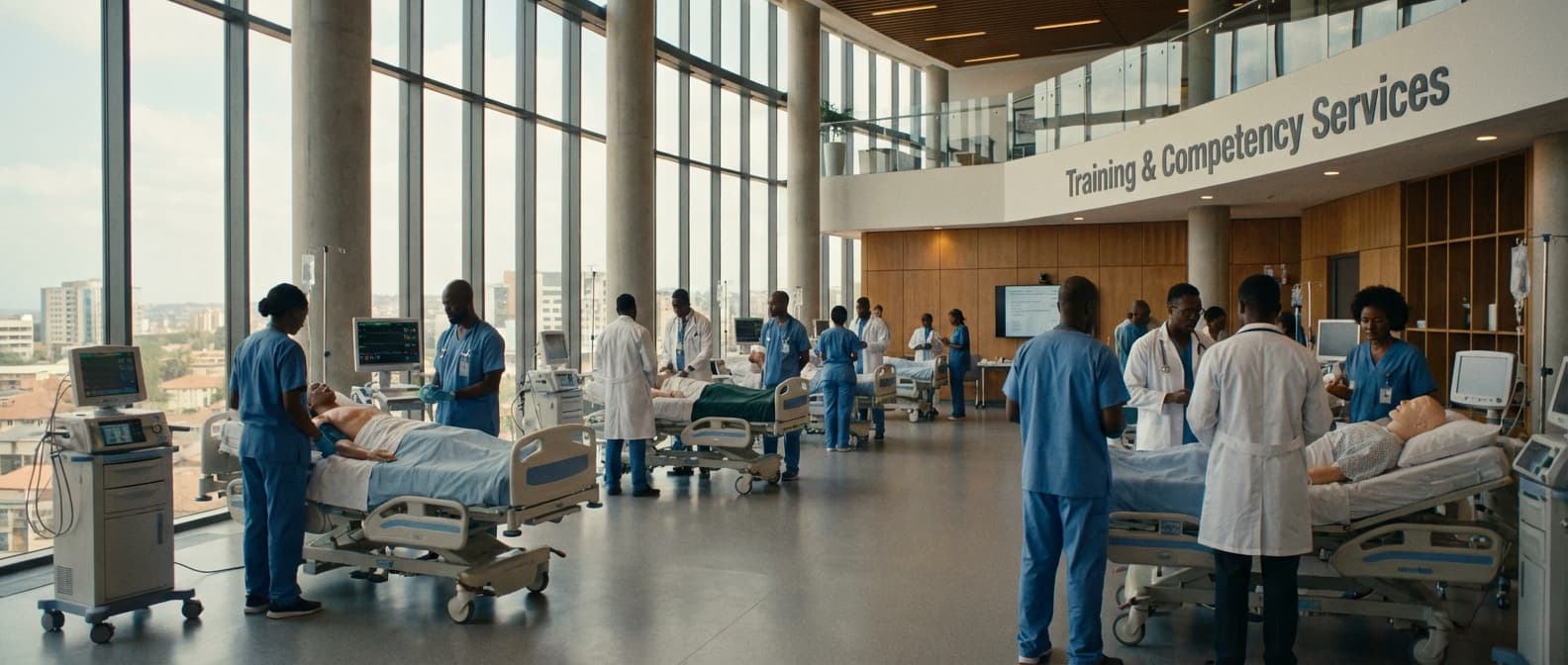
Ventilator User Training Service (Nurses) in Angola
Engineering Excellence & Technical Support
Ventilator User Training Service (Nurses) High-standard technical execution following OEM protocols and local regulatory frameworks.
Mastering Ventilation Modes
Gain expert proficiency in selecting, setting, and managing various mechanical ventilation modes (e.g., AC/VC, SIMV, PSV) to optimize patient respiratory support based on individual clinical needs. Understand the physiological impact of each mode and how to adapt settings in real-time.
Advanced Patient Monitoring & Alarms
Develop critical skills in interpreting real-time ventilator waveforms and numerical data. Learn to proactively identify and respond to common alarm conditions, preventing adverse events and ensuring patient safety through effective monitoring strategies.
Effective Ventilator Troubleshooting
Become adept at quickly diagnosing and resolving common ventilator malfunctions and patient-ventilator dyssynchrony. Acquire practical strategies for troubleshooting circuit leaks, airway pressure issues, and connectivity problems, ensuring uninterrupted patient care.
What Is Ventilator User Training Service (Nurses) In Angola?
Ventilator User Training Service (Nurses) in Angola refers to a specialized educational program designed to equip registered nurses with the knowledge and practical skills necessary for the safe and effective operation of mechanical ventilators within the Angolan healthcare context. This service is critical for ensuring optimal patient outcomes in critical care settings where respiratory support is essential.
| Who Needs Ventilator User Training (Nurses)? | Typical Use Cases | ||||||||
|---|---|---|---|---|---|---|---|---|---|
| Registered Nurses working in Critical Care Units (ICUs): Including general ICUs, surgical ICUs, medical ICUs, and neonatal ICUs. | Post-operative patients: Requiring mechanical ventilation due to respiratory compromise following surgery. | Patients with severe respiratory failure: Caused by conditions such as pneumonia, Acute Respiratory Distress Syndrome (ARDS), sepsis, and exacerbations of chronic respiratory diseases (e.g., COPD, asthma). | Patients with neurological conditions: Affecting respiratory drive or muscle function (e.g., Guillain-Barré syndrome, myasthenia gravis, traumatic brain injury). | Neonatal and pediatric patients: Requiring ventilatory support due to prematurity, congenital respiratory anomalies, or severe illness. | Emergency Room Nurses: Involved in the initial stabilization and management of patients requiring mechanical ventilation. | Nurses in specialized units: Such as burn units or trauma centers where respiratory complications are frequent. | Patients undergoing invasive procedures: Requiring airway protection and mechanical ventilation. | Patients with cardiac arrest: Requiring ventilatory support during resuscitation and post-resuscitation care. | Patients with opioid overdose or drug-induced respiratory depression. |
Key Components of Ventilator User Training Service (Nurses) in Angola
- Theoretical Knowledge Acquisition: Comprehensive instruction on the principles of mechanical ventilation, including respiratory physiology, pathophysiology of common respiratory failures (e.g., ARDS, pneumonia, COPD exacerbations), and the biomechanics of breathing.
- Ventilator Technology Familiarization: Detailed understanding of various ventilator modes (e.g., Volume Control, Pressure Control, Pressure Support, SIMV), settings (tidal volume, respiratory rate, PEEP, FiO2), and alarms. Training covers the specific models and brands commonly utilized in Angolan healthcare facilities.
- Patient Interface Management: Training on the selection, application, and maintenance of various patient interfaces, including endotracheal tubes, tracheostomy tubes, and non-invasive ventilation interfaces (e.g., nasal masks, full-face masks).
- Parameter Setting and Adjustment: Practical guidance on initiating mechanical ventilation, setting appropriate initial parameters based on patient condition, and making timely adjustments in response to physiological changes and clinical assessment.
- Monitoring and Assessment: Instruction on interpreting ventilator waveforms, numerical data, and patient-specific physiological parameters (e.g., SpO2, EtCO2, arterial blood gases). Emphasis on continuous patient assessment and the identification of ventilator-associated complications.
- Troubleshooting and Alarm Management: Protocols for responding to and resolving common ventilator alarms, including equipment malfunctions, circuit disconnections, and patient-ventilator asynchrony.
- Weaning and Discontinuation: Training on appropriate criteria and methodologies for weaning patients from mechanical ventilation, including spontaneous breathing trials (SBTs) and post-extubation care.
- Infection Prevention and Control: Protocols for maintaining ventilator hygiene, circuit changes, and preventing ventilator-associated pneumonia (VAP).
- Ethical and Legal Considerations: Awareness of patient rights, consent, and documentation requirements related to mechanical ventilation.
Who Needs Ventilator User Training Service (Nurses) In Angola?
This document outlines the essential need for Ventilator User Training Services specifically tailored for nurses in Angola. Effective and safe utilization of ventilators is critical in patient care, particularly in critical care settings. Nurses are at the forefront of operating and monitoring these life-support devices, and comprehensive training ensures patient safety, optimal treatment outcomes, and efficient use of resources. The training will address theoretical knowledge, practical skills, troubleshooting, and emergency procedures related to various ventilator models commonly found in Angolan healthcare facilities.
| Healthcare Facility Type | Specific Departments Requiring Training | Rationale for Training Need |
|---|---|---|
| Public Hospitals | ICUs, Emergency Departments, Surgical Wards with Ventilator Support | Essential for patient stabilization and management in critical conditions, especially in under-resourced settings where nurses often bear a wide range of responsibilities. Addresses potential gaps in existing training and equipment complexity. |
| Private Hospitals | ICUs, Anesthesiology Departments, Operating Rooms | Ensures adherence to high standards of care, sophisticated equipment operation, and up-to-date best practices. Crucial for specialized patient populations and advanced ventilation modes. |
| Referral Hospitals | All departments utilizing mechanical ventilation | These facilities often handle complex cases requiring advanced ventilation techniques and are central to medical education and research. Training is vital for maintaining expertise. |
| District/Regional Hospitals (with critical care capacity) | ICUs, Emergency Departments | Supports decentralized healthcare delivery and ensures that nurses in various regions are equipped to manage ventilated patients effectively, reducing the burden on tertiary centers. |
| Missions Hospitals / NGOs | ICUs, Emergency Departments | Often operate with limited resources and staff. Comprehensive training empowers nurses to maximize the effectiveness of available equipment and provide essential life support. |
Target Customers and Departments
- Hospitals (Public and Private)
- Intensive Care Units (ICUs)
- Emergency Departments
- Anesthesiology Departments
- Respiratory Therapy Departments (where applicable)
Ventilator User Training Service (Nurses) Process In Angola
The Ventilator User Training Service for Nurses in Angola is a structured process designed to equip healthcare professionals with the essential knowledge and skills to safely and effectively operate and manage ventilators. This process ensures that nurses are proficient in patient assessment, ventilator settings, troubleshooting, and maintenance, ultimately contributing to improved patient outcomes in critical care settings. The workflow begins with an initial inquiry from a healthcare facility or individual nurse, progresses through needs assessment and curriculum development, culminates in the execution of training sessions, and concludes with evaluation and certification. Throughout the process, clear communication, adherence to established protocols, and a focus on practical application are paramount.
| Stage | Description | Key Activities | Responsible Parties | Deliverables/Outcomes |
|---|---|---|---|---|
| The process begins when a healthcare facility (hospital, clinic) or an individual nurse expresses interest in ventilator training. | Submitting an inquiry form, making a phone call, or sending an email. Initial discussion of training needs and objectives. | Healthcare Facility/Nurse, Training Provider Representative | Acknowledgement of inquiry, initial understanding of training requirements. |
| A thorough evaluation of the current skill level of the nurses and the specific types of ventilators in use at the facility. | Conducting surveys, interviews, reviewing existing documentation, assessing current ventilator inventory and features. | Training Provider (Instructors/Consultants), Healthcare Facility Management | Detailed report on training needs, identification of skill gaps, understanding of equipment specifics. |
| Based on the needs assessment, a tailored training program is designed or adapted. | Developing training modules covering theoretical concepts, practical skills, safety protocols, and troubleshooting. Selecting appropriate training materials (manuals, presentations). | Training Provider (Curriculum Developers/Subject Matter Experts) | Approved training curriculum, session plans, training materials. |
| Arranging the practical aspects of the training delivery. | Identifying suitable training locations (on-site at facility or training center), scheduling training dates and times, ensuring availability of ventilators for hands-on practice, arranging for instructors. | Training Provider, Healthcare Facility Administration | Confirmed training schedule, confirmed training venue, confirmed instructor availability. |
| The actual delivery of the training program to the nurses. | Conducting theoretical lectures, practical demonstrations, hands-on exercises with ventilators, case study discussions, Q&A sessions. | Training Provider (Certified Instructors) | Completion of training sessions, demonstrated understanding of concepts, developed practical skills. |
| Measuring the learning and competency of the nurses after the training. | Administering written tests, practical skill assessments (e.g., setting up a ventilator, responding to alarms), post-training feedback surveys for participants and instructors. | Training Provider (Assessors/Instructors) | Assessment results, performance evaluation reports, feedback on training effectiveness. |
| Formal recognition of successful completion and ongoing support. | Issuing certificates of completion to nurses who meet the competency standards. Providing post-training support, refresher courses, or advanced training as needed. Gathering feedback for continuous improvement of the training program. | Training Provider | Certificates of completion, post-training support plan, updated training program based on feedback. |
Workflow Steps for Ventilator User Training Service (Nurses) in Angola
- Inquiry and Initial Contact
- Needs Assessment and Gap Analysis
- Curriculum Development and Customization
- Logistics and Scheduling
- Training Execution
- Assessment and Evaluation
- Certification and Follow-up
Ventilator User Training Service (Nurses) Cost In Angola
The cost of ventilator user training services for nurses in Angola can vary significantly due to several pricing factors. These factors include the experience and qualifications of the trainers, the duration and intensity of the training program, the number of participants, the location within Angola (e.g., major cities vs. remote areas), and the specific content covered (e.g., basic operation, advanced troubleshooting, specific ventilator models). Training can be delivered on-site at healthcare facilities, at dedicated training centers, or online, with on-site training often incurring higher costs due to travel and logistical expenses. The inclusion of hands-on practice with actual ventilator equipment also influences the overall price.
Due to the localized nature of service provision and the potential for customized training packages, specific, universally published pricing for ventilator user training for nurses in Angola is not readily available. However, based on general industry practices for specialized medical training, we can estimate a potential range in Angolan Kwanza (AOA).
| Training Intensity / Duration | Estimated Cost Range (AOA) Per Nurse |
|---|---|
| Basic Operations (1-2 Days) | 25,000 - 75,000 |
| Intermediate Skills (3-4 Days, incl. troubleshooting) | 60,000 - 150,000 |
| Advanced/Specialized Modules (5+ Days) | 120,000 - 300,000+ |
| Group/Facility-Wide Training (Bulk Pricing) | Negotiable based on participant numbers and scope |
Key Pricing Factors for Ventilator User Training in Angola:
- Trainer Expertise and Certifications
- Training Duration and Curriculum Depth
- Number of Participating Nurses
- Location of Training Delivery (On-site vs. Off-site)
- Travel and Accommodation Costs (for off-site trainers or trainees)
- Inclusion of Hands-on Practice and Simulation
- Customization of Training Content
- Provider Reputation and Accreditation
Affordable Ventilator User Training Service (Nurses) Options
This document outlines affordable ventilator user training service options specifically designed for nurses. We focus on delivering high-quality, practical training that enhances clinical competency and patient safety. Our approach emphasizes cost-effectiveness through flexible delivery methods, bundled services, and strategic resource utilization. The goal is to equip nurses with the confidence and skills to manage ventilated patients effectively, while minimizing training expenditure for healthcare facilities.
| Cost-Saving Strategy | Description | Benefit for Healthcare Facilities |
|---|---|---|
| Blended Learning Approach | Combines online modules, live webinars, and limited in-person simulation sessions. Reduces travel time and costs for both trainers and trainees. | Lower training costs, increased flexibility for scheduling, wider reach across multiple facilities. |
| Group/Bulk Discounts | Offers reduced per-participant costs for larger groups or when multiple bundles are purchased simultaneously. | Significant cost savings for facilities with substantial nursing staff requiring training. |
| Modular Curriculum Design | Training is broken down into smaller, digestible modules that can be purchased and delivered individually or combined as needed. Avoids paying for unnecessary content. | Targeted training, cost-effectiveness by only paying for relevant content, easier to integrate into existing staff development plans. |
| Utilizing Facility Resources | Leveraging existing simulation labs, equipment, and potentially qualified internal educators where appropriate. | Reduced external vendor fees, enhanced internal capacity for ongoing training, foster a culture of continuous learning. |
| Subscription-Based Access | Provides ongoing access to a library of on-demand resources and updates for a fixed annual fee. | Predictable training budget, continuous learning opportunities, access to the latest information and best practices. |
Key Value Bundles for Ventilator User Training (Nurses)
- {"title":"Core Competency Bundle","description":"This foundational bundle covers essential ventilator modes, patient assessment, common alarms, and basic troubleshooting. Ideal for nurses new to critical care or those needing a refresher on fundamental principles."}
- {"title":"Advanced Management Bundle","description":"Builds upon the core competencies, incorporating more complex ventilation strategies, weaning protocols, advanced monitoring, and management of specific patient populations (e.g., ARDS, COPD exacerbations)."}
- {"title":"Simulation & Skills Lab Bundle","description":"Focuses on hands-on practice using high-fidelity simulators and manikins. This bundle offers realistic scenarios for alarm management, intubation/extubation support, and emergency response. Excellent for reinforcing theoretical knowledge with practical application."}
- {"title":"On-Demand & Refresher Bundle","description":"Provides access to a library of online modules, webinars, and short video tutorials for continuous learning and quick refreshers. This bundle is highly flexible and can be utilized as needed throughout the year."}
- {"title":"Train-the-Trainer Bundle","description":"Empowers experienced nurses to become internal trainers. This bundle equips them with the pedagogical skills and curriculum to deliver basic ventilator training to new staff within their own facility."}
Verified Providers In Angola
In the realm of healthcare in Angola, identifying truly reliable and high-quality providers is paramount for individuals and organizations seeking optimal health outcomes. Franance Health stands out as a beacon of excellence, distinguishing itself through its rigorous credentialing process and unwavering commitment to patient care. This document explores why Franance Health credentials represent the best choice for healthcare services in Angola.
| Provider Type | Franance Health Assurance | Why it's the Best Choice |
|---|---|---|
| Hospitals & Clinics | Verified for infrastructure, medical equipment, staff qualifications, and adherence to hygiene standards. | Guarantees access to well-equipped facilities with competent medical teams, ensuring comprehensive care and safety. |
| Specialist Doctors | Credentials rigorously checked for medical degrees, licenses, specializations, and professional experience. | Ensures you receive care from highly qualified and experienced specialists in their respective fields, leading to accurate diagnoses and effective treatments. |
| Diagnostic Laboratories | Accredited laboratories with certified technicians and validated testing protocols. | Provides reliable and accurate diagnostic results, crucial for effective medical decision-making. |
| Pharmacies | Licensed pharmacies with verified drug sourcing and dispensing protocols. | Ensures access to genuine medications and safe dispensing practices, safeguarding patient health. |
What Franance Health Credentials Signify:
- Rigorous Verification: Franance Health employs a multi-faceted verification process for all its partner providers. This includes thorough background checks, license validation, and confirmation of educational qualifications.
- Professional Affiliations and Accreditations: We ensure our providers are affiliated with reputable national and international medical organizations and hold relevant accreditations, demonstrating adherence to established standards of practice.
- Experience and Specialization: Franance Health meticulously reviews the clinical experience and areas of specialization of each provider, ensuring they possess the necessary expertise for the services they offer.
- Patient Feedback and Outcomes: We incorporate mechanisms for collecting and analyzing patient feedback, as well as tracking clinical outcomes, to continuously assess and improve the quality of care delivered by our network.
- Ethical Standards and Compliance: All Franance Health providers are vetted for their adherence to the highest ethical standards and compliance with all relevant Angolan healthcare regulations.
Scope Of Work For Ventilator User Training Service (Nurses)
This Scope of Work (SOW) outlines the requirements for providing comprehensive ventilator user training services specifically for nurses. The training will focus on the safe and effective operation, monitoring, and troubleshooting of modern mechanical ventilators. The objective is to equip nurses with the necessary knowledge and skills to confidently manage patients requiring ventilatory support. This SOW details the technical deliverables and standard specifications for the training program.
| Deliverable Category | Technical Deliverable | Standard Specification | Description |
|---|---|---|---|
| Training Curriculum | Comprehensive Training Manual | Latest version, easily accessible, and searchable digital format (PDF/ePub) with clear, concise language and visual aids. | Detailed breakdown of all training modules, including theoretical concepts, practical procedures, and case studies. |
| Training Curriculum | Presentation Slides | High-quality, visually engaging slides (e.g., PowerPoint, Google Slides) with consistent branding, minimal text, and clear diagrams/images. | Supportive material for instructor-led sessions, covering key concepts and learning objectives. |
| Training Methodology | Hands-on Practice Scenarios | Use of functional, up-to-date mechanical ventilators or high-fidelity simulators that accurately replicate ventilator operation and alarm responses. | Practical exercises allowing nurses to set up, operate, and respond to various scenarios on the ventilator. |
| Training Methodology | Case Studies and Scenarios | Realistic clinical scenarios requiring critical thinking and application of learned knowledge, presented in written and/or interactive format. | Opportunities for participants to apply ventilator management principles to simulated patient situations. |
| Assessment | Pre- and Post-Training Assessments | Standardized quizzes or knowledge checks (multiple choice, short answer) to evaluate learning gain, delivered electronically. | Measures the baseline knowledge and the effectiveness of the training program. |
| Assessment | Practical Skills Validation Checklist | Observational checklist used by trainers to assess the nurse's proficiency in performing key ventilator management tasks. | Ensures competency in practical application of skills. |
| Certification | Certificate of Completion | Digital or physical certificate awarded upon successful completion of the training and assessment, including trainer's signature and date. | Validates that the nurse has completed the specified ventilator user training. |
| Support | Post-Training Support Plan | Clearly defined process for addressing post-training questions or concerns, including contact information for trainers or subject matter experts. | Provides ongoing support and clarification for nurses after the formal training. |
| Technology | Learning Management System (LMS) Integration (Optional) | Compatibility with standard LMS platforms for content delivery, tracking, and reporting. | Facilitates efficient training management and record-keeping. |
Key Training Modules and Topics
- Introduction to Mechanical Ventilation: Principles, indications, contraindications.
- Ventilator Components and Controls: Understanding the interface, settings, and alarms.
- Ventilator Modes: Pressure control, volume control, SIMV, PSV, CPAP, etc.
- Initiating Mechanical Ventilation: Step-by-step procedure, patient connection.
- Ventilator Monitoring: Waveform analysis, physiological parameters, trending.
- Alarm Management: Identifying, responding to, and troubleshooting common alarms.
- Ventilator Weaning: Assessment, strategies, and procedures.
- Ventilator Circuit Management: Hygiene, troubleshooting leaks and disconnections.
- Specialized Ventilator Applications: Non-invasive ventilation (NIV), high-frequency ventilation (if applicable).
- Troubleshooting and Emergency Procedures: Common issues and rapid response protocols.
- Documentation and Reporting: Accurate recording of settings and patient response.
Service Level Agreement For Ventilator User Training Service (Nurses)
This Service Level Agreement (SLA) outlines the response times and uptime guarantees for the Ventilator User Training Service specifically designed for nurses. It defines the expected service levels, responsibilities of both parties, and remedies for non-compliance.
| Service Component | Response Time Target (Standard Request) | Response Time Target (Urgent Request) | Uptime Guarantee |
|---|---|---|---|
| Acknowledgement of Training Request | 4 Business Hours | 1 Business Hour | 99.5% during Service Hours |
| Initiation of Training Delivery (Live Sessions/Remote Support) | 24 Business Hours | 4 Business Hours | 99.5% during Service Hours |
| Resolution of Technical Issues (affecting training access) | 8 Business Hours | 2 Business Hours | 99.5% during Service Hours |
Key Definitions
- Training Request: A formal request submitted by a Nurse or designated hospital representative for ventilator user training.
- Service Hours: Monday to Friday, 8:00 AM to 6:00 PM (local hospital time), excluding public holidays.
- Urgent Request: A Training Request related to a critical patient care situation requiring immediate training to ensure patient safety.
- Standard Request: A Training Request for routine training, refresher courses, or new staff onboarding.
- Downtime: Any period during Service Hours when the Ventilator User Training Service is unavailable or significantly degraded, preventing nurses from accessing essential training materials or live instruction.
- Response Time: The maximum allowable time for the Training Provider to acknowledge and begin addressing a Training Request.
- Uptime Guarantee: The minimum percentage of time the Ventilator User Training Service is expected to be available and fully functional during Service Hours.
Frequently Asked Questions

Ready when you are
Let's scope your Ventilator User Training Service (Nurses) in Angola project in Angola.

Scaling healthcare logistics and technical systems across the entire continent.