
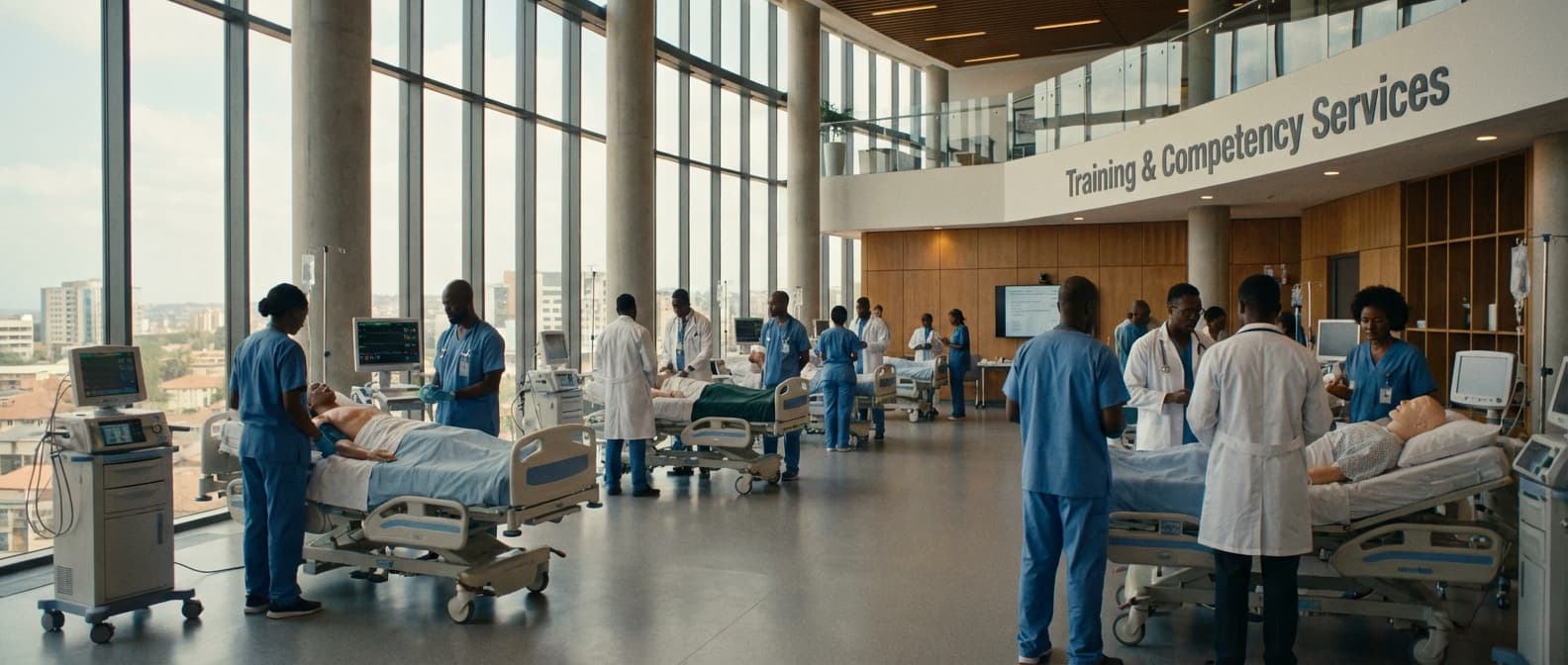
Ultrasound Application Training Service (Protocol-Based) in Angola
Engineering Excellence & Technical Support
Ultrasound Application Training Service (Protocol-Based) High-standard technical execution following OEM protocols and local regulatory frameworks.
Standardized Protocol-Based Training
Our Angolan training service delivers standardized, protocol-driven ultrasound education, ensuring consistent and high-quality image acquisition and interpretation across all participants. This approach guarantees adherence to best practices and facilitates accurate diagnostic outcomes.
Expert-Led, Locally Relevant Instruction
Benefit from training delivered by experienced sonographers with a deep understanding of the specific healthcare landscape and common pathologies encountered in Angola. Our instructors provide practical, hands-on guidance tailored to the unique challenges and opportunities within the Angolan context.
Comprehensive Competency Assessment & Certification
Upon completion of our protocol-based training, participants undergo rigorous competency assessments designed to validate their skills. Successful completion leads to recognized certification, empowering healthcare professionals in Angola with the confidence and credentials to excel in ultrasound practice.
What Is Ultrasound Application Training Service (Protocol-based) In Angola?
Ultrasound Application Training Service (Protocol-Based) in Angola refers to specialized educational programs designed to equip healthcare professionals with the proficiency to utilize ultrasound imaging devices for specific diagnostic and therapeutic protocols. This service emphasizes standardized, evidence-based examination procedures (protocols) rather than general device operation. The training covers the theoretical underpinnings of ultrasound physics, image acquisition techniques, interpretation of sonographic findings, and adherence to established clinical pathways for various applications. The objective is to ensure consistent, accurate, and efficient ultrasound examinations, thereby improving diagnostic yield and patient care within the Angolan healthcare system.
| Who Needs It? | Typical Use Cases |
|---|---|
| Radiologists and Radiology Residents | Routine diagnostic imaging across various specialties (e.g., abdominal pain workup, fetal anomaly screening, deep vein thrombosis assessment). |
| Obstetricians and Gynecologists | Antenatal scans (dating, anomaly, growth), gynecological assessments (pelvic masses, intrauterine devices). |
| Cardiologists and Cardiac Sonographers | Echocardiography for assessment of cardiac structure, function, and valvular disease. |
| Vascular Surgeons and Sonographers | Doppler ultrasound for evaluation of peripheral arterial and venous disease, carotid stenosis. |
| Emergency Medicine Physicians | Point-of-care ultrasound (POCUS) for rapid assessment of trauma (FAST scan), fluid status, and procedural guidance. |
| Physiotherapists and Sports Medicine Physicians | Musculoskeletal ultrasound for diagnosis of soft tissue injuries, inflammatory conditions, and joint effusions. |
| Sonographers (Diagnostic Medical) | |
| Healthcare professionals in primary care settings requiring basic diagnostic ultrasound capabilities. |
Key Components of Ultrasound Application Training Service (Protocol-Based):
- Protocol Familiarization: In-depth study of established ultrasound protocols for specific organ systems (e.g., abdominal, obstetric, cardiac, vascular, musculoskeletal).
- Image Acquisition Mastery: Hands-on training on transducer manipulation, optimal probe selection, machine parameter optimization, and systematic scanning techniques aligned with each protocol.
- Anatomical and Pathological Correlation: Understanding the normal sonographic anatomy and recognizing key pathological presentations within the context of each protocol.
- Image Interpretation and Reporting: Developing skills in analyzing acquired images, identifying abnormalities, and documenting findings in a standardized report format.
- Quality Assurance and Artifact Management: Education on recognizing and mitigating common ultrasound artifacts to ensure diagnostic image quality.
- Ethical and Safety Considerations: Training on patient safety, infection control, and ethical considerations in ultrasound practice.
- Clinical Scenario Simulation: Practical exercises involving simulated patient cases to apply learned protocols and decision-making skills.
- Competency Assessment: Evaluation mechanisms to verify the trainee's ability to perform examinations according to established protocols.
Who Needs Ultrasound Application Training Service (Protocol-based) In Angola?
This training service is designed to equip healthcare professionals in Angola with the knowledge and practical skills to effectively utilize ultrasound technology in various clinical settings, with a strong emphasis on standardized protocols. This ensures consistent, accurate, and efficient diagnostic capabilities across different departments and institutions.
| Target Customer Segment | Key Departments/Specialties Requiring Training | Specific Needs Addressed by Protocol-Based Training |
|---|---|---|
| Hospitals (Public and Private) | Radiology/Medical Imaging, Obstetrics and Gynecology, Cardiology, Internal Medicine, Emergency Medicine, Pediatrics, Surgery | Standardized image acquisition for accurate diagnosis, improved workflow efficiency, reduction in diagnostic errors, competency in specific organ system scanning, emergency bedside ultrasound protocols. |
| Clinics and Health Centers | General Practice, Obstetrics and Gynecology, Internal Medicine | Basic diagnostic ultrasound for point-of-care assessment, early detection of common conditions, referral guidance, protocol-driven screening programs. |
| Diagnostic Imaging Centers | Radiology, Cardiology, Obstetrics and Gynecology | Advanced protocol adherence for specialized scans, quality assurance, efficiency in high-volume settings, training on new equipment and techniques. |
| Specialized Medical Facilities (e.g., Maternity, Cardiology) | Obstetrics, Fetal Medicine, Cardiology, Electrophysiology | In-depth protocol training for advanced obstetric and fetal assessments, specific cardiac ultrasound protocols (e.g., echocardiography), interventional ultrasound guidance. |
| Medical Training Institutions and Universities | Medical Schools, Nursing Schools, Radiology Technician Programs | Incorporation of standardized ultrasound protocols into curriculum, hands-on training for future professionals, development of best practices, faculty development. |
| Government Health Agencies and NGOs | Public Health Departments, Maternal and Child Health Programs, Disease Control Units | Training for outreach programs, capacity building in underserved areas, standardized data collection for public health initiatives, implementation of national ultrasound guidelines. |
Target Customers and Departments for Ultrasound Application Training Service (Protocol-Based) in Angola
- Hospitals (Public and Private)
- Clinics and Health Centers
- Diagnostic Imaging Centers
- Specialized Medical Facilities (e.g., Maternity, Cardiology)
- Medical Training Institutions and Universities
Ultrasound Application Training Service (Protocol-based) Process In Angola
This document outlines the workflow for Ultrasound Application Training Services (Protocol-Based) in Angola, from initial inquiry to successful execution of the training program. The process is designed to ensure a clear understanding of client needs, tailor the training effectively, and deliver high-quality, protocol-driven ultrasound education.
| Phase | Step | Description | Key Activities | Deliverables/Outcomes | Responsible Parties |
|---|---|---|---|---|---|
| 1.1 Initial Contact/Inquiry | The client (e.g., hospital, clinic, educational institution) expresses interest in ultrasound application training. | Receiving and logging client inquiry, initial discussion of training needs. | Inquiry logged, basic understanding of client's interest. | Client, Training Provider Sales/Inquiry Team |
| 1.2 Needs Assessment Meeting/Call | Detailed understanding of the client's specific training requirements, target audience, and existing knowledge levels. | Conducting in-depth discussions, identifying specific ultrasound applications to be covered (e.g., OB/GYN, Abdominal, Vascular), number of participants, desired learning outcomes, and any specific protocols or standards they adhere to. | Detailed Training Needs Analysis Report, identified target protocols, participant profile. | Client, Training Provider Technical/Consultation Team | |
| 2.1 Training Proposal Development | Based on the needs assessment, a comprehensive training proposal is crafted. | Defining training objectives, curriculum outline (aligned with specific protocols), duration, venue requirements, trainer qualifications, equipment needs (if applicable), pricing, and schedule. | Detailed Training Proposal. | Training Provider Technical/Sales Team |
| 2.2 Proposal Review and Negotiation | Client reviews the proposal and negotiates terms and conditions. | Client feedback, discussion of modifications, clarification of details. | Revised proposal (if necessary). | Client, Training Provider Sales Team | |
| 2.3 Contract/Agreement Signing | Formalization of the training service agreement. | Signing of contract, payment schedule confirmation, service level agreements (SLAs) defined. | Signed Training Agreement. | Client, Training Provider Management | |
| 3.1 Curriculum Customization & Protocol Integration | Tailoring the training curriculum to the agreed-upon protocols and client-specific workflows. | Reviewing and adapting standard training modules to incorporate client's specific ultrasound protocols, guidelines, and imaging standards. Development of case studies relevant to Angolan context. | Protocol-aligned training modules, customized learning materials. | Training Provider Curriculum Development Team, Trainers |
| 3.2 Trainer Assignment and Briefing | Selecting and briefing qualified trainers on the specific training objectives and protocols. | Assigning experienced trainers with relevant clinical and teaching expertise. Providing trainers with detailed briefing on client requirements, protocols, and learning objectives. | Assigned trainers, Trainer briefing documentation. | Training Provider Management, Lead Trainer | |
| 3.3 Logistics and Resource Arrangement | Arranging all necessary logistical aspects for the training. | Booking venue (if external), coordinating participant registration, ensuring availability of ultrasound equipment (loaner or client-provided), setting up audio-visual aids, preparing training materials (manuals, handouts). | Confirmed venue, registered participants, prepared training materials, functional equipment. | Training Provider Operations Team, Client (for venue/equipment if applicable) | |
| 4.1 Pre-Training Briefing | Setting the stage for the training and ensuring participants are oriented. | Welcome address, overview of training agenda, setting expectations, pre-assessment (optional). | Informed participants. | Lead Trainer, Training Provider Representative |
| 4.2 Training Delivery | Conducting the practical and theoretical training sessions based on protocols. | Theoretical lectures on ultrasound principles and applications, hands-on scanning sessions guided by protocols, demonstration of techniques, case study discussions, Q&A sessions. | Knowledge and skill transfer, practical application of protocols. | Trainers, Participants | |
| 4.3 Practical Skill Assessment | Evaluating participants' ability to perform ultrasound scans according to protocols. | Direct observation of scanning techniques, review of images acquired by participants, structured competency checklists. | Assessment of practical skills against protocol standards. | Trainers | |
| 4.4 Post-Training Review and Feedback | Consolidating learning and gathering immediate feedback. | Summary of key learning points, open forum for questions, participant feedback collection (surveys, verbal feedback). | Reinforced learning, initial feedback collected. | Lead Trainer, Participants | |
| 5.1 Training Report and Certification | Documenting training outcomes and issuing certificates. | Compilation of training attendance records, assessment results, and overall training summary. Issuance of certificates of completion to successful participants. | Training Report, Certificates of Completion. | Training Provider Administration, Lead Trainer |
| 5.2 Follow-up Support (Optional) | Providing ongoing support to reinforce learning and address challenges. | Remote consultation, access to training materials, follow-up Q&A sessions (if agreed upon). | Continued learning and skill development. | Training Provider Technical Team, Client | |
| 5.3 Training Evaluation and Improvement | Assessing the overall effectiveness of the training and identifying areas for improvement. | Analyzing participant feedback, evaluating impact on clinical practice (if feasible), internal review of training delivery and materials. Using feedback for future service enhancement. | Training effectiveness report, actionable insights for service improvement. | Training Provider Management, Quality Assurance Team |
Ultrasound Application Training Service (Protocol-Based) Process in Angola: Workflow
- Phase 1: Inquiry and Needs Assessment
- Phase 2: Proposal and Agreement
- Phase 3: Training Preparation
- Phase 4: Training Execution
- Phase 5: Post-Training Support and Evaluation
Ultrasound Application Training Service (Protocol-based) Cost In Angola
The cost of Ultrasound Application Training Services (Protocol-Based) in Angola can vary significantly due to several influencing factors. These services are crucial for healthcare professionals looking to enhance their diagnostic skills and ensure standardized patient care. The pricing is generally determined by the depth and breadth of the training, the expertise of the instructors, the location and facilities provided, and the duration of the program. While specific figures are not readily published and often require direct quotes, understanding the pricing components can help in budgeting.
| Training Type/Scope | Estimated Cost Range (AOA - Angolan Kwanza) | Notes |
|---|---|---|
| Basic Ultrasound Principles (e.g., 1-3 days) | 300,000 - 750,000 AOA | Covers fundamental scanning techniques and image optimization. May be introductory for nurses or technicians. |
| General Abdominal Ultrasound Training (e.g., 3-5 days) | 600,000 - 1,200,000 AOA | Focuses on scanning organs like the liver, kidneys, spleen, gallbladder. Suitable for radiologists and sonographers. |
| Obstetric & Gynecological Ultrasound (e.g., 5-7 days) | 800,000 - 1,800,000 AOA | Covers fetal assessment, maternal health, and gynecological imaging. Often highly specialized. |
| Cardiovascular Ultrasound (Echocardiography) (e.g., 5-7 days) | 1,000,000 - 2,500,000 AOA | In-depth training on cardiac anatomy, physiology, and pathology assessment via ultrasound. |
| Specialized Applications (e.g., MSK, Vascular, Interventional - 3-5 days) | 700,000 - 1,600,000 AOA | Training for specific, niche ultrasound applications requiring advanced skills. |
| Advanced / Refresher Courses (e.g., 2-3 days) | 400,000 - 900,000 AOA | For experienced professionals looking to update skills or learn new protocols. |
| On-site Training (Per Day, Group of 5-10) | 200,000 - 500,000 AOA + Travel/Accommodation | Cost for the instructor and program delivery at client's facility. Logistics are extra. |
Key Pricing Factors for Ultrasound Application Training in Angola:
- Scope and Specialization of Training: Basic ultrasound principles versus specialized applications (e.g., obstetrics, cardiology, musculoskeletal, interventional). Advanced or niche training commands higher fees.
- Duration of Training: The total number of hours or days dedicated to the training program. Longer, more comprehensive courses will naturally cost more.
- Instructor Expertise and Credentials: Highly experienced sonographers or radiologists with extensive teaching experience and recognized certifications often charge premium rates.
- Training Format (On-site vs. Remote): On-site training, especially if requiring travel and accommodation for instructors, will be more expensive. Remote or blended learning options might offer cost savings.
- Number of Participants: Group training sessions often have a lower per-participant cost compared to individual training.
- Training Venue and Facilities: If the training provider is responsible for providing a venue, equipment (if not provided by the client), and materials, this cost will be factored in. Training at a client's facility might reduce some overheads but could also incur travel costs.
- Customization of Curriculum: Tailoring the training protocol to specific institutional needs or equipment can increase the overall cost.
- Accreditation and Certification: Training that leads to recognized certifications might have additional fees associated with examinations and administrative processes.
- Market Demand and Competition: The local demand for specific ultrasound skills and the number of training providers in a particular region can influence pricing.
- Logistical Costs: For on-site training, travel expenses, accommodation, and per diems for instructors are significant cost components, especially in remote areas of Angola.
Affordable Ultrasound Application Training Service (Protocol-based) Options
Our Affordable Ultrasound Application Training Service offers comprehensive, protocol-based training designed to equip sonographers with essential skills and knowledge. We understand the financial pressures on healthcare facilities and have developed flexible training solutions to maximize your return on investment. Our services focus on practical, hands-on learning, ensuring trainees can confidently perform a variety of ultrasound examinations adhering to established protocols. We offer various value bundles and cost-saving strategies to make high-quality training accessible and economical.
| Cost-Saving Strategy | Description | Benefit |
|---|---|---|
| Group Discounts | Register multiple trainees from the same facility for a single training session or bundle. | Significantly reduces per-trainee cost, encouraging team development. |
| Early Bird Registration | Book training sessions well in advance to secure discounted rates. | Locks in lower prices and allows for better budget planning. |
| Bundled Module Savings | Purchase multiple training modules or value bundles together for a reduced overall price compared to individual module costs. | Maximizes learning scope while minimizing expenditure. |
| On-Site Training Options | We can bring our expert trainers and curriculum to your facility, reducing travel and accommodation costs for trainees. | Convenient, cost-effective for larger groups, and allows for direct integration with existing equipment. |
| Virtual/Hybrid Learning | Leverage online modules and remote instruction for theoretical components, combined with focused on-site practical sessions. | Reduces the need for extended on-site training, saving on logistics and personnel time away from clinical duties. |
| Customized Training Paths | Work with our team to tailor a training program that precisely meets your needs, avoiding unnecessary modules and associated costs. | Ensures trainees learn only what is essential, maximizing efficiency and relevance. |
Value Bundles for Comprehensive Training
- {"title":"Foundational Sonography Package","description":"Ideal for new hires or those transitioning to new ultrasound modalities. Includes core principles, image optimization, and basic protocol introduction for general imaging, obstetrics, or cardiology."}
- {"title":"Advanced Specialty Module Bundle","description":"For experienced sonographers looking to specialize. Combines training in two or more advanced areas such as vascular, musculoskeletal, or small parts, with in-depth protocol review."}
- {"title":"Comprehensive Curriculum Bundle","description":"Our most popular option, offering a complete training pathway from foundational to advanced specialty modules. Ensures a well-rounded and highly proficient sonographer."}
- {"title":"Site-Specific Protocol Integration","description":"Customizable bundle that includes our standard protocols alongside training on your facility's unique scanning procedures and reporting requirements."}
Verified Providers In Angola
In the rapidly evolving landscape of healthcare in Angola, identifying trusted and verified providers is paramount for individuals seeking quality medical services. Franance Health stands out as a beacon of reliability, offering a comprehensive network of accredited healthcare professionals and facilities. Their stringent credentialing process ensures that every provider associated with Franance Health has met the highest standards of expertise, ethical practice, and patient care. This commitment to verification not only safeguards patients but also fosters a more efficient and trustworthy healthcare ecosystem. Choosing Franance Health means opting for peace of mind, knowing you are in the hands of qualified and continuously assessed medical professionals.
| Credentialing Aspect | Franance Health's Verification | Benefit for Patients |
|---|---|---|
| Medical License Validity | Confirmed with Angolan Ministry of Health and relevant professional bodies. | Ensures providers are legally authorized to practice medicine. |
| Educational Background | Verification of degrees and diplomas from accredited institutions. | Confirms foundational medical knowledge and training. |
| Professional Certifications | Validation of specialized training and board certifications. | Guarantees expertise in specific medical fields. |
| Experience and Track Record | Review of practice history and, where applicable, peer references. | Indicates practical application of knowledge and patient management skills. |
| Adherence to Ethical Standards | Background checks and confirmation of no disciplinary actions. | Promotes patient safety and trust in professional conduct. |
Why Franance Health Credentials Represent the Best Choice for Verified Providers in Angola:
- Rigorous Vetting Process: Franance Health employs a multi-stage vetting procedure, including verification of medical licenses, educational qualifications, professional certifications, and peer reviews, ensuring only the most competent practitioners are listed.
- Commitment to Continuous Improvement: Beyond initial accreditation, Franance Health actively monitors provider performance, patient feedback, and adherence to evolving medical best practices, guaranteeing ongoing quality.
- Patient-Centric Approach: The credentialing prioritizes providers who demonstrate a strong commitment to patient well-being, ethical conduct, and transparent communication.
- Access to Specialized Care: Franance Health's network encompasses a wide range of medical specialties, all curated through their robust verification system, allowing for easy access to expert care.
- Enhanced Trust and Transparency: By clearly indicating verified providers, Franance Health empowers patients to make informed decisions, reducing uncertainty and building confidence in the healthcare system.
Scope Of Work For Ultrasound Application Training Service (Protocol-based)
This document outlines the Scope of Work (SOW) for a protocol-based Ultrasound Application Training Service. The service aims to equip participants with the necessary knowledge and practical skills to perform ultrasound examinations according to established protocols, ensuring standardized and high-quality diagnostic imaging. This SOW details the technical deliverables and standard specifications for the training program.
| Deliverable | Description | Standard Specification/Requirement |
|---|---|---|
| Training Curriculum | Detailed outline of all modules, learning objectives, and topics covered for each ultrasound application (e.g., abdominal, cardiac, obstetric, vascular). | Must be protocol-driven, adhering to national/international guidelines (e.g., AIUM, ASE, ISUOG) or client-specified protocols. Comprehensive and logically sequenced. |
| Theoretical Training Materials | Presentations, lecture notes, e-books, videos, and interactive modules. | High-quality, visually engaging, and factually accurate. Regularly updated to reflect current best practices and technological advancements. |
| Practical Training Sessions | Hands-on practice with ultrasound equipment and anatomical models/phantoms. | Adequate simulation equipment (phantoms, mannequins) representing diverse anatomical variations. Sufficient training time allocated per participant for each modality. |
| Supervised Scanning | Real-time guidance and feedback from certified sonographers during scanning sessions. | Trainees must achieve a minimum number of supervised scans per protocol. Sonographer-to-trainee ratio must be appropriate for effective supervision (e.g., 1:3). |
| Competency Assessment | Practical examinations (e.g., performing a complete scan following a protocol) and theoretical quizzes/tests. | Objective scoring criteria for practical assessments. Passing score for theoretical tests (e.g., >80%). Assessments must be standardized across all participants. |
| Training Equipment | Ultrasound machines, transducers, phantoms, and other necessary accessories. | Modern, fully functional ultrasound equipment with appropriate probes for each application. Phantoms must accurately simulate relevant anatomical structures and pathologies. |
| Trainer Qualifications | Experienced and certified sonographers with expertise in the specific ultrasound applications being taught. | Minimum of X years of clinical experience. Holding relevant certifications (e.g., RDMS, ARDMS). Demonstrated teaching ability and excellent communication skills. |
| Certification | Formal certificate awarded upon successful completion of all training modules and assessments. | Certificate must include trainee's name, course title, date of completion, and the issuing institution's accreditation details. |
| Reporting and Feedback | Regular progress reports for trainees and feedback mechanisms for both trainees and trainers. | Standardized report templates. Confidentiality of trainee performance maintained. Feedback surveys to evaluate training effectiveness. |
Key Components of the Ultrasound Application Training Service
- Comprehensive curriculum development aligned with recognized ultrasound protocols.
- Delivery of theoretical knowledge through lectures, presentations, and case studies.
- Hands-on practical training sessions utilizing ultrasound phantoms and/or simulated patient scenarios.
- Supervised scanning sessions with experienced sonographers.
- Assessment of competency through practical examinations and theoretical quizzes.
- Provision of training materials, including manuals, reference guides, and digital resources.
- Certification of successful participants upon completion of the training program.
- Post-training support and refresher courses (optional, as per agreement).
Service Level Agreement For Ultrasound Application Training Service (Protocol-based)
This Service Level Agreement (SLA) outlines the guaranteed response times and uptime for the Ultrasound Application Training Service (Protocol-Based). This SLA is an addendum to the Master Service Agreement (MSA) between [Your Company Name] and [Client Company Name].
| Incident Severity Level | Description | Response Time Guarantee | Target Resolution Time | Uptime Guarantee |
|---|---|---|---|---|
Key Service Definitions
- {"title":"Protocol-Based Training","description":"Refers to the delivery of ultrasound application training that strictly adheres to pre-defined protocols and standard operating procedures as documented by [Client Company Name] or recognized industry standards."}
- {"title":"Service Hours","description":"The period during which the Ultrasound Application Training Service is actively available and supported. This is defined as Monday to Friday, 9:00 AM to 5:00 PM [Client's Time Zone], excluding public holidays observed by [Your Company Name]."}
- {"title":"Uptime","description":"The percentage of time the Ultrasound Application Training Service is operational and accessible to authorized users during the Service Hours. Uptime is measured by [Your Company Name]'s internal monitoring systems."}
- {"title":"Downtime","description":"The percentage of time the Ultrasound Application Training Service is not operational or accessible. Scheduled maintenance is excluded from Downtime calculations."}
- {"title":"Response Time","description":"The maximum time within which [Your Company Name] will acknowledge and begin to address a reported incident or request for support related to the Ultrasound Application Training Service."}
- {"title":"Resolution Time","description":"The target time within which [Your Company Name] will aim to resolve a reported incident. Resolution times are dependent on the severity and complexity of the issue."}
- {"title":"Incident Severity Levels","description":"A classification of reported issues based on their impact on the Ultrasound Application Training Service."}
Frequently Asked Questions

Ready when you are
Let's scope your Ultrasound Application Training Service (Protocol-Based) in Angola project in Angola.

Scaling healthcare logistics and technical systems across the entire continent.