
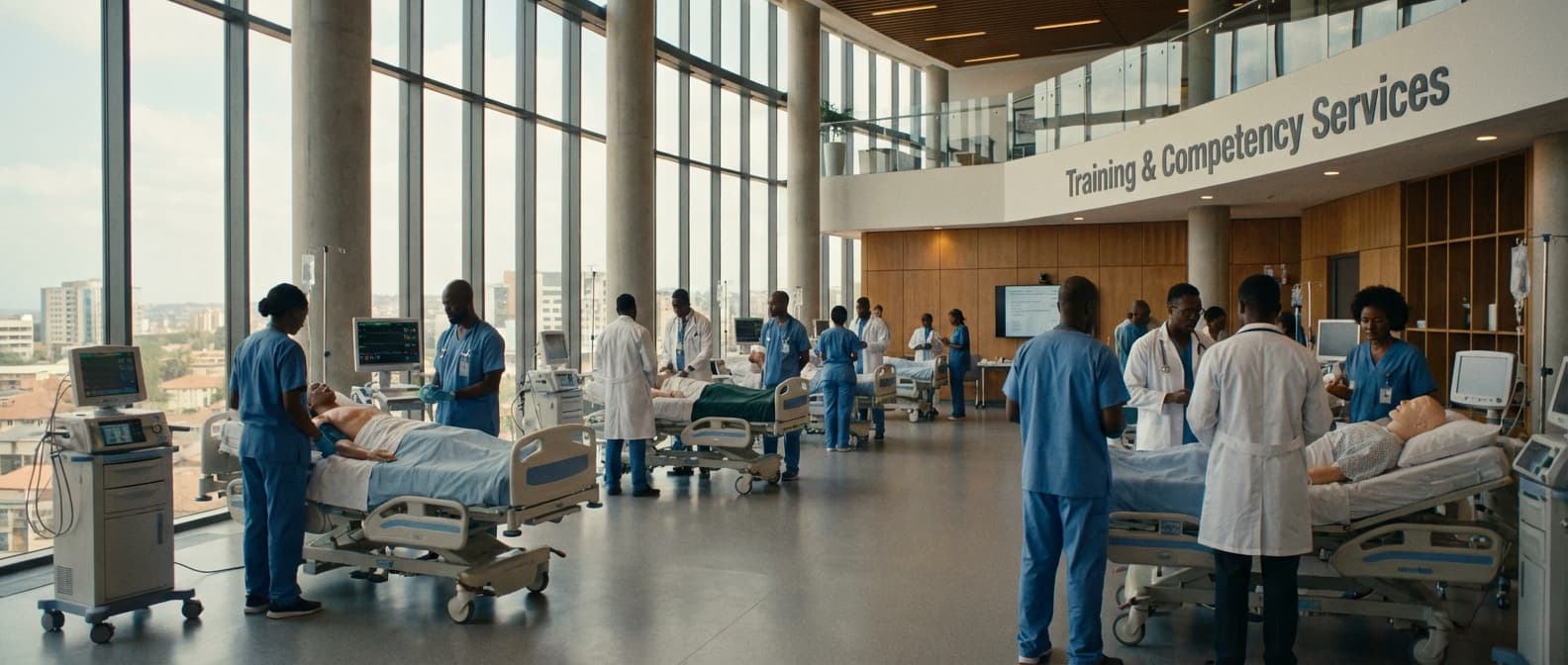
MRI Operator Training Service (Radiographers) in Angola
Engineering Excellence & Technical Support
MRI Operator Training Service (Radiographers) High-standard technical execution following OEM protocols and local regulatory frameworks.
Advanced Neuroimaging Techniques
Master sophisticated MRI protocols for neurological conditions, including advanced diffusion tensor imaging (DTI) and functional MRI (fMRI), crucial for diagnosing and monitoring complex brain disorders prevalent in Angola.
Thoracic & Abdominal MRI Excellence
Develop expertise in high-resolution thoracic and abdominal MRI, enabling precise identification of pathologies such as tuberculosis, tropical diseases, and other organ-specific conditions affecting the Angolan population.
Hands-on Protocol Optimization & Troubleshooting
Gain practical skills in optimizing MRI sequences for diverse patient demographics and equipment limitations found in Angolan healthcare settings, with a strong emphasis on effective troubleshooting and quality control.
What Is Mri Operator Training Service (Radiographers) In Angola?
MRI Operator Training Service (Radiographers) in Angola refers to specialized educational programs designed to equip radiographers with the necessary knowledge and practical skills to safely and effectively operate Magnetic Resonance Imaging (MRI) scanners. These services are crucial for ensuring high-quality diagnostic imaging and patient safety within the Angolan healthcare sector, addressing a critical need for skilled personnel in advanced medical imaging modalities.
| Target Audience | Need for Service | Typical Use Cases | Service Providers |
|---|---|---|---|
| Radiographers in Angolan healthcare facilities (public and private hospitals, specialized imaging centers). | Lack of specialized MRI expertise within existing radiographer workforce. Introduction of new MRI equipment requiring skilled operators. Enhancement of diagnostic imaging capabilities. Improvement of patient outcomes through accurate MRI diagnosis. | Operating new MRI scanners. Performing routine MRI examinations (e.g., neuroimaging, musculoskeletal, abdominal). Acquiring specialized MRI scans (e.g., cardiac MRI, functional MRI). Training junior radiographers. Ensuring compliance with international imaging standards. | Medical imaging equipment manufacturers. Specialized medical training companies. Academic institutions with radiology departments. International healthcare training organizations. |
Key Components of MRI Operator Training Service:
- Physics of MRI: Comprehensive understanding of fundamental principles such as nuclear magnetic resonance, signal generation, gradient coils, radiofrequency pulses, and image reconstruction algorithms.
- MRI Safety Protocols: In-depth training on ferromagnetic detection, patient screening, contraindication identification (e.g., implants, pacemakers), cryogen safety (for superconducting magnets), and emergency procedures.
- Image Acquisition Techniques: Practical instruction on various pulse sequences (e.g., spin echo, gradient echo), contrast-enhanced imaging, and optimization for different anatomical regions and pathologies.
- Patient Care and Management: Training on patient preparation, communication, positioning, sedation (if applicable), and management of potential adverse reactions.
- Quality Assurance and Control: Understanding of image quality metrics, artifact identification and correction, and routine equipment maintenance and calibration procedures.
- PACS and RIS Integration: Familiarization with Picture Archiving and Communication Systems (PACS) and Radiology Information Systems (RIS) for image archival, retrieval, and reporting.
- Legal and Ethical Considerations: Awareness of regulatory requirements, professional conduct, and patient confidentiality in diagnostic imaging.
Who Needs Mri Operator Training Service (Radiographers) In Angola?
MRI operator training services for radiographers are essential for healthcare facilities in Angola looking to enhance their diagnostic imaging capabilities. As the demand for advanced medical imaging grows, ensuring that radiographers are proficient in operating MRI scanners and interpreting the resulting images is paramount for accurate diagnosis and patient care. This training addresses the need for skilled personnel capable of performing MRI examinations safely and effectively, adhering to international standards and best practices.
| Target Customers | Departments/Contexts |
|---|---|
| Public Hospitals | Radiology Departments, Diagnostic Imaging Centers |
| Private Hospitals & Clinics | Radiology Departments, Imaging Units |
| Tertiary Care Centers | Specialized Imaging Departments (e.g., Neurology, Orthopedics, Oncology) |
| Medical Training Institutions | Radiography Programs, Continuing Education Departments |
| Government Health Initiatives | National Diagnostic Imaging Programs, Rural Healthcare Projects |
Who Needs MRI Operator Training Service (Radiographers) in Angola?
- Radiographers seeking to acquire new skills in MRI operation.
- Existing MRI operators requiring refresher courses or advanced training.
- New medical imaging departments being established that will incorporate MRI technology.
- Hospitals and clinics aiming to expand their diagnostic service offerings.
- Radiographers working in general radiology who wish to specialize in magnetic resonance imaging.
- Healthcare institutions that have recently acquired new MRI equipment.
- Radiographers needing to meet continuing professional development requirements.
Mri Operator Training Service (Radiographers) Process In Angola
This document outlines the standard workflow for the MRI Operator Training Service for Radiographers in Angola, from the initial inquiry to the successful execution of the training program. The process is designed to be clear, efficient, and ensure all client needs are met.
| Stage | Description | Key Activities | Responsible Parties | Deliverables | Timeline (Indicative) |
|---|---|---|---|---|---|
| The initial contact from a client seeking MRI operator training. | Client expresses interest, provides details on training needs (e.g., number of participants, experience level, specific MRI modalities, desired outcomes). | Client, Training Provider (Business Development/Sales) | Initial understanding of client requirements, preliminary scope of training. | 1-3 business days |
| Development and submission of a tailored training proposal and cost estimate. | Training Provider analyzes needs, designs a draft curriculum, estimates resources, prepares a detailed proposal including objectives, methodology, duration, and a formal quotation. | Training Provider (Technical Team, Sales) | Formal training proposal, detailed quotation, draft training schedule. | 3-7 business days |
| Formalization of the training engagement. | Client reviews proposal and quotation, negotiates terms, and signs a formal training agreement. Payment terms are agreed upon. | Client, Training Provider (Legal/Contracts, Finance) | Signed training contract, initial payment/deposit (as per agreement). | 5-10 business days |
| Finalizing the training content and determining the most suitable dates and location. | Collaborative review and finalization of the training curriculum. Confirmation of participant list. Selection of optimal training dates and venue (on-site, off-site, or virtual). | Client, Training Provider (Training Department, Instructors) | Finalized training curriculum, confirmed training dates, participant roster. | 7-14 business days |
| Ensuring all necessary resources and arrangements are in place for the training. | Booking of venue, equipment, and any required travel/accommodation for instructors. Preparation of training materials (manuals, presentations, software). Communication with participants regarding pre-requisites and logistics. | Training Provider (Operations, Administration), Client (Participant coordination) | Logistical arrangements confirmed, training materials ready, participant pre-communication sent. | 10-20 business days prior to training |
| The execution of the planned MRI operator training program. | Conducting theoretical sessions, practical hands-on training, demonstrations, and case studies as per the curriculum. Ensuring active participation and engagement of trainees. | Training Provider (Instructors) | Delivered training modules, practical sessions completed, trainee participation. | Duration of training (e.g., 1-5 days or longer, depending on scope) |
| Measuring the effectiveness of the training and the learning outcomes of participants. | Administering pre- and post-training assessments (quizzes, practical evaluations, simulations). Gathering feedback from participants on the training content, delivery, and instructors. Internal evaluation of the training program's success. | Training Provider (Instructors, Training Management), Client (Participant feedback) | Assessment results, participant feedback reports, training evaluation summary. | During and immediately after training |
| Issuing certificates and providing ongoing support. | Issuing certificates of completion to successful trainees. Providing post-training support, answering queries, and offering further resources. Conducting a post-training review meeting with the client to discuss outcomes and identify future training needs. | Training Provider (Administration, Training Management), Client | Certificates of completion, post-training support, final project report (if applicable), relationship management. | 1-5 business days post-training, ongoing for support |
MRI Operator Training Service (Radiographers) Process in Angola
- Inquiry & Needs Assessment
- Proposal & Quotation
- Contract & Agreement
- Curriculum Customization & Scheduling
- Logistics & Preparation
- Training Delivery
- Assessment & Evaluation
- Certification & Follow-up
Mri Operator Training Service (Radiographers) Cost In Angola
The cost of MRI operator training for radiographers in Angola can vary significantly based on several factors. These include the training provider's reputation and expertise, the specific curriculum and depth of the training, the duration of the program, and whether the training is conducted on-site at a facility or at a dedicated training center. Location within Angola can also play a role due to travel and logistical costs. In addition to the core training, costs might also be influenced by the need for specialized equipment simulation or hands-on practice with advanced MRI techniques.
| Training Type/Duration | Estimated Cost Range (AOA) | Notes |
|---|---|---|
| Basic MRI Principles & Operation (e.g., 3-5 days) | 500,000 - 1,500,000 | Covers foundational knowledge and basic scanning procedures. |
| Intermediate MRI Techniques (e.g., 5-10 days) | 1,000,000 - 3,000,000 | Includes advanced protocols, image optimization, and common pathologies. |
| Specialized MRI Modalities (e.g., neuro, cardiac, musculoskeletal - per module) | 750,000 - 2,000,000 per module | Focuses on specific anatomical regions or advanced applications. |
| Comprehensive MRI Operator Certification Program (e.g., 2-4 weeks) | 2,000,000 - 6,000,000+ | A more in-depth program leading to a recognized certification. |
| On-site Corporate Training (per day/program) | Negotiable, typically higher per day than external courses | Costs are customized based on the number of trainees, curriculum, and duration. May include travel and accommodation for trainers. |
Key Factors Influencing MRI Operator Training Costs in Angola:
- Training Provider Reputation and Accreditation
- Curriculum Scope and Specialization (e.g., basic vs. advanced techniques)
- Program Duration (e.g., short courses vs. comprehensive programs)
- Location of Training (on-site vs. external facility)
- Inclusion of Hands-on Practice and Equipment Simulation
- Materials and Resources Provided (manuals, online access, etc.)
- Trainer's Experience and Qualifications
- Certification or Accreditation Offered
- Geographic Location within Angola (transportation and accommodation for trainers/trainees)
- Group Size and Discounts
Affordable Mri Operator Training Service (Radiographers) Options
This service focuses on providing accessible and cost-effective MRI operator training specifically designed for radiographers seeking to enhance their skills or transition into MRI. We understand the financial constraints many healthcare facilities and individual professionals face. Therefore, our approach emphasizes flexibility, value-driven bundles, and strategic cost-saving measures to make high-quality MRI training attainable.
| Training Package | Target Audience | Key Components | Estimated Cost Range (USD) | Cost-Saving Strategy |
|---|---|---|---|---|
| Foundational MRI Principles | Radiographers new to MRI | Physics, Safety, Basic Acquisition, Artifacts | $800 - $1,500 | Online modules, group discounts |
| Advanced MRI Techniques | Experienced Radiographers | Neuro, MSK, Body, Advanced Sequences | $1,000 - $1,800 | Blended learning, tiered levels |
| Comprehensive Certification Prep | Radiographers seeking certification | All modules, mock exams, review | $1,500 - $2,500 | Early bird discounts, bundled pricing |
| Custom On-Site Group Training | Healthcare Facilities | Tailored to facility needs | Varies based on group size & duration | Significant per-person savings, no travel costs |
Key Value Bundles and Cost-Saving Strategies:
- Foundational MRI Principles Package: This bundle covers essential physics, safety protocols, image acquisition basics, and common artifact identification. Ideal for radiographers new to MRI.
- Advanced MRI Techniques Module: Focuses on specific applications like neuroimaging, musculoskeletal MRI, body MRI, and advanced pulse sequences. Suitable for those with foundational knowledge.
- Comprehensive MRI Certification Prep Course: Combines foundational and advanced modules with mock exams and dedicated review sessions to prepare candidates for professional MRI certifications.
- On-Site Group Training Discounts: We offer significant cost reductions for training entire departments or groups of radiographers at your facility. This eliminates travel and accommodation expenses for participants.
- Blended Learning Options: Combining online self-paced modules with scheduled virtual instructor-led sessions reduces the need for physical classroom space and allows for greater flexibility in scheduling.
- Early Bird Registration Incentives: Availing discounts for early sign-ups helps manage budgeting and secures training slots at a lower price point.
- Tiered Training Levels: Offering different levels of training (e.g., basic operator, advanced technologist) allows facilities to select only the training that is truly necessary for their staff, avoiding unnecessary expenses.
- Partnership Programs: Collaborating with professional organizations or imaging equipment manufacturers can unlock further discounts or bundled offerings.
- Customizable Training Paths: We can tailor training programs to meet the specific needs of your facility, ensuring you're not paying for modules or content that are irrelevant to your current operations.
- Digital Resource Library Access: All participants gain access to a continually updated library of digital resources, reducing the need for purchasing expensive textbooks or external materials.
Verified Providers In Angola
In Angola's evolving healthcare landscape, identifying trustworthy and skilled medical professionals is paramount for quality patient care. Franance Health stands out as a beacon of reliability, rigorously vetting and credentialing its network of providers. This commitment to verification ensures that patients receive care from highly qualified and ethical practitioners, minimizing risks and maximizing positive health outcomes. When seeking medical services in Angola, choosing a Franance Health-affiliated provider means opting for assurance, expertise, and a superior standard of healthcare.
| Credential Type | Verification Process | Benefit to Patients |
|---|---|---|
| Medical Licenses & Certifications | Franance Health independently verifies all official medical licenses and board certifications with relevant Angolan authorities and international accreditation bodies. | Confirms that providers have met the minimum educational and practical requirements to practice medicine. |
| Professional Experience & Specialization | Detailed review of provider CVs, past performance reviews, and confirmation of specialization through training and practice history. | Ensures patients are matched with providers who possess the specific expertise needed for their condition. |
| Background Checks & Ethical Conduct | Comprehensive background checks, including criminal record and any history of disciplinary actions by medical boards. | Guarantees that providers adhere to high ethical standards and have no history of malpractice or misconduct. |
| Continuing Medical Education (CME) | Verification of ongoing participation in accredited CME programs to ensure providers stay current with medical advancements. | Ensures patients receive care informed by the latest medical knowledge and techniques. |
| Hospital Affiliations & Privileges | Confirmation of active affiliations with reputable hospitals and clinics in Angola, along with verified medical privileges. | Indicates that providers have been recognized and approved by established healthcare institutions. |
Why Franance Health Credentials Matter:
- Rigorous vetting process ensures only qualified practitioners are included.
- Focus on professional ethics and patient-centered care.
- Access to a network of specialists across various medical disciplines.
- Reduces the risk of encountering unqualified or fraudulent medical services.
- Promotes patient confidence and trust in the healthcare system.
Scope Of Work For Mri Operator Training Service (Radiographers)
This document outlines the Scope of Work (SOW) for MRI Operator Training Services, specifically targeting radiographers. The objective is to provide comprehensive theoretical and practical training to ensure radiographers are proficient in operating MRI equipment safely, efficiently, and according to established protocols. This training will cover fundamental MRI principles, patient safety, image acquisition techniques, protocol optimization, quality assurance, and troubleshooting.
| Technical Deliverable | Standard Specifications / Description | Acceptance Criteria |
|---|---|---|
| Training Curriculum Document | A detailed document outlining all modules, learning objectives, duration, and assessment methods. Must be reviewed and approved by the client. | Curriculum is comprehensive, aligned with industry best practices, and approved by the client prior to commencement of training. |
| Training Materials (Presentations, Handouts, Manuals) | High-quality, up-to-date, and easily understandable materials in electronic and/or print format. Content must be technically accurate and reflect current MRI technology. | Materials are provided in advance of training sessions, are error-free, and cover all topics outlined in the curriculum. |
| Practical Training Sessions | Hands-on training on actual MRI scanners, covering patient positioning, protocol selection, scan execution, and image review. Must be conducted by certified and experienced MRI technologists/physicists. | Sufficient machine time allocated for each trainee. Trainees demonstrate proficiency in all practical aspects as per assessment criteria. Sessions conducted at the client's facility or an approved training site. |
| Assessment Tools (Quizzes, Practical Exams, Case Studies) | Tools designed to evaluate the theoretical knowledge and practical skills of the radiographers. Must include both formative and summative assessments. | Assessments are validated, administered consistently, and provide objective evaluation of trainee competency. Pass rates are defined and met. |
| Training Completion Certificates | Certificates issued to radiographers who successfully complete the training program, indicating the modules covered and the level of achievement. | Certificates are issued promptly after successful completion and are signed by authorized personnel. |
| Post-Training Support (Optional, but recommended) | Limited post-training consultation or follow-up to address any emergent questions or issues. This could be via email, phone, or a dedicated portal. | Support is available for a defined period (e.g., 30-60 days) and response times are within agreed upon SLA (e.g., 24-48 business hours). |
| Trainer Qualifications and Experience | Documentation of trainer's credentials, certifications, and relevant MRI operational experience. Minimum of X years of hands-on MRI experience and relevant teaching certifications. | Trainer CVs and certifications provided for review. Trainers meet or exceed the specified experience and qualification requirements. |
| Equipment Usage and Maintenance Log | A log maintained during practical sessions detailing scanner usage, any issues encountered, and maintenance performed during the training period. | Log is kept meticulously and is available for client review. Any issues reported are addressed promptly. |
Key Training Modules and Topics
- Introduction to MRI Physics: Principles of Nuclear Magnetic Resonance, Signal Generation, Relaxation Processes (T1, T2, T2*), Magnetic Field Gradients, RF Pulses.
- MRI Safety: Magnetic Field Hazards (ferromagnetic objects, implants), RF and Gradient Field Effects on Patients and Personnel, Screening Procedures, Emergency Procedures.
- MRI Hardware and Components: Magnet System, Gradient Coils, RF Coils, Shim Coils, Patient Table, Console and Workstation.
- Image Acquisition Techniques: Pulse Sequences (Spin Echo, Gradient Echo, Inversion Recovery, Echo Planar Imaging), Contrast Mechanisms, Spatial Encoding, k-space.
- Protocol Development and Optimization: Understanding Protocol Parameters (TR, TE, Flip Angle, NEX, Slice Thickness, FOV), Selecting Appropriate Sequences and Parameters for Different Anatomies, Contrast Agent Administration and Imaging.
- Image Processing and Post-processing: Image Reconstruction, Filtering, Windowing, Leveling, Multiplanar Reformation (MPR), Maximum Intensity Projection (MIP), 3D Rendering.
- Quality Assurance and Control: Image Quality Assessment, Artifact Identification and Correction, Routine Equipment Checks, Calibration Procedures.
- Patient Care and Management: Patient Preparation, Communication and Patient Comfort, Sedation Management (if applicable), Monitoring of Patients During Scan.
- Troubleshooting Common Issues: Artifacts, Equipment Malfunctions, Image Degradation, Protocol Errors.
- Advanced MRI Applications (Optional, depending on scope): fMRI, Diffusion MRI, Perfusion MRI, Spectroscopy, MR Angiography.
Service Level Agreement For Mri Operator Training Service (Radiographers)
This Service Level Agreement (SLA) outlines the performance standards and guarantees for the MRI Operator Training Service provided to radiographers. It defines the agreed-upon response times for support requests and uptime guarantees for the training platform.
| Service Component | Uptime Guarantee | Monitoring Period | Exclusions | Support Channel | Response Time Target (Business Hours) |
|---|---|---|---|---|---|
| MRI Operator Training Platform (LMS) | 99.5% | Monthly | Scheduled Maintenance, Force Majeure Events, Customer-induced issues, Third-party network outages | Email, Ticketing System | 2 Business Hours for critical (Severity 1) Incidents, 4 Business Hours for high (Severity 2) Incidents |
| Support for Training Content/Curriculum Inquiries | N/A (Service-based) | N/A | N/A | Email, Ticketing System | 8 Business Hours for general inquiries |
| Technical Support for Platform Access/Usage | N/A (Service-based) | N/A | N/A | Email, Ticketing System | 4 Business Hours for access issues |
Key Definitions
- {"term":"Training Platform","definition":"The online learning management system (LMS) and associated resources used to deliver the MRI Operator Training Service."}
- {"term":"Incident","definition":"Any event which causes, or may cause, an interruption to the Training Platform's service or a degradation of its performance."}
- {"term":"Response Time","definition":"The maximum time allowed from the initiation of a support request by the Customer to the acknowledgement of the request by the Service Provider."}
- {"term":"Resolution Time","definition":"The maximum time allowed from the initiation of a support request to the resolution of the reported Incident. (Note: Resolution time may vary based on Incident severity and complexity and will be communicated individually.)"}
- {"term":"Uptime","definition":"The percentage of time the Training Platform is operational and accessible to the Customer."}
Frequently Asked Questions

Ready when you are
Let's scope your MRI Operator Training Service (Radiographers) in Angola project in Angola.

Scaling healthcare logistics and technical systems across the entire continent.