
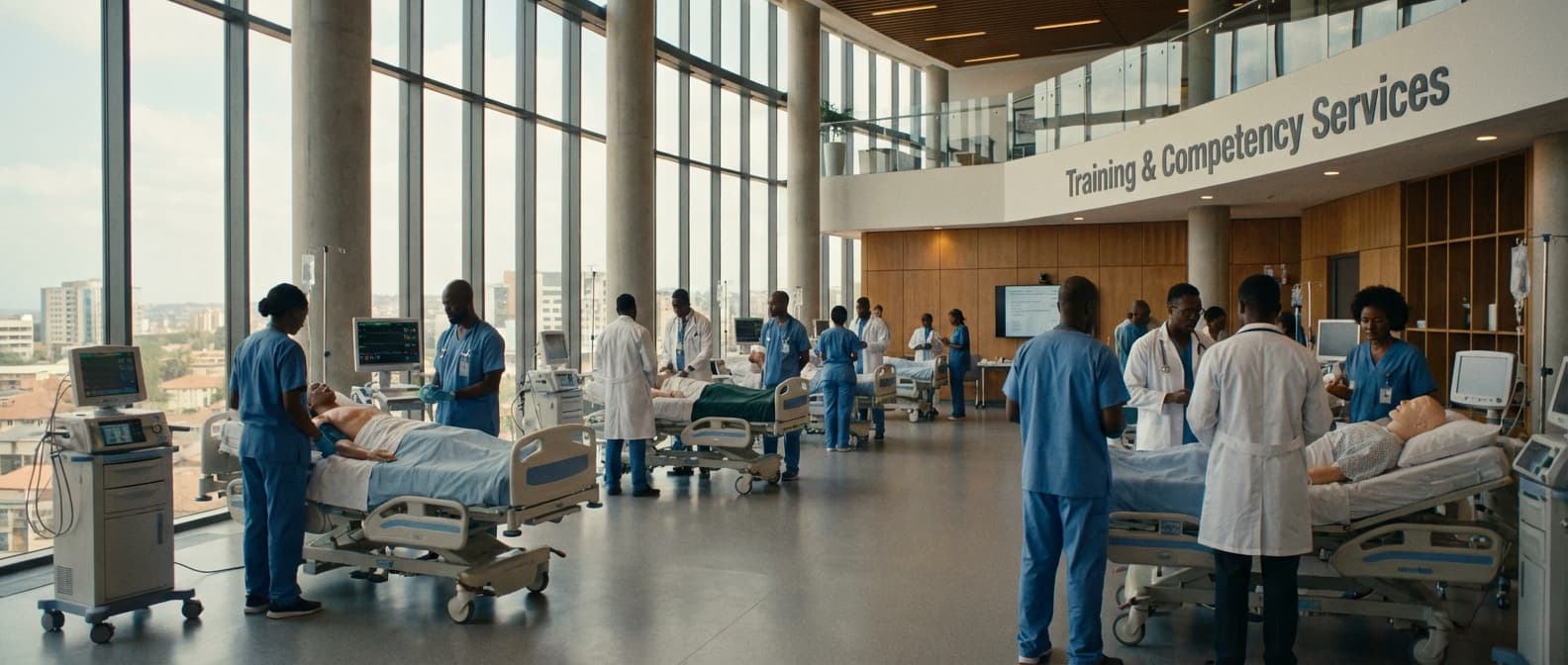
CT Operator Training Service (Radiographers) in Angola
Engineering Excellence & Technical Support
CT Operator Training Service (Radiographers) High-standard technical execution following OEM protocols and local regulatory frameworks.
Advanced CT Imaging Protocols
Master cutting-edge CT imaging protocols tailored for Angolan healthcare needs, ensuring optimal diagnostic accuracy for a wide range of pathologies.
Radiation Safety & Optimization Techniques
Gain expertise in implementing ALARA principles and advanced dose reduction techniques to ensure patient and staff safety while maintaining diagnostic image quality.
CT Scanner Maintenance & Troubleshooting
Develop essential skills in routine maintenance, calibration, and basic troubleshooting of modern CT scanners, maximizing uptime and operational efficiency in Angolan facilities.
What Is Ct Operator Training Service (Radiographers) In Angola?
CT Operator Training Service (Radiographers) in Angola refers to specialized educational programs designed to equip certified radiographers in Angola with the requisite knowledge, skills, and practical experience to safely and effectively operate Computed Tomography (CT) scanners. This service is crucial for ensuring diagnostic accuracy, patient safety, and adherence to international standards within the Angolan healthcare sector.
| Who Needs CT Operator Training? | Typical Use Cases | ||||||||
|---|---|---|---|---|---|---|---|---|---|
| Certified Radiographers in Angolan healthcare facilities (public and private hospitals, specialized imaging centers). | Acquisition and operation of new CT scanner installations. | Radiographers transitioning from conventional radiography or other imaging modalities to CT. | Upgrading existing CT technology or implementing new imaging protocols. | Addressing skills gaps and enhancing the competency of the radiography workforce. | Meeting regulatory requirements for CT scanner operation and personnel qualifications. | Improving diagnostic accuracy and reducing the need for repeat scans. | Enhancing patient safety through adherence to radiation protection standards. | Facilitating specialized CT examinations (e.g., cardiac CT, interventional CT guidance). | Supporting research and development in medical imaging within Angola. |
Key Components of CT Operator Training Service:
- Anatomy and Physiology: In-depth understanding of human anatomy relevant to CT imaging, coupled with physiological principles that influence image acquisition.
- CT Physics and Technology: Comprehensive coverage of CT principles, including X-ray generation, beam attenuation, image reconstruction algorithms (e.g., filtered back-projection, iterative reconstruction), and artifact identification/mitigation.
- Equipment Operation: Hands-on training on specific CT scanner models, covering patient positioning, scan parameter selection (kVp, mAs, pitch, slice thickness), contrast administration protocols, and emergency procedures.
- Image Acquisition Protocols: Development and application of standardized protocols for various anatomical regions and clinical indications (e.g., head, chest, abdomen, pelvis, vascular imaging).
- Radiation Safety and Protection: Training on principles of radiation physics, dose estimation (e.g., CTDIvol, DLP), ALARA (As Low As Reasonably Achievable) principles, patient shielding, and regulatory compliance.
- Image Quality Assessment: Techniques for evaluating image quality, including spatial resolution, contrast resolution, noise levels, and artifact presence. Proficiency in post-processing techniques for image enhancement and analysis.
- Pathology Recognition: Basic understanding of common pathologies visualized on CT scans to assist in protocol optimization and communication with radiologists.
- Quality Assurance and Control (QA/QC): Implementation and execution of QA/QC procedures to ensure consistent and optimal scanner performance.
- Ethical and Legal Considerations: Adherence to professional ethics, patient confidentiality (HIPAA equivalent in Angola), and legal requirements related to medical imaging.
- Documentation and Reporting: Proper recording of patient data, scan parameters, and communication of findings.
Who Needs Ct Operator Training Service (Radiographers) In Angola?
In Angola, the demand for specialized CT Operator Training Services for Radiographers is driven by the growing need to enhance diagnostic imaging capabilities across the nation. As healthcare infrastructure develops and the adoption of advanced medical technologies like Computed Tomography (CT) scanners increases, a skilled workforce is essential. This training is crucial for ensuring accurate diagnoses, patient safety, and efficient operation of CT equipment. The target customers are primarily institutions and individuals involved in medical imaging and healthcare delivery within Angola.
| Target Customer Group | Relevant Departments/Units | Specific Needs/Justification |
|---|---|---|
| Public Hospitals and Clinics | Radiology Department, Diagnostic Imaging Unit | Improving diagnostic accuracy, expanding service offerings, ensuring compliance with national health standards, and training existing staff to operate new or underutilized CT scanners. |
| Private Hospitals and Diagnostic Centers | Radiology Department, Imaging Services | Gaining a competitive edge through advanced imaging skills, meeting international quality standards, and ensuring efficient turnaround times for patient scans. |
| University Hospitals and Medical Schools | Radiology Department, Medical Education Departments, Training and Development Units | Providing hands-on training for aspiring radiographers, conducting advanced courses for practicing professionals, and contributing to the development of specialized medical expertise in Angola. |
| Government Health Ministries and Agencies | Healthcare Planning and Infrastructure Departments, Human Resources for Health Units | Developing national standards for CT operation, ensuring a competent workforce across the public health sector, and facilitating the rollout of new imaging technologies in underserved areas. |
| Non-Governmental Organizations (NGOs) involved in healthcare | Medical Programs, Clinical Services | Supporting healthcare initiatives in remote or underserved regions by equipping local medical personnel with essential CT operation skills, particularly in areas where specialized technicians may be scarce. |
| Individual Radiographers | Self-Employed, Employed in various healthcare settings | Seeking to upgrade their skills, specialize in CT imaging, obtain certifications, and enhance their career prospects in a rapidly evolving field. |
Target Customers for CT Operator Training Service (Radiographers) in Angola:
- Public Hospitals and Clinics
- Private Hospitals and Diagnostic Centers
- University Hospitals and Medical Schools
- Government Health Ministries and Agencies
- Non-Governmental Organizations (NGOs) involved in healthcare
- Individual Radiographers seeking professional development
Ct Operator Training Service (Radiographers) Process In Angola
This document outlines the typical workflow for a CT Operator Training Service (Radiographers) in Angola, covering the process from initial inquiry to the successful completion of training.
| Stage | Description | Key Activities | Deliverables | Responsible Parties |
|---|---|---|---|---|
| Initial contact from a client (hospital, clinic, or individual radiographer) seeking CT operator training. | Receive inquiry, understand training needs (specific CT modalities, skill levels, number of trainees), discuss objectives and desired outcomes. | Acknowledged inquiry, preliminary understanding of training requirements. | Client, Training Provider Sales/Consultant |
| The training provider crafts a comprehensive proposal based on the assessed needs. | Develop detailed training curriculum, outline methodologies (theory, practical, simulation), specify trainer qualifications, list equipment/resource requirements, provide cost breakdown and timeline. | Formal Training Proposal (including syllabus, schedule, pricing, terms & conditions). | Training Provider (Technical & Sales Teams) |
| Discussion and agreement on the terms of the training service. | Review and negotiate proposal details (scope, duration, fees, payment schedule, confidentiality, liability), finalize contract. | Signed Training Agreement/Contract. | Client (Procurement/HR), Training Provider (Legal/Management) |
| Tailoring the training content and delivery to meet specific client requirements. | Adapt standard curriculum to client's CT scanner models, protocols, and specific clinical applications. Develop training materials (manuals, presentations, case studies). | Customized Training Curriculum & Materials. | Training Provider (Training Design Team, Subject Matter Experts) |
| Organizing the practical aspects of delivering the training. | Confirm training dates and times. Secure training venue (on-site at client facility or dedicated training center). Arrange for training equipment, phantom models, and any necessary software. Coordinate travel and accommodation for trainers if required. | Confirmed Training Schedule, Logistics Plan. | Training Provider (Operations/Logistics), Client (Facility Access) |
| Ensuring trainees are prepared for the training. | Send welcome packs, pre-reading materials, and detailed instructions to trainees and relevant client personnel. Confirm attendance and address any last-minute queries. | Pre-training Information Pack, Attendance Confirmation. | Training Provider (Administration), Client (Point of Contact) |
| Delivery of the theoretical and practical aspects of the CT training. | Conduct lectures, demonstrations, hands-on practice sessions with CT scanners (or simulators), case study analysis, and Q&A sessions. Adhere to the agreed curriculum and schedule. | Trainees actively participating in learning activities. | Lead Trainer(s), Trainees |
| Measuring the effectiveness of the training and the trainees' learning. | Administer theoretical assessments (quizzes, exams) and practical evaluations (skills observation, competency checks). Gather feedback from trainees and client stakeholders. | Assessment Results, Training Feedback Forms. | Trainer(s), Trainees, Client Feedback |
| Formalizing the completion of the training. | Issue certificates of completion to successful trainees. Provide a summary report to the client detailing training outcomes, assessments, and recommendations. | Certificates of Completion, Training Summary Report. | Training Provider (Administration) |
| Offering continued assistance after the formal training period. | Provide access to online resources, answer follow-up questions, and offer refresher courses or advanced modules as needed. Conduct a post-training review to assess long-term impact. | Ongoing support, potential for future training engagements. | Training Provider (Support Team), Client |
CT Operator Training Service Workflow (Angola)
- Inquiry & Needs Assessment
- Proposal Development & Submission
- Contract Negotiation & Agreement
- Training Program Design & Customization
- Logistics & Scheduling
- Pre-Training Communication
- On-site/Remote Training Execution
- Assessment & Evaluation
- Certification & Documentation
- Post-Training Support & Follow-up
Ct Operator Training Service (Radiographers) Cost In Angola
Determining the precise cost of CT Operator Training (Radiographers) in Angola can be challenging due to a variety of factors influencing pricing. The training itself is a crucial investment for healthcare facilities, ensuring competent operation of CT scanners and adherence to safety protocols. The cost is not static and can fluctuate significantly based on several key elements. These include the reputation and accreditation of the training provider, the duration and intensity of the course, the specialization of the CT training (e.g., general CT, cardiac CT, neuro CT), the inclusion of practical hands-on sessions with actual equipment, the location of the training (in-house at a facility versus a dedicated training center), and the use of advanced simulation technologies. Furthermore, the number of participants, the need for specialized materials, and the inclusion of certification exams will also contribute to the overall expenditure. Angolan currency, the Kwanza (AOA), is the local medium of exchange, and prices will be quoted in this denomination.
| Training Type/Scope | Estimated Cost Range (AOA) | Notes |
|---|---|---|
| Basic CT Operator Training (Short-term, theoretical focus) | 50,000 - 150,000 | May cover fundamental principles, safety, and basic scanning protocols. Limited practical exposure. |
| Comprehensive CT Operator Training (Extended duration, practical focus) | 150,000 - 400,000 | Includes in-depth theory, extensive hands-on practice with CT scanners, various imaging protocols, and quality assurance. |
| Specialized CT Modality Training (e.g., Cardiac CT, Neuro CT) | 200,000 - 500,000+ | Focuses on specific advanced applications, requiring specialized knowledge and potentially higher-end simulation or equipment access. |
| In-house Training (Provider visits facility) | Variable (per participant or group rate) | Cost can be influenced by travel expenses of trainers, but may offer cost-effectiveness for larger groups. |
| Certification Exam Fees (if separate) | 20,000 - 50,000 | Charges associated with formal assessment and accreditation. |
Key Pricing Factors for CT Operator Training (Radiographers) in Angola
- Reputation and Accreditation of the Training Provider
- Duration and Intensity of the Course
- Specialization of CT Training (e.g., General, Cardiac, Neuro)
- Inclusion of Practical Hands-on Sessions with Equipment
- Location of Training (In-house vs. Dedicated Center)
- Use of Advanced Simulation Technologies
- Number of Participants
- Provision of Training Materials
- Inclusion of Certification Exams
Affordable Ct Operator Training Service (Radiographers) Options
This guide outlines affordable CT operator training services for radiographers, focusing on value bundles and cost-saving strategies to enhance skills and career progression without significant financial strain. Investing in specialized CT training is crucial for radiographers to stay current with technology, improve patient care, and expand their service offerings. We explore flexible learning formats and cost-effective approaches to acquire or enhance CT operator competency.
| Training Service Type | Description | Value Bundle Potential | Cost-Saving Strategies |
|---|---|---|---|
| Online CT Fundamentals Courses | Comprehensive theoretical knowledge of CT physics, instrumentation, patient positioning, and safety. Accessible anytime, anywhere. | Bundled with advanced CT protocols, CT angiography, or CT dose reduction modules for a more complete skill set. | Self-paced learning reduces the need for time off work. Often the most budget-friendly option. Look for promotions and early bird discounts. |
| Hybrid CT Operator Programs | Combines online theory with in-person practical labs or simulation sessions. Offers a balanced approach to learning. | Bundled with specialized CT applications (e.g., neuro CT, cardiac CT) or advanced imaging techniques. | Can be more cost-effective than fully in-person programs. Negotiate package deals for multiple employees from the same facility. |
| CT Simulation-Based Training | Utilizes advanced simulators to provide realistic hands-on practice without patient exposure. Excellent for developing procedural skills. | Bundled with virtual reality CT scanners for immersive learning experiences or with online modules for theoretical reinforcement. | Reduces the cost and logistical challenges associated with traditional clinical rotations. Invest in simulations as a long-term training asset for facilities. |
| Manufacturer-Specific CT Training | Training focused on a particular CT scanner manufacturer's equipment and software. Ideal for optimizing use of existing technology. | Bundled with advanced feature training, troubleshooting workshops, or maintenance courses specific to the equipment. | Often included as part of equipment purchase agreements or offered at a reduced rate to existing clients. Explore refresher courses at a lower price point. |
| Community College/University Continuing Education | Part-time courses or certificate programs offered by educational institutions. Can be more affordable than specialized private training providers. | May offer bundled pathways towards a broader radiologic technology specialization, including CT. | Leverage potential discounts for local residents or students. Explore financial aid or scholarship opportunities if available. |
| Professional Association Workshops/Webinars | Short, focused sessions on specific CT topics or new technologies. Good for staying updated or filling knowledge gaps. | Bundled as part of membership packages or as a series of related webinars. | Often more affordable than full courses. Look for member discounts and free introductory webinars. |
Key Considerations for Affordable CT Operator Training
- Accreditation and Certification: Ensure training programs are accredited by recognized bodies to guarantee quality and portability of your certification.
- Program Modalities: Consider online, hybrid, or in-person options based on your learning style, schedule, and budget. Online courses often offer more flexibility and lower costs.
- Curriculum Relevance: Verify that the training covers essential CT principles, cross-sectional anatomy, imaging protocols, safety standards, and quality assurance relevant to current practice.
- Hands-on Experience: While theoretical knowledge is vital, assess the availability of practical or simulation-based components, especially for entry-level operators.
- Instructor Expertise: Look for programs led by experienced CT technologists, radiographers, or medical physicists with practical industry knowledge.
- Employer Support: Inquire about potential tuition reimbursement or sponsorship programs offered by your current employer.
- Continuing Education Units (CEUs): Confirm that the training offers accredited CEUs, which are often required for license renewal and professional development.
- Reputation and Reviews: Research the training provider's reputation and read reviews from past participants to gauge satisfaction and effectiveness.
Verified Providers In Angola
In Angola, finding reliable and trustworthy healthcare providers is paramount. Franance Health has emerged as a leading force in credentialing healthcare professionals, ensuring that patients have access to the highest quality of care. This document outlines the significance of verified providers and specifically highlights why Franance Health credentials represent the best choice for patients seeking medical services in Angola. Franance Health's rigorous verification process goes beyond simple licensure, encompassing a thorough evaluation of qualifications, experience, ethical standing, and ongoing professional development. This commitment to comprehensive vetting provides a crucial layer of assurance for individuals and families navigating the Angolan healthcare landscape.
| Credentialing Aspect | Franance Health's Approach | Benefit to Patients |
|---|---|---|
| Educational Background and Qualifications | Thorough review of degrees, certifications, and specialized training from accredited institutions. | Ensures providers possess the foundational knowledge and expertise required for their medical practice. |
| Professional Experience and Track Record | Verification of past employment, practice history, and peer reviews. | Confirms practical application of skills and positive patient outcomes. |
| Licensure and Regulatory Compliance | Confirmation of valid and current medical licenses and adherence to all Angolan health regulations. | Guarantees providers are legally authorized to practice and meet established professional standards. |
| Ethical Conduct and Professionalism | Background checks and assessment of professional conduct records. | Upholds the integrity of the medical profession and protects patients from malpractice or unethical behavior. |
| Continuing Medical Education (CME) | Ensures providers actively participate in ongoing learning and stay updated with the latest medical advancements. | Guarantees patients receive care based on current best practices and innovative treatments. |
Why Franance Health Credentials Stand Out
- Comprehensive Verification Process
- Focus on Patient Safety and Quality of Care
- Commitment to Ethical Standards
- Promotion of Continuous Professional Development
- Enhanced Patient Trust and Confidence
Scope Of Work For Ct Operator Training Service (Radiographers)
This Scope of Work (SOW) outlines the requirements for a comprehensive CT Operator Training Service specifically designed for Radiographers. The service will equip participants with the theoretical knowledge and practical skills necessary to safely and effectively operate CT scanners, acquire high-quality diagnostic images, and adhere to established protocols and best practices. The training will cover fundamental CT principles, image acquisition techniques, patient positioning, radiation safety, quality control, and common artifact identification and troubleshooting.
| Deliverable | Description | Standard Specification |
|---|---|---|
| Training Curriculum Document | A detailed outline of all training modules, learning objectives, duration, and assessment methods. | Fully documented, version-controlled, and approved by the client. |
| Training Materials (Presentations, Handouts) | Comprehensive slides, notes, and supplementary materials for each module. | High-resolution digital format (e.g., PDF, PowerPoint), clear and concise language, relevant diagrams and images. |
| Practical Training Sessions (On-site) | Hands-on experience operating CT scanners under the supervision of qualified instructors. | Sufficient time allocated for each participant to practice on actual equipment, covering a range of imaging scenarios. |
| Case Study Demonstrations | Presentation and discussion of real-world CT cases, highlighting diagnostic findings and acquisition techniques. | Diverse range of pathologies and anatomical regions, with detailed explanations from experienced radiographers/physicians. |
| Assessment Tools (Quizzes, Practical Exams) | Methods to evaluate participant understanding and skill proficiency. | Written quizzes covering theoretical knowledge, and practical evaluations assessing image acquisition and patient management skills. |
| Training Completion Certificates | Formal acknowledgment of successful completion of the training program. | Individually issued, bearing the participant's name, course title, date, and issuing organization's details. |
| Post-Training Support (Optional) | Follow-up assistance or resources to reinforce learning and address ongoing queries. | Defined channels for communication (e.g., email, dedicated support portal) and a specified response time. |
| Training Report | A summary of the training conducted, including participant attendance, performance, and feedback. | Comprehensive and concise, providing an overview of the training effectiveness and any recommendations for future improvements. |
| Instructor Qualifications | Proof of experience and certification for all training personnel. | Instructors must be certified radiographers or medical physicists with extensive CT experience and proven teaching ability. |
| Adherence to Radiation Safety Regulations | All training activities must comply with national and local radiation safety guidelines. | Demonstrated knowledge and implementation of ALARA principles and relevant regulatory standards. |
| Equipment Utilization Standards | Training on the proper use and maintenance of the specific CT scanner models provided by the client. | Familiarization with manufacturer's guidelines and best practices for optimal equipment performance and longevity. |
| Image Archiving and Retrieval Protocols | Training on the facility's PACS system and image management procedures. | Understanding of DICOM standards, image labeling, and efficient data retrieval. |
Key Training Modules
- Introduction to CT Physics and Principles
- CT Scanner Anatomy and Operation
- Patient Preparation and Safety Protocols
- Image Acquisition Techniques (Axial, Helical, Multi-detector CT)
- Image Reconstruction and Display
- Contrast Media Administration and Safety
- Radiation Protection and Dose Optimization
- Image Quality Assessment and Artifact Management
- Common CT Protocols for Various Anatomical Regions
- Introduction to Advanced CT Applications (optional, based on agreement)
- Quality Assurance and Quality Control (QA/QC) for CT Scanners
- Legal and Ethical Considerations in CT Imaging
Service Level Agreement For Ct Operator Training Service (Radiographers)
This Service Level Agreement (SLA) outlines the guaranteed response times and uptime for the CT Operator Training Service provided to Radiographers by [Your Company Name]. This agreement is effective as of [Start Date] and will remain in effect until [End Date], unless terminated earlier according to the terms of the Master Services Agreement.
| Service Component | Uptime Guarantee | Response Time (Support Inquiry) | Resolution Time Target |
|---|---|---|---|
| Online Learning Platform Availability | 99.5% uptime, measured monthly | N/A (Continuous Access) | N/A (Continuous Access) |
| Simulation Tool Availability | 99.0% uptime, measured monthly | N/A (Continuous Access) | N/A (Continuous Access) |
| Technical Support (Platform Issues) | N/A | Within 2 business hours | Within 8 business hours for critical issues, 24 business hours for non-critical issues |
| Content Inquiry Support | N/A | Within 4 business hours | Within 48 business hours |
| System Updates/Maintenance | Scheduled maintenance will be performed outside of peak hours with prior notification (minimum 48 hours notice). | N/A | N/A |
Scope of Service
- Provision of comprehensive CT operator training modules and materials.
- Access to online learning platform and simulation tools.
- Technical support for the training platform.
- Regular updates to training content based on industry best practices and technological advancements.
Frequently Asked Questions

Ready when you are
Let's scope your CT Operator Training Service (Radiographers) in Angola project in Angola.

Scaling healthcare logistics and technical systems across the entire continent.