
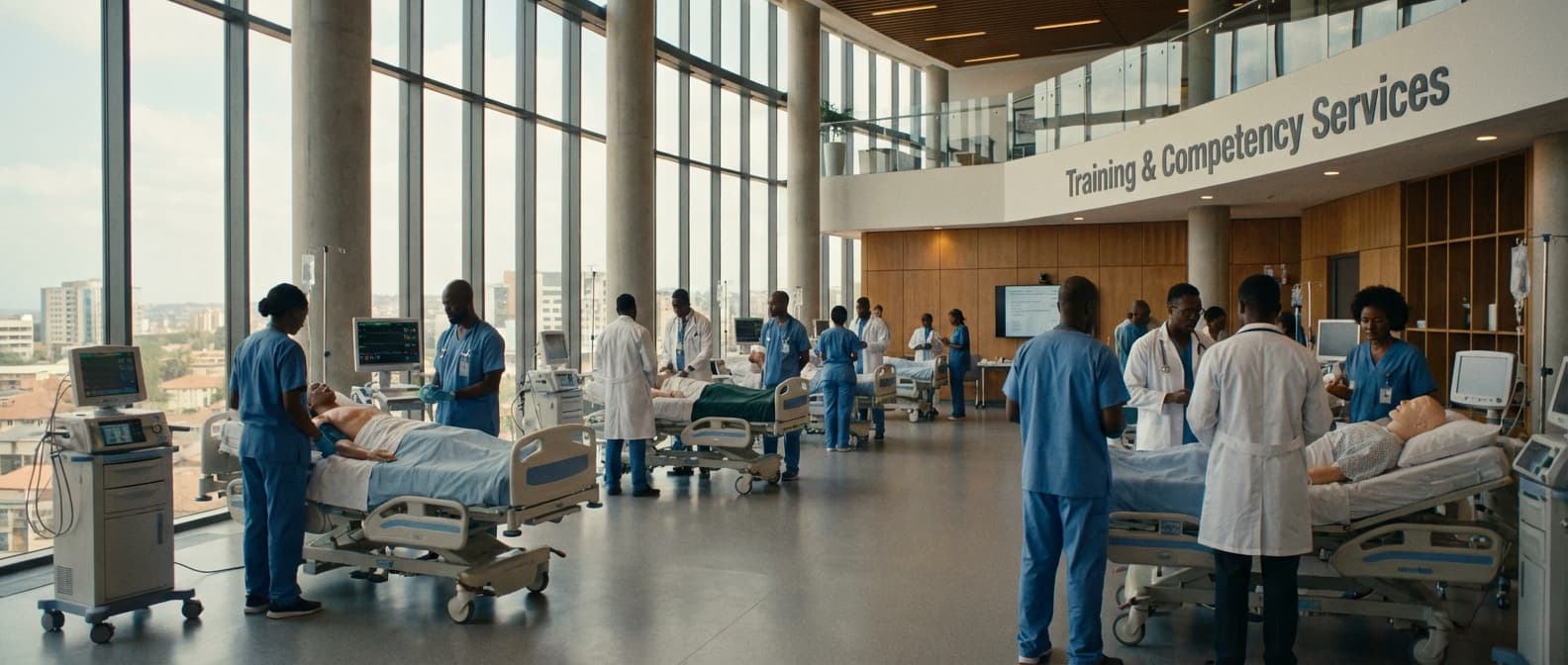
Biomedical Engineering First-Line Support Training Service in Angola
Engineering Excellence & Technical Support
Biomedical Engineering First-Line Support Training Service High-standard technical execution following OEM protocols and local regulatory frameworks.
Diagnostic Equipment Mastery
Empowering Angolan technicians with hands-on training in the operation, routine maintenance, and basic troubleshooting of critical diagnostic medical devices, ensuring accurate and timely patient assessments.
Imaging Modality Safety & Functionality
Focusing on the safe use, preventive checks, and fundamental troubleshooting for common medical imaging equipment (e.g., X-ray, ultrasound), crucial for patient care and operational efficiency in Angolan healthcare facilities.
Patient Monitoring Systems Proficiency
Developing expertise in setting up, calibrating, and performing basic diagnostics on vital patient monitoring systems (e.g., ECG, SpO2, NIBP) to ensure continuous and reliable patient vital sign tracking in Angolan hospitals and clinics.
What Is Biomedical Engineering First-line Support Training Service In Angola?
Biomedical Engineering First-Line Support Training Service in Angola refers to the provision of foundational technical training and skill development for individuals tasked with initial troubleshooting, maintenance, and operational support of medical devices and equipment within healthcare facilities across Angola. This service aims to empower local personnel to address common equipment malfunctions, perform routine preventive maintenance, and ensure the safe and effective utilization of biomedical technology, thereby enhancing healthcare service delivery and reducing reliance on external expertise for basic issues. The training focuses on practical skills, diagnostic procedures, and adherence to safety protocols, tailored to the specific medical device landscape prevalent in Angolan healthcare settings.
| Target Audience | Needs Addressed | Typical Use Cases |
|---|---|---|
| Biomedical Technicians (Entry-Level): Individuals newly recruited or transitioning into biomedical support roles. | Lack of practical experience with medical equipment; need for foundational technical skills and knowledge of maintenance procedures. | Performing daily equipment checks; responding to user reports of minor equipment malfunctions; executing scheduled preventive maintenance tasks; assisting senior technicians with more complex repairs. |
| Clinical Staff (Nurses, Doctors, Lab Technicians): Healthcare professionals who directly operate medical devices. | Limited understanding of equipment limitations, basic troubleshooting, and proper usage, leading to potential damage or misuse. | Identifying and reporting equipment issues accurately; performing basic user-level cleaning and maintenance; understanding alarm conditions and basic corrective actions; ensuring proper device setup and connection. |
| Healthcare Facility Management: Administrators responsible for resource allocation and operational efficiency. | Need to optimize equipment uptime and reduce maintenance costs; improve the overall reliability of the medical technology infrastructure. | Ensuring adequate staffing of trained first-line support personnel; planning for ongoing training needs; allocating resources for routine maintenance to prevent costly breakdowns. |
| Local Government Health Departments/Agencies: Overseeing the quality and accessibility of healthcare services. | Ensuring that healthcare facilities have the capacity to maintain and operate essential medical equipment effectively, contributing to improved public health outcomes. | Developing national standards for biomedical support; identifying training gaps within the healthcare system; supporting the establishment of sustainable biomedical engineering departments. |
Key Components of Biomedical Engineering First-Line Support Training Service in Angola:
- Device Familiarization and Operation: Training on the fundamental principles of operation, user interfaces, and basic functionalities of commonly used medical devices (e.g., vital signs monitors, infusion pumps, ECG machines, basic laboratory equipment).
- Preventive Maintenance Procedures: Instruction on scheduled checks, cleaning protocols, calibration verification (where applicable), and battery management to prolong equipment lifespan and ensure reliability.
- Basic Troubleshooting and Fault Diagnosis: Development of systematic approaches to identify common error codes, perform simple diagnostics, and resolve basic technical issues without extensive disassembly.
- Safety Standards and Protocols: Education on electrical safety, infection control procedures related to equipment handling, and safe disposal of consumables or damaged parts.
- Documentation and Reporting: Training on maintaining accurate records of maintenance activities, reported issues, and escalation procedures for complex problems.
- Inventory Management Principles: Basic understanding of equipment inventory, tracking, and reporting for asset management purposes.
- Context-Specific Training: Tailoring of training content to the specific models of medical equipment available in Angolan healthcare facilities, considering local environmental factors and resource constraints.
Who Needs Biomedical Engineering First-line Support Training Service In Angola?
Biomedical Engineering First-Line Support Training Service in Angola is designed to empower healthcare professionals and institutions with the essential skills to maintain and troubleshoot medical equipment. This training is crucial for ensuring the reliable operation of vital healthcare technology, thereby improving patient care and operational efficiency within the Angolan healthcare sector.
| Customer Type | Specific Departments/Roles | Need for Training |
|---|---|---|
| Hospitals and Clinics | Biomedical Engineering Departments, Clinical Engineering Teams, Hospital Technicians, Nursing Supervisors (for basic troubleshooting of certain devices) | Essential for immediate identification and resolution of common equipment malfunctions, reducing downtime, ensuring patient safety, and optimizing the lifespan of medical devices. |
| Government Health Ministries and Agencies | Health Infrastructure Department, Procurement and Logistics Units, National Biomedical Engineering Directorate (if established) | To develop standardized training protocols, ensure a skilled workforce for public health facilities, and inform procurement decisions based on available maintenance capacity. |
| Medical Equipment Suppliers and Distributors | Field Service Technicians, Installation Engineers, Customer Support Staff | To provide accredited and effective first-line support to their clients, enhancing customer satisfaction, reducing the need for extensive on-site interventions by senior technicians, and building local capacity. |
| NGOs and International Aid Organizations | Project Managers (Healthcare Focus), Logistics Officers, Field Technicians | To ensure the sustainability of donated or procured medical equipment in remote or underserved areas, enabling local personnel to perform basic maintenance and identify issues before they become critical. |
| Academic and Training Institutions | Biomedical Engineering Lecturers, Technical Trainers, Students in healthcare technology programs | To integrate practical, hands-on first-line support skills into their curriculum, producing graduates with immediate employability and a foundational understanding of medical equipment maintenance. |
Target Customers and Departments for Biomedical Engineering First-Line Support Training in Angola:
- Hospitals and Clinics (Public and Private): From large referral hospitals to smaller community clinics, all facilities relying on medical equipment are primary beneficiaries.
- Government Health Ministries and Agencies: Organizations responsible for national health infrastructure planning and oversight.
- Medical Equipment Suppliers and Distributors: Companies that sell, install, and service medical devices in Angola.
- Non-Governmental Organizations (NGOs) and International Aid Organizations: Entities involved in providing healthcare services and infrastructure development in Angola.
- Academic and Training Institutions: Universities and vocational schools that offer healthcare-related programs.
Biomedical Engineering First-line Support Training Service Process In Angola
This document outlines the standard workflow for providing Biomedical Engineering First-Line Support Training Services in Angola, from the initial client inquiry to the successful execution and completion of the training. The process is designed to be clear, efficient, and ensure that all client needs are met effectively.
| Step | Description | Responsible Party | Key Deliverables/Outcomes | Timeline (Indicative) |
|---|---|---|---|---|
| 1.1 Inquiry Received | Client contacts the training provider to request information or express interest in first-line biomedical engineering support training. | Client, Training Provider Sales/Inquiry Team | Acknowledgement of inquiry, preliminary information provided. | 1-2 business days |
| 1.2 Initial Consultation | A meeting (in-person or virtual) to understand the client's general requirements, organizational structure, and initial training goals. | Training Provider Sales/Consultant, Client Representative | Understanding of basic needs, identification of key stakeholders. | 3-5 business days after inquiry |
| 2.1 Detailed Needs Assessment | In-depth analysis of specific equipment to be covered, existing technician skill levels, desired learning objectives, and logistical constraints. | Training Provider Technical Expert/Consultant, Client's Biomedical Engineering Department | Detailed training needs report, list of target equipment and skills. | 1-2 weeks |
| 2.2 Training Program Customization | Development of a tailored training curriculum, including modules, practical exercises, and assessment methods. | Training Provider Technical Expert/Curriculum Developer | Draft training curriculum, session plans, and materials list. | 1-2 weeks |
| 2.3 Proposal Submission | Formal presentation of the proposed training program, including scope, objectives, methodology, duration, team, and cost. | Training Provider Sales/Project Manager | Formal training proposal document. | 2-3 weeks after needs assessment |
| 3.1 Proposal Review & Negotiation | Client reviews the proposal, asks clarifying questions, and negotiates terms and conditions. | Client, Training Provider Sales/Project Manager | Feedback on proposal, agreed-upon terms. | 1-2 weeks |
| 3.2 Contract/Agreement Signing | Formal signing of the training service agreement outlining all agreed-upon terms, deliverables, and payment schedules. | Authorized Representatives of Client and Training Provider | Signed training contract/agreement. | 1 week after negotiation |
| 3.3 Scheduling & Logistics Confirmation | Finalization of training dates, venue confirmation, participant list, equipment availability, and any necessary travel arrangements. | Training Provider Project Manager, Client Logistics Coordinator | Confirmed training schedule, logistics plan, participant roster. | 1-2 weeks |
| 4.1 Pre-Training Material Distribution | Issuance of any preparatory reading materials, pre-course assessments, or introductory information to participants. | Training Provider Project Manager | Pre-training package for participants. | 1 week before training |
| 4.2 Training Execution | Delivery of the training program by qualified instructors, encompassing theoretical sessions, practical demonstrations, hands-on exercises, and Q&A. | Training Provider Instructors, Participants | Completed training modules, practical skills demonstrated, participant engagement. | As per agreed schedule (e.g., 3-5 days) |
| 4.3 On-site Support during Training | Immediate assistance and clarification provided by trainers to address participant queries and troubleshoot any issues during practical sessions. | Training Provider Instructors | Real-time problem-solving, enhanced learning experience. | Throughout training duration |
| 4.4 Training Assessment & Feedback Collection | Post-training assessments (quizzes, practical evaluations) to gauge learning and collection of feedback from participants and supervisors. | Training Provider Instructors/Assessors, Participants, Client Supervisors | Assessment results, participant feedback forms. | Last day of training |
| 5.1 Post-Training Reporting | Compilation and submission of a comprehensive report detailing training activities, participant performance, assessment outcomes, and key observations. | Training Provider Project Manager | Training completion report. | 1 week after training completion |
| 5.2 Certification Issuance | Distribution of certificates of completion to participants who have successfully met the training objectives. | Training Provider Administration | Certificates of completion. | 1-2 weeks after reporting |
| 5.3 Follow-up Support (as agreed) | Provision of limited post-training support, answering specific technical questions or offering guidance on initial implementation. | Training Provider Technical Support/Project Manager | Resolved follow-up queries, continued client confidence. | As per contractual agreement (e.g., 30 days) |
| 5.4 Training Evaluation & Improvement | Internal review of the training process and outcomes to identify areas for improvement in future service delivery. | Training Provider Management | Internal process improvement recommendations. | Ongoing |
Biomedical Engineering First-Line Support Training Service Process in Angola
- {"title":"Phase 1: Inquiry & Initial Consultation","description":"The process begins when a potential client (e.g., a hospital, clinic, or healthcare institution) expresses interest in receiving first-line biomedical engineering support training."}
- {"title":"Phase 2: Needs Assessment & Proposal Development","description":"A detailed assessment of the client's specific needs, existing infrastructure, and desired training outcomes is conducted."}
- {"title":"Phase 3: Agreement & Scheduling","description":"Upon acceptance of the proposal, formal agreements are put in place, and the training schedule is finalized."}
- {"title":"Title: Phase 4: Training Delivery","description":"The core of the service involves the comprehensive delivery of the agreed-upon training program."}
- {"title":"Phase 5: Post-Training Support & Evaluation","description":"Following the training, ongoing support and an evaluation of the training's effectiveness are provided."}
Biomedical Engineering First-line Support Training Service Cost In Angola
The cost of first-line support training services for biomedical engineers in Angola can vary significantly based on several factors. These factors influence the overall pricing structure, making it crucial for organizations to understand them when budgeting for such training. The training generally aims to equip biomedical engineers with the foundational skills to troubleshoot, maintain, and perform initial repairs on medical equipment, ensuring operational continuity and patient safety.
Key pricing factors include:
- Training Provider Reputation and Accreditation: Established training centers with a strong track record and accredited programs often command higher fees due to their perceived quality, experienced instructors, and certified curriculum.
- Course Content and Specialization: The depth and breadth of the curriculum are critical. Basic, generalist first-line support training will be less expensive than specialized courses focusing on specific types of medical devices (e.g., imaging equipment, laboratory analyzers, patient monitoring systems).
- Duration and Intensity of Training: Longer, more intensive courses that involve hands-on practical sessions, simulation labs, and extensive theoretical knowledge transfer will naturally incur higher costs.
- Instructor Qualifications and Experience: Highly experienced and certified biomedical engineers or medical device specialists as instructors will contribute to a higher training cost.
- Location and Logistics: Training conducted at the client's site might involve additional travel and accommodation costs for trainers, while off-site training at a dedicated facility might include venue rental and catering expenses.
- Training Materials and Resources: The provision of comprehensive training manuals, digital resources, access to simulation software, and potentially loaner equipment for practical exercises will impact the overall price.
- Class Size and Customization: Smaller class sizes often lead to more personalized attention and are thus priced higher. Customized training programs tailored to an organization's specific equipment inventory and needs will also have a premium.
- Post-Training Support and Certification: Inclusion of follow-up support, technical assistance, or formal certification upon successful completion of the course will add to the cost.
Pricing Ranges in Angolan Kwanza (AOA):
It's challenging to provide exact figures without specific course details, but a general estimation for first-line support training services for biomedical engineers in Angola can range from 200,000 AOA to 1,500,000 AOA per participant for a standard to moderately specialized course. Highly specialized, in-depth programs or those delivered by international accredited bodies could exceed this range.
Breakdown of potential cost components:
- Basic/Introductory Courses (1-3 days): 200,000 AOA - 500,000 AOA
- Intermediate/General First-Line Support (3-5 days): 500,000 AOA - 900,000 AOA
- Advanced/Specialized First-Line Support (5+ days, specific equipment): 900,000 AOA - 1,500,000 AOA (and potentially higher)
These are indicative ranges and can fluctuate based on the aforementioned factors and the prevailing economic conditions in Angola.
| Training Type/Duration | Estimated Cost Range (AOA) |
|---|---|
| Basic/Introductory Courses (1-3 days) | 200,000 - 500,000 |
| Intermediate/General First-Line Support (3-5 days) | 500,000 - 900,000 |
| Advanced/Specialized First-Line Support (5+ days, specific equipment) | 900,000 - 1,500,000+ |
Key Factors Influencing Biomedical Engineering First-Line Support Training Costs in Angola
- Training Provider Reputation and Accreditation
- Course Content and Specialization
- Duration and Intensity of Training
- Instructor Qualifications and Experience
- Location and Logistics
- Training Materials and Resources
- Class Size and Customization
- Post-Training Support and Certification
Affordable Biomedical Engineering First-line Support Training Service Options
This document outlines affordable first-line biomedical engineering support training service options, emphasizing value bundles and cost-saving strategies to equip new technicians with essential skills. Effective first-line support is crucial for maintaining medical equipment uptime, ensuring patient safety, and reducing the burden on senior engineers. Investing in targeted training for new hires is a proactive approach to building a competent and efficient biomedical engineering department.
| Cost-Saving Strategy | Description | Example Application |
|---|---|---|
| Value Bundling | Combining multiple essential training components into a single package at a reduced price compared to purchasing them individually. This encourages comprehensive training and offers better overall value. | A 'Core Biomedical Technician Fundamentals Bundle' that includes electrical safety, basic troubleshooting, and introduction to vital signs monitors at a 15% discount compared to separate module costs. |
| Online/Blended Learning Models | Utilizing a mix of self-paced online modules for theoretical knowledge and limited in-person sessions for practical application. This reduces travel, facility, and instructor time costs. | A 6-week program with 4 weeks of online modules and 2 weeks of on-site practical workshops for a cohort of 10 new technicians. |
| Train-the-Trainer Programs | Empowering experienced internal biomedical engineers to deliver certain training modules. This leverages existing expertise and reduces reliance on external trainers. | A dedicated session for senior engineers to become certified trainers for the 'Biomedical Device Preventative Maintenance' module. |
| Group/Volume Discounts | Offering reduced per-person training costs for larger groups of trainees. This incentivizes organizations to train multiple new hires simultaneously. | A 10% discount for training 5-10 individuals, and a 15% discount for training more than 10 individuals from the same institution. |
| Customizable Training Paths | Allowing organizations to select specific modules relevant to their equipment inventory and organizational needs, avoiding unnecessary costs for irrelevant content. | A hospital specializing in imaging can opt for a specialized module on X-ray equipment troubleshooting, rather than a general medical device course. |
| Partnerships with Educational Institutions | Collaborating with vocational schools or community colleges to integrate training components into their existing curriculum or offer specialized co-branded courses. | A partnership with a local technical college to offer a 'Biomedical Equipment Technician Certificate' program, with the service provider contributing specific training content. |
| Subscription-Based Access | Providing ongoing access to a library of training resources and updates for a recurring fee. This is cost-effective for continuous learning and onboarding new hires over time. | An annual subscription that grants access to all core training modules, new content releases, and refresher courses for an unlimited number of new technicians. |
Value-Added Components of Training Services
- Core Skills Modules: Foundational knowledge in electrical safety, basic mechanical troubleshooting, common medical device principles (e.g., vital signs monitoring, infusion pumps), and diagnostic tool usage.
- Regulatory Compliance Basics: Introduction to relevant standards (e.g., IEC 60601 series), documentation requirements, and safety protocols.
- Troubleshooting Methodologies: Structured approaches to problem identification, root cause analysis, and effective solution implementation.
- Hands-on Practical Sessions: Simulated scenarios and practical exercises using common biomedical equipment.
- Soft Skills Development: Communication, customer service, teamwork, and report writing for effective interaction with clinical staff and reporting.
- Digital Learning Resources: Access to online modules, video tutorials, knowledge bases, and interactive quizzes for self-paced learning and reinforcement.
- Mentorship/Shadowing Program Integration: Guidance on how to effectively integrate trainees into existing mentorship or shadowing programs.
- Certification Opportunities: Preparation and potential for industry-recognized certifications to validate acquired skills.
Verified Providers In Angola
In Angola's burgeoning healthcare sector, discerning the best healthcare providers is paramount. Franance Health stands out as a leading network of verified and credentialed healthcare professionals, offering a benchmark for quality and reliability. Their rigorous vetting process ensures that every provider within their network meets the highest standards of medical expertise, ethical practice, and patient-centered care. This commitment to excellence makes Franance Health the optimal choice for individuals seeking dependable and high-quality medical services in Angola.
| Provider Type | Franance Health Verification Standard | Key Benefits for Patients |
|---|---|---|
| Hospitals | Accredited by national and international bodies, adherence to strict hygiene and safety protocols, robust quality management systems. | Access to state-of-the-art facilities, comprehensive treatment options, and highly trained medical staff. |
| Clinics | Licensed by the Ministry of Health, qualified medical professionals with verified licenses and certifications, established patient record management. | Convenient access to primary and specialized care, personalized attention, and continuity of care. |
| Specialist Doctors | Board-certified in their respective fields, proven track record of successful treatments, adherence to professional codes of conduct. | Expert diagnosis and treatment for complex medical conditions, access to specialized knowledge and advanced techniques. |
| Diagnostic Laboratories | Certified by regulatory bodies, utilization of advanced diagnostic equipment, strict quality control measures for accurate results. | Reliable and timely diagnostic results, supporting effective treatment planning and monitoring. |
Why Franance Health Providers are the Best Choice:
- Rigorous Credentialing and Verification Process
- Commitment to Ethical Medical Practices
- Focus on Patient-Centered Care and Outcomes
- Access to a Diverse Range of Medical Specialties
- Enhanced Patient Trust and Confidence
Scope Of Work For Biomedical Engineering First-line Support Training Service
This Scope of Work (SOW) outlines the requirements for a Biomedical Engineering First-Line Support Training Service. The service aims to equip a designated group of personnel with the essential knowledge and skills to perform initial troubleshooting, basic maintenance, and effective escalation of biomedical equipment issues. The training will focus on common issues encountered in a healthcare setting and will emphasize safety protocols and proper documentation procedures. The technical deliverables are designed to ensure a competent and confident first-line support team, ultimately contributing to improved equipment uptime and patient safety.
| Category | Standard Specification | Description | Verification Method |
|---|---|---|---|
| Training Content Relevance | Aligned with current biomedical equipment inventory and common failure modes | Curriculum must address the specific types of medical devices used by the client and the most frequent issues encountered. Prioritization of training on high-impact or critical equipment. | Review of training curriculum against client's equipment list and historical maintenance data. |
| Training Delivery Format | Blended learning approach: In-person/virtual instructor-led sessions combined with self-paced online modules and hands-on practical sessions | Optimal mix of theoretical knowledge transfer, interactive engagement, and practical skill development. Hands-on sessions must be conducted with actual or simulated equipment. | Observation of training sessions, review of online module content, assessment of practical exercise setup. |
| Instructor Qualifications | Certified Biomedical Technicians/Engineers with a minimum of 5 years of experience in clinical engineering and training delivery | Instructors must possess both technical expertise in biomedical equipment and proven experience in adult education and training. | Review of instructor CVs, certifications, and relevant experience documentation. |
| Safety Protocols Integration | Mandatory inclusion of patient and equipment safety procedures in all training modules | Training must emphasize electrical safety, biohazard handling, infection control, and proper lockout/tagout procedures applicable to biomedical equipment. | Audit of training materials and observation of practical sessions for safety compliance. |
| Troubleshooting Methodology | Systematic approach to problem identification, diagnosis, and resolution | Training on structured troubleshooting steps, using diagnostic tools effectively, and documenting findings accurately. | Evaluation of trainee performance in simulated troubleshooting scenarios. |
| Documentation Standards | Adherence to client's reporting and documentation policies | Training on accurate completion of service requests, incident reports, and preventive maintenance logs. | Review of sample documentation completed by trainees. |
| Competency Assessment | Multimodal assessment including written tests, practical demonstrations, and scenario-based evaluations | Clear pass/fail criteria for each assessment component. Minimum passing score for overall competency. | Review of assessment results and competency attainment reports. |
| Post-Training Support | Defined period of access to trainers/resources for follow-up questions and support | Establishment of a clear channel for ongoing learning and clarification of any doubts after the formal training concludes. | Confirmation of post-training support mechanism and availability. |
Technical Deliverables
- Comprehensive Training Curriculum Document
- Interactive Training Modules (e.g., presentations, simulations, hands-on exercises)
- Competency Assessment Tools (e.g., quizzes, practical skill evaluations)
- Troubleshooting Flowcharts and Checklists for common equipment issues
- User Manuals and Reference Guides for supported equipment
- Training Attendance and Completion Records
- Post-Training Support Plan (e.g., Q&A sessions, refresher materials)
- Final Training Report summarizing outcomes and recommendations
Service Level Agreement For Biomedical Engineering First-line Support Training Service
This Service Level Agreement (SLA) outlines the terms and conditions for the Biomedical Engineering First-Line Support Training Service, focusing on guaranteed response times and uptime for the training platform and associated support.
| Service Component | Uptime Guarantee | Response Time (Technical Support - Platform) | Response Time (Inquiry - Training Content) |
|---|---|---|---|
| Online Training Portal & Core Functionality | 99.5% Uptime (Excluding Scheduled Maintenance) | 4 Business Hours (for critical issues: platform inaccessible, login failures) | 8 Business Hours (for general inquiries: module access, feature clarification) |
| Training Module Access & Playback | 99.0% Availability (Content accessible) | 6 Business Hours (for issues preventing module completion) | 1 Business Day (for minor content errors or suggestions) |
| Technical Support Helpdesk | N/A (Support is provided during business hours) | 2 Business Hours (acknowledgement of ticket, initial assessment) | N/A |
Scope of Service
- Provision of access to the online training portal for Biomedical Engineering First-Line Support personnel.
- Availability of training modules, resources, and interactive exercises.
- Access to the helpdesk for technical issues related to the training platform.
- Timely responses to user inquiries regarding training content and platform functionality.
Frequently Asked Questions

Ready when you are
Let's scope your Biomedical Engineering First-Line Support Training Service in Angola project in Angola.

Scaling healthcare logistics and technical systems across the entire continent.