
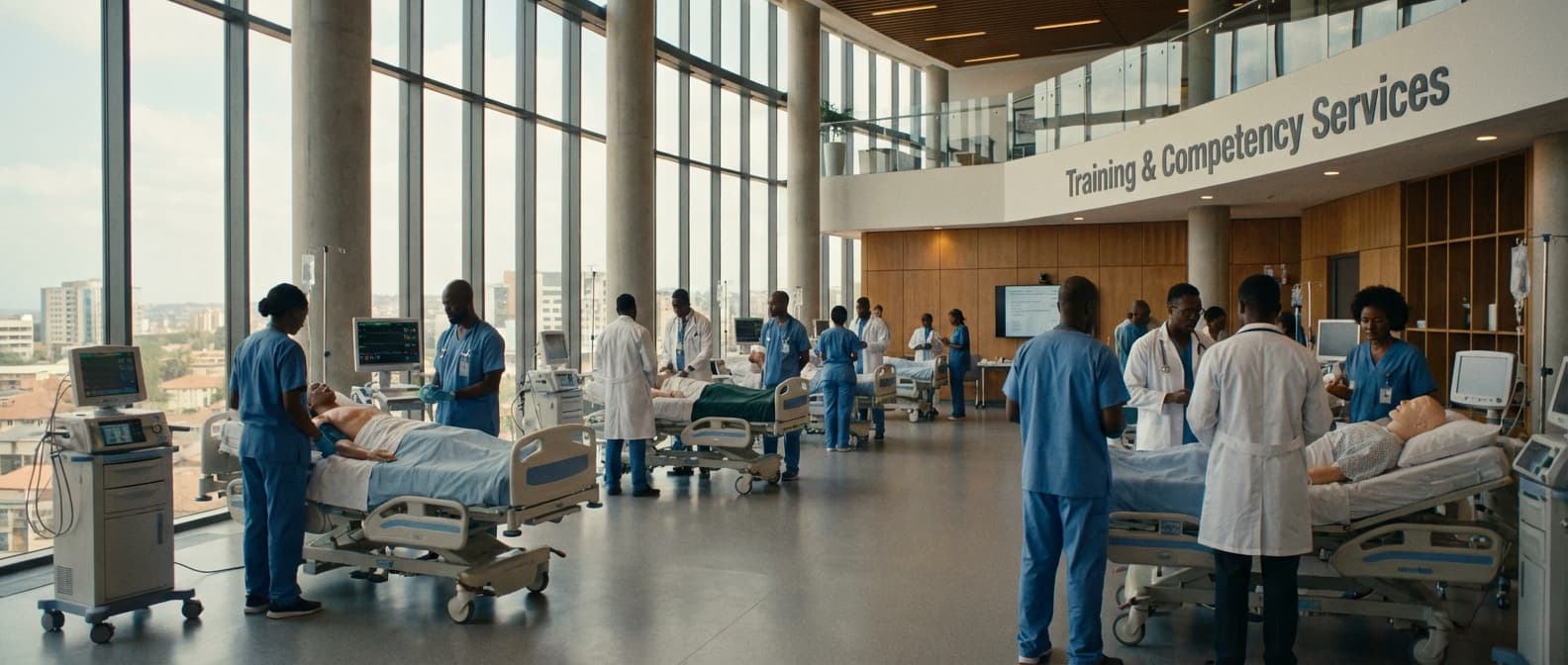
Anesthesia Workstation User Training Service in Angola
Engineering Excellence & Technical Support
Anesthesia Workstation User Training Service High-standard technical execution following OEM protocols and local regulatory frameworks.
Optimized Workflow Integration
Master the Anesthesia Workstation's intuitive interface and advanced features for seamless integration into your daily clinical workflow, reducing setup time and enhancing patient monitoring efficiency.
Advanced Ventilation Modes Mastery
Gain expert proficiency in utilizing all ventilation modes, from basic settings to complex pressure support and volume-controlled strategies, ensuring optimal patient respiratory support and safety.
Drug Delivery Precision & Safety
Achieve unparalleled accuracy in drug administration and monitoring. Our training covers precise dosage calculations, delivery system management, and real-time feedback mechanisms to minimize risks and maximize therapeutic effectiveness.
What Is Anesthesia Workstation User Training Service In Angola?
Anesthesia Workstation User Training Service in Angola refers to specialized educational programs designed to equip healthcare professionals in Angola with the knowledge and practical skills necessary to safely and effectively operate anesthesia workstations. These workstations are complex medical devices integrating multiple functions, including ventilation, gas delivery, monitoring, and drug administration, critical for patient care during surgical and procedural interventions. The service aims to ensure users understand the device's capabilities, limitations, proper setup, operation, troubleshooting, and maintenance procedures, thereby optimizing patient safety and clinical outcomes. The training is typically delivered by certified instructors, often representatives from the workstation manufacturers or specialized third-party training organizations, utilizing a combination of theoretical instruction, hands-on simulation, and practical application in a controlled environment.
| Who Needs the Service? | Typical Use Cases |
|---|---|
| Anesthesiologists | Operating Room (OR) procedures: General surgery, orthopedic surgery, cardiothoracic surgery, neurosurgery, etc. |
| Certified Registered Nurse Anesthetists (CRNAs) | Pediatric anesthesia: Specialized settings requiring precise control of ventilation and gas delivery for neonates and children. |
| Anesthesia Technicians/Assistants | Intensive Care Unit (ICU) settings: Providing mechanical ventilation and monitoring for critically ill patients. |
| Medical Residents and Trainees in Anesthesiology | Diagnostic and interventional procedures: Endoscopies, bronchoscopies, interventional radiology, and pain management procedures. |
| Healthcare Facilities (Hospitals, Surgical Centers) | Emergency and trauma care: Rapid and reliable administration of anesthesia and ventilation in urgent situations. |
| Medical Device Technicians (for maintenance and service personnel) | Remote or field anesthesia: Deployment in mobile surgical units or areas with limited infrastructure. |
Key Components of Anesthesia Workstation User Training Service:
- Device Anatomy and Physiology Integration: Understanding how the workstation's components (vaporizers, flow meters, ventilators, CO2 absorbers, etc.) interact with physiological principles of respiration and anesthesia delivery.
- Operational Procedures: Detailed instruction on starting up, setting parameters, connecting the patient circuit, selecting ventilation modes, and initiating anesthesia delivery.
- Monitoring and Alarm Management: Comprehensive training on interpreting displayed parameters (e.g., tidal volume, respiratory rate, FiO2, ETCO2, anesthetic gas concentrations), understanding alarm thresholds, and responding to critical alerts.
- Pharmacological Integration: Understanding how to deliver anesthetic agents, sedatives, and muscle relaxants through the workstation, including calibration and safety checks of vaporizers.
- Ventilation Strategies: Instruction on various ventilation modes (e.g., volume-controlled, pressure-controlled, synchronized intermittent mandatory ventilation), their applications, and patient-specific adjustments.
- Troubleshooting and Error Correction: Equipping users with the ability to identify common malfunctions, error codes, and implement appropriate corrective actions.
- Preventive Maintenance and Cleaning: Guidelines for routine cleaning, disinfection, and basic maintenance to ensure device longevity and prevent cross-contamination.
- Emergency Procedures: Training on how to manage equipment failures or patient emergencies related to workstation function.
- Regulatory Compliance and Best Practices: Adherence to local and international standards for anesthesia delivery and device utilization.
Who Needs Anesthesia Workstation User Training Service In Angola?
Anesthesia Workstation User Training Service is crucial for ensuring safe, efficient, and effective use of advanced anesthesia equipment in healthcare facilities across Angola. This specialized training is designed for medical professionals who operate and maintain anesthesia workstations, thereby directly impacting patient care outcomes. The service aims to equip users with the knowledge and practical skills necessary to utilize the full capabilities of these complex machines, troubleshoot common issues, and adhere to best practices in anesthesia delivery.
| Target Customer Segment | Primary Departments Requiring Training | Key Personnel to Train |
|---|---|---|
| Public Hospitals | Anesthesiology Department, Operating Room (OR), Intensive Care Unit (ICU), Emergency Department | Anesthesiologists, Nurse Anesthetists, Anesthesia Technicians, Critical Care Nurses |
| Private Hospitals & Surgical Centers | Anesthesiology Department, Operating Theatre, Post-Anesthesia Care Unit (PACU) | Anesthesiologists, Registered Nurses (Anesthesia), Surgical Technicians |
| Specialized Clinics | Anesthesiology, Cardiology, Neurology, Pain Management Units | Specialist Anesthesiologists, Anesthesia Assistants, Relevant Clinical Staff |
| Teaching Hospitals & Medical Universities | Anesthesiology Departments, Simulation Centers, Clinical Training Facilities | Anesthesiology Faculty, Residents (Anesthesia), Medical Students, Anesthesia Technicians in Training |
Target Customers and Departments in Angola
- Hospitals (Public and Private)
- Surgical Centers
- Specialized Clinics (e.g., Cardiac, Neurological)
- Teaching Hospitals and Medical Universities
Anesthesia Workstation User Training Service Process In Angola
This document outlines the standard workflow for the Anesthesia Workstation User Training Service Process in Angola, from initial inquiry to the successful execution of the training. This structured approach ensures efficient communication, accurate needs assessment, and effective knowledge transfer for healthcare professionals operating anesthesia workstations.
| Phase | Stage | Key Activities | Responsible Parties | Deliverables |
|---|---|---|---|---|
| 1 | Inquiry and Initial Consultation |
| Client (Healthcare Facility), Service Provider (Training Department/Sales) | Initial contact established, understanding of client's basic requirements. |
| 2 | Needs Assessment and Proposal Development |
| Service Provider (Training Specialists, Curriculum Developers), Client (Clinical Staff, Procurement) | Detailed training needs analysis report, Customized Training Proposal. |
| 3 | Contract and Scheduling |
| Client (Legal/Procurement, Clinical Management), Service Provider (Sales, Legal) | Signed Training Contract, Confirmed Training Schedule. |
| 4 | Training Preparation |
| Service Provider (Training Facilitators, Logistics Team), Client (Facility Management, IT Support) | Prepared Training Materials, Confirmed Logistics, Participant Information Pack. |
| 5 | Training Execution |
| Service Provider (Certified Trainers), Client (Trainees) | Delivered Training Sessions, Trainee Engagement, Initial Competency Assessment. |
| 6 | Post-Training Follow-up and Support |
| Service Provider (Training Department, Technical Support), Client (Clinical Management) | Training Certificates, Feedback Report, Post-Training Support Plan, Impact Assessment Report. |
Anesthesia Workstation User Training Service Process in Angola
- Phase 1: Inquiry and Initial Consultation
- Phase 2: Needs Assessment and Proposal Development
- Phase 3: Contract and Scheduling
- Phase 4: Training Preparation
- Phase 5: Training Execution
- Phase 6: Post-Training Follow-up and Support
Anesthesia Workstation User Training Service Cost In Angola
The cost of Anesthesia Workstation User Training Services in Angola can vary significantly based on several factors, making it challenging to provide a single definitive price. These services are crucial for ensuring medical professionals can safely and effectively operate complex anesthesia machines, minimizing risks and optimizing patient care. The pricing is typically influenced by the scope and duration of the training, the expertise of the trainers, the location of the training, and the specific anesthesia workstation model being covered. Negotiations with training providers, often either the workstation manufacturer/distributor or specialized third-party training companies, will also play a role. For accurate budgeting, it's essential to obtain quotes directly from service providers.
| Training Scope | Estimated Cost Range (Kz) | Notes |
|---|---|---|
| Basic User Training (1-2 days) | 150,000 - 400,000 | Covers fundamental operations, safety checks, and basic troubleshooting. May be for a small group. |
| Intermediate User Training (2-3 days) | 300,000 - 700,000 | Includes more in-depth features, advanced monitoring, ventilation modes, and common error management. Suitable for teams. |
| Advanced/Specialized Training (3-5 days) | 500,000 - 1,200,000+ | Focuses on complex functionalities, specialized applications, maintenance basics, and scenario-based training. Often includes on-site delivery. |
| On-site Training Surcharge | 100,000 - 300,000+ | Covers travel, accommodation, and per diem for trainers, depending on the remoteness and duration. |
Key Pricing Factors for Anesthesia Workstation User Training in Angola
- Training Duration and Depth: Shorter, introductory sessions will be less expensive than comprehensive, multi-day courses covering advanced features and troubleshooting.
- Trainer's Expertise and Credentials: Highly experienced and certified trainers, particularly those with specialized knowledge of specific workstation brands, may command higher fees.
- Number of Participants: Costs are often per-person, or there might be a fixed fee for a group, influencing the overall cost-effectiveness for larger teams.
- Location of Training: On-site training at a hospital in Angola will likely incur additional costs for travel, accommodation, and per diem for trainers, compared to training at a provider's facility.
- Anesthesia Workstation Model: Training for basic models might be more affordable than for advanced, feature-rich workstations with complex software interfaces.
- Customization Requirements: If the training needs to be tailored to specific clinical protocols or departmental workflows, this can add to the cost.
- Materials and Resources: The inclusion of training manuals, simulations, or access to online learning platforms can affect the final price.
- Post-Training Support: Some packages may include follow-up support or refresher courses, which would be factored into the overall cost.
- Provider Type: Training directly from the manufacturer or authorized distributor might have different pricing structures than from independent training organizations.
Affordable Anesthesia Workstation User Training Service Options
Providing accessible and effective user training for affordable anesthesia workstations is crucial for ensuring safe and efficient patient care. This service aims to empower healthcare professionals with the knowledge and skills to operate these systems confidently. We offer flexible training options designed to meet diverse institutional needs and budgets, emphasizing value bundles and cost-saving strategies.
| Training Package | Description | Value Proposition | Cost-Saving Strategies |
|---|---|---|---|
| Basic Proficiency Bundle | Covers fundamental operation, safety features, and basic troubleshooting for one workstation model. Includes virtual modules and a digital user manual. | Ensures core competency for new users at a minimal investment. | Leverages digital content to reduce travel and material costs. Ideal for institutions with experienced staff who need specific model training. |
| Standard Operator Bundle | Includes on-site training for up to 10 staff members, covering all core functionalities, advanced features, and common clinical scenarios. Comes with printed manuals and a competency assessment. | Provides a well-rounded understanding for a typical department, enhancing team efficiency and reducing errors. | Group training discounts for multiple attendees. Reduced per-user cost compared to individual sessions. |
| Comprehensive Clinical Bundle | Offers extensive on-site and virtual training for multiple workstation models and advanced applications. Includes simulation-based training, departmental workflow integration, and a dedicated support line for 6 months. | Maximizes the utility of the workstation, supports complex procedures, and ensures long-term safe and effective use. | Multi-year training contracts with bundled discounts. Training package tailored to specific institutional needs, avoiding unnecessary modules. Train-the-trainer option to build internal expertise. |
| Customizable Training Solutions | Tailored training programs based on specific institutional requirements, existing skill sets, and budget constraints. Can be a mix of on-site, virtual, and self-paced learning. | Guarantees that training is relevant, efficient, and cost-effective for unique operational environments. | Flexible scheduling to minimize disruption. Focus on essential modules to reduce overall training time and cost. Integration with existing hospital training platforms. |
Key Training Service Components
- On-site practical training sessions for hands-on experience.
- Remote virtual training modules with live Q&A.
- Comprehensive user manuals and quick reference guides.
- Competency assessments and certification.
- Ongoing technical support and refresher courses.
Verified Providers In Angola
In Angola's evolving healthcare landscape, identifying trustworthy and competent healthcare providers is paramount for individuals seeking quality medical services. Franance Health stands out as a beacon of reliability, offering a network of verified providers that ensure patients receive the highest standard of care. This document outlines the credentials that make Franance Health and its affiliated providers the superior choice for your health needs in Angola.
| Credential Type | Verification Standard | Impact on Patient Care |
|---|---|---|
| Medical Licensing and Certification | Official government and professional body validation of qualifications. | Guarantees that providers possess the fundamental knowledge and skills required to practice medicine safely and effectively. |
| Professional Experience | Review of past practice history, specialization, and years in practice. | Ensures that patients are treated by experienced practitioners who have successfully managed a wide range of medical cases. |
| Continuing Medical Education (CME) | Mandatory participation in recognized CME programs and workshops. | Keeps providers updated with the latest medical research, diagnostic techniques, and treatment options, leading to more informed and effective care. |
| Facility Accreditation | Compliance with national and international healthcare facility standards (e.g., infection control, safety protocols). | Ensures a safe, clean, and well-equipped environment for medical procedures and patient recovery. |
| Ethical Conduct and Professionalism | Background checks and review of professional conduct records. | Builds trust and confidence by ensuring providers operate with integrity, respect patient confidentiality, and adhere to ethical medical practices. |
| Specialty Board Certification | Certification by recognized boards in specific medical specialties. | Confirms a high level of expertise and specialized knowledge in a particular field of medicine, crucial for complex health issues. |
Key Credentials of Franance Health Verified Providers:
- Rigorous Vetting Process: Franance Health employs a multi-stage vetting process that scrutinizes the qualifications, experience, and ethical standing of every healthcare professional and facility in its network. This includes verification of medical licenses, certifications, and professional affiliations.
- Specialized Expertise: Providers are selected based on their demonstrated expertise in various medical specialties, ensuring that patients are connected with the right doctor for their specific condition, from general practitioners to highly specialized surgeons.
- Commitment to Continuous Professional Development: Franance Health mandates that its affiliated providers engage in ongoing training and professional development, keeping them abreast of the latest medical advancements, treatment protocols, and technological innovations.
- Adherence to International Standards: Verified providers are committed to upholding international healthcare quality and safety standards, ensuring that treatment and patient care meet global benchmarks.
- Patient-Centric Approach: Franance Health prioritizes a patient-centric philosophy. Verified providers are expected to demonstrate empathy, clear communication, and a dedication to personalized care plans that cater to individual patient needs and preferences.
- Technological Integration: Many Franance Health verified providers leverage modern medical technology and digital health solutions to enhance diagnostic accuracy, treatment efficacy, and patient accessibility.
- Robust Infrastructure and Facilities: Partnering healthcare facilities are assessed for their infrastructure, equipment, hygiene standards, and overall capacity to deliver comprehensive medical services.
- Transparent Pricing and Billing: Franance Health promotes transparency in healthcare costs. Verified providers are committed to clear and upfront pricing structures, minimizing unexpected expenses for patients.
- Positive Patient Feedback and Outcomes: Franance Health actively monitors patient feedback and clinical outcomes, ensuring that its network consistently delivers satisfactory results and positive patient experiences.
Scope Of Work For Anesthesia Workstation User Training Service
This Scope of Work (SOW) outlines the requirements for providing comprehensive user training services for the Anesthesia Workstation. The training will ensure that qualified healthcare professionals can safely and effectively operate the Anesthesia Workstation, understand its features, and perform routine maintenance. This document specifies the technical deliverables and standard specifications for the training program.
| Deliverable | Description | Format/Medium | Standard Specification |
|---|---|---|---|
| Anesthesia Workstation User Manual (Digital) | Comprehensive guide covering all aspects of the Anesthesia Workstation's operation, features, and maintenance. | Latest approved version, searchable, with clear diagrams and illustrations. Minimum resolution for images. | |
| Instructor-Led Training Sessions | On-site or remote training delivered by certified instructors. | In-person sessions, Live Webinars | Minimum 8 hours per session, tailored to user group (e.g., anesthesiologists, nurse anesthetists, technicians). Instructor-to-participant ratio not exceeding 1:6. |
| Hands-on Practical Training Module | Supervised practical sessions allowing users to operate the Anesthesia Workstation. | Simulation Lab, Actual Workstation (if applicable) | Each participant must complete a minimum of 4 hours of supervised hands-on operation. Scenarios to cover routine procedures and common emergencies. |
| Training Presentation Materials | Slides and visual aids used during instructor-led sessions. | PowerPoint Presentation (.pptx), PDF | Professionally designed, aligned with user manual content, and incorporating interactive elements where appropriate. |
| Assessment and Evaluation Forms | Tools to assess user comprehension and provide feedback on the training. | Digital Forms (e.g., Google Forms, SurveyMonkey), Printable PDFs | Includes knowledge-based questions (multiple choice, short answer) and practical skill observation checklists. Feedback section for participants to evaluate training quality. |
| Certificate of Completion | Document awarded to participants who successfully complete the training. | Digital (PDF), Printable | Includes participant name, training date, Anesthesia Workstation model, and issuing organization's seal/logo. |
| Post-Training Support Plan | Outline of resources and channels available for users after the training. | Document (PDF) | Includes contact information for technical support, access to online FAQs, and procedure for requesting refresher training. |
Training Objectives
- Familiarize users with the Anesthesia Workstation's hardware and software components.
- Train users on the safe and correct setup, calibration, and operation of the Anesthesia Workstation.
- Educate users on the interpretation of monitoring parameters and alarm management.
- Instruct users on essential maintenance procedures and troubleshooting common issues.
- Ensure users are aware of all safety features and emergency procedures related to the Anesthesia Workstation.
- Provide hands-on experience with the Anesthesia Workstation in a simulated clinical environment.
Service Level Agreement For Anesthesia Workstation User Training Service
This Service Level Agreement (SLA) outlines the terms and conditions for the Anesthesia Workstation User Training Service provided by [Your Company Name] to [Client Name]. It defines the expected response times for support requests and the uptime guarantees for the training platform and associated resources.
| Service Component | Service Level Objective (SLO) | Measurement Method | Remedy for Non-Compliance |
|---|---|---|---|
| Technical Support Response Time (Standard Hours) | 90% of critical support requests acknowledged within 4 business hours. | Ticket submission timestamp via portal/email and internal response timestamp. | Service credit of 5% of monthly training fee for each incident where SLO is not met. |
| Technical Support Response Time (24/7 Emergency) | 100% of emergency support requests acknowledged within 2 business hours. | Ticket submission timestamp via dedicated emergency channel and internal response timestamp. | Service credit of 10% of monthly training fee for each incident where SLO is not met. |
| Training Platform Uptime | 99.5% uptime during scheduled training hours. | Monitoring of platform availability via third-party uptime monitoring tools. | Service credit of 5% of monthly training fee for every 1% of downtime exceeding the guaranteed uptime. |
| Training Content Availability | 99.9% availability of training materials and resources. | Monitoring of content access and availability through platform logs. | Service credit of 2% of monthly training fee for every 0.1% of unavailability exceeding the guaranteed availability. |
| Scheduled Training Session Availability (if applicable) | 100% availability of scheduled virtual training sessions. | Confirmation of session commencement as per scheduled time. | Rescheduling of the session at no additional cost and a service credit of 5% of the prorated monthly training fee for the affected module. |
Key Service Components
- Anesthesia Workstation User Training Platform Access
- Technical Support for Training Platform
- Training Content Updates and Maintenance
- Scheduled Training Sessions (if applicable)
Frequently Asked Questions

Ready when you are
Let's scope your Anesthesia Workstation User Training Service in Angola project in Angola.

Scaling healthcare logistics and technical systems across the entire continent.