
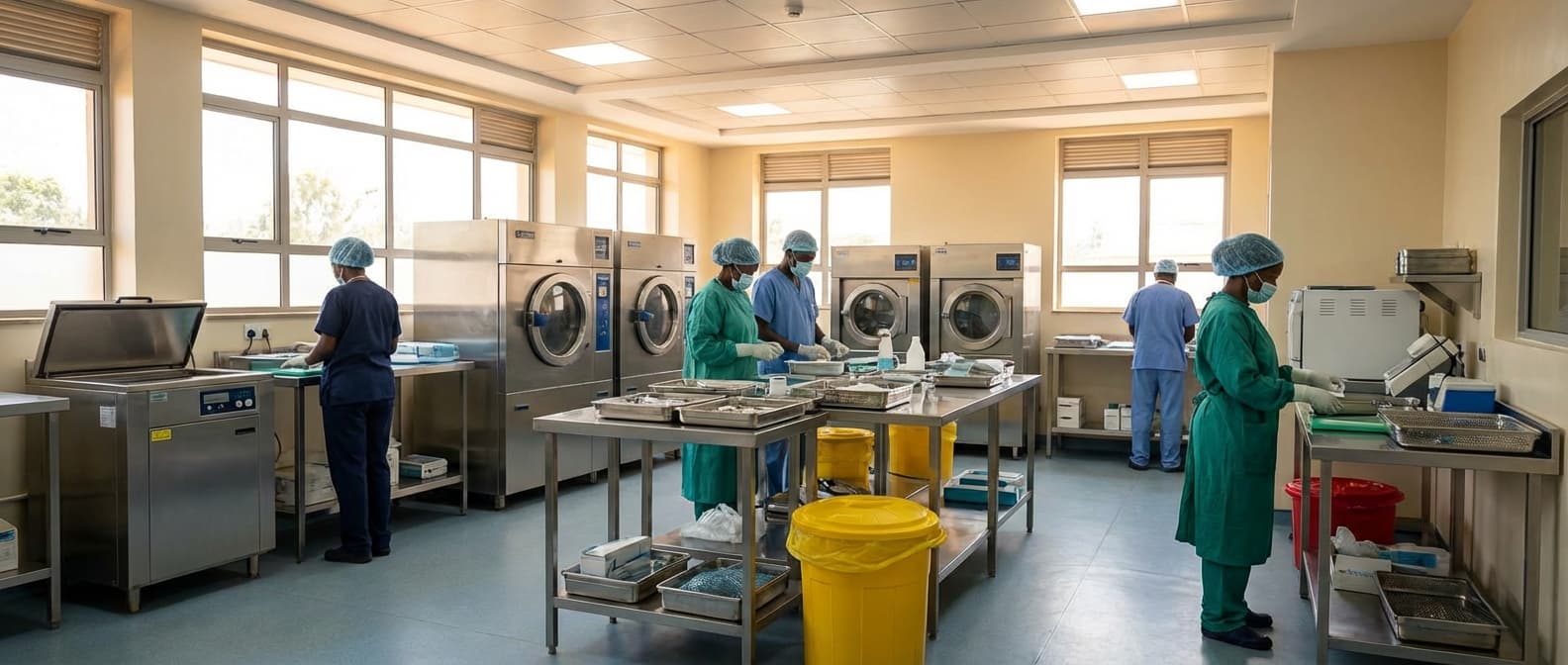
Medical Equipment Decontamination Service (Pre-Repair/Pre-Relocation) in Angola
Engineering Excellence & Technical Support
Medical Equipment Decontamination Service (Pre-Repair/Pre-Relocation) High-standard technical execution following OEM protocols and local regulatory frameworks.
Pathogen-Free Workspace Guarantee
Our advanced multi-stage decontamination process, utilizing EPA-approved disinfectants and advanced UV-C sterilization, eliminates over 99.9% of all airborne and surface pathogens. This ensures a sterile environment for your medical equipment technicians and prevents cross-contamination, safeguarding patient safety and equipment integrity before repair or relocation within Angola.
Streamlined Pre-Repair & Pre-Relocation Protocol
We offer a fully integrated decontamination service designed to seamlessly fit into your existing maintenance and relocation workflows. Our rapid turnaround times and on-site capabilities in major Angolan cities minimize equipment downtime, allowing for quicker repairs and efficient transitions, thereby maintaining operational continuity for your healthcare facilities.
Adherence to International Decontamination Standards
Our decontamination protocols are meticulously developed to align with international guidelines and best practices for medical equipment sterilization. We provide comprehensive documentation and certification for each service rendered, ensuring full compliance for your critical medical assets, thereby mitigating risks and supporting regulatory adherence within Angola's healthcare sector.
What Is Medical Equipment Decontamination Service (Pre-repair/pre-relocation) In Angola?
Medical Equipment Decontamination Service (Pre-Repair/Pre-Relocation) in Angola refers to the specialized process of cleaning, disinfecting, and sterilizing medical devices prior to their transport for repair or relocation. This service is critical in preventing the cross-contamination of pathogens, protecting service personnel, and ensuring the integrity of the equipment during transit and subsequent handling. The decontamination process typically involves a multi-stage approach, encompassing initial cleaning to remove gross organic debris, followed by high-level disinfection or sterilization, depending on the equipment's nature and intended use. Aseptic packaging may also be employed to maintain sterility post-decontamination. This proactive measure is essential for biosafety and regulatory compliance within healthcare settings.
| Who Needs the Service | Typical Use Cases |
|---|---|
| Hospitals and Clinics (Public & Private) | Routine maintenance scheduling for specialized equipment (e.g., imaging machines, surgical instruments, laboratory analyzers) requiring off-site repair. |
| Diagnostic Laboratories | Relocation of complex laboratory equipment (e.g., PCR machines, centrifuges, automated sample processors) between facilities or to new laboratory sites. |
| Medical Device Manufacturers/Distributors | Returning equipment for warranty repair or after end-of-life refurbishment, requiring pre-shipment decontamination. |
| Non-Governmental Organizations (NGOs) & Humanitarian Organizations | Managing fleets of medical equipment deployed in remote or field settings that require servicing. |
| Healthcare Facilities Undergoing Renovation or Relocation | Ensuring all reusable medical devices are decontaminated before being moved to temporary or permanent new locations. |
| Government Health Agencies | Overseeing public health infrastructure and ensuring the safe and compliant movement of critical medical assets. |
Key Aspects of Medical Equipment Decontamination Service (Pre-Repair/Pre-Relocation)
- Scope of Service: Encompasses cleaning, disinfection, sterilization, and potentially aseptic packaging of medical devices.
- Objective: To eliminate or significantly reduce microbial load, preventing pathogen transmission and protecting personnel.
- Compliance: Adherence to national and international biosafety standards and manufacturer guidelines.
- Personnel Safety: Minimizing occupational exposure risks for repair technicians and relocation staff.
- Equipment Integrity: Preventing damage or contamination of sensitive internal components during transit.
- Regulatory Framework: Compliance with Angolan Ministry of Health directives and relevant international standards (e.g., ISO 13485 principles).
Who Needs Medical Equipment Decontamination Service (Pre-repair/pre-relocation) In Angola?
Medical equipment decontamination service before repair or relocation is crucial in Angola to ensure the safety of technicians, patients, and the environment. This process removes biohazardous materials, chemical contaminants, and other harmful substances that may be present on medical devices. This service is particularly vital for preventing the spread of infections and cross-contamination, especially in a healthcare setting where such risks are elevated. It also prepares equipment for safe handling during the repair or relocation process, preventing damage to sensitive components and ensuring the integrity of the equipment. In Angola, with its developing healthcare infrastructure and potential for diverse environmental factors, this specialized service plays a critical role in maintaining hygiene standards and operational efficiency.
| Target Customer Type | Key Departments Requiring Service | Rationale for Service | Example Equipment |
|---|---|---|---|
| Hospitals | Operating Theaters, Intensive Care Units (ICUs), Emergency Rooms, Sterilization Departments, Pathology, Radiology, Central Sterile Supply Department (CSSD) | High volume of patient contact, diverse biohazardous materials, complex equipment requiring specialized repair/relocation. | Anesthesia machines, ventilators, surgical lasers, endoscopes, imaging equipment (MRI, CT scanners). |
| Clinics and Health Centers | Treatment Rooms, Minor Procedure Areas, Diagnostic Labs | Regular use of disposable and reusable equipment, risk of infectious material contamination, need for safe handling during upgrades or relocations. | Autoclaves, centrifuges, diagnostic kits, minor surgical instruments. |
| Diagnostic Laboratories | Sample Processing Areas, Equipment Maintenance Bays | Handling of potentially infectious biological samples, specialized analytical equipment that requires careful decontamination before servicing. | PCR machines, sequencers, microscopes, immunoassay analyzers. |
| Surgical Centers | Operating Rooms, Recovery Areas | Focus on invasive procedures, high risk of bloodborne pathogens, equipment requiring sterile environments and meticulous cleaning. | Surgical microscopes, electrosurgical units, laparoscopic equipment. |
| Dental Practices | Treatment Chairs, Sterilization Areas | Exposure to saliva, blood, and other bodily fluids, instruments requiring rigorous decontamination before maintenance or relocation. | Dental chairs, X-ray machines, ultrasonic scalers, dental drills. |
| Research Institutions | Laboratories using medical devices | Handling of novel pathogens or chemicals, ensuring equipment integrity and safety for researchers and lab personnel during maintenance. | Bioreactors, flow cytometers, specialized imaging systems. |
| Government Health Agencies / NGOs | Mobile clinics, health posts, storage facilities for donated equipment | Broad reach, diverse equipment types, often in remote areas where specialized services are scarce, ensuring donated or distributed equipment is safe. | Portable X-ray units, basic diagnostic tools, basic surgical kits. |
| Medical Equipment Manufacturers/Suppliers | Repair and Refurbishment Centers, Service Departments | Receiving equipment from various clients, ensuring their own technicians are safe and that refurbished equipment meets hygiene standards. | All types of medical equipment requiring repair, calibration, or software updates. |
| Third-Party Maintenance Providers | Service Technicians, Workshop Facilities | Directly handling medical equipment for repair, requiring a decontamination step before touching or transporting devices to prevent occupational hazards and cross-contamination. | Any medical equipment requiring external repair services. |
Target Customers and Departments in Angola for Medical Equipment Decontamination Service (Pre-Repair/Pre-Relocation)
- Hospitals (Public and Private)
- Clinics and Health Centers
- Diagnostic Laboratories
- Surgical Centers
- Dental Practices
- Research Institutions with Medical Equipment
- Government Health Agencies
- Non-Governmental Organizations (NGOs) involved in healthcare delivery
- Medical Equipment Manufacturers and Suppliers (for their own repair/refurbishment needs)
- Third-Party Medical Equipment Maintenance and Repair Companies
Medical Equipment Decontamination Service (Pre-repair/pre-relocation) Process In Angola
This document outlines the standard workflow for the Medical Equipment Decontamination Service (Pre-Repair/Pre-Relocation) provided in Angola. This service is crucial to ensure the safety of personnel and the environment by neutralizing biological, chemical, or radiological hazards present on medical equipment before it undergoes repair or relocation.
| Step # | Phase | Activity | Description | Responsible Party/Department | Key Deliverables/Outcomes | Notes/Considerations |
|---|---|---|---|---|---|---|
| 1 | Inquiry & Assessment | Initial Client Inquiry | Client contacts the decontamination service provider with a request for decontamination of medical equipment for repair or relocation. | Client, Sales/Customer Service Representative | Service request logged, initial client contact details captured. | Identify type of equipment, intended purpose, and reason for decontamination (repair/relocation). |
| 2 | Inquiry & Assessment | Information Gathering & Risk Assessment | Provider requests detailed information about the equipment, its usage history, and potential contaminants. A preliminary risk assessment is conducted. | Sales/Customer Service Representative, Technical Assessor | Equipment details, usage history, potential hazard assessment report. | Clarify materials of construction, any known spills or contamination events. This guides decontamination method selection. |
| 3 | Planning & Proposal | Methodology Development & Proposal Creation | Based on the risk assessment, the provider develops a tailored decontamination plan, including chosen methods, chemicals/processes, safety protocols, and timelines. A formal proposal is generated. | Technical Assessor, Operations Manager | Decontamination plan, cost proposal, quotation, service agreement draft. | Consider regulatory compliance (Angolan health and safety regulations), availability of specialized equipment, and client budget. |
| 4 | Planning & Proposal | Client Approval & Scheduling | Client reviews the proposal and approves the service. The decontamination schedule is finalized. | Client, Sales/Customer Service Representative | Signed service agreement, confirmed decontamination date and time. | Ensure clear communication of any pre-decontamination preparation required by the client. |
| 5 | Execution | Equipment Collection/Receipt | The equipment is either collected from the client's site by the provider's team or delivered to the provider's designated decontamination facility. | Logistics Team, Decontamination Technicians | Equipment received at designated location, documented in inventory. | Utilize appropriate transport procedures and personal protective equipment (PPE) during collection. |
| 6 | Execution | Pre-Decontamination Inspection & Documentation | A thorough inspection of the equipment is performed to document its condition before decontamination. Photographs are taken. | Decontamination Technicians, Quality Control Officer | Pre-decontamination inspection report, photographic evidence. | Note any existing damage or features that might be affected by the decontamination process. |
| 7 | Execution | Decontamination Process Execution | The approved decontamination plan is executed using the selected methods (e.g., chemical disinfection, steam sterilization, high-level disinfection, plasma sterilization, radiological decontamination). Safety protocols and PPE are strictly followed. | Decontamination Technicians | Equipment is decontaminated according to the plan, records of decontamination process parameters (temperature, pressure, exposure time, chemical concentrations). | Adherence to manufacturer's guidelines for equipment compatibility with decontamination agents is paramount. |
| 8 | Execution | Post-Decontamination Inspection & Verification | The equipment is inspected again to verify the effectiveness of the decontamination process and ensure no residues remain. Bioburden testing or indicator tests may be performed if required. | Decontamination Technicians, Quality Control Officer | Post-decontamination inspection report, verification of decontamination effectiveness. | Ensure all visible contaminants have been removed and the equipment is safe to handle. |
| 9 | Completion & Handover | Documentation & Certificate of Decontamination Issuance | A comprehensive report detailing the decontamination process, including methods used, chemicals, dates, times, and results of verification is generated. A Certificate of Decontamination is issued. | Quality Control Officer, Administrative Staff | Final decontamination report, Certificate of Decontamination. | This document is crucial for the repair or relocation process and for regulatory compliance. |
| 10 | Completion & Handover | Equipment Release/Return | The decontaminated equipment is prepared for collection by the client, repair facility, or relocation team. Final handover is documented. | Logistics Team, Decontamination Technicians | Equipment released to authorized personnel, signed release form. | Ensure proper packaging and handling of the decontaminated equipment to prevent re-contamination. |
| 11 | Completion & Handover | Client Feedback & Record Keeping | Client provides feedback on the service. All records related to the decontamination process are archived. | Customer Service Representative, Administrative Staff | Client feedback record, archived decontamination records. | Continuous improvement based on client feedback is vital. |
Medical Equipment Decontamination Service Workflow (Angola)
- Objective: To safely and effectively decontaminate medical equipment prior to repair or relocation, mitigating risks associated with hazardous materials.
- Scope: This process covers all stages from initial client inquiry to the final handover of decontaminated equipment.
Medical Equipment Decontamination Service (Pre-repair/pre-relocation) Cost In Angola
Decontaminating medical equipment in Angola before repair or relocation is a crucial step to prevent the spread of infections and ensure the safety of technicians and the environment. The cost of this service can vary significantly based on several factors. These include the type and complexity of the medical equipment, the level of contamination (e.g., routine cleaning vs. biohazard), the urgency of the service, the geographical location within Angola, and the specific decontamination methods employed. Specialized decontamination might involve autoclaving, chemical sterilization, or high-level disinfection, each with its own associated costs.
Factors Influencing Cost:
- Equipment Type and Size: Larger and more complex equipment (e.g., MRI machines, CT scanners) will generally incur higher decontamination costs than smaller devices (e.g., stethoscopes, blood pressure monitors) due to the increased time, specialized chemicals, and expertise required.
- Level of Contamination: Equipment used in high-risk areas or known to be contaminated with infectious agents will necessitate more rigorous and specialized decontamination protocols, leading to higher expenses.
- Decontamination Method: The chosen method plays a significant role. Standard cleaning and disinfection are less expensive than advanced sterilization techniques like autoclaving or gamma irradiation (though gamma irradiation is less common for on-site decontamination).
- Urgency: Emergency decontamination services often come with a premium due to the need for immediate mobilization of resources and personnel.
- Geographic Location: Accessibility of the equipment's location within Angola can impact costs. Remote areas might involve higher travel and logistical expenses for the decontamination team.
- Service Provider: Different companies and service providers will have varying pricing structures based on their overhead, expertise, and the quality of their equipment and personnel.
- Volume of Equipment: For bulk decontamination of multiple items, some providers might offer volume discounts.
Estimated Cost Ranges in Angolan Kwanza (AOA):
It's important to note that these are estimated ranges, and actual quotes can vary. Prices are typically quoted per piece of equipment or on a project basis. For precise pricing, it is always recommended to obtain detailed quotes from multiple service providers in Angola.
- Small Medical Devices (e.g., stethoscopes, thermometers, blood pressure cuffs): AOA 5,000 - AOA 20,000 per item.
- Medium-Sized Equipment (e.g., infusion pumps, vital signs monitors, portable ultrasound probes): AOA 25,000 - AOA 75,000 per item.
- Large and Complex Equipment (e.g., anesthesia machines, ventilators, endoscopes, dental chairs): AOA 80,000 - AOA 300,000+ per item. For very specialized or biohazardous contamination, costs could exceed AOA 500,000.
- On-site Consultation and Assessment: AOA 15,000 - AOA 50,000 (often waived if a decontamination service is subsequently booked).
- Travel and Logistics (if applicable): This can add a significant percentage to the total cost, especially for remote locations, and will be quoted separately.
| Equipment Category | Estimated Cost Range (AOA) |
|---|---|
| Small Medical Devices (e.g., stethoscope, thermometer) | 5,000 - 20,000 |
| Medium-Sized Equipment (e.g., infusion pump, vital signs monitor) | 25,000 - 75,000 |
| Large and Complex Equipment (e.g., anesthesia machine, ventilator, endoscope) | 80,000 - 300,000+ |
| Highly Contaminated/Biohazardous Equipment | 500,000+ (Variable) |
| On-site Consultation/Assessment Fee | 15,000 - 50,000 (Potentially Waived) |
| Travel and Logistics (Additional) | Variable (Quoted Separately) |
Key Pricing Factors for Medical Equipment Decontamination in Angola
- Type and Complexity of Equipment
- Level of Contamination (Routine vs. Biohazard)
- Decontamination Method Used (e.g., Chemical, Autoclaving)
- Urgency of the Service Request
- Geographical Location within Angola
- Service Provider's Pricing Structure and Expertise
- Volume of Equipment to be Decontaminated
Affordable Medical Equipment Decontamination Service (Pre-repair/pre-relocation) Options
Our Affordable Medical Equipment Decontamination Service provides a critical step before repairs or relocation, ensuring safety, compliance, and extending equipment lifespan. We offer flexible value bundles and cost-saving strategies to meet diverse needs and budgets.
| Service Bundle | Description | Ideal For | Key Cost Savings |
|---|---|---|---|
| Essential Decon | Standard cleaning and disinfection of external surfaces using EPA-approved hospital-grade disinfectants. | Routine maintenance, minor repairs, standard relocation. | Lower per-unit cost, predictable pricing for common needs. |
| Advanced Decon | Includes Essential Decon plus targeted internal component cleaning (where accessible and safe) and fogging for hard-to-reach areas. | Equipment with known or suspected bioburden, complex repairs, inter-facility transfers. | Reduced risk of further contamination, potentially fewer repair callbacks, expedited handling. |
| Custom Decon Solutions | Tailored decontamination protocols based on specific equipment type, anticipated contaminants, and client requirements. May include specialized sterilization methods. | High-risk equipment, specialized imaging devices, bulk relocation projects, specific regulatory mandates. | Optimized resource allocation, minimized risk of specialized equipment damage, bulk discounts for large projects. |
| Preventative Maintenance Bundle | Scheduled, routine decontamination integrated with existing maintenance schedules. | Facilities with high equipment turnover, proactive infection control strategies. | Long-term cost reduction through reduced repair frequency, extended equipment lifespan, bulk service agreements. |
Why Decontaminate Before Repair/Relocation?
- Patient & Staff Safety: Eliminates biohazards, protecting everyone from potential infections.
- Regulatory Compliance: Meets industry standards and guidelines for handling medical devices.
- Prevents Cross-Contamination: Isolates potential contaminants from the repair/relocation environment.
- Optimizes Repair Process: Technicians can work on clean equipment, reducing their risk and improving efficiency.
- Asset Protection: Prevents further degradation of equipment due to residual contaminants.
- Reduced Liability: Minimizes risk associated with mishandling potentially infectious materials.
Verified Providers In Angola
Finding reliable and verified healthcare providers in Angola is crucial for ensuring quality medical care. Franance Health stands out as a premier choice due to its rigorous credentialing process, commitment to patient well-being, and extensive network of top-tier medical professionals. This dedication to verification and excellence makes Franance Health a trusted partner for individuals and families seeking comprehensive healthcare solutions in Angola.
| Provider Type | Franance Health Verification Focus | Key Benefits for Patients |
|---|---|---|
| General Practitioners | Valid medical license, good standing with medical council, demonstrated experience in primary care. | Reliable first point of contact for routine health concerns, early detection of illnesses, access to referrals. |
| Specialists (e.g., Cardiologists, Oncologists, Dermatologists) | Board certification in specialty, advanced degrees, proven track record in their field, relevant hospital affiliations. | Expert diagnosis and treatment for complex conditions, access to specialized procedures and therapies. |
| Surgeons | Surgical board certification, extensive surgical experience, excellent patient outcomes, adherence to safety protocols. | Skilled surgical interventions, post-operative care expertise, minimal complication rates. |
| Pediatricians | Pediatric board certification, specialized training in child health, experience with diverse pediatric conditions. | Comprehensive care for infants, children, and adolescents, focus on growth and development. |
| Dentists | Dental license, proficiency in various dental procedures, commitment to oral hygiene education. | Quality dental care, preventative treatments, restorative and cosmetic dentistry options. |
Why Franance Health is Your Best Choice for Verified Providers in Angola
- Rigorous Verification Process: Franance Health employs a multi-stage vetting system to confirm the qualifications, licenses, and professional standing of all its affiliated healthcare providers. This ensures you are connected with legitimate and competent medical experts.
- Commitment to Patient Safety and Quality: Patient well-being is at the forefront of Franance Health's mission. They partner only with providers who adhere to the highest standards of medical ethics, patient care, and evidence-based practices.
- Extensive Network of Specialists: Franance Health boasts a broad network encompassing a wide range of medical specialties, from general practitioners and pediatricians to surgeons and specialists in complex fields. This means you can find the right expert for your specific needs.
- Focus on Accessibility and Convenience: Understanding the challenges of healthcare access in certain regions, Franance Health strives to make connecting with verified providers as seamless and convenient as possible through their innovative platform.
- Continuous Professional Development: Franance Health encourages and supports its providers in ongoing learning and professional development, ensuring they remain up-to-date with the latest medical advancements and techniques.
- Patient-Centric Approach: Beyond just medical expertise, Franance Health prioritizes providers who demonstrate empathy, clear communication, and a genuine commitment to understanding and addressing patient concerns.
Scope Of Work For Medical Equipment Decontamination Service (Pre-repair/pre-relocation)
This Scope of Work (SOW) outlines the requirements for medical equipment decontamination services to be performed prior to repair or relocation. The objective is to ensure that medical equipment is rendered safe and free from biohazardous materials, chemical contaminants, or radioactive isotopes, thereby protecting service technicians, transport personnel, and the environment. This SOW details the technical deliverables and standard specifications for the decontamination process.
| Section | Description | Standard Specifications / Requirements |
|---|---|---|
| 1.0 Pre-Decontamination Assessment | Initial evaluation of the equipment to identify potential contaminants, hazard levels, and required decontamination methods. | Visual inspection for visible contamination (blood, body fluids, powders, etc.). Review of equipment use history and known associated risks (e.g., patient population, procedures performed). Identification of any residual chemicals or radioactive materials. Determination of appropriate Personal Protective Equipment (PPE) for decontamination personnel. Classification of equipment based on contamination risk (low, medium, high). |
| 2.0 Decontamination Methods | Application of validated cleaning and disinfection/sterilization procedures based on the contaminant type and equipment material. | For biological contaminants: Use of EPA-registered, hospital-grade disinfectants with validated efficacy against relevant pathogens (e.g., HIV, HBV, HCV, C. diff). Methods may include manual wiping, spraying, or fogging. For chemical contaminants: Use of specific neutralizing agents or cleaning solutions compatible with the chemical and equipment materials. Consult Material Safety Data Sheets (MSDS) or Safety Data Sheets (SDS) for appropriate procedures. For radioactive contaminants: Procedures must adhere to nuclear regulatory guidelines, involving shielding, containment, and approved decontamination agents. Requires specialized training and licensing. All methods must be validated and documented. |
| 3.0 Cleaning Agents and Disinfectants | Selection and use of appropriate cleaning agents and disinfectants. | Must be approved for use on the specific equipment materials (e.g., plastics, metals, electronics). Concentration and contact times must be strictly adhered to as per manufacturer's instructions and efficacy data. Availability of Safety Data Sheets (SDS) for all chemicals used. Proper storage and handling of cleaning agents and disinfectants. |
| 4.0 Personal Protective Equipment (PPE) | Mandatory use of appropriate PPE for all personnel involved in decontamination. | Minimum PPE includes: disposable gloves (nitrile or similar), eye protection (safety glasses or goggles), protective clothing (disposable gowns or coveralls). Additional PPE may be required based on the assessed hazard level (e.g., respirators, face shields, specialized suits). |
| 5.0 Waste Management | Proper handling, segregation, and disposal of all contaminated waste. | Contaminated materials (e.g., wipes, swabs, disposable PPE) must be placed in designated biohazard waste bags. Waste must be handled and disposed of according to local, state, and federal regulations for biohazardous and chemical waste. Documentation of waste disposal is required. |
| 6.0 Documentation and Certification | Comprehensive record-keeping of the decontamination process. | Each piece of equipment must be accompanied by a Decontamination Certificate confirming the date of service, methods used, chemicals employed, and the name/signature of the authorized technician. Logbooks or electronic records detailing each decontamination event, including equipment ID, date, technician, contaminants identified, methods used, and waste disposal details. Certificates should clearly state that the equipment is safe for repair or relocation. |
| 7.0 Equipment Handling and Containment | Procedures for safe handling and containment during and after decontamination. | Equipment should be decontaminated in a designated area with adequate ventilation or containment if necessary. Upon completion of decontamination, equipment surfaces should be dried to prevent microbial growth. Equipment may require temporary containment (e.g., sealed bags) for transport to prevent re-contamination or spread of any residual airborne particles. |
| 8.0 Training and Competency | Personnel performing decontamination must be adequately trained and competent. | Technicians must receive documented training on infection control principles, safe handling of biohazardous and chemical materials, use of PPE, and specific decontamination procedures for various equipment types. Competency assessments should be conducted periodically. |
Objectives
- To prevent the spread of infectious diseases and biohazards.
- To ensure the safety of personnel involved in repair, maintenance, and transportation of medical equipment.
- To comply with relevant regulatory and safety standards.
- To minimize the risk of cross-contamination.
- To provide a documented record of decontamination for accountability and traceability.
Service Level Agreement For Medical Equipment Decontamination Service (Pre-repair/pre-relocation)
This Service Level Agreement (SLA) outlines the agreed-upon response times and uptime guarantees for the Pre-Repair/Pre-Relocation Medical Equipment Decontamination Service provided by [Your Company Name] to [Client Name]. This SLA is effective as of [Start Date] and remains in effect until [End Date], unless terminated according to the terms of the Master Service Agreement (MSA).
| Service Type | Equipment Criticality | Response Time (Business Hours) | Uptime Guarantee |
|---|---|---|---|
| Pre-Repair Decontamination | Critical | Within [Number] business hours | 99.5% |
| Pre-Repair Decontamination | Non-Critical | Within [Number] business hours | 99.0% |
| Pre-Relocation Decontamination | Critical | Within [Number] business hours | 99.5% |
| Pre-Relocation Decontamination | Non-Critical | Within [Number] business hours | 99.0% |
Key Definitions
- Decontamination Service: The process of cleaning, disinfecting, and/or sterilizing medical equipment as per established protocols to prepare it for repair or relocation, ensuring compliance with relevant health and safety standards.
- Critical Equipment: Medical equipment whose malfunction or unavailability poses an immediate and severe threat to patient care or safety.
- Non-Critical Equipment: Medical equipment whose malfunction or unavailability has a minimal or no immediate impact on patient care or safety.
- Response Time: The time elapsed from the moment a service request is acknowledged by [Your Company Name] until a qualified technician is dispatched to initiate the decontamination process.
- Uptime Guarantee: The percentage of time the decontamination service is available and operational for scheduled or requested services, excluding planned maintenance.
- Scheduled Maintenance: Pre-announced periods when the decontamination service may be unavailable for routine upkeep and updates, which will be communicated to the client with at least [Number] days' notice.
- Force Majeure: Any event beyond the reasonable control of [Your Company Name], including but not limited to acts of God, war, terrorism, strikes, natural disasters, or widespread pandemics, that may impact service delivery.
Frequently Asked Questions

Ready when you are
Let's scope your Medical Equipment Decontamination Service (Pre-Repair/Pre-Relocation) in Angola project in Angola.

Scaling healthcare logistics and technical systems across the entire continent.