
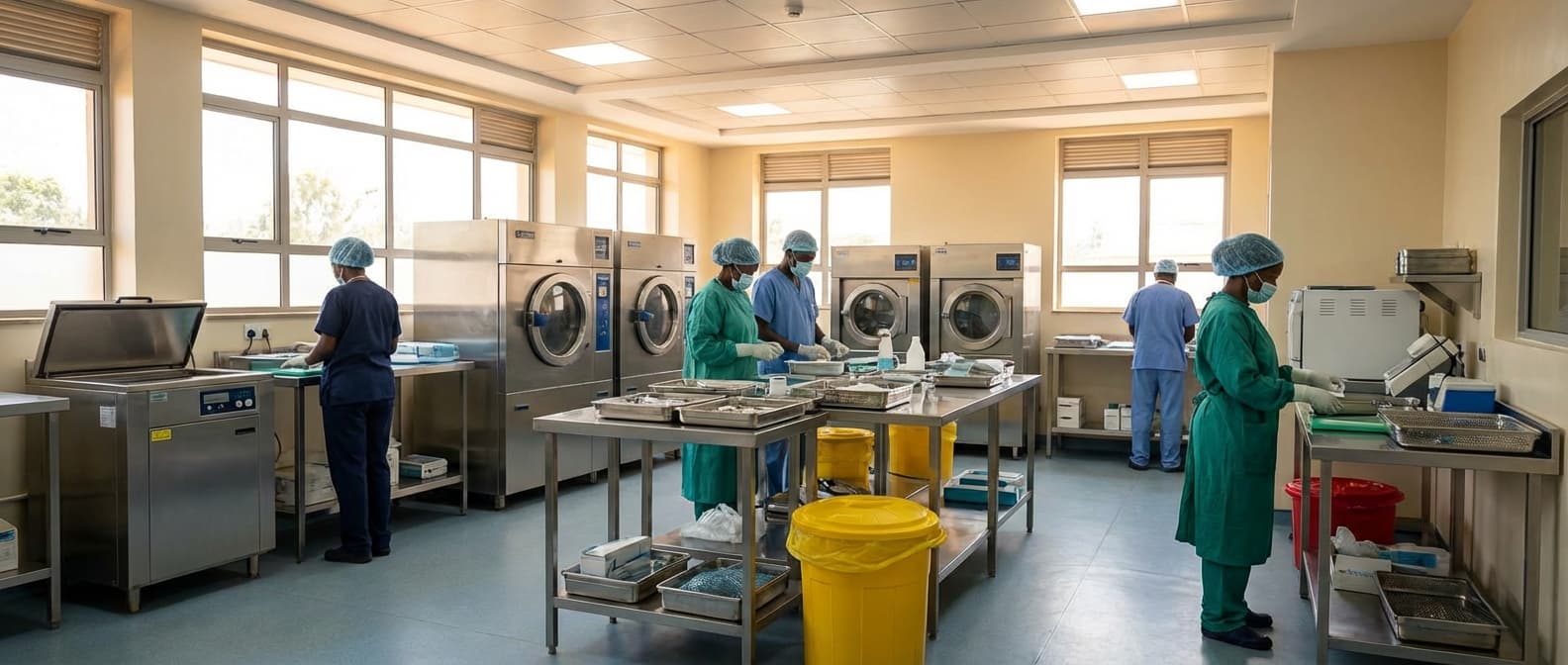
Infection-Control Readiness Support Service for Reusable Equipment in Angola
Engineering Excellence & Technical Support
Infection-Control Readiness Support Service for Reusable Equipment High-standard technical execution following OEM protocols and local regulatory frameworks.
Robust Sterilization & Disinfection Protocols
Implementation and strict adherence to internationally recognized, Angola-adapted protocols for the sterilization and disinfection of all reusable medical equipment. This includes validated processes for high-level disinfection, autoclaving, and chemical sterilization, tailored to the specific equipment and local resource availability, ensuring maximum pathogen inactivation.
Expert Personnel Training & Competency Assurance
Comprehensive, hands-on training programs for healthcare personnel involved in equipment reprocessing. Training covers proper handling, cleaning, disinfection, sterilization techniques, quality control monitoring, and documentation. Regular competency assessments and refresher courses guarantee sustained proficiency and adherence to best practices.
Proactive Equipment Maintenance & Validation
Establishment of a systematic preventive maintenance program for all sterilization and disinfection equipment. This includes regular calibration, functional testing, and timely repairs, backed by robust validation documentation (e.g., biological and chemical indicators) to confirm the efficacy and safety of the reprocessing cycles for reusable medical devices.
What Is Infection-control Readiness Support Service For Reusable Equipment In Angola?
Infection-Control Readiness Support Service for Reusable Equipment in Angola is a specialized, multi-faceted program designed to ensure that healthcare facilities in Angola maintain robust and effective infection prevention and control (IPC) measures specifically for reusable medical devices and equipment. This service encompasses the assessment, implementation, and ongoing monitoring of protocols and infrastructure necessary to prevent the transmission of healthcare-associated infections (HAIs) through contaminated or improperly reprocessed reusable items. The core objective is to mitigate risks to patient safety by guaranteeing that all reusable equipment is cleaned, disinfected, and/or sterilized to established standards before each use.
| Stakeholder/Facility Type | Need for Service | Typical Use Cases |
|---|---|---|
| Public Hospitals (Central, Provincial, District) | High volume of reusable equipment, varying levels of infrastructure and trained personnel, significant patient populations at risk for HAIs. | Routine reprocessing of surgical instruments, endoscopes, respiratory therapy equipment, and diagnostic tools. Implementing new sterilization technologies. Training new staff on reprocessing protocols. Responding to outbreaks of HAIs linked to reusable equipment. |
| Private Healthcare Facilities (Clinics, Diagnostic Centers, Hospitals) | Variable infrastructure and adherence to standards, potentially less direct regulatory oversight compared to public facilities, need for standardized best practices. | Ensuring compliance with national IPC standards. Upgrading reprocessing workflows for specific specialties (e.g., dental, ophthalmology). Training expatriate or newly hired staff. Implementing quality assurance programs for reprocessing. |
| Non-Governmental Organizations (NGOs) and International Aid Organizations | Operating in resource-limited settings, establishing new health facilities, or supporting existing ones with limited capacity and funding. | Setting up functional reprocessing units in mobile clinics or remote health posts. Providing training and equipment to support healthcare delivery in underserved areas. Ensuring safe reprocessing of essential medical supplies in emergency response scenarios. |
| Ministry of Health (MoH) and Regional Health Directorates | Developing national IPC policies, overseeing healthcare quality, and ensuring equitable access to safe healthcare services across the country. | Developing national guidelines for reusable equipment reprocessing. Conducting nationwide assessments of IPC readiness. Supporting the implementation of large-scale training initiatives. Establishing national accreditation or certification standards for reprocessing units. |
| Medical Device Manufacturers and Suppliers | Ensuring their products can be safely reprocessed according to manufacturer's instructions for use (IFU) in the Angolan context. | Providing specific training on the reprocessing of their devices. Validating reprocessing protocols in local settings. Advising on the appropriate sterilization and disinfection methods for their equipment. |
Key Components of the Service:
- Needs Assessment and Gap Analysis: Comprehensive evaluation of existing IPC practices, infrastructure, and resources related to reusable equipment reprocessing within a healthcare facility.
- Policy and Protocol Development/Refinement: Creation or enhancement of Standard Operating Procedures (SOPs) for cleaning, disinfection, sterilization, and safe handling of all types of reusable medical devices, aligned with national and international guidelines (e.g., WHO, CDC).
- Infrastructure and Equipment Evaluation: Assessment of the suitability and functionality of reprocessing areas, including water supply, ventilation, waste management, and the availability and condition of cleaning, disinfection, and sterilization equipment (e.g., autoclaves, washer-disinfectors).
- Staff Training and Capacity Building: Provision of targeted training programs for healthcare personnel involved in reusable equipment reprocessing, covering theoretical knowledge and practical skills in IPC principles and equipment operation.
- Supply Chain Management Support: Guidance on the procurement and inventory management of appropriate detergents, disinfectants, sterilants, and personal protective equipment (PPE) necessary for safe reprocessing.
- Monitoring and Auditing: Establishment of systems for routine monitoring of reprocessing processes (e.g., biological and chemical indicators) and regular audits to ensure compliance with SOPs and identify areas for improvement.
- Technical Support and Troubleshooting: Provision of expert advice and assistance in resolving technical issues related to reprocessing equipment or implementing new IPC protocols.
- Regulatory Compliance Guidance: Support in understanding and adhering to relevant Angolan national health regulations and standards pertaining to medical device reprocessing.
Who Needs Infection-control Readiness Support Service For Reusable Equipment In Angola?
This service is designed to bolster infection prevention and control (IPC) practices for reusable medical equipment in healthcare facilities across Angola. By providing comprehensive support, we aim to ensure that all reusable items are safely cleaned, disinfected, and sterilized, minimizing the risk of healthcare-associated infections (HAIs) for patients and healthcare workers. This is particularly critical in regions with limited resources and infrastructure, where maintaining robust IPC protocols for reusable items is paramount.
| Customer Type | Key Departments Involved | Primary Needs Addressed |
|---|---|---|
| Public Hospitals | CSSD, Surgical Theaters, Nursing Units, IPC Committee, Medical Administration | Training on cleaning/disinfection/sterilization protocols, equipment maintenance guidance, supply chain optimization for reprocessing, adherence to national guidelines. |
| Private Hospitals | CSSD, Operating Rooms, IPC Nurse, Biomedical Engineering, Administration | Advanced training in sterilization techniques, quality assurance monitoring, compliance with international standards, troubleshooting complex equipment issues. |
| Clinics and Health Centers | Nursing staff, General Practitioners, Administrative Staff | Basic training on safe handling and reprocessing of common reusable items (e.g., syringes, speculums), provision of essential supplies, guidance on simple disinfection methods, establishment of basic protocols. |
| Maternity Wards | Midwives, Nurses, IPC Staff | Specific protocols for reusable obstetric instruments and equipment, training on aseptic techniques, management of sharps. |
| Surgical Theaters/Operating Rooms | Surgeons, Anesthetists, Scrub Nurses, Sterilizing Technicians, IPC Officers | Validation of sterilization cycles, decontamination procedures for complex surgical instruments, management of surgical trays, prevention of surgical site infections (SSIs). |
| Intensive Care Units (ICUs) | Critical Care Nurses, Physicians, Respiratory Therapists, IPC Staff | Reprocessing of critical care equipment (e.g., ventilators, monitoring probes), management of high-risk reusable items, prevention of HAIs in vulnerable patients. |
| Sterilization and Central Sterile Supply Departments (CSSDs) | CSSD Technicians, Supervisors, IPC Managers | Workflow optimization, equipment calibration and maintenance, validation of sterilization processes, quality control, staff competency assessment. |
| NGOs in Healthcare | Project Managers, Healthcare Staff, Training Coordinators | Capacity building for local healthcare facilities, implementation of standardized IPC programs, supply chain support for reprocessing materials, monitoring and evaluation. |
Target Customers and Departments
- Hospitals (Public and Private)
- Clinics and Health Centers
- Maternity Wards
- Surgical Theaters/Operating Rooms
- Intensive Care Units (ICUs)
- Emergency Departments
- Outpatient Departments
- Sterilization and Central Sterile Supply Departments (CSSDs)
- Infection Prevention and Control Committees/Teams
- Nursing Departments
- Medical Device Management Departments
- Laboratory Services
- Non-Governmental Organizations (NGOs) involved in healthcare delivery
- Government Health Ministries and Provincial Health Directorates
Infection-control Readiness Support Service For Reusable Equipment Process In Angola
The Infection-Control Readiness Support Service for Reusable Equipment Process in Angola aims to ensure healthcare facilities are equipped and trained to safely reprocess reusable medical devices, thereby reducing the risk of healthcare-associated infections. The workflow encompasses a comprehensive approach from initial client engagement to sustained support.
| Stage | Description | Key Activities | Deliverables/Outcomes | Responsible Parties |
|---|---|---|---|---|
| Inquiry and Needs Assessment | Initial contact from a healthcare facility or government entity seeking support for reusable equipment reprocessing. This stage focuses on understanding their current situation, challenges, and specific needs regarding infection control and reusable equipment management. | Initial consultation, site visit (if feasible), review of existing protocols and infrastructure, identification of gaps in knowledge, equipment, and processes. | Needs assessment report, preliminary scope of services, identification of key stakeholders. | Inquiry recipient (e.g., Ministry of Health, hospital administration), Service Provider's technical team. |
| Proposal Development and Agreement | Based on the needs assessment, a tailored service proposal is developed, outlining the scope of work, objectives, methodologies, timelines, budget, and expected outcomes. Upon acceptance, a formal agreement is established. | Developing a detailed project plan, cost estimation, contract negotiation, formal agreement signing. | Approved project proposal, signed service agreement. | Service Provider's management and technical team, Client (healthcare facility/entity). |
| Pre-Implementation Assessment and Planning | A more in-depth assessment of the designated facility/facilities to gather detailed information for effective planning. This includes mapping current workflows, identifying specific equipment types, and assessing existing resources. | Detailed workflow analysis, inventory of reusable equipment, assessment of existing infrastructure (water, electricity, waste disposal), identification of specific training needs, development of a detailed implementation plan. | Detailed facility assessment report, finalized implementation plan, risk assessment matrix. | Service Provider's technical team, Facility's infection control committee, relevant staff. |
| Training and Capacity Building | Comprehensive training programs are delivered to healthcare professionals, including nurses, technicians, and environmental health workers, on best practices for cleaning, disinfection, sterilization, and safe handling of reusable medical equipment. | Developing training modules, conducting theoretical and practical training sessions, competency assessments, on-the-job coaching. | Trained personnel, training materials, competency assessment records. | Service Provider's trainers, Facility's healthcare professionals. |
| Equipment Procurement and Installation (if applicable) | If identified needs include new or upgraded reprocessing equipment, the service provider may facilitate procurement and ensure proper installation, calibration, and initial operational checks. | Equipment specification, vendor selection, procurement process management, installation and commissioning, user training on new equipment. | Installed and functional reprocessing equipment, user manuals, warranty information. | Service Provider (procurement specialists), Vendor, Facility's technical staff. |
| Process Implementation and Quality Assurance | Assisting the facility in establishing and integrating standardized reprocessing protocols and quality control measures into their daily operations. This includes setting up monitoring systems. | Development and implementation of Standard Operating Procedures (SOPs), establishment of quality control checkpoints, implementation of traceability systems, regular process audits. | Established and operational reprocessing workflows, documented SOPs, quality control records. | Service Provider's technical team, Facility's infection control committee, reprocessing staff. |
| Monitoring, Evaluation, and Ongoing Support | Regular monitoring of the implemented processes to ensure adherence to standards, identification of areas for improvement, and provision of ongoing technical support and mentorship. | Data collection on reprocessing effectiveness (e.g., sterility rates), periodic facility visits for supervision, refresher training sessions, troubleshooting support, reporting on service impact. | Performance reports, recommendations for improvement, sustained reduction in infection rates related to reusable equipment, ongoing technical assistance. | Service Provider's monitoring and evaluation team, Facility's management and infection control committee. |
Workflow Stages
- Inquiry and Needs Assessment
- Proposal Development and Agreement
- Pre-Implementation Assessment and Planning
- Training and Capacity Building
- Equipment Procurement and Installation (if applicable)
- Process Implementation and Quality Assurance
- Monitoring, Evaluation, and Ongoing Support
Infection-control Readiness Support Service For Reusable Equipment Cost In Angola
The cost of Infection-Control Readiness Support Services for Reusable Equipment in Angola is influenced by several key pricing factors. These factors determine the overall investment required for healthcare facilities to ensure the safe and effective sterilization and management of reusable medical instruments, thereby preventing healthcare-associated infections (HAIs). Understanding these elements is crucial for budgeting and strategic planning.
| Service Component | Estimated Cost Range (Angolan Kwanza - AOA) - Low | Estimated Cost Range (Angolan Kwanza - AOA) - High | Notes |
|---|---|---|---|
| Initial Site Assessment & Basic Audit (Per facility) | 150,000 | 500,000 | Covers basic review of current practices, visual inspection of equipment, and initial recommendations. Excludes detailed testing. |
| Comprehensive Equipment Sterilization Process Audit (Per department/major unit) | 300,000 | 1,000,000 | Includes detailed assessment of sterilization cycles, validation of processes, and testing of effectiveness for a specific unit. |
| Staff Training Module (Per participant) | 15,000 | 50,000 | Basic training on hygiene, PPE, and handling of reusable items. Advanced sterilization techniques will be higher. |
| Full-Day On-Site Infection Control Consultation | 100,000 | 300,000 | Expert advice, troubleshooting, and guidance on specific infection control challenges. |
| Development of Standard Operating Procedures (SOPs) for Reusable Equipment | 200,000 | 700,000 | Tailored SOPs based on facility needs and national guidelines. Complexity and length of SOPs will influence cost. |
| Bi-Annual Infection Control Readiness Review | 400,000 | 1,500,000 | Regular follow-up assessments to monitor progress and ensure sustained compliance. Cost is for the entire review period. |
| Emergency Decontamination Protocol Review & Support | 150,000 | 500,000 | Rapid assessment and advice in response to specific contamination events. |
| Monthly Retainer for Advisory Services | 50,000 | 200,000 | Ongoing access to expert advice and support via remote communication. |
Key Pricing Factors for Infection-Control Readiness Support Services in Angola
- Scope of Services: The breadth and depth of the support provided are paramount. This includes the number of sterilization cycles monitored, types of equipment requiring support (e.g., surgical instruments, endoscopes, respiratory equipment), the level of training provided to staff, and the complexity of the decontamination processes.
- Frequency and Duration of Support: Whether the service is a one-time assessment, ongoing monitoring, or a long-term partnership significantly impacts cost. Regular, continuous support will naturally incur higher cumulative expenses than a single audit.
- Staff Training and Capacity Building: The investment in training healthcare personnel in proper infection control protocols, sterilization techniques, and equipment handling is a substantial component. The number of staff to be trained and the duration/intensity of the training programs are key cost drivers.
- Equipment Assessment and Audit: The cost is influenced by the number and type of reusable equipment to be assessed, the methodology used (e.g., visual inspection, biological monitoring, chemical indicator verification), and the reporting requirements.
- Technology and Infrastructure Assessment: Evaluating the adequacy of existing sterilization equipment, water supply, ventilation, and waste management systems contributes to the service cost. Recommendations for upgrades or new installations will also factor in.
- Geographic Location and Accessibility: Travel costs for support personnel, especially to remote or less accessible regions within Angola, can increase the overall service price due to logistical challenges.
- Level of Expertise and Certification: The experience, qualifications, and any specific certifications of the infection control professionals providing the service will influence their hourly or project rates.
- Reporting and Documentation Requirements: The complexity and detail of the reports generated (e.g., audit findings, risk assessments, action plans, training materials) will impact the service cost.
- Materials and Consumables: If the support service includes the provision of specific infection control consumables (e.g., sterilizing agents, testing strips, personal protective equipment), these will be additional costs.
- Regulatory Compliance and Standards: Adherence to national and international infection control standards (e.g., WHO guidelines, national Ministry of Health regulations) may require more rigorous assessment and documentation, potentially increasing costs.
Affordable Infection-control Readiness Support Service For Reusable Equipment Options
Our Affordable Infection-Control Readiness Support Service for Reusable Equipment is designed to empower healthcare facilities by ensuring their reusable medical devices are consistently and cost-effectively managed for optimal infection prevention. We understand that maintaining high standards of infection control can be a significant operational challenge, especially when managing reusable equipment. Our service offers comprehensive solutions that go beyond basic cleaning, focusing on proactive readiness, robust documentation, and streamlined processes to minimize risks and reduce costs associated with reprocessing.
| Cost-Saving Strategy | Description | Impact on Reusable Equipment Management |
|---|---|---|
| Standardized Protocol Implementation | Developing and enforcing uniform cleaning, disinfection, and sterilization protocols across all reusable equipment types. This reduces errors and ensures consistent application of best practices. | Minimizes reprocessing errors leading to re-processing cycles, reduced equipment downtime, and extended equipment lifespan through proper care. Saves on labor and material costs associated with incorrect reprocessing. |
| Proactive Equipment Auditing & Maintenance | Regularly inspecting reusable equipment for damage, wear, and tear, and ensuring it is in optimal working condition. Implementing preventative maintenance schedules. | Prevents costly repairs or premature replacement of equipment due to neglect or minor issues escalating. Ensures equipment is always ready for use, reducing the need for emergency rentals or replacements. |
| Optimized Staff Training & Competency Assessment | Providing targeted and ongoing training to staff responsible for equipment reprocessing, with regular competency checks to ensure adherence to protocols. | Reduces the likelihood of human error in reprocessing, which can lead to equipment damage, contamination, or patient safety risks. Better trained staff work more efficiently, saving time and resources. |
| Streamlined Documentation & Record-Keeping | Implementing efficient systems for tracking equipment history, reprocessing cycles, maintenance, and staff training. Utilizing digital solutions where possible. | Improves traceability and accountability, essential for compliance and quality assurance. Reduces time spent on manual record-keeping and minimizes the risk of lost or inaccurate data, preventing costly investigations or penalties. |
| Inventory Management & Usage Optimization | Analyzing equipment usage patterns to ensure adequate stock levels without over-investment in underutilized equipment. Promoting efficient sharing and turnaround of equipment. | Reduces capital expenditure on unnecessary equipment purchases and minimizes storage costs. Ensures that existing equipment is used to its full potential, maximizing return on investment. |
| Leveraging Technology for Monitoring | Utilizing smart devices or software to monitor sterilization parameters, equipment usage, and cleaning effectiveness. This can include automated data logging. | Provides real-time insights into reprocessing effectiveness, allowing for immediate corrective actions. Reduces manual checks, saving staff time, and can identify equipment malfunctions early, preventing larger issues and associated costs. |
Value Bundles:
- Core Readiness Bundle: Includes routine equipment assessment, standardized cleaning protocol development and training, basic documentation support, and regular readiness audits. This bundle is ideal for facilities seeking to establish a foundational infection control program for their reusable equipment.
- Enhanced Compliance Bundle: Builds upon the Core Readiness Bundle by adding advanced staff training on specific device reprocessing, detailed record-keeping systems, a dedicated support hotline for immediate queries, and proactive identification of potential compliance gaps. This is suitable for facilities requiring a more rigorous approach to regulatory adherence.
- Comprehensive Risk Mitigation Bundle: Encompasses all features of the Enhanced Compliance Bundle, plus advanced quality control testing (e.g., biological indicators, chemical indicators), equipment performance monitoring, a dedicated infection control consultant for strategic planning and issue resolution, and a tailored risk assessment report. This bundle is for facilities aiming for the highest level of infection control assurance and risk reduction.
- Customizable Solutions: We also offer bespoke bundles, allowing you to select specific services that best meet your unique operational needs and budget.
Verified Providers In Angola
Finding verified healthcare providers in Angola is crucial for ensuring quality and trustworthy medical care. Franance Health stands out as a leading platform dedicated to connecting individuals with highly credentialed and vetted medical professionals across Angola. Their rigorous verification process, coupled with a comprehensive network of specialists, makes them the premier choice for anyone seeking reliable healthcare services.
| Provider Aspect | Franance Health's Commitment | Benefit to Patients |
|---|---|---|
| Credential Verification | Thorough checks of medical degrees, specializations, and board certifications. | Ensures you are treated by qualified and competent medical professionals. |
| Experience and Expertise | Review of practice history, areas of expertise, and continuous professional development. | Access to providers with proven track records and up-to-date knowledge. |
| Ethical Standards | Adherence to a strict code of ethics and professional conduct. | Peace of mind knowing your healthcare provider operates with integrity. |
| Patient Feedback Integration | Incorporates anonymized patient reviews and ratings (where applicable) into provider profiles. | Provides real-world insights into patient experiences and provider satisfaction. |
| Regulatory Compliance | Ensures all listed providers meet Angolan healthcare regulations and standards. | Guarantees that your healthcare experience is within legal and safe boundaries. |
Why Franance Health is the Best Choice for Verified Providers in Angola:
- Extensive Verification Process: Franance Health employs a multi-layered verification system that goes beyond basic licensing. They meticulously check credentials, qualifications, and past performance of every provider on their platform.
- Comprehensive Network: Access a wide range of medical specialists, from general practitioners to highly specialized surgeons, ensuring you can find the right care for your specific needs.
- Patient-Centric Approach: Franance Health prioritizes patient well-being and satisfaction, providing tools and resources to help you make informed decisions about your healthcare.
- Transparency and Trust: The platform is built on a foundation of transparency, offering clear information about provider qualifications and patient reviews, fostering trust and confidence.
- Accessibility and Convenience: Easily search for verified providers by specialty, location, and availability, streamlining the process of finding and booking appointments.
Scope Of Work For Infection-control Readiness Support Service For Reusable Equipment
This Scope of Work (SOW) outlines the requirements for providing infection-control readiness support services specifically for reusable medical equipment. The objective is to ensure that all reusable equipment within the facility is handled, cleaned, disinfected, and sterilized according to established best practices and regulatory guidelines, thereby minimizing the risk of healthcare-associated infections (HAIs). The service will encompass a comprehensive assessment, development of protocols, training, and ongoing monitoring to enhance the facility's infection control posture related to reusable equipment.
| Deliverable | Description | Standard Specifications / Criteria | Format | Timeline |
|---|---|---|---|---|
| Current State Assessment Report | A detailed report outlining the existing processes, infrastructure, and personnel competency related to reusable equipment infection control. Identifies gaps and areas for improvement. | Includes process mapping, SWOT analysis of current practices, identification of high-risk equipment, and a summary of compliance with relevant guidelines (e.g., CDC, AAMI, local regulations). | PDF document, Presentation slides | Weeks 1-2 |
| Revised/New SOPs for Reusable Equipment Processing | Comprehensive, step-by-step Standard Operating Procedures (SOPs) for the entire lifecycle of reusable equipment, from point-of-use to sterile storage. Covers cleaning, disinfection, sterilization, inspection, packaging, and storage. | SOPs must be clear, concise, actionable, and align with current evidence-based guidelines. Specificity for different equipment types and sterilization methods is required. Must include competency checks and documentation requirements. | Microsoft Word documents, Editable templates | Weeks 3-6 |
| Training Materials and Delivery Plan | Development of training modules and a structured plan for educating healthcare personnel involved in reusable equipment handling and processing. | Materials to cover principles of infection control, specific SOPs, proper use of cleaning agents and disinfectants, sterilization methods, equipment maintenance, and documentation. Training should be tailored to different roles (e.g., nurses, sterile processing technicians, environmental services). | PowerPoint presentations, Handouts, E-learning modules (if applicable), Training schedule | Weeks 5-8 |
| Competency Assessment Tools | Development of tools to assess and verify the competency of personnel in performing tasks related to reusable equipment infection control. | Includes written tests, practical demonstrations, and observation checklists. Specifications for passing criteria and re-training requirements. | Microsoft Word documents, Excel spreadsheets | Week 7 |
| Monitoring and Auditing Framework | A framework for ongoing monitoring and periodic auditing of reusable equipment processing to ensure sustained compliance with SOPs and regulatory standards. | Includes recommended audit frequency, checklists, data collection methods, reporting templates, and a process for root cause analysis and corrective action implementation. | Microsoft Excel spreadsheets, PDF checklists, Reporting templates | Week 8 |
| Recommendations Report for Equipment/Infrastructure | A report detailing recommendations for upgrades or changes to equipment, facilities, or workflow to enhance infection control for reusable items. | Recommendations to be evidence-based and cost-benefit considered, addressing areas such as workflow optimization, ventilation, instrument tracking systems, and washer-disinfector performance. | PDF document, Presentation slides | Week 9 |
| Final Project Report and Close-out Documentation | A comprehensive report summarizing all activities undertaken, findings, implemented solutions, and recommendations for future sustainability. | Includes a summary of training conducted, audit results, key achievements, and a plan for ongoing quality improvement. All deliverables from previous stages should be finalized and submitted. | PDF document | Week 10 |
Key Service Components
- Assessment of current reusable equipment management processes.
- Development/refinement of Standard Operating Procedures (SOPs) for cleaning, disinfection, and sterilization.
- Provision of specialized training for relevant personnel.
- Development and implementation of monitoring and auditing mechanisms.
- Recommendations for equipment and infrastructure improvements.
- Ongoing consultation and advisory services.
Service Level Agreement For Infection-control Readiness Support Service For Reusable Equipment
This Service Level Agreement (SLA) outlines the response times and uptime guarantees for the Infection-Control Readiness Support Service for Reusable Equipment. The service aims to ensure that reusable equipment is maintained in a state of readiness for infection control, minimizing downtime and supporting operational continuity.
| Service Component | Priority Level | Response Time Guarantee | Resolution Target | Uptime Guarantee (Support Service) |
|---|---|---|---|---|
| Infection Control Readiness Support Service | Critical (Equipment failure impacting immediate patient care or outbreak risk) | 15 minutes (acknowledgement of issue) | 4 hours (full restoration of function or acceptable workaround) | 99.9% (measured monthly) |
| Infection Control Readiness Support Service | High (Equipment malfunction with potential to impact patient care or workflow within 24 hours) | 1 hour (acknowledgement of issue) | 8 business hours (full restoration of function or acceptable workaround) | 99.9% (measured monthly) |
| Infection Control Readiness Support Service | Medium (Routine maintenance requests, minor issues affecting non-critical equipment) | 4 business hours (acknowledgement of issue) | 2 business days (full restoration of function or acceptable workaround) | 99.9% (measured monthly) |
| Infection Control Readiness Support Service | Low (Inquiries, general information requests, non-urgent issues) | 1 business day (acknowledgement of issue) | 5 business days (resolution or provision of information) | 99.9% (measured monthly) |
Service Objectives
- To provide timely technical support for infection control related issues concerning reusable equipment.
- To ensure high availability of the support service.
- To facilitate rapid resolution of critical equipment failures impacting infection control.
- To maintain a proactive approach to identifying and mitigating potential risks to infection control readiness.
Frequently Asked Questions

Ready when you are
Let's scope your Infection-Control Readiness Support Service for Reusable Equipment in Angola project in Angola.

Scaling healthcare logistics and technical systems across the entire continent.