
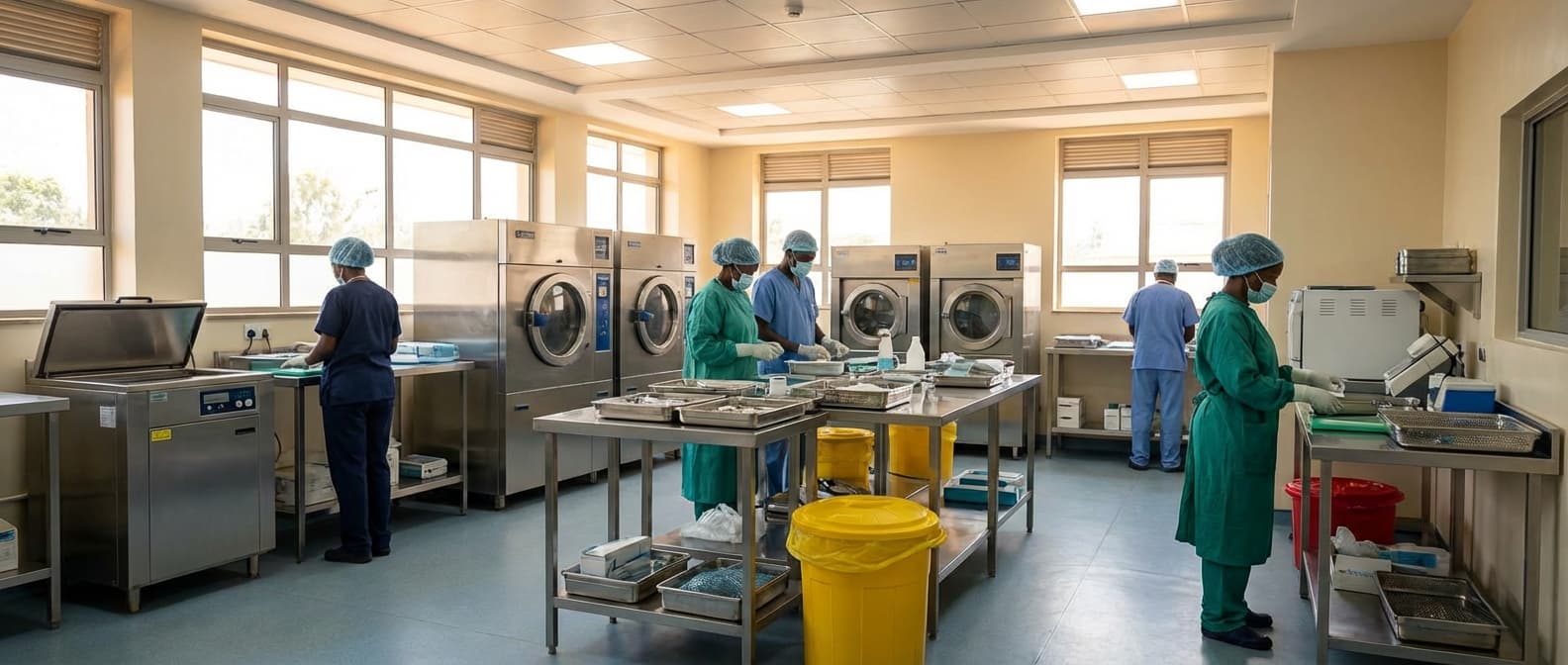
Autoclave Validation Support Service in Angola
Engineering Excellence & Technical Support
Autoclave Validation Support Service High-standard technical execution following OEM protocols and local regulatory frameworks.
ISO 17025 Compliant Calibration
We provide accredited calibration of critical autoclave parameters (temperature, pressure, time) to ISO 17025 standards, ensuring the highest level of accuracy and traceability for your sterilization cycles in Angola.
Protocol Development & Execution
Our expert engineers develop and execute comprehensive validation protocols, including Installation Qualification (IQ), Operational Qualification (OQ), and Performance Qualification (PQ), tailored to the specific autoclave models and operational needs of Angolan healthcare and industrial facilities.
On-Site Technical Expertise
Benefit from our skilled technicians providing on-site support for autoclave validation and revalidation services across Angola, minimizing downtime and ensuring compliance with local and international regulations.
What Is Autoclave Validation Support Service In Angola?
Autoclave Validation Support Service in Angola refers to the provision of expert technical assistance and documentation to ensure that steam sterilizers (autoclaves) within healthcare facilities, laboratories, and other critical environments in Angola operate effectively, reliably, and in compliance with relevant regulatory standards for sterilization processes. This service is crucial for verifying the efficacy of the sterilization cycle, thereby guaranteeing the destruction of microorganisms and preventing the transmission of infections. It involves a comprehensive assessment of the autoclave's performance, including its physical, biological, and chemical parameters, to confirm it consistently achieves the required Sterility Assurance Level (SAL).
| Who Needs Autoclave Validation Support Service? | Typical Use Cases |
|---|---|
| Hospitals and Healthcare Facilities (Operating Rooms, Central Sterilization Supply Departments - CSSD, Dental Clinics, Laboratories). | Sterilization of surgical instruments, medical devices, laboratory glassware, and other critical items requiring microbial inactivation. |
| Research and Development Laboratories (Biotechnology, Pharmaceutical, Food Science). | Sterilization of media, reagents, equipment, and waste to prevent contamination and ensure experimental integrity. |
| Pharmaceutical Manufacturing Facilities. | Sterilization of components, equipment, and sterile products in accordance with Good Manufacturing Practices (GMP). |
| Veterinary Clinics and Animal Research Facilities. | Sterilization of surgical instruments and equipment for animal care and research. |
| Cosmetic and Tattoo/Piercing Studios (where applicable by regulation). | Sterilization of equipment to ensure patient/client safety and prevent transmissible diseases. |
Key Components of Autoclave Validation Support Service
- Installation Qualification (IQ): Verifies that the autoclave has been installed correctly according to manufacturer specifications and industry best practices.
- Operational Qualification (OQ): Confirms that the autoclave operates within its specified parameters under normal and worst-case conditions.
- Performance Qualification (PQ): Demonstrates that the autoclave consistently sterilizes a defined load under routine operating conditions, achieving the required SAL.
- Validation Protocol Development: Creation of detailed protocols outlining the methodology, acceptance criteria, and testing procedures for each validation stage.
- On-site Testing and Calibration: Conducting a series of tests using calibrated equipment, including temperature probes, pressure sensors, and biological indicators (BIs) and chemical indicators (CIs).
- Data Analysis and Reporting: Comprehensive analysis of collected validation data and the generation of a detailed validation report.
- Revalidation and Calibration Services: Ongoing support for periodic revalidation, calibration, and preventative maintenance to maintain compliance and operational efficiency.
- Training and Consultation: Providing guidance to facility staff on proper autoclave operation, maintenance, and the significance of validation.
Who Needs Autoclave Validation Support Service In Angola?
In Angola, reliable sterilization is paramount for ensuring patient safety and compliance with stringent healthcare regulations. Autoclave validation support services are essential for organizations that rely on steam sterilization for their critical equipment and instruments. These services provide the expertise and documentation necessary to confirm that autoclaves are functioning correctly and consistently achieving the required levels of sterilization. This is crucial for preventing the spread of infections and maintaining the integrity of medical procedures.
| Target Customer Segment | Key Departments Requiring Autoclave Validation |
|---|---|
| Hospitals | Central Sterile Supply Department (CSSD)/Sterilization Services, Operating Rooms (OR), Intensive Care Units (ICU), Emergency Departments (ED), Dental Departments, Outpatient Clinics |
| Clinics and Medical Centers | Sterilization Area, Treatment Rooms, Surgical Procedure Areas |
| Dental Practices | Sterilization Room, Dental Operatories |
| Laboratories | Microbiology Labs, Pathology Labs, Research Labs, Quality Control Departments |
| Veterinary Clinics | Surgical Suites, Treatment Rooms |
| Pharmaceutical Manufacturing Facilities | Sterile Production Areas, Quality Assurance/Quality Control (QA/QC) |
Target Customers in Angola for Autoclave Validation Support Service
- Hospitals (Public and Private)
- Clinics and Medical Centers
- Dental Practices
- Laboratories (Medical, Research, and Industrial)
- Veterinary Clinics
- Surgical Centers
- Blood Banks
- Dialysis Centers
- Pharmaceutical Manufacturing Facilities
- Beauty and Tattoo/Piercing Studios (where applicable for sterilization)
Autoclave Validation Support Service Process In Angola
This document outlines the typical workflow for an Autoclave Validation Support Service Process in Angola, from initial inquiry to final execution. The service aims to ensure autoclaves meet regulatory requirements and perform reliably and effectively for sterilization purposes. This process is crucial for industries like healthcare, pharmaceuticals, and research where sterile equipment is paramount.
| Stage | Description | Key Activities | Deliverables/Outcomes |
|---|---|---|---|
| Inquiry and Initial Consultation | The client contacts the service provider with a need for autoclave validation. This stage involves understanding the client's specific requirements, the type of autoclave, and its intended use. | Receive and acknowledge inquiry, Discuss client needs and scope, Identify autoclave type and capacity, Understand regulatory requirements (e.g., local health ministry standards), Initial risk assessment. | Understanding of client's validation needs, Preliminary scope definition, Potential for a site visit. |
| Proposal and Quotation | Based on the initial consultation, the service provider develops a detailed proposal outlining the scope of work, methodology, timeline, and associated costs. | Develop validation protocol outline, Identify required equipment and consumables, Estimate personnel time, Prepare detailed proposal with technical specifications and cost breakdown, Submit proposal and quotation to client. | Formal proposal document, Itemized quotation, Proposed timeline for validation activities. |
| Agreement and Scheduling | Upon acceptance of the proposal, a formal agreement is established, and the validation activities are scheduled at a mutually convenient time. | Review and negotiation of proposal terms, Contract signing, Agreement on validation dates and times, Coordination of access to the facility and autoclave. | Signed service agreement/contract, Confirmed validation schedule. |
| Pre-Validation Site Assessment | A preliminary visit to the client's facility to assess the autoclave's current condition, surrounding environment, and any potential influencing factors. | Inspect autoclave installation and utilities, Verify maintenance records, Assess environmental conditions (temperature, humidity), Discuss operational procedures with client staff, Confirm availability of necessary resources (power, water). | Pre-validation checklist completion, Identification of potential risks or deviations, Confirmation of readiness for validation. |
| Validation Execution | The core phase where the actual validation tests are performed according to the agreed-upon protocol. This typically involves several cycles (e.g., empty, partially loaded, fully loaded). | Calibration of sensors and monitoring equipment, Performance of physical and biological challenge tests, Collection and recording of temperature, pressure, and time data, Biological indicator incubation and reading, Documentation of all test results and observations. | Raw validation data (charts, logs, sensor readings), Biological indicator results, Observations and deviations recorded. |
| Data Analysis and Reporting | All collected data is meticulously analyzed to determine if the autoclave meets the specified validation criteria. | Review and analyze all collected data, Compare results against acceptance criteria (established by regulatory bodies and manufacturer's specifications), Identify any deviations or out-of-specification results, Prepare a draft validation report. | Analyzed data, Identification of pass/fail status for each parameter, Draft validation report. |
| Corrective Actions (if necessary) | If the validation tests reveal any failures or deviations, corrective actions are implemented and re-validation may be required. | Investigate root cause of failures, Develop and implement corrective action plan, Perform re-testing or re-validation as per protocol, Document all corrective actions and re-validation results. | Records of corrective actions, Results of re-validation tests. |
| Final Report and Certification | A comprehensive validation report is prepared, summarizing the entire process, results, and conclusions. A certificate of validation is issued upon successful completion. | Finalize the validation report, Include all raw data, analysis, conclusions, and recommendations, Issue a formal Certificate of Validation, Present the final report and certificate to the client. | Final Autoclave Validation Report, Certificate of Validation, Recommendations for optimal performance and maintenance. |
| Post-Validation Support | Ongoing support and guidance to the client to ensure continued compliance and optimal autoclave performance. | Provide advice on calibration schedules, Assist with troubleshooting if issues arise, Offer recommendations for preventive maintenance, Support during audits or inspections. | Ongoing client satisfaction, Continued compliance with regulatory standards. |
Key Stages of Autoclave Validation Support Service in Angola:
- Inquiry and Initial Consultation
- Proposal and Quotation
- Agreement and Scheduling
- Pre-Validation Site Assessment
- Validation Execution
- Data Analysis and Reporting
- Corrective Actions (if necessary)
- Final Report and Certification
- Post-Validation Support
Autoclave Validation Support Service Cost In Angola
Providing autoclave validation support services in Angola involves several cost factors that influence the final price. These services are crucial for ensuring that autoclaves are functioning correctly and meeting regulatory standards for sterilization, especially in healthcare, research, and pharmaceutical industries. The cost can vary significantly based on the complexity of the equipment, the scope of the validation required, the location within Angola, and the provider's expertise and reputation.
| Service Scope | Estimated Range (Kwanza - AOA) | Notes |
|---|---|---|
| Basic Performance Qualification (PQ) for a small/medium autoclave (e.g., annual requalification) | 500,000 - 1,500,000 | Covers essential cycle testing and basic documentation. |
| Full Validation (IQ, OQ, PQ) for a medium-sized autoclave | 1,500,000 - 3,500,000 | Includes initial setup verification, operational checks, and performance testing with detailed reporting. |
| Full Validation (IQ, OQ, PQ) for a large/complex industrial or healthcare autoclave | 3,500,000 - 8,000,000+ | Higher complexity, more test points, and extensive documentation. |
| Requalification (PQ) for multiple autoclaves at one site | Negotiable, based on volume and complexity | Volume discounts may apply. |
| On-site travel and accommodation for validation team (if outside major city) | Variable, billed separately | Dependent on distance and duration. |
Key Pricing Factors for Autoclave Validation Support in Angola:
- Type and Size of Autoclave: Larger, more complex, or specialized autoclaves (e.g., large-scale industrial autoclaves vs. smaller laboratory units) will generally incur higher validation costs due to increased time, specialized equipment, and potentially more complex validation protocols.
- Scope of Validation: The extent of the validation process is a major cost driver. This can range from basic performance qualification (PQ) to full validation, including Installation Qualification (IQ), Operational Qualification (OQ), and Performance Qualification (PQ). The number of cycles to be validated and the specific parameters to be tested (temperature, pressure, time, steam penetration, etc.) will directly impact the service cost.
- Frequency of Validation: While initial validation is a significant cost, regular requalification (often annual or bi-annual) is also necessary. Requalification might be less expensive than initial validation but is a recurring operational expense.
- Provider's Expertise and Reputation: Highly experienced and reputable validation service providers, especially those with international accreditations or specialized knowledge of Angolan regulatory requirements, may command higher fees.
- Geographic Location within Angola: Travel and logistical costs for the validation team to reach the client's facility can influence the overall price. Services in major cities like Luanda might be more accessible and potentially less costly in terms of travel than remote locations.
- Calibration and Maintenance Services: If the validation service package includes calibration of critical instruments used during validation or minor maintenance tasks, these will add to the overall cost.
- Documentation and Reporting: The thoroughness and format of the validation report, including detailed data, analysis, and recommendations, can also affect the service price. Comprehensive and regulatory-compliant documentation is essential and requires significant effort.
- Regulatory Requirements: Adherence to specific Angolan health or industry regulations will necessitate particular testing methodologies and documentation standards, which can influence the complexity and cost of the validation process.
- Urgency of Service: If the validation is required on short notice or outside of standard working hours, rush fees may apply.
Affordable Autoclave Validation Support Service Options
Ensuring your autoclave operates correctly and meets regulatory standards is crucial for sterile processing. Autoclave validation, a complex and often costly process, can be made more accessible through strategic service options. This guide explores affordable autoclave validation support service options, focusing on value bundles and effective cost-saving strategies.
| Service Option | Description | Value Proposition | Cost-Saving Potential |
|---|---|---|---|
| Basic Validation Package | Includes essential tests like temperature, pressure, and time cycle verification. | Covers fundamental compliance requirements at a lower entry cost. | Ideal for facilities with simpler reprocessing needs or smaller equipment fleets. |
| Comprehensive Validation Bundle | Combines basic validation with additional tests such as Bowie-Dick tests, biological indicator testing, and load penetration studies. | Offers a more thorough validation, suitable for diverse instrument types and higher-risk environments. | Bundling multiple services often results in a discounted rate compared to individual test purchases. |
| Routine Maintenance & Validation Integration | Integrates scheduled preventative maintenance with validation testing. | Ensures equipment is maintained for optimal performance and validated concurrently, reducing separate service calls. | Minimizes downtime and avoids the cost of a validation-only visit. |
| Multi-Year Service Agreements | Commits to validation services over an extended period (e.g., 3-5 years). | Provides predictable budgeting and often includes tiered discounts for longer commitments. | Can lock in current pricing and offer preferential scheduling. |
| On-Demand Support with Volume Discounts | Offers flexible validation services as needed, with reduced per-test pricing for higher volumes within a specified timeframe. | Allows facilities to scale services based on their actual needs without being tied to a fixed contract. | Economical for facilities with fluctuating reprocessing demands. |
Understanding Autoclave Validation and its Importance
- What is Autoclave Validation? It's a documented process to confirm that an autoclave consistently sterilizes medical devices according to predefined specifications and regulatory requirements.
- Why is it Important?
- Patient Safety: Guarantees effective sterilization, preventing infections.
- Regulatory Compliance: Meets standards set by bodies like the FDA, AAMI, and ISO.
- Operational Efficiency: Minimizes the risk of reprocessing, saving time and resources.
- Equipment Longevity: Ensures proper functioning, extending the life of the autoclave.
Verified Providers In Angola
In Angola, ensuring access to reliable and qualified healthcare providers is paramount. Verified providers, particularly those with credentials from reputable organizations like Franance Health, stand out as the most trustworthy and effective choice for patients seeking quality medical care. This commitment to rigorous vetting and adherence to high standards sets them apart, offering peace of mind and superior health outcomes.
| Criterion | Verified Provider (Franance Health) | Unverified Provider |
|---|---|---|
| Credentialing & Vetting | Rigorous, multi-stage process including education, training, experience, and ethical conduct review by Franance Health. | Potentially limited or no formal verification of qualifications or background. |
| Quality Assurance | Ongoing adherence to Franance Health's standards and best practices for patient care. | Variable, dependent on individual practice without external oversight. |
| Patient Confidence | High level of assurance due to recognized and trusted certification. | Lower confidence, potential for uncertainty regarding qualifications. |
| Professional Standards | Demonstrated commitment to ethical medical practice and continuous learning. | May vary significantly; no guaranteed adherence to specific ethical codes. |
| Risk Mitigation | Reduced likelihood of encountering unqualified or unethical practitioners. | Increased risk of encountering providers with inadequate training or questionable ethics. |
Why Verified Providers with Franance Health Credentials are the Best Choice in Angola:
- Unwavering Commitment to Quality: Franance Health's stringent credentialing process ensures that all verified providers meet and exceed established medical standards and ethical guidelines.
- Enhanced Patient Safety: Patients can be confident that they are receiving care from practitioners who have undergone thorough background checks and have a proven track record of competence.
- Access to Expertise: Verification often signifies a dedication to continuous professional development and specialization, meaning patients gain access to highly skilled and knowledgeable medical professionals.
- Transparency and Accountability: Franance Health's verification system promotes transparency in the healthcare sector, making it easier for patients to identify and choose reliable providers.
- Reduced Risk of Medical Errors: By adhering to strict protocols and standards, verified providers are less likely to make errors, contributing to better patient safety and outcomes.
- Building Trust in the System: The presence of a robust verification framework like Franance Health's helps to build patient confidence in the Angolan healthcare system as a whole.
Scope Of Work For Autoclave Validation Support Service
This Scope of Work (SOW) outlines the services to be provided by the Validation Support Service provider for the validation of an Autoclave. The objective is to ensure the autoclave consistently sterilizes medical devices and materials according to established efficacy and safety standards. This SOW details the technical deliverables, standard specifications, and activities involved in the validation process.
| Deliverable/Activity | Description | Standard Specification/Reference | Acceptance Criteria |
|---|---|---|---|
| Installation Qualification (IQ) | Verification of the autoclave's proper installation, including components, utilities, and safety features. | Manufacturer's Installation Manual, relevant industry standards (e.g., ISO 13485). | All specified installation parameters met. Documented evidence of components and utilities matching specifications. Safety features tested and confirmed functional. |
| Operational Qualification (OQ) | Testing to confirm the autoclave operates within its defined operational range and meets specified performance criteria. | Manufacturer's O&M Manual, process parameters defined by the client, relevant industry standards. | Successful completion of a minimum of three consecutive cycles demonstrating consistent temperature, pressure, and time parameters within specified tolerances. |
| Performance Qualification (PQ) | Demonstration that the autoclave consistently sterilizes a challenging biological load under normal operating conditions. | Client-defined sterilization cycle parameters, biological indicators (BIs) and chemical indicators (CIs) as per USP/EP/local regulatory requirements, industry best practices. | 100% inactivation of biological indicators across multiple validation runs (e.g., three consecutive runs). Chemical indicators show expected color change in all test locations. Documented evidence of process repeatability and reproducibility. |
| Validation Protocol Development | Detailed plan outlining the scope, objectives, responsibilities, methods, materials, and acceptance criteria for the validation study. | Client's Quality System, regulatory guidelines (e.g., FDA 21 CFR Part 11, EU GMP Annex 15). | Protocol approved by client and relevant stakeholders prior to execution. Clearly defined and measurable acceptance criteria. |
| Validation Report Generation | Comprehensive document summarizing the validation activities, results, deviations, and conclusions. | Client's Quality System, regulatory guidelines. | All executed protocols attached. All deviations documented and justified. Clear conclusion on the validated status of the autoclave. |
| Calibration of Validation Equipment | Ensuring all measurement and monitoring equipment used in the validation process is calibrated and traceable. | NIST traceable calibration certificates, ISO 17025 accredited calibration laboratories. | All equipment used has current and valid calibration certificates. Calibration due dates are respected. |
| Maintenance of Validation Equipment | Ensuring validation equipment is in good working order and suitable for its intended use. | Manufacturer's recommendations, client's equipment management system. | Equipment logs maintained. Any identified faults or issues addressed promptly. |
| Final Validation Documentation Package | Compilation of all executed protocols, reports, raw data, calibration certificates, and other relevant documentation. | Client's Quality System, regulatory requirements. | Complete and organized package, ready for client review and archiving. |
Key Activities and Deliverables
- Installation Qualification (IQ) of the Autoclave.
- Operational Qualification (OQ) of the Autoclave.
- Performance Qualification (PQ) of the Autoclave.
- Validation Protocol Development and Execution.
- Validation Report Generation.
- Calibration and Maintenance of Validation Equipment.
- Final Validation Documentation Package.
- Client Training on Validation Procedures and Data Interpretation.
Service Level Agreement For Autoclave Validation Support Service
This Service Level Agreement (SLA) outlines the response times and uptime guarantees for the Autoclave Validation Support Service provided by [Your Company Name] to [Client Company Name]. This SLA is an appendix to the Master Service Agreement dated [Date of MSA].
| Service Component | Response Time (Business Hours) | Uptime Guarantee |
|---|---|---|
| Initial Response to Critical Incidents (e.g., validation failure, critical equipment malfunction) | 2 Business Hours | N/A (Focus on rapid resolution) |
| Initial Response to High Priority Incidents (e.g., validation delays, urgent inquiry) | 4 Business Hours | N/A (Focus on rapid resolution) |
| Initial Response to Medium Priority Incidents (e.g., general inquiry, minor technical question) | 8 Business Hours (Next Business Day) | N/A (Focus on timely resolution) |
| Initial Response to Low Priority Incidents (e.g., documentation requests, non-urgent feedback) | 24 Business Hours (2 Business Days) | N/A (Focus on timely resolution) |
| Remote Support Availability (for troubleshooting, analysis) | 99.5% during Business Hours | 99.5% |
| Scheduled Validation Report Review Sessions | As per scheduled appointments | N/A (Dependent on client availability) |
| Email and Ticketing System Availability | 24x7 (response within defined times) | 99.9% |
Service Objectives
- To provide timely and effective support for autoclave validation processes.
- To ensure high availability of the support services.
- To maintain clear communication channels regarding service status and incident resolution.
Frequently Asked Questions

Ready when you are
Let's scope your Autoclave Validation Support Service in Angola project in Angola.

Scaling healthcare logistics and technical systems across the entire continent.