
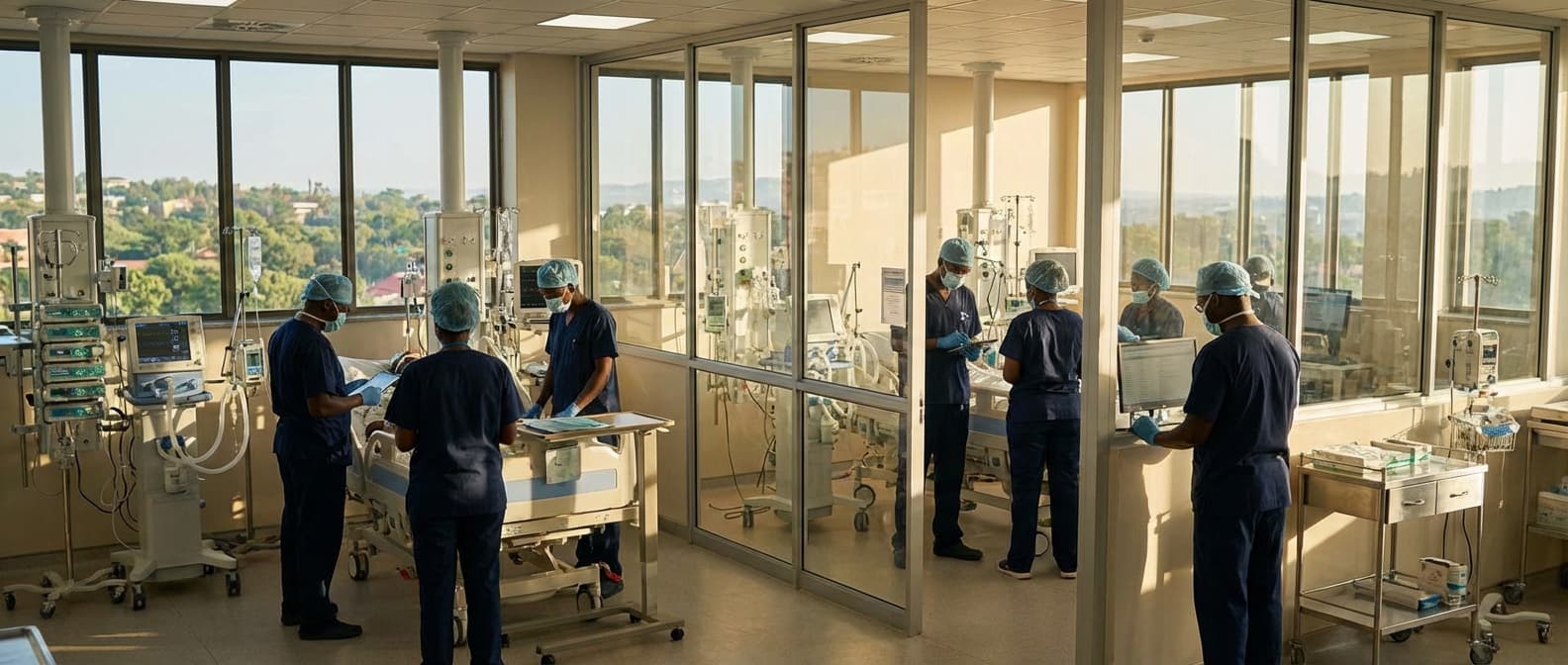
Ventilator Fleet Management & PM in Angola
Engineering Excellence & Technical Support
Preventive maintenance and fleet management for ICU ventilators High-standard technical execution following OEM protocols and local regulatory frameworks.
Predictive Maintenance Program for Ventilator Fleet
Leveraging IoT sensors and AI-powered analytics to proactively identify potential equipment failures in the Angolan ventilator fleet. This minimizes unexpected downtime, ensures optimal patient care, and reduces costly emergency repairs across remote and urban healthcare facilities.
Real-time Ventilator Asset Tracking & Utilization
Implementing a robust digital inventory and tracking system for the entire Angolan ventilator fleet. This provides real-time visibility into equipment location, status, and utilization rates, enabling efficient resource allocation during critical periods and informed procurement decisions.
Remote Monitoring & Diagnostics for Ventilator Performance
Establishing a secure, cloud-based platform for remote monitoring of ventilator performance and diagnostics across Angola. This allows for timely identification of operational issues, remote troubleshooting, and proactive software updates, thereby enhancing device reliability and extending lifespan.
What Is Ventilator Fleet Management & Pm In Angola?
Ventilator Fleet Management & Preventive Maintenance (PM) in Angola refers to the comprehensive oversight and scheduled upkeep of all mechanical ventilators owned or operated by an entity. This service ensures optimal performance, reliability, and longevity of these critical medical devices, thereby safeguarding patient care and operational continuity within healthcare facilities. It encompasses a lifecycle approach, from initial deployment and configuration to routine inspections, calibration, repair, and eventual decommissioning. The primary objective is to mitigate the risk of equipment failure during patient support, reduce unscheduled downtime, and maintain compliance with regulatory standards and manufacturer specifications. This service is crucial for healthcare providers and organizations that rely on a consistent and functional ventilator inventory to deliver respiratory care.
| Stakeholder Group | Need for Ventilator Fleet Management & PM | Typical Use Cases |
|---|---|---|
| Hospitals (Public & Private) | Ensuring uninterrupted patient ventilation, minimizing critical equipment downtime, optimizing resource allocation, maintaining patient safety and quality of care, complying with national health regulations. | Management of ICU ventilators, emergency room ventilators, operating room ventilators, and transport ventilators. Routine PM for all critical care respiratory support devices. |
| Ministry of Health/Government Health Agencies | Ensuring national healthcare infrastructure readiness, standardization of medical equipment maintenance, public health emergency preparedness, efficient allocation of public health funds. | Overseeing the ventilator fleet in public hospitals nationwide. Developing national maintenance protocols and standards. Managing large-scale ventilator deployments during health crises. |
| Non-Governmental Organizations (NGOs) & Humanitarian Organizations | Maintaining the operational capability of donated or acquired medical equipment in resource-limited settings, ensuring sustainability of deployed medical assets, delivering essential healthcare services. | Managing ventilators deployed in remote clinics or disaster relief operations. Providing essential maintenance services for critical equipment in underserved areas. |
| Private Healthcare Providers (Clinics, Specialized Centers) | Guaranteeing reliable performance of specialized respiratory equipment, upholding service quality standards, managing capital expenditure on medical assets, ensuring patient satisfaction and outcomes. | Maintenance of ventilators in specialized respiratory care units, sleep labs, or rehabilitation centers. |
| Biomedical Engineering Departments/Third-Party Service Providers | Delivering specialized technical expertise, performing scheduled maintenance and repairs, ensuring compliance with technical specifications and safety standards, managing parts inventory and service contracts. | Executing PM schedules, performing advanced repairs, managing service contracts for multiple healthcare facilities, offering outsourced fleet management solutions. |
Key Components of Ventilator Fleet Management & PM in Angola:
- Inventory Management: Establishing and maintaining a detailed registry of all ventilators, including serial numbers, acquisition dates, locations, service history, and warranty status.
- Preventive Maintenance Scheduling: Developing and executing a proactive maintenance plan based on manufacturer recommendations, usage patterns, and regulatory requirements. This includes routine inspections, cleaning, disinfection, and functional testing.
- Calibration and Performance Verification: Ensuring ventilators are calibrated to precise specifications and meet performance benchmarks through specialized testing equipment and procedures.
- Repair and Troubleshooting: Diagnosing and rectifying mechanical, electrical, or software malfunctions by trained biomedical technicians.
- Parts and Consumables Management: Maintaining an adequate stock of genuine spare parts and consumables, ensuring availability for immediate repairs and maintenance.
- Documentation and Record Keeping: Meticulously documenting all maintenance activities, repairs, part replacements, and test results for audit and historical tracking purposes.
- Staff Training and Competency: Providing training for healthcare professionals on the proper operation, basic troubleshooting, and infection control protocols related to ventilators.
- Regulatory Compliance: Ensuring all maintenance practices adhere to Angolan healthcare regulations, international standards (e.g., ISO), and original equipment manufacturer (OEM) guidelines.
- Asset Lifecycle Management: Planning for the eventual replacement or retirement of ventilators based on their age, condition, and technological obsolescence.
- Remote Monitoring and Diagnostics (where applicable): Utilizing advanced systems for real-time performance monitoring and remote fault detection.
Who Needs Ventilator Fleet Management & Pm In Angola?
Effective Ventilator Fleet Management and Preventive Maintenance (PM) are crucial for ensuring the optimal functioning and longevity of critical medical equipment in Angola. This is particularly important in a healthcare landscape where resource optimization and reliable patient care are paramount. The demand for such services extends across various healthcare facilities and the entities responsible for their operation and maintenance.
| Customer Type | Key Departments Involved | Specific Needs & Benefits |
|---|---|---|
| Public Hospitals | Intensive Care Units (ICU), Respiratory Therapy Departments, Biomedical Engineering Departments, Procurement Departments, Hospital Administration | Ensure continuous availability of functional ventilators for critical care. Reduce unexpected equipment failures during emergencies. Optimize maintenance schedules to minimize downtime and operational costs. Improve inventory management of spare parts and consumables. Extend the lifespan of existing equipment through regular PM. |
| Private Hospitals and Clinics | ICU, Anesthesiology Departments, Biomedical Services, Facility Management, Administration | Maintain high standards of patient care and safety. Prevent costly emergency repairs. Enhance the reputation of the facility through reliable equipment. Optimize capital expenditure on new equipment by maximizing the use of existing assets. |
| Tertiary and Referral Centers | Specialized ICUs (e.g., Neonatal, Cardiac), Advanced Diagnostic Departments, Biomedical Engineering | Manage a large and diverse fleet of ventilators. Ensure the availability of specialized ventilators for complex cases. Implement advanced diagnostic and calibration services. Support research and training activities with well-maintained equipment. |
| Emergency Medical Services (EMS) | Operations Management, Fleet Maintenance, Training Departments | Ensure ventilators are always ready for deployment in pre-hospital settings. Maintain equipment in optimal working condition for rapid response. Facilitate training on the use and basic maintenance of portable ventilators. |
| NGO Healthcare Providers | Clinical Operations, Logistics, Procurement, Local Management | Maximize the impact of donated or limited resources. Ensure the sustainability of healthcare services in underserved areas. Provide essential respiratory support in remote or resource-limited settings. |
| Military and Police Healthcare Facilities | Medical Units, Logistics, Maintenance Divisions | Maintain operational readiness for medical support in various deployments. Ensure equipment reliability in challenging environments. Manage specialized ventilators for military medical needs. |
| Medical Equipment Suppliers and Distributors | Service Departments, Technical Support, Sales Departments | Offer comprehensive after-sales service and maintenance packages. Build long-term customer relationships. Provide training and technical expertise to end-users. Ensure the availability of spare parts and support for the brands they represent. |
| Government Health Ministries and Departments | Public Health Planning, Procurement and Logistics, Biomedical Engineering Oversight, Disease Control Departments | Develop and implement national strategies for medical equipment management. Monitor the condition and performance of the national ventilator fleet. Ensure equitable distribution and accessibility of respiratory support. Facilitate standardized training and certification for maintenance technicians. |
Target Customers and Departments for Ventilator Fleet Management & PM in Angola
- Public Hospitals (National, Provincial, and Municipal)
- Private Hospitals and Clinics
- Tertiary and Referral Centers
- Emergency Medical Services (EMS)
- Non-Governmental Organization (NGO) Healthcare Providers
- Military and Police Healthcare Facilities
- Medical Equipment Suppliers and Distributors
- Government Health Ministries and Departments
Ventilator Fleet Management & Pm Process In Angola
This document outlines the workflow for Ventilator Fleet Management and Preventive Maintenance (PM) processes in Angola, from initial inquiry to the successful execution of services. It details the steps involved in ensuring the optimal functioning and longevity of the ventilator fleet, crucial for healthcare infrastructure.
| Stage | Description | Key Activities | Responsible Parties | Deliverables | Timeframe (Typical) |
|---|---|---|---|---|---|
| The initial contact from a client regarding ventilator fleet management or PM services. | Receive inquiry, understand client's fleet size, ventilator types, current condition, and specific PM requirements. | Client (Healthcare Facility/Ministry of Health), Service Provider (Fleet Management Company) | Inquiry document, preliminary understanding of scope | 1-3 business days |
| Based on the assessed needs, a detailed offer is prepared. | Develop technical proposal outlining PM schedule, parts, labor, timelines, and methodologies. Prepare a comprehensive quotation with pricing. | Service Provider (Technical & Sales Teams) | Technical Proposal, Financial Quotation | 3-7 business days |
| Formalizing the service agreement between the client and the service provider. | Negotiate terms and conditions, finalize pricing, and sign the contract/service level agreement (SLA). | Client (Procurement/Legal), Service Provider (Legal & Management) | Signed Contract/SLA | 7-14 business days |
| Preparing and dispatching resources to the client's location. | Procure necessary spare parts and consumables. Schedule technician's travel and accommodation. Coordinate equipment and tool mobilization to Angola. | Service Provider (Logistics, Procurement, Field Operations) | Mobilized team, necessary parts and equipment at site | 1-4 weeks (depending on import/local availability) |
| The core service delivery stage where PM tasks are performed. | Perform scheduled PM as per manufacturer guidelines and SLA. This includes inspection, cleaning, calibration, minor repairs, and functional testing. Record all actions and findings. | Service Provider (Certified Technicians) | Completed PM checklist, service logs, updated equipment status | Varies based on fleet size and PM schedule (e.g., per ventilator per scheduled interval) |
| Providing detailed reports on the performed services. | Generate comprehensive PM reports including performed tasks, parts used, findings, recommendations, and images if applicable. Submit these reports to the client. | Service Provider (Technicians, Service Manager) | PM Reports, Service Records | 1-3 business days post-execution |
| The financial reconciliation of services rendered. | Issue invoices based on the signed contract/SLA and completed service reports. Process payments according to agreed terms. | Service Provider (Finance & Billing), Client (Finance) | Invoices, Payment Confirmation | As per contract payment terms (e.g., Net 30, Net 60) |
| Gathering feedback to enhance service quality and efficiency. | Solicit client feedback on service delivery. Analyze performance data, identify areas for improvement in processes, training, or resource allocation. | Service Provider (Management, Quality Assurance), Client | Client Satisfaction Survey, Performance Improvement Plan | Ongoing |
Ventilator Fleet Management & PM Process Workflow in Angola
- Inquiry & Needs Assessment
- Quotation & Proposal Development
- Contracting & Agreement
- Logistics & Mobilization
- Preventive Maintenance (PM) Execution
- Reporting & Documentation
- Billing & Payment
- Feedback & Continuous Improvement
Ventilator Fleet Management & Pm Cost In Angola
Managing a ventilator fleet in Angola involves significant operational costs, particularly for preventative maintenance (PM). These costs are influenced by a complex interplay of local economic factors, the specific type and age of ventilators, and the availability of specialized technicians and spare parts. Understanding these pricing factors is crucial for healthcare facilities and procurement bodies to budget effectively and ensure the continuous functionality of critical medical equipment. The following discussion outlines key pricing considerations and provides estimated cost ranges in Angolan Kwanza (AOA).
| Item/Service Category | Estimated Annual Cost Range (AOA) - Low | Estimated Annual Cost Range (AOA) - High | Notes |
|---|---|---|---|
| Basic Ventilator PM (per unit, annual) | 150,000 | 400,000 | Covers routine checks, filter replacement, calibration for simpler models. May involve local technicians with basic training. |
| Intermediate Ventilator PM (per unit, annual) | 300,000 | 800,000 | Includes more comprehensive checks, potential part replacements, for mid-range ventilators. May require OEM-trained technicians. |
| Advanced Ventilator PM (per unit, annual) | 700,000 | 2,000,000+ | For complex ICU ventilators, requiring specialized OEM technicians, extensive part replacements, and adherence to strict protocols. |
| Spare Parts (Estimated annual allocation per unit) | 50,000 | 300,000 | Highly variable based on ventilator age, usage, and likelihood of part failure. Import costs can be substantial. |
| Technical Support/Labor (per hour, specialized technician) | 20,000 | 50,000 | Reflects the scarcity of specialized skills and potential travel costs. |
| Annual Service Contract (basic coverage, per unit) | 200,000 | 600,000 | May cover scheduled PM and limited response times. Exclusions apply. |
| Annual Service Contract (comprehensive coverage, per unit) | 500,000 | 1,500,000+ | Typically includes extended warranties, rapid response, parts, and labor for critical machines. |
| Logistics & Transportation (per service call/part delivery) | 10,000 | 100,000+ | Dependent on distance, terrain, and urgency. Significant cost in remote areas. |
Key Pricing Factors for Ventilator Fleet Management & PM in Angola
- Ventilator Type and Complexity: Advanced ventilators with sophisticated features (e.g., invasive and non-invasive ventilation modes, integrated monitoring) typically have higher PM costs due to more complex components and specialized servicing requirements. Basic transport ventilators will generally be less expensive to maintain.
- Age and Condition of Ventilators: Older ventilators often require more frequent and extensive maintenance as parts wear out. The initial condition upon procurement and the intensity of usage also play a role in determining the frequency and cost of PM.
- Availability of Original Equipment Manufacturer (OEM) Parts: Access to genuine OEM spare parts is critical for effective PM. If OEM parts are scarce or expensive in Angola, reliance on third-party suppliers or refurbished parts may be necessary, which can impact quality and long-term cost-effectiveness. The cost of importing parts also adds to the overall expense.
- Skilled Technical Personnel: The availability of trained and certified biomedical technicians capable of servicing specific ventilator models is a major cost driver. Hiring and retaining such talent, especially in remote areas, can be challenging and expensive. Training costs for existing staff also need to be factored in.
- Service Level Agreements (SLAs): Contracts with service providers (whether OEM or third-party) for routine PM and emergency repairs. These SLAs vary in scope, response times, and inclusions, directly impacting the annual maintenance budget.
- Geographical Location and Logistics: Servicing ventilators across Angola, given its vastness and potentially challenging infrastructure, can incur significant travel and logistical costs for technicians and spare parts.
- Inflation and Exchange Rates: As with any imported goods and services, inflation within Angola and fluctuations in the exchange rate of the Angolan Kwanza against major currencies (USD, EUR) can significantly impact the cost of imported parts, specialized tools, and outsourced technical support.
- Preventative Maintenance Schedule: The frequency of PM dictated by the manufacturer's recommendations and the operational demands on the ventilators. More frequent servicing naturally leads to higher cumulative costs.
- Consumables: While not strictly PM, the cost of replacement consumables (e.g., filters, tubing, humidifiers) as part of ongoing maintenance should be considered within the overall fleet management budget.
Affordable Ventilator Fleet Management & Pm Options
Managing a ventilator fleet effectively is crucial for patient care, but can also represent a significant operational cost for healthcare facilities. This document outlines affordable fleet management and preventative maintenance (PM) options, focusing on value bundles and cost-saving strategies. By implementing these approaches, hospitals can ensure optimal equipment performance, extend lifespan, and reduce overall expenditure.
| Cost-Saving Strategy | Description | Potential Benefit |
|---|---|---|
| Negotiated Multi-Year Contracts: | Securing long-term service agreements with OEMs or third-party providers often unlocks discounted rates and predictable budgeting. | Reduced annual service costs, protection against price increases. |
| Bundled PM and Repair Services: | Combining preventative maintenance with a set number of repair calls or a capped repair budget in a single contract. | Streamlined vendor management, potential for volume discounts, better cost predictability. |
| Third-Party Service Provider Evaluation: | Obtaining quotes and comparing service quality from independent, certified biomedical service companies. | Significant cost savings compared to OEM contracts, competitive pricing. |
| In-House BMET Training: | Investing in training for your biomedical staff to handle routine PM, calibration, and minor repairs for specific ventilator models. | Reduced reliance on external technicians, faster response times, significant labor cost savings. |
| Parts Management & Standardization: | Developing a robust system for tracking and managing spare parts, and standardizing on fewer ventilator models to reduce parts inventory complexity and cost. | Lower inventory holding costs, reduced risk of obsolete parts, bulk purchasing discounts on common parts. |
| Preventative Maintenance Scheduling Software: | Utilizing software to automate PM scheduling, track service history, and generate reports for compliance and trend analysis. | Improved PM compliance, reduced manual effort, data-driven insights for cost optimization. |
| Leasing vs. Purchasing: | Evaluating the total cost of ownership for leasing equipment versus outright purchase, considering maintenance, upgrades, and obsolescence. | Potentially lower upfront costs, predictable monthly expenses, easier access to newer technology (depending on lease terms). |
Key Components of Affordable Ventilator Fleet Management & PM
- Comprehensive PM Programs: Proactive maintenance is essential to prevent costly breakdowns and extend the operational life of ventilators. This includes routine inspections, calibration, cleaning, and replacement of worn parts.
- Value-Based Service Bundles: Instead of individual service contracts, consider bundled offerings that cover multiple ventilators or a comprehensive service package (e.g., PM, repairs, software updates) at a negotiated, reduced rate.
- Flexible Service Agreements: Explore tiered agreements that allow for customization based on usage, age of equipment, and risk tolerance. Options can range from basic PM to full-service with rapid response guarantees.
- Remote Monitoring and Diagnostics: Leveraging technology for remote monitoring can identify potential issues before they become critical, reducing the need for on-site emergency repairs and minimizing downtime.
- Parts Inventory Optimization: Strategic management of spare parts inventory can prevent delays and reduce the cost of expedited shipping. This involves analyzing repair trends and stocking essential components.
- Third-Party Service Providers: Evaluate the cost-effectiveness and quality of accredited third-party service providers for PM and repairs, which can often be more affordable than Original Equipment Manufacturer (OEM) contracts.
- Staff Training and Empowerment: Training in-house biomedical engineering technicians (BMETs) to perform routine PM and basic repairs can significantly reduce external service costs.
- Equipment Lifecycle Management: Implement a strategy for managing ventilators throughout their lifecycle, from acquisition to retirement, considering total cost of ownership including maintenance and potential resale value.
Verified Providers In Angola
In Angola's evolving healthcare landscape, ensuring access to reliable and competent medical services is paramount. This is where the crucial role of 'Verified Providers' comes into play. Franance Health distinguishes itself by meticulously vetting its network of healthcare professionals, ensuring each provider meets stringent standards of qualification, ethical practice, and patient care. This rigorous credentialing process not only safeguards patient well-being but also empowers individuals to make informed decisions about their health. Franance Health's commitment to verification means you can trust that the providers within their network are not only licensed and experienced but also dedicated to delivering high-quality, evidence-based medical treatment.
| Verification Criterion | Franance Health Standard | Benefit to Patients |
|---|---|---|
| Medical License & Registration | Current and valid license verified with relevant Angolan medical boards. | Ensures providers are legally authorized to practice medicine. |
| Educational Qualifications | Verification of degrees, diplomas, and specialized training from accredited institutions. | Guarantees a strong foundation of medical knowledge and expertise. |
| Professional Experience | Assessment of clinical experience and areas of specialization. | Connects patients with specialists best suited for their specific needs. |
| Ethical Conduct & Reputation | Background checks and review of professional history for any disciplinary actions. | Upholds the highest standards of integrity and patient trust. |
| Continuing Medical Education (CME) | Requirement for ongoing professional development and staying updated with medical advancements. | Ensures providers are equipped with the latest knowledge and techniques. |
Why Franance Health's Verified Providers are the Best Choice:
- Uncompromising Quality: Rigorous vetting process ensures only qualified and experienced professionals are included.
- Patient Safety: Commitment to ethical practices and patient-centered care for enhanced well-being.
- Informed Decision-Making: Transparency in provider credentials empowers patients to choose with confidence.
- Access to Excellence: Connects you with a network of leading healthcare professionals in Angola.
- Peace of Mind: Reduces the risk of encountering unqualified or unethical practitioners.
Scope Of Work For Ventilator Fleet Management & Pm
This document outlines the Scope of Work (SOW) for the Ventilator Fleet Management and Preventative Maintenance (PM) program. It details the technical deliverables and standard specifications required to ensure the optimal performance, reliability, and longevity of the organization's ventilator fleet. The objective is to establish a comprehensive and standardized approach to managing and maintaining all ventilators, from acquisition to decommissioning, minimizing downtime and associated costs while ensuring patient safety and regulatory compliance.
| Technical Deliverable | Description | Standard Specification/Requirement |
|---|---|---|
| Comprehensive Fleet Inventory Database | A centralized, searchable database containing all relevant information for each ventilator unit. | Minimum data fields: Unique Asset ID, Manufacturer, Model, Serial Number, Acquisition Date, Location, Department, PM Schedule, Service History, Warranty Information, End-of-Life projection. |
| Standardized PM Checklist and Procedure | Detailed checklists and step-by-step procedures for all scheduled preventative maintenance tasks. | Must align with manufacturer recommendations, industry best practices, and regulatory requirements (e.g., FDA, ISO). Include visual inspection, functional testing, cleaning, lubrication, and replacement of wear-and-tear components. |
| Calibration and Performance Verification Reports | Documented evidence of successful calibration and performance verification against established benchmarks. | Reports must include date of calibration, technician name, equipment used, parameters tested, acceptable tolerance ranges, and results. Calibration equipment must be traceable to national standards. |
| Corrective Maintenance (CM) Service Level Agreements (SLAs) | Defined response and resolution times for reported ventilator malfunctions and failures. | SLAs to be tiered based on criticality (e.g., critical failure, non-critical issue). Typical response times for critical failures: < 1 hour; resolution times: < 4 hours (depending on part availability). |
| Service Manual and Technical Documentation Repository | A readily accessible repository of all manufacturer service manuals, technical bulletins, schematics, and software updates. | Must be organized logically, digitally accessible to authorized personnel, and regularly updated. |
| Training Program for Biomedical Technicians | Structured training curriculum for technicians responsible for the maintenance of the ventilator fleet. | Topics to include: specific ventilator model operation, PM procedures, troubleshooting, diagnostic tools, safety protocols, and regulatory compliance. Training records must be maintained. |
| Quality Assurance and Auditing Plan | A framework for regularly assessing the effectiveness and adherence to the PM program and overall fleet management. | Includes regular internal audits, review of maintenance logs, and assessment of equipment downtime and repair costs. Compliance with established KPIs. |
| Reporting Dashboard and Analytics | A system for generating regular reports on fleet status, PM completion rates, CM incidents, costs, and equipment performance trends. | Reports should be customizable and provide actionable insights for decision-making. Key Performance Indicators (KPIs) to include: PM Compliance Rate, Mean Time Between Failures (MTBF), Mean Time To Repair (MTTR), Equipment Uptime. |
| Decommissioning and Disposal Plan | A standardized procedure for the safe and environmentally responsible decommissioning and disposal of end-of-life ventilators. | Must comply with all relevant environmental regulations and data security policies. Includes asset de-identification and secure disposal of sensitive data. |
Key Areas of Responsibility
- Fleet Inventory and Asset Management
- Preventative Maintenance (PM) Program
- Corrective Maintenance and Repair
- Calibration and Performance Verification
- Documentation and Record Keeping
- Training and Competency Assurance
- Procurement and Decommissioning Support
- Reporting and Analytics
Service Level Agreement For Ventilator Fleet Management & Pm
This Service Level Agreement (SLA) outlines the terms and conditions for the comprehensive management and preventive maintenance (PM) of the client's ventilator fleet. It details guaranteed response times for incidents and uptime for critical medical equipment, ensuring continuous availability and optimal performance of the ventilator fleet.
| Service Component | Priority Level | Response Time Target | Uptime Guarantee | Notes |
|---|---|---|---|---|
| Ventilator Fleet Management & Support | Critical (Life-Threatening Equipment Failure) | Within 30 minutes (initial contact & diagnosis) | 99.5% | Applies to active patient use; excludes planned downtime. |
| Ventilator Fleet Management & Support | High (Imminent Performance Degradation/Non-critical Failure) | Within 2 hours (initial contact & diagnosis) | 99.0% | Aims to prevent future critical failures. |
| Ventilator Fleet Management & Support | Medium (Routine Inquiries/Non-urgent Issues) | Within 4 business hours | N/A | Includes general inquiries, minor troubleshooting. |
| Preventive Maintenance (PM) | Scheduled PM | N/A (scheduled in advance) | N/A | Performed according to manufacturer recommendations and agreed schedule. Downtime for PM will be communicated and minimized. |
Key Performance Indicators (KPIs) and Guarantees
- Response Times: Defined as the time from a reported issue by the client to the initiation of diagnostic and remedial actions by the service provider.
- Uptime Guarantees: The percentage of time the ventilator fleet is expected to be operational and available for patient use, excluding scheduled maintenance.
- Preventive Maintenance (PM) Schedule: Proactive maintenance activities performed at predetermined intervals to minimize the risk of equipment failure.
- Reporting and Escalation: Procedures for tracking performance, reporting on KPIs, and escalating issues that may impact service levels.
Frequently Asked Questions

Ready when you are
Let's scope your Ventilator Fleet Management & PM in Angola project in Angola.

Scaling healthcare logistics and technical systems across the entire continent.