
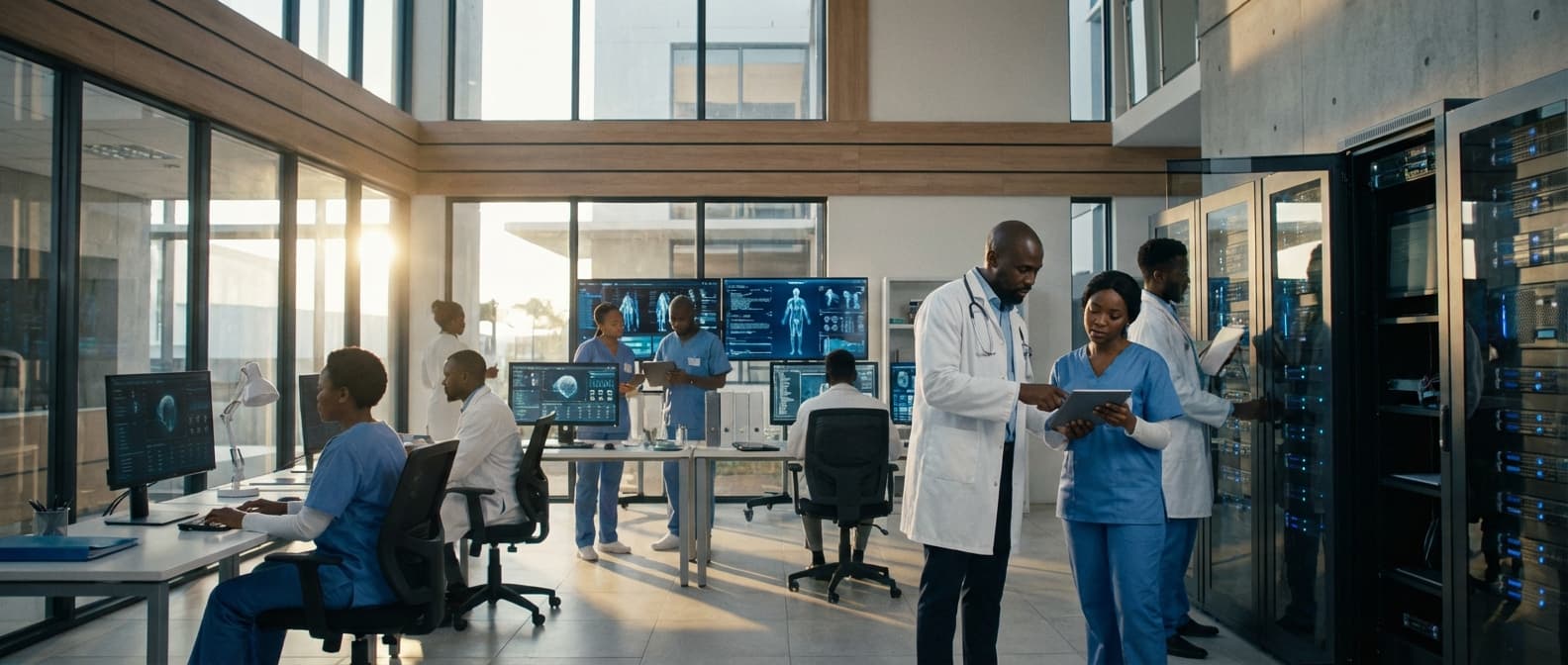
Tele-Radiology in Angola
Engineering Excellence & Technical Support
24/7 access to certified radiologists providing rapid, accurate remote interpretation of diagnostic imaging studies. High-standard technical execution following OEM protocols and local regulatory frameworks.
Remote Diagnostic Hubs
Establish secure, high-bandwidth satellite hubs in underserved regions, enabling real-time transmission of medical images (X-rays, CT scans, MRIs) to specialized radiologists. This bypasses geographical barriers, bringing expert diagnostics directly to remote clinics and hospitals across Angola.
AI-Powered Triage & Analysis
Implement AI algorithms integrated into the tele-radiology platform for initial image analysis and anomaly detection. This assists local medical staff with rapid triage, prioritizing urgent cases and flagging potential abnormalities for immediate review by remote radiologists, thereby improving turnaround times and patient outcomes.
Cloud-Based PACS & EHR Integration
Deploy a robust, cloud-based Picture Archiving and Communication System (PACS) that seamlessly integrates with existing or new Electronic Health Records (EHRs). This ensures secure storage, easy retrieval, and comprehensive data management for all patient imaging studies, facilitating collaborative diagnosis and long-term patient care tracking.
What Is Tele-radiology In Angola?
Tele-radiology in Angola refers to the practice of transmitting radiological images (such as X-rays, CT scans, MRI scans) from one geographic location to another for the purpose of interpretation by a radiologist. This service leverages telecommunications and information technology to overcome geographical barriers and improve access to specialized diagnostic imaging services within the Angolan context. It involves the remote acquisition, storage, and interpretation of medical images, enabling consultation and diagnosis without the physical presence of a radiologist at the imaging site. This is particularly critical in Angola, where there are significant disparities in the availability of skilled medical professionals and advanced imaging equipment across its provinces.
| Use Case | Description | Beneficiaries |
|---|---|---|
| Improved Access to Specialist Interpretation in Rural/Remote Areas | Enables healthcare facilities in provinces with a scarcity of radiologists to provide advanced diagnostic imaging services by outsourcing interpretation to a central hub or international experts. | Patients in remote areas, primary care physicians, district hospitals. |
| 24/7 Emergency Radiology Coverage | Provides immediate interpretation of critical imaging studies (e.g., trauma, stroke, acute abdomen) outside of standard working hours, especially for facilities lacking on-site radiologists. | Emergency departments, intensive care units, patients in critical condition. |
| Subspecialty Consultation | Facilitates access to radiologists with specific expertise (e.g., neuroradiology, interventional radiology, pediatric radiology) for complex cases, even if such subspecialists are not available locally. | Specialized medical departments, referring physicians for complex diagnoses. |
| Quality Assurance and Training | Allows for peer review of studies, consistent adherence to diagnostic standards, and ongoing training of local radiographers and junior radiologists through case review and feedback. | Radiologists, radiographers, medical students, residents. |
| Cost-Effectiveness and Resource Optimization | Reduces the need to relocate scarce radiology professionals to remote areas, optimizing the use of existing imaging equipment and personnel. | Ministry of Health, hospital administrators, healthcare payers. |
| Support for Public Health Initiatives | Facilitates large-scale screening programs (e.g., tuberculosis detection via chest X-rays) by enabling rapid processing of images from multiple sites. | Public health organizations, screening program participants. |
Key Components and Stakeholders of Tele-radiology in Angola
- Image Acquisition and Digitization: Local healthcare facilities equipped with digital imaging modalities (DR, CT, MRI) or analog systems capable of digitization are required. This generates DICOM-compliant images.
- Image Transmission: Secure and reliable network infrastructure (internet, satellite) is essential for transmitting large image files from remote sites to a central reading center or individual radiologists. Bandwidth management and data compression techniques are crucial considerations.
- Image Archiving and Management: A Picture Archiving and Communication System (PACS) or similar server-based system is needed for storing, retrieving, and managing digital radiological images and associated patient data.
- Remote Interpretation: Board-certified radiologists, either located within Angola or internationally, access and interpret the transmitted images. This necessitates teleradiology workstations equipped with high-resolution diagnostic monitors and specialized software.
- Reporting and Communication: Radiologists generate diagnostic reports, which are then securely transmitted back to the referring clinician. Communication platforms may facilitate direct consultation between radiologists and referring physicians.
- Referral and Ordering System: A robust system for ordering radiological examinations and referring patients to appropriate imaging centers is integral to the workflow.
- Patients: Individuals requiring diagnostic imaging services, particularly those residing in underserved or remote areas of Angola.
- Referring Clinicians: Doctors and other healthcare professionals in primary care clinics, district hospitals, and even specialized centers who need expert interpretation of radiological studies to inform patient management.
- Imaging Technologists/Radiographers: The personnel responsible for acquiring high-quality radiological images at local facilities.
- Radiologists: The medical specialists who interpret the images and provide diagnostic reports.
- Healthcare Facilities: Hospitals, clinics, and diagnostic centers that possess or have access to imaging equipment.
- Technology Providers: Companies supplying PACS, teleradiology platforms, networking solutions, and hardware.
- Government and Regulatory Bodies: Ministries of Health and other regulatory agencies involved in healthcare policy, licensing, and standards.
Who Needs Tele-radiology In Angola?
Tele-radiology offers a significant opportunity to bridge the gap in radiology services across Angola. The country faces a shortage of trained radiologists, particularly in rural and underserved areas. Tele-radiology allows for remote interpretation of medical images by qualified specialists, improving diagnostic accuracy, turnaround times, and ultimately, patient outcomes. This technology is not just a luxury but a critical necessity for enhancing healthcare accessibility and quality in Angola.
| Target Customer/Department | Key Needs Addressed by Tele-Radiology | Specific Imaging Modalities | Potential Benefits |
|---|---|---|---|
| Rural/Provincial Hospitals | Lack of on-site radiologists, delayed diagnoses, limited subspecialty expertise. | X-ray, CT, Ultrasound (initially X-ray and Ultrasound are most critical due to accessibility). | Improved diagnostic accuracy, reduced patient travel, faster treatment initiation, capacity building for local staff. |
| Urban Hospitals (Overflow/Specialty Support) | High patient volume, need for subspecialty interpretation (e.g., neuro-radiology, interventional radiology), after-hours coverage. | CT, MRI, X-ray, Mammography, Ultrasound. | Reduced workload for in-house radiologists, enhanced subspecialty coverage, 24/7 reporting capabilities, improved turnaround times for critical scans. |
| Primary Healthcare Clinics/Health Posts | Limited diagnostic infrastructure, basic imaging needs, need for preliminary interpretation. | X-ray (portable where available), Ultrasound. | Early detection of common conditions, reduced unnecessary referrals to larger facilities, improved primary care decision-making. |
| Diagnostic Imaging Centers | Capacity to perform imaging but limited specialist interpretation for complex cases or during off-hours. | CT, MRI, X-ray, Ultrasound, Mammography. | Increased service offering, competitive advantage, ability to handle higher volumes, revenue diversification. |
| Emergency Departments | Urgent need for rapid interpretation of trauma and acute condition imaging. | CT, X-ray, Ultrasound. | Faster decision-making in critical care, improved patient management in emergencies, reduced risk of missed diagnoses. |
| Maternal and Child Health Programs | Need for specialized interpretation of obstetric ultrasound and pediatric imaging. | Obstetric Ultrasound, Pediatric X-ray and Ultrasound. | Improved prenatal care, better management of pediatric illnesses, reduced infant mortality rates. |
Target Customers and Departments for Tele-Radiology in Angola
- Hospitals (Public and Private): Especially those in remote or provincial areas lacking in-house radiology expertise.
- Clinics and Health Centers: Requiring basic imaging interpretation capabilities for common pathologies.
- Diagnostic Imaging Centers: Seeking to augment their existing services and expand their reach.
- Referral Networks: Enabling primary care physicians to access specialist radiology opinions quickly.
- Maternal and Child Health Facilities: For the interpretation of obstetric and pediatric imaging.
Tele-radiology Process In Angola
Tele-radiology in Angola is an evolving field aimed at bridging the gap in access to expert radiological interpretation, especially in remote or underserved areas. The process typically begins with a referral, followed by image acquisition, transmission, interpretation by a remote radiologist, and finally, the delivery of the report back to the referring clinician. This workflow leverages technology to overcome geographical and resource limitations, improving diagnostic accuracy and patient care.
| Stage | Description | Key Stakeholders | Technology Involved | Challenges in Angola |
|---|---|---|---|---|
| Inquiry & Referral | A patient requires radiological imaging. The referring clinician, often a general practitioner or specialist in a local clinic or hospital, determines the need for a radiology consultation and initiates the referral process. | Referring Clinician (Doctor, Nurse Practitioner), Patient | Electronic Health Records (EHR) - if available, Paper-based referral forms | Limited access to specialists for initial referral decisions, lack of standardized referral protocols, potential communication barriers between remote and central facilities. |
| Image Acquisition | The patient undergoes the required imaging procedure (e.g., X-ray, CT scan, Ultrasound) at a local facility that has the necessary equipment. Image quality is crucial for accurate interpretation. | Radiographer/Technologist, Patient, Local Healthcare Facility | X-ray machines, CT scanners, Ultrasound machines, PACS (Picture Archiving and Communication System) - if implemented locally | Outdated or limited imaging equipment, frequent equipment malfunctions, lack of trained radiographers, inconsistent image quality standards. |
| Image Transmission | Acquired digital images are securely transmitted from the local facility to a central tele-radiology hub or a network of remote radiologists. This often involves specialized software and internet connectivity. | Radiographer/Technologist, IT Support, Tele-radiology Service Provider | PACS, Teleradiology software, Secure VPN, Satellite internet, Broadband internet | Unreliable or slow internet connectivity, high cost of data transmission, security concerns regarding data transfer, lack of robust and secure IT infrastructure. |
| Radiologist Assignment & Interpretation | A remote radiologist, based elsewhere (potentially even internationally), receives the images. The case is assigned based on sub-specialty, workload, and availability. The radiologist reviews the images and provides an expert interpretation. | Remote Radiologist, Teleradiology Platform Administrator | Teleradiology software, PACS viewer, AI-assisted diagnostic tools (emerging) | Shortage of qualified radiologists in Angola, potential time zone differences impacting response times, ensuring radiologist licensing and accreditation for local practice. |
| Report Generation & Review | The remote radiologist dictates or types a comprehensive report of their findings, including diagnosis, recommendations, and any relevant clinical correlations. This report is then often reviewed by a senior radiologist or a quality assurance team. | Remote Radiologist, Senior Radiologist (for QA), Teleradiology Service Provider | Voice recognition software, Dictation software, Report generation module within teleradiology platform | Ensuring the report is clear, concise, and relevant to the referring clinician's needs, maintaining high standards of medical reporting. |
| Report Delivery & Follow-up | The final interpreted report is securely transmitted back to the referring clinician at the local facility. The clinician uses the report for diagnosis, treatment planning, and patient management. Follow-up communication might be necessary. | Referring Clinician, Teleradiology Service Provider, Patient | Secure email, Teleradiology platform portal, EHR integration (ideal) | Ensuring timely delivery of reports, facilitating effective communication between remote radiologists and local clinicians, potential challenges in integrating reports into existing patient records, patient follow-up challenges due to distance. |
Tele-Radiology Workflow in Angola: From Inquiry to Execution
- Inquiry & Referral
- Image Acquisition
- Image Transmission
- Radiologist Assignment & Interpretation
- Report Generation & Review
- Report Delivery & Follow-up
Tele-radiology Cost In Angola
Tele-radiology services in Angola are still in their nascent stages of development, with widespread adoption and standardized pricing yet to be firmly established. The cost of tele-radiology is influenced by several key factors, leading to a potentially wide range in pricing. These factors include the complexity of the imaging modality, the specific type of radiological examination required, the experience and specialization of the remote radiologist, the urgency of the report, and the service provider's operational costs. As the market matures, pricing is expected to become more structured, but currently, local currency (Angolan Kwanza - AOA) pricing can vary significantly. It's crucial for healthcare providers and institutions in Angola seeking tele-radiology services to obtain personalized quotes based on their specific needs.
| Service Component/Examination Type | Estimated Price Range (AOA) | Notes |
|---|---|---|
| Basic X-ray Interpretation (e.g., chest X-ray, limb fracture) | 5,000 - 15,000 | Generally the most affordable. May vary based on report detail and urgency. |
| Ultrasound Interpretation (e.g., abdominal, obstetric) | 7,000 - 20,000 | Price influenced by the complexity and area scanned. Specialized ultrasounds may be higher. |
| CT Scan Interpretation (e.g., head, abdomen) | 15,000 - 40,000 | CT scans are more complex; pricing reflects this. Contrast studies might incur additional charges. |
| MRI Scan Interpretation (e.g., brain, spine, joints) | 25,000 - 70,000+ | MRI is typically the most expensive due to imaging complexity and radiologist specialization. Advanced sequences will increase costs. |
| STAT/Emergency Report Fee | Additional 20% - 50% on base price | Charged for expedited turnaround times (e.g., within 1-2 hours). |
| Monthly/Annual Service Retainer (for bulk services) | Negotiable, based on volume and service level agreements | Providers may offer discounted rates for long-term contracts and consistent case volumes. |
| PACS/Integration Setup Fee | One-time fee, highly variable (e.g., 50,000 - 200,000+) | Depends on the complexity of integration with existing hospital systems. |
Key Pricing Factors for Tele-Radiology in Angola
- Imaging Modality Complexity (e.g., basic X-ray vs. advanced MRI/CT)
- Type of Radiological Examination (e.g., bone fracture vs. complex neurological scan)
- Radiologist's Experience and Specialization (sub-specialists may command higher fees)
- Report Urgency (standard vs. STAT reports)
- Service Provider's Infrastructure and Technology Investment
- Volume of Cases (potential for bulk discounts)
- Ancillary Services (e.g., PACS integration, patient data management)
- Geographical Reach and Connectivity Costs
Affordable Tele-radiology Options
Tele-radiology, the practice of remote medical imaging interpretation, offers significant cost-saving potential for healthcare providers. By leveraging technology, facilities can access specialized expertise without the overhead of in-house radiologists, improve turnaround times, and enhance patient care, especially in underserved areas. Understanding value bundles and employing cost-saving strategies are key to maximizing the benefits of tele-radiology.
| Cost-Saving Strategy | Description | Benefit |
|---|---|---|
| Optimize Workflow Integration: | Seamless integration of tele-radiology reports and PACS (Picture Archiving and Communication System) into the existing hospital IT infrastructure. | Reduces manual data entry, minimizes errors, and speeds up report delivery to referring physicians. |
| Negotiate Volume-Based Discounts: | Leverage higher imaging volumes to negotiate more favorable pricing with tele-radiology vendors. | Achieves lower per-study costs, leading to significant savings over time. |
| Strategic Vendor Selection: | Thoroughly vet multiple tele-radiology providers, comparing pricing, service level agreements (SLAs), subspecialty coverage, and IT capabilities. | Ensures the best value for specific needs and avoids overpaying for unnecessary services. |
| Utilize Teleradiology for Off-Peak Hours: | Contract with tele-radiology services specifically for overnight, weekend, or holiday coverage, rather than maintaining a full in-house staff for these times. | Significantly reduces staffing costs for periods of lower imaging demand. |
| Focus on Subspecialty Needs: | Outsource complex or niche subspecialty interpretations that are rarely needed in-house, rather than hiring or maintaining full-time specialists. | Cost-effective access to expert opinions without the expense of dedicated in-house subspecialists. |
| Leverage Technology for Efficiency: | Explore vendors offering advanced tools like AI-powered preliminary reads or automated report generation to further streamline the process. | Enhances radiologist efficiency, potentially leading to faster turnaround times and increased throughput. |
Value Bundles in Tele-Radiology
- Per-Study/Per-Exam Pricing: A straightforward model where providers are billed for each radiology study interpreted. This is common for high-volume facilities or those with predictable imaging loads.
- Subspecialty Coverage Packages: Bundles offering access to a range of subspecialist radiologists (e.g., neuroradiology, musculoskeletal, pediatric radiology). This is ideal for hospitals that need diverse expertise but can't justify full-time hires for each specialty.
- Dedicated Radiologist/Team Contracts: Longer-term agreements for a dedicated radiologist or team to cover a specific volume or set of services. This can offer greater consistency and integration with the referring physician team.
- 24/7 Emergency Coverage: A bundle focused on providing immediate interpretation of urgent or emergent imaging studies, ensuring critical diagnoses are made promptly regardless of time of day.
- Ancillary Services Bundles: Some tele-radiology providers may offer integrated services like preliminary reads, final reports, quality assurance, and even basic IT support as part of a comprehensive package.
Verified Providers In Angola
In Angola's evolving healthcare landscape, identifying reliable and trustworthy medical services is paramount. Franance Health has emerged as a leading force, distinguished by its commitment to stringent credentialing and a patient-centric approach. This document outlines why Franance Health's verified providers represent the gold standard for healthcare in Angola, emphasizing their rigorous vetting process and the tangible benefits it offers to patients.
| Credential Category | Verification Scope | Benefits for Patients |
|---|---|---|
| Medical Licenses and Registrations | Confirmation of active and valid licenses issued by Angolan medical regulatory bodies. | Ensures providers are legally qualified to practice medicine. |
| Educational Qualifications and Certifications | Verification of degrees, diplomas, and specialized certifications from recognized institutions. | Confirms providers possess the necessary theoretical knowledge and specialized skills. |
| Professional Experience and Track Record | Review of previous employment, practice history, and peer references (where applicable). | Assesses practical experience and established reputation within the medical community. |
| Areas of Specialization | Confirmation of specific medical disciplines and sub-specialties the provider is qualified to practice. | Helps patients find specialists best suited for their unique health needs. |
| Continuing Medical Education (CME) | Verification of ongoing professional development and updated training. | Demonstrates a commitment to staying current with medical advancements and best practices. |
| Institutional Accreditation (for clinics/hospitals) | Assessment of facility compliance with national and international healthcare standards. | Guarantees a safe, well-equipped, and efficiently managed healthcare environment. |
| Adherence to Ethical Codes | Review of disciplinary records and commitment to patient rights and confidentiality. | Ensures a compassionate, respectful, and trustworthy patient experience. |
Why Franance Health Credentials Matter:
- Rigorous Verification Process: Franance Health employs a multi-stage verification protocol for all affiliated healthcare professionals and institutions.
- Expertise and Specialization Confirmation: Credentials include verification of licenses, certifications, and documented experience in specific medical fields.
- Commitment to Ethical Practices: Franance Health assesses a provider's adherence to ethical guidelines and patient care standards.
- Facility and Equipment Standards: For institutions, verification extends to the quality of infrastructure, technology, and diagnostic capabilities.
- Patient Safety and Quality Assurance: The vetting process is designed to ensure the highest levels of patient safety and consistent quality of care.
- Trust and Transparency: Franance Health's verified providers offer a guarantee of competence and reliability, reducing patient anxiety.
- Access to Top-Tier Healthcare: By partnering with Franance Health, patients gain access to a curated network of Angola's finest healthcare professionals.
Scope Of Work For Tele-radiology
This document outlines the Scope of Work (SOW) for Tele-Radiology services, detailing technical deliverables and standard specifications. The objective is to establish a robust and reliable tele-radiology system that facilitates remote interpretation of medical imaging studies, enhancing diagnostic accuracy, turnaround time, and access to specialized radiology expertise.
| Category | Deliverable | Standard Specifications | Key Performance Indicators (KPIs) |
|---|---|---|---|
| Infrastructure & Connectivity | Secure & High-Speed Data Transmission Network | Minimum Bandwidth: 10 Mbps per site (adjustable based on image volume & modality). Protocol: DICOM over secure VPN (IPsec/SSL) or dedicated leased lines. Redundancy: Failover mechanisms for network connectivity. Latency: <200ms for real-time interaction. | Network uptime: >99.9%. Data transfer success rate: >99.9%. Average latency. |
| Imaging Modalities Supported | DICOM Compliance | All standard DICOM modalities: X-ray, CT, MRI, Ultrasound, Mammography, Nuclear Medicine. Support for latest DICOM versions and conformance statements. | Number of modalities integrated. Successful acquisition and transmission of all supported modalities. |
| Picture Archiving and Communication System (PACS) | Interoperable PACS Integration | Seamless integration with existing hospital PACS or provision of a cloud-based PACS. Support for HL7 for order and results communication. Adherence to DICOM standards for storage and retrieval. | Successful image retrieval from PACS: >99.9%. Report integration success rate: >99.9%. |
| Worklist Management | Dynamic & Prioritized Worklist | Real-time display of pending studies with patient demographics, study type, and urgency. Configurable rules for study prioritization (e.g., STAT, critical findings). Integration with RIS/HIS for order reconciliation. | Average time to assign a study to a radiologist. Percentage of studies read within defined turnaround time SLAs. |
| Reporting System | Web-Based Reporting Platform | Secure, user-friendly interface for radiologists to dictate and generate reports. Integration with speech recognition software (optional). Configurable report templates. Electronic signature capabilities. | Report generation time. User satisfaction with reporting tool. |
| Radiologist Access & Tools | Remote Viewing Workstation | High-resolution medical-grade monitors (minimum 3MP). Ergonomic workstation setup. Secure remote access to PACS and reporting tools. Availability of advanced visualization tools (e.g., MPR, MIP). Dedicated secure communication channels. | Radiologist availability as per schedule. Uptime of remote workstations. |
| Security & Compliance | Data Encryption & Access Control | End-to-end encryption for data in transit and at rest (AES-256). Role-based access control (RBAC). Audit trails for all system access and data modifications. Compliance with HIPAA, GDPR, and other local/international regulations. | Number of security incidents (target: 0). Successful completion of security audits. |
| Service Level Agreements (SLAs) | Defined Turnaround Times (TAT) | Specific TAT for different study types (e.g., Routine: 24 hours, STAT: 1 hour, Critical findings: 30 minutes). Real-time alerts for critical findings. Defined availability of radiologists. | Percentage of studies reported within TAT. Percentage of critical findings communicated within defined timeframes. |
| Quality Assurance | Peer Review & Continuous Improvement | Regular peer review of reports. Performance monitoring of radiologists. Feedback mechanisms for referring clinicians. Data analytics for identifying trends and areas for improvement. | Percentage of reports undergoing peer review. Radiologist performance metrics. |
| Support & Maintenance | 24/7 Technical Support | On-call technical support for critical issues. Proactive system monitoring and maintenance. Regular software updates and patches. Disaster recovery and business continuity plan. | Average time to resolve critical technical issues. System uptime during maintenance windows. |
Key Objectives of Tele-Radiology Services
- Improve access to expert radiological interpretation, particularly in underserved or remote areas.
- Reduce turnaround times for diagnostic reports, enabling faster clinical decision-making.
- Enhance diagnostic accuracy through the availability of subspecialty radiologists.
- Optimize workflow efficiency for radiology departments and referring clinicians.
- Provide 24/7/365 coverage for critical imaging studies.
- Ensure data security and compliance with all relevant healthcare regulations (e.g., HIPAA, GDPR).
Service Level Agreement For Tele-radiology
This Service Level Agreement (SLA) outlines the performance expectations and guarantees for tele-radiology services provided by [Radiology Provider Name] (hereinafter referred to as "Provider") to [Client Organization Name] (hereinafter referred to as "Client"). This SLA addresses critical metrics such as response times for image interpretation and overall system uptime, ensuring reliable and timely diagnostic services.
| Service Metric | Guaranteed Level | Measurement Period | Client Notification | Remedy for Failure |
|---|---|---|---|---|
| Routine Study Interpretation Response Time | Within 12 business hours of study receipt | Monthly | Email notification upon exceeding 10 business hours | 10% discount on monthly service fee for the affected reporting period |
| STAT/Urgent Study Interpretation Response Time | Within 60 minutes of study receipt and notification | Monthly | Immediate verbal and email notification upon exceeding 45 minutes | 20% discount on the specific STAT/Urgent study interpretation fee |
| Critical/Impending Life-Threatening Finding Notification | Within 15 minutes of identification by the radiologist | Monthly | Immediate verbal and email notification | No monetary remedy, but immediate escalation and root cause analysis |
| Platform Uptime | 99.9% availability (excluding scheduled maintenance) | Monthly | Email notification 48 hours in advance for scheduled maintenance; immediate notification for unscheduled downtime | 5% discount on monthly service fee for every 30 minutes of unscheduled downtime exceeding the guaranteed uptime |
| Data Availability for Retrieval | 99.95% availability | Monthly | Immediate notification for unscheduled downtime | 5% discount on monthly service fee for every 15 minutes of unscheduled downtime exceeding the guaranteed availability |
Key Service Level Objectives
- Image Interpretation Response Times: Guarantees for the turnaround time from when a study is received by the Provider to when the final report is delivered to the Client.
- System Uptime: Guarantees for the continuous availability of the tele-radiology platform, including image viewing, reporting, and communication tools.
- Data Security and Confidentiality: Commitment to protecting patient data in accordance with all applicable regulations (e.g., HIPAA).
- Reporting Quality: Assurance of high-quality, accurate, and comprehensive diagnostic reports.
- Support Availability: Availability of technical and clinical support to address any issues or inquiries.
- Data Archiving and Retrieval: Procedures for secure storage and timely retrieval of imaging studies and reports.
Frequently Asked Questions

Ready when you are
Let's scope your Tele-Radiology in Angola project in Angola.

Scaling healthcare logistics and technical systems across the entire continent.