
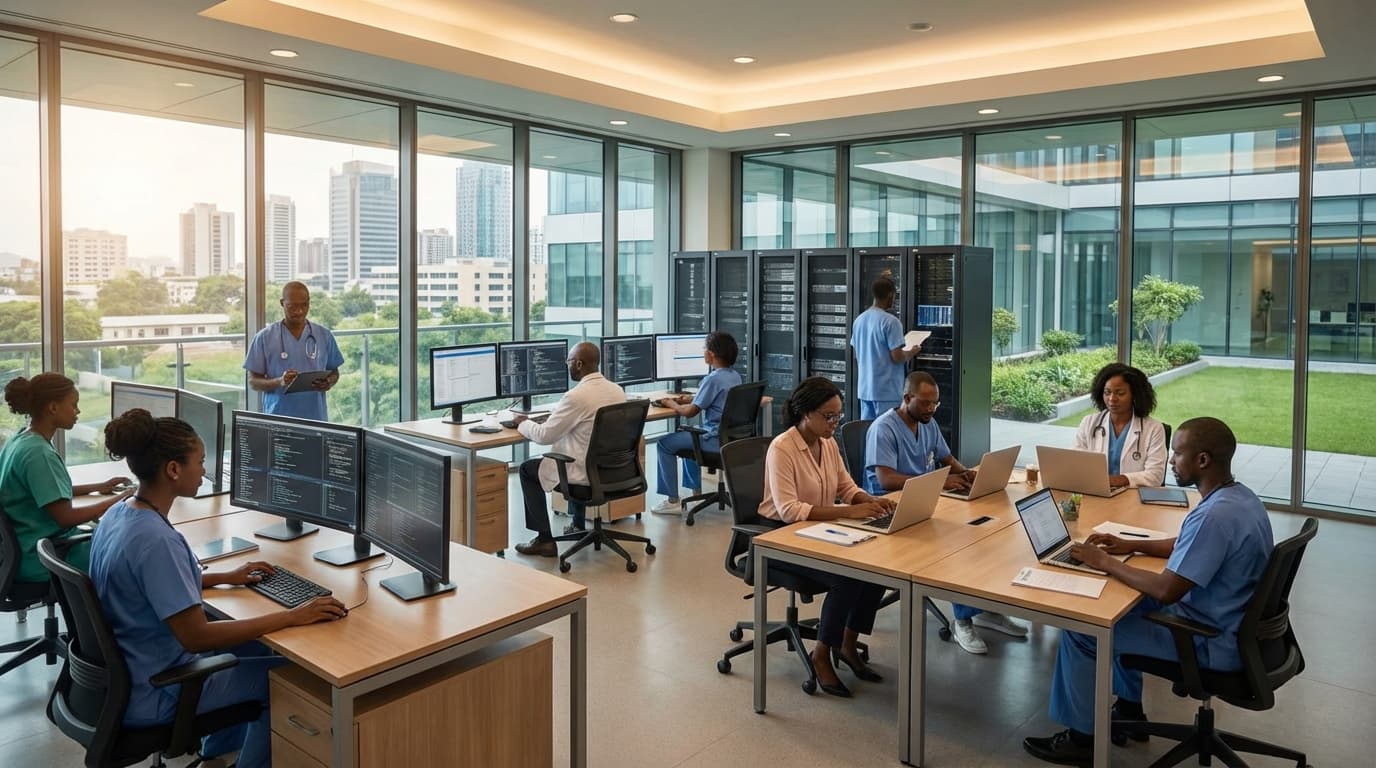
Radiology Reader & Reporting Support in Angola
Engineering Excellence & Technical Support
Remote radiology reading and reporting services High-standard technical execution following OEM protocols and local regulatory frameworks.
Streamlined Patient Data Integration
Facilitates seamless integration of patient demographics, medical history, and previous imaging studies from various Angolan healthcare systems, ensuring comprehensive context for every radiological interpretation.
Advanced Reporting & Annotation Tools
Provides radiologists with intuitive, customizable reporting templates and advanced annotation tools for precise lesion marking, measurements, and clear, concise reporting of imaging findings.
Secure Remote Collaboration Platform
Enables secure, real-time collaboration between radiologists and referring physicians across different Angolan regions, fostering efficient consultation, second opinions, and improved patient care pathways.
What Is Radiology Reader & Reporting Support In Angola?
Radiology Reader & Reporting Support in Angola refers to the provision of specialized services designed to augment and enhance the diagnostic capabilities and reporting efficiency of radiology departments and practitioners within the Angolan healthcare landscape. This encompasses a spectrum of solutions aimed at improving the accuracy, speed, and comprehensiveness of radiological interpretations and the subsequent generation of clinical reports. These services leverage advanced technologies, skilled personnel, and established workflows to address potential limitations in local expertise, equipment availability, or workload management. The objective is to ensure that patients in Angola receive timely and high-quality diagnostic imaging services, facilitating informed clinical decision-making and improved patient outcomes.
| Who Needs It | Typical Use Cases | |||||||
|---|---|---|---|---|---|---|---|---|
| Hospitals and Clinics in Angola: Particularly those with limited in-house radiology expertise, especially for specialized subspecialties (e.g., neuroradiology, interventional radiology, pediatric radiology). | Emergency Departments: Requiring rapid interpretation of urgent imaging studies (e.g., head CT for trauma, chest X-ray for suspected pneumonia) outside of standard working hours or when local radiologists are unavailable. | Remote and Underserved Regions: Facilities lacking access to experienced radiologists, where tele-radiology can bridge the geographical gap. | Academic and Training Hospitals: To supplement existing teaching faculty and expose trainees to a wider range of cases and interpretation styles. | Radiology Practices Seeking to Expand Services: Enhancing capacity to handle increased caseloads or offer new subspecialty interpretations. | Patients Requiring Specialized Diagnoses: Cases where the referring physician requires a second opinion from a subspecialist to ensure diagnostic certainty. | Healthcare Systems Aiming for Standardization: Implementing consistent reporting quality and terminology across multiple facilities. | Facilities Experiencing Radiologist Shortages or High Workloads: To manage peak demands and ensure timely reporting. | Early Adopters of Advanced Imaging Technologies: Leveraging AI or other cutting-edge tools for enhanced diagnostic accuracy. |
Key Components of Radiology Reader & Reporting Support
- Remote Interpretation (Tele-Radiology): Enabling external radiologists to review medical images (X-rays, CT scans, MRIs, ultrasounds) and provide preliminary or final reports to Angolan healthcare facilities. This is often facilitated through secure Picture Archiving and Communication Systems (PACS) and Radiology Information Systems (RIS).
- Second Opinion Services: Offering expert review of diagnostic images by subspecialist radiologists to confirm or clarify diagnoses, particularly for complex or unusual cases.
- Reporting Software & Template Customization: Implementing and supporting advanced reporting software that utilizes standardized templates and structured reporting methodologies to ensure consistency, completeness, and adherence to international guidelines.
- Quality Assurance & Peer Review: Establishing protocols for ongoing quality assessment of radiological interpretations and reports, including peer review processes to identify areas for improvement and maintain high diagnostic standards.
- Training & Education: Providing continuing medical education (CME) and specialized training for local radiologists and radiographers in advanced imaging techniques, interpretation of specific modalities, and effective report generation.
- Workflow Optimization: Analyzing and streamlining existing radiology workflows to enhance efficiency, reduce turnaround times, and improve overall departmental productivity.
- AI-powered Diagnostic Support: Integration of Artificial Intelligence (AI) tools to assist in image analysis, anomaly detection, and quantitative measurements, thereby augmenting the capabilities of human readers.
Who Needs Radiology Reader & Reporting Support In Angola?
Radiology reader and reporting support services are crucial for enhancing diagnostic accuracy, improving efficiency, and addressing radiologist shortages in Angola. These services can range from preliminary image interpretation and second reads to comprehensive final reporting, all contributing to better patient care and outcomes.
| Customer Type | Key Departments Requiring Support | Specific Needs & Benefits |
|---|---|---|
| Public Hospitals | Radiology Department, Emergency Department, Oncology, Cardiology, Neurology, Pediatrics | Addressing radiologist workload, faster turnaround times for critical cases, improved diagnostic accuracy, access to subspecialty expertise, particularly in underserved areas. |
| Private Hospitals | Radiology Department, Surgical Departments (Orthopedics, Neurosurgery, etc.), Cardiology, Internal Medicine | Enhancing service offerings, reducing report turnaround time for referring physicians, maintaining high standards of care, managing peak demand periods, cost-effective solutions. |
| Diagnostic Imaging Centers | General Radiology, Mammography, CT, MRI, Ultrasound | Increasing throughput, ensuring consistent and high-quality reporting, reducing reliance on in-house subspecialists, providing preliminary reads to expedite initial assessments. |
| Clinics with Imaging Capabilities | General Practice, Specialty Clinics (e.g., Orthopedic, Women's Health) | Providing essential radiology interpretation for smaller facilities, enabling local diagnosis and treatment planning, reducing the need for patient travel for secondary opinions. |
| Medical Group Practices | Various Specialties requiring imaging interpretation | Streamlining the diagnostic process, providing immediate feedback to clinicians, supporting evidence-based decision-making, improving patient satisfaction through faster results. |
| Government Health Initiatives | Public Health Programs, Remote Area Healthcare Projects | Extending diagnostic services to remote and underserved populations, supporting national health screening programs, capacity building for local healthcare professionals, ensuring equitable access to radiology services. |
Target Customers & Departments in Angola
- Hospitals (Public & Private)
- Diagnostic Imaging Centers
- Clinics with Imaging Capabilities
- Medical Group Practices
- Government Health Initiatives
Radiology Reader & Reporting Support Process In Angola
This document outlines the workflow for the Radiology Reader & Reporting Support Process in Angola, designed to facilitate efficient and accurate interpretation of medical imaging studies and the generation of comprehensive reports. The process begins with an inquiry and concludes with the delivery of a finalized report to the requesting clinician. This workflow aims to ensure timely access to expert radiological interpretation, particularly in regions where specialized radiologists may be scarce.
| Stage | Description | Key Stakeholders | Output | Service Level Agreement (SLA) Consideration |
|---|---|---|---|---|
| Inquiry & Request Initiation | A clinician or healthcare facility identifies the need for a radiological interpretation and initiates a request, often through a designated portal or contact point. This may involve specifying the type of imaging modality, suspected diagnosis, and clinical history. | Requesting Clinician/Facility | Formal Request for Service | Acknowledgement of receipt within X hours. |
| Case Triage & Prioritization | Incoming requests are assessed for urgency based on clinical factors (e.g., emergency cases, oncology follow-ups). This ensures that critical studies are reviewed promptly. Data may be collected to categorize the complexity and nature of the case. | Administrative Staff/Triage Radiologist | Prioritized Case List | Urgent cases prioritized for read within Y hours. |
| Image Acquisition & Transmission | Radiological images are acquired using appropriate modalities (X-ray, CT, MRI, Ultrasound, etc.). These images are then securely transmitted to the central PACS (Picture Archiving and Communication System) or a dedicated platform for remote access. | Radiology Technologist, IT Department | Digital Medical Images | Successful image upload and availability within Z hours of acquisition. |
| Reader Assignment & Access | The prioritized case is assigned to an available and qualified radiologist based on subspecialty expertise and workload. The radiologist gains secure access to the images and associated clinical information. | Case Management System, Radiologist | Assigned Case | Assignment to reader within A hours of triage. |
| Radiological Interpretation & Dictation | The assigned radiologist meticulously reviews the medical images, identifying any abnormalities. Findings are then dictated in a structured format, often using specialized reporting software and standardized templates. | Radiologist | Dictated Report/Findings | Interpretation commenced within B hours of assignment. |
| Reporting & Editing | The dictated findings are transcribed into a written report. This stage may involve a medical transcriptionist or an integrated speech-to-text system. The report is then reviewed for clarity, accuracy, and completeness. | Transcriptionist (if applicable), Radiologist/Reporting Assistant | Draft Report | Transcription and initial report draft completed within C hours of dictation. |
| Quality Assurance & Review | A secondary review by another radiologist or a senior reader may be conducted for complex cases or as part of routine quality control. This ensures adherence to reporting standards and minimizes errors. | Senior Radiologist/Quality Assurance Team | Reviewed Report | QA review completed within D hours. |
| Report Finalization & Distribution | The report is finalized after any necessary revisions. It is then securely transmitted back to the requesting clinician or healthcare facility through the established communication channel (e.g., EMR, secure portal). | Radiologist, IT Department | Finalized Radiology Report | Final report distributed within E hours of QA approval. |
| Feedback & Improvement | Mechanisms are in place for requesting clinicians to provide feedback on the report's timeliness, clarity, and diagnostic accuracy. This feedback is used to identify areas for process improvement and training. | Requesting Clinician, Management | Performance Metrics, Improvement Initiatives | Regular review of feedback and implementation of corrective actions. |
Radiology Reader & Reporting Support Process Stages
- Inquiry & Request Initiation
- Case Triage & Prioritization
- Image Acquisition & Transmission
- Reader Assignment & Access
- Radiological Interpretation & Dictation
- Reporting & Editing
- Quality Assurance & Review
- Report Finalization & Distribution
- Feedback & Improvement
Radiology Reader & Reporting Support Cost In Angola
The cost of radiology reader and reporting support in Angola can vary significantly due to several factors. These include the complexity of the radiology study (e.g., X-ray, CT, MRI), the urgency of the report, the experience and specialization of the radiologist providing the interpretation, and the location within Angola. Furthermore, the adoption of teleradiology services and the associated infrastructure can influence pricing. Many providers offer tiered pricing based on the volume of studies and the level of service required, from basic interpretation to comprehensive reporting with clinical correlation. It's essential to consider the accreditation and quality assurance processes of the reporting service, as these often contribute to the overall cost.
| Service Type | Estimated Price Range (Angolan Kwanza - AOA) | Notes |
|---|---|---|
| Standard X-ray Interpretation & Report | 15,000 - 30,000 AOA | Basic interpretation and report for common X-ray examinations. |
| Standard CT Scan Interpretation & Report | 30,000 - 60,000 AOA | Includes interpretation and reporting for standard CT scans. |
| Standard MRI Scan Interpretation & Report | 45,000 - 90,000 AOA | Covers interpretation and reporting for standard MRI scans. |
| STAT/Rush Reporting (per study) | Additional 10,000 - 25,000 AOA | An added fee for urgent turnaround times. |
| Specialized Interpretation (e.g., Neuro, MSK) | 50,000 - 120,000+ AOA | Higher costs due to specialist radiologist involvement. |
| Teleradiology Platform Access (Monthly/Annual) | Varies widely (Contact provider) | Often a recurring fee for access to the teleradiology system and network. |
| Volume-Based Contracts | Negotiable | Significant discounts may be offered for high-volume providers or institutions. |
Key Pricing Factors for Radiology Reader & Reporting Support in Angola
- Type and Complexity of Radiology Modality (X-ray, CT, MRI, Ultrasound, etc.)
- Urgency of Report (Standard vs. STAT/Rush)
- Radiologist Experience and Specialization (e.g., neuro-radiologist, musculoskeletal radiologist)
- Volume of Studies (Bulk discounts often available)
- Level of Reporting Detail (Basic interpretation vs. detailed report with recommendations)
- Teleradiology Service Fees (Infrastructure, platform costs)
- Geographic Location within Angola (Accessibility, operational costs)
- Accreditation and Quality Assurance Standards
- Ancillary Services (e.g., second opinions, consultations)
Affordable Radiology Reader & Reporting Support Options
Finding affordable radiology reading and reporting support is crucial for healthcare providers looking to optimize costs while maintaining high-quality patient care. Value bundles and strategic cost-saving approaches can significantly reduce expenses related to teleradiology services, subspecialty coverage, and workflow optimization. This document outlines various options and strategies to achieve these goals.
| Value Bundle Type | Description | Cost-Saving Strategies | Typical Benefits |
|---|---|---|---|
| Volume-Based Pricing | Pricing structured around the number of studies interpreted. Higher volumes often lead to lower per-study costs. | Negotiate tiered pricing with higher volume commitments. Implement efficient PACS/RIS for streamlined study submission. | Predictable costs, bulk discounts, scalable for growing practices. |
| Dedicated Subspecialty Pool | A pre-arranged group of subspecialists available on demand for specific modalities or specialties. | Commit to a minimum monthly volume for guaranteed access. Utilize shared services across multiple facilities. | Consistent subspecialty expertise, reduced turnaround times, predictable subspecialty cost. |
| After-Hours/Weekend Coverage Packages | Bundled services for interpretations outside of regular business hours. | Optimize staffing levels based on historical demand. Combine coverage needs across different departments. | Reduced overhead for in-house staff, 24/7 coverage, improved patient care continuity. |
| Integrated Workflow Solutions | Bundles that include teleradiology reading, reporting software, and IT support. | Choose providers with existing integrations with your EHR/PACS. Leverage cloud-based solutions to reduce hardware costs. | Streamlined operations, improved efficiency, single point of contact for support. |
| Per-Report or Per-Study Pricing | Direct billing for each interpretation and report generated. | Clearly define scope of work to avoid scope creep. Implement quality assurance checks to minimize re-reads. | Pay-as-you-go flexibility, suitable for variable workloads. |
Key Components of Affordable Radiology Support
- {"title":"Teleradiology Services","description":"Leveraging external radiologists to interpret medical images. This can be particularly cost-effective for after-hours coverage, weekends, and specific subspecialties that may be difficult to recruit locally."}
- {"title":"Subspecialty Coverage","description":"Accessing expert interpretations for niche areas like neuroradiology, musculoskeletal radiology, or interventional radiology without the need for in-house specialists. This ensures accurate diagnoses for complex cases."}
- Workflow Optimization
- Technology Integration
- Flexible Service Models
Verified Providers In Angola
In Angola's healthcare landscape, identifying truly reliable and credentialed providers is paramount for patients seeking quality care. Franance Health stands out as a beacon of trust, meticulously vetting its network of healthcare professionals to ensure they meet the highest standards of competence, ethics, and patient safety. This commitment to rigorous credentialing is what positions Franance Health providers as the best choice for your medical needs in Angola. Their comprehensive verification process goes beyond basic qualifications, examining clinical experience, ongoing professional development, and adherence to best practices. Choosing a Franance Health provider means opting for a healthcare experience grounded in expertise and unwavering dedication to your well-being.
| Credential Aspect | Franance Health's Verification Standard | Benefit to Patients |
|---|---|---|
| Medical Licenses & Certifications | Verified against official Angolan and international regulatory bodies. | Ensures providers are legally qualified and hold recognized expertise. |
| Clinical Experience & Specialization | Thorough review of past work, case studies, and documented experience. | Guarantees access to specialists with proven track records in specific fields. |
| Ongoing Education & Training | Mandatory participation in accredited continuing medical education programs. | Ensures providers are up-to-date with the latest medical advancements and techniques. |
| Professional Ethics & Disciplinary History | Background checks and review of any disciplinary actions from regulatory boards. | Upholds the highest ethical standards and protects patients from malpractice. |
| Reputation & Peer Review | Gathering of feedback from peers and, where applicable, patient testimonials. | Provides assurance of a provider's respected standing and quality of care. |
| Compliance with Best Practices | Assessment of adherence to evidence-based medical protocols and guidelines. | Ensures patients receive care that is effective, safe, and of the highest quality. |
Why Franance Health Providers are the Top Choice in Angola
- Rigorous Credentialing and Verification Process
- Commitment to Clinical Excellence and Patient Safety
- Access to Highly Qualified and Experienced Medical Professionals
- Adherence to International Standards of Healthcare Practice
- Focus on Ethical Conduct and Patient-Centered Care
- Continuous Professional Development for All Providers
- A Trusted Network for Diverse Medical Needs
Scope Of Work For Radiology Reader & Reporting Support
This Scope of Work (SOW) outlines the requirements for Radiology Reader & Reporting Support services. The objective is to provide qualified radiologists for the interpretation of medical imaging studies and the generation of accurate, timely, and comprehensive reports. This service will support [Client Name]'s radiology department in managing workflow, ensuring high-quality patient care, and optimizing resource allocation. This document details the technical deliverables, standard specifications, and expectations for the successful execution of these services.
| Technical Deliverable | Description | Standard Specifications / Requirements | Acceptance Criteria |
|---|---|---|---|
| Radiology Reading Services | Interpretation of medical imaging studies (e.g., X-ray, CT, MRI, Ultrasound, Nuclear Medicine) by qualified radiologists. | Reads performed by board-certified or board-eligible radiologists with appropriate subspecialty expertise. Adherence to established radiology protocols and best practices. Turnaround time (TAT) for preliminary and final reports as per agreed Service Level Agreements (SLAs). | All interpreted studies are accompanied by a report signed by a qualified radiologist. Reported findings are accurate and consistent with image quality standards. TAT SLAs are met for a minimum of 95% of studies. |
| Radiology Reporting | Generation of comprehensive, accurate, and standardized radiology reports. | Reports include patient demographics, clinical history, examination details, findings, impression/conclusion, and recommendations (if applicable). Use of standardized reporting templates or client-approved templates. Clear and concise language, free of ambiguity. Integration with client's Reporting system (e.g., RIS, EMR) for report delivery. | Reports are legible, grammatically correct, and clinically sound. All required report sections are present. Reports are delivered to the client's designated system within the agreed TAT. |
| Image Quality Review (as applicable) | Review of image quality to ensure diagnostic adequacy. | Radiologists will notify the referring physician or PACS administrator of any studies with suboptimal image quality that may impact diagnostic interpretation. Clear criteria for identifying technically inadequate studies will be provided. | Notification of suboptimal image quality is documented and communicated promptly. Number of studies requiring repeat imaging due to radiologist-identified quality issues is tracked and minimized. |
| Data Security and Confidentiality | Ensuring the privacy and security of all patient data. | Strict adherence to HIPAA (Health Insurance Portability and Accountability Act) and other applicable data privacy regulations. Secure remote access protocols. Non-disclosure agreements (NDAs) signed by all personnel involved. Regular security training for all readers. | Zero breaches of patient data confidentiality. Successful completion of security audits. Confirmation of NDAs on file for all personnel. |
| System Integration and Access | Secure and reliable access to client's Picture Archiving and Communication System (PACS), Radiology Information System (RIS), and Electronic Medical Record (EMR). | Provision of secure VPN access or other approved remote access methods. Compatibility with client's existing IT infrastructure. Reliable and stable connection with minimal downtime. | Successful and consistent access to PACS/RIS/EMR. System performance meets defined thresholds for speed and responsiveness. Downtime logs are maintained and reviewed. |
| Reporting and Communication | Regular reporting on key performance indicators (KPIs) and communication with client stakeholders. | Monthly performance reports including volume of reads, TAT, error rates, and client feedback. Regular meetings (e.g., weekly, bi-weekly) with client representatives to discuss operational performance, address issues, and plan for future needs. Ad-hoc communication as needed for urgent matters. | Performance reports are submitted on time and are comprehensive. Meeting minutes are documented. Client satisfaction surveys indicate positive feedback on communication and responsiveness. |
| Quality Assurance and Improvement | Processes for ongoing quality assurance and continuous improvement. | Participation in client's quality assurance programs. Peer review of reports as agreed. Feedback mechanisms for continuous improvement. Adherence to accreditation standards (e.g., ACR, Joint Commission). | Demonstrated participation in QA activities. Reduction in identified report discrepancies or errors over time. Successful audits by accreditation bodies. |
| On-Call and Emergency Reads | Provision of on-call services for emergency radiology interpretations. | Availability during specified on-call hours for urgent reads. Rapid turnaround for STAT interpretations as defined in the SLA. Clear escalation protocols for critical findings. | On-call radiologists are available and responsive during scheduled hours. STAT read TAT is consistently met. Critical findings are communicated per protocol. |
Key Objectives
- Enhance radiology reading capacity to meet current and projected demand.
- Ensure timely and accurate interpretation of all medical imaging modalities.
- Produce clear, concise, and clinically relevant radiology reports.
- Maintain compliance with all relevant regulatory and accreditation standards.
- Facilitate seamless integration with existing PACS, RIS, and EMR systems.
- Provide flexible and scalable support to adapt to fluctuating workloads.
Service Level Agreement For Radiology Reader & Reporting Support
This Service Level Agreement (SLA) outlines the commitment of [Provider Name] ('Provider') to [Client Name] ('Client') for Radiology Reader & Reporting Support services. This agreement defines the expected response times for support requests and the guaranteed uptime for the provided services. This SLA is an integral part of the overall service contract between the Provider and the Client.
| Service Component | Uptime Guarantee | Response Time (Business Hours) | Response Time (24/7) |
|---|---|---|---|
| Radiology Image Reading & Interpretation | 99.9% | 15 minutes (for critical alerts) | 30 minutes (for critical alerts) |
| Report Generation & Delivery | 99.5% | 1 hour (for urgent reports) | 2 hours (for urgent reports) |
| Reporting Platform Availability | 99.9% | 30 minutes (for login/access issues) | 1 hour (for login/access issues) |
| Support Ticketing System | 99.9% | 2 hours (acknowledgment) | 4 hours (acknowledgment) |
Key Definitions
- Service: Radiology Reader & Reporting Support, including but not limited to, image interpretation, report generation, and communication of findings.
- Uptime: The percentage of time the Service is available and operational, excluding scheduled maintenance.
- Response Time: The maximum time allowed for the Provider to acknowledge and begin addressing a reported incident or request.
- Resolution Time: The maximum time allowed to resolve a reported incident or fulfill a request, subject to complexity and dependencies.
- Critical Incident: A service failure that significantly impacts the Client's ability to perform core radiology functions, leading to a complete or near-complete interruption of service.
- Major Incident: A service failure that substantially degrades the Client's ability to perform core radiology functions, but does not completely prevent operations.
- Minor Incident: A service issue that has minimal impact on the Client's operations and can be worked around or has a limited scope.
- Scheduled Maintenance: Planned periods during which the Service may be unavailable for updates, upgrades, or system maintenance. Clients will be notified in advance.
Frequently Asked Questions

Ready when you are
Let's scope your Radiology Reader & Reporting Support in Angola project in Angola.

Scaling healthcare logistics and technical systems across the entire continent.