
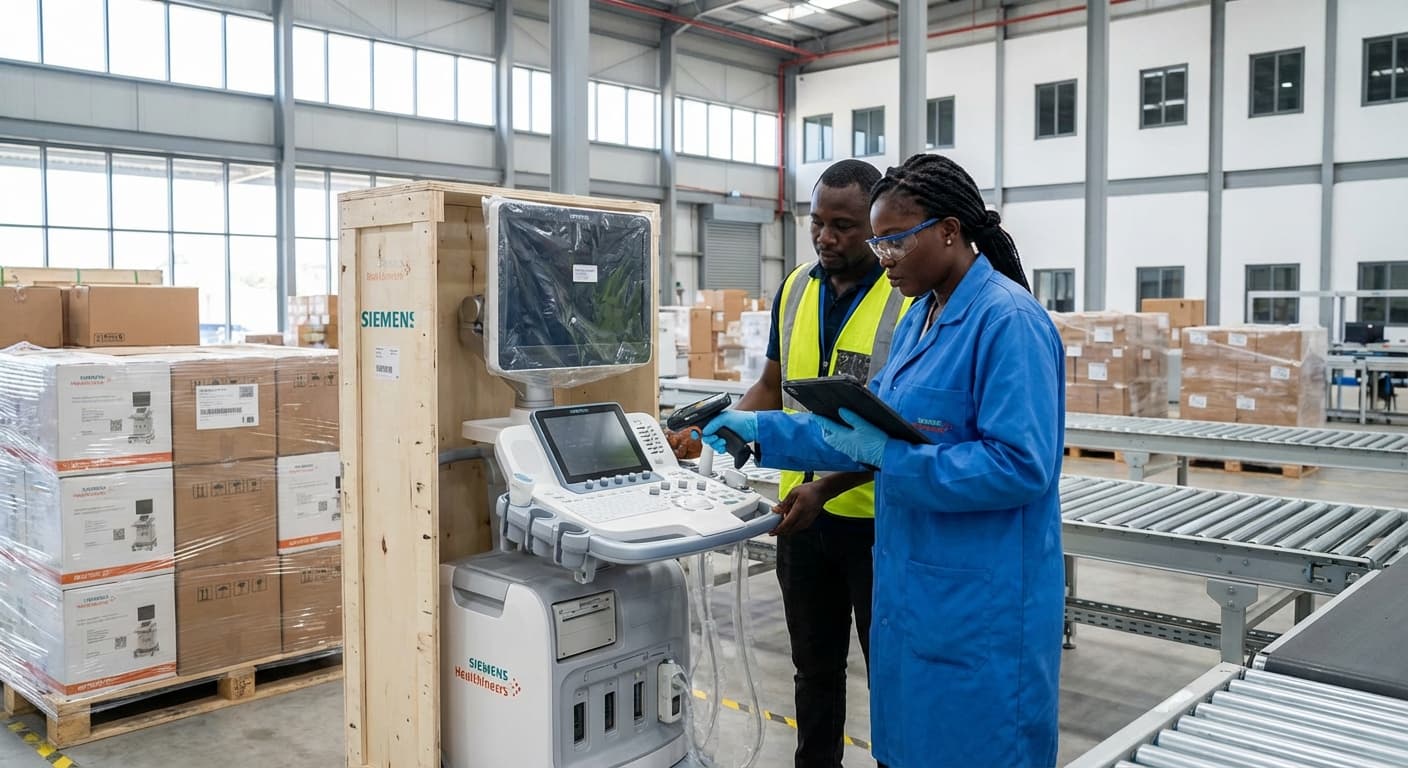
Warehouse Receiving Inspection Service (Medical Equipment) in Angola
Engineering Excellence & Technical Support
Warehouse Receiving Inspection Service (Medical Equipment) High-standard technical execution following OEM protocols and local regulatory frameworks.
End-to-End Chain of Custody Verification
Our service meticulously tracks medical equipment from point of origin to final warehouse receipt in Angola, ensuring tamper-proof documentation and verification at every critical transit point. This guarantees the integrity and authenticity of received goods.
Compliance-Driven Quality Assurance Audits
We perform rigorous inspections against international (ISO, FDA) and Angolan regulatory standards. Our audits encompass visual checks, functional testing, documentation review, and environmental condition assessment to ensure full compliance and readiness for deployment.
Advanced Defect Identification & Reporting
Leveraging specialized tools and trained inspectors, we identify and document even subtle defects, damages, or discrepancies. Our detailed reports include photographic evidence and actionable recommendations, facilitating prompt resolution with suppliers and minimizing operational delays.
What Is Warehouse Receiving Inspection Service (Medical Equipment) In Angola?
Warehouse Receiving Inspection Service for Medical Equipment in Angola is a quality assurance process designed to verify the condition, specifications, and regulatory compliance of medical devices and equipment upon arrival at a designated storage facility within Angola. This service ensures that received goods meet the predefined contractual obligations and adhere to relevant Angolan health and safety regulations prior to their integration into the supply chain or distribution network. It mitigates risks associated with damaged, incorrect, or non-compliant medical equipment, thereby safeguarding patient safety and operational efficiency.
| Who Needs This Service? | Typical Use Cases | ||||
|---|---|---|---|---|---|
| Medical Equipment Importers and Distributors: Entities responsible for the import and onward distribution of medical devices and equipment within Angola. | Hospitals and Healthcare Facilities: Public and private healthcare institutions receiving large or critical shipments of medical equipment directly or through a central procurement agency. | Government Health Ministries and Agencies: Public health organizations overseeing the procurement and management of medical equipment for national health programs. | Non-Governmental Organizations (NGOs) and Aid Agencies: Organizations involved in providing medical aid and equipment to Angolan communities. | Third-Party Logistics (3PL) Providers: Companies managing the warehousing and distribution of medical equipment on behalf of other entities within Angola. | |
| Importation of New Medical Devices: Ensuring that imported medical equipment meets all quality, safety, and regulatory requirements before entering the Angolan market. | Receiving Bulk Orders: Verifying the accuracy and condition of large quantities of medical equipment procured for national health initiatives or hospital networks. | Equipment Replenishment and Stock Management: Confirming that incoming stock accurately reflects orders and is in satisfactory condition for storage and future deployment. | Post-Transportation Damage Assessment: Identifying and documenting any damage incurred during international or domestic transit. | Compliance Verification for Government Procurement: Ensuring that equipment procured through government tenders meets all specified technical and regulatory standards. | Receiving Donations and Aid: Verifying the usability and condition of donated medical equipment before it is distributed to healthcare facilities. |
Key Components of Warehouse Receiving Inspection Service:
- Document Verification: Cross-referencing shipment manifests, purchase orders, certificates of origin, and any other required documentation against the physical goods and associated paperwork.
- Physical Inspection: Conducting a thorough examination of the packaging for integrity, damage, and proper labeling. Inspecting the equipment itself for visible defects, signs of tampering, and cosmetic imperfections.
- Quantity Verification: Confirming that the number of units received matches the order and shipping documentation.
- Identification and Traceability Check: Verifying serial numbers, batch numbers, and model numbers against procurement records to ensure proper identification and traceability.
- Initial Functional Assessment (where applicable): Performing basic operational checks to confirm that the equipment powers on and exhibits primary functions, without compromising sterility or warranty.
- Labeling and Marking Compliance: Ensuring that all labeling, including regulatory markings (e.g., CE marking, FDA approval if relevant for import), instructions for use, and identification labels, are present, legible, and accurate according to Angolan standards.
- Condition Assessment: Evaluating the general condition of the equipment, including any signs of wear, damage, or environmental exposure during transit.
- Sampling for Further Testing: In some cases, a representative sample of the received equipment may be selected for more rigorous laboratory testing or performance validation.
- Non-Conformance Reporting: Documenting any discrepancies, damages, or non-compliance issues identified during the inspection process and initiating the appropriate corrective action procedures.
Who Needs Warehouse Receiving Inspection Service (Medical Equipment) In Angola?
In Angola's growing healthcare sector, ensuring the quality, safety, and regulatory compliance of imported medical equipment is paramount. Warehouse receiving inspection services play a critical role in this process, acting as a crucial gatekeeper. These services verify that the equipment received matches the order specifications, is free from damage, and adheres to all relevant Angolan health and safety standards before it enters the supply chain and reaches end-users.
| Target Customer | Key Departments Involved |
|---|---|
| Hospitals and Clinics (Public and Private) | Procurement Department, Biomedical Engineering Department, Pharmacy Department, Quality Assurance Department, Logistics/Warehouse Department |
| Medical Equipment Distributors and Suppliers | Procurement/Purchasing Department, Sales Department, Warehouse/Logistics Department, Quality Control Department, Compliance Department |
| Government Health Agencies (e.g., Ministry of Health) | Procurement and Tender Department, Regulatory Affairs Department, Quality Assurance Department, Inspection and Verification Units |
| Non-Governmental Organizations (NGOs) involved in healthcare | Procurement Department, Logistics and Supply Chain Management, Program Management, Finance Department |
| International Aid Organizations | Procurement Department, Logistics and Supply Chain Management, Project Management |
| Research Institutions and Universities with medical programs | Procurement Department, Laboratory Management, Facilities Management |
Who Needs Warehouse Receiving Inspection Service (Medical Equipment) in Angola?
- Any entity involved in the importation and distribution of medical equipment within Angola.
- Organizations seeking to mitigate risks associated with damaged, counterfeit, or non-compliant medical devices.
- Businesses aiming to streamline their supply chain operations and reduce post-delivery disputes.
Warehouse Receiving Inspection Service (Medical Equipment) Process In Angola
The Warehouse Receiving Inspection Service for Medical Equipment in Angola is a critical process ensuring that procured medical devices meet quality, safety, and functional standards before being accepted into the warehouse. This service typically involves a systematic inspection by qualified personnel to identify any discrepancies, damage, or non-compliance with specifications. The workflow begins with a client's inquiry and culminates in a comprehensive inspection report and the official acceptance or rejection of the equipment. This process is vital for maintaining the integrity of the medical supply chain and ensuring the efficacy of medical interventions.
| Stage | Description | Key Activities | Responsible Party | Output/Outcome |
|---|---|---|---|---|
| Initial contact from a client (e.g., Ministry of Health, hospital, NGO) requesting inspection services for incoming medical equipment. | Client outlines needs, equipment type, quantity, and desired inspection scope. Service provider provides a proposal and quotation. | Client, Inspection Service Provider | Service agreement/contract, understanding of scope. |
| Detailed collection of all relevant information about the equipment and the shipment. | Review of purchase orders, manufacturer specifications, quality certificates, shipping documents, and prior inspection reports. Planning of inspection personnel, equipment, and schedule. | Inspection Service Provider | Pre-inspection plan, list of required documents, personnel allocation. |
| Inspection team arrives at the designated receiving warehouse. Initial verification of the site and equipment presence. | Confirmation of arrival, verification of shipment integrity (packaging, seals), preliminary visual check of the receiving area. | Inspection Team | Confirmation of readiness, initial assessment of potential issues. |
| Thorough examination of the physical condition of each piece of medical equipment. | Checking for damage (dents, scratches, cracks), cosmetic imperfections, correct model/serial numbers, completeness of accessories and components. | Inspection Team | Identification of external damage, missing parts, or incorrect items. |
| Verification of all accompanying paperwork against the equipment and purchase order. | Cross-referencing equipment labels with specifications, checking user manuals, warranty cards, certificates of origin, sterilization certificates (if applicable), and calibration records. | Inspection Team | Confirmation of documentation accuracy and completeness. |
| Performing operational checks to ensure the equipment functions as intended. | Powering on equipment, running basic diagnostic tests, verifying key operational parameters according to manufacturer guidelines and specifications. | Inspection Team | Verification of basic functionality and operational readiness. |
| For critical equipment or specific quality concerns, samples may be taken for laboratory testing. | Collecting sterile samples for material composition analysis, electrical safety tests, or performance validation in a controlled environment. | Inspection Team, Accredited Laboratory | Results of laboratory tests validating material or performance standards. |
| Systematic documentation of any non-conformities found during the inspection. | Recording details of damage, missing parts, functional failures, or documentation discrepancies. Assigning severity levels to identified defects. | Inspection Team | Detailed list of identified defects and non-conformities. |
| Providing a clear recommendation on whether the equipment should be accepted or rejected, with justifications. | Suggesting actions such as acceptance, rejection, repair, re-inspection, or replacement based on the findings and agreed-upon criteria. | Inspection Team | Clear recommendations for the client's decision. |
| Compiling all findings into a formal inspection report. | Including executive summary, detailed inspection results, photographic evidence, defect logs, and final recommendations. Report submitted to the client. | Inspection Team, Inspection Service Provider | Comprehensive inspection report. |
| The client reviews the report and makes a final decision regarding the equipment. | Client formally accepts or rejects the equipment based on the report. If rejected, follow-up actions such as return, replacement, or dispute resolution are initiated. | Client, Inspection Service Provider | Final disposition of the medical equipment, resolution of any issues. |
Warehouse Receiving Inspection Service (Medical Equipment) Process in Angola: Workflow
- Inquiry and Service Request
- Information Gathering & Pre-inspection Planning
- On-site Arrival & Pre-inspection Checks
- Visual Inspection
- Documentation Review
- Functional Testing (where applicable)
- Sampling and Laboratory Analysis (if required)
- Defect Identification & Reporting
- Disposition & Recommendations
- Final Report Generation & Submission
- Client Acceptance/Rejection & Follow-up Actions
Warehouse Receiving Inspection Service (Medical Equipment) Cost In Angola
The cost of Warehouse Receiving Inspection Services for medical equipment in Angola is influenced by a variety of factors, leading to a range of pricing. These services are crucial for ensuring that imported medical devices meet quality, safety, and regulatory standards before being stored and distributed. Understanding these pricing dynamics is essential for import and logistics companies operating within Angola's healthcare sector.
| Service Component | Estimated Cost Range (Angolan Kwanza - AOA) | Notes |
|---|---|---|
| Basic Visual Inspection & Documentation Review (per shipment/container) | 50,000 - 150,000 AOA | Covers exterior condition, labeling, and verification of key documents. |
| Detailed Functional Testing (per unit/device) | 75,000 - 300,000+ AOA | Varies greatly based on device complexity. May include calibration. |
| Sampling and Quality Control Checks (per batch) | 60,000 - 200,000 AOA | Involves taking representative samples for further analysis. |
| Full Report Generation (standard) | 30,000 - 80,000 AOA | Cost for a detailed, compliant report. |
| Expedited Service Fee (percentage of total) | 15% - 30% | Additional charge for urgent requests. |
| Travel & Accommodation (if applicable) | Variable (based on distance and duration) | Costs incurred for inspectors traveling to remote locations. |
| Pre-Purchase Inspection (per visit/site) | 100,000 - 400,000 AOA | Inspection conducted at the manufacturer's site before shipment. |
| Specialized Equipment (e.g., X-ray, MRI components) | 200,000 - 1,000,000+ AOA | Requires highly specialized technicians and equipment; pricing is project-based. |
Key Pricing Factors for Warehouse Receiving Inspection Services (Medical Equipment) in Angola:
- Type and Complexity of Medical Equipment: Highly complex or specialized medical equipment, such as imaging machines or advanced surgical tools, often require inspectors with specific technical expertise and specialized testing equipment, driving up costs.
- Volume of Equipment: Larger shipments or a higher number of individual items to inspect will naturally incur higher service fees. Bulk discounts may be available for very large volumes.
- Scope of Inspection: The depth of the inspection significantly impacts cost. This can range from basic visual checks and documentation verification to detailed functional testing, calibration, and environmental assessments.
- Required Documentation and Reporting: The level of detail and formality required in inspection reports, including adherence to specific international or Angolan regulatory standards (e.g., ANVISA equivalent, World Health Organization guidelines), can influence pricing.
- Time Sensitivity and Urgency: Expedited inspection services, requiring immediate attention or weekend/holiday work, will typically command premium pricing.
- Location of the Warehouse: The geographical location of the warehouse within Angola can affect costs due to travel time and associated expenses for inspectors, particularly if it's in remote areas.
- Provider's Expertise and Reputation: Established inspection agencies with a proven track record, qualified personnel, and accreditations often charge higher rates compared to newer or less experienced providers.
- Ancillary Services: If the inspection service includes additional tasks like sampling, storage, or preliminary testing, these will be factored into the overall cost.
- Regulatory Compliance Requirements: The specific regulatory framework in Angola for medical equipment and the associated documentation requirements for import and clearance play a significant role in the scope and cost of inspection.
Affordable Warehouse Receiving Inspection Service (Medical Equipment) Options
Finding affordable warehouse receiving inspection services for medical equipment is crucial for ensuring product integrity, regulatory compliance, and cost control. This service validates that received medical equipment matches purchase orders, is free from damage, and meets specified quality standards before it enters your inventory. Cost-effective solutions can be achieved through carefully selected service providers, tailored inspection scopes, and strategic bundling of services.
| Cost-Saving Strategy | Description | Impact on Affordability |
|---|---|---|
| Tiered Inspection Levels: | Offer different levels of inspection intensity based on the criticality and value of the medical equipment. Not every item requires the same level of scrutiny. | Reduces unnecessary inspection costs by applying resources where they are most needed. |
| Volume-Based Discounts: | Negotiate pricing based on the anticipated volume of shipments or inspection requests. Higher volumes often lead to lower per-unit costs. | Directly lowers the cost per inspection as volume increases. |
| Long-Term Contracts: | Commit to a service provider for an extended period (e.g., 1-3 years) to secure more favorable rates and preferential service. | Locks in lower pricing and can provide budget predictability. |
| Remote/Hybrid Inspection Models: | Explore services that offer a combination of on-site and remote inspections, leveraging technology for some aspects of verification. For example, video audits or data analysis. | Can significantly reduce travel and on-site labor costs. |
| In-House Training & Oversight: | Invest in training your internal staff to perform certain basic inspection tasks, with the service provider focusing on more complex or critical elements. The provider can offer training and periodic audits. | Reduces reliance on external services for routine tasks. |
| Bundled Service Agreements: | Combine receiving inspection with other warehouse services like de-kitting, labeling, or light assembly from the same provider to leverage economies of scale and reduce administrative overhead. | Achieves cost efficiencies through combined service delivery. |
| Data-Driven Process Improvement: | Work with your service provider to analyze inspection data to identify recurring issues with suppliers or equipment, enabling proactive problem-solving that reduces future inspection needs and costs. | Minimizes future inspection requirements and associated costs by addressing root causes. |
| Standardized Inspection Checklists: | Develop clear and standardized inspection checklists tailored to your specific medical equipment types. This ensures consistency and efficiency for inspectors. | Improves inspection speed and reduces errors, leading to lower overall inspection time and cost. |
Key Value Bundles for Affordable Warehouse Receiving Inspection Services (Medical Equipment):
- Basic Inspection Bundle: Includes visual inspection for damage, verification against purchase orders (PO), quantity checks, and documentation review (e.g., packing slips, certificates of origin). Ideal for routine, low-risk items.
- Standard Inspection Bundle: Expands on the basic bundle by adding functional checks (basic operational tests), verification of serial numbers against records, and initial compliance checks (e.g., presence of required labels). Suitable for most standard medical devices.
- Premium Inspection Bundle: Offers comprehensive inspection including detailed functional testing, critical component verification, pre-shipment sample testing (if applicable), and in-depth regulatory documentation review. Recommended for high-value, complex, or highly regulated medical equipment.
- Quality Assurance & Compliance Bundle: Combines receiving inspection with broader QA support, such as random auditing of incoming shipments, supplier performance monitoring, and assistance with developing incoming inspection protocols. A proactive approach to reducing long-term quality issues.
- Inventory Management Integration Bundle: Pairs receiving inspection with basic inventory tagging, data entry into your WMS (Warehouse Management System), and immediate put-away coordination. Streamlines the entire inbound process.
Verified Providers In Angola
In the evolving landscape of healthcare in Angola, identifying reliable and trustworthy medical service providers is paramount. This is where verified providers, such as those accredited by Franance Health, come to the forefront. Franance Health's rigorous credentialing process ensures that accredited institutions and professionals meet the highest standards of quality, safety, and ethical practice. Choosing a Franance Health verified provider means opting for excellence in care, backed by a commitment to continuous improvement and patient well-being. Their stringent evaluation encompasses a wide array of criteria, from state-of-the-art facilities and advanced medical equipment to the qualifications and experience of their medical staff. This dedication to thorough vetting provides patients with the peace of mind that they are receiving the best possible medical attention.
| Aspect | Franance Health Verified Provider | Unverified Provider |
|---|---|---|
| Quality Assurance | Rigorous, ongoing assessment and adherence to international standards. | Potentially variable, with no independent oversight. |
| Professional Competence | Verified qualifications, experience, and continuous professional development of staff. | Uncertain; relies solely on self-representation. |
| Facility Standards | Ensured compliance with safety, hygiene, and technological requirements. | No guaranteed standards; may be outdated or inadequate. |
| Patient Safety | Proactive measures and protocols to minimize risks and ensure patient well-being. | Risk of inadequate safety protocols and potential for errors. |
| Ethical Practice | Commitment to patient rights, informed consent, and transparent communication. | Potential for ethical compromises and lack of patient advocacy. |
| Reputation & Trust | Built on a foundation of verified excellence and commitment to patient care. | Can be based on hearsay or marketing, with no objective validation. |
Why Franance Health Credentials Represent the Best Choice:
- Uncompromising Quality Standards: Franance Health adheres to internationally recognized benchmarks for healthcare quality and patient safety.
- Expert Medical Professionals: Accreditation signifies that practitioners possess the requisite qualifications, certifications, and ongoing professional development.
- Advanced Facilities & Technology: Verified providers are equipped with modern infrastructure and cutting-edge medical technology, ensuring accurate diagnoses and effective treatments.
- Patient-Centric Approach: The credentialing process emphasizes patient rights, ethical conduct, and a commitment to compassionate care.
- Trust and Transparency: Franance Health's verification offers a transparent and reliable indicator of a healthcare provider's competence and reliability.
- Reduced Risk for Patients: Choosing a verified provider minimizes the risk of substandard care, medical errors, and ethical breaches.
Scope Of Work For Warehouse Receiving Inspection Service (Medical Equipment)
This Scope of Work (SOW) outlines the requirements for a comprehensive receiving inspection service for medical equipment. The service aims to ensure that all received medical equipment meets predefined technical specifications, quality standards, and regulatory compliance before being accepted into inventory. This SOW details the technical deliverables and standard specifications that the service provider must adhere to. The primary objective is to minimize the risk of accepting non-conforming or defective medical equipment, thereby protecting patient safety, ensuring operational efficiency, and maintaining compliance with healthcare standards.
| Phase | Activity | Technical Deliverables | Standard Specifications/Requirements |
|---|---|---|---|
| Pre-Inspection | Review of Documentation | List of required documentation (PO, packing list, manufacturer's specs, certificates) | Documentation must be complete, accurate, and readily available. Latest version of technical specifications to be provided. |
| Receiving & Documentation Verification | Unpacking and Initial Inventory Check | Count reconciliation report, preliminary condition report | Visual inspection for external damage. Verification against PO and packing list. Ensure correct model, serial number, and quantity. |
| Physical & Visual Inspection | Assessment of Equipment Condition | Detailed physical inspection report with photographic evidence of any damage | Check for dents, scratches, missing parts, correct labeling, and overall cosmetic integrity. Refer to manufacturer's guidelines for acceptable cosmetic standards. |
| Technical Specification Verification | Functionality and Performance Testing (as applicable) | Test results report, calibration certificates (if required) | Verification of key technical specifications against documented standards. Basic functional tests to confirm operational readiness. Calibration must be within specified tolerances if applicable. Reference relevant industry standards (e.g., IEC 60601 series) and manufacturer's performance specifications. |
| Regulatory & Compliance Check | Verification of Certifications and Documentation | Compliance checklist, copies of relevant certifications (e.g., CE, FDA 510(k) clearance) | Ensure CE marking, FDA clearance, or other required regulatory approvals are present and valid. Verify presence of user manuals, service manuals, and warranty information. |
| Non-Conformity Reporting | Identification and Documentation of Issues | Non-conformance report (NCR) detailing the issue, affected equipment, and impact | NCRs must be clear, concise, and include all relevant details for root cause analysis and corrective action. Reference specific specifications or standards that were not met. |
| Final Reporting | Summarized Inspection Findings | Final Receiving Inspection Report including accepted items, rejected items, and pending issues | Report should provide a clear summary of all inspection activities, findings, and recommendations. Include a formal acceptance or rejection status for each inspected item. ISO 9001 or similar quality management system principles should guide reporting. |
Key Objectives of Receiving Inspection Service
- Verify identity and quantity of received medical equipment against purchase orders and shipping documents.
- Assess physical condition and integrity of packaging and the equipment itself.
- Confirm that all received medical equipment meets agreed-upon technical specifications and performance criteria.
- Ensure compliance with relevant regulatory standards (e.g., FDA, CE marking, local healthcare regulations).
- Identify and document any discrepancies, damage, or non-conformities.
- Facilitate timely decision-making regarding acceptance, rejection, or further investigation of received equipment.
Service Level Agreement For Warehouse Receiving Inspection Service (Medical Equipment)
This Service Level Agreement (SLA) outlines the agreed-upon service levels for the Warehouse Receiving Inspection Service for Medical Equipment provided by [Provider Name] to [Client Name]. It defines the expected response times and uptime guarantees for this critical service.
| Service Component | Response Time Target | Uptime Guarantee | Measurement Method | Escalation Procedure |
|---|---|---|---|---|
| Initial Inspection Request Acknowledgement | Within 1 business hour of receiving a complete inspection request. | N/A (Focus on responsiveness) | System-generated timestamp of acknowledgement. | If acknowledgement is not received within the target, the client should follow the escalation contact for the Account Manager. |
| Commencement of Inspection (for pre-scheduled deliveries) | Within 30 minutes of the scheduled delivery arrival. | N/A (Focus on execution speed) | Timestamp of delivery arrival and timestamp of initial inspection activity start. | If inspection does not commence within the target, the Warehouse Manager should be notified. |
| Commencement of Inspection (for unscheduled/urgent deliveries) | Within 2 business hours of notification of delivery arrival. | N/A (Focus on responsiveness) | Timestamp of delivery notification and timestamp of initial inspection activity start. | If inspection does not commence within the target, the Warehouse Manager should be notified. |
| Completion of Standard Inspection and Report Generation | Within 4 business hours of commencing inspection for standard equipment. Urgent/complex equipment may have a separate agreed-upon timeframe. | 99.5% of standard inspections completed within the defined timeframe, measured monthly. | Timestamp of inspection start and timestamp of report generation. Monthly average of completion times. | If a standard inspection is at risk of exceeding the timeframe, the Lead Inspector should be notified. If the 99.5% threshold is not met for a month, a root cause analysis will be performed and reported to the client. |
| Availability of Inspection Personnel | N/A (Focus on uptime) | 99.8% of scheduled service hours will have adequate inspection personnel available to perform assigned tasks. | Monitoring of staff schedules and availability. Calculation of unplanned downtime of inspection resources. | If service availability drops below the guarantee, the Operations Manager will implement contingency plans, including reassigning personnel or authorizing overtime. Client will be notified of any significant impact. |
| System Availability for Reporting and Communication | N/A (Focus on uptime) | 99.9% uptime for the client-facing reporting portal and communication channels (e.g., email, designated platform). | Monitoring of system uptime using industry-standard tools. Tracking of any unplanned outages. | In case of system downtime, the IT support team will be immediately engaged. Client will receive proactive notifications about any significant outages and estimated resolution times. Service credits may apply as per the remedies section. |
Key Service Level Objectives
- Scope of Service: This SLA covers the inspection of all incoming medical equipment at the designated warehouse facility. This includes visual inspection for damage, verification of contents against shipping manifests, and initial functional checks as specified in the standard operating procedures (SOPs).
- Service Hours: The receiving inspection service is available during the following hours: Monday to Friday, 8:00 AM to 6:00 PM [Client's Time Zone], excluding public holidays.
- Reporting: All inspection findings will be documented and reported to the designated client contact within the specified timeframes.
Frequently Asked Questions

Ready when you are
Let's scope your Warehouse Receiving Inspection Service (Medical Equipment) in Angola project in Angola.

Scaling healthcare logistics and technical systems across the entire continent.