
Imaging Acceptance Testing & QA in Angola
Engineering Excellence & Technical Support
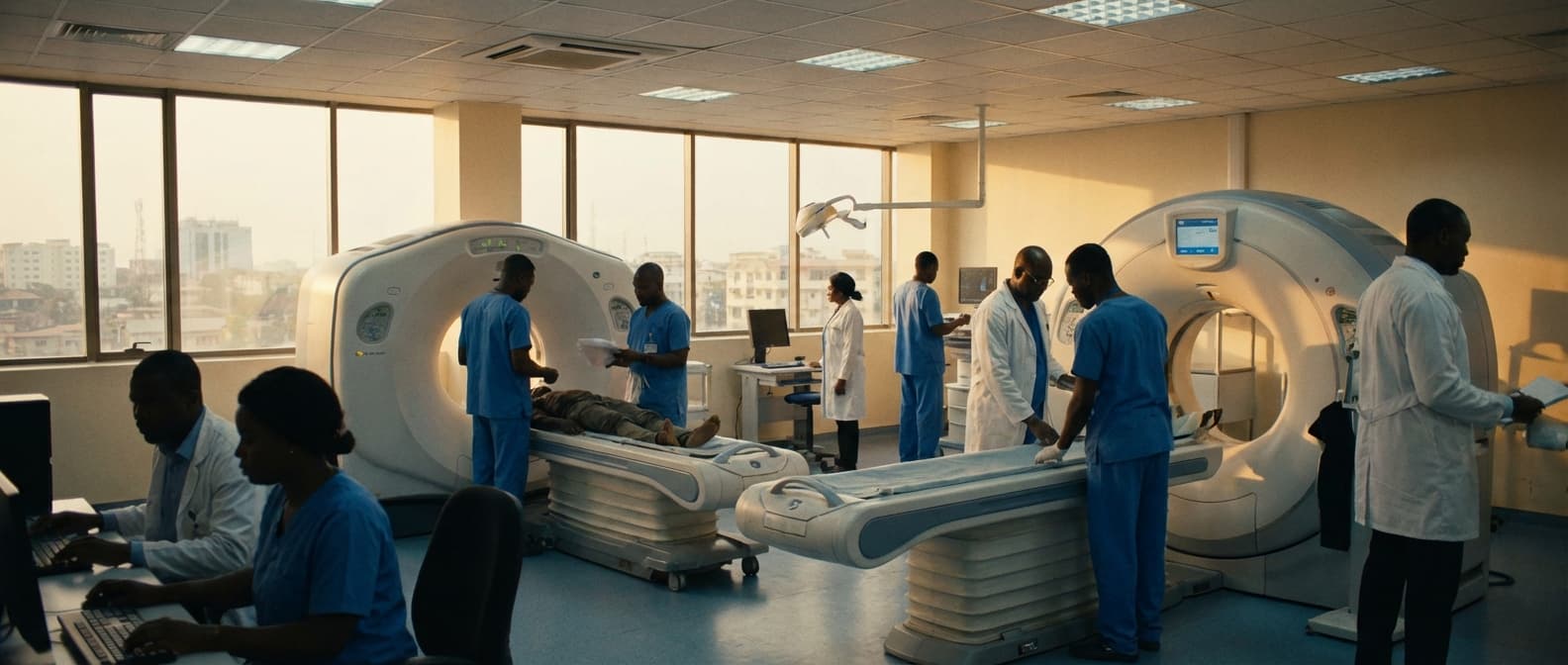
Commissioning and periodic QA for CT/MRI/X‑ray/US/Mammo. High-standard technical execution following OEM protocols and local regulatory frameworks.
Advanced Image Quality Metrics for Geological Surveys
Implementing state-of-the-art image quality assessment tools to rigorously test and validate the performance of seismic and remote sensing imagery captured across Angolan geological exploration sites. This ensures data integrity and accuracy for subsurface interpretation and resource identification.
Hardware & Software Integration Testing for Medical Imaging Devices
Conducting comprehensive acceptance testing for newly deployed medical imaging hardware (e.g., X-ray, MRI, CT scanners) and their associated software in Angolan healthcare facilities. Focus on ensuring seamless integration, diagnostic accuracy, and compliance with international healthcare standards.
Security and Compliance Auditing for Imaging Data Archiving
Performing rigorous technical audits of imaging data archiving and management systems in Angola to verify adherence to data privacy regulations (e.g., GDPR principles where applicable) and ensure robust cybersecurity measures are in place to protect sensitive patient or proprietary imaging information.
What Is Imaging Acceptance Testing & Qa In Angola?
Imaging Acceptance Testing (IAT) & Quality Assurance (QA) in Angola refers to a systematic process of validating and verifying that imaging systems, software, and related workflows meet predefined specifications, performance criteria, and regulatory requirements before deployment or during their operational lifecycle. This service ensures the accuracy, reliability, integrity, and usability of medical imaging data and the systems that generate, process, store, and retrieve it within Angolan healthcare and research environments. It encompasses a range of activities designed to identify defects, confirm functionality, and ensure compliance with local and international standards.
| Who Needs Imaging Acceptance Testing & QA? | Typical Use Cases in Angola | ||||||||
|---|---|---|---|---|---|---|---|---|---|
| Hospitals and Clinics: Both public and private healthcare facilities requiring reliable imaging services for diagnostics and patient care. | New Medical Imaging Equipment Procurement: Validating the performance and integration of newly acquired MRI, CT, X-ray, Ultrasound, and other imaging modalities and their associated software. | PACS/RIS/VNA Implementation or Upgrade: Ensuring the successful deployment and functionality of Picture Archiving and Communication Systems (PACS), Radiology Information Systems (RIS), or Vendor Neutral Archives (VNA). | Integration of New Imaging Workflows: Testing the seamless integration of imaging into broader digital health initiatives, including EHR integration. | Software Updates and Patches: Verifying that software updates do not introduce new defects or negatively impact existing functionality. | Compliance Audits: Demonstrating adherence to national and international imaging standards and regulations. | Research Institutions: Validating imaging systems used for scientific research to ensure data integrity and reproducibility. | Medical Imaging Service Providers: Companies offering outsourced imaging services to healthcare providers. | Telemedicine Providers: Ensuring the reliable and secure transmission of imaging data for remote consultations and diagnostics. | Government Health Agencies: For regulatory oversight and quality control of imaging services nationwide. |
Key Components of Imaging Acceptance Testing & QA:
- Functional Testing: Verifying that all specified features and functionalities of the imaging system operate as intended. This includes image acquisition, display, manipulation, storage, retrieval, and network transmission.
- Performance Testing: Assessing the system's speed, throughput, and responsiveness under various load conditions. This is critical for diagnostic imaging workflows where efficiency is paramount.
- Usability Testing: Evaluating the ease of use and user experience for clinicians, technologists, and administrators interacting with the imaging system.
- Data Integrity Testing: Ensuring that image data is accurately acquired, transferred, stored, and retrieved without corruption or loss.
- Interoperability Testing: Confirming that the imaging system can seamlessly communicate and exchange data with other healthcare IT systems, such as Electronic Health Records (EHRs), Picture Archiving and Communication Systems (PACS), and imaging modalities, adhering to standards like DICOM and HL7.
- Security Testing: Validating the system's adherence to data security and privacy regulations (e.g., HIPAA equivalent or local data protection laws) through access controls, authentication mechanisms, and data encryption.
- Regulatory Compliance Testing: Ensuring the system meets Angolan Ministry of Health regulations, CE marking (if applicable), and other relevant standards for medical devices and healthcare IT.
- Disaster Recovery & Business Continuity Testing: Verifying the robustness of backup and recovery procedures to ensure data availability and minimal downtime in the event of system failures or emergencies.
- Configuration Testing: Validating that system configurations, including network settings, user permissions, and workflow parameters, are correctly implemented.
- Documentation Review: Assessing the accuracy, completeness, and clarity of user manuals, technical documentation, and training materials.
Who Needs Imaging Acceptance Testing & Qa In Angola?
Imaging Acceptance Testing & QA is crucial for any organization in Angola that deals with the acquisition, storage, retrieval, and processing of medical or industrial images. This ensures the integrity, accuracy, and reliability of imaging systems, leading to better diagnostic decisions, improved operational efficiency, and compliance with regulatory standards. Without robust testing, organizations risk incorrect diagnoses, faulty inspections, data corruption, and significant financial losses.
| Customer Segment | Key Departments/Units | Specific Needs/Impacts |
|---|---|---|
| Healthcare Providers | Radiology Departments, Pathology Labs, Cardiology Units, Oncology Departments, PACS Administrators | Ensuring diagnostic accuracy, patient safety, seamless workflow integration, compliance with medical imaging standards (e.g., DICOM), early detection of anomalies, and reliable image archiving. |
| Industrial & Manufacturing | Quality Control (QC) / Quality Assurance (QA) Departments, Non-Destructive Testing (NDT) Services, Production Lines, Maintenance Departments | Verifying product integrity, identifying defects, ensuring safety standards in manufacturing, validating inspection results from X-ray, ultrasound, or other industrial imaging systems, minimizing production downtime. |
| Oil and Gas | Inspection & Integrity Departments, Pipeline Integrity Teams, Asset Management | Detecting flaws in pipelines and equipment using techniques like ultrasonic testing (UT) and radiography, ensuring operational safety, preventing environmental hazards, and extending asset lifespan. |
| Research & Development | Medical Research Labs, Engineering R&D Departments, Scientific Imaging Facilities | Validating the performance of new imaging technologies, ensuring the accuracy of research data, and supporting innovation in image-based scientific discovery. |
| Government & Public Sector | Defense Ministries (e.g., for aerial or battlefield imaging), Infrastructure Development Agencies (e.g., for structural inspections), Forensic Departments | Ensuring the reliability of surveillance and inspection imagery, maintaining national security, verifying the structural integrity of public infrastructure, and supporting investigative processes. |
| Telecommunications | Network Operations Centers (NOCs), Field Service Teams, Infrastructure Maintenance | Inspecting telecommunication towers and infrastructure for structural integrity and potential issues using drone-based imaging or other visual inspection methods. |
Target Customers & Departments in Angola Needing Imaging Acceptance Testing & QA
- Hospitals and Clinics
- Diagnostic Imaging Centers
- Industrial Manufacturing Facilities
- Oil and Gas Companies (for NDT)
- Research Institutions
- Government Agencies (e.g., defense, infrastructure)
- Telecommunications Companies (for infrastructure inspection)
Imaging Acceptance Testing & Qa Process In Angola
Acceptance Testing & Quality Assurance (QA) for imaging systems in Angola follows a structured workflow to ensure that the installed or upgraded equipment meets the specified requirements, performs accurately, and is integrated effectively within the healthcare facility's operational environment. This process is crucial for patient safety, diagnostic accuracy, and the overall efficiency of radiology departments. The workflow typically begins with an inquiry and culminates in the final sign-off after successful execution of tests.
| Stage | Description | Key Activities | Responsible Parties | Deliverables/Outcomes |
|---|---|---|---|---|
| The process initiates when a healthcare facility in Angola requires new imaging equipment, an upgrade, or a change in service provider. | Identify user needs, clinical requirements, technical specifications, regulatory compliance (Angolan health regulations), budget, and project scope. Conduct site surveys. | Healthcare Facility (Radiology Department, IT, Procurement), Vendor/Supplier. | Needs assessment document, preliminary project scope, functional and technical requirements. |
| A detailed plan is formulated to guide the entire testing process, ensuring all aspects are covered systematically. | Develop a comprehensive test plan outlining scope, objectives, resources, timeline, testing methodologies, and risk assessment. Create specific test cases and scenarios based on requirements (e.g., image quality, dose management, DICOM compliance, PACS integration, safety features). Define acceptance criteria. | Healthcare Facility QA/IT Team, Vendor QA/Technical Team. | Test plan document, detailed test cases, acceptance criteria. |
| Once the equipment is physically installed, preliminary checks are performed to ensure it's functional and safe. | On-site installation of hardware and software. Perform basic functionality tests, power checks, safety inspections (radiation safety, electrical safety), and initial network connectivity checks. | Vendor Installation Team, Biomedical Engineering (if available), Facility IT. | Successful installation report, preliminary safety compliance certificate, basic system operational status. |
| This is the core phase where the system's performance is rigorously tested against the predefined requirements and test cases. | Execute test cases covering image acquisition (resolution, contrast, artifacts), image processing and display, dose monitoring, integration with PACS/RIS, cybersecurity, user interface, emergency stop functions, and patient positioning aids. Conduct phantom tests and, where applicable, initial clinical validation with anonymized data. | Healthcare Facility QA/Technical Team, Clinical Users (Radiologists, Technologists), Vendor Technical/QA Team. | Completed test case reports, detailed performance logs, initial test results. |
| A formal review of the gathered test results is conducted to assess compliance with acceptance criteria. | Analyze all test results and logs. Compare outcomes against the defined acceptance criteria. Identify any discrepancies, failures, or deviations from expected performance. | Healthcare Facility QA Manager, Clinical Lead, Vendor QA Manager. | QA review report, list of identified defects/non-conformities. |
| Any identified issues or failures are addressed, and retesting is performed to confirm resolution. | Vendor addresses identified defects (software patches, hardware adjustments, configuration changes). Facility QA team re-executes specific test cases that previously failed to verify the fixes. This stage may involve multiple iterations. | Vendor Technical/Engineering Team, Healthcare Facility QA/Technical Team. | Resolved defect logs, re-test results confirming successful fixes. |
| Upon successful completion of all tests and resolution of issues, the system is formally accepted. | Compile final test reports, including all test results, issue resolution records, and certificates of compliance. Present the comprehensive documentation for final review and approval. Formal sign-off by authorized representatives of the healthcare facility. | Healthcare Facility QA Manager, Clinical Lead, IT Manager, Procurement Officer; Vendor Project Manager. | Final Acceptance Test Report, Certificate of Acceptance, project closure documentation. |
| Even after acceptance, ongoing monitoring and user training are vital for sustained optimal performance. | Monitor system performance in a live clinical environment. Provide comprehensive training to end-users (radiologists, technologists) on system operation, troubleshooting, and new features. Establish ongoing maintenance and support protocols. | Healthcare Facility IT/Biomedical Engineering, Vendor Support Team, Clinical Users. | User training completion records, performance monitoring reports, established support agreements. |
Imaging Acceptance Testing & QA Process Workflow in Angola
- Inquiry & Requirements Gathering
- Planning & Test Case Development
- Installation & Initial System Checks
- Acceptance Testing (AT) Execution
- Quality Assurance (QA) Review
- Issue Resolution & Retesting
- Documentation & Sign-off
- Post-Implementation Monitoring & Training
Imaging Acceptance Testing & Qa Cost In Angola
Imaging Acceptance Testing (IAT) and Quality Assurance (QA) are crucial steps in ensuring that medical imaging equipment functions correctly and meets diagnostic standards. In Angola, the cost of these services can vary significantly due to several factors. These include the complexity and type of imaging equipment (e.g., MRI, CT scanners, X-ray machines, ultrasound), the location of the facility within Angola, the specific testing protocols required, and the expertise and reputation of the testing vendor. Furthermore, the availability of specialized technicians and the need for imported testing equipment can also influence pricing. Local currency, the Angolan Kwanza (AOA), is used for all transactions, but the exchange rate against major currencies can fluctuate, impacting the perceived cost for international entities.
| Service Type | Estimated Cost Range (AOA per Service/Day) | Notes |
|---|---|---|
| Basic X-ray/Ultrasound Acceptance Testing | 150,000 - 350,000 | Covers fundamental performance checks and image quality assessment. |
| CT Scanner Acceptance Testing | 400,000 - 800,000 | Involves more complex protocols for radiation safety, image reconstruction, and spatial resolution. |
| MRI Scanner Acceptance Testing | 500,000 - 1,000,000+ | Requires specialized expertise and equipment for magnetic field uniformity, gradient performance, and signal-to-noise ratio. |
| Periodic QA Checks (Per Machine/Day) | 75,000 - 200,000 | Routine checks to ensure ongoing compliance with standards. Cost can vary based on equipment type. |
| Specialized Modality Testing (e.g., Mammography, Fluoroscopy) | 300,000 - 700,000 | Pricing dependent on specific performance metrics and regulatory requirements. |
| On-site Troubleshooting/Calibration | 100,000 - 300,000 (per day, excluding parts) | For issues identified post-acceptance or during regular QA. |
Key Pricing Factors for Imaging Acceptance Testing & QA in Angola
- Type and Complexity of Imaging Equipment: Advanced modalities like MRI and CT scanners generally incur higher testing costs than simpler equipment like basic X-ray or ultrasound machines.
- Scope of Testing: The extent of the acceptance testing and QA protocols, including the number of tests performed and the depth of analysis, directly impacts the cost.
- Vendor Expertise and Reputation: Highly experienced and reputable testing service providers often command higher fees due to their established track record and specialized knowledge.
- Geographic Location: Testing conducted in remote or less accessible areas of Angola might incur additional travel and logistical costs for the service provider.
- Frequency and Duration of Testing: One-time acceptance testing will differ in cost from ongoing, periodic QA checks.
- Need for Specialized Tools/Calibration: If specialized calibration equipment or rare spare parts are required for testing, this will increase the overall cost.
- Certification and Documentation Requirements: The level of detail and formality required for the final reports and certifications can also influence pricing.
- Market Demand and Competition: The number of available testing providers and the overall demand for these services in Angola can affect pricing dynamics.
Affordable Imaging Acceptance Testing & Qa Options
Navigating the complexities and costs associated with imaging Acceptance Testing (AT) and Quality Assurance (QA) can be a significant challenge for healthcare providers. Ensuring that new imaging equipment meets stringent performance standards and operates reliably is crucial for patient safety, diagnostic accuracy, and operational efficiency. This document outlines affordable options, focusing on value bundles and cost-saving strategies to make these essential processes more accessible.
| Value Bundle Components | Description | Cost-Saving Strategies |
|---|---|---|
| Basic Acceptance Testing (AT) | Covers essential initial tests to verify core functionality, safety features, and compliance with manufacturer specifications immediately post-installation. | Bundle with routine QA: Combine AT for new equipment with ongoing QA services to leverage vendor resources and scheduling. Negotiate multi-equipment or multi-year contracts. |
| Comprehensive AT + Initial QA | Includes full AT plus the first set of scheduled QA tests, ensuring immediate post-installation performance is maintained. | Standardized testing protocols: Utilize pre-defined, efficient testing procedures that cover all critical areas without redundancy. |
| AT + Integrated QA Program | Bundles acceptance testing with a complete, ongoing quality assurance program for a specific period (e.g., 1-3 years), potentially including calibration, performance monitoring, and routine checks. | Remote monitoring & reporting: Utilize technologies that allow for remote data collection and analysis, reducing on-site visit frequency and associated travel costs. |
| Customizable AT/QA Packages | Tailored bundles based on the specific needs of the facility, equipment, and regulatory environment. Can include optional services like dose monitoring, image quality optimization, and staff training. | Tiered service levels: Opt for a basic package and add advanced services only as needed, rather than paying for features that won't be utilized. |
| Vendor-Specific AT/QA Support | Services provided directly by the imaging equipment manufacturer, often with deep knowledge of their specific hardware and software. | Negotiate bundled pricing: Inquire about discounts when purchasing equipment and AT/QA services together. Compare with independent service providers. |
| Third-Party Independent AT/QA Services | Independent companies specializing in AT/QA, often offering competitive pricing and flexibility across different equipment brands. | Seek competitive bids: Obtain quotes from multiple reputable third-party providers to ensure the best value. Explore providers with multi-vendor expertise. |
Key Considerations for Affordable Imaging AT & QA
- Understanding Regulatory & Vendor Requirements: Familiarize yourself with essential standards (e.g., ACR, AAPM, FDA) and the specific AT/QA protocols mandated by imaging equipment manufacturers.
- Defining the Scope of Testing: Clearly outline what needs to be tested. Over-testing can be as costly as under-testing. Prioritize critical functionalities and safety parameters.
- Leveraging Internal Resources: Empowering trained in-person staff can reduce reliance on external vendors for certain routine QA tasks.
- Exploring Third-Party Service Providers: Many specialized companies offer cost-effective AT/QA services, often with flexible packages.
- Considering Equipment Type & Complexity: The cost will vary based on the modality (e.g., X-ray, CT, MRI, Ultrasound, Mammography) and its technological sophistication.
- Evaluating Long-Term Value vs. Initial Cost: The cheapest option upfront might not be the most cost-effective in the long run if it compromises quality or leads to more frequent issues.
Verified Providers In Angola
In Angola, securing reliable and high-quality healthcare is paramount. Verified providers play a crucial role in ensuring access to safe and effective medical services. Franance Health stands out as a leading credentialing body, meticulously vetting healthcare professionals and facilities to guarantee excellence. Their rigorous verification process ensures that all accredited providers meet stringent international standards for competence, ethics, and patient care. Choosing a Franance Health-verified provider means opting for a level of trust and assurance that is unmatched, offering peace of mind and confidence in the healthcare you receive. This dedication to quality control makes Franance Health credentials a benchmark for the best in Angolan healthcare.
| Provider Type | Franance Health Verification Focus | Why This Matters to Patients |
|---|---|---|
| Hospitals & Clinics | Infrastructure, equipment, sterilization, staff qualifications, patient safety protocols, emergency readiness. | Ensures a safe, well-equipped environment with competent staff capable of handling a wide range of medical needs, including emergencies. |
| Specialist Doctors | Medical degrees, licensing, post-graduate training, board certifications, clinical experience, disciplinary records. | Confirms that doctors possess the necessary qualifications, expertise, and experience in their specific fields, leading to accurate diagnoses and effective treatments. |
| General Practitioners | Medical licenses, continuous professional development, patient feedback mechanisms, adherence to primary care guidelines. | Guarantees access to knowledgeable and up-to-date primary care physicians who can provide essential health services and referrals. |
| Diagnostic Laboratories | Equipment calibration, quality control measures, staff expertise, turnaround times, accreditation by relevant bodies. | Ensures accurate and reliable test results, crucial for proper diagnosis and treatment planning. |
| Pharmaceutical Services | Drug sourcing, storage conditions, dispensing accuracy, pharmacist qualifications, counterfeit drug prevention. | Provides assurance that medications are safe, effective, and dispensed by qualified professionals, protecting against substandard or counterfeit drugs. |
Benefits of Choosing Franance Health Verified Providers
- Uncompromising Quality: Access to healthcare professionals and facilities that meet and exceed international standards.
- Patient Safety First: Rigorous vetting ensures adherence to the highest safety protocols and ethical practices.
- Enhanced Trust and Confidence: Peace of mind knowing you are receiving care from accredited and reliable sources.
- Access to Expertise: Verification often highlights specialized skills and advanced medical knowledge.
- Streamlined Healthcare Journey: Easier to identify and connect with dependable medical services.
Scope Of Work For Imaging Acceptance Testing & Qa
This document outlines the Scope of Work (SoW) for Imaging Acceptance Testing and Quality Assurance (QA). It details the technical deliverables expected and the standard specifications to be adhered to during the testing phases. The objective is to ensure that the imaging system meets all functional, performance, and quality requirements as defined by the project.
| Category | Standard/Specification | Description/Details | Compliance Method |
|---|---|---|---|
| Image Acquisition | DICOM Standard (Part 10) | Ensures interoperability and standard data format for medical images. Adherence to PS3.10 for file structure and content. | Code review, functional testing, validation of DICOM tags. |
| Image Display | Grayscale Standard Display Function (GSDF) - NEMA/MITA XR-5 | Defines optimal display characteristics for medical images to ensure accurate perception of subtle details. | Visual inspection against reference images, luminance and contrast measurements. |
| Image Quality Metrics | Signal-to-Noise Ratio (SNR), Contrast-to-Noise Ratio (CNR), Modulation Transfer Function (MTF) | Quantitative measures to assess image clarity, detail, and artifact reduction. | Automated analysis of phantom images, statistical analysis of image data. |
| Image Storage & Retrieval | PACS/VNA Integration Standards (e.g., HL7, DICOM) | Ensures seamless integration with existing Picture Archiving and Communication Systems (PACS) or Vendor Neutral Archives (VNA). | Integration testing, data transfer verification, workflow simulation. |
| User Interface (UI) & User Experience (UX) | Usability testing heuristics, accessibility standards (e.g., WCAG 2.1) | Focus on intuitive navigation, ease of use, and accessibility for diverse users. | User observation, heuristic evaluation, accessibility audits. |
| Performance | Response Time, Throughput, Load Capacity | Measures the system's responsiveness under various load conditions. | Load testing, stress testing, performance profiling. |
| Security | HIPAA, GDPR, relevant data privacy regulations | Ensures patient data is protected according to legal and regulatory requirements. | Security audits, penetration testing, access control verification. |
| Image Annotation & Manipulation | Standard annotation tools and techniques | Verification of functionality for measurements, text overlays, and image processing tools. | Functional testing of all annotation features, validation of measurement accuracy. |
Key Technical Deliverables
- Test Plan Document
- Test Cases (Functional & Non-Functional)
- Test Data Sets (representative images)
- Test Execution Reports
- Defect/Bug Reports
- Performance Test Results
- User Acceptance Testing (UAT) Sign-off
- Final QA Report
- Traceability Matrix (linking requirements to test cases)
Service Level Agreement For Imaging Acceptance Testing & Qa
This Service Level Agreement (SLA) outlines the performance standards and commitments for Imaging Acceptance Testing and Quality Assurance (QA) services. It defines the expected response times for critical incidents and the guaranteed uptime for the imaging acceptance testing environment. This SLA aims to ensure timely and reliable testing processes, leading to the consistent delivery of high-quality imaging solutions.
| Service Component | Response Time Goal (Critical Incident) | Resolution Target (Critical Incident) | Uptime Guarantee |
|---|---|---|---|
| Imaging Acceptance Testing Environment | 1 Hour | 4 Business Hours | 99.5% |
| QA Support & Consultation | 2 Business Hours | 8 Business Hours | N/A (Support based on availability) |
| Test Script Execution & Reporting | 1 Business Day | 3 Business Days | N/A (Dependent on environment uptime) |
Key Definitions
- Acceptance Testing: The process of evaluating an imaging system or solution against predefined requirements and criteria to determine if it meets the needs of the client or end-users.
- Quality Assurance (QA): A set of activities used to ensure that the imaging system or solution being developed is of the highest possible quality.
- Critical Incident: A disruption or failure in the imaging acceptance testing environment that prevents the execution of planned testing activities, impacting the project timeline or the ability to deliver a tested imaging solution.
- High Priority Incident: An issue that significantly degrades the performance or functionality of the imaging acceptance testing environment, but does not completely prevent testing activities.
- Normal Priority Incident: A minor issue or request that has a minimal impact on testing activities and can be addressed in a scheduled maintenance window.
- Uptime: The percentage of time that the imaging acceptance testing environment is operational and accessible for use as intended.
Frequently Asked Questions

Ready when you are
Let's scope your Imaging Acceptance Testing & QA in Angola project in Angola.

Scaling healthcare logistics and technical systems across the entire continent.