
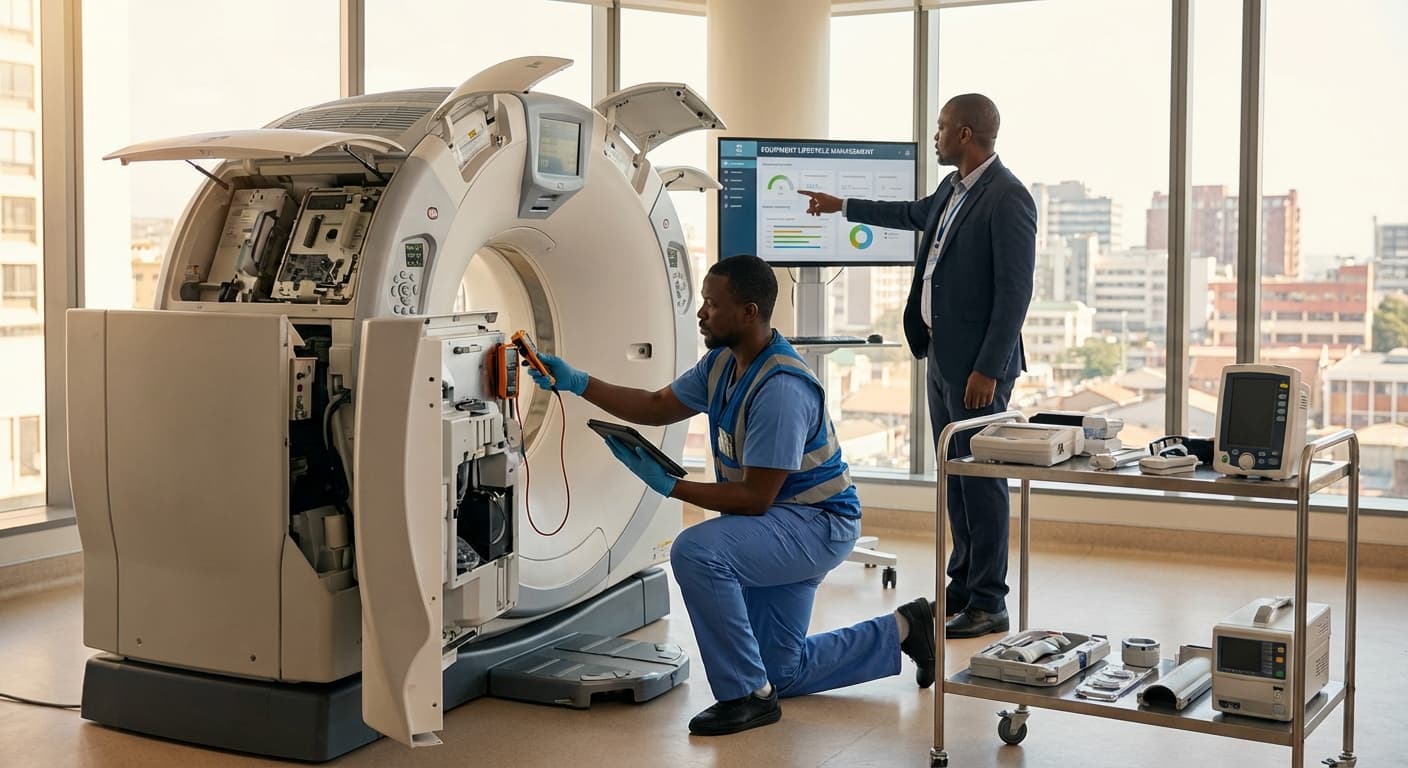
Equipment Replacement Planning & Obsolescence Strategy Service in Angola
Engineering Excellence & Technical Support
Equipment Replacement Planning & Obsolescence Strategy Service High-standard technical execution following OEM protocols and local regulatory frameworks.
Proactive Obsolescence Mitigation
Leverage advanced data analytics and predictive modeling to identify at-risk equipment before it impacts operations. Our service monitors component lifecycles, supplier viability, and technological advancements to create proactive replacement plans that minimize downtime and maximize ROI in Angola's critical infrastructure.
Optimized Lifecycle Costing
We provide comprehensive lifecycle cost analysis for critical Angola assets, factoring in acquisition, maintenance, energy consumption, and disposal. Our strategic approach ensures optimal timing for equipment replacement, balancing upfront investment with long-term operational efficiency and cost savings.
Resilient Supply Chain Integration
Navigate the complexities of global supply chains to secure critical replacement parts and equipment for Angola's industries. Our service integrates obsolescence planning with robust supply chain strategies, ensuring timely procurement and mitigating risks associated with component scarcity and lead times.
What Is Equipment Replacement Planning & Obsolescence Strategy Service In Angola?
Equipment Replacement Planning and Obsolescence Strategy Service in Angola refers to a specialized consulting offering designed to assist organizations in managing the lifecycle of their critical assets, specifically focusing on the timely and strategic replacement of equipment that has reached or is approaching obsolescence. This service is crucial for maintaining operational efficiency, mitigating risks associated with equipment failure, and optimizing capital expenditure. It involves a systematic approach to identifying, evaluating, and planning for the retirement and subsequent replacement of outdated or end-of-life equipment within an Angolan business context, considering local economic factors, regulatory compliance, and supply chain dynamics.
| Who Needs This Service? | Typical Use Cases |
|---|---|
Industries with significant capital-intensive assets, such as:
| Establishing a long-term capital expenditure (CAPEX) roadmap for asset renewal. Mitigating risks associated with aging infrastructure in critical sectors. Responding to evolving technological advancements and competitive pressures. Optimizing maintenance budgets by shifting from reactive to proactive replacement strategies. Ensuring compliance with safety and environmental regulations for older equipment. Facilitating mergers, acquisitions, or divestitures by providing a clear asset lifecycle view. Planning for the introduction of new technologies and automation. Addressing supply chain disruptions for critical spare parts for legacy equipment. |
Key Components of the Service:
- Asset Inventory and Condition Assessment: Comprehensive cataloging of existing equipment, including age, condition, performance data, maintenance history, and estimated remaining useful life (RUL).
- Obsolescence Identification: Analysis of technology trends, vendor support lifecycles, and the availability of spare parts and qualified maintenance personnel to determine the degree of obsolescence.
- Risk Assessment: Evaluation of the potential impact of equipment failure or obsolescence on operations, including production downtime, safety hazards, environmental non-compliance, and reputational damage.
- Replacement Planning: Development of phased replacement strategies, prioritizing critical assets based on risk and operational impact. This includes defining replacement timelines, budgetary requirements, and alternative solutions (e.g., refurbishment, upgrade).
- Technology Scouting and Evaluation: Researching and assessing emerging technologies and potential replacement equipment that aligns with business objectives and future operational needs.
- Total Cost of Ownership (TCO) Analysis: Comparative analysis of the TCO for continuing to operate existing equipment versus the TCO of acquiring and implementing new equipment, factoring in acquisition, installation, operation, maintenance, and disposal costs.
- Vendor Management and Procurement Strategy: Facilitation of the procurement process, including vendor selection, contract negotiation, and ensuring compliance with Angolan procurement regulations.
- Disposal and Decommissioning Planning: Development of strategies for the safe, environmentally responsible, and compliant disposal or decommissioning of obsolete equipment.
- Change Management and Training: Planning for the seamless integration of new equipment and providing necessary training to operational and maintenance staff.
- Regulatory Compliance Review: Ensuring that replacement plans and new equipment comply with all relevant Angolan industry standards, environmental regulations, and safety protocols.
Who Needs Equipment Replacement Planning & Obsolescence Strategy Service In Angola?
This service is crucial for organizations in Angola that operate with significant physical assets and face the challenges of aging equipment and the increasing complexity of technology lifecycles. A proactive approach to equipment replacement and obsolescence management ensures operational continuity, cost optimization, risk mitigation, and strategic advantage.
| Industry/Sector | Typical Target Customers | Key Departments Involved | Specific Needs Addressed |
|---|---|---|---|
| Oil & Gas | National Oil Companies, International Exploration & Production Companies, Service Providers | Operations & Maintenance, Engineering, Procurement, Asset Management, Finance | Managing aging drilling rigs, processing plants, pipelines; ensuring supply chain for specialized parts; planning for technology upgrades in exploration and production. |
| Mining | Large-scale mining operations, mineral processing plants | Operations & Maintenance, Engineering, Asset Management, Procurement, Environmental Health & Safety (EHS) | Replacing heavy earth-moving equipment, processing machinery, conveyor systems; managing obsolescence of safety and monitoring systems. |
| Power & Utilities | National power utilities, renewable energy providers, water treatment facilities | Operations & Maintenance, Engineering, Grid Management, Asset Management, Regulatory Affairs | Planning for replacement of turbines, transformers, transmission lines, control systems; ensuring grid stability with evolving technology. |
| Telecommunications | Mobile network operators, internet service providers, infrastructure providers | Network Operations, Engineering, IT Infrastructure, Procurement, Strategic Planning | Managing obsolescence of network switching equipment, base stations, fiber optic infrastructure; planning for 5G and future technology rollouts. |
| Manufacturing | Automotive, food & beverage, pharmaceuticals, heavy industry manufacturers | Production, Maintenance, Engineering, Quality Control, Supply Chain Management | Replacing production lines, robotics, automation systems; ensuring availability of spare parts for specialized machinery; adapting to Industry 4.0. |
| Transportation & Logistics | Airlines, shipping companies, railway operators, port authorities, road construction companies | Fleet Management, Engineering, Operations, Maintenance, Asset Management | Replacing aircraft, vessels, rolling stock, port cranes, construction equipment; managing lifecycle of complex control and navigation systems. |
| Government & Defense | Ministry of Defense, Ministry of Transport, Public Works Departments, National Security Agencies | Procurement, Logistics, Technical Support, Asset Management, Strategic Planning | Managing obsolescence of military hardware, communication systems, infrastructure assets; ensuring long-term availability of critical components. |
| Healthcare | Large hospitals, diagnostic centers, medical equipment suppliers | Biomedical Engineering, IT Department, Procurement, Facilities Management | Replacing complex medical imaging equipment (MRI, CT scanners), surgical robots, laboratory analyzers; ensuring compliance with evolving medical technology standards. |
Target Customers and Departments in Angola
- Industries with High Capital Investment:
- Sectors reliant on heavy machinery, specialized equipment, or critical infrastructure.
- Government and Public Sector Agencies:
- Entities managing public utilities, transportation networks, defense assets, and essential services.
- Technology-Dependent Enterprises:
- Businesses whose competitiveness hinges on up-to-date technology and systems.
- Companies with Long Asset Lifespans:
- Organizations where equipment is expected to function for many years, requiring careful planning for end-of-life.
- Organizations Undergoing Digital Transformation:
- Companies modernizing their operations and integrating new technologies.
- Financial Institutions with Significant IT Infrastructure:
- Banks and insurance companies managing large-scale IT systems and hardware.
Equipment Replacement Planning & Obsolescence Strategy Service Process In Angola
This document outlines the Equipment Replacement Planning & Obsolescence Strategy Service Process in Angola, detailing the workflow from initial inquiry to the final execution and ongoing support. This service aims to help organizations proactively manage their aging equipment, mitigate risks associated with obsolescence, and ensure optimal operational efficiency through strategic replacements and lifecycle management.
| Phase | Key Activities | Deliverables | Typical Duration (Angola Context) |
|---|---|---|---|
| Client expresses interest. Initial meeting to understand scope, objectives, and existing challenges. Discuss service offerings and preliminary feasibility. | Service Proposal, Non-Disclosure Agreement (NDA) if required. | 1-3 business days |
| On-site visits (if applicable) to inspect equipment. Detailed inventory of existing assets, age, condition, maintenance history, performance data, and operational criticality. Identify key stakeholders and their requirements. | Asset Register, Condition Reports, Maintenance Logs, Stakeholder Requirement Matrix. | 1-4 weeks (depending on fleet size and complexity) |
| Analyze gathered data for wear and tear, performance degradation, and obsolescence risks (technical, support, regulatory). Assess total cost of ownership (TCO) for current assets. Develop a comprehensive obsolescence mitigation strategy. | Obsolescence Risk Assessment Report, TCO Analysis, Draft Obsolescence Strategy. | 2-3 weeks |
| Present findings and proposed replacement strategy. Outline phased replacement plan, including prioritization of critical assets. Define new equipment specifications and vendor selection criteria. Develop budget estimates and projected ROI. | Equipment Replacement Plan, Vendor Shortlist Criteria, Budget Proposal, ROI Projections. | 1-2 weeks |
| Assist in vendor selection, tender evaluation, and contract negotiation for new equipment. Coordinate procurement logistics, including import regulations and customs clearance specific to Angola. Manage project initiation and resource allocation. | Procurement Documentation, Vendor Contracts, Project Charter. | 4-12 weeks (highly variable due to import and logistics) |
| Oversee installation and commissioning of new equipment. Ensure seamless integration with existing infrastructure and systems. Conduct initial testing and configuration. Manage site readiness and necessary infrastructure upgrades. | Installation Reports, Commissioning Certificates, Integration Test Results. | 2-6 weeks (depending on complexity of equipment and integration) |
| Conduct performance validation against defined specifications. Train client personnel on the operation and maintenance of new equipment. Formal handover of assets and associated documentation. Finalize project closure. | Performance Validation Report, Training Materials, Handover Documentation, Project Closure Report. | 1-2 weeks |
| Establish a framework for ongoing monitoring of asset performance and identification of emerging obsolescence. Provide post-implementation support and advice on future replacement cycles. Offer periodic strategy reviews. | Performance Monitoring Plan, Periodic Review Reports, Support Agreement. | Ongoing (as per service agreement) |
Service Process Workflow: Equipment Replacement Planning & Obsolescence Strategy
- Inquiry & Initial Consultation
- Assessment & Data Gathering
- Analysis & Strategy Development
- Recommendation & Planning
- Procurement & Implementation
- Deployment & Integration
- Validation & Handover
- Ongoing Monitoring & Support
Equipment Replacement Planning & Obsolescence Strategy Service Cost In Angola
Planning for equipment replacement and developing obsolescence strategies are critical for businesses operating in Angola to maintain operational efficiency, minimize downtime, and avoid the escalating costs associated with outdated technology. The cost of these specialized services in Angola is influenced by a variety of factors, reflecting the local economic landscape and the complexity of the projects. Understanding these pricing dynamics is crucial for accurate budgeting and strategic decision-making.
Key Pricing Factors:
- Scope and Complexity of Equipment Inventory: The sheer volume and diversity of equipment requiring assessment significantly impact costs. A detailed inventory, including asset tagging, condition assessment, and performance analysis, requires more resources. The presence of specialized or highly technical equipment will also drive up costs due to the need for expert analysis.
- Depth of Analysis Required: Services can range from basic replacement scheduling to in-depth lifecycle cost analysis, risk assessment of obsolescence, and the development of comprehensive maintenance and upgrade roadmaps. The more detailed the analysis, the higher the service cost.
- Consultant Expertise and Experience: The reputation, experience, and specialized knowledge of the consulting firm or individual consultant play a substantial role. Firms with a proven track record in Angola's industrial sectors, particularly those with experience in energy, mining, or telecommunications, may command higher fees.
- Data Availability and Quality: The ease with which consultants can access accurate and up-to-date information on equipment history, maintenance records, and operational data affects efficiency. If significant data collection and validation are required, costs will increase.
- Geographic Location and Accessibility: Projects in remote or challenging-to-access locations within Angola might incur additional costs related to travel, accommodation, and logistics for the consulting team.
- Project Timeline and Urgency: Expedited projects or those with tight deadlines may require additional resources or overtime, leading to higher costs.
- Integration with Existing Systems: The extent to which the obsolescence strategy needs to be integrated with existing enterprise resource planning (ERP) systems or asset management software can influence project complexity and cost.
- Regulatory and Compliance Considerations: Specific industry regulations or compliance requirements in Angola that necessitate detailed obsolescence planning will add to the project's scope and, consequently, its cost.
- Local Economic Conditions and Inflation: The general economic climate in Angola, including inflation rates, currency fluctuations (primarily against the US Dollar, often used for significant transactions), and the cost of living, will influence the pricing of professional services.
Pricing Ranges in Angolan Kwanza (AOA):
It's important to note that these figures are estimates and can vary significantly. For high-value, complex projects, contracts may be negotiated in USD and then converted, or have clauses to mitigate currency risks. The Angolan Kwanza (AOA) has experienced volatility, which is a significant factor.
| Service Component | Estimated Range (AOA) - Per Project/Month/Hour | Notes |
| :-------------------------------------------------- | :-------------------------------------------- | :---------------------------------------------------------------------------------------------------------------------------------- |
| Initial Assessment & Inventory Audit | 2,500,000 - 15,000,000 | Based on the scale of the asset register. Includes data gathering and initial condition reporting. |
| Detailed Obsolescence Risk Analysis | 5,000,000 - 25,000,000 | Deeper dive into technical obsolescence, supplier viability, and risk mitigation strategies. |
| Development of Replacement Planning Strategy | 7,500,000 - 30,000,000 | Creating roadmaps, budgeting, and scheduling for replacements. Includes financial modeling. |
| Full-Service Project Management & Implementation| 15,000,000 - 100,000,000+ | Comprehensive service from initial planning to implementation support and ongoing monitoring. Varies greatly with project duration. |
| Hourly Consulting Rate (Senior Specialist) | 50,000 - 150,000 | For ad-hoc advice, specific problem-solving, or specialized tasks. |
| Data Analysis & Software Integration | 4,000,000 - 20,000,000 | Cost dependent on the complexity of data and the systems to be integrated. |
| Training & Knowledge Transfer | 3,000,000 - 10,000,000 | For internal teams to manage obsolescence planning long-term. |
Important Considerations for Angola:
- Currency Volatility: The Angolan Kwanza (AOA) is subject to fluctuations. Projects involving international consultants or significant imported equipment will often be priced or invoiced in US Dollars (USD) to mitigate this risk.
- Local vs. International Consultants: International firms or consultants with global experience may charge higher rates but can bring specialized methodologies. Local consultants might offer a better understanding of the Angolan context and potentially more competitive pricing, but their experience with very complex obsolescence strategies might be less prevalent.
- Negotiation: Service contracts are highly negotiable. It is advisable to obtain multiple quotes and thoroughly vet potential service providers.
- Value-Based Pricing: Many sophisticated service providers will offer value-based pricing, demonstrating how their services will lead to significant cost savings or revenue protection, justifying their fees.
Businesses in Angola should conduct thorough due diligence, clearly define their requirements, and engage with multiple reputable service providers to secure the most suitable and cost-effective equipment replacement planning and obsolescence strategy services.
| Service Component | Estimated Range (AOA) - Per Project/Month/Hour | Notes |
|---|---|---|
| Initial Assessment & Inventory Audit | 2,500,000 - 15,000,000 | Based on the scale of the asset register. Includes data gathering and initial condition reporting. |
| Detailed Obsolescence Risk Analysis | 5,000,000 - 25,000,000 | Deeper dive into technical obsolescence, supplier viability, and risk mitigation strategies. |
| Development of Replacement Planning Strategy | 7,500,000 - 30,000,000 | Creating roadmaps, budgeting, and scheduling for replacements. Includes financial modeling. |
| Full-Service Project Management & Implementation | 15,000,000 - 100,000,000+ | Comprehensive service from initial planning to implementation support and ongoing monitoring. Varies greatly with project duration. |
| Hourly Consulting Rate (Senior Specialist) | 50,000 - 150,000 | For ad-hoc advice, specific problem-solving, or specialized tasks. |
| Data Analysis & Software Integration | 4,000,000 - 20,000,000 | Cost dependent on the complexity of data and the systems to be integrated. |
| Training & Knowledge Transfer | 3,000,000 - 10,000,000 | For internal teams to manage obsolescence planning long-term. |
Key Factors Influencing Equipment Replacement Planning & Obsolescence Strategy Service Costs in Angola
- Scope and Complexity of Equipment Inventory
- Depth of Analysis Required
- Consultant Expertise and Experience
- Data Availability and Quality
- Geographic Location and Accessibility
- Project Timeline and Urgency
- Integration with Existing Systems
- Regulatory and Compliance Considerations
- Local Economic Conditions and Inflation
Affordable Equipment Replacement Planning & Obsolescence Strategy Service Options
Our Affordable Equipment Replacement Planning & Obsolescence Strategy Service offers tailored solutions to help your organization proactively manage equipment lifecycles, mitigate risks associated with outdated technology, and optimize capital expenditure. We understand that businesses of all sizes require cost-effective strategies to maintain operational efficiency and competitive advantage. This service provides a structured approach to identifying critical assets, forecasting replacement needs, and developing sustainable obsolescence management plans, all while prioritizing budget constraints. We aim to transform potential liabilities into strategic assets through informed decision-making and smart investment.
Value Bundles are designed to provide comprehensive solutions at attractive price points. These bundles are curated to address common organizational needs and offer a tiered approach to service delivery, allowing you to select the level of support that best suits your requirements and budget. Each bundle represents a synergistic combination of our core services, delivering greater overall value than procuring individual components separately. Our objective is to empower your organization with the tools and expertise necessary for effective long-term equipment management.
Cost-Saving Strategies are integrated into every aspect of our service. We focus on identifying opportunities to reduce both immediate and future expenditures. This includes leveraging our expertise to negotiate better terms with suppliers, recommending the most cost-effective replacement options, and developing strategies to maximize the useful life of existing equipment. Our approach emphasizes preventative maintenance, informed upgrade decisions, and the strategic phasing out of aging assets to avoid costly emergency replacements or production downtime.
| Value Bundle | Key Features | Target Audience | Estimated Cost Savings Potential | Investment Level |
|---|---|---|---|---|
| Essential Starter Pack | Equipment inventory, basic condition assessment, initial obsolescence risk identification, basic replacement roadmap. | Small to medium-sized businesses with limited IT/asset management resources. | 5-10% reduction in unplanned maintenance costs, 3-5% optimized procurement. | Low |
| Growth & Resilience Bundle | Comprehensive asset lifecycle analysis, proactive obsolescence tracking for critical assets, detailed replacement planning with budget integration, vendor negotiation support. | Growing businesses, organizations with mission-critical equipment, those seeking to improve operational continuity. | 10-15% reduction in emergency replacement costs, 5-8% improved procurement leverage, minimized downtime. | Medium |
| Strategic Vanguard Package | Full lifecycle management framework, advanced obsolescence forecasting and mitigation, customized capital expenditure optimization strategies, sustainability integration, total cost of ownership (TCO) analysis. | Large enterprises, organizations with complex asset portfolios, those focused on long-term strategic advantage and risk mitigation. | 15-25% reduction in overall equipment lifecycle costs, significant ROI on capital deployment, enhanced operational agility. | High |
Our Affordable Equipment Replacement Planning & Obsolescence Strategy Service Options
- Core Assessment & Planning: A foundational service to inventory current equipment, assess operational status, and identify immediate replacement priorities. Includes initial risk assessment and basic lifecycle planning.
- Proactive Obsolescence Management: Builds upon the Core Assessment by implementing regular monitoring of technology trends, vendor support timelines, and emerging obsolescence risks for critical equipment.
- Strategic Capital Expenditure Optimization: Integrates financial modeling and forecasting to align equipment replacement with budgetary cycles, identify potential financing options, and optimize ROI on capital investments.
- Integrated Lifecycle Management: A comprehensive solution encompassing all aspects from initial assessment to end-of-life disposal and sustainable sourcing of replacements, focusing on long-term operational resilience and cost efficiency.
Verified Providers In Angola
In Angola's evolving healthcare landscape, identifying trusted and skilled medical professionals is paramount. Franance Health stands as a beacon of excellence, diligently curating a network of verified providers who not only meet but exceed industry standards. Our rigorous credentialing process ensures that every practitioner associated with Franance Health possesses the necessary qualifications, experience, and ethical standing to deliver superior patient care. Choosing a Franance Health-verified provider means opting for expertise, reliability, and a commitment to your well-being.
| Credential Type | Franance Health Verification Standard | Significance for Patients |
|---|---|---|
| Medical License | Active, valid, and issued by the Angolan Ministry of Health or equivalent. | Ensures legal authorization to practice medicine. |
| Educational Degrees & Diplomas | Verified from accredited institutions, confirming foundational medical knowledge. | Guarantees a strong academic background and comprehensive medical training. |
| Board Certifications | Current and recognized certifications in specialized medical fields. | Indicates advanced training and proven expertise in a specific area of medicine. |
| Professional Experience | Minimum required years of practice, often with a focus on relevant specialties. | Confirms practical application of knowledge and hands-on skill development. |
| Reputation & Ethical Conduct | Background checks and reference verifications to ensure a history of ethical practice and positive patient feedback. | Provides assurance of trustworthy and morally sound medical professionals. |
| Continuing Medical Education (CME) | Proof of ongoing professional development and commitment to staying updated with medical advancements. | Demonstrates a dedication to lifelong learning and providing the most current treatment options. |
Why Choose Franance Health Verified Providers?
- Uncompromising Quality: Franance Health employs a multi-faceted vetting process, including verification of medical licenses, educational degrees, board certifications, and a thorough review of professional history and references.
- Specialized Expertise: We connect you with providers who have demonstrated proficiency and experience in their specific medical fields, ensuring you receive the most appropriate care for your needs.
- Patient-Centric Approach: Verified providers are committed to a patient-first philosophy, prioritizing clear communication, empathy, and personalized treatment plans.
- Trust and Transparency: Our verification process builds trust, offering you peace of mind knowing you are in capable and ethical hands.
- Access to Advanced Care: Franance Health partners with leading medical professionals, granting you access to the latest medical advancements and best practices available in Angola.
Scope Of Work For Equipment Replacement Planning & Obsolescence Strategy Service
This Scope of Work (SOW) outlines the services to be provided by [Service Provider Name] for Equipment Replacement Planning & Obsolescence Strategy Development for [Client Name]. The objective is to establish a proactive and data-driven approach to manage the lifecycle of critical equipment, mitigate risks associated with obsolescence, and optimize capital expenditure for replacements.
| Deliverable | Description | Standard Specification / Format | Phase |
|---|---|---|---|
| Equipment Inventory & Baseline Report | A comprehensive catalog of all relevant equipment, including specifications, installation dates, vendor information, maintenance history, and current condition. | Database export (e.g., CSV, Excel) or structured document (e.g., PDF). | Phase 1 |
| Obsolescence Assessment Matrix | A matrix detailing identified obsolescence risks (e.g., end-of-life support, component availability, regulatory compliance) for each equipment item, with associated impact and likelihood ratings. | Spreadsheet (e.g., Excel) with predefined columns for equipment ID, risk category, description, impact, likelihood, and overall risk score. | Phase 2 |
| Obsolescence Mitigation Strategies Report | Recommendations for mitigating identified obsolescence risks, including options for extended support, component sourcing, redesign, or early replacement. | Structured document (e.g., PDF) with executive summary, detailed findings, and actionable recommendations. | Phase 2 |
| Equipment Replacement Strategy Document | A high-level strategy outlining the approach to equipment replacement, including criteria for prioritization, preferred vendor approaches, and budget considerations. | Structured document (e.g., PDF). | Phase 2 |
| Replacement Prioritization Register | A ranked list of equipment requiring replacement, based on factors such as criticality, obsolescence risk, operational impact, and available budget. | Spreadsheet (e.g., Excel) with columns for equipment ID, priority level, justification, estimated replacement cost, and projected replacement year. | Phase 3 |
| Long-Term Capital Replacement Plan | A multi-year forecast of capital expenditure required for equipment replacement, aligned with operational needs and budget cycles. | Financial model (e.g., Excel) or integrated asset management system report. | Phase 3 |
| Implementation Roadmap | A phased plan detailing the steps, timelines, responsibilities, and resource requirements for executing the replacement strategy. | Project management tool output (e.g., Gantt chart in MS Project, Asana, Jira) or structured document (e.g., PDF). | Phase 4 |
| Final Project Report & Presentation | A comprehensive report summarizing the project findings, recommendations, and the implemented strategy, along with a presentation to key stakeholders. | Structured document (e.g., PDF) and presentation slides (e.g., PowerPoint). | Phase 4 |
Key Services Offered
- Phase 1: Assessment & Data Gathering
- Phase 2: Obsolescence Risk Analysis & Strategy Development
- Phase 3: Replacement Planning & Prioritization
- Phase 4: Implementation Roadmap & Reporting
Service Level Agreement For Equipment Replacement Planning & Obsolescence Strategy Service
This Service Level Agreement (SLA) outlines the commitment to providing a high standard of service for the Equipment Replacement Planning & Obsolescence Strategy Service. It defines the response times for critical issues and the uptime guarantees for the service platform.
| Service Component | Response Time Guarantee | Uptime Guarantee |
|---|---|---|
| Service Platform Access (Login, Dashboard, Basic Functionality) | Critical Incident (Service Unavailability): 2 Business Hours | 99.8% Monthly Uptime |
| Proactive Obsolescence Alerts & Standard Reports | High Priority Incident (Data Glitch, Report Inaccuracy): 4 Business Hours | N/A (Service functionality, not platform uptime) |
| Strategic Replacement Planning Consultations (Scheduled) | Medium Priority Incident (Feature Degradation): 8 Business Hours | N/A (Service functionality, not platform uptime) |
| Lifecycle Management Consultation (Scheduled) | Low Priority Incident (General Inquiry, Minor UI Issue): 24 Business Hours | N/A (Service functionality, not platform uptime) |
| General Technical Support & Inquiries | Standard Support Request: 24 Business Hours | N/A (Service functionality, not platform uptime) |
Key Service Components
- Equipment Replacement Planning & Obsolescence Strategy Service Platform Access
- Proactive Obsolescence Monitoring and Reporting
- Strategic Replacement Planning Support
- Lifecycle Management Consultation
- Incident Management and Support
Frequently Asked Questions

Ready when you are
Let's scope your Equipment Replacement Planning & Obsolescence Strategy Service in Angola project in Angola.

Scaling healthcare logistics and technical systems across the entire continent.