
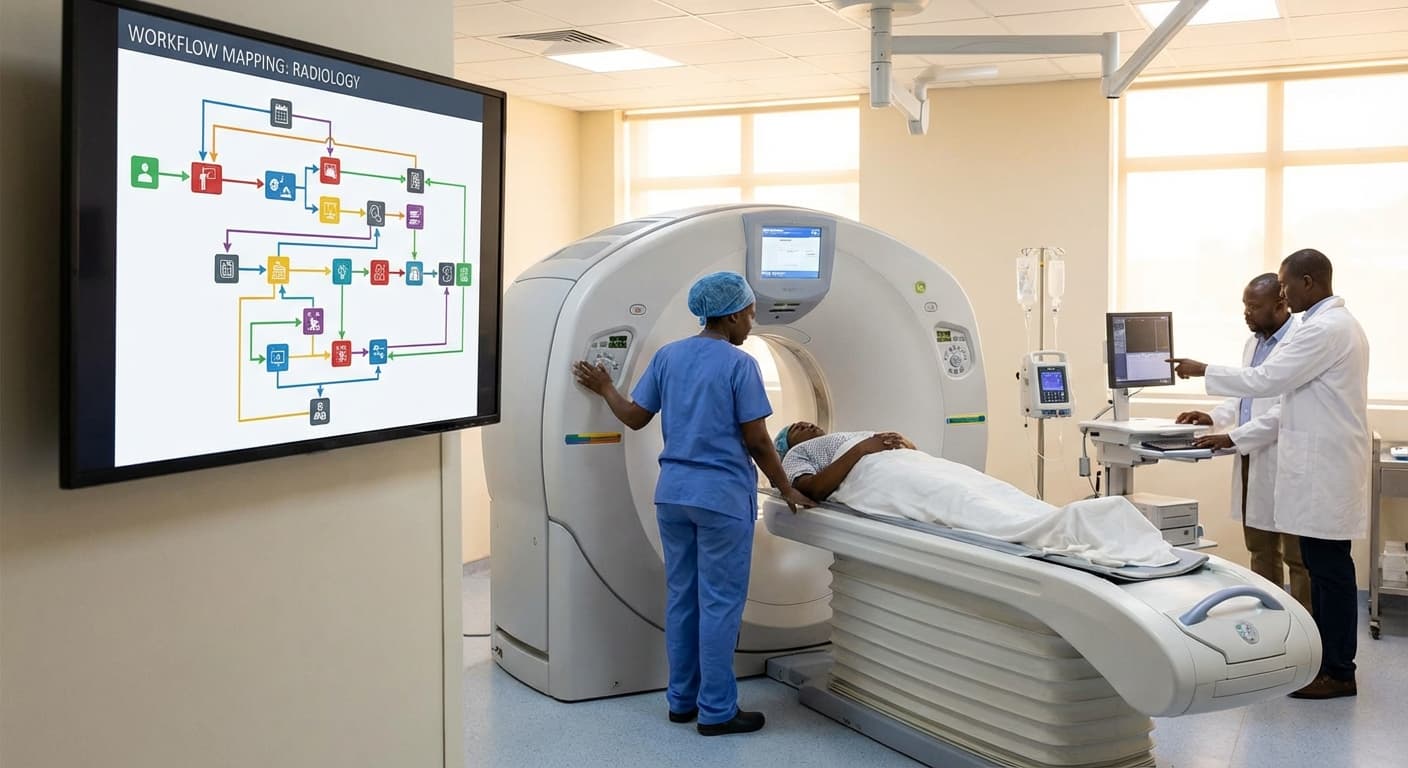
Department Workflow Mapping Service (Radiology/ICU/OT/Lab/Dialysis) in Angola
Engineering Excellence & Technical Support
Department Workflow Mapping Service (Radiology/ICU/OT/Lab/Dialysis) High-standard technical execution following OEM protocols and local regulatory frameworks.
Streamlined Patient Journeys Across Departments
Visualize and optimize patient flow through Radiology, ICU, OT, Lab, and Dialysis in Angolan healthcare facilities. Our service identifies bottlenecks, reduces wait times, and ensures seamless transitions for improved patient care and operational efficiency.
Interdepartmental Data Synchronization & Workflow Integration
Connect critical data points and workflows between Angolan Radiology, ICU, OT, Lab, and Dialysis units. Our mapping service facilitates real-time information sharing, reducing manual data entry errors and enhancing diagnostic and treatment accuracy.
Performance Analytics for Optimized Resource Allocation
Gain actionable insights into departmental performance in Angolan hospitals. Our workflow mapping highlights resource utilization, staff allocation, and equipment efficiency across Radiology, ICU, OT, Lab, and Dialysis, enabling data-driven decisions for better service delivery and cost management.
What Is Department Workflow Mapping Service (Radiology/icu/ot/lab/dialysis) In Angola?
Department Workflow Mapping Service, within the Angolan healthcare context, refers to a systematic process of documenting, analyzing, and optimizing the operational procedures and information flow within specific high-acuity clinical departments such as Radiology, Intensive Care Unit (ICU), Operating Theater (OT), Laboratory, and Dialysis. This service aims to identify bottlenecks, redundancies, inefficiencies, and areas for improvement in patient care delivery, resource utilization, and staff productivity. It involves detailed observation, data collection, process modeling, and stakeholder engagement to create a comprehensive understanding of existing workflows and to design more effective and efficient future states. The ultimate objective is to enhance patient safety, improve diagnostic accuracy, reduce waiting times, optimize resource allocation, and ensure compliance with clinical standards and regulatory requirements.
| Stakeholder Group | Needs Addressed by Workflow Mapping | Typical Use Cases |
|---|---|---|
| Healthcare Providers (Physicians, Nurses, Technologists) | Streamlined patient care pathways, reduced administrative burden, improved communication and collaboration, enhanced patient safety through error reduction. | Optimizing patient triage and admission in ICU; standardizing image acquisition protocols in Radiology; improving surgical scheduling and instrument management in OT; reducing sample processing times in the Lab; enhancing patient scheduling and monitoring in Dialysis. |
| Hospital Administration and Management | Improved operational efficiency, optimized resource allocation (staff, equipment, consumables), cost reduction, enhanced service quality and patient satisfaction, better compliance with accreditation and regulatory standards. | Analyzing departmental capacity and throughput to inform capital investment; identifying opportunities for inter-departmental synergy; developing performance dashboards; benchmarking against best practices. |
| IT and Health Information Management (HIM) Departments | Identification of data integration requirements, optimization of Electronic Health Record (EHR) utilization, ensuring data accuracy and integrity, streamlining reporting mechanisms. | Mapping data flows for EHR integration; identifying requirements for Picture Archiving and Communication System (PACS) optimization; designing automated reporting tools; ensuring compliance with data privacy regulations. |
| Quality Improvement and Patient Safety Officers | Systematic identification and mitigation of risks, reduction of medical errors, enhancement of adherence to clinical protocols, facilitation of evidence-based practice implementation. | Analyzing critical incident reports to identify systemic issues; developing standard operating procedures (SOPs) for high-risk processes; measuring the impact of workflow changes on patient outcomes. |
| Government and Regulatory Bodies | Ensuring adherence to national healthcare standards, facilitating the evaluation of healthcare service delivery, informing policy development related to departmental operations. | Assessing compliance with licensing requirements; providing data for national health statistics and planning; evaluating the effectiveness of healthcare reforms. |
Key Components of Department Workflow Mapping Service
- Current State Analysis: Detailed documentation of existing processes, roles, responsibilities, and information exchange within the target department.
- Data Collection and Metrics: Gathering quantitative and qualitative data on key performance indicators (KPIs) such as turnaround times, patient throughput, error rates, and resource utilization.
- Process Modeling: Utilizing visual tools (e.g., flowcharts, BPMN diagrams) to represent the sequence of activities, decision points, and handoffs.
- Bottleneck Identification: Pinpointing constraints in the workflow that hinder efficiency and patient flow.
- Root Cause Analysis: Investigating the underlying reasons for identified inefficiencies and areas of concern.
- Future State Design: Developing optimized workflows, incorporating best practices, technological advancements, and lean principles.
- Implementation Planning: Creating a roadmap for transitioning from the current to the future state, including change management strategies.
- Performance Monitoring and Evaluation: Establishing mechanisms to track the effectiveness of implemented changes and ensure continuous improvement.
Who Needs Department Workflow Mapping Service (Radiology/icu/ot/lab/dialysis) In Angola?
Our Department Workflow Mapping Service is specifically designed to address the critical need for optimized operational efficiency within key departments of healthcare facilities in Angola. By meticulously documenting, analyzing, and redesigning existing workflows, we empower these departments to overcome bottlenecks, reduce errors, improve patient care, and maximize resource utilization. This service is invaluable for institutions striving for excellence in high-pressure and complex medical environments.
| Department | Rationale for Workflow Mapping | Key Benefits of Mapping |
|---|---|---|
| Radiology | Managing patient flow from imaging request to report generation, equipment utilization, image archiving and retrieval, and interdepartmental communication. | Reduced patient wait times, improved radiologist efficiency, enhanced image quality control, streamlined reporting process, better equipment uptime. |
| Intensive Care Unit (ICU) | Optimizing patient admission/transfer protocols, medication administration, vital sign monitoring, communication among care teams, resource allocation (beds, equipment), and discharge planning. | Improved patient outcomes through timely interventions, reduced medical errors, enhanced team collaboration, efficient use of critical resources, faster patient throughput. |
| Operating Theater (OT) | Standardizing surgical scheduling, pre-operative patient preparation, instrument sterilization and management, intra-operative procedures, post-operative care handoffs, and equipment maintenance. | Increased surgical capacity, reduced procedure delays, minimized infection rates, improved surgical team coordination, efficient inventory management. |
| Laboratory | Streamlining sample collection, processing, analysis, quality control, result reporting, and specimen disposal. Managing reagent inventory and equipment calibration. | Faster turnaround times for diagnostic results, reduced sample rejection rates, improved accuracy of tests, optimized staff workload, enhanced regulatory compliance. |
| Dialysis | Managing patient scheduling, pre-treatment assessments, dialysis session procedures, post-treatment monitoring, equipment cleaning and maintenance, and fluid management. | Increased patient safety, efficient scheduling to maximize machine utilization, reduced treatment complications, improved patient comfort, optimized staff allocation. |
Target Customers and Departments in Angola Requiring Workflow Mapping:
- Hospitals (Public and Private)
- Specialty Clinics with Inpatient or High-Volume Outpatient Services
- Medical Centers
- Diagnostic Laboratories
- Dialysis Centers
Department Workflow Mapping Service (Radiology/icu/ot/lab/dialysis) Process In Angola
This document outlines the Department Workflow Mapping Service for various hospital departments (Radiology, ICU, OT, Lab, Dialysis) in Angola. The service aims to analyze, document, and optimize existing processes within these critical departments to improve efficiency, reduce errors, and enhance patient care. The workflow begins with an initial inquiry and culminates in the execution and delivery of the mapped workflows, along with recommendations for improvement.
| Stage | Description | Key Activities | Deliverables | Responsible Parties |
|---|---|---|---|---|
| The process begins when a hospital department in Angola expresses interest in the workflow mapping service. | Initial contact via phone, email, or website. Discussion of departmental needs and service overview. Preliminary feasibility assessment. | Service proposal, preliminary understanding of departmental challenges. | Client (Department Head/Administrator), Service Provider |
| A detailed understanding of the department's specific requirements and the scope of the project is established. | On-site or remote meetings with department stakeholders (e.g., doctors, nurses, technicians, administrators). Identification of key processes to be mapped. Defining project objectives, timelines, and budget. | Detailed project scope document, agreed-upon objectives, identified key performance indicators (KPIs). | Service Provider, Client Stakeholders |
| Gathering comprehensive information about the current state of the department's operations. | Observation of daily operations, interviews with staff at all levels, review of existing documentation (SOPs, protocols, patient records), analysis of patient flow and resource utilization. | Raw data, interview transcripts, observation notes, initial process analysis findings. | Service Provider (Analysts, Consultants) |
| Visually representing the collected data into clear and understandable workflow diagrams. | Utilizing flowcharting tools (e.g., Visio, Lucidchart). Documenting each step, decision point, roles, responsibilities, inputs, outputs, and potential bottlenecks for each identified process. Creating 'As-Is' workflow diagrams. | Detailed 'As-Is' workflow diagrams for each mapped process. | Service Provider (Workflow Analysts) |
| Ensuring the accuracy and completeness of the mapped workflows with the department's staff. | Presenting the 'As-Is' workflows to department stakeholders. Facilitating review sessions to gather feedback, identify discrepancies, and confirm accuracy. Making necessary revisions based on feedback. | Validated 'As-Is' workflow diagrams. | Service Provider, Client Stakeholders |
| Identifying areas for improvement based on the analysis of the current workflows. | Analyzing the validated 'As-Is' workflows for inefficiencies, redundancies, potential errors, and compliance gaps. Brainstorming potential 'To-Be' workflows incorporating best practices, technological advancements, and departmental goals. Developing actionable recommendations for process optimization. | List of identified inefficiencies and bottlenecks, proposed 'To-Be' workflow concepts, preliminary recommendations. | Service Provider (Consultants, Analysts) |
| Presenting the findings, mapped workflows, and recommendations to the client. | Compiling a comprehensive report including executive summary, 'As-Is' workflows, analysis of findings, prioritized recommendations, and potential benefits. Presenting the report and recommendations to department leadership and relevant stakeholders. | Final Workflow Mapping Report, Presentation slides. | Service Provider, Client Leadership |
| Providing assistance in putting the recommended changes into practice. | Developing detailed implementation plans for 'To-Be' workflows. Training staff on new processes. Monitoring initial implementation and providing ongoing support. Evaluating the impact of implemented changes against defined KPIs. | Implementation plans, training materials, post-implementation review reports. | Service Provider, Client (with potential dedicated implementation team) |
Department Workflow Mapping Service Stages
- Inquiry and Initial Consultation
- Needs Assessment and Scoping
- Data Collection and Analysis
- Workflow Mapping and Documentation
- Validation and Review
- Recommendation Development
- Final Report and Presentation
- Implementation Support (Optional)
Department Workflow Mapping Service (Radiology/icu/ot/lab/dialysis) Cost In Angola
The cost of a Department Workflow Mapping Service (Radiology/ICU/OT/Lab/Dialysis) in Angola can vary significantly due to several influencing factors. This service is crucial for optimizing operational efficiency, identifying bottlenecks, and improving patient care within specialized hospital departments. Understanding these factors is key to budgeting accurately for such a consultancy engagement.
| Service Component / Department Type | Estimated Cost Range (Angolan Kwanza - AOA) | Notes |
|---|---|---|
| Basic Workflow Documentation (Single Department, limited scope) | 1,500,000 - 3,000,000 AOA | Covers initial mapping of core processes for a smaller department or a specific set of workflows. |
| Comprehensive Workflow Mapping & Analysis (Radiology/Lab - Medium Size) | 3,000,000 - 7,000,000 AOA | Includes in-depth data collection, bottleneck identification, and initial recommendations. Assumes standard imaging modalities or lab tests. |
| Advanced Workflow Mapping & Optimization (ICU/OT - High Complexity) | 6,000,000 - 15,000,000+ AOA | Addresses complex patient pathways, critical care interventions, surgical scheduling, and multidisciplinary team coordination. Higher end for extensive analysis and detailed optimization plans. |
| Dialysis Unit Workflow Mapping | 2,500,000 - 6,000,000 AOA | Focuses on patient scheduling, machine utilization, patient flow, and infection control protocols. |
| Multi-Departmental Service (e.g., Radiology & Lab) | 6,000,000 - 12,000,000+ AOA | Cost increases with the number of departments and the complexity of inter-departmental handoffs. |
| Add-on: Implementation Support / Change Management | 2,000,000 - 5,000,000+ AOA (per phase) | Separate cost for assisting with the implementation of recommended changes, staff training, and monitoring progress. |
| Add-on: Technology Integration Assessment | 1,000,000 - 3,000,000 AOA | For assessing and recommending improvements related to IT systems within the workflows. |
Key Pricing Factors for Workflow Mapping Services in Angola:
- Department Complexity and Size: Larger departments (e.g., a major radiology department with multiple imaging modalities and extensive patient throughput) or highly complex ones (e.g., an Intensive Care Unit with intricate patient monitoring and intervention protocols) will require more in-depth analysis, leading to higher costs.
- Scope of the Project: A comprehensive workflow mapping might include initial assessment, data collection (observation, interviews, document review), analysis, identification of inefficiencies, recommendation development, and implementation support. A project limited to just initial mapping will be less expensive.
- Number of Workflows to Map: The more distinct workflows that need to be documented and analyzed within a department, the longer the engagement and thus the higher the cost.
- Data Collection Methodology: The methods used for data collection, such as direct observation, patient journey tracking, staff interviews, surveys, and system log analysis, will influence the time and resources required.
- Consultant Expertise and Reputation: Experienced consultants or established firms with a proven track record in healthcare workflow optimization, particularly in the Angolan context, will typically command higher fees.
- Location within Angola: While national rates exist, consulting fees might see slight variations based on the cost of living and operational expenses in major cities like Luanda compared to other regions.
- Duration of Engagement: The total time the consultancy team spends on-site and off-site for analysis, reporting, and potential implementation support directly impacts the overall cost.
- Deliverables Required: The level of detail and format of the final reports, presentations, process diagrams, and implementation roadmaps will influence the effort involved.
- Technology Integration Assessment: If the scope includes assessing and recommending improvements for technology integration within the workflow (e.g., PACS in radiology, EMR in ICU), this can add to the complexity and cost.
- Language and Cultural Nuances: While Portuguese is the official language, understanding local cultural nuances and ensuring effective communication with staff across different levels can be a factor in the time and approach of the consultants.
Affordable Department Workflow Mapping Service (Radiology/icu/ot/lab/dialysis) Options
Our Affordable Department Workflow Mapping Service offers comprehensive analysis and optimization for critical hospital departments including Radiology, Intensive Care Unit (ICU), Operating Theater (OT), Laboratory, and Dialysis. We specialize in identifying bottlenecks, improving efficiency, and reducing operational costs through detailed workflow visualization and strategic recommendations. Our value lies in providing clear, actionable insights that lead to tangible improvements in patient care, resource utilization, and staff productivity. We offer flexible options to suit various departmental needs and budgets.
| Service Tier | Description | Included Departments | Value Bundle Highlights | Cost-Saving Strategies | Estimated Price Range (per department) |
|---|---|---|---|---|---|
| Basic Assessment | Initial analysis of existing workflows, identifying major pain points and areas for improvement. | Radiology, ICU, OT, Lab, Dialysis (Choose 1) | Visual workflow diagrams, bottleneck identification report. | Basic recommendations for process improvement, staff reallocation insights. | $2,500 - $5,000 |
| Standard Optimization | In-depth mapping, detailed analysis, and development of optimized workflows with actionable recommendations. | Radiology, ICU, OT, Lab, Dialysis (Choose 1-2) | Comprehensive workflow maps, detailed analysis reports, preliminary implementation plan. | Process standardization, reduction of redundant steps, inventory management improvements, scheduling optimization. | $5,000 - $10,000 |
| Comprehensive Transformation | Full-scale workflow re-engineering, including technology integration recommendations, staff training guidance, and performance metrics setup. | Radiology, ICU, OT, Lab, Dialysis (Bundle 3+ or all) | End-to-end workflow redesign, technology assessment, change management strategy, key performance indicator (KPI) framework. | Automation opportunities, Lean Six Sigma principles application, cross-training strategies, reduced supply chain costs, improved staff utilization. | $10,000 - $25,000+ (depending on scope and number of departments) |
Key Benefits of Our Workflow Mapping Service
- Enhanced operational efficiency and reduced waste.
- Improved patient throughput and reduced wait times.
- Optimized resource allocation (staff, equipment, supplies).
- Identification and mitigation of potential risks and errors.
- Streamlined communication and collaboration among staff.
- Foundation for digital transformation and automation initiatives.
- Data-driven insights for continuous improvement.
Verified Providers In Angola
In Angola's evolving healthcare landscape, identifying trustworthy and competent medical service providers is paramount for individuals and organizations alike. Franance Health stands out as a leading example of a verified provider, consistently demonstrating a commitment to excellence, patient well-being, and ethical practices. This section will delve into the credentials that solidify Franance Health's reputation and explain why they represent the best choice for healthcare needs in Angola.
| Franance Health Credential | Significance for Patients in Angola | Why it's the Best Choice |
|---|---|---|
| Certified Medical Professionals: (e.g., Licensed Physicians, Board-Certified Specialists) | Ensures competence, up-to-date knowledge, and adherence to professional medical standards. | Guarantees access to expert medical advice and treatment from individuals who have met rigorous academic and practical requirements. |
| International Partnerships/Affiliations: (e.g., with renowned medical institutions) | Facilitates access to specialized knowledge, advanced training for staff, and potentially referral pathways for complex cases. | Provides a bridge to global best practices and cutting-edge medical advancements, enhancing the quality of care available locally. |
| Robust Quality Management Systems: (e.g., ISO certifications, internal audits) | Demonstrates a commitment to continuous improvement in service delivery, patient safety, and operational efficiency. | Offers assurance that the provider is consistently striving for the highest standards, minimizing risks, and optimizing patient outcomes. |
| Patient Satisfaction Scores and Testimonials: | Direct feedback from previous patients provides insights into the actual experience of receiving care. | Reflects a provider's ability to deliver not just clinical treatment but also a compassionate and supportive patient journey. |
| Commitment to Ongoing Training and Development: | Ensures medical staff remain at the forefront of medical innovation and best practices. | Translates to patients receiving care based on the latest research and techniques, leading to potentially better diagnosis and treatment. |
Key Credentials and Qualities of Verified Providers like Franance Health:
- Accreditation and Certifications: Verified providers typically hold recognized accreditations from national or international healthcare bodies. These accreditations signify adherence to stringent quality standards, safety protocols, and operational efficiency.
- Qualified and Experienced Medical Staff: A cornerstone of any reputable healthcare provider is its team. Franance Health emphasizes the recruitment and retention of highly qualified physicians, nurses, specialists, and allied health professionals with extensive experience in their respective fields.
- State-of-the-Art Facilities and Technology: Investment in modern medical equipment, diagnostic tools, and treatment technologies is a hallmark of excellence. Verified providers ensure their facilities are well-equipped to offer comprehensive and advanced medical care.
- Patient-Centric Approach: Beyond clinical expertise, verified providers prioritize the patient experience. This includes clear communication, empathy, respect for patient rights, and personalized care plans tailored to individual needs.
- Adherence to Ethical Standards and Regulations: Compliance with all relevant healthcare laws, ethical guidelines, and data privacy regulations is non-negotiable. Verified providers operate with transparency and integrity.
- Strong Track Record and Reputation: A consistent history of positive patient outcomes, community engagement, and a strong reputation built on trust are vital indicators of a reliable provider.
Scope Of Work For Department Workflow Mapping Service (Radiology/icu/ot/lab/dialysis)
This Scope of Work (SOW) outlines the services to be provided for a comprehensive workflow mapping initiative across critical hospital departments: Radiology, Intensive Care Unit (ICU), Operating Theatre (OT), Laboratory (Lab), and Dialysis. The objective is to create detailed visual representations and analyses of existing departmental processes to identify inefficiencies, bottlenecks, and areas for improvement. This mapping will serve as a foundation for process optimization, technology implementation, and staff training.
| Deliverable | Department(s) | Standard Specifications / Format | Description |
|---|---|---|---|
| Detailed Workflow Diagrams | Radiology, ICU, OT, Lab, Dialysis | BPMN 2.0 (Business Process Model and Notation) compliant; PDF, Visio, or Lucidchart formats | Visual representation of end-to-end processes, including steps, decision points, roles, systems, and data flow. |
| Process Narrative Documentation | Radiology, ICU, OT, Lab, Dialysis | Microsoft Word or equivalent; clear and concise language | Written descriptions accompanying each workflow diagram, elaborating on activities, triggers, outcomes, and responsible parties. |
| Identification of Key Performance Indicators (KPIs) | Radiology, ICU, OT, Lab, Dialysis | Microsoft Excel or equivalent; clearly defined metrics with baseline values (if available) | Quantifiable metrics to measure the efficiency and effectiveness of each mapped workflow (e.g., turnaround time, error rate, resource utilization). |
| Bottleneck and Inefficiency Analysis Report | Radiology, ICU, OT, Lab, Dialysis | Microsoft Word or equivalent; detailed findings with supporting evidence | Identification and explanation of stages in the workflow that hinder smooth operations, delay processes, or increase costs. |
| Recommendations for Process Improvement | Radiology, ICU, OT, Lab, Dialysis | Microsoft Word or equivalent; actionable and prioritized recommendations | Proposed solutions to address identified bottlenecks and inefficiencies, including suggestions for automation, standardization, resource reallocation, or policy changes. |
| Data Dictionary for Workflow Elements | Radiology, ICU, OT, Lab, Dialysis | Microsoft Excel or equivalent; structured format | A glossary of all elements used in the workflow diagrams and documentation, defining terms, abbreviations, and data fields. |
| Final Project Report | All Departments | Microsoft Word or equivalent; comprehensive and executive summary included | Consolidated report detailing the entire project, including methodology, findings, diagrams, analysis, recommendations, and future considerations. |
Technical Deliverables
- Detailed Workflow Diagrams (e.g., BPMN 2.0 compliant)
- Process Narrative Documentation
- Identification of Key Performance Indicators (KPIs) for each workflow
- Bottleneck and Inefficiency Analysis Report
- Recommendations for Process Improvement
- Data Dictionary for Workflow Elements
- Final Project Report summarizing findings and proposed next steps
Service Level Agreement For Department Workflow Mapping Service (Radiology/icu/ot/lab/dialysis)
This Service Level Agreement (SLA) outlines the guaranteed response times and uptime for the Department Workflow Mapping Service. This service is critical for ensuring efficient and effective operations within the Radiology, Intensive Care Unit (ICU), Operating Theatre (OT), Laboratory, and Dialysis departments. The SLA aims to provide clarity on performance expectations and remedial actions in case of service disruptions.
| Service Component | Response Time Guarantee | Uptime Guarantee | Monitoring Method |
|---|---|---|---|
| Workflow Data Collection & Initial Analysis | Within 4 business hours of request submission | 99.5% per calendar month | Automated system logs and manual verification |
| Draft Workflow Map Generation | Within 2 business days of data collection completion | 99.5% per calendar month | Automated system logs and manual verification |
| Workflow Map Revision (based on feedback) | Within 1 business day of feedback submission | 99.5% per calendar month | Automated system logs and manual verification |
| Service Availability (Platform Access) | N/A (Continuous availability is expected) | 99.9% per calendar month | Automated network and application performance monitoring |
| Critical Issue Resolution (e.g., system outage) | Within 2 business hours of notification | N/A (Focus on immediate resolution) | Real-time alerts and incident tracking system |
Key Departments Covered
- Radiology
- Intensive Care Unit (ICU)
- Operating Theatre (OT)
- Laboratory
- Dialysis
Frequently Asked Questions

Ready when you are
Let's scope your Department Workflow Mapping Service (Radiology/ICU/OT/Lab/Dialysis) in Angola project in Angola.

Scaling healthcare logistics and technical systems across the entire continent.