
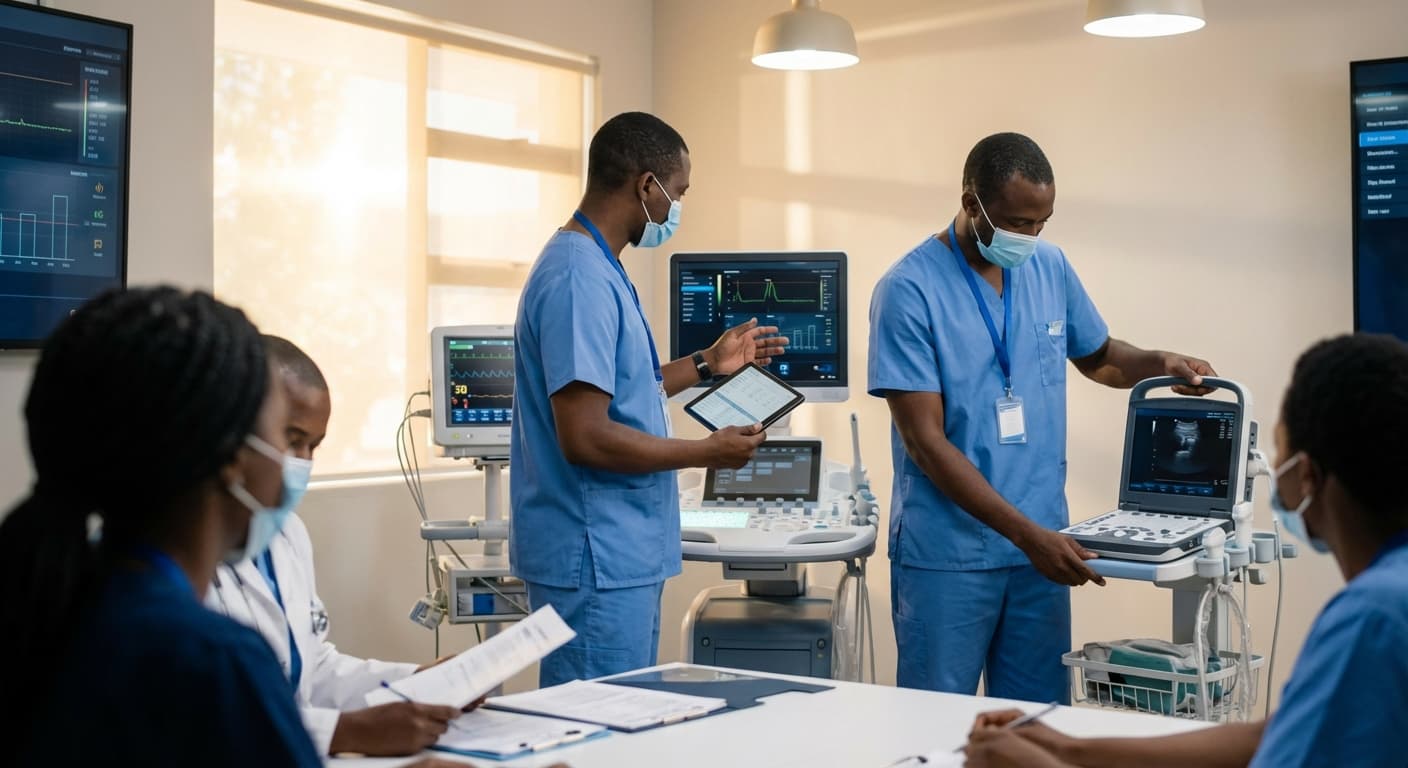
Clinical Needs Assessment for Medical Equipment in Angola
Engineering Excellence & Technical Support
Clinical Needs Assessment for Medical Equipment High-standard technical execution following OEM protocols and local regulatory frameworks.
Localized Data Collection & Needs Mapping
Leveraging mobile-first platforms and offline data capture capabilities to conduct comprehensive needs assessments across Angola's diverse regions. This includes mapping existing equipment infrastructure, identifying critical gaps in underserved rural areas, and prioritizing essential medical technologies based on disease prevalence and demographic data.
Integrated Lifecycle Cost Analysis
Implementing a robust framework for evaluating the total cost of ownership for medical equipment. This goes beyond initial purchase price to include installation, training, maintenance, spare parts, energy consumption, and eventual disposal. Our analysis informs sustainable procurement strategies and ensures long-term operational viability for Angola's healthcare facilities.
Capacity Building & Knowledge Transfer Framework
Developing a sustainable model for building local technical capacity in equipment maintenance and repair. This involves identifying critical training needs for biomedical engineers and technicians, designing curricula aligned with international standards, and facilitating knowledge transfer through workshops and on-the-job training to ensure long-term equipment sustainability and reduce reliance on external support.
What Is Clinical Needs Assessment For Medical Equipment In Angola?
Clinical Needs Assessment for Medical Equipment in Angola is a systematic and evidence-based process designed to evaluate the existing healthcare infrastructure, identify critical gaps in medical equipment availability and functionality, and prioritize the acquisition, maintenance, and deployment of appropriate technologies to meet the specific healthcare demands of the Angolan population. This service is crucial for optimizing resource allocation, ensuring equitable access to quality healthcare services, and improving patient outcomes within the Angolan context, considering its unique epidemiological profile, geographical distribution of facilities, and economic constraints.
| Who Needs Clinical Needs Assessment for Medical Equipment in Angola? | Typical Use Cases in Angola | ||||||
|---|---|---|---|---|---|---|---|
| Ministry of Health (MINSA): For strategic planning, national health policy development, and resource allocation across the country. | Provincial and Municipal Health Directorates: To tailor equipment strategies to specific regional needs and challenges. | Public Hospitals and Health Centers: To identify immediate equipment deficits and prioritize replacements or upgrades for improved service delivery. | NGOs and International Aid Organizations: To ensure that donated or procured equipment aligns with identified needs and integrates effectively into the existing healthcare system. | Healthcare Facilities Undergoing Renovation or Expansion: To determine new equipment requirements based on updated infrastructure and service scope. | Training Institutions for Healthcare Professionals: To ensure that educational facilities are equipped with relevant technologies for training future healthcare workers. | Private Healthcare Providers (in certain contexts): To validate equipment needs and compliance with national standards, especially for specialized services. | |
| Establishing or upgrading diagnostic imaging departments: Identifying needs for X-ray machines, ultrasound, CT scanners, and MRI, along with associated infrastructure and training. | Equipping primary healthcare clinics in remote areas: Focusing on essential diagnostic tools (e.g., basic microscopes, vital signs monitors) and basic treatment equipment. | Enhancing surgical capacity in regional hospitals: Assessing requirements for operating room equipment, anesthesia machines, and sterilization units. | Improving maternal and child health services: Identifying needs for incubators, phototherapy units, ultrasound for antenatal care, and essential delivery room equipment. | Strengthening laboratory diagnostics: Evaluating needs for analytical equipment, reagents, and quality control systems. | Addressing the burden of non-communicable diseases (NCDs): Assessing equipment for screening, diagnosis, and management of conditions like diabetes, hypertension, and cardiovascular diseases (e.g., ECG machines, blood glucose monitors). | Developing emergency medical services: Identifying needs for ambulances, advanced life support equipment, and trauma care resources. | Planning for equipment maintenance and repair infrastructure: Assessing the need for biomedical engineering workshops, spare parts inventory management systems, and training for maintenance technicians. |
Key Components of Clinical Needs Assessment for Medical Equipment in Angola:
- Infrastructure Evaluation: Assessing the physical capacity of healthcare facilities (hospitals, clinics, health posts) to house and operate specific equipment, including power supply stability, environmental controls (temperature, humidity), and space availability.
- Human Resource Capacity Assessment: Evaluating the availability of trained personnel (clinicians, technicians, maintenance staff) capable of operating, troubleshooting, and maintaining the proposed medical equipment.
- Disease Burden and Epidemiological Data Analysis: Analyzing national and regional health statistics to identify prevalent diseases, injury patterns, and demographic trends that dictate the types and quantities of medical equipment required.
- Current Equipment Inventory and Functionality Review: Documenting existing medical equipment, assessing its operational status, age, maintenance history, and identifying obsolescence or underutilization.
- Service Delivery Model Analysis: Understanding the current and desired models of healthcare service delivery to ensure that equipment acquisition aligns with patient flow, referral pathways, and the scope of services offered by different levels of care.
- Technological Appropriateness and Sustainability: Evaluating the suitability of proposed technologies considering local maintenance capabilities, availability of spare parts, user-friendliness, cost of ownership (including consumables and training), and compatibility with existing infrastructure and other medical systems.
- Stakeholder Consultation: Engaging with Ministry of Health officials, healthcare providers, administrators, patient advocacy groups, and relevant international partners to gather diverse perspectives and ensure buy-in.
- Risk Assessment: Identifying potential challenges and risks associated with equipment procurement, installation, operation, and maintenance, and developing mitigation strategies.
- Prioritization and Budgetary Planning: Developing a phased plan for equipment acquisition, repair, and replacement based on identified needs, impact on health outcomes, and available financial resources.
- Recommendations for Procurement, Training, and Maintenance: Providing actionable recommendations for the procurement process, training programs for end-users and technical staff, and establishing robust maintenance and service frameworks.
Who Needs Clinical Needs Assessment For Medical Equipment In Angola?
A comprehensive clinical needs assessment for medical equipment is crucial for a wide range of entities in Angola to ensure efficient, effective, and appropriate healthcare delivery. This process identifies the current and future requirements for medical devices, considering patient populations, disease prevalence, existing infrastructure, technological advancements, and budgetary constraints. By systematically evaluating needs, organizations can make informed procurement decisions, optimize resource allocation, and ultimately improve patient outcomes.
| Target Customer | Relevant Departments/Units |
|---|---|
| Public Hospitals | Emergency Department, Intensive Care Unit (ICU), Operating Theatre, Radiology/Imaging, Laboratory, Maternity Ward, Pediatrics, Cardiology, Oncology, General Wards, Pharmacy, Central Sterile Supply Department (CSSD) |
| Private Hospitals and Clinics | Similar to Public Hospitals, with potential specialization based on their service offerings (e.g., advanced diagnostics, specialized surgery) |
| NGOs involved in healthcare | Field clinics, mobile health units, community health programs, specific project-based medical facilities |
| Maternal and Child Health Centers | Antenatal Care, Delivery Room, Neonatal Intensive Care Unit (NICU), Pediatrics, Ultrasound Units |
| Specialized Treatment Centers | Oncology (radiotherapy, chemotherapy equipment), Cardiology (ECG, echocardiography, cath lab), Diagnostics (MRI, CT scanners, X-ray, ultrasound), Neurology, Gastroenterology |
| Rehabilitation Centers | Physiotherapy, Occupational Therapy, Speech Therapy, Prosthetics and Orthotics workshops |
| Blood Banks and Transfusion Services | Blood collection areas, testing laboratories, storage facilities, apheresis units |
| Medical Training and Research Institutions | Simulation labs, teaching hospitals, research laboratories (for specific equipment needs) |
| Ministry of Health | Planning and Policy departments, Procurement and Logistics divisions, Disease surveillance units, Health infrastructure management |
| International Health Organizations | Project-specific facilities, national health programs, emergency response units |
Who Needs Clinical Needs Assessment for Medical Equipment in Angola?
- Public Hospitals (National, Provincial, Municipal)
- Private Hospitals and Clinics
- Non-Governmental Organizations (NGOs) involved in healthcare
- Maternal and Child Health Centers
- Specialized Treatment Centers (e.g., oncology, cardiology, diagnostics)
- Rehabilitation Centers
- Blood Banks and Transfusion Services
- Medical Training and Research Institutions
- Ministry of Health and its regional/district offices
- International Health Organizations and Aid Agencies
Clinical Needs Assessment For Medical Equipment Process In Angola
This document outlines a comprehensive workflow for conducting a clinical needs assessment for medical equipment in Angola, from the initial inquiry to the final execution and deployment. The process is designed to ensure that procured equipment aligns with the actual clinical demands, resource availability, and sustainability goals of healthcare facilities in the country. It emphasizes a structured, evidence-based approach to identify essential medical equipment, prioritize procurement, and facilitate effective utilization.
| Phase | Key Activities | Responsible Parties | Key Outputs | Timeline (Indicative) | |||||
|---|---|---|---|---|---|---|---|---|---|
| 1. Initiation and Planning | 1.1. Inquiry/Mandate Receipt: Formal request or directive to conduct the needs assessment. | 1.2. Scope Definition: Clarify geographical areas, facility types (hospitals, clinics), specialty areas, and types of equipment to be assessed. | 1.3. Team Formation: Assemble a multidisciplinary team (clinicians, biomedical engineers, procurement specialists, public health experts, local MoH representatives). | 1.4. Methodology Development: Define data collection tools (surveys, interviews, site visits), assessment criteria (clinical impact, cost-effectiveness, maintenance capacity), and risk assessment protocols. | 1.5. Stakeholder Identification & Engagement Plan: Map out all relevant stakeholders (Ministry of Health, facility managers, healthcare workers, local suppliers, international partners). | 1.6. Work Plan & Budgeting: Develop a detailed project plan, timeline, and secure necessary funding. | Ministry of Health (MoH), Project Lead, Team Members | Project Charter, Defined Scope, Assessment Methodology, Stakeholder Register, Work Plan, Budget | Weeks 1-4 |
| 2. Data Collection and Analysis | 2.1. Baseline Data Review: Gather existing data on current equipment inventory, utilization rates, maintenance records, patient demographics, disease burden, and available infrastructure. | 2.2. Needs Identification Surveys & Interviews: Conduct surveys and interviews with healthcare professionals at various levels to understand their current equipment challenges, unmet needs, and desired improvements. | 2.3. Facility Site Visits & Observations: Conduct on-site assessments to evaluate existing infrastructure, space, power supply, water, and the condition of current equipment. | 2.4. Clinical Practice Review: Analyze patient flow, diagnostic and treatment protocols to identify essential equipment requirements. | 2.5. Technological Trend Analysis: Research relevant and appropriate medical technologies considering local context, sustainability, and maintenance capacity. | 2.6. Data Analysis: Consolidate and analyze collected data to identify gaps, quantify needs, and understand the rationale behind identified requirements. | Assessment Team, Facility Staff, MoH Representatives | Collected Raw Data, Needs Gap Analysis Report, Equipment Requirements List (Un-prioritized) | Weeks 5-16 |
| 3. Prioritization and Recommendation | 3.1. Criteria-Based Prioritization: Apply pre-defined criteria (e.g., impact on mortality/morbidity, essential service provision, safety, cost-effectiveness, existing capacity) to rank identified equipment needs. | 3.2. Technical Feasibility Assessment: Evaluate the suitability of prioritized equipment based on local infrastructure, availability of consumables, and trained personnel for operation and maintenance. | 3.3. Cost-Benefit Analysis: Conduct a preliminary assessment of the financial implications of procuring and maintaining prioritized equipment. | 3.4. Draft Needs Assessment Report: Compile findings, including prioritized list of equipment, justification for recommendations, and estimated costs. | 3.5. Stakeholder Validation Workshop: Present draft findings to key stakeholders for feedback, validation, and consensus building. | 3.6. Final Needs Assessment Report: Incorporate feedback and finalize the report with a clear, prioritized list of recommended medical equipment, specifications, and justification. | Assessment Team, MoH Technical Committee, Clinical Champions | Prioritized Equipment List, Technical Specifications, Estimated Procurement & Maintenance Costs, Final Needs Assessment Report | Weeks 17-24 |
| 4. Procurement and Implementation Support | 4.1. Procurement Planning: Develop detailed procurement plans based on the finalized needs assessment report, including tendering processes and supplier selection criteria. | 4.2. Equipment Specification Refinement: Work with MoH to finalize technical specifications for procurement, ensuring alignment with needs and standards. | 4.3. Procurement Process Management: Oversee or support the tendering, evaluation, and award of contracts for medical equipment. | 4.4. Logistics and Installation: Coordinate delivery, customs clearance, and installation of equipment at designated facilities. | 4.5. Training Program Development & Delivery: Develop and implement training programs for healthcare workers on the operation and basic maintenance of new equipment. | 4.6. Establishment of Maintenance & Support Systems: Support the setup or strengthening of biomedical engineering departments and maintenance protocols. | MoH Procurement Unit, Biomedical Engineering Department, Training Providers, Suppliers | Procurement Documents, Purchased Equipment, Installed Equipment, Trained Personnel, Maintenance Plan | Months 6-18 (Variable based on procurement cycles) |
| 5. Monitoring and Evaluation | 5.1. Post-Installation Verification: Confirm that delivered equipment meets specifications and is functioning correctly. | 5.2. Utilization Monitoring: Track the usage of newly procured equipment to ensure it is being used as intended and meeting clinical needs. | 5.3. Performance Evaluation: Assess the impact of the new equipment on service delivery, patient outcomes, and healthcare worker satisfaction. | 5.4. Maintenance & Repair Tracking: Monitor the effectiveness of maintenance systems and identify any recurring issues or needs for further support. | 5.5. Lessons Learned & Recommendations: Document successes, challenges, and lessons learned to inform future needs assessments and procurement processes. | MoH M&E Unit, Facility Managers, Biomedical Engineers, Project Team | Equipment Performance Reports, Utilization Data, Impact Assessments, Lessons Learned Document, Recommendations for Future Interventions | Ongoing (Post-implementation onwards) |
Clinical Needs Assessment Workflow for Medical Equipment in Angola
- Phase 1: Initiation and Planning
- Phase 2: Data Collection and Analysis
- Phase 3: Prioritization and Recommendation
- Phase 4: Procurement and Implementation Support
- Phase 5: Monitoring and Evaluation
Clinical Needs Assessment For Medical Equipment Cost In Angola
This document outlines a clinical needs assessment focused on understanding the pricing factors and ranges for medical equipment in Angola. Accurate cost data is crucial for effective procurement, resource allocation, and ensuring access to essential healthcare technologies for the Angolan population. Several key factors influence the price of medical equipment in Angola, including import duties, taxes, transportation and logistics, supplier margins, currency exchange rates, and the specific brand and model of the equipment. The current economic climate and the availability of foreign currency significantly impact import costs. Local currency (Angolan Kwanza - AOA) prices are subject to fluctuation due to these external economic pressures.
| Equipment Category | Estimated Price Range (AOA) | Key Considerations for Pricing |
|---|---|---|
| Basic Diagnostic Tools (e.g., Stethoscope, Blood Pressure Monitor) | 15,000 - 100,000 | Brand (e.g., Littmann vs. generic), durability, inclusion of accessories. |
| Laboratory Equipment (e.g., Microscope, Basic Hematology Analyzer) | 500,000 - 10,000,000 | Type of analysis, automation level, brand reputation, software features. |
| Imaging Equipment (e.g., Portable Ultrasound, X-ray Machine) | 5,000,000 - 50,000,000+ | Resolution, portability, advanced features (e.g., Doppler), service contracts. |
| Surgical Instruments (e.g., Basic Set, Laparoscopic Set) | 200,000 - 5,000,000 | Material quality (e.g., stainless steel grade), number of instruments in a set, specialization. |
| Patient Monitoring Systems (e.g., Vital Signs Monitor) | 300,000 - 3,000,000 | Number of parameters monitored, display technology, connectivity options, portability. |
| Anesthesia Machines | 10,000,000 - 60,000,000+ | Ventilation modes, gas delivery systems, safety features, integrated monitors. |
| Sterilization Equipment (e.g., Autoclave) | 1,000,000 - 15,000,000 | Capacity, cycle time, type of sterilization (steam, chemical), automation. |
| Dental Chairs and Equipment | 2,000,000 - 30,000,000 | Ergonomics, integrated features (e.g., scaler, light cure), brand, number of units. |
| Emergency Medical Services (EMS) Equipment (e.g., Defibrillator, Ventilator) | 1,000,000 - 20,000,000 | Portability, battery life, advanced resuscitation features, ruggedness for field use. |
Key Pricing Factors for Medical Equipment in Angola
- Import Duties and Taxes: Varying tariffs and value-added taxes (VAT) levied on imported medical devices.
- Transportation and Logistics: Costs associated with shipping, customs clearance, warehousing, and last-mile delivery within Angola.
- Supplier Margins: Markups added by local distributors and resellers.
- Currency Exchange Rate: Fluctuations between the Angolan Kwanza (AOA) and major international currencies (USD, EUR) significantly impact import costs.
- Brand and Model Specificity: Reputable international brands and advanced models generally command higher prices than generic or less sophisticated alternatives.
- Condition of Equipment: New versus refurbished or used equipment will have vastly different price points.
- After-Sales Service and Support: The availability and cost of maintenance, repair, and training can be factored into the overall price.
- Volume and Bulk Purchases: Larger orders may qualify for discounts from suppliers.
- Local Availability and Competition: Limited local availability of certain equipment or a lack of competitive suppliers can drive prices up.
Affordable Clinical Needs Assessment For Medical Equipment Options
This document outlines affordable strategies for conducting clinical needs assessments for medical equipment, focusing on value bundles and cost-saving tactics to ensure optimal resource allocation and patient care. A comprehensive needs assessment identifies the specific equipment required by a healthcare facility, considering factors like patient volume, service lines, technological advancements, and budget constraints. By leveraging value bundles and implementing smart cost-saving measures, institutions can acquire essential medical equipment without compromising quality or financial stability. This approach emphasizes a holistic view of equipment procurement, moving beyond individual item costs to consider the total value and long-term benefits.
| Cost-Saving Strategy | Explanation | Example/Benefit |
|---|---|---|
| Value Bundling | Acquiring a package of related equipment, services, and training from a single vendor at a potentially discounted price. This simplifies procurement and often includes integrated support. | Purchasing an 'imaging suite bundle' that includes an MRI machine, PACS system, and initial training for technicians, potentially at a lower combined cost than individual purchases. |
| Leasing vs. Purchasing | Renting equipment for a specified period with an option to upgrade or purchase at the end. This can reduce upfront capital expenditure and allow for access to newer technology. | Leasing high-volume diagnostic equipment can be more cost-effective for facilities with rapidly evolving needs or uncertain long-term utilization. |
| Refurbished and Pre-owned Equipment | Purchasing gently used or professionally refurbished medical equipment. Reputable vendors offer warranties and assurance of quality, significantly reducing costs. | Acquiring a refurbished high-quality surgical microscope for a fraction of the cost of a new one, freeing up capital for other critical investments. |
| Consolidated Purchasing | Collaborating with other healthcare facilities or joining group purchasing organizations (GPOs) to leverage collective buying power and negotiate better prices. | Joining a GPO can lead to significant discounts on common medical supplies and equipment due to bulk purchasing agreements. |
| Total Cost of Ownership (TCO) Analysis | Evaluating not just the initial purchase price but also ongoing costs like maintenance, service contracts, consumables, and energy consumption. | Choosing a slightly more expensive but energy-efficient ventilator that incurs lower electricity costs over its lifespan, resulting in greater overall savings. |
| Standardization | Selecting a limited range of equipment models and manufacturers across the facility to simplify training, maintenance, and inventory management. | Standardizing on a single brand of infusion pumps allows for easier technician training and reduces the need for diverse spare parts inventory. |
| Service Contract Negotiation | Carefully reviewing and negotiating terms of service and maintenance contracts to ensure fair pricing and comprehensive coverage. | Negotiating a multi-year service contract with a vendor that includes preventative maintenance and guaranteed response times at a fixed annual cost. |
| Modular and Scalable Equipment | Opting for equipment that can be upgraded or expanded as needs change, rather than requiring a complete replacement. | Purchasing a modular laboratory analyzer that can accommodate additional testing modules as the facility's diagnostic capabilities grow. |
Key Components of an Affordable Clinical Needs Assessment
- Define Scope and Objectives: Clearly outline the purpose and desired outcomes of the assessment. Identify specific departments, patient populations, and clinical services to be covered.
- Involve Stakeholders: Engage clinicians, IT professionals, finance departments, and biomedical engineers to gather diverse perspectives and ensure buy-in.
- Inventory Existing Equipment: Document current assets, their condition, utilization rates, and maintenance costs. Identify obsolete or underutilized equipment.
- Analyze Clinical Workflow: Understand how equipment is used in practice to identify bottlenecks, inefficiencies, and unmet needs.
- Research Technological Trends: Stay abreast of innovative medical technologies that can improve patient outcomes and operational efficiency.
- Assess Budgetary Constraints: Establish a realistic budget for equipment acquisition, installation, training, and ongoing maintenance.
- Prioritize Needs: Rank equipment requirements based on clinical impact, patient safety, regulatory compliance, and return on investment.
- Explore Funding Options: Investigate grants, financing, leasing, and potential partnerships.
Verified Providers In Angola
In Angola's evolving healthcare landscape, distinguishing between genuine and questionable medical services is paramount. Verified providers, those who have undergone rigorous credentialing and adhere to established quality standards, offer a crucial layer of assurance. Franance Health stands out as a leading entity in this domain, championing a commitment to excellence and patient well-being through its stringent verification processes and partnerships with top-tier healthcare institutions. This dedication ensures that individuals seeking medical care in Angola can access reliable, high-quality services, making Franance Health's endorsed providers the unequivocally best choice for their health needs.
| Aspect | Franance Health Verification Standard | Benefit for Patients |
|---|---|---|
| Medical Licensure & Certification | Mandatory verification of all active and valid medical licenses and specialized certifications from recognized bodies. | Ensures providers are legally authorized and possess the required expertise. |
| Professional Experience | Thorough review of clinical experience, including years of practice and specialization. | Guarantees that providers have practical, hands-on knowledge in their respective fields. |
| Facility Accreditation | Partnership with healthcare facilities that meet or exceed national and international accreditation standards. | Confirms that facilities are equipped with advanced technology and adhere to strict safety protocols. |
| Patient Feedback & Outcomes | Systematic collection and analysis of patient feedback and historical treatment outcomes. | Indicates a consistent track record of patient satisfaction and effective medical care. |
| Compliance & Ethics | Verification of adherence to ethical medical practices, data privacy regulations, and professional conduct guidelines. | Promotes trust, transparency, and a patient-first approach to healthcare. |
Why Franance Health Credentials Mean Superior Healthcare in Angola:
- Rigorous Vetting: Franance Health implements a multi-faceted verification process for all associated providers, scrutinizing qualifications, experience, and adherence to international medical best practices.
- Quality Assurance: Our partners are selected based on their demonstrated commitment to patient safety, advanced medical technology, and continuous quality improvement initiatives.
- Ethical Standards: Franance Health champions providers who uphold the highest ethical principles, ensuring transparency, patient-centered care, and respect for individual rights.
- Access to Expertise: By partnering with Franance Health, patients gain access to a network of specialists and facilities renowned for their expertise and successful treatment outcomes.
- Peace of Mind: Choosing a Franance Health-verified provider offers unparalleled peace of mind, knowing you are receiving care from a trusted and accredited medical professional or institution.
Scope Of Work For Clinical Needs Assessment For Medical Equipment
This Scope of Work (SOW) outlines the requirements for conducting a comprehensive clinical needs assessment for medical equipment. The objective is to identify, evaluate, and prioritize medical equipment requirements based on current and future clinical demands, technological advancements, and financial constraints. The assessment will inform procurement decisions, optimize equipment utilization, and ensure the delivery of high-quality patient care.
| Deliverable | Description | Format | Timeline |
|---|---|---|---|
| Project Kick-off Meeting Minutes | Summary of initial discussions, objectives, and team roles. | Meeting Minutes Document | Week 1 |
| Current State Assessment Report | Detailed analysis of existing equipment, utilization, maintenance history, and clinical feedback. | PDF Report | Week 4 |
| Future State Needs Analysis | Projection of clinical needs, service demands, and technological requirements. | PDF Report | Week 6 |
| Prioritized Equipment Recommendations | List of recommended equipment, justified by clinical need, ROI, and strategic alignment. | PDF Report | Week 8 |
| Standard Equipment Specifications | Detailed technical specifications for each recommended piece of equipment, including performance criteria, safety features, connectivity requirements, and warranty details. This will be a living document that can be updated as needs evolve. | Microsoft Word Document / PDF | Week 9 |
| Final Needs Assessment Report | Comprehensive document encompassing all findings, analyses, recommendations, and specifications. Includes executive summary, detailed methodologies, stakeholder input summaries, gap analysis, financial considerations, and implementation roadmap. | PDF Report | Week 10 |
| Presentation of Findings | Oral presentation of the key findings and recommendations to relevant stakeholders. | PowerPoint Presentation | Week 10 |
Key Activities and Deliverables
- Define the scope and methodology for the needs assessment.
- Conduct a thorough review of existing medical equipment inventory and utilization data.
- Engage with clinical stakeholders (physicians, nurses, technicians, administrators) through interviews, surveys, and focus groups.
- Analyze patient demographics, service line growth projections, and emerging clinical practices.
- Identify gaps in current equipment availability and functionality.
- Evaluate the performance and suitability of existing equipment.
- Research and identify new and emerging medical technologies relevant to the organization's needs.
- Assess the total cost of ownership (TCO) for proposed equipment, including acquisition, installation, maintenance, training, and consumables.
- Develop prioritized recommendations for equipment procurement, replacement, and upgrade.
- Document all findings, analyses, and recommendations in a comprehensive report.
- Provide standard specifications for identified equipment to facilitate procurement.
Service Level Agreement For Clinical Needs Assessment For Medical Equipment
This Service Level Agreement (SLA) outlines the performance standards for the Clinical Needs Assessment (CNA) service provided for medical equipment. It defines response times for support requests and uptime guarantees for the associated assessment tools and platforms.
| Service Component | Response Time Target | Resolution Time Target | Uptime Guarantee |
|---|---|---|---|
| Initial Support Response for Critical Incidents (e.g., inability to access assessment platform, critical data loss) | 1 Hour | 4 Business Hours | N/A (Focus is on rapid response) |
| Initial Support Response for High Priority Incidents (e.g., partial functionality loss affecting assessment progress) | 2 Business Hours | 8 Business Hours | N/A (Focus is on timely resolution) |
| Initial Support Response for Medium Priority Incidents (e.g., minor bug affecting user experience) | 4 Business Hours | 2 Business Days | N/A (Focus is on scheduled resolution) |
| Initial Support Response for Low Priority Incidents (e.g., feature request, minor usability issue) | 1 Business Day | 5 Business Days | N/A (Focus is on backlog management) |
| Response to General Information Requests (e.g., clarification on assessment methodology) | 4 Business Hours | N/A (Information provided as available) | N/A |
| CNA Assessment Platform/Tool Availability | N/A | N/A | 99.5% (excluding scheduled maintenance) |
Key Service Components
- Scope of Service: This SLA covers the clinical needs assessment process for new medical equipment procurement, replacement, or significant upgrades. It includes consultation with clinical staff, equipment evaluation, and documentation of requirements.
- Service Hours: Standard service hours are Monday to Friday, 9:00 AM to 5:00 PM (Local Time), excluding public holidays. Emergency support may be available outside these hours as per separate agreement.
- Definitions: - Incident: Any event that disrupts or degrades the service quality of the CNA process or associated platforms. - Request: A standard query or request for information related to the CNA process. - Uptime: The percentage of time the CNA assessment platform or related tools are operational and accessible to authorized users.
- Responsibilities: - Provider: To deliver timely and accurate clinical needs assessments, maintain the availability of assessment tools, and adhere to agreed-upon response and resolution times. - Client: To provide accurate and complete information, designate appropriate points of contact, and utilize the assessment tools as intended.
Frequently Asked Questions

Ready when you are
Let's scope your Clinical Needs Assessment for Medical Equipment in Angola project in Angola.

Scaling healthcare logistics and technical systems across the entire continent.