
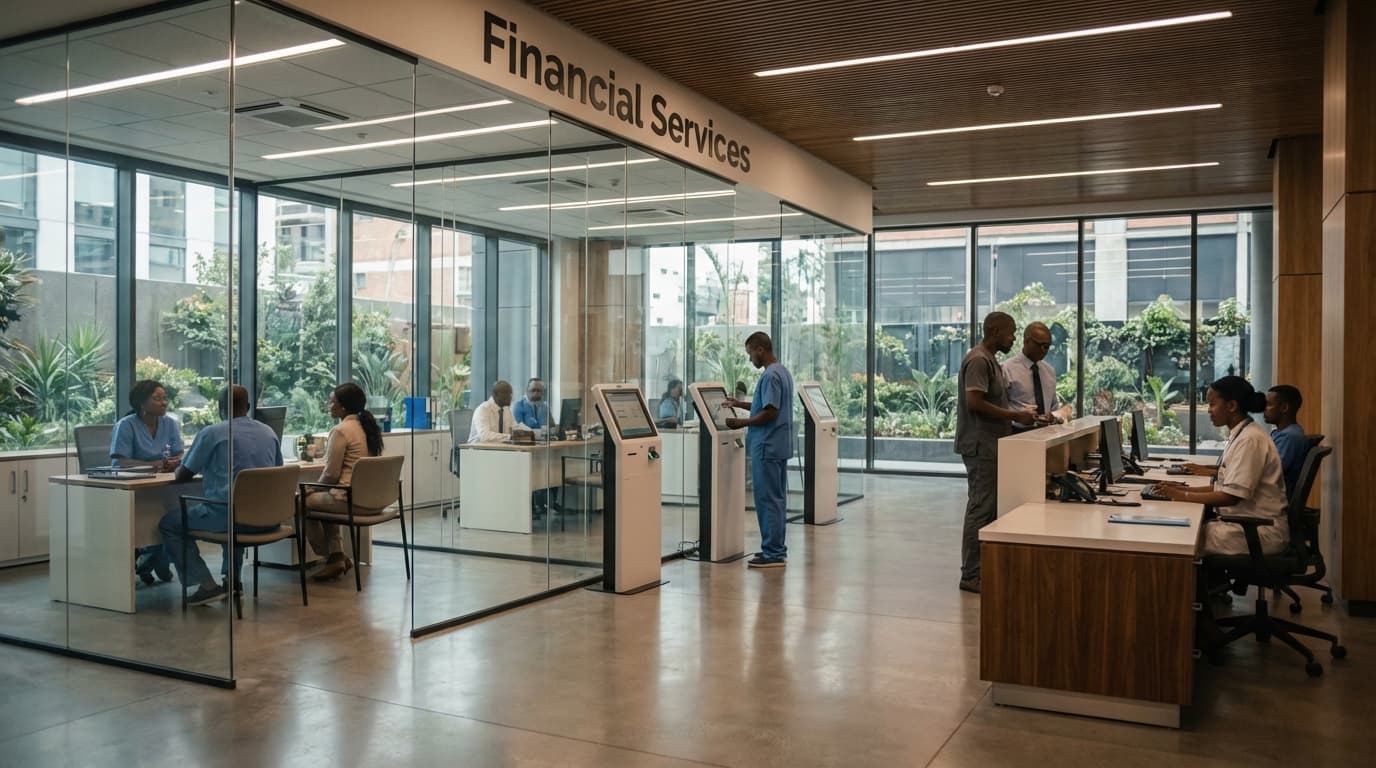
Medical Equipment Financing in Angola
Engineering Excellence & Technical Support
Leasing and financing solutions for medical equipment High-standard technical execution following OEM protocols and local regulatory frameworks.
Accelerated Equipment Acquisition
Facilitate rapid procurement of critical medical equipment through tailored financing solutions, empowering healthcare providers in Angola to enhance service delivery and patient outcomes.
Optimized Capital Allocation
Unlock operational flexibility and preserve working capital with flexible repayment terms and competitive interest rates designed for the Angolan healthcare market. Focus on patient care, not upfront investment.
Risk Mitigation & Compliance
Navigate the complexities of equipment acquisition with secure financing options, ensuring compliance with local regulations and providing peace of mind for medical institutions across Angola.
What Is Medical Equipment Financing In Angola?
Medical equipment financing in Angola refers to a specialized financial service that provides capital for the acquisition, upgrade, or maintenance of medical equipment by healthcare institutions within the Angolan Republic. This financing mechanism enables healthcare providers to access essential and advanced medical technology without requiring immediate, substantial capital outlay, thereby improving diagnostic capabilities, treatment efficacy, and overall patient care standards. The service typically involves a lender providing funds to a borrower (healthcare facility) for the purchase of specific medical assets, with repayment structured over an agreed-upon period, often with interest. The equipment itself may serve as collateral for the loan.
| Use Case Category | Specific Equipment/Technology | Financing Objective | Impact on Healthcare Delivery |
|---|---|---|---|
| Diagnostic Imaging | MRI Scanners, CT Scanners, X-ray Machines, Ultrasound Devices | Acquisition of new generation imaging systems, replacement of obsolete units, expansion of diagnostic capacity | Enhanced diagnostic accuracy, earlier disease detection, reduced patient wait times, improved imaging resolution |
| Surgical and Anesthesia Equipment | Surgical Robots, Laparoscopic Systems, Anesthesia Machines, Operating Room Lights | Investment in minimally invasive surgical technology, modernization of operating theaters, procurement of advanced anesthesia delivery systems | Shorter recovery times, reduced surgical complications, improved patient safety, expanded surgical procedure capabilities |
| Laboratory and Pathology Equipment | Automated Analyzers, Microscopes, PCR Machines, Hematology Analyzers | Upgrade of laboratory infrastructure, acquisition of high-throughput testing equipment, expansion of molecular diagnostics | Faster and more accurate laboratory test results, improved disease surveillance, support for personalized medicine |
| Therapeutic and Rehabilitation Equipment | Dialysis Machines, Ventilators, Physiotherapy Equipment, Cardiac Defibrillators | Provision of life-sustaining treatment capabilities, enhancement of critical care services, expansion of rehabilitation programs | Improved patient outcomes in chronic disease management, critical care support, enhanced recovery and mobility for patients |
| Information Technology and Telemedicine | Electronic Health Record (EHR) Systems, PACS (Picture Archiving and Communication System), Telemedicine Platforms | Implementation of digital health infrastructure, enhancement of data management and accessibility, expansion of remote patient consultation | Streamlined patient record management, improved inter-departmental communication, increased access to specialist care through remote means |
Key Stakeholders and Their Needs for Medical Equipment Financing in Angola
- Public Hospitals and Clinics: Require financing for upgrading aging infrastructure, expanding service offerings, and acquiring state-of-the-art diagnostic and therapeutic equipment to meet growing population health demands and improve accessibility of quality healthcare, particularly in underserved regions.
- Private Hospitals and Diagnostic Centers: Seek financing to remain competitive, invest in cutting-edge technologies for specialized procedures, enhance patient experience, and expand their operational capacity to cater to a growing private healthcare market.
- Non-Governmental Organizations (NGOs) and Charitable Organizations: Need financing to procure medical equipment for health initiatives, mobile clinics, and specialized treatment centers operating in remote or low-income areas, aiming to address specific public health challenges.
- Research and Academic Medical Institutions: Require financing for advanced research equipment, laboratory instruments, and sophisticated diagnostic tools to support medical education, scientific inquiry, and the development of new treatment protocols.
- Small and Medium-sized Healthcare Practices: May utilize financing to acquire essential diagnostic tools, specialized treatment chairs, or advanced monitoring systems, enabling them to offer a broader range of services and improve the quality of patient care.
Who Needs Medical Equipment Financing In Angola?
Medical equipment financing in Angola is crucial for a range of healthcare providers looking to acquire, upgrade, or maintain essential medical technology. This financing is not a one-size-fits-all solution and caters to diverse needs across different types of healthcare institutions and their specific departments. By offering accessible capital, medical equipment financing empowers these entities to deliver better patient care, improve diagnostic capabilities, and enhance operational efficiency.
| Department | Equipment Needs | Financing Justification |
|---|---|---|
| Radiology/Imaging | MRI machines, CT scanners, X-ray machines, Ultrasound devices | Crucial for diagnosis; high initial cost and rapid technological advancement necessitate financing for upgrades and replacements. |
| Surgery | Operating tables, surgical lights, anesthesia machines, laparoscopic equipment, electrocautery units | Essential for patient care and safety; financing ensures access to modern surgical technology and instruments. |
| Intensive Care Unit (ICU) | Ventilators, defibrillators, cardiac monitors, infusion pumps, dialysis machines | Life-support equipment requires continuous maintenance and potential upgrades; financing facilitates investment in critical care technology. |
| Pathology/Laboratory | Microscopes, centrifuges, automated analyzers, DNA sequencers | High volume of tests and need for precision require advanced, often automated, equipment; financing supports acquisition and upkeep. |
| Emergency Services | Ambulance equipment, portable X-ray units, trauma kits | Need for immediate response and mobile diagnostic tools requires readily available and functional equipment, often financed for swift acquisition. |
| Rehabilitation | Physical therapy equipment, prosthetics, specialized exercise machines | Supports patient recovery and long-term health management; financing allows for comprehensive rehabilitation services. |
| General Medicine/Outpatient | ECG machines, diagnostic kits, minor procedure equipment | Fundamental for primary care and early detection; financing ensures availability of essential diagnostic and treatment tools. |
Target Customers and Departments for Medical Equipment Financing in Angola
- {"customer":"Public Hospitals","description":"Government-funded hospitals are primary recipients, often facing budget constraints but requiring advanced equipment for widespread public healthcare delivery."}
- {"customer":"Private Hospitals and Clinics","description":"These institutions, driven by a need for profitability and advanced service offerings, seek financing to acquire state-of-the-art technology to attract patients and compete in the market."}
- {"customer":"Diagnostic Centers and Laboratories","description":"Specialized facilities focused on imaging, pathology, and other diagnostic services require significant investment in sophisticated equipment to ensure accuracy and efficiency."}
- {"customer":"Specialty Medical Centers (e.g., Cardiology, Oncology, Orthopedics)","description":"Centers focusing on specific medical fields often need highly specialized and expensive equipment that necessitates financing."}
- {"customer":"Rural Health Posts and Community Clinics","description":"Though often smaller, these facilities can benefit from financing to acquire basic but essential equipment, improving primary healthcare access in underserved areas."}
- {"customer":"Medical Training Institutions (Universities, Nursing Schools)","description":"Educational facilities require equipment for practical training of healthcare professionals, ensuring they are proficient with modern medical technology."}
Medical Equipment Financing Process In Angola
Financing medical equipment in Angola involves a structured workflow that typically begins with an inquiry from a healthcare provider and culminates in the successful acquisition and deployment of the equipment. This process is crucial for upgrading healthcare infrastructure, enhancing diagnostic capabilities, and improving patient care within the country. The workflow can be broadly categorized into several key stages, each with its own set of activities and considerations.
| Stage | Key Activities | Involved Parties |
|---|---|---|
| Inquiry & Initial Assessment | Needs identification, initial contact, understanding requirements | Healthcare Provider, Financial Institution/Financier, Equipment Supplier (indirect) |
| Application & Documentation | Submitting financial statements, business plans, equipment details | Healthcare Provider, Financial Institution |
| Due Diligence & Credit Appraisal | Verifying documents, assessing financial health, risk evaluation | Financial Institution, Credit Bureaus (if applicable) |
| Equipment Sourcing & Quotation | Identifying suppliers, obtaining detailed price quotes | Healthcare Provider, Equipment Supplier |
| Financing Proposal & Negotiation | Developing loan terms, interest rates, repayment schedule | Financial Institution, Healthcare Provider |
| Approval & Offer Letter | Formal loan approval, issuing offer letter/term sheet | Financial Institution, Healthcare Provider |
| Legal Documentation & Security | Drafting loan agreement, perfecting collateral | Legal Counsel (both parties), Financial Institution, Healthcare Provider |
| Disbursement | Transfer of funds to supplier or client | Financial Institution, Equipment Supplier/Healthcare Provider |
| Procurement, Installation & Commissioning | Purchasing equipment, setting up and testing functionality | Healthcare Provider, Equipment Supplier |
| Monitoring & Repayment | Tracking loan payments, ensuring collateral maintenance | Financial Institution, Healthcare Provider |
Key Stages in the Medical Equipment Financing Process in Angola
- {"title":"Inquiry and Initial Assessment","description":"The process begins when a healthcare facility (hospital, clinic, diagnostic center) identifies a need for specific medical equipment. They will then initiate contact with financial institutions, equipment suppliers, or specialized financing companies. This initial stage involves understanding the client's needs, the type and cost of the equipment, and their general financial standing."}
- {"title":"Application and Documentation Submission","description":"The healthcare provider formally applies for financing. This requires submitting a comprehensive set of documents, which usually includes financial statements, business plans, proof of ownership/lease of premises, identification of key personnel, and detailed specifications of the medical equipment being sought. Lenders will assess the applicant's creditworthiness, financial stability, and repayment capacity."}
- {"title":"Due Diligence and Credit Appraisal","description":"The financial institution conducts thorough due diligence. This involves verifying the authenticity of submitted documents, assessing the financial health of the applicant, evaluating market demand for the services the equipment will support, and potentially conducting site visits to the healthcare facility. A credit appraisal report is generated to determine the risk associated with the loan."}
- {"title":"Equipment Sourcing and Quotation","description":"Simultaneously, or in parallel with the financial appraisal, the healthcare provider identifies and sources the specific medical equipment. This often involves obtaining detailed quotations from reputable suppliers, both local and international. The quotation will include the equipment's cost, delivery, installation, and any associated warranties or service agreements."}
- {"title":"Financing Proposal and Negotiation","description":"Based on the credit appraisal and the equipment quotation, the financial institution prepares a financing proposal. This proposal outlines the loan amount, interest rate, repayment tenure, collateral requirements, and any other terms and conditions. Negotiations may occur between the lender and the borrower to finalize these terms."}
- {"title":"Approval and Offer Letter","description":"Once the terms are agreed upon, the financial institution formally approves the financing and issues an offer letter or loan agreement. This document details all the agreed-upon conditions and serves as the basis for the legal contract."}
- {"title":"Legal Documentation and Security Perfection","description":"The legal teams of both the lender and borrower draft and review the final loan agreement. This stage also involves establishing and perfecting any security interests (e.g., chattel mortgage, hypothecation) over the financed equipment or other assets of the borrower as collateral. This ensures the lender's rights in case of default."}
- {"title":"Disbursement","description":"Upon signing of all legal documents and fulfillment of any pre-disbursement conditions (such as proof of insurance for the equipment), the funds are disbursed. Disbursement can be made directly to the equipment supplier, or to the healthcare provider, depending on the financing structure agreed upon."}
- {"title":"Equipment Procurement, Installation, and Commissioning","description":"The healthcare provider proceeds with the purchase of the medical equipment. Once delivered, the equipment is installed and commissioned by the supplier or authorized technicians. This stage ensures the equipment is functional and ready for use."}
- {"title":"Post-Disbursement Monitoring and Repayment","description":"After the equipment is operational, the financial institution monitors the loan repayment schedule. Regular repayments are made by the healthcare provider according to the agreed-upon terms. The lender may also conduct periodic reviews to ensure the collateral remains in good condition."}
Medical Equipment Financing Cost In Angola
Financing medical equipment in Angola involves several key pricing factors that influence the overall cost. These factors can lead to a wide range of financing costs, expressed in Angolan Kwanza (AOA). The primary drivers include the interest rate set by the financial institution, which is heavily dependent on the lender's risk assessment, the prevailing monetary policy of the Angolan National Bank (BNA), and the borrower's creditworthiness. The loan tenor (duration) significantly impacts monthly payments and total interest paid, with longer terms generally leading to higher overall interest costs. Equipment type and value are also crucial; high-value or specialized equipment will naturally involve larger loan amounts and potentially higher financing fees. Administrative and processing fees charged by the financing institution can add to the initial cost. Furthermore, the collateralization requirements can influence the interest rate offered. Finally, market competition among financial institutions in Angola also plays a role in determining competitive financing rates.
| Financing Cost Component | Typical Range (AOA) | Notes |
|---|---|---|
| Annual Interest Rate | 25% - 50%+ | Highly variable based on credit risk, economic conditions, and lender. |
| Loan Processing/Arrangement Fees | 1% - 5% of loan value | One-time fee charged at the commencement of the loan. |
| Monthly Service Fees | Negotiable / % of outstanding balance | May apply depending on the financial institution. |
| Insurance Premiums (if required for collateral) | Varies based on equipment value and insurer | Often a prerequisite for financing, especially for high-value assets. |
| Valuation Fees (for collateral) | 50,000 - 200,000 AOA+ | Cost to assess the market value of the equipment for collateral purposes. |
| Total Financing Cost (Estimate for a typical 5-year loan) | Can range from 50% to over 100% of the equipment's principal value over the loan term, heavily dependent on the interest rate. |
Key Pricing Factors for Medical Equipment Financing in Angola
- Interest Rate (influenced by BNA policy, lender risk, borrower creditworthiness)
- Loan Tenor (duration of the financing agreement)
- Equipment Type and Value (size of the loan and associated risks)
- Administrative and Processing Fees
- Collateralization Requirements
- Market Competition among Financial Institutions
Affordable Medical Equipment Financing Options
Securing affordable medical equipment is crucial for healthcare providers aiming to offer quality patient care without breaking the bank. Fortunately, a range of financing options exist, complemented by value bundles and strategic cost-saving measures that can significantly reduce the overall financial burden. Understanding these avenues can empower healthcare organizations to make informed decisions and optimize their capital expenditure on essential medical technology.
| Concept | Description | Value Proposition for Providers |
|---|---|---|
| Value Bundles | Packages that combine medical equipment with related services such as installation, maintenance, training, and sometimes even consumables. These are offered by manufacturers or third-party providers. | Simplified procurement, predictable operational costs, potential for bundled discounts, improved operational efficiency through integrated support, reduced risk of unexpected service charges. |
| Cost-Saving Strategies | Proactive measures and smart purchasing decisions to reduce the total cost of acquiring and operating medical equipment. | Lower overall capital expenditure, improved return on investment (ROI), enhanced financial flexibility, extended equipment lifespan, minimized downtime, competitive advantage through efficient resource allocation. |
| Negotiation and Bulk Purchasing | Leveraging purchasing power through negotiation with vendors or participating in group purchasing organizations (GPOs) to secure better pricing. | Direct reduction in equipment acquisition costs. |
| Refurbished or Remanufactured Equipment | Purchasing pre-owned equipment that has been professionally restored to full working order, often with a warranty. | Significant cost savings compared to new equipment, still offers reliable performance and functionality. |
| Prioritizing Essential Equipment | Carefully assessing needs and prioritizing the acquisition of equipment that directly impacts patient care and revenue generation, deferring non-essential purchases. | Optimizes capital allocation, focuses spending on critical needs. |
| Extended Warranties and Service Contracts | Investing in comprehensive warranties and service contracts to cover potential repair and maintenance costs, avoiding unexpected expenses. | Predictable maintenance budgets, reduced risk of costly emergency repairs, minimized equipment downtime. |
| Exploring Technology Upgrades Strategically | Instead of replacing entire systems, consider upgrading specific components or software to extend the life and functionality of existing equipment. | Lower cost of upgrades compared to full replacement, avoids disruption of new system integration. |
Key Financing Options for Medical Equipment
- {"title":"Direct Purchase with Cash Reserves","description":"The most straightforward method, utilizing existing funds. Offers immediate ownership and avoids interest payments, but requires substantial upfront capital."}
- {"title":"Traditional Loans","description":"Secured or unsecured loans from banks or credit unions. Provide ownership upon repayment but involve interest charges and require a strong credit history. Terms can be customized."}
- {"title":"Equipment Leasing","description":"Companies lease equipment to providers for a fixed monthly fee over a set term. This avoids large upfront costs and allows for easier upgrades to newer technology. Ownership may or may not transfer at the end of the lease, depending on the agreement."}
- {"title":"Medical Equipment Financing Companies","description":"Specialized lenders offering financing tailored to the healthcare industry. Often more flexible with credit requirements and can provide a wider range of financing structures."}
- {"title":"Sale-Leaseback Agreements","description":"Healthcare providers sell their existing, owned equipment to a financing company and then lease it back. This frees up capital for other operational needs while retaining the use of the equipment."}
- {"title":"Government Grants and Subsidies","description":"Explore opportunities for grants or subsidies from government agencies, often aimed at improving healthcare access in underserved areas or for specific medical specialties."}
Verified Providers In Angola
In the realm of healthcare, particularly in Angola, identifying reliable and credentialed providers is paramount for ensuring quality patient care and making informed decisions. Franance Health stands out as a premier organization, consistently demonstrating a commitment to excellence through rigorous credentialing processes and a dedication to patient well-being. This commitment translates into a network of healthcare professionals and facilities that Angolan citizens can trust for their medical needs. Understanding what makes Franance Health's credentials significant reveals why they represent the best choice for verified healthcare services.
| Benefit for Patients | Franance Health Credentialing Aspect | Why it's the Best Choice |
|---|---|---|
| Peace of Mind & Trust | Rigorous Screening and Verification | Knowing you are receiving care from thoroughly vetted and legitimate professionals. |
| Safer Healthcare | Commitment to Quality Standards & Patient Safety | Reduced risk of medical errors and assurance of adherence to best practices. |
| Effective Treatment | Focus on Patient Outcomes & Specialty Validation | Increased likelihood of successful treatment and access to the most appropriate specialists. |
| Consistent Quality | Ongoing Monitoring and Re-credentialing | Ensures that providers maintain their high standards of care over time. |
| Access to a Trusted Network | Comprehensive Provider Network | A readily available and reliable source for diverse healthcare needs across Angola. |
Key aspects of Franance Health's verified provider credentialing:
- Rigorous Screening and Verification: Franance Health employs a multi-layered approach to vetting its providers, including background checks, verification of licenses and certifications, and review of professional history. This ensures that only qualified and ethical practitioners join their network.
- Commitment to Quality Standards: Beyond basic qualifications, Franance Health assesses providers based on adherence to established clinical guidelines, patient safety protocols, and a demonstrable commitment to continuous quality improvement.
- Focus on Patient Outcomes: The credentialing process often includes an evaluation of a provider's track record in achieving positive patient outcomes, fostering a culture of accountability and results-driven care.
- Specialty and Expertise Validation: Franance Health ensures that providers are accurately credentialed for their specific areas of expertise, allowing patients to confidently seek specialized care from appropriately qualified professionals.
- Ongoing Monitoring and Re-credentialing: Maintaining credentials with Franance Health is not a one-time event. Providers undergo regular monitoring and periodic re-credentialing to ensure continued compliance with their high standards.
Scope Of Work For Medical Equipment Financing
This Scope of Work (SOW) outlines the requirements for providing medical equipment financing solutions. It details the technical deliverables expected from the financing provider and outlines standard specifications to ensure the acquired equipment meets clinical and operational needs. The financing will cover the acquisition of a range of medical devices, including but not limited to diagnostic imaging systems, surgical instruments, patient monitoring units, and laboratory equipment.
| Equipment Category | Key Technical Specifications/Requirements | Minimum Performance Standards | Regulatory Compliance |
|---|---|---|---|
| Diagnostic Imaging Systems (e.g., MRI, CT Scanner) | Image resolution, scan speed, field of view, radiation dose management features, patient comfort features. | Achieve diagnostic-quality images as per industry benchmarks (e.g., ACR guidelines). <br> Downtime not exceeding X% per annum. | FDA/CE Mark, IEC 60601 compliance, HIPAA compliant data handling. |
| Surgical Instruments (e.g., Laparoscopic, Robotic) | Ergonomics, precision, durability, material quality, sterilization compatibility, connectivity for data logging. | Maintain precision and functionality over specified usage cycles. <br> Compatibility with existing sterilization protocols. | FDA/CE Mark, ISO 13485 standards. |
| Patient Monitoring Units (e.g., ECG, SpO2, BP) | Accuracy of measurements, data sampling rates, alarm functionalities, battery life, connectivity (wired/wireless), display clarity. | Meet or exceed accuracy standards defined by relevant medical bodies (e.g., AHA). <br> Real-time data transmission with minimal latency. | FDA/CE Mark, IEC 60601-1, relevant telemedicine standards (if applicable). |
| Laboratory Equipment (e.g., Analyzers, Centrifuges) | Throughput, accuracy, precision, sample handling capabilities, software interface, calibration requirements, waste management. | Achieve specified analytical sensitivity and specificity. <br> Consistent and reproducible results. | FDA/CE Mark, CLIA compliance, ISO 15189 (for in-vitro diagnostics). |
| Anesthesia Machines | Ventilation modes, gas delivery accuracy, vaporizers, safety features, integrated monitoring, user interface. | Deliver accurate and controlled gas mixtures. <br> Robust safety interlocks and alarms. | FDA/CE Mark, IEC 60601 standards, relevant anesthesia guidelines. |
Technical Deliverables
- Detailed financing proposal including interest rates, loan terms, repayment schedules, and any associated fees.
- Legal documentation for the financing agreement, including loan covenants, security agreements, and any required insurance.
- Regular financial reporting to the client on the status of the loan, including outstanding balance, payments made, and upcoming installments.
- Liaison with equipment vendors for procurement and delivery coordination, if specified in the financing agreement.
- Support in navigating regulatory and compliance requirements related to the financed medical equipment.
- Options for lease-to-own, outright purchase, or other financing structures as mutually agreed.
- Information on residual value and buy-out options at the end of the financing term.
Service Level Agreement For Medical Equipment Financing
This Service Level Agreement (SLA) outlines the response times and uptime guarantees for the provision and maintenance of medical equipment financed through [Your Company Name] for [Client Name]. This SLA is an integral part of the overarching financing agreement.
| Service Component | Severity Level | Response Time Target | Resolution Time Target | Uptime Guarantee |
|---|---|---|---|---|
| Technical Support (for equipment malfunctions) | Critical (Equipment failure impacting patient care; immediate cessation of critical services) | 1 hour | 4 business hours | 99.5% |
| Technical Support (for equipment malfunctions) | High (Significant disruption to patient care; reduced capacity of critical services) | 2 business hours | 8 business hours | 99.5% |
| Technical Support (for equipment malfunctions) | Medium (Minor disruption to patient care; potential for workaround) | 4 business hours | 24 business hours | 99.0% |
| Preventative Maintenance Scheduling | N/A | 2 business days (notification prior to scheduled maintenance) | N/A | N/A |
| Parts Replacement (if required due to malfunction) | Critical | Included within Resolution Time Target | Next business day for critical parts, 3 business days for non-critical parts (subject to availability) | N/A |
Key Performance Indicators (KPIs)
- Response Time: The maximum allowable time for [Your Company Name] or its designated service provider to acknowledge a reported issue and initiate troubleshooting.
- Resolution Time: The maximum allowable time for [Your Company Name] or its designated service provider to resolve a reported issue, depending on its severity and complexity.
- Uptime Guarantee: The minimum percentage of time the financed medical equipment is expected to be operational and available for use.
- Service Credits: Compensation provided to the client for failing to meet the agreed-upon SLAs.
Frequently Asked Questions

Ready when you are
Let's scope your Medical Equipment Financing in Angola project in Angola.

Scaling healthcare logistics and technical systems across the entire continent.