
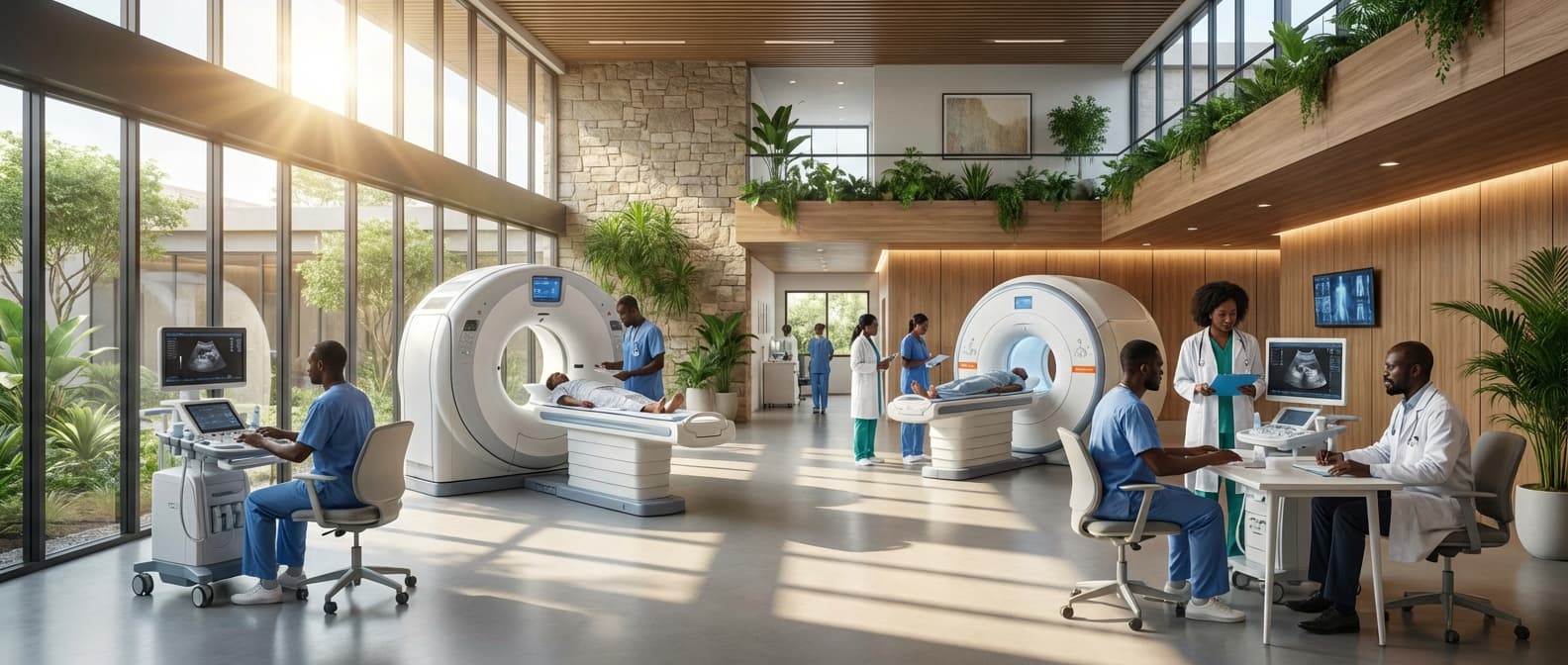
Endoscopy Solutions in Angola
Engineering Excellence & Technical Support
Advanced endoscopic equipment delivering superior visualization and diagnostic precision for minimally invasive procedures. High-standard technical execution following OEM protocols and local regulatory frameworks.
Advanced Diagnostic Endoscopy Suite
Introducing a state-of-the-art endoscopy suite featuring high-definition imaging, advanced illumination, and a comprehensive range of therapeutic instruments. This solution empowers Angolan healthcare professionals with precise visualization and minimally invasive treatment capabilities for gastrointestinal and respiratory conditions, leading to earlier diagnoses and improved patient outcomes.
Integrated Digital Endoscopy Workflow
Our end-to-end digital endoscopy platform integrates seamlessly with existing hospital information systems. It provides secure image and video capture, intelligent annotation tools, and cloud-based archiving, streamlining documentation, facilitating remote consultations, and enhancing medical education for endoscopy specialists across Angola.
Remote Endoscopy Training & Support
Leveraging secure tele-endoscopy technology, we offer remote expert-led training and real-time procedural support. This initiative addresses the need for specialized endoscopic training in remote Angolan regions, enabling local practitioners to acquire advanced skills and receive immediate guidance, thereby expanding access to critical gastrointestinal care nationwide.
What Is Endoscopy Solutions In Angola?
Endoscopy Solutions in Angola refers to the provision of diagnostic and therapeutic services utilizing endoscopic procedures. These procedures involve the insertion of a specialized instrument, an endoscope, which is a flexible or rigid tube equipped with a light and camera, into the body to visualize internal organs and tissues. The camera transmits real-time images to a monitor, allowing for detailed examination. Beyond visualization, endoscopes can be equipped with accessories to perform biopsies, remove polyps, control bleeding, or even deliver targeted therapies. In the Angolan context, these solutions are crucial for a nation striving to enhance its healthcare infrastructure and provide advanced diagnostic capabilities within its borders, reducing the need for overseas referrals for complex gastrointestinal, respiratory, and other internal organ investigations.
| Who Needs Endoscopy Solutions? | Typical Use Cases |
|---|---|
| Patients presenting with gastrointestinal bleeding (e.g., hematemesis, melena, hematochezia). | Investigating persistent or unexplained abdominal pain, nausea, vomiting, or diarrhea. |
| Individuals with suspected or known inflammatory bowel disease (e.g., Crohn's disease, ulcerative colitis). | Screening for colorectal cancer and surveillance of patients with a history of polyps or colorectal cancer. |
| Patients experiencing persistent cough, hemoptysis, or shortness of breath suggestive of pulmonary pathology. | Evaluation of upper airway abnormalities or trauma. |
| Individuals with suspected urinary tract issues, such as blood in the urine (hematuria) or recurrent infections. | Investigation of infertility or pelvic pain in women. |
| Patients requiring monitoring for pre-existing conditions affecting internal organs, such as Barrett's esophagus or chronic gastritis. | Removal of ingested foreign bodies from the gastrointestinal tract. |
Key Aspects of Endoscopy Solutions in Angola
- Procedure Types: Includes gastroscopy, colonoscopy, bronchoscopy, cystoscopy, and other specialized endoscopic examinations.
- Diagnostic Capabilities: Facilitates the identification of abnormalities such as ulcers, inflammation, tumors, polyps, and strictures.
- Therapeutic Interventions: Enables the performance of procedures like polypectomy, hemostasis, dilation of stenotic areas, and foreign body retrieval.
- Equipment & Technology: Involves the use of advanced endoscopes, imaging systems, and associated instrumentation.
- Personnel Training: Requires highly skilled endoscopists, nurses, and technicians trained in endoscopic procedures and patient management.
- Sterilization & Infection Control: Adherence to stringent protocols for the cleaning and disinfection of endoscopic equipment to prevent cross-contamination.
Who Needs Endoscopy Solutions In Angola?
Endoscopy solutions are critical for accurate diagnosis and minimally invasive treatment of a wide range of gastrointestinal and respiratory conditions. In Angola, the growing demand for advanced healthcare, coupled with an increasing prevalence of conditions requiring endoscopic intervention, creates a significant market for these specialized medical devices and associated services.
| Target Customer/Department | Key Needs & Applications | Specific Endoscopic Procedures |
|---|---|---|
| Hospitals (Public and Private) | Comprehensive diagnostic and therapeutic capabilities; managing high patient volumes; infection control; staff training; equipment maintenance. | Gastroscopy (OGD), Colonoscopy, Bronchoscopy, Sigmoidoscopy, ERCP (Endoscopic Retrograde Cholangiopancreatography), Laparoscopy (though often considered surgical, it utilizes endoscopic principles). |
| Gastroenterology Departments | Diagnosis and treatment of upper and lower GI disorders; screening for GI cancers; therapeutic interventions. | Gastroscopy (OGD), Colonoscopy, Sigmoidoscopy, Capsule Endoscopy, ERCP, Endoscopic Ultrasound (EUS). |
| Pulmonology Departments | Diagnosis and treatment of lung diseases; airway management; removal of foreign bodies. | Bronchoscopy, Thoracoscopy. |
| Surgical Departments (General Surgery, Colorectal Surgery, Hepato-Pancreato-Biliary Surgery) | Minimally invasive surgical procedures; pre-operative diagnosis; post-operative management. | Laparoscopy, Colonoscopy (therapeutic), ERCP (therapeutic). |
| Oncology Departments | Diagnosis and staging of cancers; palliative care interventions; biopsy collection. | Gastroscopy, Colonoscopy, Bronchoscopy, ERCP, EUS. |
| Diagnostic Centers | Specialized diagnostic services; efficient throughput; accurate reporting. | Gastroscopy (OGD), Colonoscopy, Sigmoidoscopy, Bronchoscopy. |
| Medical Training and Research Institutions | Simulation training for new endoscopists; research into new techniques and technologies; advanced diagnostic capabilities. | All types of diagnostic and therapeutic endoscopies; simulators; research-grade equipment. |
Target Customers and Departments in Angola for Endoscopy Solutions
- Hospitals (Public and Private)
- Specialty Clinics (Gastroenterology, Pulmonology, Surgery)
- Diagnostic Centers
- Medical Training and Research Institutions
Endoscopy Solutions Process In Angola
This document outlines the typical workflow for Endoscopy Solutions procurement and implementation in Angola, from initial inquiry to final execution. It covers the key stages, responsibilities, and considerations involved in ensuring successful deployment of endoscopy equipment and services.
| Phase | Key Activities | Responsible Parties | Key Considerations/Documentation |
|---|---|---|---|
| Client (Hospital/Clinic) identifies a need for endoscopy equipment or services. Defines specific requirements (type of endoscopy, volume, budget, desired features). | Client (Clinical Department, Procurement), Potential Supplier (Sales Representative/Distributor) | Clear definition of clinical needs, desired patient outcomes, existing infrastructure, budget constraints. Initial contact and expression of interest. |
| Client researches potential suppliers and solutions. Gathers product brochures, technical specifications, and company profiles. May issue a Request for Information (RFI). | Client (Procurement, Biomedical Engineering), Potential Suppliers | Market research, due diligence on suppliers' reputation and experience in Angola, understanding of local regulations. RFI responses. |
| Suppliers provide detailed quotations, technical proposals, and service agreements based on the client's requirements. This may follow a formal Request for Proposal (RFP). | Potential Suppliers, Client (Procurement, Technical Committee) | Comprehensive and accurate proposals, including pricing, warranty, service levels, delivery timelines, and compliance with local standards. RFP responses. |
| Client's technical team (biomedical engineers, clinicians) evaluates the technical suitability, performance, and safety of the proposed solutions. Commercial team evaluates pricing, payment terms, and overall value. | Client (Technical Committee, Procurement, Finance), Potential Suppliers (for clarifications) | Benchmarking against alternatives, site visits (if applicable), reference checks. Technical specifications, certifications, training plans. |
| Negotiation of terms and conditions, pricing, payment schedules, delivery timelines, warranties, and after-sales service. Finalization of a formal contract. | Client (Legal, Procurement, Finance), Supplier (Sales, Legal) | Clear contractual terms, service level agreements (SLAs), intellectual property clauses, dispute resolution mechanisms. Signed contract. |
| Client issues a Purchase Order (PO) based on the signed contract. Supplier confirms the order and initiates manufacturing/preparation. | Client (Procurement), Supplier (Sales, Operations) | Formal Purchase Order, order confirmation, payment of any upfront deposits. |
| Supplier manages the shipping, customs clearance, and transportation of equipment to Angola. Client may assist with necessary import permits and documentation. | Supplier (Logistics Department), Client (Procurement, Logistics, Customs Broker) | Incoterms, shipping documents (bill of lading, commercial invoice, packing list), import licenses, customs duties and taxes, compliance with Angolan import regulations. |
| Supplier's certified technicians install and configure the endoscopy equipment. Perform functional tests to ensure it meets specifications and is ready for clinical use. | Supplier (Field Service Engineers), Client (Biomedical Engineering, Clinical Staff) | Installation checklist, commissioning report, calibration certificates, demonstration of full functionality. |
| Comprehensive training for clinical staff (physicians, nurses, technicians) on the operation, maintenance, and safety of the new endoscopy equipment. May include simulation or hands-on sessions. | Supplier (Application Specialists, Trainers), Client (Clinical Staff, Biomedical Engineering) | Training manuals, competency assessments, certification of trained personnel, understanding of best practices. |
| Provision of scheduled preventive maintenance, corrective maintenance (breakdown service), and technical support as per the service agreement. Availability of spare parts. | Supplier (Service Department), Client (Biomedical Engineering) | Service contracts, response times for support calls, spare parts availability, remote diagnostics (if applicable). |
| Client and supplier conduct a review to assess the successful implementation, user satisfaction, and achievement of initial objectives. Identify lessons learned for future projects. | Client (Management, Department Heads), Supplier (Account Manager) | Performance metrics, user feedback surveys, documentation of any issues or successes, plans for optimization. |
Endoscopy Solutions Process in Angola: Workflow Overview
- Initial Inquiry & Needs Assessment
- Information Gathering & Supplier Identification
- Quotation & Proposal Submission
- Technical & Commercial Evaluation
- Contract Negotiation & Agreement
- Order Placement & Procurement
- Logistics & Importation
- Installation & Commissioning
- Training & Education
- Ongoing Support & Maintenance
- Post-Implementation Review
Endoscopy Solutions Cost In Angola
Endoscopy, a vital diagnostic and therapeutic procedure, involves the use of a flexible tube with a camera to visualize internal organs. The cost of endoscopic procedures in Angola can vary significantly due to several factors, including the specific type of endoscopy, the facility where it's performed, the physician's expertise, and the need for any additional treatments or interventions during the procedure. Pricing is typically quoted in Angolan Kwanzas (AOA). It's crucial for patients to obtain detailed quotes from healthcare providers and inquire about what is included in the stated cost.
| Endoscopy Type (Example) | Estimated Cost Range (AOA) | Notes |
|---|---|---|
| Gastroscopy (OGD - Oesophago-gastro-duodenoscopy) | 50,000 - 150,000 | Includes examination of esophagus, stomach, and duodenum. May include biopsy. |
| Colonoscopy | 70,000 - 200,000 | Includes examination of the large intestine. May include polyp removal (polypectomy). |
| Sigmoidoscopy | 40,000 - 100,000 | Examines the lower part of the colon. |
| Bronchoscopy | 80,000 - 250,000 | Examination of the airways and lungs. May include biopsy or lavage. |
| Cystoscopy | 40,000 - 120,000 | Examination of the bladder and urethra. May include biopsy. |
| Polypectomy (during colonoscopy) |
| Cost for removal of polyps, dependent on size and number. |
Key Factors Influencing Endoscopy Costs in Angola
- Type of Endoscopy: Gastroscopy (upper endoscopy), colonoscopy (lower endoscopy), bronchoscopy (lungs), and cystoscopy (bladder) all have different inherent complexities and resource requirements.
- Facility Fees: Private hospitals and clinics generally have higher costs compared to public health facilities, reflecting differences in infrastructure, technology, and service levels.
- Physician's Fees: The experience and specialization of the gastroenterologist or surgeon performing the procedure will impact the overall cost.
- Anesthesia/Sedation: The type and duration of anesthesia or sedation administered contribute to the total expense.
- Diagnostic vs. Therapeutic Procedures: Simple diagnostic endoscopies are usually less expensive than those requiring interventions such as polyp removal (polypectomy), biopsy collection, or dilation.
- Pre- and Post-Procedure Tests: Costs may include pre-procedure blood work, imaging, and follow-up consultations.
- Consumables and Materials: Disposable instruments, specialized tools, and medications used during the procedure are factored into the price.
- Geographical Location: While less pronounced than other factors, costs might slightly differ between major cities like Luanda and more rural areas.
Affordable Endoscopy Solutions Options
Endoscopy, a vital diagnostic and therapeutic procedure, can be a significant expense. However, numerous affordable endoscopy solutions and cost-saving strategies exist for both patients and healthcare providers. Understanding value bundles and exploring these options can make this essential medical service more accessible and economically viable.
| Strategy | Description | Potential Savings |
|---|---|---|
| Value Bundles | Pre-packaged services at a fixed price, simplifying costs. | Can offer significant savings compared to à la carte pricing. |
| Compare Provider Costs | Obtain quotes from multiple endoscopy facilities. | Savings can range from tens to hundreds of dollars. |
| Outpatient Procedure | Performed in an outpatient setting rather than a hospital. | Typically 20-40% less expensive than inpatient procedures. |
| Generic Sedation | Using less expensive generic anesthetic agents. | Minor savings, but can contribute to overall cost reduction. |
| HSA/FSA Utilization | Using pre-tax dollars for medical expenses. | Equivalent to a percentage discount based on your tax bracket. |
| In-Network Providers | Choosing facilities and physicians contracted with your insurance. | Avoids high out-of-network fees, potentially saving thousands. |
Affordable Endoscopy Solutions & Cost-Saving Strategies
- Value Bundles Explained: Value bundles in healthcare refer to packages of services offered at a pre-determined price, often lower than purchasing each service individually. For endoscopy, this can include the procedure itself, pre-operative consultations, post-procedure follow-up, and even sedation. These bundles simplify billing and can provide cost certainty.
- Negotiate Package Pricing: Directly inquire with endoscopy centers or hospitals about potential package deals for common procedures like colonoscopies or upper endoscopies.
- Compare Provider Costs: Obtain price estimates from multiple endoscopy facilities, as costs can vary significantly based on location, facility type (hospital vs. outpatient center), and the specific physician.
- Outpatient vs. Inpatient Procedures: Outpatient endoscopy procedures are generally less expensive than those performed on an inpatient basis.
- Insurance Coverage Maximization: Understand your insurance policy thoroughly. Inquire about deductibles, co-pays, co-insurance, and in-network vs. out-of-network provider costs for endoscopy.
- Pre-Authorization: Ensure that pre-authorization for the endoscopy procedure is obtained from your insurance company, as this can prevent surprise bills.
- Generic Sedation Options: Discuss with your physician if generic sedation medications are suitable for your procedure, as they are typically less expensive.
- Referral Programs and Discounts: Some facilities may offer discounts for referrals or cash payments. Inquire about these possibilities.
- Telehealth Consultations: Utilize telehealth for pre- and post-procedure consultations whenever possible, as this can reduce travel and time-off costs.
- Medical Tourism: For individuals with significant financial constraints, exploring medical tourism for endoscopy in countries with lower healthcare costs might be an option, though careful research into quality and safety is crucial.
- Health Savings Accounts (HSAs) & Flexible Spending Accounts (FSAs): Utilize pre-tax dollars from HSAs or FSAs to cover eligible endoscopy expenses, reducing your overall tax burden.
- Screening vs. Diagnostic Endoscopies: While preventive screenings are often covered by insurance at a higher rate, be aware of the cost implications if the procedure becomes diagnostic.
- Choosing In-Network Providers: Always prioritize in-network providers to benefit from negotiated rates and avoid higher out-of-network charges.
- Bundled Payment Models: Increasingly, healthcare systems are exploring bundled payment models for specific conditions or procedures, which can include all services related to an endoscopy. Ask if such models are available.
Verified Providers In Angola
In the realm of healthcare, where trust and expertise are paramount, identifying verified providers is crucial for ensuring quality and safety. In Angola, Franance Health stands out as a leader, distinguished by its rigorous credentialing process and unwavering commitment to excellence. This document outlines why Franance Health credentials represent the best choice for individuals seeking reliable and high-quality healthcare services in Angola.
| Franance Health Credentialing Criteria | Description | Significance for Patients |
|---|---|---|
| Licensure and Certification Verification | Thorough checks of medical licenses, board certifications, and any required professional accreditations. | Ensures practitioners possess the legal and educational qualifications to practice in their respective fields. |
| Education and Training Review | Verification of medical degrees, postgraduate training, and continuing medical education (CME) records. | Confirms that providers have received comprehensive and up-to-date training from reputable institutions. |
| Practice History and Background Checks | Examination of past employment, peer reviews, and absence of disciplinary actions or malpractice claims. | Assesses a provider's professional conduct, experience, and reliability. |
| Specialty Competency Assessment | Evaluation of a provider's expertise and experience within their specific medical specialty. | Guarantees that patients are treated by specialists who are highly skilled in their area of need. |
| Adherence to Ethical Standards | Assessment of commitment to patient care, confidentiality, and professional ethics. | Reassures patients of compassionate, respectful, and trustworthy medical care. |
| Facility Accreditation (for institutions) | Verification of compliance with healthcare facility standards, safety protocols, and quality management systems. | Ensures that healthcare facilities are safe, well-equipped, and operate with high standards of patient care. |
Understanding Verified Providers
- Definition of Verified Providers: Verified providers are healthcare professionals and institutions that have undergone a thorough examination of their qualifications, licenses, certifications, and practice history. This verification process confirms their legitimacy and adherence to established standards.
- Importance of Verification in Healthcare: Verification ensures that patients receive care from competent and ethical practitioners, minimizing the risk of medical errors, fraud, and substandard treatment. It fosters patient confidence and promotes accountability within the healthcare system.
- Franance Health's Commitment to Verification: Franance Health places verification at the core of its operations. Their stringent credentialing protocols are designed to identify and onboard only the most qualified and ethical healthcare professionals and facilities.
- Benefits for Patients: Choosing a verified provider through Franance Health offers peace of mind, assurance of quality care, access to a network of trusted professionals, and protection against fraudulent or unqualified practitioners.
Scope Of Work For Endoscopy Solutions
This Scope of Work (SOW) outlines the technical deliverables and standard specifications required for the procurement and implementation of Endoscopy Solutions. The objective is to acquire state-of-the-art endoscopy systems that enhance diagnostic capabilities, improve patient outcomes, and streamline workflow for healthcare providers. This document details the technical requirements, performance criteria, and acceptance testing procedures to ensure the successful deployment and integration of the selected solutions.
| Category | Specification | Description | Compliance Requirement |
|---|---|---|---|
| Imaging System Resolution | Minimum 1920x1080 (Full HD) | High-definition imaging for clear visualization of anatomical details and lesions. | Mandatory |
| Image Sensor | CMOS/CCD | Advanced sensor technology for optimal image quality, color reproduction, and low-light performance. | Mandatory |
| Illumination | LED or Xenon (minimum 300W equivalent) | Powerful and adjustable illumination for bright, uniform, and consistent visualization. | Mandatory |
| Field of View | Minimum 120 degrees | Wide field of view to maximize visual coverage during procedures. | Mandatory |
| Working Channel Diameter | Variable (e.g., 2.8mm to 3.2mm for diagnostic, 3.7mm and above for therapeutic) | Sufficient diameter to accommodate various endoscopic instruments for diagnostic and therapeutic procedures. | Mandatory |
| Instrument Channel Compatibility | Standardized connectors for common endoscopic accessories | Ensures compatibility with a wide range of biopsy forceps, snares, graspers, etc. | Mandatory |
| Video Output | HDMI, DVI, SDI | Multiple high-quality video output options for connection to monitors and recording devices. | Mandatory |
| Image/Video Recording Format | MPEG-4/H.264, DICOM | Standardized formats for efficient storage and seamless integration with PACS. | Mandatory |
| Data Storage Capacity | Minimum 1TB internal or network storage | Sufficient capacity for storing a significant number of procedures. | Mandatory |
| System Ergonomics | Lightweight scope, user-friendly controls, adjustable monitor height/articulation | Designed for comfortable and efficient use by clinicians. | Preferred |
| Sterilization Compatibility | Compatible with standard sterilization methods (e.g., HLD, autoclaving) | Adherence to infection control protocols. | Mandatory |
| Software Interface | Intuitive graphical user interface (GUI) | Easy-to-navigate interface for system control, image management, and reporting. | Mandatory |
| Network Connectivity | Ethernet (RJ45), Wi-Fi (optional) | Enables integration with hospital networks and PACS. | Mandatory |
| Security Features | User authentication, data encryption | Protects patient data and system integrity. | Mandatory |
| Serviceability | Modular design, readily available spare parts, remote diagnostics capability | Facilitates efficient maintenance and minimizes downtime. | Preferred |
| Warranty Period | Minimum 2 years | Ensures coverage against defects and malfunctions. | Mandatory |
Technical Deliverables
- Endoscopic Imaging Systems (e.g., scopes, light sources, cameras, monitors)
- Endoscopic Video Processing and Recording Units
- Image Management and Archiving System (PACS integration capabilities)
- Ancillary Equipment (e.g., insufflators, pumps, biopsy forceps, retrieval devices)
- Consumables and Disposables (initial stock)
- Software for system operation, data analysis, and reporting
- Installation and Configuration Services
- User Training (clinical and technical staff)
- Comprehensive Documentation (user manuals, service manuals, training materials)
- Warranty and Maintenance Services
- Integration Support for existing hospital IT infrastructure (e.g., EHR, PACS)
Service Level Agreement For Endoscopy Solutions
This Service Level Agreement (SLA) outlines the response times and uptime guarantees for Endoscopy Solutions provided by [Your Company Name] (hereinafter referred to as "Provider") to its clients (hereinafter referred to as "Client"). This SLA is an integral part of the Endoscopy Solutions Service Agreement between the Client and the Provider.
| Severity Level | Description | Response Time Target | Uptime Guarantee |
|---|---|---|---|
Definitions
- {"term":"Downtime","definition":"Any period during which the Endoscopy Solutions are unavailable to the Client due to issues within the Provider's control, excluding Scheduled Maintenance."}
- {"term":"Scheduled Maintenance","definition":"Pre-planned maintenance activities performed by the Provider to ensure the optimal performance and security of the Endoscopy Solutions. The Provider will provide reasonable advance notice (typically 48 hours) for Scheduled Maintenance, and efforts will be made to perform such maintenance during off-peak hours."}
- {"term":"Response Time","definition":"The maximum time allowed for the Provider to acknowledge and begin working on a reported incident or request."}
- {"term":"Resolution Time","definition":"The target time for the Provider to resolve an incident or fulfill a request. Actual resolution may vary depending on the complexity of the issue."}
- {"term":"Severity Levels","definition":"A classification system used to prioritize support requests based on the impact on the Client's operations."}
Frequently Asked Questions

Ready when you are
Let's scope your Endoscopy Solutions in Angola project in Angola.

Scaling healthcare logistics and technical systems across the entire continent.