
Diagnostic Imaging in Angola
Engineering Excellence & Technical Support
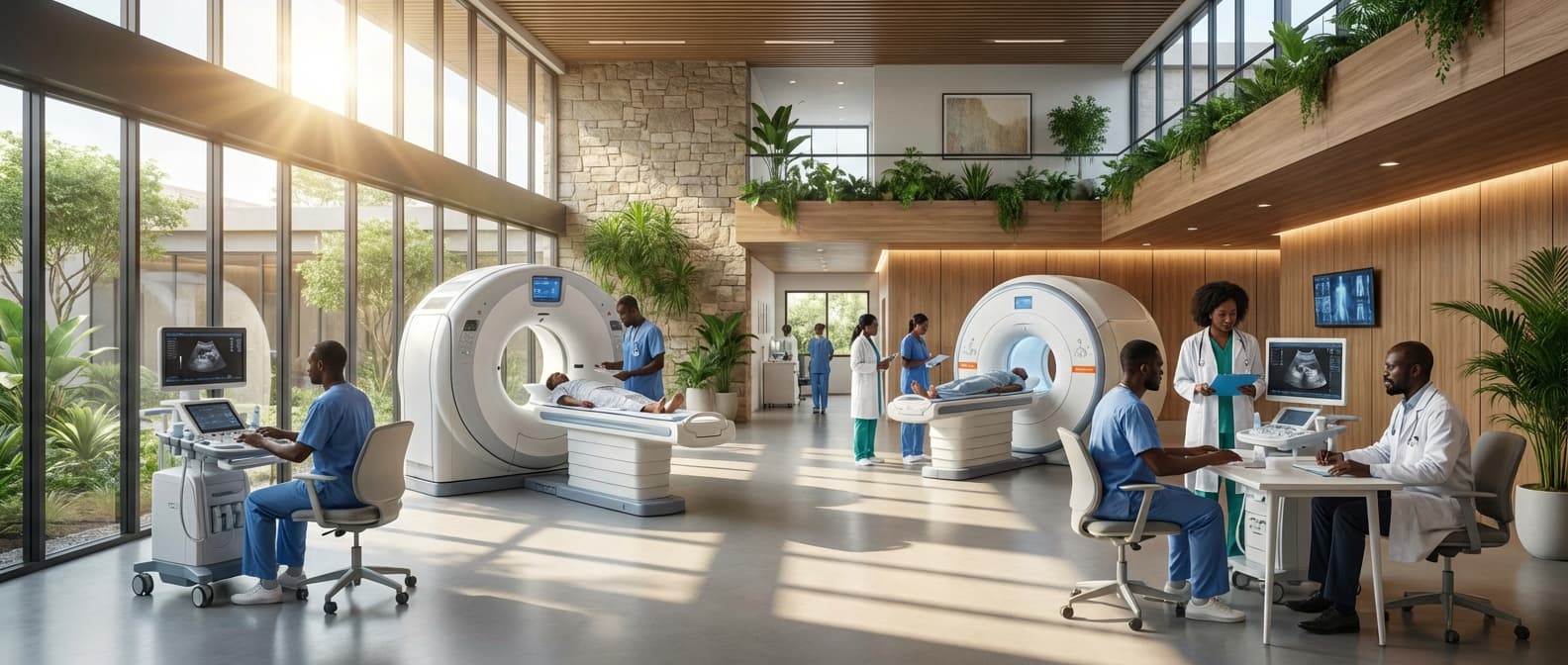
High-resolution imaging systems including CT scanners, MRI, X-ray, and ultrasound technology for accurate clinical diagnosis. High-standard technical execution following OEM protocols and local regulatory frameworks.
Mobile X-Ray Units Deployed to Rural Communities
Expansion of mobile X-ray services to remote Angolan regions, significantly increasing early detection rates for pulmonary diseases like tuberculosis and pneumonia. This initiative leverages portable, battery-powered units for greater accessibility and reduces the burden of travel for patients.
AI-Powered Ultrasound for Prenatal Care
Implementation of AI-assisted ultrasound systems in key maternal health centers across Angola. These advanced tools enhance diagnostic accuracy for fetal anomalies and provide crucial real-time guidance to sonographers, improving outcomes for mothers and newborns.
Tele-Radiology Network for Specialist Consultations
Establishment of a robust tele-radiology network connecting regional hospitals with specialized diagnostic imaging centers in urban hubs. This allows for remote interpretation of complex scans (CT, MRI), facilitating timely diagnoses and treatment plans for patients outside major medical facilities.
What Is Diagnostic Imaging In Angola?
Diagnostic imaging in Angola refers to the use of various medical imaging technologies to visualize the internal structures of the human body for the purpose of diagnosis, monitoring, and treatment guidance. This modality plays a crucial role in modern healthcare by enabling non-invasive or minimally invasive assessment of anatomical abnormalities, pathological processes, and physiological functions. The service encompasses the acquisition and interpretation of images generated by devices such as X-ray machines, ultrasound transducers, computed tomography (CT) scanners, magnetic resonance imaging (MRI) scanners, and nuclear medicine equipment (e.g., PET scanners). Radiologists, radiographers, and other trained medical professionals are integral to the effective utilization of these technologies. The need for diagnostic imaging spans a broad spectrum of medical specialties, from emergency medicine and surgery to internal medicine, pediatrics, and oncology.
| Imaging Modality | Typical Use Cases in Angola |
|---|---|
| X-ray (Radiography) | Assessment of bone fractures, dislocations; evaluation of chest conditions (pneumonia, tuberculosis); detection of foreign bodies; initial assessment of abdominal pain. |
| Ultrasound (Sonography) | Obstetric and gynecological imaging (fetal monitoring, ovarian cysts); abdominal imaging (gallbladder, liver, kidneys); vascular studies (deep vein thrombosis); superficial soft tissue assessment. |
| Computed Tomography (CT) | Detailed imaging of the brain (stroke, hemorrhage); evaluation of trauma (head, chest, abdomen); diagnosis of pulmonary embolism; assessment of complex fractures; cancer staging. |
| Magnetic Resonance Imaging (MRI) | Advanced imaging of the brain and spinal cord (tumors, multiple sclerosis); musculoskeletal imaging (ligament/tendon tears); evaluation of soft tissue masses; abdominal and pelvic organ assessment. |
| Nuclear Medicine (e.g., SPECT, PET - availability may be limited) | Assessment of organ function (thyroid, cardiac); detection of metastatic disease; evaluation of bone infections or tumors. |
Who Needs Diagnostic Imaging?
- Patients presenting with acute symptoms suggestive of internal injury or disease (e.g., trauma, stroke, appendicitis).
- Individuals undergoing routine medical check-ups for early detection of asymptomatic conditions.
- Patients diagnosed with a medical condition requiring further characterization or staging.
- Individuals requiring monitoring of treatment response or disease progression.
- Patients scheduled for surgical interventions to plan procedures and assess anatomical relationships.
- Pregnant women undergoing prenatal care for fetal assessment.
- Patients with suspected or confirmed neoplastic conditions requiring tumor localization, characterization, and staging.
Who Needs Diagnostic Imaging In Angola?
Diagnostic imaging plays a crucial role in modern healthcare by providing non-invasive visualization of internal body structures, aiding in the diagnosis, monitoring, and treatment of a wide range of diseases and injuries. In Angola, the demand for these services is growing, driven by increasing healthcare needs, a rising population, and efforts to improve the quality of medical care. The target customers for diagnostic imaging services in Angola encompass a broad spectrum of individuals and institutions, each with unique requirements and utilization patterns.
| Customer Segment | Primary Needs | Key Departments Involved | Common Imaging Modalities |
|---|---|---|---|
| General Population (Symptomatic) | Diagnosis of acute and chronic conditions | Radiology, ED, Internal Medicine, Surgery | X-ray, Ultrasound, CT, MRI |
| Chronic Disease Patients | Monitoring disease progression, treatment efficacy | Radiology, Internal Medicine (Cardiology, Pulmonology, Oncology) | X-ray, Ultrasound, CT, MRI, PET-CT (if available) |
| Trauma Patients | Urgent diagnosis of injuries, life-saving interventions | ED, Radiology, Surgery | X-ray, Ultrasound (FAST scan), CT |
| Pediatric Patients | Diagnosis of congenital, developmental, infectious, and traumatic conditions | Pediatrics, Radiology | X-ray, Ultrasound, CT (with reduced dose), MRI |
| Maternal and Fetal Health Patients | Antenatal screening, fetal monitoring, obstetric complication diagnosis | OB/GYN, Radiology | Ultrasound |
| Surgical Patients | Pre-operative planning, post-operative assessment | Surgery, Radiology | X-ray, CT, MRI, Ultrasound |
| Referral Patients | Specialized diagnostic evaluation for complex cases | Radiology, various specialist departments | All modalities based on referral |
Target Customers and Departments for Diagnostic Imaging in Angola
- {"items":["General Population: Individuals experiencing symptoms of illness or injury who require a definitive diagnosis. This includes patients presenting with pain, swelling, fever, neurological issues, or suspected fractures.","Chronic Disease Patients: Individuals managing long-term conditions such as diabetes, cardiovascular disease, respiratory illnesses, and cancer, who require regular monitoring and follow-up imaging to assess disease progression and treatment efficacy.","Trauma Patients: Individuals who have suffered acute injuries from accidents, falls, or violence, necessitating urgent imaging to identify and manage life-threatening conditions like internal bleeding, fractures, and organ damage.","Pediatric Patients: Children with congenital abnormalities, developmental delays, infections, or injuries requiring specialized imaging techniques and protocols suitable for their age and physiological needs.","Maternal and Fetal Health Patients: Pregnant women requiring antenatal screening, monitoring of fetal development, and diagnosis of obstetric complications. This includes ultrasound and potentially other imaging modalities.","Surgical Patients: Individuals requiring pre-operative assessment to plan surgical procedures and post-operative evaluation to monitor recovery and detect complications.","Preventive Health Seekers: Individuals opting for health screenings, especially those with family histories of certain diseases, to detect potential health issues at an early, more treatable stage.","Referral Patients: Individuals referred by primary healthcare providers, clinics, or specialists for advanced diagnostic evaluation."],"title":"Target Customers"}
- {"items":["Radiology Departments: The central hub for diagnostic imaging services, housing various modalities and staffed by radiologists and radiographers. This department serves all other medical departments.","Emergency Departments (ED): Critical for rapid diagnosis of acute conditions such as trauma, strokes, heart attacks, and acute infections, requiring immediate imaging for timely intervention.","Surgical Departments (General Surgery, Orthopedics, Neurosurgery, etc.): Utilize imaging for pre-operative planning, intra-operative guidance, and post-operative assessment of surgical outcomes and complications.","Internal Medicine Departments (Cardiology, Pulmonology, Gastroenterology, Neurology, etc.): Rely heavily on imaging for diagnosing and monitoring a wide array of conditions affecting the heart, lungs, digestive system, brain, and nervous system.","Oncology Departments: Essential for cancer staging, treatment planning (e.g., radiation therapy), monitoring treatment response, and detecting recurrence.","Pediatric Departments: Require specialized imaging for diagnosing and managing a range of childhood illnesses and injuries.","Obstetrics and Gynecology (OB/GYN) Departments: Utilize ultrasound extensively for prenatal care, fertility assessments, and diagnosis of gynecological conditions.","Primary Healthcare Clinics and Health Centers: While they may not house advanced imaging equipment, they serve as crucial referral points for patients requiring diagnostic imaging services at higher-level facilities.","Rehabilitation Centers: May use imaging to assess progress, identify underlying issues contributing to functional limitations, and guide rehabilitation strategies."],"title":"Key Departments Utilizing Diagnostic Imaging"}
Diagnostic Imaging Process In Angola
The diagnostic imaging process in Angola, like in many other healthcare systems, follows a structured workflow designed to ensure accurate and timely diagnosis. This process typically begins with a referral from a healthcare provider and culminates in the interpretation and reporting of imaging results. While specific details might vary slightly between public and private facilities, and across different regions, the general sequence of events remains consistent.
| Stage | Description | Key Stakeholders | Common Modalities Used (Examples) | Potential Challenges in Angola |
|---|---|---|---|---|
| Inquiry & Referral | A healthcare professional (doctor, specialist) determines that diagnostic imaging is necessary for a patient's diagnosis or monitoring. The referring physician generates a request form detailing the patient's history, clinical question, and the specific imaging modality required. | Referring Physician, Patient | X-ray, Ultrasound, CT, MRI (availability varies) | Limited access to specialists for referral, patient awareness of appropriate imaging needs. |
| Scheduling & Preparation | The patient's appointment is scheduled. Depending on the imaging modality, specific pre-scan instructions (e.g., fasting, avoiding certain medications, contrast agent administration) are provided to the patient. This may involve administrative staff, nurses, and radiographers. | Administrative Staff, Nurses, Radiographers, Patient | N/A (scheduling process) | Long waiting times for appointments, lack of standardized pre-scan protocols, patient understanding of instructions. |
| Image Acquisition (The Scan) | The patient undergoes the imaging procedure in the radiology department. Radiographers operate the equipment and ensure the patient is positioned correctly to obtain the necessary images. | Radiographers, Technologists, Patient | X-ray, Ultrasound, CT, MRI, Mammography, Fluoroscopy | Outdated or insufficient equipment, power supply interruptions, lack of trained personnel, limited availability of specific advanced modalities (e.g., PET-CT). |
| Image Processing & Quality Control | The acquired images are processed, often digitally. Radiographers and/or technologists review the images for quality, ensuring they are diagnostic and free from artifacts. Minor adjustments may be made. | Radiographers, Technologists | PACS (Picture Archiving and Communication System) if available, image processing software | Lack of modern PACS infrastructure, limited IT support, inconsistent quality control practices. |
| Interpretation & Reporting | A qualified radiologist (a physician specializing in interpreting medical images) analyzes the images, correlates them with the patient's clinical information, and dictates or writes a comprehensive report. This report includes findings, impressions, and recommendations. | Radiologists, Medical Records Staff | N/A (diagnostic interpretation) | Severe shortage of radiologists, heavy workload for existing radiologists, reliance on remote interpretation services (which may have infrastructure challenges). |
| Communication of Results | The final diagnostic imaging report is communicated back to the referring physician. This can be done electronically, via fax, or through physical copies. The referring physician then uses this information to inform patient management and treatment decisions. | Referring Physician, Radiologist, Patient (indirectly) | N/A (communication channels) | Delays in report delivery, lack of secure and efficient communication systems, limited patient access to their own reports. |
Diagnostic Imaging Workflow in Angola
- Inquiry & Referral
- Scheduling & Preparation
- Image Acquisition (The Scan)
- Image Processing & Quality Control
- Interpretation & Reporting
- Communication of Results
Diagnostic Imaging Cost In Angola
Diagnostic imaging costs in Angola are influenced by a confluence of factors, making precise price ranges variable and often subject to negotiation. These factors include the type of imaging modality (e.g., X-ray, ultrasound, CT scan, MRI), the specific clinic or hospital where the procedure is performed (private vs. public, and within private, the level of the facility), the complexity of the examination (e.g., a simple chest X-ray versus a detailed abdominal CT with contrast), and geographical location within Angola, with Luanda generally having higher costs than other provinces. Additionally, the availability of specialized equipment and expertise can impact pricing. Many private healthcare providers operate on a fee-for-service basis, and costs can fluctuate based on demand and operational overheads. For public healthcare facilities, costs are generally subsidized, but access and waiting times can be significant, and out-of-pocket expenses, while lower, still exist for certain services or medications. It's crucial for patients to inquire directly with healthcare providers for the most accurate and up-to-date pricing information in Angolan Kwanzas (AOA).
| Imaging Modality | Estimated Cost Range (AOA) | Notes |
|---|---|---|
| X-ray (e.g., Chest) | 2,500 - 15,000 | Basic, widely available. Cost varies by body part and number of views. |
| Ultrasound (e.g., Abdomen/Pelvis) | 7,500 - 25,000 | Common for soft tissue visualization. Price depends on the area examined. |
| CT Scan (e.g., Head/Abdomen) | 30,000 - 150,000+ | More advanced imaging. Costs increase significantly with contrast agents and specialized protocols. |
| MRI (e.g., Brain/Spine) | 75,000 - 300,000+ | Most complex and expensive modality. Prices are highly dependent on the body region and sequence required. |
| Mammography | 10,000 - 30,000 | Specific to breast imaging. |
| Dental X-ray | 1,000 - 5,000 | For dental diagnostics. |
Key Factors Influencing Diagnostic Imaging Costs in Angola:
- Imaging Modality (X-ray, Ultrasound, CT, MRI)
- Healthcare Facility Type (Public vs. Private)
- Facility Level and Reputation (Private sector)
- Complexity and Scope of the Examination
- Geographical Location (Luanda vs. other provinces)
- Specialized Equipment and Expertise Availability
- Use of Contrast Agents
- Insurance Coverage (if applicable)
- Urgency of the Procedure
Affordable Diagnostic Imaging Options
Diagnostic imaging plays a crucial role in healthcare, but costs can be a significant barrier for many. Fortunately, various affordable diagnostic imaging options and cost-saving strategies are available to help patients and healthcare providers manage expenses. Understanding value bundles and exploring different avenues for care can lead to substantial savings without compromising diagnostic quality.
| Strategy | Description | Potential Savings |
|---|---|---|
| Value Bundles | Pre-negotiated packages for multiple imaging services or imaging with follow-up care at a single price. | Significant, often 10-30% or more compared to à la carte pricing. |
| Price Comparison | Obtaining quotes from multiple imaging providers before scheduling a scan. | Can range from a few percent to over 50% depending on the provider and service. |
| Self-Pay Discounts | Reduced rates offered by imaging centers to patients paying out-of-pocket. | Typically 20-50% discount. |
| Free-Standing Imaging Centers | Outpatient imaging facilities not affiliated with a hospital. | Often 20-40% less expensive than hospital-based imaging. |
| Insurance Optimization | Understanding and utilizing your insurance benefits fully. | Minimizes out-of-pocket expenses, saving on deductibles, copays, and coinsurance. |
| Negotiate Bills | Discussing payment plans or adjustments with the billing department. | Can lead to partial write-offs or more manageable payment terms. |
| Package Deals | Inquiring about discounts for booking multiple imaging procedures together. | Varies by provider, but can offer a percentage discount. |
Value Bundles and Cost-Saving Strategies in Diagnostic Imaging
- What are Value Bundles in Diagnostic Imaging?
- Value bundles are pre-negotiated packages of services that combine multiple diagnostic imaging procedures, or imaging with related follow-up care, for a single, often discounted, price. These bundles are designed to offer transparency and predictability in healthcare costs.
- Benefits of Value Bundles:
- Cost Savings: Bundles typically offer a lower overall cost compared to paying for each service individually.
- Predictability: Patients and payers know the exact cost upfront, simplifying budgeting and reducing unexpected bills.
- Streamlined Care: Bundles can encourage coordination of care among providers, potentially leading to more efficient diagnosis and treatment.
- Focus on Value: Bundles often emphasize outcomes and quality, aligning the interests of providers and patients.
- Strategies for Cost Savings in Diagnostic Imaging:
- Compare Prices: Don't assume all imaging centers charge the same. Prices can vary significantly. Get quotes from multiple facilities.
- Inquire About Self-Pay Discounts: If you don't have insurance or have a high deductible, ask about self-pay discounts. Many imaging centers offer lower rates for patients paying out-of-pocket.
- Understand Your Insurance Coverage: Know what your insurance plan covers, including deductibles, copays, and coinsurance. Understand if pre-authorization is required.
- Explore Free-Standing Imaging Centers: These centers are often less expensive than hospital-based facilities, as they have lower overhead costs.
- Utilize Advanced Imaging Software and AI: Some imaging centers leverage technology that can improve efficiency and potentially reduce costs, though this is often reflected in overall operational costs rather than direct patient savings on a per-scan basis.
- Consider "Open Access" or "Direct" Imaging: In some cases, you can schedule imaging directly without a physician referral, which can be more cost-effective, but always consult with your doctor to ensure it's appropriate for your condition.
- Negotiate Bills: If you receive an unexpected or high bill, don't hesitate to contact the billing department to discuss payment options or potential adjustments.
- Look for "Package Deals" or Bundled Services: Similar to value bundles, inquire if imaging centers offer discounts for multiple scans or related services booked together.
- Seek Out Imaging Centers with Transparent Pricing: Providers who clearly display their pricing or offer easy ways to obtain cost estimates can help you make informed decisions.
- Telehealth for Consultations: While not for the scan itself, initial consultations to determine the necessity of imaging can sometimes be done via telehealth, potentially saving on travel and appointment time.
- Generic vs. Brand Name Contrast Agents: While less common to have a choice, in some niche scenarios, generic contrast agents might be available and cost-effective. Always discuss this with your provider.
Verified Providers In Angola
When seeking reliable healthcare services in Angola, identifying verified providers is paramount for ensuring quality care and peace of mind. Franance Health stands out as a leading organization dedicated to connecting individuals with trusted and credentialed healthcare professionals across the nation. This document outlines the core credentials Franance Health values in its providers and explains why this rigorous vetting process makes them the superior choice for your healthcare needs.
| Credential Type | Verification Process | Why it Matters for Patients |
|---|---|---|
| Licensure and Certification | Cross-referencing with Angolan Medical Council and relevant regulatory bodies. | Guarantees that providers are legally qualified and meet essential competency standards for safe practice. |
| Educational Background | Review of diplomas, transcripts, and accreditation of the educational institution. | Ensures providers have a solid theoretical understanding and have been trained by reputable institutions. |
| Professional Experience | Verification of past employment, practice history, and potentially reference checks. | Indicates practical application of knowledge, familiarity with diverse cases, and proven patient management skills. |
| Continuing Professional Development | Review of certificates from workshops, conferences, and ongoing training programs. | Demonstrates a commitment to staying current with medical advancements, new techniques, and evolving treatment protocols. |
| Ethical Conduct | Emphasis on adherence to professional codes of conduct and patient rights. | Promotes trust, respect, and a patient-centered approach to care, ensuring your well-being and privacy are prioritized. |
Franance Health's Core Provider Credentials
- Official Licensure and Certification: All Franance Health providers undergo a thorough verification of their professional licenses and certifications with relevant Angolan medical boards and regulatory bodies. This ensures they meet the minimum standards of practice and are legally authorized to provide medical services.
- Educational Background and Training: We meticulously review the educational qualifications of our providers, including degrees from accredited institutions, specialized training, and postgraduate education. This confirms a strong foundation in medical knowledge and skills.
- Professional Experience: Franance Health prioritizes providers with demonstrated experience in their respective fields. We assess the length and nature of their clinical practice to ensure they possess practical expertise and a proven track record of patient care.
- Continuing Professional Development (CPD): We encourage and often require our affiliated providers to engage in ongoing learning and professional development. This commitment to staying abreast of the latest medical advancements and best practices is a key indicator of quality care.
- Reputation and Peer Endorsements: While not always formally documented, Franance Health considers the professional reputation of its providers within the medical community. Positive feedback and endorsements from peers can further validate their competence and ethical conduct.
- Adherence to Ethical Standards: All Franance Health providers are expected to uphold the highest ethical standards in patient care, including confidentiality, informed consent, and professional integrity.
Scope Of Work For Diagnostic Imaging
This document outlines the Scope of Work (SOW) for the provision of diagnostic imaging services. It details the technical deliverables expected, along with the standard specifications that will govern the execution of these services. The objective is to ensure high-quality, accurate, and timely diagnostic imaging to support patient care and clinical decision-making.
| Service Category | Imaging Modality | Standard Specifications | Reporting Timeframe | Image Resolution (Minimum) |
|---|---|---|---|---|
| Radiology | X-ray (General) | ACR Appropriateness Criteria, Dose Optimization Protocols | Within 24 business hours | 300 DPI |
| Radiology | Fluoroscopy | ALARA principles, Real-time image processing | Within 24 business hours | 2K x 2K matrix |
| Radiology | CT Scan | Slice thickness as per protocol, Contrast administration guidelines | Within 48 business hours | 1024 x 1024 matrix |
| Radiology | MRI Scan | Sequence optimization, Artifact reduction techniques | Within 48 business hours | 1024 x 1024 matrix |
| Radiology | Mammography | Full-field digital mammography, ACR standards | Within 48 business hours | 50-micron pixel size |
| Nuclear Medicine | PET/CT Scan | Isotope selection based on clinical indication, SUV quantification | Within 72 business hours | 2K x 2K matrix |
| Ultrasound | Diagnostic Ultrasound | Doppler imaging capabilities, Appropriate transducer selection | Within 24 business hours | 1024 x 768 matrix |
| Interventional Radiology | Angiography/Interventional Procedures | Cine loop acquisition, Image stabilization | Within 24 business hours post-procedure | 2K x 2K matrix |
Technical Deliverables
- Comprehensive Diagnostic Imaging Reports
- Acquisition of High-Resolution Image Data
- Secure Transmission of Images and Reports
- Image Archival and Retrieval Capabilities
- Routine Quality Assurance and Control Reports
- Adherence to PACS (Picture Archiving and Communication System) Standards
- Metadata Generation for Image Indexing and Searchability
- On-demand Image and Report Revisions (with documented justification)
- Timely Availability of Study Results
Service Level Agreement For Diagnostic Imaging
This Service Level Agreement (SLA) outlines the performance commitments for the diagnostic imaging services provided by [Provider Name] to [Client Name]. It covers response times for critical imaging requests and guarantees a high level of system uptime.
| Service Component | Uptime Guarantee | Response Time Guarantee (Critical Requests) | Response Time Guarantee (Routine Requests) |
|---|---|---|---|
| PACS Availability | 99.9% (excluding Scheduled Maintenance) | N/A (System wide uptime is critical) | N/A (System wide uptime is critical) |
| RIS (Radiology Information System) Availability | 99.9% (excluding Scheduled Maintenance) | N/A (System wide uptime is critical) | N/A (System wide uptime is critical) |
| Image Acquisition System Availability | 99.5% (excluding Scheduled Maintenance) | N/A (Focus on system access) | N/A (Focus on system access) |
| Image Archiving and Retrieval | 99.9% (excluding Scheduled Maintenance) | Within 5 minutes | Within 15 minutes |
| Report Generation and Distribution | 99.9% (excluding Scheduled Maintenance) | Within 30 minutes of image completion | Within 2 hours of image completion |
| Interconnectivity (HL7, DICOM interfaces) | 99.8% (excluding Scheduled Maintenance) | N/A (System wide uptime is critical) | N/A (System wide uptime is critical) |
Key Definitions
- Uptime: The percentage of time the diagnostic imaging system is available and operational for use.
- Response Time: The time elapsed from the initiation of a diagnostic imaging request (e.g., PACS query, scheduling request) to the point where the system acknowledges and begins processing the request.
- Critical Imaging Request: An imaging study designated as urgent or emergent by the referring physician, requiring immediate attention and analysis.
- Scheduled Maintenance: Pre-planned downtime for system updates, upgrades, or preventative maintenance, communicated in advance.
- Downtime: Any period when the diagnostic imaging system is unavailable for use, excluding Scheduled Maintenance.
Frequently Asked Questions

Ready when you are
Let's scope your Diagnostic Imaging in Angola project in Angola.

Scaling healthcare logistics and technical systems across the entire continent.