
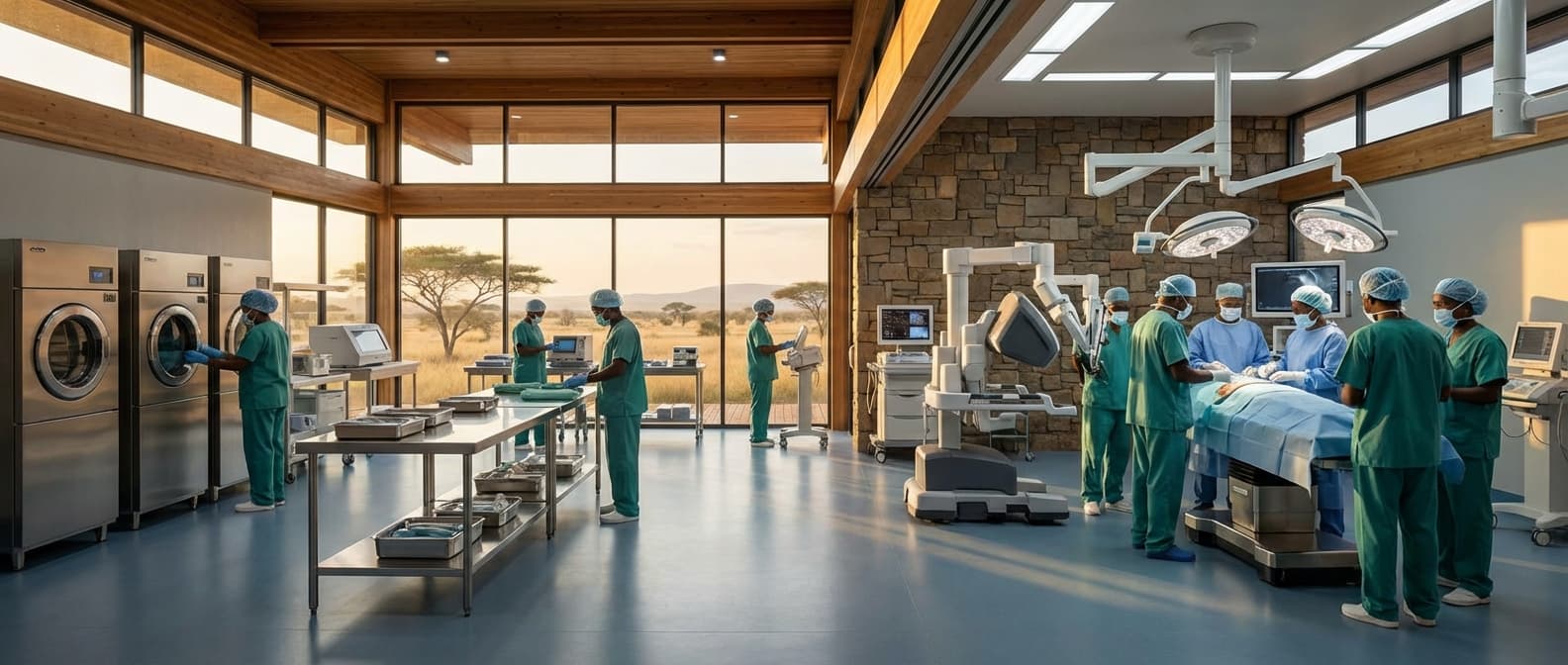
Medical Gas System Design & Installation in Angola
Engineering Excellence & Technical Support
Medical gas pipeline systems: O2, N2O, air, vacuum High-standard technical execution following OEM protocols and local regulatory frameworks.
Centralized Medical Gas Plants (Angola)
Design and installation of advanced, compliant central medical gas plants for hospitals and clinics in Angola, ensuring reliable and safe supply of oxygen, medical air, and vacuum systems adhering to international standards (e.g., HTM, NFPA) and local regulations. Includes state-of-the-art compressor, receiver, and manifold technologies optimized for Angolan environmental conditions.
Pipeline Distribution & Alarm Systems (Angola)
Expertise in designing and installing robust medical gas pipeline distribution networks for healthcare facilities in Angola. This includes precise pipe sizing, material selection for safety and longevity, and integration of sophisticated alarm and monitoring systems to alert staff to pressure deviations or system failures, ensuring uninterrupted patient care.
On-site Training & Commissioning (Angola)
Comprehensive on-site training for Angolan healthcare facility staff on the operation, maintenance, and emergency protocols of medical gas systems. Thorough commissioning and testing services to verify system performance, safety integrity, and compliance before handover, guaranteeing operational readiness and adherence to stringent healthcare requirements.
What Is Medical Gas System Design & Installation In Angola?
Medical gas system design and installation in Angola refers to the specialized engineering and construction process of creating, implementing, and commissioning the infrastructure responsible for supplying and distributing medical gases within healthcare facilities. This encompasses a comprehensive approach, from initial conceptualization and detailed design to the physical installation of pipelines, storage systems, control mechanisms, and point-of-use outlets. The primary objective is to ensure a safe, reliable, and continuous supply of essential medical gases to patient care areas, meeting stringent international standards and local regulations relevant to healthcare infrastructure.
| Who Needs Medical Gas System Design & Installation? | Typical Use Cases in Angola |
|---|---|
| Hospitals (public and private) | Oxygen therapy in general wards, intensive care units (ICUs), and emergency departments. |
| Surgical centers and operating theaters | Anesthetic gas delivery (e.g., nitrous oxide, volatile anesthetics) and ventilatory support in operating rooms and post-anesthesia care units (PACUs). |
| Specialized clinics (e.g., respiratory, cardiology) | Diagnostic procedures and treatment requiring specific medical gases. |
| Ambulatory care facilities | Emergency resuscitation and short-term therapeutic gas administration. |
| Veterinary hospitals | Anesthesia and respiratory support for animal patients. |
| Medical research and development laboratories | Controlled gas environments for experimental procedures. |
Key Components and Processes of Medical Gas System Design & Installation
- System Design: Involves detailed planning, schematic development, and engineering calculations to determine gas requirements, pipe sizing, pressure regulation, material selection, and alarm system integration based on facility size, type, and projected patient load.
- Material Specification: Selection of appropriate medical-grade piping, fittings, valves, and regulators compliant with standards such as NFPA 99 (Health Care Facilities Code) and ISO 7396-1.
- Pipeline Installation: Precision installation of high-purity gas pipelines, including brazing or welding to ensure leak-free connections and prevent contamination.
- Gas Source Management: Design and integration of central gas sources (e.g., liquid oxygen tanks, medical air compressors, vacuum pumps) and backup systems (e.g., emergency cylinder banks) to ensure uninterrupted supply.
- Pressure Regulation and Control: Implementation of pressure reducing valves, manifolds, and control panels to maintain precise gas pressures at various points within the system.
- Alarm Systems: Installation of comprehensive alarm systems to monitor gas pressure, flow rates, and source status, providing immediate alerts to medical staff in case of deviations or system failures.
- Point-of-Use Outlets: Installation of standardized gas outlets at patient bedsides, operating rooms, and other critical areas, designed for quick and secure connection of medical equipment.
- Purging and Testing: Rigorous purging of pipelines to remove contaminants and extensive pressure, leak, and purity testing to verify system integrity and compliance with standards.
- Commissioning and Certification: Final system verification, functional testing, and official certification by qualified engineers and relevant authorities to confirm operational readiness and safety.
- Documentation and Training: Provision of detailed as-built drawings, operation and maintenance manuals, and training for facility biomedical engineers and maintenance staff.
Who Needs Medical Gas System Design & Installation In Angola?
Designing and installing a reliable medical gas system is crucial for healthcare facilities in Angola to ensure patient safety, efficient medical procedures, and compliance with modern healthcare standards. These systems provide essential gases like oxygen, medical air, nitrous oxide, and vacuum to various points of use within a hospital or clinic. The demand for these services spans across new hospital constructions, existing facility upgrades, and specialized medical centers.
| Target Customer/Facility Type | Key Departments Benefiting | Specific Needs & Services |
|---|---|---|
| Public Hospitals | Operating Theatres, Intensive Care Units (ICU), Emergency Rooms (ER), General Wards, Neonatal Intensive Care Units (NICU), Recovery Rooms | Provision of reliable oxygen for life support, medical air for ventilation, nitrous oxide for anesthesia, vacuum for suction. Installation of central pipelines, outlets, alarms, and monitoring systems. Emergency backup systems. |
| Private Hospitals & Clinics | Similar to Public Hospitals, plus specialized outpatient clinics, fertility clinics, dental clinics | High-quality, patient-centric systems ensuring optimal gas delivery. Advanced monitoring and control for specialized procedures. Emphasis on system redundancy and compliance with international standards. |
| Government Health Institutions | District Hospitals, Regional Health Centers, Military Hospitals | Scalable solutions to meet diverse needs, from basic oxygen supply to more complex anesthetic gas management. Focus on cost-effectiveness and long-term reliability. |
| Research & Educational Medical Institutions | Laboratories, teaching hospitals, specialized research wings | Precision gas mixtures for research, specialized anesthesia gases for training, robust vacuum systems for laboratory equipment. Compliance with safety regulations for research environments. |
| Emergency Medical Services (EMS) & Ambulance Services | Ambulance bays, central dispatch centers | Portable medical gas solutions for transport, reliable oxygen supply for immediate patient care en route. Maintenance and refilling services. |
| Veterinary Hospitals & Clinics | Surgical suites, recovery areas | Safe and effective delivery of anesthetic gases and oxygen for animal patients. Specialized veterinary gas delivery systems. |
Target Customers and Departments Requiring Medical Gas System Design & Installation in Angola:
- New Hospital & Clinic Construction
- Existing Healthcare Facility Renovations & Upgrades
- Specialized Medical Centers (e.g., Surgical Centers, Intensive Care Units)
- Diagnostic Imaging Centers
- Rehabilitation Centers
Medical Gas System Design & Installation Process In Angola
Designing and installing a medical gas system is a complex and critical undertaking, particularly in a region like Angola where adherence to international standards and local regulations is paramount. This process involves meticulous planning, precise execution, and rigorous validation to ensure patient safety and system reliability. The workflow typically begins with an initial inquiry from a client, leading through a series of distinct phases including conceptualization, detailed design, procurement, installation, and finally, commissioning and handover. Each stage requires close collaboration between the client, design engineers, equipment suppliers, installation teams, and relevant authorities.
| Phase | Key Activities | Deliverables | Key Stakeholders |
|---|---|---|---|
| Client expresses interest, initial project scope discussed, site visit may occur. | Understanding of client needs, preliminary project brief. | Client (Hospital Administration, Project Manager), Potential Vendor/Integrator |
| Detailed analysis of medical gas requirements (types, flow rates, pressures), existing infrastructure, budget, and timeline. Site surveys and condition assessments. | Feasibility report, detailed requirements specification, preliminary budget and schedule. | Client, Design Engineers, Technical Consultants |
| Development of system philosophy, preliminary layout of medical gas pipelines, location of sources (cylinders, manifolds, generators), control panels, and outlets. Consideration of relevant standards (HTM, NFPA, ISO). | Conceptual design report, preliminary system diagrams, P&IDs (Piping and Instrumentation Diagrams). | Design Engineers, Client |
| Production of detailed engineering drawings, P&IDs, equipment specifications, bill of materials, electrical schematics, and coordination with other building services. Compliance with Angolan building codes and medical gas standards. | Final engineering drawings, P&IDs, equipment specifications, installation manuals, safety procedures, comprehensive Bill of Quantities (BOQ). | Design Engineers, Specialist Consultants, Client |
| Submission of design documents to relevant Angolan authorities (e.g., Ministry of Health, National Directorate of Public Health) for review and approval. Obtaining necessary construction and operational permits. | Approved design documentation, permits and licenses. | Design Engineers, Client, Angolan Regulatory Authorities |
| Sourcing and ordering of all medical gas equipment (manifolds, compressors, vacuum pumps, dryers, alarms, distribution panels, piping, fittings, outlets) and materials from approved suppliers, ensuring compliance with standards and specifications. | Procured equipment and materials, supplier warranties, delivery schedules. | Procurement Department, Client, Suppliers, Installation Contractor |
| Preparation of plant rooms, trenches, and installation pathways. Any necessary civil works to accommodate the system components. | Prepared site, completed civil works. | Installation Contractor, Civil Works Contractors, Client |
| Installation of the medical gas pipeline network, source equipment, control panels, alarms, and outlets according to approved drawings and manufacturer instructions. Welding and jointing of pipes, pressure testing of lines. | Installed medical gas system infrastructure, documented installation procedures. | Installation Contractor, Site Supervisors, Welders, Technicians |
| Rigorous testing of the entire system: leak testing, pressure testing, flow rate verification, alarm functionality checks, purity analysis of gases. Validation and certification of the system's performance. | Commissioning reports, test results, system certification, as-built drawings. | Commissioning Engineers, Installation Contractor, Client Representatives, Third-Party Inspectors |
| Comprehensive training for hospital maintenance staff and end-users on system operation, maintenance, and emergency procedures. Formal handover of the system with all documentation. | Trained personnel, user manuals, maintenance guides, warranty documents, final handover certificate. | Installation Contractor, Training Staff, Hospital Maintenance Team, End-Users |
| Ongoing maintenance, troubleshooting, and spare parts provision as per contractual agreements. Periodic inspections and system health checks. | Maintenance agreements, responsive support. | Service Provider, Client |
Key Stages in Medical Gas System Design & Installation in Angola
- Inquiry and Initial Consultation
- Feasibility Study and Needs Assessment
- Conceptual Design and System Philosophy
- Detailed Design and Engineering
- Regulatory Approvals and Permitting
- Procurement of Equipment and Materials
- Site Preparation and Civil Works
- Installation and Assembly
- Testing and Commissioning
- Training and Handover
- Post-Installation Support and Maintenance
Medical Gas System Design & Installation Cost In Angola
Designing and installing a medical gas system in Angola involves several key factors that influence the overall cost. These include the complexity of the system, the types of gases required, the size of the facility, the quality of materials and equipment used, labor costs, regulatory compliance, and logistical challenges specific to Angola. The pricing can vary significantly based on these elements, and local currency (Angolan Kwanza - AOA) is the standard for quotations. It's crucial to obtain detailed quotes from reputable suppliers and installers familiar with Angolan standards and practices.
| System Component/Service | Estimated Cost Range (AOA) |
|---|---|
| Medical Gas Pipeline Installation (per outlet/bay): | 150,000 - 500,000+ |
| Central Gas Manifold System (e.g., cylinder banks, regulators): | 5,000,000 - 25,000,000+ |
| Liquid Oxygen (LOX) Storage Tank (medium size): | 10,000,000 - 50,000,000+ |
| Medical Air Plant/Compressor System: | 7,000,000 - 30,000,000+ |
| Vacuum System (pump, receiver): | 3,000,000 - 15,000,000+ |
| Alarm Systems (local and central): | 1,000,000 - 5,000,000+ |
| Design & Engineering Fees: | 5% - 15% of total project cost |
| Installation Labor (skilled technicians): | Highly variable, dependent on project duration and team size |
| Testing, Commissioning & Certification: | 2,000,000 - 10,000,000+ |
| Project Management: | 3% - 8% of total project cost |
| Contingency (for unforeseen issues): | 10% - 15% of estimated costs |
Key Pricing Factors for Medical Gas Systems in Angola
- System Complexity: The number of medical gases (e.g., oxygen, medical air, nitrous oxide, vacuum, nitrogen), the required pressure and flow rates, and the distribution network's extent directly impact cost.
- Facility Size & Scope: Larger hospitals or facilities with multiple wings and specialized departments will naturally incur higher installation costs due to increased piping, outlets, and equipment.
- Type of Medical Gases: Different gases have varying availability and storage requirements, which can influence their cost contribution to the system.
- Materials & Equipment Quality: The choice between high-grade, certified medical gas equipment and less expensive alternatives will significantly affect the initial investment and long-term reliability.
- Source of Supply: Whether the gases are supplied via cylinders, liquid cryogenic storage tanks, or on-site generation (e.g., oxygen concentrators) will have a substantial impact on capital and operational costs.
- Labor Costs: Skilled labor for design, installation, and commissioning of medical gas systems can be a significant cost component. Availability and rates of specialized technicians in Angola are key.
- Regulatory Compliance & Certification: Meeting Angolan healthcare regulations and obtaining necessary certifications for the medical gas system will add to the overall project expenses.
- Project Management & Supervision: The cost of experienced project managers and supervisors to oversee the design and installation process.
- Testing & Commissioning: Thorough testing and commissioning of the system to ensure safety and performance are essential and contribute to the final cost.
- Logistics & Transportation: Import duties, taxes, shipping, and on-site transportation of equipment and materials within Angola can add to the overall price.
- After-Sales Support & Maintenance: While not strictly an installation cost, the availability and cost of ongoing maintenance contracts and spare parts should be considered in the long-term financial planning.
Affordable Medical Gas System Design & Installation Options
Designing and installing a medical gas system can be a significant investment for healthcare facilities. Fortunately, there are several affordable options available, focusing on smart design principles, modularity, and strategic purchasing. Understanding value bundles and implementing cost-saving strategies are key to managing these expenses effectively without compromising safety or compliance.
| Value Bundle Type | Description | Cost-Saving Benefits | Considerations |
|---|---|---|---|
| Design & Installation Package | A bundled service where a single provider handles the entire process from initial design and engineering to final installation and commissioning. | Streamlined project management, potentially reduced overhead through a single point of contact, often offers package discounts, faster project completion. | Ensure the provider has a strong track record and understands your specific facility needs. Verify all certifications and compliance adherence. |
| System Maintenance & Monitoring Bundle | Includes regular preventative maintenance, scheduled inspections, alarm monitoring, and potentially emergency repair services for the medical gas system. | Predictable operational costs, reduced risk of unexpected breakdowns and costly emergency repairs, extended equipment lifespan, ensures continuous compliance. | Clearly define the scope of services, response times for emergencies, and the frequency of maintenance. Understand what is included in the monitoring and alarm notification. |
| Equipment & Installation Lease/Financing | Rather than outright purchase, a lease or financing option spreads the upfront cost over time, often including installation and sometimes maintenance. | Lower initial capital outlay, easier budgeting with fixed monthly payments, can sometimes include the latest technology without large upfront investment. | Analyze the total cost of ownership over the lease term, understand the terms of the lease (e.g., end-of-lease options), and compare with outright purchase financing. |
| Turnkey Project Management | Similar to Design & Installation but may encompass a broader scope, including managing all subcontractors, material procurement, and site logistics. | Frees up internal resources, reduces the burden on facility staff, can lead to efficiencies through experienced project management, single point of accountability. | Requires a highly competent and trustworthy project manager. Thoroughly vet the provider's experience with similar healthcare projects. |
Key Cost-Saving Strategies for Medical Gas Systems
- Phased Installation: Break down the project into smaller, manageable phases. This allows for budgeting and cash flow management, and can defer costs until later stages of facility development.
- Modular System Components: Opt for pre-fabricated and modular gas panels, outlets, and regulators. These are often more cost-effective than site-built systems and can reduce on-site labor and installation time.
- Standardization of Components: Utilize standard medical gas outlets, probes, and manifolds across the facility. This simplifies inventory, maintenance, and training, and can lead to bulk purchasing discounts.
- Right-Sizing the System: Conduct a thorough needs assessment to ensure the system is designed to meet current and projected demands, avoiding over-engineering and unnecessary capacity.
- Competitive Bidding: Obtain multiple quotes from reputable medical gas system designers and installers. Compare not only price but also experience, references, and warranty offerings.
- Off-the-Shelf vs. Custom Solutions: Evaluate if standard, readily available components can meet requirements instead of opting for expensive custom-designed solutions.
- Long-Term Maintenance Agreements: Negotiate bundled maintenance and service contracts as part of the initial installation. This can provide predictable costs and potentially lower rates than ad-hoc service.
- Energy-Efficient Equipment: Invest in energy-efficient medical air compressors and vacuum pumps to reduce long-term operational costs.
- Collaboration with Facility Planners: Integrate medical gas system design early in the architectural and construction planning process to avoid costly rework and delays.
- Utilizing Existing Infrastructure (where feasible): Assess if any existing medical gas infrastructure can be safely and economically repurposed or integrated, though this requires careful evaluation for compliance and capacity.
Verified Providers In Angola
In Angola's evolving healthcare landscape, the assurance of quality and reliability is paramount. Verified providers offer peace of mind, ensuring access to safe and effective medical services. Franance Health stands out as a premier example of such a provider, distinguished by its rigorous credentialing process and commitment to excellence. This document outlines why Franance Health's verified status makes them the optimal choice for healthcare needs in Angola.
| Franance Health Credentialing Criteria | Significance for Patients |
|---|---|
| Licensing and Regulatory Compliance | Guarantees that Franance Health operates strictly within Angolan medical laws and regulations, ensuring lawful and ethical practice. |
| Professional Qualifications and Experience | Confirms that all healthcare professionals possess the necessary degrees, certifications, and practical experience for their roles. |
| Continuous Professional Development (CPD) | Demonstrates a commitment to ongoing learning and skill enhancement, ensuring practitioners are up-to-date with the latest medical advancements. |
| Quality Assurance and Peer Review | Indicates that Franance Health undergoes regular internal and external reviews to maintain high standards of service delivery and patient care. |
| Adherence to Ethical Standards | Underlines a dedication to patient confidentiality, respect, and integrity in all medical interactions. |
Key Benefits of Choosing Verified Healthcare Providers like Franance Health:
- Uncompromising Quality of Care: Verification signifies adherence to stringent medical standards and best practices.
- Patient Safety First: Rigorous background checks and quality assessments minimize risks associated with unqualified practitioners.
- Access to Competent Professionals: Ensures that all medical personnel are properly licensed, trained, and experienced.
- Trust and Transparency: Provides patients with confidence in the integrity and reliability of the healthcare services they receive.
- Enhanced Patient Outcomes: Higher standards of care translate directly to improved health results for patients.
Scope Of Work For Medical Gas System Design & Installation
This Scope of Work outlines the requirements for the design and installation of a medical gas system. It details the technical deliverables expected from the contractor and references standard specifications to ensure compliance with industry best practices and regulatory requirements. The project aims to provide a safe, reliable, and efficient medical gas distribution network for the facility.
| Standard/Specification | Description | Applicability |
|---|---|---|
| NFPA 99: Health Care Facilities Code | Establishes requirements for the preservation of life safety, health, and well-being of patients and caregivers in health care facilities, including medical gas systems. | Design, installation, testing, and maintenance of medical gas systems. |
| NFPA 70: National Electrical Code (NEC) | Covers electrical installations, including power supply and wiring for medical gas equipment. | Electrical connections and power requirements for medical gas equipment. |
| ASME B31.1: Power Piping | Provides requirements for the design, fabrication, erection, and testing of power piping, which includes medical gas piping systems. | Piping material, fabrication, and installation standards. |
| CGA G-4.1: Cleaning Equipment for Oxygen Service | Specifies methods for cleaning equipment to prevent contamination of oxygen. | Cleaning of piping, fittings, and equipment for oxygen service. |
| Local Building Codes and Regulations | Any additional codes or regulations mandated by the local jurisdiction for health care facilities. | Compliance with all applicable local building and health regulations. |
Key Technical Deliverables
- Detailed design drawings for the medical gas system, including layout, pipe sizing, valve locations, and terminal units.
- Equipment submittals for all medical gas equipment, including regulators, alarms, shut-off valves, and outlets.
- As-built drawings reflecting the actual installation of the medical gas system.
- Testing and commissioning reports, including pressure testing, leak testing, purity testing, and flow rate verification.
- Operation and maintenance manuals, including troubleshooting guides and recommended maintenance schedules.
- Certificates of compliance with relevant codes and standards.
Service Level Agreement For Medical Gas System Design & Installation
This Service Level Agreement (SLA) outlines the commitment of [Service Provider Name] to the design and installation of medical gas systems for [Client Name]. It details the response times for critical issues and uptime guarantees for the installed systems.
| Service Category | Response Time (Critical Issues) | Uptime Guarantee |
|---|---|---|
| Design Phase Support | 4 business hours for urgent design queries impacting project schedule. | N/A |
| Installation Phase Support | 2 business hours for critical on-site issues preventing installation progress. | N/A |
| Post-Installation System Uptime (First 12 Months) | 4 business hours for initial diagnosis of any system failure. | 99.9% uptime for the medical gas system. |
| Post-Installation System Uptime (Year 2 Onwards) | 8 business hours for initial diagnosis of any system failure. | 99.5% uptime for the medical gas system. |
Scope of Service
- Design of medical gas systems according to relevant standards and regulations (e.g., NFPA 99, ISO 7396).
- Procurement and installation of all necessary medical gas equipment, piping, and accessories.
- System testing, commissioning, and certification.
- Documentation and handover of the completed system.
Frequently Asked Questions

Ready when you are
Let's scope your Medical Gas System Design & Installation in Angola project in Angola.

Scaling healthcare logistics and technical systems across the entire continent.