
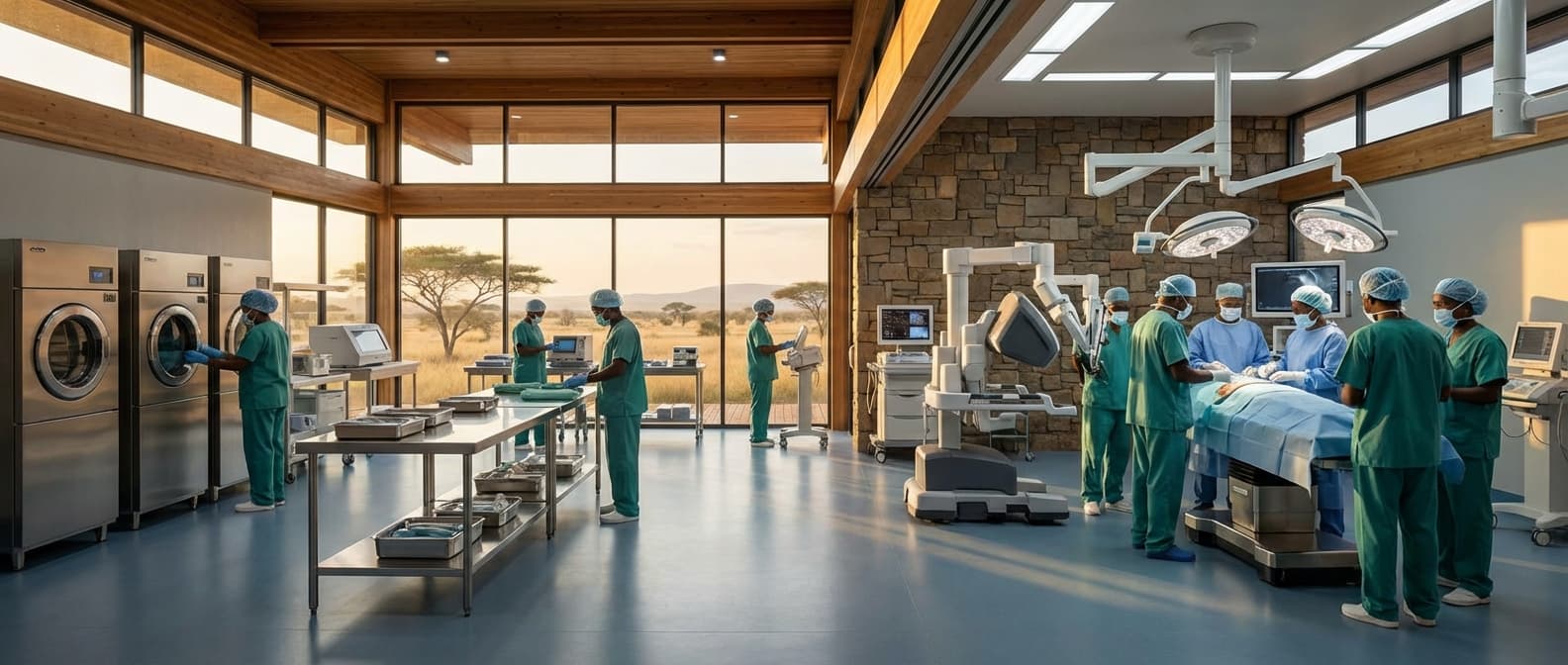
Endoscopy Reprocessing Validation in Angola
Engineering Excellence & Technical Support
AER validation, SOP development and compliance High-standard technical execution following OEM protocols and local regulatory frameworks.
Comprehensive Validation Protocols
Implementing robust, multi-stage validation protocols for all reprocessing steps, including cleaning efficacy, high-level disinfection/sterilization parameters, and drying effectiveness. This ensures consistent and documented adherence to international standards, building trust in the safety of reusable endoscopic instruments within Angolan healthcare facilities.
Environmental Monitoring and Control
Establishing rigorous environmental monitoring programs, including air quality assessments and surface microbial testing, in reprocessing areas. This technical highlight focuses on identifying and mitigating potential contamination risks, ensuring the sterile integrity of instruments and safeguarding patient health in the Angolan context.
Data-Driven Performance Tracking
Utilizing digital tools for real-time data capture and analysis of reprocessing parameters, including temperature, time, and chemical concentrations. This technical advancement allows for immediate detection of deviations, proactive troubleshooting, and continuous improvement of reprocessing workflows, ensuring reliable and verifiable performance in Angolan Endoscopy Reprocessing Centers.
What Is Endoscopy Reprocessing Validation In Angola?
Endoscopy reprocessing validation in Angola refers to the rigorous process of verifying and documenting that flexible endoscopes and their associated accessories have been reprocessed according to established guidelines and regulatory requirements, ensuring their safety for patient use and minimizing the risk of Healthcare-Associated Infections (HAIs). This validation is critical for healthcare facilities performing endoscopic procedures. It involves a systematic assessment of the entire reprocessing cycle, from initial cleaning through to high-level disinfection or sterilization, to confirm the efficacy of each step. The objective is to demonstrate that the reprocessing method consistently renders the endoscope free from viable microorganisms.
| Who Needs Endoscopy Reprocessing Validation? | Typical Use Cases |
|---|---|
All healthcare facilities in Angola that utilize flexible endoscopes for diagnostic and therapeutic procedures, including but not limited to:
| Initial implementation of a new reprocessing protocol or equipment
|
Key Components of Endoscopy Reprocessing Validation
- Microbiological Testing: Verification of the removal of viable microorganisms from the endoscope lumen and external surfaces using surrogate organisms and appropriate growth media.
- Chemical Indicator Testing: Assessment of the efficacy of disinfection or sterilization processes by using chemical indicators that change color or state when exposed to specific parameters (e.g., time, temperature, concentration of disinfectant).
- Mechanical Monitoring: Verification of the proper functioning of automated endoscope reprocessors (AERs) and washer-disinfectors, including checks on water pressure, flow rates, temperature, and cycle times.
- Process Documentation Review: Examination of the facility's Standard Operating Procedures (SOPs) for reprocessing, training records of personnel, and maintenance logs for reprocessing equipment.
- Visual Inspection: Confirmation that the endoscope is free from gross soil and that all components are intact and functioning correctly post-reprocessing.
- Spore Testing: In some cases, direct inoculation of the endoscope with bacterial spores followed by reprocessing and culturing to confirm complete inactivation.
Who Needs Endoscopy Reprocessing Validation In Angola?
In Angola, as healthcare systems globally strive for enhanced patient safety and infection control, the rigorous reprocessing of endoscopic equipment is paramount. Endoscopy reprocessing validation ensures that all reusable medical devices, particularly endoscopes, are thoroughly cleaned and disinfected to eliminate the risk of transmitting infections between patients. This validation process is crucial for any healthcare facility in Angola that performs endoscopic procedures, directly impacting patient outcomes and the reputation of the institution.
| Department | Primary Endoscopic Procedures Performed | Reasons for Reprocessing Validation |
|---|---|---|
| Gastroenterology | Gastroscopy (EGD), Colonoscopy, Sigmoidoscopy, ERCP | High risk of microbial transmission due to direct contact with the gastrointestinal tract; critical for preventing post-procedure infections and outbreaks. |
| Pulmonology | Bronchoscopy | Involves navigating the respiratory tract, a pathway for potential airborne and contact pathogen transmission. Essential for preventing ventilator-associated pneumonia and other respiratory infections. |
| Urology | Cystoscopy, Ureteroscopy | Procedures involving the urinary tract, which can harbor bacteria. Reprocessing validation is vital to prevent urinary tract infections (UTIs) and sepsis. |
| Surgery (General/Minimally Invasive) | Laparoscopy, Arthroscopy (if reusable instruments are used) | While often involving instruments, validated reprocessing of any reusable endoscopic components or associated scopes is critical to maintain sterile surgical fields and prevent surgical site infections (SSIs). |
| Infection Control Department | N/A | Oversight and assurance of compliance with national and international reprocessing standards; part of a broader hospital-wide infection prevention strategy. |
| Sterile Processing Department (SPD) / Central Sterile Supply Department (CSSD) | N/A | Responsible for the actual cleaning and disinfection processes; validation provides objective proof of the effectiveness of their protocols. |
| Nursing Services | N/A | Direct patient care providers who rely on correctly reprocessed equipment for safe patient procedures and outcomes. |
| Medical Administration / Management | N/A | Responsible for ensuring patient safety, regulatory compliance, risk management, and the overall quality of care provided by the facility. |
Target Customers and Departments Requiring Endoscopy Reprocessing Validation in Angola
- Hospitals (Public and Private)
- Specialty Clinics (Gastroenterology, Pulmonology, Urology, etc.)
- Diagnostic Centers
- Surgical Centers
Endoscopy Reprocessing Validation Process In Angola
The Endoscopy Reprocessing Validation process in Angola is a critical safety protocol ensuring that reusable endoscopic instruments are properly cleaned and sterilized to prevent the transmission of infections. This process involves a series of steps, from the initial inquiry about the validation need to the final execution and documentation of the validation. It's crucial for healthcare facilities to adhere to these steps rigorously to maintain patient safety and comply with regulatory requirements. The workflow is designed to be systematic and thorough, leaving no room for error in the critical area of reprocessing medical devices.
| Step | Description | Key Activities | Responsible Parties | Output/Deliverable |
|---|---|---|---|---|
| Healthcare facility recognizes the need for validation or is prompted by regulatory bodies/internal audits. | Contacting the designated validation authority/service provider, discussing the need and initial requirements. | Healthcare Facility Management, Infection Control Department, Validation Service Provider | Confirmation of intent to validate, preliminary information exchange. |
| Clearly outlining which endoscopes and reprocessing equipment are to be validated, and the specific validation parameters. | Joint meeting to define the scope, identify all relevant equipment (endoscopes, washers, sterilizers, chemicals), and set timelines. | Healthcare Facility Management, Infection Control Department, Technical Team, Validation Service Provider | Signed scope of work, project plan, and preliminary timeline. |
| Creating a detailed document outlining the methodology, acceptance criteria, and procedures for the validation. | Drafting the protocol based on national guidelines, international standards (e.g., ISO, AAMI), and the specific scope. Review and approval of the protocol. | Validation Service Provider (lead), Healthcare Facility's Infection Control and Technical Teams (review) | Approved Validation Protocol. |
| Ensuring the reprocessing area and all involved equipment are in optimal working condition and meet specifications. | Cleaning and disinfection of the reprocessing area, routine maintenance and calibration of reprocessing equipment, ensuring availability of validated consumables (e.g., detergents, disinfectants, sterilants). | Healthcare Facility's Technical and Maintenance Teams, Infection Control Department | Validated reprocessing equipment, clean and prepared reprocessing area, readily available consumables. |
| Carrying out the tests and challenges outlined in the validation protocol. | Performing leak tests, high-level disinfection efficacy tests, sterilization cycle validation (temperature, time, pressure monitoring), cleaning efficacy tests (visual inspection, biochemical markers). | Validation Service Provider (primary execution), Healthcare Facility Staff (support) | Raw test data, instrument logs, and observations. |
| Systematically gathering and analyzing all collected data against the acceptance criteria. | Organizing test results, performing statistical analysis where applicable, identifying any deviations from expected outcomes. | Validation Service Provider | Analyzed data, comparison with acceptance criteria. |
| Compiling a comprehensive report detailing the validation process, results, and conclusions. | Drafting the validation report, including methodology, results, analysis, and recommendations. Review of the report by the healthcare facility's management and infection control. | Validation Service Provider (drafting), Healthcare Facility Management and Infection Control (review) | Draft Validation Report, then Final Validation Report. |
| Addressing any identified non-conformities or failures to meet acceptance criteria. | Investigating the root cause of failure, implementing corrective actions (e.g., equipment repair, process adjustment, re-training), and re-testing the affected parameters. | Healthcare Facility's Technical and Infection Control Teams, Validation Service Provider (support/re-validation) | Corrective action plan, re-validation results (if applicable). |
| Formally approving the validation report and archiving all relevant documentation. | Issuance of a final validation certificate, filing of the approved report, protocol, raw data, and certificates of calibration for equipment. | Healthcare Facility Management, Validation Service Provider | Signed Validation Certificate, complete validation file. |
| Establishing a system for continuous monitoring of reprocessing effectiveness and planning for periodic revalidation. | Regular internal audits, routine equipment maintenance and testing, scheduling revalidation based on manufacturer recommendations or regulatory requirements (e.g., annually or after major equipment changes). | Healthcare Facility's Infection Control and Technical Departments | Routine monitoring data, schedule for future revalidations. |
Endoscopy Reprocessing Validation Workflow in Angola
- Initial Inquiry & Needs Assessment
- Scope Definition & Planning
- Validation Protocol Development
- Site Preparation & Equipment Readiness
- Execution of Validation Procedures
- Data Collection & Analysis
- Report Generation & Review
- Remediation (if necessary)
- Final Approval & Documentation
- Ongoing Monitoring & Revalidation
Endoscopy Reprocessing Validation Cost In Angola
Endoscopy reprocessing validation is a critical step in infection prevention and control, ensuring that reusable medical devices like endoscopes are safely sterilized and ready for patient use. In Angola, the cost of this validation process is influenced by several key factors. These include the type and complexity of the endoscope being validated, the specific validation methods and protocols employed (e.g., biological indicators, chemical indicators, process challenge devices), the laboratory conducting the validation (in-house vs. external), and the regulatory requirements applicable in the Angolan healthcare system. Labor costs for trained personnel, the cost of consumables (e.g., growth media for biological indicators), and potential travel expenses for validation teams also contribute to the overall price. Due to the specialized nature of this service and the limited availability of dedicated reprocessing validation services in Angola, pricing can vary significantly. While precise, universally published price lists are rare, estimates can be made based on regional comparisons and discussions with healthcare providers and potential service providers.
| Service Component | Estimated Cost Range (Angolan Kwanza - AOA) | Notes |
|---|---|---|
| Basic Biological Indicator Testing (per cycle) | 15,000 - 50,000 | Covers cost of indicator, incubation, and reporting for a single reprocessing cycle. |
| Process Challenge Device (PCD) Testing (per use) | 20,000 - 60,000 | Includes the PCD, consumables, and analysis. May be required periodically or after equipment maintenance. |
| Chemical Indicator Testing (per cycle/batch) | 5,000 - 15,000 | Cost per indicator strip/label, used to verify sterilization parameters. |
| Full Validation Protocol (initial validation of reprocessing equipment) | 200,000 - 1,000,000+ | This is a comprehensive process involving multiple tests, documentation, and protocol development. Highly dependent on the scope and complexity. |
| On-site Validation Services (if offered) | Additional 10-20% | Covers travel, accommodation, and time for external validation teams to visit facilities. |
| Consultation and Protocol Development | 50,000 - 200,000 | For establishing or refining reprocessing validation protocols based on specific endoscopes and local regulations. |
Factors Influencing Endoscopy Reprocessing Validation Costs in Angola
- Type and complexity of the endoscope (e.g., flexible vs. rigid, number of channels)
- Specific validation methods and protocols used (e.g., biological indicators, chemical indicators, process challenge devices)
- Nature of the service provider (in-house laboratory vs. external specialized service)
- Cost of consumables (biological indicators, chemical indicators, growth media)
- Labor costs for trained validation personnel
- Geographic location of the healthcare facility within Angola
- Frequency and scope of validation required
- Any specific regulatory or accreditation requirements
- Potential for package deals or ongoing service contracts
Affordable Endoscopy Reprocessing Validation Options
Ensuring the proper reprocessing of endoscopic equipment is paramount for patient safety and infection prevention. Validation of reprocessing procedures is a critical component of this process, confirming that cleaning and high-level disinfection (HLD) or sterilization methods are effective. However, the cost of validation can be a significant barrier for some healthcare facilities. This section explores affordable validation options, focusing on value bundles and cost-saving strategies.
| Strategy | Description | Potential Cost Savings | Considerations |
|---|---|---|---|
| Value Bundles from Reprocessing Solution Providers | Many companies offering reprocessing chemicals, equipment, or services also provide validation testing as part of a comprehensive package. This can include pre-cleaning assessments, routine testing of disinfectants, and periodic validation of the entire reprocessing cycle. | Reduced per-test cost, consolidated purchasing, predictable budgeting, streamlined vendor management. | Ensure the bundle meets all specific regulatory and internal requirements. Carefully review the scope of services included. |
| In-House Validation Testing Programs | Developing internal protocols and training staff to perform some validation tasks, such as routine testing of disinfectant potency or water quality. This is often complemented by external validation for more complex parameters. | Reduced reliance on external labs, faster turnaround times for routine tests, increased staff familiarity with processes. | Requires investment in training, quality control measures, and appropriate testing kits. Not suitable for all validation aspects (e.g., complex sterilization validation). |
| Collaborative Purchasing and Group Contracts | Joining forces with other healthcare facilities to negotiate bulk discounts with validation service providers or manufacturers of testing equipment. | Significant price reductions due to volume purchasing, shared resources and expertise. | Requires coordination and agreement among participating facilities. Legal and contractual considerations need to be addressed. |
| Optimizing Testing Frequency and Scope | Conducting a thorough risk assessment to determine the appropriate frequency and scope of validation testing. Instead of over-testing, focus on critical control points and areas with higher risk. | Reduced number of tests performed, leading to lower consumable and labor costs. | Requires a robust understanding of regulatory requirements and potential risks. Insufficient validation can lead to non-compliance. |
| Utilizing Reprocessing Equipment with Integrated Validation Features | Some automated reprocessors come with built-in sensors and logging capabilities that provide continuous monitoring and validation data for cycles. This can reduce the need for separate, manual testing. | Reduced labor for manual testing, real-time data for quality assurance, automated record-keeping. | Higher initial equipment cost. Ensure the integrated features meet all validation requirements. |
| Leveraging Manufacturer Recommendations and Support | Endoscope manufacturers often provide specific guidance on reprocessing and validation. Engaging with them can help identify the most effective and cost-efficient validation strategies tailored to their equipment. | Avoids unnecessary testing, ensures compatibility of validation methods with equipment, potential access to discounted testing services. | Manufacturers may have a vested interest in recommending their own services or partners. Independent verification of recommendations is advisable. |
Understanding Validation Needs
- Regulatory Compliance: Adherence to guidelines from organizations like the CDC, FDA, and professional societies (e.g., SGNA) is mandatory.
- Risk Assessment: Identifying the specific risks associated with different types of endoscopes and reprocessing methods.
- Process Verification: Confirming that cleaning agents, disinfectants, and sterilization methods are performing as intended.
- Documentation: Maintaining thorough records of validation processes and results.
Verified Providers In Angola
In Angola, ensuring access to reliable and high-quality healthcare is paramount. When seeking medical services, understanding the credentials of healthcare providers is crucial. Franance Health has established itself as a leader in this regard, offering a network of verified providers who consistently demonstrate excellence in patient care. Their rigorous vetting process ensures that all affiliated medical professionals meet the highest international standards, making them the best choice for your health needs in Angola.
| Provider Type | Franance Health Credentialing Criteria | Benefits for Patients |
|---|---|---|
| Doctors | Medical degree from accredited institution, valid license to practice, board certification (where applicable), proven experience, adherence to ethical guidelines. | Expert diagnosis and treatment, specialized medical knowledge, access to advanced procedures. |
| Hospitals & Clinics | Accreditation by recognized health organizations, adherence to safety and hygiene protocols, availability of essential medical equipment, qualified nursing and support staff. | Safe and sterile environment, access to comprehensive medical facilities, coordinated care across departments. |
| Specialists | Extensive training and experience in their specific field, advanced certifications, participation in continuing medical education. | In-depth knowledge and treatment for complex conditions, access to cutting-edge therapies. |
| Laboratories & Diagnostic Centers | Use of calibrated and up-to-date equipment, adherence to quality control standards, qualified technicians and pathologists, accurate and timely results. | Reliable diagnostic information, precise test results for informed medical decisions. |
Why Choose Franance Health Verified Providers?
- Uncompromising quality of care, adhering to international best practices.
- Access to a comprehensive network of specialists and general practitioners.
- Peace of mind knowing you are receiving care from trusted and qualified professionals.
- Streamlined access to appointments and medical services.
- Commitment to patient safety and ethical medical conduct.
Scope Of Work For Endoscopy Reprocessing Validation
This Scope of Work (SOW) outlines the requirements for the validation of the endoscopy reprocessing procedures. The objective is to ensure that the implemented reprocessing methods effectively eliminate microbial contamination from flexible endoscopes, meeting all relevant regulatory and industry standards. This validation is critical for patient safety and compliance.
| Deliverable | Description | Standard/Specification | Acceptance Criteria |
|---|---|---|---|
| Validation Protocol | A detailed document outlining the scope, objectives, methodology, sample plan, acceptance criteria, and reporting requirements for the validation study. | ISO 17665 (Sterilization of health care products – Moist heat), ISO 13485 (Medical devices – Quality management systems), facility-specific SOPs. | Protocol approved by the Quality Assurance (QA) department prior to execution. |
| Cleaning Validation Report | Documentation demonstrating the effectiveness of the manual and/or automated cleaning processes in removing visible soil and biological material. | Guidelines from AAMI ST79 (Comprehensive guide to sterilization and sterile packaging for healthcare facilities), facility-specific cleaning SOPs. | Demonstration of removal of visible soil. Microbiological testing showing significant reduction in bioburden post-cleaning (e.g., <100 CFU/cm² for specific areas). |
| High-Level Disinfection (HLD) / Sterilization Validation Report | Documentation confirming the efficacy of the HLD or sterilization process in eliminating vegetative microorganisms, mycobacteria, and spores (for sterilization). | Guidelines from CDC, AAMI ST58 (Chemical sterilization and high-level disinfection in health care facilities), ISO 17665, manufacturer's IFU for HLD agents/sterilizers. | Microbiological testing demonstrating the absence of viable microorganisms on reprocessed endoscopes (e.g., absence of growth in culture media after incubation). |
| Equipment Functionality and Performance Validation | Confirmation that all automated endoscope reprocessors (AERs), washer-disinfectors, and sterilization equipment are functioning within specified parameters. | Manufacturer's specifications, facility SOPs for equipment maintenance and calibration. | Successful completion of operational qualification (OQ) and performance qualification (PQ) tests for all relevant equipment. |
| Microbiological Testing Methodology and Validation | Detailed description of the sampling techniques, culture methods, incubation conditions, and identification of microorganisms used. | ISO 11133 (Microbiology of food, animal feed and water – Guidelines on preparation and production of culture media), facility's laboratory SOPs. | Validated laboratory methods with appropriate positive and negative controls, demonstrating accuracy and reliability. |
| Environmental Monitoring Report (if applicable) | Assessment of the environmental conditions in the sterile processing department to ensure they do not compromise reprocessing efficacy. | Guidelines from ASHRAE, facility's environmental monitoring program. | Environmental parameters (temperature, humidity, air changes) within acceptable limits as defined by the facility's policy. |
| Final Validation Report | A comprehensive report summarizing the validation activities, findings, deviations (if any), and conclusions, including recommendations for ongoing monitoring. | ISO 13485, facility's Quality Management System documentation. | Report approved by the QA department, demonstrating that the reprocessing procedures meet all predefined acceptance criteria. |
Key Objectives
- Verify the efficacy of the documented cleaning and high-level disinfection (HLD) or sterilization processes.
- Confirm the absence of viable microorganisms on endoscopes post-reprocessing.
- Validate the functionality and integrity of reprocessing equipment.
- Ensure compliance with relevant standards and guidelines (e.g., AAMI, CDC, ISO).
- Establish a baseline for ongoing quality monitoring of the reprocessing program.
Service Level Agreement For Endoscopy Reprocessing Validation
This Service Level Agreement (SLA) outlines the agreed-upon response times and uptime guarantees for the Endoscopy Reprocessing Validation service. This service is critical for ensuring the safe and effective reprocessing of endoscopic equipment, minimizing the risk of patient infection and ensuring compliance with regulatory standards. The validation process includes but is not limited to chemical indicator testing, biological indicator testing, and documentation review.
| Service Component | Response Time (Business Hours) | Resolution Target (Business Hours) | Uptime Guarantee (%) |
|---|---|---|---|
| Initial Validation Setup and Configuration | 2 business days | 5 business days | N/A (one-time service) |
| Routine Validation Testing (as per agreed schedule) | Next business day | 3 business days | 99.5% |
| Validation Report Generation and Delivery | 1 business day (after testing completion) | 1 business day | 99.9% |
| Troubleshooting and Issue Resolution for Validation Failures | 4 business hours (for critical failures) | 8 business hours (for critical failures) | 99.9% |
| Revalidation Services (following equipment maintenance or protocol changes) | 2 business days | 4 business days | N/A (one-time service) |
Key Service Components
- Initial Validation Setup and Configuration
- Routine Validation Testing (as per agreed schedule)
- Validation Report Generation and Delivery
- Troubleshooting and Issue Resolution for Validation Failures
- Revalidation Services (following equipment maintenance or protocol changes)
Frequently Asked Questions

Ready when you are
Let's scope your Endoscopy Reprocessing Validation in Angola project in Angola.

Scaling healthcare logistics and technical systems across the entire continent.