
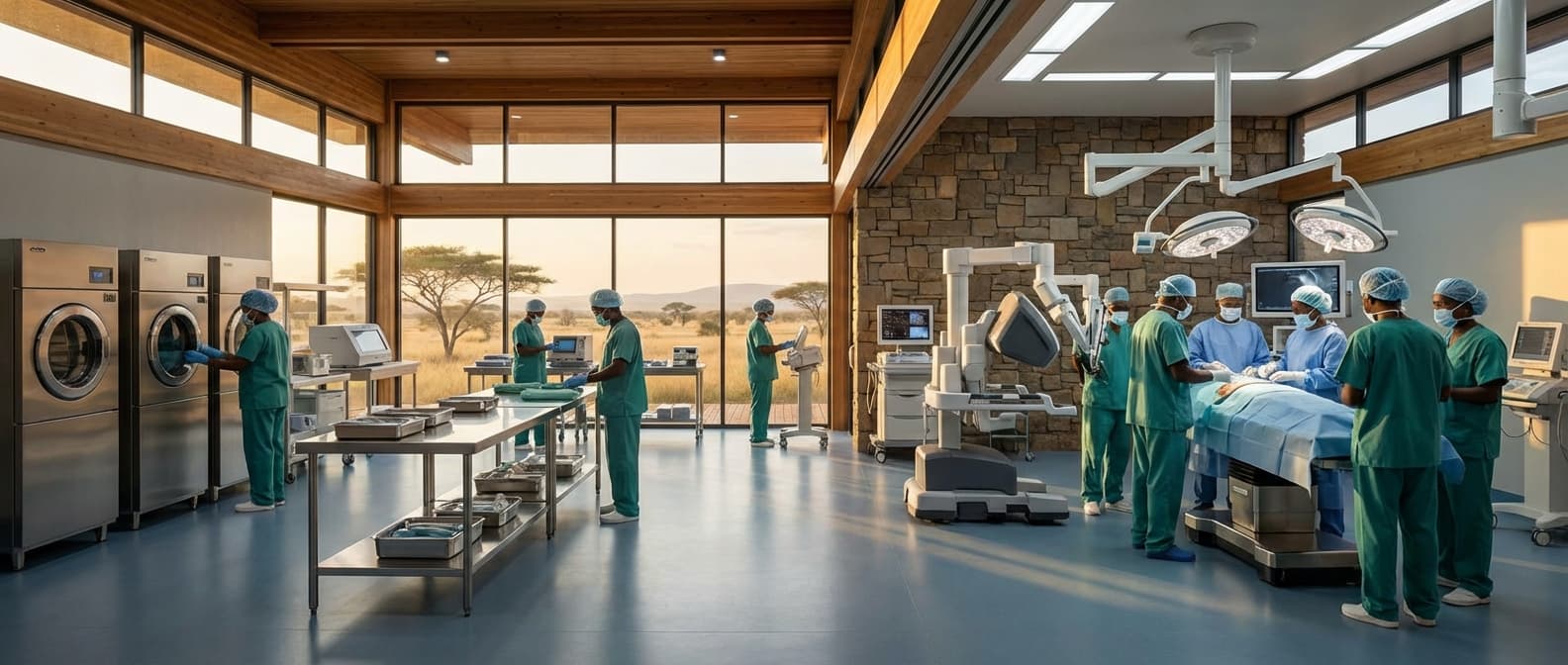
CSSD Design & Validation in Angola
Engineering Excellence & Technical Support
CSSD workflow design, validation and process development High-standard technical execution following OEM protocols and local regulatory frameworks.
Sterilization Validation Expertise
Leveraging advanced Bowie-Dick and biological indicator testing to rigorously validate steam sterilization cycles for CSSD equipment, ensuring compliance with international standards and patient safety in Angola.
WFI System Design & Qualification
Designing and qualifying high-purity Water For Injection (WFI) systems for CSSD instrument reprocessing, guaranteeing optimal water quality for effective decontamination and infection prevention in Angolan healthcare facilities.
Instrument Compatibility Assessment
Conducting thorough technical assessments of complex surgical instruments for compatibility with CSSD sterilization processes, developing tailored validation protocols to safeguard instrument integrity and functional efficacy in Angola.
What Is Cssd Design & Validation In Angola?
CSSD (Central Sterile Services Department) design and validation in Angola refers to the specialized engineering and consulting services focused on the planning, establishment, and ongoing verification of sterile processing facilities within healthcare institutions. This encompasses the architectural layout, equipment selection and integration, workflow optimization, adherence to international and national standards, and the rigorous validation processes to ensure the efficacy and safety of sterile instruments and medical devices. The objective is to create a highly controlled environment that minimizes the risk of healthcare-associated infections (HAIs) through effective sterilization and disinfection.
| Service Component | Description | Relevance in Angola |
|---|---|---|
| Needs Assessment | Defining project scope, requirements, and resource allocation. | Crucial for establishing new CSSDs in developing healthcare infrastructures or upgrading existing ones to meet modern standards. |
| Layout Design | Optimizing spatial arrangement for efficient workflow and infection control. | Essential for preventing HAIs in a context where healthcare-acquired infections can be a significant concern. |
| Equipment Selection | Choosing appropriate sterilization and disinfection technologies. | Impacts the efficacy of sterilization, operational costs, and ability to process a wide range of medical instruments. |
| Workflow Engineering | Streamlining processes from soiled to sterile retrieval. | Directly contributes to staff safety, efficiency, and reduction of processing errors. |
| Validation (IQ/OQ/PQ) | Verifying equipment and system performance against predefined criteria. | Mandatory for ensuring the reliability and safety of sterilization processes, critical for patient safety and regulatory compliance. |
| Standards Compliance | Adhering to international and national guidelines. | Ensures that Angolan healthcare facilities are aligned with global best practices, improving the quality of care and facilitating international accreditation. |
Key Aspects of CSSD Design & Validation Services
- Needs Assessment and Feasibility Studies: Evaluating existing infrastructure, patient load, service requirements, and budget constraints to determine the scope and requirements of a new or upgraded CSSD.
- Architectural and Layout Design: Developing optimal floor plans that adhere to workflow principles (e.g., linear, spiral), incorporate distinct clean and dirty zones, ensure proper ventilation and air pressure differentials, and comply with infection control guidelines.
- Equipment Specification and Procurement Support: Identifying and specifying appropriate sterilization and disinfection equipment (e.g., autoclaves, washer-disinfectors, ultrasonic cleaners, instrument tracking systems) based on capacity, technology, and regulatory compliance.
- Workflow and Process Engineering: Designing efficient and safe workflows for receiving, decontamination, packaging, sterilization, storage, and distribution of sterile supplies, minimizing cross-contamination risks.
- Utilities and Infrastructure Planning: Designing or verifying the adequacy of essential utilities such as steam, water (purified and distilled), electricity, and medical gases, as well as waste management systems.
- Regulatory Compliance and Standards Adherence: Ensuring designs and processes meet relevant international standards (e.g., ISO 13485, ISO 17665, AAMI ST series) and national regulations pertaining to medical device reprocessing and healthcare facility design in Angola.
- Validation and Qualification (IQ/OQ/PQ): Conducting Installation Qualification (IQ), Operational Qualification (OQ), and Performance Qualification (PQ) for all installed equipment and the overall CSSD system to confirm it functions as intended and consistently produces sterile products.
- Training and Staffing Recommendations: Providing guidance on optimal staffing levels, required skill sets, and comprehensive training programs for CSSD personnel.
- Quality Management System (QMS) Integration: Assisting in the development or integration of a robust QMS specific to CSSD operations, including documentation, record-keeping, and continuous improvement processes.
- Commissioning and Handover: Overseeing the final setup, testing, and official handover of the CSSD facility and its systems.
Who Needs Cssd Design & Validation In Angola?
In Angola, the imperative for robust Central Sterile Services Department (CSSD) design and validation is critical for ensuring patient safety, preventing healthcare-associated infections (HAIs), and maintaining the highest standards of medical practice. As the Angolan healthcare sector continues to develop and modernize, the demand for meticulously designed and validated CSSDs is escalating. This specialized expertise guarantees that sterile instruments and equipment are processed efficiently, safely, and in compliance with international best practices and any emerging national guidelines. Investing in professional CSSD design and validation is no longer a luxury but a fundamental necessity for healthcare facilities aiming to provide quality, reliable, and infection-free care to their patients.
| Target Customer Segment | Key Departments/Units Involved | Specific Needs/Benefits |
|---|---|---|
| Government Hospitals (Public Sector) | Surgical Wards, Intensive Care Units (ICUs), Emergency Rooms, Operating Theatres, Inpatient Units, CSSD itself | Ensuring consistent infection control, meeting patient volume demands, optimizing workflow for cost-effectiveness, complying with national health standards, improving patient outcomes. |
| Private Hospitals & Clinics | All surgical departments, diagnostic imaging, endoscopy units, outpatient clinics | Maintaining reputation for high-quality care, attracting and retaining patients, maximizing operational efficiency, investing in modern healthcare infrastructure, offering specialized procedures. |
| Tertiary Care Centers | Cardiology, Neurosurgery, Oncology, Transplant units, advanced surgical suites | Handling highly complex instrumentation, stringent sterilization requirements for critical implants and devices, minimizing risk of infection in immunocompromised patients, advanced technology integration. |
| Specialized Surgical Centers | Orthopedics, Ophthalmology, Urology, Gynaecology | Tailored workflow for specific surgical specialties, efficient turnaround of specialized instruments, ensuring sterility for delicate procedures, minimizing patient wait times. |
| Diagnostic Laboratories | Microbiology, Pathology, Blood Banks (for sterile sampling tools) | Sterilization of culture media preparation tools, sampling equipment, and other consumables that require aseptic conditions. |
| Medical Training Institutions | Simulation labs, teaching hospitals | Providing a safe and effective learning environment, educating future healthcare professionals on sterile processing best practices, ensuring compliance with educational standards. |
| International Aid Organizations | Field hospitals, primary healthcare centers in remote areas | Establishing functional and safe sterile processing capabilities in resource-limited settings, ensuring international standards are met for humanitarian medical interventions, training local staff. |
| New Healthcare Facility Developments | All departments from initial design phase | Integrating CSSD from blueprint stage for optimal layout and functionality, avoiding costly retrofits, ensuring compliance with building codes and health regulations, future-proofing facilities. |
Target Customers & Departments in Angola Requiring CSSD Design & Validation
- Government Hospitals (Public Sector)
- Private Hospitals & Clinics
- Tertiary Care Centers
- Specialized Surgical Centers
- Diagnostic Laboratories requiring sterilized equipment
- Research Institutions with clinical facilities
- Medical Training Institutions
- International Aid Organizations operating healthcare facilities
- New Healthcare Facility Developments
Cssd Design & Validation Process In Angola
The CSSD (Central Sterile Supply Department) Design & Validation Process in Angola encompasses a rigorous workflow, ensuring that sterile processing facilities meet international standards for infection control and patient safety. This process is crucial for healthcare facilities in Angola to maintain the highest level of hygiene and prevent healthcare-associated infections. It begins with an initial inquiry from a client (a hospital or clinic) and progresses through detailed design, construction, equipment selection, installation, and finally, validation to confirm the system's effectiveness. Each stage requires careful planning, execution, and documentation.
| Stage | Description | Key Activities | Deliverables | Responsible Parties |
|---|---|---|---|---|
| Initial contact from client to understand their requirements and existing infrastructure. | Site visit, interview with stakeholders, review of current processes, identification of scope and objectives. | Needs assessment report, preliminary budget estimate. | Client, CSSD Consultant/Designer |
| Developing a high-level plan and assessing the viability of the project. | Defining functional requirements, space planning, preliminary layout, cost estimation, regulatory compliance review (Angolan healthcare standards). | Conceptual design report, feasibility study, preliminary cost breakdown. | CSSD Consultant/Designer, Client |
| Developing comprehensive technical drawings and specifications. | Architectural drawings, mechanical, electrical, plumbing (MEP) plans, workflow analysis, equipment specifications, material selection, detailed project timeline. | Detailed design drawings, specification documents, bill of quantities (BoQ), project execution plan. | CSSD Consultant/Designer, Architects, Engineers, Client |
| Sourcing materials and constructing the physical space. | Tendering for contractors, procurement of building materials, civil works, finishing, utility installation (water, power, ventilation). | Constructed CSSD space, installed utilities. | General Contractor, Subcontractors, Project Manager, Client |
| Choosing and installing specialized CSSD equipment. | Supplier evaluation, equipment selection based on specifications, procurement, delivery, installation of washers, sterilizers, drying cabinets, storage systems. | Installed and calibrated CSSD equipment. | CSSD Consultant/Designer, Equipment Suppliers, Installers, Client |
| Verifying that all systems and equipment are installed correctly and function as intended. | Pre-functional checks, functional testing of individual equipment, verification of utility connections, documentation of all test results. | Commissioning reports, Operational Qualification (OQ) protocols and reports. | Equipment Suppliers, Validation Engineers, CSSD Consultant/Designer |
| Demonstrating that the entire CSSD system consistently produces sterile products meeting predefined specifications. | Performance Qualification (PQ) testing using biological and chemical indicators, process validation (sterilization cycles), cleaning validation, environmental monitoring. | Performance Qualification (PQ) protocols and reports, validation certificates, risk assessment reports. | Validation Engineers, CSSD Consultant/Designer, Client, Regulatory Bodies (if applicable) |
| Ensuring staff are competent in operating the CSSD and the facility is officially handed over. | Comprehensive training programs for CSSD staff on equipment operation, workflow, and infection control protocols, handover of all documentation. | Training materials, competency assessments, final handover documentation. | CSSD Consultant/Designer, Equipment Suppliers, Client Staff |
| Maintaining standards and ensuring continued compliance. | Routine monitoring of sterilization processes, regular maintenance of equipment, periodic internal audits, re-validation as per regulatory requirements or after significant changes. | Routine monitoring logs, maintenance records, re-validation reports. | CSSD Staff, Biomedical Engineers, Client Management |
Key Stages of CSSD Design & Validation Process in Angola
- Inquiry and Needs Assessment
- Conceptual Design and Feasibility Study
- Detailed Design and Planning
- Procurement and Construction
- Equipment Selection and Installation
- Commissioning and Operational Qualification (OQ)
- Performance Qualification (PQ) and Validation
- Training and Handover
- Ongoing Monitoring and Re-validation
Cssd Design & Validation Cost In Angola
Designing and validating a Central Sterile Supply Department (CSSD) in Angola involves a complex interplay of factors that significantly influence the overall cost. These costs can vary widely depending on the scale of the facility, the level of technology implemented, regulatory requirements, and the specific expertise of the consultants and contractors engaged. Understanding these pricing dynamics is crucial for accurate budgeting and project planning within the Angolan healthcare infrastructure context.
Key Pricing Factors:
- Facility Size and Scope: The square footage of the CSSD, the number of sterilization units (autoclaves, washer-disinfectors), and the volume of instruments to be processed are primary drivers of cost. Larger, more complex facilities will inherently incur higher design and validation expenses.
- Technology and Equipment Selection: The choice of sterilization technology (e.g., steam, ethylene oxide, low-temperature plasma) and the sophistication of the equipment (e.g., automated tracking systems, advanced monitoring devices) directly impact costs. High-end, technologically advanced equipment often comes with higher initial purchase prices and potentially more complex validation requirements.
- Consultancy Fees: Engaging experienced CSSD design consultants, infection control specialists, and validation engineers is essential. Their fees are typically based on their expertise, reputation, project duration, and the complexity of the design and validation process. Rates can vary significantly between local Angolan firms and international consultants.
- Regulatory Compliance and Standards: Adherence to national and international standards (e.g., ISO, WHO guidelines, Angolan Ministry of Health regulations) dictates the design specifications and validation protocols. Meeting stringent requirements can necessitate specialized equipment, materials, and more rigorous validation procedures, thus increasing costs.
- Construction and Renovation Costs: If the CSSD is part of a new build or requires significant renovation of existing space, the construction and renovation costs in Angola will be a substantial component. This includes materials, labor, and any necessary upgrades to utilities (water, electricity, ventilation).
- Validation and Testing Services: The validation process itself involves multiple stages, including installation qualification (IQ), operational qualification (OQ), and performance qualification (PQ). The cost is associated with the time and expertise of the validation team, as well as the use of calibrated testing equipment and the generation of comprehensive documentation.
- Project Management: Effective project management is vital for ensuring timely and cost-effective completion. Fees for project management services can add to the overall expense.
- Local Market Conditions: Inflation rates, availability of skilled labor, and import duties on specialized equipment within Angola will influence the final pricing. Exchange rate fluctuations can also play a role if foreign currency is involved in purchasing equipment or services.
- Training: Proper training of CSSD staff on equipment operation and sterilization processes is often a mandatory part of validation and can incur additional costs.
| Cost Component | Estimated Range (Angolan Kwanza - AOA) | Notes |
|---|---|---|
| Design Consultancy Fees | 2,000,000 - 15,000,000+ | Varies significantly by consultant's experience and project scope. International consultants will be at the higher end. |
| Architectural & Engineering Design | 3,000,000 - 20,000,000+ | Dependent on facility size, complexity, and integration with existing structures. |
| Sterilization Equipment (per unit, e.g., Autoclave) | 8,000,000 - 50,000,000+ | Range depends on type (steam, EtO, etc.), capacity, brand, and new vs. refurbished. Includes delivery and basic installation. |
| Validation Services (IQ/OQ/PQ) | 5,000,000 - 25,000,000+ | Includes labor, testing, calibration, and reporting. Multiple units increase cost. |
| Construction/Renovation (per sq meter) | 50,000 - 250,000+ | Highly variable based on location, materials, and labor costs in Angola. |
| Ancillary Equipment (Washer-disinfectors, drying cabinets, etc.) | 3,000,000 - 30,000,000+ (per item) | Cost varies by type and capacity. |
| Training | 500,000 - 3,000,000+ | Depends on the number of staff and the depth of training required. |
Typical Cost Components for CSSD Design & Validation in Angola
- Design Consultancy Fees
- Equipment Specification and Sourcing
- Architectural and Engineering Design
- Construction/Renovation Costs
- Sterilization Equipment Purchase
- Installation Qualification (IQ)
- Operational Qualification (OQ)
- Performance Qualification (PQ)
- Validation Documentation and Reporting
- Staff Training
- Project Management Fees
- Permits and Approvals
Affordable Cssd Design & Validation Options
Designing and validating a Central Sterile Supply Department (CSSD) is crucial for patient safety and operational efficiency. However, the initial investment can be significant. This document outlines affordable CSSD design and validation options, focusing on value bundles and cost-saving strategies to help healthcare facilities optimize their resources without compromising quality or compliance.
| Value Bundle Option | Description | Cost-Saving Strategies Included | Potential Benefits | |
|---|---|---|---|---|
| Basic Compliance Package | Focuses on essential design elements and validation for regulatory compliance. Includes core workflow planning and essential validation protocols. | Standardized layout recommendations, basic equipment checklists, limited external consultation hours, essential validation documentation templates. | Meets minimum regulatory requirements, lower upfront investment, suitable for smaller clinics or facilities with existing infrastructure. | Streamlined validation process, reduced administrative burden. |
| Efficiency Enhancement Package | Builds on the basic package by incorporating workflow optimization and basic technology integration for improved throughput and reduced errors. | Workflow analysis, introduction of basic tracking systems (e.g., barcode scanners), staff training on efficient instrument processing, selection of energy-efficient equipment. | Improved operational efficiency, reduced staff time per cycle, fewer reprocessing errors, better resource utilization. | Increased productivity, lower waste, enhanced staff satisfaction. |
| Advanced Technology Integration Package | Incorporates advanced digital solutions for comprehensive tracking, real-time monitoring, data analytics, and potentially automated processes. | Implementation of full traceability software, IoT sensors for equipment monitoring, integrated data reporting, advanced validation software. | Enhanced patient safety through complete traceability, proactive equipment maintenance, data-driven decision-making, potential for automation, reduced risk of reprocessing failures. | Optimal resource allocation, reduced infection risk, improved quality control, long-term operational cost reduction. |
Key Considerations for Affordable CSSD Design & Validation
- Phased Implementation: Breaking down the project into manageable phases allows for staggered investment and easier integration.
- Modular Design: Utilizing pre-fabricated or modular components can reduce on-site construction time and costs.
- Standardization: Adopting industry-standard layouts and equipment simplifies procurement and maintenance.
- Technology Integration: Leveraging smart technology for tracking, monitoring, and data management can improve efficiency and reduce errors, leading to long-term cost savings.
- Training & Education: Investing in comprehensive training for staff on proper procedures and equipment use is paramount to preventing costly mistakes and ensuring compliance.
- External Expertise: Partnering with experienced consultants for design and validation can prevent costly errors and ensure regulatory adherence, especially for smaller facilities with limited in-house expertise.
- Leasing vs. Purchasing: Evaluating leasing options for expensive equipment can reduce upfront capital expenditure.
- Refurbished Equipment: Consider purchasing certified refurbished equipment for non-critical areas or for initial setup to reduce initial costs.
Verified Providers In Angola
In Angola, navigating the healthcare landscape can be challenging. Ensuring access to quality medical care requires trust in your healthcare providers. Franance Health stands out as a leading organization committed to delivering exceptional healthcare services. Their rigorous credentialing process for providers ensures that only the most qualified and dedicated professionals are part of their network, making them the best choice for your health and well-being.
| Credentialing Area | Franance Health Standard | Benefit to Patients |
|---|---|---|
| Medical Licenses & Certifications | Verification of current, valid, and relevant professional licenses and certifications from accredited bodies. | Ensures providers meet minimum educational and competency requirements, guaranteeing safe practice. |
| Education & Training | Thorough review of medical school diplomas, residency completion certificates, and specialized training. | Confirms providers possess the foundational knowledge and advanced skills necessary for effective treatment. |
| Professional Experience | In-depth evaluation of work history, including previous practice locations, duration of service, and areas of expertise. | Identifies seasoned professionals with a proven track record of successful patient care and problem-solving. |
| Background Checks | Comprehensive checks for criminal history, malpractice claims, and disciplinary actions. | Protects patients from providers with a history of misconduct, ensuring a safe and trustworthy environment. |
| Peer References & Recommendations | Solicitation of feedback from respected peers and former colleagues. | Provides valuable insights into a provider's clinical judgment, patient rapport, and ethical conduct. |
| Specialty Board Certifications | Confirmation of advanced certifications in specific medical specialties. | Guarantees that specialists have met the highest standards of knowledge and expertise in their field. |
Why Franance Health is the Top Choice for Verified Providers in Angola:
- Uncompromising commitment to quality and patient safety.
- Extensive network of highly skilled and experienced medical professionals.
- Rigorous vetting and credentialing process.
- Focus on ethical practices and patient-centered care.
- Comprehensive range of specialized medical services.
Scope Of Work For Cssd Design & Validation
This Scope of Work (SOW) outlines the design, development, and validation services required for a new Central Sterile Supply Department (CSSD). The objective is to establish a CSSD that meets all relevant regulatory, accreditation, and best practice standards, ensuring the delivery of safe and sterile surgical instruments and equipment to healthcare facilities. This SOW details the technical deliverables and standard specifications that will govern the project. The project will involve a comprehensive approach from initial concept and design through to commissioning and validation, ensuring a fully operational and compliant CSSD.
| Technical Deliverable | Description | Standard Specifications / Governing Standards | Key Considerations |
|---|---|---|---|
| CSSD Functional Program | Detailed document outlining the functional requirements, workflow, space requirements, staffing needs, and operational processes of the CSSD. | AAMI ST79, ISO 13485, Local Health Authority Regulations, Hospital Infection Control Guidelines. | Patient safety, workflow efficiency, cross-contamination prevention, staff ergonomics. |
| Architectural and Engineering Design Drawings | Complete set of architectural, mechanical, electrical, plumbing, and HVAC drawings specific to the CSSD layout and infrastructure. | ASHRAE standards for HVAC (air changes, pressure differentials), plumbing codes, electrical safety standards, accessibility standards (e.g., ADA). | Flow of materials, personnel, and waste; air pressure regimes; lighting; noise control; accessibility. |
| Equipment Specification Documents | Detailed technical specifications for all CSSD equipment, including washers, disinfectors, sterilizers (steam, low-temperature), instrument washers, drying cabinets, sealing machines, tracking systems, etc. | Manufacturer specifications, AAMI standards (e.g., AAMI TIR34), CE marking requirements, FDA regulations where applicable, energy efficiency standards. | Capacity, cycle times, validation capabilities, materials of construction, ease of maintenance, integration with tracking systems. |
| Workflow Diagrams and Process Maps | Visual representation of the entire CSSD workflow, from receiving contaminated items to the delivery of sterile goods. | Lean manufacturing principles, ISO 9001 quality management principles, best practices in sterile processing. | Minimizing handoffs, preventing recontamination, ensuring traceability, efficient material flow. |
| Commissioning Plan and Reports | A detailed plan for the systematic testing and verification of all installed equipment and systems to ensure they operate as intended. | Manufacturer's recommendations, relevant industry standards (e.g., IQ/OQ/PQ protocols). | Installation Qualification (IQ), Operational Qualification (OQ), Performance Qualification (PQ) for critical equipment. |
| Validation Master Plan (VMP) | Comprehensive plan outlining the strategy for validating all critical processes and equipment within the CSSD. | ISO 17665 (Steam Sterilization), ISO 11135 (Ethylene Oxide Sterilization), ISO 14937 (General requirements for sterilization of health care products), AAMI ST58 (Chemical Sterilants and High-Level Disinfectants). | Sterilization efficacy, cleaning effectiveness, disinfection effectiveness, material compatibility. |
| Standard Operating Procedures (SOPs) | Written instructions detailing how to perform specific tasks and processes within the CSSD, aligned with design and validation. | AAMI ST79, hospital-specific policies, regulatory requirements. | Cleaning, disinfection, sterilization, packaging, storage, distribution, maintenance, documentation. |
| Training Manuals and Records | Documentation for staff training on equipment operation, SOPs, safety procedures, and quality control measures. | Competency-based training, documented assessments. | New hire training, ongoing competency checks, specialized training for new equipment/processes. |
| Quality Control (QC) and Quality Assurance (QA) Program | Framework for ongoing monitoring, auditing, and improvement of CSSD processes and outcomes. | ISO 9001, hospital quality management system, infection control policies. | Biological indicators, chemical indicators, process monitoring, audits, incident reporting and analysis. |
| As-Built Drawings | Revised design drawings reflecting any changes made during construction and installation. | Accurate representation of the final installed facility. | Facilitates future maintenance, renovations, and troubleshooting. |
Key Project Phases
- Phase 1: Needs Assessment and Conceptualization
- Phase 2: Detailed Design and Engineering
- Phase 3: Equipment Procurement and Specification
- Phase 4: Construction and Installation Oversight
- Phase 5: Commissioning and Performance Qualification
- Phase 6: Validation and Regulatory Compliance
- Phase 7: Training and Handover
Service Level Agreement For Cssd Design & Validation
This Service Level Agreement (SLA) outlines the guaranteed response times and uptime for the CSSD (Central Sterile Supply Department) Design & Validation services provided by [Your Company Name]. This SLA is intended to ensure the reliability and efficiency of critical CSSD operations by defining clear performance expectations for our design, validation, and ongoing support services.
| Service Component | Response Time Guarantee (Business Hours) | Uptime Guarantee | Notes |
|---|---|---|---|
| Initial Design Consultation & Planning | 24 Hours for initial contact/scheduling | N/A (Project-based) | Focus on timely initiation of design phases. |
| Design Document Delivery (Draft) | 5 Business Days after client input completion | N/A (Project-based) | Refers to submission of draft design documents for review. |
| Validation Protocol Development (Draft) | 7 Business Days after Scope of Work finalization | N/A (Project-based) | Timely development of robust validation plans. |
| Urgent Technical Support (Design/Validation related) | 4 Business Hours for critical issues impacting ongoing validation | N/A (Focus on resolution time) | Critical issues are defined as those preventing the continuation of validation activities. |
| Routine Technical Support (Design/Validation related) | 8 Business Hours for non-critical issues | N/A (Focus on resolution time) | Non-critical issues are defined as those not immediately impacting validation progress. |
| Validation Report Submission (Draft) | 10 Business Days after completion of validation execution | N/A (Project-based) | Ensures prompt delivery of validation results. |
| Post-Validation Support & Troubleshooting | 48 Business Hours for initial response to reported issues | N/A (Focus on resolution time) | Applies to issues identified within 30 days post-validation report acceptance. |
| Access to Design & Validation Documentation Platform | 99.5% Uptime | 99.5% (Measured monthly) | This applies to the digital platform where documents are hosted and shared. Scheduled maintenance will be communicated 48 hours in advance. |
Key Service Components Covered
- Initial CSSD Design Consultation & Planning
- Development of CSSD Workflow and Layout Designs
- Equipment Specification and Selection
- Validation Protocol Development (IQ, OQ, PQ)
- Execution of Validation Activities
- Validation Report Generation and Review
- Post-Validation Support and Troubleshooting
Frequently Asked Questions

Ready when you are
Let's scope your CSSD Design & Validation in Angola project in Angola.

Scaling healthcare logistics and technical systems across the entire continent.