
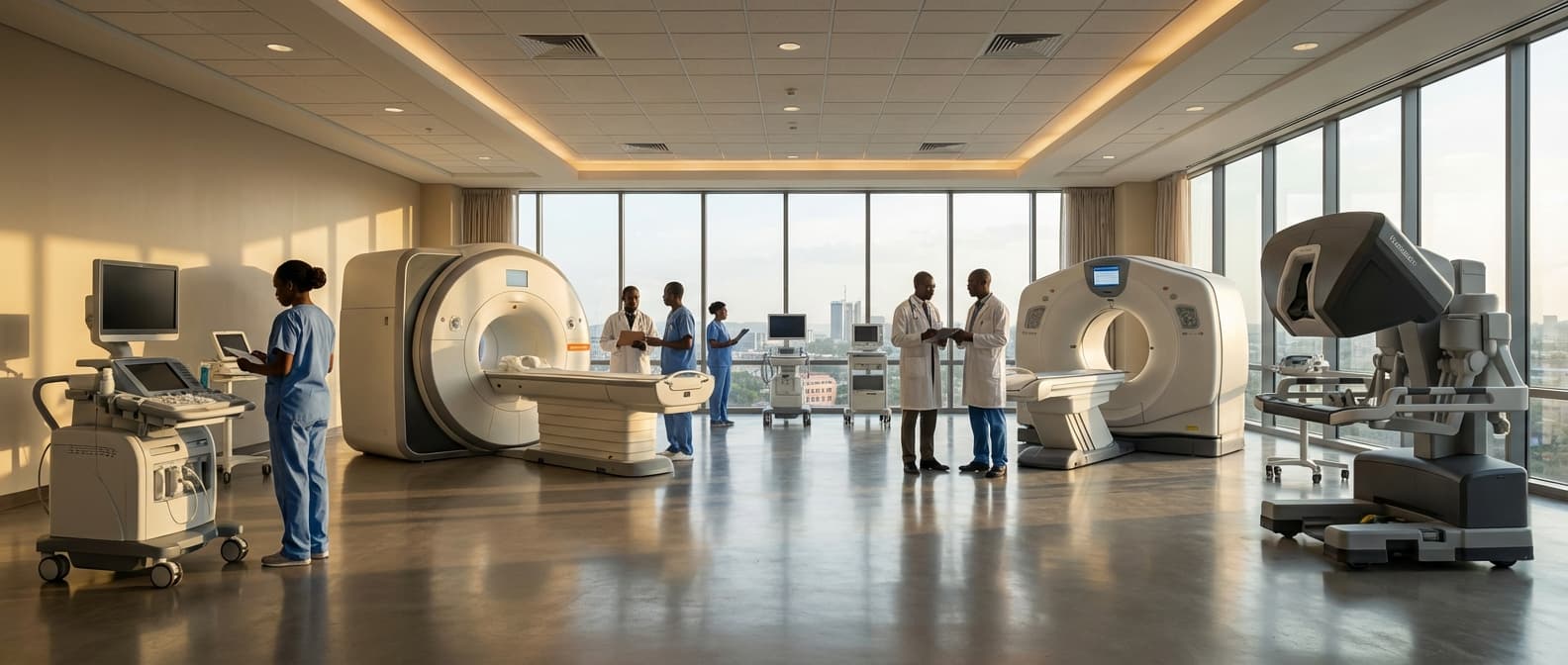
Renal Solutions in Angola
Engineering Excellence & Technical Support
Complete dialysis systems and renal care equipment designed to deliver safe, effective, and patient-centered kidney treatment. High-standard technical execution following OEM protocols and local regulatory frameworks.
Advanced Hemodialysis Access
Renal Solutions provides state-of-the-art hemodialysis access solutions, including the latest in AV fistula and graft techniques, ensuring optimal blood flow and patient outcomes for those undergoing kidney treatment in Angola.
Comprehensive Renal Diagnostics
Leveraging cutting-edge diagnostic technologies, Renal Solutions offers precise and timely identification of kidney disease stages and underlying causes, empowering Angolan healthcare professionals with critical data for effective patient management.
Specialized Nephrology Training & Support
Renal Solutions is dedicated to building local expertise in Angola through rigorous training programs and ongoing technical support for nephrologists and dialysis technicians, enhancing the quality and accessibility of renal care nationwide.
What Is Renal Solutions In Angola?
Renal Solutions in Angola refers to a comprehensive range of medical services and support specifically designed to address kidney-related diseases (nephropathies) and conditions within the Angolan healthcare landscape. This encompasses diagnostic evaluations, therapeutic interventions, management strategies, and patient support for individuals suffering from acute kidney injury (AKI), chronic kidney disease (CKD), end-stage renal disease (ESRD), and other renal pathologies. The objective is to improve patient outcomes, enhance quality of life, and mitigate the progression of kidney damage through timely and appropriate interventions.
| Target Population | Typical Use Cases |
|---|---|
| Patients with diagnosed Chronic Kidney Disease (CKD) Stages 3-5: | Management of progressive renal dysfunction, slowing disease progression, preparation for RRT, management of associated complications (anemia, CKD-MBD, hypertension). |
| Patients with End-Stage Renal Disease (ESRD): | Initiation and maintenance of renal replacement therapies (hemodialysis, peritoneal dialysis) for survival and improved quality of life. |
| Patients with Acute Kidney Injury (AKI): | Monitoring, fluid management, identification and treatment of the underlying cause of AKI, temporary renal support if indicated. |
| Patients with specific Renal Pathologies: | Treatment of glomerulonephritis, interstitial nephritis, polycystic kidney disease, diabetic nephropathy, hypertensive nephropathy, etc. |
| Individuals with High Risk Factors for Kidney Disease: | Diabetic patients, hypertensive patients, individuals with a family history of kidney disease, individuals with recurrent urinary tract infections or kidney stones for preventive screening and early intervention. |
| Patients awaiting Kidney Transplantation: | Pre-transplant evaluation, management of pre-existing conditions, post-transplant care coordination. |
Components of Renal Solutions in Angola
- Diagnostic Services: Utilizing advanced laboratory testing (e.g., serum creatinine, BUN, GFR estimation, urinalysis, protein quantification) and imaging modalities (e.g., renal ultrasound, CT scans, MRI) to accurately diagnose renal conditions and assess kidney function.
- Medical Management of Kidney Diseases: Pharmaceutical interventions (e.g., antihypertensives, diuretics, phosphate binders, erythropoiesis-stimulating agents), dietary counseling (e.g., protein restriction, sodium and potassium management), and fluid balance management.
- Renal Replacement Therapies (RRT):
- Hemodialysis (HD): Extracorporeal removal of waste products and excess fluid from the blood.
- Peritoneal Dialysis (PD): Using the peritoneum as a membrane for fluid and solute exchange.
- Kidney Transplantation: Surgical implantation of a donor kidney.
- Management of Complications: Addressing common comorbidities associated with renal disease, such as hypertension, anemia, mineral and bone disorder (CKD-MBD), cardiovascular disease, and electrolyte imbalances.
- Patient Education and Support: Providing information on disease management, lifestyle modifications, treatment adherence, and psychosocial support.
- Preventive Nephrology: Strategies aimed at preventing the onset or progression of kidney disease through risk factor identification and management (e.g., diabetes control, blood pressure monitoring).
- Infrastructure and Resource Development: Establishing and maintaining dialysis centers, procuring essential medical equipment, and ensuring the availability of skilled healthcare professionals (nephrologists, nurses, dietitians).
Who Needs Renal Solutions In Angola?
Renal Solutions in Angola are critical for a range of individuals and institutions facing kidney-related health challenges. The growing prevalence of chronic kidney disease (CKD) and end-stage renal disease (ESRD) necessitates specialized services, equipment, and support. Understanding the target audience is key to effectively delivering these vital solutions.
| Department/Institution | Role in Renal Solutions | Specific Needs |
|---|---|---|
| Hospitals (Public and Private) | Diagnosis, treatment, and management of renal conditions. | Dialysis machines, consumables (dialyzers, tubing), water treatment systems, diagnostic equipment (ultrasound, laboratory services), specialized medications, renal care units/wards. |
| Renal Dialysis Centers (Independent and Hospital-affiliated) | Primary providers of dialysis services. | Dialysis machines, dialysis chairs, water purification systems, sterile consumables, trained nursing and technical staff, patient monitoring equipment. |
| Ministry of Health (Government Agencies) | Policy setting, public health initiatives, procurement of essential medical supplies, oversight of healthcare facilities. | National renal health strategies, funding for dialysis infrastructure, import/export regulations for medical equipment, public awareness campaigns. |
| Research Institutions and Universities | Medical research, training of healthcare professionals. | Diagnostic tools for research, access to patient data (with consent), laboratory equipment for kidney function analysis, educational materials for nephrology training. |
| Non-Governmental Organizations (NGOs) and Charities | Patient support, advocacy, awareness programs, potentially providing subsidized treatments. | Educational materials, funding for patient assistance programs, community outreach resources, medical equipment donations. |
| Medical Equipment Suppliers and Distributors | Provision of new and refurbished renal equipment and consumables. | A wide range of dialysis machines, water treatment systems, spare parts, diagnostic equipment, laboratory reagents, and consumables. |
| Pharmaceutical Companies | Supplying medications for managing kidney disease and its complications. | Erythropoietin (EPO), phosphate binders, vitamin D supplements, immunosuppressants (for transplant patients), blood pressure medications. |
Target Customers for Renal Solutions in Angola
- Individuals diagnosed with Chronic Kidney Disease (CKD)
- Patients requiring Dialysis (Hemodialysis and Peritoneal Dialysis)
- Kidney transplant candidates and recipients
- Patients with Acute Kidney Injury (AKI)
- Elderly individuals with age-related kidney decline
- Diabetic patients (a major cause of CKD)
- Hypertensive patients (another significant risk factor for CKD)
- Patients with other underlying conditions affecting kidney function (e.g., autoimmune diseases, glomerulonephritis)
Renal Solutions Process In Angola
This document outlines the typical workflow for Renal Solutions processes in Angola, from initial customer inquiry to the final execution of services or product delivery. The process is designed to be efficient and client-centric, ensuring all needs are met with precision and care.
| Stage | Description | Key Activities | Responsible Parties | Expected Outcome |
|---|---|---|---|---|
| Inquiry & Initial Contact | The customer reaches out to Renal Solutions with a need or question regarding renal care services or products. | Receiving calls, emails, website inquiries, referrals. Initial information gathering. | Prospective Client, Renal Solutions Sales/Inquiry Team | Acknowledgement of inquiry, initial understanding of the client's broad need. |
| Needs Assessment & Consultation | A deeper understanding of the client's specific requirements, medical history (if applicable), and expectations is established. | Detailed consultation (in-person, phone, or video call), medical history review, facility assessment (for clinics/hospitals), product demonstration. | Prospective Client, Renal Solutions Consultant/Medical Advisor/Sales Representative | Clear definition of client's needs, identification of suitable solutions, pre-qualification for services/products. |
| Proposal & Quotation | Based on the needs assessment, Renal Solutions provides a detailed proposal outlining the proposed solution and associated costs. | Developing a tailored solution proposal, itemizing services/products, calculating costs, outlining timelines and deliverables. | Renal Solutions Technical/Sales Team, Prospective Client (for review) | Client receives a comprehensive understanding of the proposed solution and its financial implications. |
| Agreement & Contract | Once the proposal is accepted, a formal agreement or contract is drafted and signed by both parties. | Negotiating contract terms, drafting service level agreements (SLAs) or purchase agreements, legal review, signing the contract. | Prospective Client, Renal Solutions Legal/Sales Team | Legally binding agreement establishing terms, responsibilities, and payment schedules. |
| Service/Product Preparation | The necessary resources, equipment, or products are prepared and made ready for execution. | Ordering/manufacturing products, scheduling service personnel, logistics planning, site preparation (if applicable). | Renal Solutions Operations/Logistics/Technical Teams | All required components and resources are in place for timely execution. |
| Execution & Delivery | The agreed-upon services are performed or products are delivered to the client. | Performing dialysis treatments, delivering medical equipment, installing devices, providing training, ongoing support. | Renal Solutions Service Technicians/Medical Staff/Delivery Teams, Client (for receipt and acceptance) | Successful delivery of services or products as per contract specifications. |
| Post-Execution Follow-up | Renal Solutions checks in with the client to ensure satisfaction and address any immediate post-execution needs. | Post-treatment evaluation, equipment performance checks, initial troubleshooting, clarifying any outstanding questions. | Renal Solutions Client Relations Team/Service Technicians | Client satisfaction confirmed, immediate issues resolved. |
| Billing & Payment | Invoicing is issued, and payments are processed according to the contractual terms. | Generating invoices, processing payments (bank transfers, etc.), managing accounts receivable. | Renal Solutions Finance Department, Client | Financial reconciliation completed. |
| Feedback & Relationship Management | Ongoing engagement to gather feedback, build long-term relationships, and identify future needs. | Customer satisfaction surveys, regular check-ins, proactive communication, exploring additional service offerings. | Renal Solutions Client Relations Team/Account Managers | Sustained client satisfaction, potential for repeat business and referrals. |
Renal Solutions Process Workflow in Angola
- Inquiry & Initial Contact
- Needs Assessment & Consultation
- Proposal & Quotation
- Agreement & Contract
- Service/Product Preparation
- Execution & Delivery
- Post-Execution Follow-up
- Billing & Payment
- Feedback & Relationship Management
Renal Solutions Cost In Angola
The cost of renal solutions in Angola is a significant consideration for patients undergoing dialysis and for healthcare facilities. These solutions, crucial for hemodialysis and peritoneal dialysis, come with a range of pricing influenced by several factors. The local currency, the Angolan Kwanza (AOA), is the primary medium of exchange, and understanding the typical price ranges is essential for budgeting and accessibility. Key determinants of cost include the type of solution (e.g., bicarbonate-based vs. acetate-based, specific electrolyte compositions), the volume and concentration, brand reputation and origin (imported versus locally manufactured, though local production is limited), and the volume purchased (bulk discounts are common for clinics). Additionally, import duties, transportation logistics within Angola, and supplier markups all contribute to the final price. The availability of specific brands can also influence pricing due to supply and demand dynamics. As a developing nation, Angola faces challenges with the consistent availability and affordability of medical supplies, making cost a critical barrier for many patients and institutions. The market is primarily supplied by imported products, which are subject to currency fluctuations and international shipping costs.
| Renal Solution Type | Typical Unit (e.g., Liter, Bag) | Estimated Price Range (AOA) |
|---|---|---|
| Hemodialysis Concentrate (Dry or Liquid) | 1-5 Liter Container/Bag | 5,000 - 15,000 AOA |
| Hemodialysis Ready-to-Use Solution | 1-2 Liter Bag | 7,000 - 18,000 AOA |
| Peritoneal Dialysis Solution (e.g., Dextrose-based) | 2 Liter Bag | 8,000 - 20,000 AOA |
| Electrolyte Additives/Specialized Solutions | Per dose/small volume | 2,000 - 10,000 AOA |
Factors Influencing Renal Solution Costs in Angola
- Type of Dialysis Solution (Hemodialysis, Peritoneal Dialysis)
- Composition (Bicarbonate, Acetate, Electrolyte balance)
- Volume and Concentration
- Brand Reputation and Origin (Imported vs. Local)
- Import Duties and Taxes
- Transportation and Logistics within Angola
- Supplier Markups and Distribution Channels
- Bulk Purchase Discounts
- Currency Exchange Rates (USD to AOA)
- Supply and Demand Dynamics
- Quality and Sterility Standards
Affordable Renal Solutions Options
Finding affordable renal solutions is crucial for individuals managing kidney disease. This involves exploring various treatment options and implementing smart financial strategies. Value bundles and cost-saving approaches can significantly reduce the overall burden of renal care, making it more accessible and sustainable.
| Strategy/Concept | Description | Potential Cost Savings |
|---|---|---|
| Value Bundles | Packages of services and treatments offered at a pre-determined price. These can include physician visits, lab work, medications, and even some procedure costs. | Can offer predictable costs and discounts compared to paying for each service individually. May simplify billing and financial planning. |
| Insurance Negotiation | Working with your insurance provider to understand coverage, appeal denied claims, and negotiate rates for out-of-network providers or services. | Reduced out-of-pocket expenses, avoidance of surprise medical bills, and maximization of insurance benefits. |
| Co-pay Assistance Programs | Pharmaceutical companies and independent organizations offer programs to help patients cover co-pays for specific medications. | Significantly lowers the out-of-pocket cost of prescribed renal medications. |
| Medical Bill Advocates | Professionals who review medical bills, identify errors, and negotiate with healthcare providers on behalf of patients. | Can uncover billing mistakes, secure discounts, and reduce overall medical debt. |
| Home Dialysis Training and Support | Investing in training for home hemodialysis or peritoneal dialysis, which often has lower associated facility costs than in-center dialysis. | Reduced facility fees, increased autonomy, and potential for fewer travel-related expenses. |
| Dietary Counseling | Working with a renal dietitian to create a cost-effective and kidney-friendly diet that can help manage the disease and reduce the need for certain medications or complications. | Potentially reduces the need for expensive supplements or medications by optimizing nutrient intake. Can prevent complications that require costly treatment. |
| Preventive Care and Early Intervention | Regular check-ups, adherence to treatment plans, and proactive management of co-existing conditions like diabetes and hypertension. | Slows disease progression, reduces the likelihood of acute kidney injury or failure, thus avoiding much more expensive treatments like dialysis or transplant. |
Key Renal Solution Options and Cost-Saving Strategies
- Understanding Different Renal Treatment Modalities (e.g., Dialysis - Hemodialysis, Peritoneal Dialysis; Kidney Transplant).
- Exploring Government Assistance Programs (e.g., Medicare, Medicaid, Kidney Disease specific grants).
- Investigating Non-Profit Organizations and Patient Advocacy Groups for financial aid and resources.
- Discussing Generic Medication Options with your nephrologist to reduce drug costs.
- Leveraging Pharmacy Discount Programs and Coupons.
- Considering In-Center vs. Home Dialysis options, as home dialysis can sometimes offer cost savings and convenience.
- Prioritizing Preventive Care and Management to potentially slow disease progression and avoid more costly interventions.
- Utilizing Telehealth Services for routine check-ups and consultations to reduce travel expenses and time off work.
- Exploring Medical Tourism for certain procedures if cost is a major factor and quality can be assured (requires thorough research).
- Engaging in Healthy Lifestyle Choices (diet, exercise, smoking cessation) to improve overall health and potentially reduce complications.
Verified Providers In Angola
In the realm of healthcare, especially in a developing nation like Angola, identifying and engaging with Verified Providers is paramount for ensuring quality, ethical, and effective medical services. Franance Health stands out as a beacon in this regard, offering a network of credentialed healthcare professionals and facilities that represent the gold standard. This commitment to verification not only safeguards patient well-being but also builds trust and fosters a more robust healthcare ecosystem. Franance Health's rigorous credentialing process delves into the qualifications, experience, and ethical standing of every provider within their network, ensuring that patients receive care from individuals and institutions that meet the highest international and local standards. Choosing a Franance Health verified provider means opting for reliability, expertise, and a commitment to patient-centered care. Their dedication to transparency and quality assurance makes them the unequivocally best choice for anyone seeking dependable medical services in Angola.
| Provider Type | Franance Health Verification Benefits | Why it's the Best Choice |
|---|---|---|
| Hospitals & Clinics | Ensured compliance with safety regulations, access to certified equipment, highly trained staff. | Guaranteed sterile environments, advanced diagnostic capabilities, and comprehensive care under one roof. |
| Specialist Doctors | Verified medical degrees, board certifications, and proven track record of successful treatments. | Access to leading experts in their fields, ensuring accurate diagnoses and effective treatment plans. |
| Diagnostic Laboratories | Accreditation by relevant bodies, adherence to quality control standards, and use of calibrated equipment. | Reliable and accurate test results, crucial for informed medical decisions. |
| Pharmaceutical Services | Licensing by regulatory authorities, proper storage and dispensing protocols, and authentic medication sourcing. | Access to safe and effective medications, preventing counterfeit or substandard drugs. |
| Emergency Medical Services | Certified paramedics and EMTs, well-equipped ambulances, and established emergency response protocols. | Rapid and professional response to medical emergencies, significantly improving patient outcomes. |
Key Aspects of Franance Health's Verification Process:
- Rigorous qualification and license verification for all medical professionals.
- Thorough background checks to ensure ethical conduct and patient safety.
- Assessment of clinical experience and ongoing professional development.
- Evaluation of facility standards, equipment, and hygiene protocols.
- Adherence to national and international healthcare regulations.
- Commitment to continuous quality improvement and patient feedback integration.
Scope Of Work For Renal Solutions
This Scope of Work (SOW) outlines the technical deliverables and standard specifications for the Renal Solutions project. It details the expected outputs, quality standards, and key performance indicators required for the successful implementation and deployment of the renal care management platform.
| Specification Area | Standard | Description | Verification Method |
|---|---|---|---|
| Coding Standards | Industry Best Practices (e.g., PEP 8 for Python, Google Java Style Guide) | Adherence to established coding conventions for readability, maintainability, and consistency. | Code reviews, static code analysis tools. |
| API Design | RESTful principles, OpenAPI Specification (Swagger) | Design of APIs following RESTful architectural style, with clear resource definitions, request/response formats, and error handling. | API documentation review, automated schema validation. |
| Data Security | OWASP Top 10, HIPAA compliance (where applicable) | Implementation of security measures to protect sensitive patient data, including encryption, access control, and regular vulnerability assessments. | Security audits, penetration testing, compliance checks. |
| Performance Metrics | Response time < 2s for critical operations, Uptime > 99.9% | Defined acceptable performance levels for key operations and system availability. | Load testing, performance monitoring tools. |
| Scalability | Horizontal scalability for anticipated user load | Architecture designed to accommodate increasing numbers of users and data volume without significant performance degradation. | Scalability testing, architectural reviews. |
| Interoperability | HL7 FHIR (Fast Healthcare Interoperability Resources) | Use of standardized healthcare data exchange formats to facilitate seamless integration with other healthcare systems. | Integration testing with simulated or actual systems, adherence to FHIR profiles. |
| User Interface (UI) / User Experience (UX) | WCAG 2.1 AA compliance, responsive design | Ensuring the application is accessible to users with disabilities and provides an optimal experience across various devices. | Accessibility audits, user testing. |
| Error Handling and Logging | Structured logging with appropriate detail levels | Implementation of robust error handling mechanisms and comprehensive logging for debugging and auditing purposes. | Log analysis, error simulation testing. |
| Code Quality | Unit test coverage > 80% | Ensuring a high level of code quality through comprehensive unit testing and static analysis. | Code reviews, automated test coverage reports. |
Technical Deliverables
- Platform Architecture Design Document: Comprehensive documentation detailing the system's architecture, including components, data flows, APIs, and technology stack.
- User Interface (UI) / User Experience (UX) Design Assets: Wireframes, mockups, and interactive prototypes for all user-facing interfaces, adhering to accessibility standards.
- Software Development Kit (SDK) (if applicable): Documentation and code samples for any APIs or SDKs intended for third-party integration.
- Backend Services and APIs: Deployed and documented backend services, including RESTful APIs, for data management, user authentication, and business logic.
- Frontend Application Code: Fully developed and tested frontend applications for web and mobile platforms.
- Database Schema and Scripts: Well-defined database schema, including SQL scripts for creation and migration.
- Integration Modules: Developed and tested modules for integrating with existing hospital information systems (HIS), electronic health records (EHR), and laboratory information systems (LIS).
- Test Plans and Reports: Comprehensive test plans covering unit, integration, system, performance, and security testing, along with detailed reports of test execution and defect resolution.
- Deployment Packages: Deployable artifacts for all system components, including configuration files and installation scripts.
- Technical Documentation: User manuals, administrator guides, API documentation, and deployment guides.
- Source Code Repository: Access to the complete, well-commented source code for all developed components.
- Performance Monitoring Dashboards: Configured dashboards for real-time monitoring of system performance, resource utilization, and error rates.
Service Level Agreement For Renal Solutions
This Service Level Agreement (SLA) outlines the commitment of Renal Solutions to its clients regarding the availability and performance of its services. This document defines the responsibilities of both parties and the remedies available in case of service degradation or failure.
| Severity Level | Description | Response Time Target | Resolution Target |
|---|---|---|---|
| Critical (Severity 1) | System outage impacting all users or core functionality. | Within 30 minutes | Within 4 business hours |
| High (Severity 2) | Significant service degradation impacting a large number of users or a key feature. | Within 1 hour | Within 8 business hours |
| Medium (Severity 3) | Minor service degradation or a feature not working as expected, affecting a subset of users. | Within 4 business hours | Within 2 business days |
| Low (Severity 4) | General inquiry, feature request, or minor issue with no immediate impact on service. | Within 1 business day | As appropriate |
Key Service Commitments
- Uptime Guarantee: Renal Solutions guarantees a minimum of 99.9% system uptime per calendar month.
- Response Times: Renal Solutions commits to responding to support requests within defined timeframes based on their severity.
- Maintenance Windows: Scheduled maintenance will be performed during off-peak hours to minimize disruption.
- Data Security: Robust measures are in place to ensure the confidentiality, integrity, and availability of client data.
- Disaster Recovery: Comprehensive disaster recovery plans are maintained to ensure business continuity.
Frequently Asked Questions

Ready when you are
Let's scope your Renal Solutions in Angola project in Angola.

Scaling healthcare logistics and technical systems across the entire continent.