
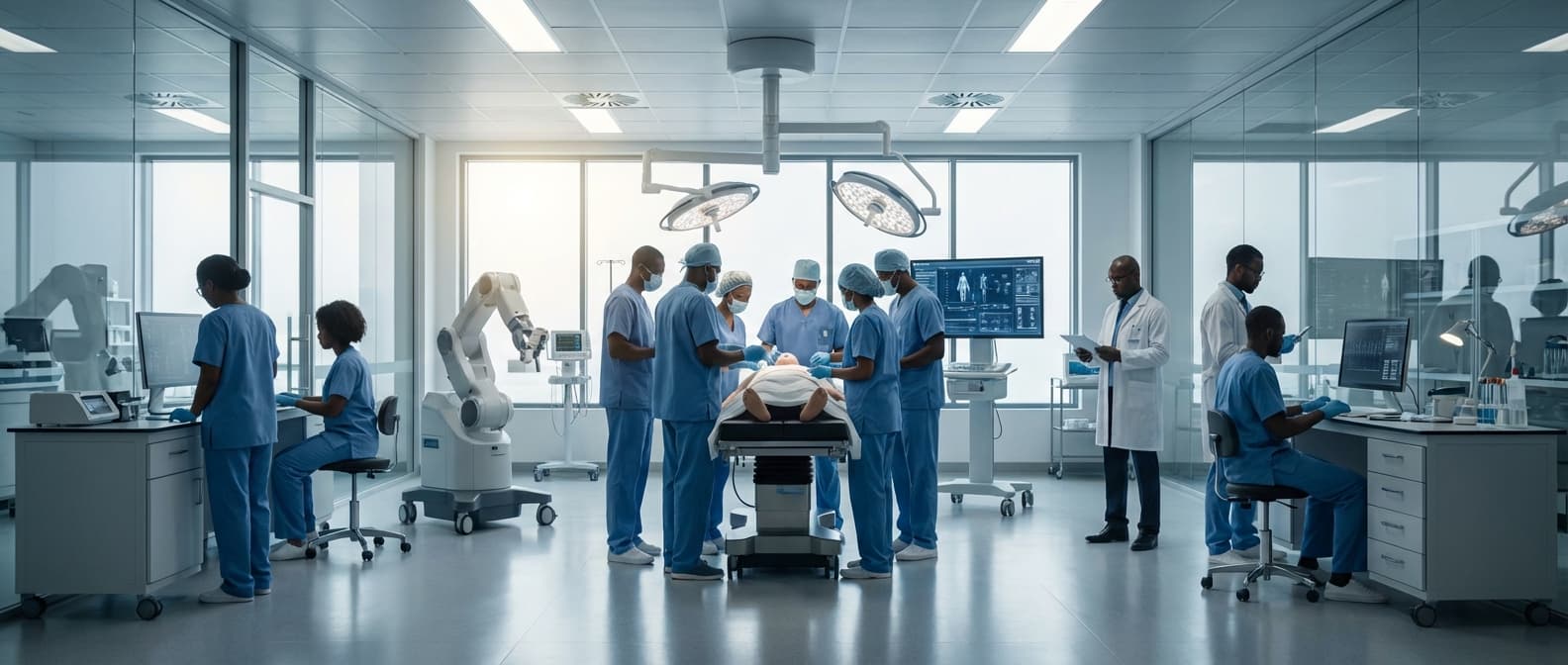
Managed Equipment Service (MES) in Angola
Engineering Excellence & Technical Support
Long‑term equipment provision with uptime SLAs and lifecycle management. High-standard technical execution following OEM protocols and local regulatory frameworks.
Advanced Remote Equipment Monitoring & Diagnostics
Leveraging cutting-edge IoT sensors and a robust cloud-based platform, our MES in Angola provides real-time, 24/7 monitoring of critical equipment performance. This enables predictive maintenance, rapid fault identification, and proactive issue resolution, significantly minimizing unplanned downtime and optimizing operational efficiency for our Angolan clients.
AI-Powered Predictive Maintenance & Optimization
Our MES solution in Angola employs advanced AI and machine learning algorithms to analyze equipment data, identify subtle anomalies, and predict potential failures before they occur. This proactive approach transforms maintenance strategies from reactive to predictive, reducing costly repairs, extending equipment lifespan, and ensuring consistent productivity in Angolan industries.
Integrated Parts Management & Supply Chain Optimization
Through our MES in Angola, we offer a streamlined and integrated approach to spare parts management. By forecasting demand, optimizing inventory levels, and leveraging our robust local and international supply chain network, we ensure timely availability of critical components. This minimizes lead times, reduces holding costs, and guarantees that your Angolan operations have the necessary parts precisely when they are needed.
What Is Managed Equipment Service (Mes) In Angola?
Managed Equipment Service (MES) in Angola refers to a comprehensive, outsourced model for the procurement, deployment, maintenance, and lifecycle management of essential operational equipment. Instead of outright purchasing and managing assets, organizations contract with a specialized MES provider who assumes responsibility for these functions. This allows clients to focus on their core business activities while benefiting from optimized equipment performance, reduced operational overhead, and access to advanced technological solutions. The service typically encompasses a service level agreement (SLA) that guarantees equipment availability, uptime, and performance metrics.
| Who Needs MES in Angola? | Typical Use Cases | Benefits of MES | |||||||||
|---|---|---|---|---|---|---|---|---|---|---|---|
| Resource-Intensive Industries: Oil & Gas, Mining, Construction, Manufacturing, Agriculture, Healthcare, Telecommunications. | Industrial Printing & Imaging: Large-format printers, copiers, scanners in offices and production environments. | Laboratory & Medical Equipment: Diagnostic machinery, analytical instruments in research facilities and hospitals. | Heavy Machinery & Vehicles: Cranes, excavators, fleet management in civil engineering and logistics. | Power Generation & Distribution: Generators, transformers, and related infrastructure. | IT Infrastructure: Servers, networking equipment, workstations in enterprises and data centers. | Reduced Capital Outlay: Eliminates the need for significant upfront investment in equipment. | Predictable Operating Costs: Fixed monthly fees or pay-per-use models simplify budgeting. | Improved Equipment Uptime & Efficiency: Expert maintenance and monitoring minimize downtime and optimize performance. | Access to Latest Technology: MES providers offer access to advanced and regularly updated equipment. | Focus on Core Business: Frees up internal resources to concentrate on strategic objectives. | Risk Transfer: Shifts the burden of equipment obsolescence, maintenance, and repair to the provider. |
MES in Angola: Key Components and Considerations
- Equipment Procurement & Deployment: Sourcing and installation of specified equipment, often on a pay-per-use or lease basis.
- Maintenance & Repair: Proactive and reactive maintenance, including scheduled servicing, troubleshooting, and component replacement.
- Lifecycle Management: Strategic planning for equipment upgrades, replacements, and end-of-life disposal.
- Inventory Management: Tracking, monitoring, and replenishment of consumables and spare parts.
- Performance Monitoring & Optimization: Continuous analysis of equipment data to identify inefficiencies and recommend improvements.
- Technical Support & Training: Provision of skilled personnel for operation and maintenance, along with user training.
- Financial Management: Management of capital expenditure (CapEx) and operational expenditure (OpEx) related to equipment.
Who Needs Managed Equipment Service (Mes) In Angola?
Managed Equipment Service (MES) in Angola offers a comprehensive solution for organizations seeking to optimize their operational efficiency, reduce costs, and ensure the reliable performance of their critical equipment. By outsourcing the management, maintenance, and often the procurement of specialized machinery and technology, businesses can focus on their core competencies. This approach is particularly beneficial in Angola's developing industrial landscape, where access to specialized technical expertise, spare parts, and efficient maintenance infrastructure can be challenging.
| Target Customer Segment | Key Departments/Functions Benefiting from MES |
|---|---|
| Oil & Gas Exploration and Production Companies | Operations (Drilling, Production, Pumping), Maintenance & Reliability, Procurement, Finance |
| Mining Operations (e.g., Diamonds, Iron Ore, Manganese) | Mine Operations, Fleet Management, Engineering & Maintenance, Supply Chain, Health & Safety |
| Construction and Infrastructure Development Firms | Project Management, Plant & Fleet Management, Site Operations, Procurement, Finance |
| Telecommunications Providers | Network Operations, Infrastructure Management, Field Services, IT Department, Finance |
| Power Generation and Utilities | Operations & Maintenance, Engineering, Asset Management, Procurement, Regulatory Compliance |
| Manufacturing and Industrial Processing Plants | Production, Maintenance & Engineering, Quality Control, Supply Chain, Operations Management |
| Logistics and Transportation Companies (with specialized fleets) | Fleet Management, Operations, Maintenance, Supply Chain, Dispatch |
| Healthcare Facilities (with advanced medical equipment) | Biomedical Engineering, Facility Management, Clinical Operations, IT, Procurement |
| Agricultural and Agribusiness Operations (large-scale mechanization) | Farm Operations, Maintenance, Procurement, Agronomy |
Who Needs Managed Equipment Service (MES) in Angola?
- Organizations with significant capital investment in specialized equipment.
- Businesses operating in sectors with high equipment utilization and demanding operational requirements.
- Companies aiming to reduce the burden of in-house equipment management and maintenance.
- Entities seeking to improve equipment uptime and minimize operational disruptions.
- Organizations looking for predictable operational costs and budgeting.
- Businesses that may lack the internal technical expertise or resources for specialized equipment maintenance.
- New ventures or expanding operations that require rapid deployment and management of essential equipment without large upfront capital expenditure.
Managed Equipment Service (Mes) Process In Angola
The Managed Equipment Service (MES) process in Angola, typically involving specialized equipment for sectors like healthcare, oil & gas, or mining, follows a structured workflow from the initial inquiry to the full execution and ongoing management of the service. This process ensures that clients receive the right equipment, properly maintained, and supported throughout its lifecycle, often on a fixed fee or pay-per-use basis. The workflow is designed for efficiency, transparency, and to meet the specific operational and regulatory requirements within Angola.
| Stage | Description | Key Activities | Responsible Parties | Angolan Context Considerations |
|---|---|---|---|---|
| The client expresses interest in MES, outlining their equipment needs and operational challenges. | Initial consultation, site visits, understanding existing infrastructure, defining scope of service, identifying specific equipment requirements (e.g., MRI scanners for a hospital, drilling rigs for oil exploration). | Client, Potential MES Provider | Understanding local market demands, existing service gaps, potential regulatory hurdles for specific equipment (e.g., medical device import/licensing). |
| The MES provider develops a comprehensive proposal based on the client's needs. | Detailed equipment specifications, service level agreements (SLAs), pricing models (fixed fee, pay-per-use), maintenance schedules, training plans, risk assessment, preliminary financial projections. | Potential MES Provider, Client | Ensuring proposals are competitive, factoring in import duties, local sourcing potential, currency fluctuations, and adherence to Angolan business laws. |
| Formalization of the MES agreement between the client and the provider. | Drafting and reviewing the contract, including terms and conditions, payment schedules, termination clauses, intellectual property rights, liability, and dispute resolution mechanisms. | Legal teams of MES Provider and Client | Ensuring compliance with Angolan contract law, local content requirements, and any sector-specific regulations (e.g., ANPG for oil & gas). |
| Acquisition and delivery of the specified equipment to Angola. | Ordering equipment from manufacturers, coordinating international shipping, customs clearance, import duties, local transportation, and warehousing. | MES Provider, Logistics Partners | Navigating Angolan customs procedures (often complex), securing import permits, managing port congestion, and ensuring secure local transport. |
| Setting up and testing the equipment to ensure it's fully operational. | Site preparation (if needed), installation by qualified technicians, calibration, functional testing, quality assurance checks, and obtaining client sign-off. | MES Provider, Technical Teams, Client Representatives | Ensuring installation meets international standards while respecting local site conditions and safety regulations. |
| Integrating the equipment into the client's operations and empowering staff. | Developing standard operating procedures (SOPs), training client's personnel on equipment operation and basic maintenance, handover of responsibilities. | MES Provider, Client's Operational Staff | Providing training in Portuguese or local dialects, adapting training materials to local skill levels, and ensuring knowledge transfer for long-term sustainability. |
| The core of MES, ensuring continuous equipment availability and performance. | Scheduled preventative maintenance, unscheduled repairs, spare parts management, technical support, remote monitoring, emergency response. | MES Provider (Technical Teams, Support Staff) | Establishing a reliable local presence for maintenance, ensuring availability of critical spare parts (potentially requiring import), and managing response times according to SLAs in often challenging logistical environments. |
| Tracking equipment performance and service delivery against agreed metrics. | Collecting data on uptime, utilization, maintenance effectiveness, response times, cost tracking, generating regular performance reports for the client. | MES Provider, Client's Management | Providing reports in an agreed format and language, demonstrating value and ROI, and identifying areas for optimization. |
| Periodic review of the MES agreement and decision on future engagement. | Performance review meetings, assessing client satisfaction, evaluating the need for equipment upgrades or changes, renegotiating terms, or planning for contract termination and equipment return/disposal. | MES Provider, Client | Planning for end-of-life equipment management, potential local resale or recycling options, and ensuring smooth transition if the contract is not renewed, adhering to any residual obligations. |
Managed Equipment Service (MES) Workflow in Angola
- Inquiry and Needs Assessment
- Proposal Development and Negotiation
- Contracting and Agreement
- Equipment Procurement and Logistics
- Installation and Commissioning
- Operationalization and Training
- Ongoing Service and Maintenance
- Performance Monitoring and Reporting
- Review and Renewal/Termination
Managed Equipment Service (Mes) Cost In Angola
Managed Equipment Service (MES) in Angola refers to the outsourcing of the management, maintenance, and sometimes even the procurement of critical medical equipment for healthcare facilities. This service aims to improve operational efficiency, reduce downtime, and ensure access to up-to-date technology. The cost of MES in Angola is influenced by several key pricing factors, leading to a variable range in local currency (Angolan Kwanza - AOA).
| Service Component/Equipment Category | Estimated Monthly Cost Range (AOA) | Notes |
|---|---|---|
| Basic Patient Monitoring Systems (per unit) | 15,000 - 45,000 | Includes preventive maintenance and basic repairs. |
| Standard Diagnostic Imaging (e.g., X-ray, Ultrasound) | 150,000 - 500,000 | Varies based on age, model, and scope of maintenance. |
| Advanced Imaging (e.g., MRI, CT Scanner) | 500,000 - 2,000,000+ | Higher costs due to complexity, specialized technicians, and high-value parts. |
| Laboratory Analyzers (e.g., Hematology, Chemistry) | 100,000 - 750,000 | Depends on the automation level and throughput of the analyzer. |
| Surgical Equipment (e.g., Electrosurgical Units, Lights) | 75,000 - 300,000 | Includes calibration and repair services. |
| Sterilization Equipment (e.g., Autoclaves) | 50,000 - 150,000 | Focus on ensuring operational efficiency and safety. |
| Comprehensive MES Package (per facility, estimated) | 1,000,000 - 10,000,000+ | This is a broad estimate for a facility with a mix of equipment and comprehensive service. Actual costs depend heavily on the factors listed above. |
Key Pricing Factors for MES in Angola
- Type and Volume of Equipment: The number and complexity of medical devices under the MES agreement significantly impact costs. High-end imaging equipment (MRI, CT scanners), complex laboratory analyzers, and surgical robots will naturally command higher service fees than basic patient monitoring systems or sterilization units.
- Service Level Agreement (SLA) Scope: The comprehensiveness of the SLA is a major determinant. This includes the scope of preventive maintenance, corrective maintenance response times (e.g., 24/7 availability vs. business hours), spare parts availability and management, and the inclusion of consumables or full replacement of parts.
- Technology Lifecycle Management: MES contracts can include provisions for equipment upgrades or replacements at predetermined intervals. Facilities opting for more frequent technology refresh cycles will generally face higher costs.
- Geographic Location and Accessibility: The remoteness of the healthcare facility can influence MES costs due to increased logistics, travel, and potential on-site technician requirements. Urban centers typically have more competitive pricing.
- Contract Duration and Commitment: Longer-term MES contracts often come with discounted rates compared to shorter engagements. The commitment level from the healthcare provider also plays a role.
- Provider Expertise and Reputation: Established MES providers with a proven track record, extensive technical expertise, and robust support infrastructure may charge a premium for their services.
- Risk Sharing and Performance Guarantees: Contracts that include performance guarantees (e.g., uptime percentages) or risk-sharing models for equipment failure can alter pricing structures.
- Training and Skill Development: Some MES agreements may incorporate training for local biomedical engineers or technicians to work alongside the provider, potentially impacting the overall cost.
Affordable Managed Equipment Service (Mes) Options
Managed Equipment Service (MES) can be a significant investment for organizations, but by exploring affordable options, adopting value bundles, and implementing cost-saving strategies, businesses can leverage the benefits of MES without breaking the bank. MES offers a comprehensive solution for managing and maintaining a company's equipment, ensuring optimal performance, minimizing downtime, and extending asset lifespan. Affordable MES focuses on delivering these core benefits through flexible service models and strategic cost management.
| Value Bundle | Description | Cost-Saving Benefits |
|---|---|---|
| Proactive Care Bundle | Includes scheduled preventive maintenance, remote monitoring, and basic diagnostic services. | Reduces unexpected breakdowns, minimizes downtime, extends equipment life, lowers emergency repair costs. |
| Performance Optimization Bundle | Combines proactive care with performance tuning, efficiency audits, and energy management services. | Improves operational efficiency, lowers energy consumption, increases throughput, maximizes ROI. |
| Full Lifecycle Management Bundle | Encompasses proactive care, performance optimization, along with end-of-life planning, decommissioning, and disposal services. | Reduces disposal costs, ensures regulatory compliance, facilitates responsible asset retirement, supports sustainable practices. |
Key Components of Affordable MES
- Tailored Service Agreements: Customized contracts that align with specific equipment needs and usage patterns, avoiding over-servicing.
- Predictive Maintenance Integration: Utilizing data analytics and IoT sensors to anticipate potential equipment failures, preventing costly emergency repairs.
- Remote Monitoring and Diagnostics: Enabling off-site support and issue resolution, reducing the need for on-site technician visits.
- Strategic Sourcing of Parts and Labor: Leveraging economies of scale and preferred vendor relationships for cost-effective procurement.
- Performance-Based Service Levels: Agreements where service provider compensation is linked to achieving agreed-upon performance metrics.
- Emphasis on Training and Knowledge Transfer: Empowering in-house teams with the skills to handle basic maintenance, reducing reliance on external support for routine tasks.
Verified Providers In Angola
In the rapidly evolving healthcare landscape of Angola, the assurance of quality and reliability in medical services is paramount. Franance Health has emerged as a leading force, distinguished by its rigorous credentialing process and commitment to patient well-being. This makes Franance Health the optimal choice for individuals seeking trustworthy healthcare providers.
| Provider Type | Franance Health Verification Includes | Benefits for Patients |
|---|---|---|
| Hospitals & Clinics | Accreditation, licensing, infection control protocols, patient safety measures, quality improvement initiatives. | Access to well-equipped facilities, adherence to safety standards, improved patient outcomes. |
| Physicians & Specialists | Medical license, board certification, residency completion, professional experience, peer reviews, ethical standing. | Consultation with highly qualified and experienced medical professionals, accurate diagnoses, effective treatment plans. |
| Diagnostic Laboratories | Laboratory licensing, quality control procedures, technician certifications, adherence to international standards (e.g., ISO). | Reliable and accurate diagnostic results, crucial for effective medical decision-making. |
| Pharmacies | Pharmacy license, dispensing protocols, pharmacist qualifications, drug sourcing and storage standards. | Access to genuine medications, safe dispensing practices, professional pharmaceutical advice. |
Why Franance Health Credentials Matter
- Rigorous Vetting Process: Franance Health employs a comprehensive evaluation system for all affiliated healthcare professionals and institutions. This includes verifying educational qualifications, professional licenses, board certifications, and a clean disciplinary record.
- Commitment to Excellence: Beyond basic requirements, Franance Health assesses providers for their adherence to best practices, patient satisfaction rates, and continuous professional development.
- Patient Safety Focus: Credentials from Franance Health are a testament to a provider's dedication to the highest standards of patient safety and ethical conduct.
- Access to Trusted Care: Choosing a Franance Health-verified provider ensures access to medical expertise and facilities that have met stringent quality benchmarks.
- Transparency and Accountability: The Franance Health credentialing process fosters transparency, offering patients confidence in the care they receive and holding providers accountable for their performance.
Scope Of Work For Managed Equipment Service (Mes)
This document outlines the Scope of Work (SOW) for a Managed Equipment Service (MES) contract, detailing the technical deliverables and standard specifications. The MES will encompass the provision, installation, maintenance, and eventual replacement of specified medical equipment within a healthcare facility. This ensures optimal equipment performance, availability, and cost-effectiveness throughout its lifecycle.
| Category | Technical Deliverable | Standard Specification/Requirement | Key Performance Indicator (KPI) | Frequency/Trigger |
|---|---|---|---|---|
| Equipment Provision & Installation | Procurement of new equipment | Conforms to agreed specifications, manufacturer-approved, meets clinical needs, Energy Star certified (where applicable). | On-time delivery of new equipment. | As per agreed procurement schedule. |
| Equipment Provision & Installation | Installation and commissioning of new equipment | Performed by certified technicians, adheres to manufacturer guidelines and site safety protocols, functional testing completed. | Successful commissioning rate. | Upon installation of new equipment. |
| Maintenance & Servicing | Preventive Maintenance (PM) | Scheduled according to manufacturer recommendations and regulatory requirements, documented, utilizes approved parts and consumables. | PM completion rate within scheduled windows. | Monthly/Quarterly/Annually (per equipment type). |
| Maintenance & Servicing | Corrective Maintenance (CM) / Repairs | Response time SLAs met, diagnosis and repair completed by qualified technicians, use of genuine or approved parts, post-repair testing. | Mean Time To Repair (MTTR). | On demand, upon equipment failure. |
| Maintenance & Servicing | Calibration | Performed by accredited personnel, traceable to national/international standards, documented with calibration certificates. | Calibration compliance rate. | As per manufacturer recommendations and regulatory requirements. |
| Maintenance & Servicing | Performance Verification (PV) | Ensures equipment operates within specified parameters after maintenance or periodically. | PV pass rate. | Post-major repair, or as per schedule. |
| Equipment Management | Asset Tracking & Inventory Management | Centralized database of all managed equipment, including serial numbers, model, location, purchase date, warranty status, maintenance history. | Accuracy of asset inventory. | Ongoing, with regular updates. |
| Equipment Management | Lifecycle Management & Replacement Planning | Proactive identification of equipment nearing end-of-life or obsolescence, proposals for replacement with cost-benefit analysis. | Successful equipment replacement planning and execution. | Annually, or as dictated by equipment age/performance. |
| Training | User Training | Provided to clinical staff for new equipment and for refresher courses, covers safe operation, basic troubleshooting, and emergency procedures. | User competency assessment completion. | Upon installation of new equipment, and as needed. |
| Reporting & Documentation | Maintenance Logs & Service Reports | Detailed records of all maintenance activities, including dates, technician, parts used, work performed, and test results. | Completeness of maintenance records. | Immediately following each service event. |
| Reporting & Documentation | Equipment Performance Reports | Summaries of uptime, downtime, MTTR, PM completion rates, and recurring issues. | Timeliness and accuracy of reports. | Monthly. |
| Reporting & Documentation | Cost & Utilization Reports | Breakdown of service costs, parts, consumables, and analysis of equipment utilization rates. | Cost per equipment type, utilization percentage. | Quarterly. |
| Compliance & Safety | Regulatory Compliance Adherence | Ensures all managed equipment meets local, national, and international healthcare standards (e.g., FDA, CE, ISO 13485). | Zero regulatory non-compliance incidents related to equipment. | Ongoing, with audits. |
| Compliance & Safety | Safety Inspections | Regular safety checks to identify and mitigate potential hazards. | Completion of scheduled safety inspections. | As per regulatory requirements. |
Key Objectives of the MES:
- To ensure high equipment uptime and availability.
- To maintain equipment to manufacturer specifications and relevant regulatory standards.
- To manage equipment lifecycle, including procurement, installation, servicing, and decommissioning/replacement.
- To provide comprehensive training to clinical staff on equipment operation.
- To optimize equipment utilization and reduce operational costs.
- To ensure compliance with all relevant healthcare regulations and standards.
- To provide detailed reporting on equipment performance, maintenance activities, and costs.
Service Level Agreement For Managed Equipment Service (Mes)
This Service Level Agreement (SLA) outlines the service standards for Managed Equipment Service (MES). It defines the response times for reported issues and the uptime guarantees for the managed equipment.
| Service Level | Uptime Guarantee | Response Time (Critical Issues) | Response Time (Major Issues) | Response Time (Minor Issues) |
|---|---|---|---|---|
| Standard MES | 99.5% Uptime (per calendar month) | 2 Business Hours | 4 Business Hours | 8 Business Hours |
| Premium MES | 99.9% Uptime (per calendar month) | 1 Business Hour | 2 Business Hours | 4 Business Hours |
Key Definitions
- MES: Managed Equipment Service, encompassing the provision, maintenance, and support of specified equipment.
- Uptime: The percentage of time the equipment is available and operational for its intended use.
- Downtime: The period during which the equipment is unavailable or not operational.
- Critical Issue: An issue that renders the equipment completely non-operational and significantly impacts critical business operations.
- Major Issue: An issue that impairs significant functionality of the equipment but does not render it completely non-operational.
- Minor Issue: An issue that affects non-critical functionality or performance of the equipment.
- Response Time: The maximum time allowed from the reporting of an issue to the commencement of investigation and remediation efforts by the service provider.
- Resolution Time: The target time for rectifying an issue and restoring the equipment to full operational status.
Frequently Asked Questions

Ready when you are
Let's scope your Managed Equipment Service (MES) in Angola project in Angola.

Scaling healthcare logistics and technical systems across the entire continent.