
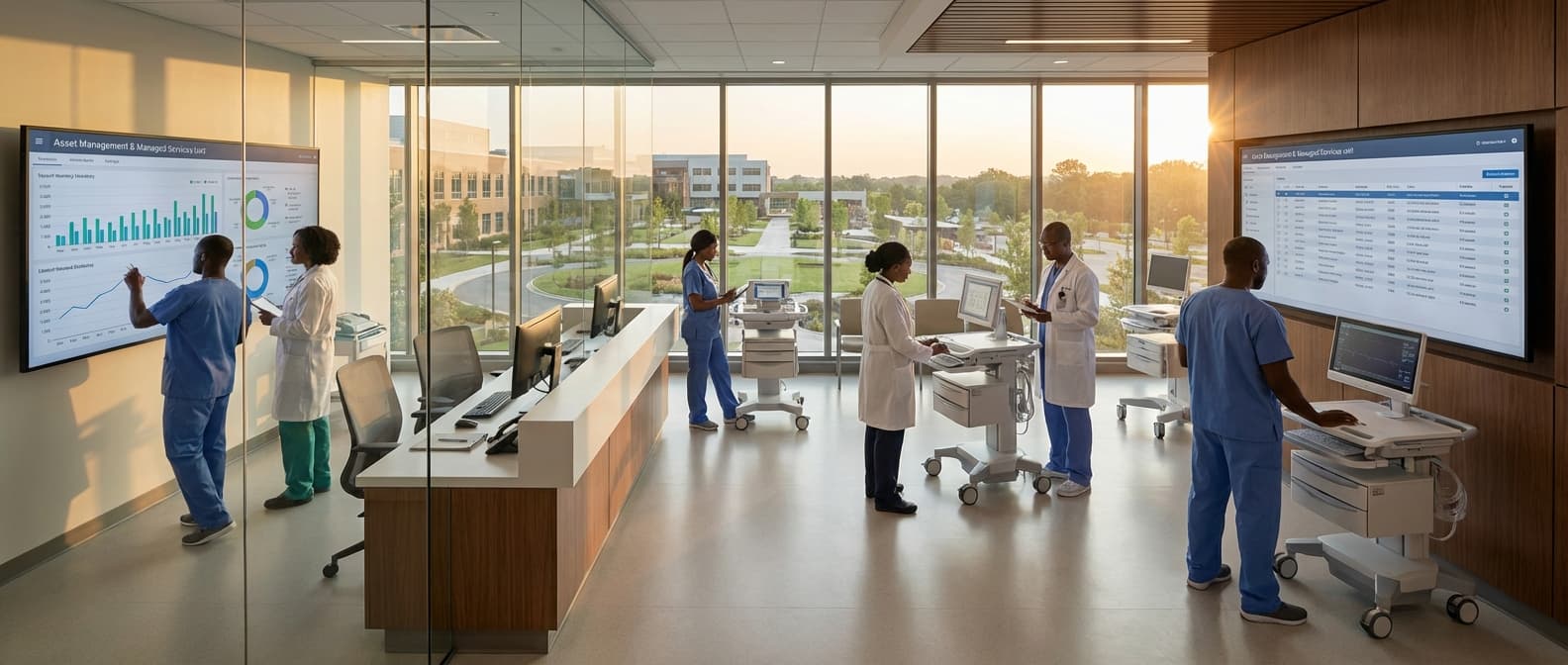
Maintenance KPI Reporting Service (Uptime/MTBF/MTTR) in Angola
Engineering Excellence & Technical Support
Maintenance KPI Reporting Service (Uptime/MTBF/MTTR) High-standard technical execution following OEM protocols and local regulatory frameworks.
Optimized Uptime: Maximizing Operational Availability
Our service provides real-time Uptime tracking and predictive analytics specifically tailored for Angola's industrial landscape. We empower businesses to proactively identify potential downtime causes, optimize maintenance schedules, and significantly boost operational availability, ensuring your critical assets are running when you need them most.
Reduced MTTR: Swift Resolution for Minimized Disruptions
Leveraging advanced diagnostic tools and Angolan-specific service response benchmarks, our platform enables faster Mean Time To Repair (MTTR). We equip your maintenance teams with actionable insights and efficient workflow management, leading to quicker issue resolution and substantially reduced production stoppages.
Enhanced MTBF: Proactive Maintenance for Extended Asset Life
Focus on preventative and predictive maintenance strategies is crucial. Our reporting service analyzes historical Angolan operational data to accurately forecast Mean Time Between Failures (MTBF). This allows for informed, data-driven maintenance interventions, extending the lifespan of your machinery and reducing costly unexpected breakdowns.
What Is Maintenance Kpi Reporting Service (Uptime/mtbf/mttr) In Angola?
Maintenance KPI Reporting Service (Uptime/MTBF/MTTR) in Angola refers to a specialized offering that provides organizations with the systematic collection, analysis, and reporting of key performance indicators (KPIs) related to the maintenance of their assets and infrastructure. The primary KPIs tracked are Uptime (availability), Mean Time Between Failures (MTBF), and Mean Time To Repair (MTTR). This service is crucial for optimizing operational efficiency, reducing downtime, and improving the overall reliability of critical systems and equipment within the Angolan economic landscape. It involves leveraging data from various sources, including Computerized Maintenance Management Systems (CMMS), sensor data from industrial equipment, manual logs, and incident reports. The service typically encompasses data validation, aggregation, statistical analysis, and the generation of actionable reports and dashboards. The objective is to provide stakeholders with clear insights into maintenance effectiveness, identify recurring issues, and support data-driven decision-making for proactive maintenance strategies, resource allocation, and capital expenditure planning.
| KPI | Definition | Significance | Calculation Basis |
|---|---|---|---|
| Uptime (Availability) | The percentage of time an asset or system is operational and available for use. | Measures the reliability and operational readiness of critical assets. High uptime is directly correlated with productivity and revenue generation. | (Total Operational Time - Downtime) / Total Operational Time * 100% |
| Mean Time Between Failures (MTBF) | The average time elapsed between one failure of a repairable system and the commencement of the next failure. It is the reciprocal of failure rate. | Indicates the reliability of a system or component. A higher MTBF suggests greater reliability and fewer unscheduled interruptions. | Total Uptime / Number of Failures |
| Mean Time To Repair (MTTR) | The average time required to repair a failed system or component and restore it to operational status. | Measures the efficiency of the maintenance and repair process. A lower MTTR minimizes the impact of downtime on operations. | Total Downtime / Number of Repairs |
Key Components of Maintenance KPI Reporting Service (Uptime/MTBF/MTTR) in Angola:
- Data Acquisition and Integration: Establishing robust mechanisms for collecting maintenance-related data from diverse sources.
- KPI Calculation and Analysis: Accurately computing Uptime, MTBF, MTTR, and potentially other relevant maintenance metrics.
- Reporting and Visualization: Developing clear, concise, and visually intuitive reports and dashboards for various stakeholder levels.
- Root Cause Analysis (RCA) Support: Facilitating the identification of underlying causes for failures and downtime.
- Benchmarking and Trend Analysis: Comparing performance against historical data, industry standards, and peer organizations.
- Recommendations and Actionable Insights: Translating data into practical suggestions for improvement.
- System Configuration and Customization: Tailoring the reporting framework to specific organizational needs and asset types.
Who Needs Maintenance Kpi Reporting Service (Uptime/mtbf/mttr) In Angola?
In Angola, businesses across various sectors recognize the critical importance of maintaining operational efficiency and minimizing downtime. A robust maintenance KPI reporting service, focusing on Uptime, Mean Time Between Failures (MTBF), and Mean Time To Repair (MTTR), is essential for organizations aiming to optimize their asset performance, reduce costs, and ensure customer satisfaction. This service provides data-driven insights into maintenance effectiveness, enabling proactive strategies and informed decision-making.
| Industry Sector | Target Companies/Organizations | Key Departments Benefiting |
|---|---|---|
| Oil & Gas | Petroleum Exploration and Production Companies, Refineries, Midstream Operators | Operations, Maintenance, Reliability Engineering, Asset Management |
| Mining | Diamond, Iron Ore, Manganese, and other mineral extraction companies | Production, Maintenance & Reliability, Engineering, Operations Management |
| Power Generation & Utilities | National Power Utility, Independent Power Producers, Water and Sanitation Boards | Operations, Plant Management, Maintenance, Technical Services |
| Telecommunications | Mobile Network Operators, Internet Service Providers | Network Operations Center (NOC), Field Maintenance, Engineering, Infrastructure Management |
| Manufacturing | Food & Beverage, Cement, Textiles, Automotive Assembly Plants | Production, Plant Management, Maintenance, Quality Control |
| Transportation & Logistics | Airports, Ports, Railway Operators, Fleet Management Companies | Operations, Maintenance, Engineering, Asset Management |
| Healthcare | Hospitals and large medical facilities with critical equipment (e.g., MRI machines, X-ray units) | Biomedical Engineering, Facilities Management, Operations |
Target Customers in Angola
- Large industrial enterprises with extensive plant and machinery.
- Companies with critical infrastructure requiring continuous operation.
- Organizations seeking to improve their competitive advantage through operational excellence.
- Businesses with remote or geographically dispersed assets.
- Government and public utility entities responsible for essential services.
Maintenance Kpi Reporting Service (Uptime/mtbf/mttr) Process In Angola
This document outlines the workflow for the Maintenance KPI Reporting Service (Uptime, MTBF, MTTR) in Angola, detailing the process from initial client inquiry through the successful execution and delivery of reports. The service aims to provide actionable insights into asset reliability and maintenance effectiveness for organizations operating in Angola.
| Phase | Step | Description | Key Activities | Deliverables/Outcomes | Responsible Parties | Timeframe (Typical) |
|---|---|---|---|---|---|---|
| 1.1 Initial Contact & Inquiry | The client expresses interest in the Maintenance KPI Reporting Service. | Contacting the service provider via phone, email, or web form. Discussing general needs and service offerings. | Initial understanding of client requirements, contact details. | Client, Service Provider Sales/Business Development | 1-3 Business Days |
| 1.2 Needs Assessment & Scoping Meeting | Detailed understanding of the client's specific operational context, assets, current data collection methods, and reporting needs. | On-site or virtual meeting. Discussing specific assets, data sources, desired KPIs, reporting frequency, and existing challenges. | Detailed scope of work document, understanding of data availability and quality. | Client Stakeholders (Operations, Maintenance), Service Provider Technical & Business Development | 3-7 Business Days | |
| 1.3 Proposal Generation & Negotiation | Developing a tailored proposal outlining the service offering, methodology, timelines, costs, and terms. | Creating a formal proposal. Presenting the proposal to the client. Negotiating terms and pricing. | Formal Proposal, Agreement on Scope and Commercial Terms. | Service Provider Sales & Management, Client Procurement & Management | 5-10 Business Days | |
| 2.1 Contract Signing & Project Kick-off | Formalizing the agreement and initiating the project. | Signing the service agreement. Holding a project kick-off meeting with the core project team. | Signed Contract, Project Team established, initial project plan. | Service Provider Project Management, Client Management | 2-5 Business Days |
| 2.2 Data Source Identification & Access | Identifying and gaining access to all relevant data sources required for KPI calculation. | Mapping existing data sources (e.g., CMMS, SCADA, ERP, manual logs). Establishing secure data access protocols. | List of confirmed data sources, access credentials/permissions granted. | Service Provider Data Engineers, Client IT & Maintenance Departments | 5-15 Business Days | |
| 2.3 Data Integration & Validation Strategy | Developing a plan for integrating data from various sources and ensuring its accuracy and completeness. | Defining data transformation rules. Planning data validation checks. Setting up data connectors or manual upload procedures. | Data integration plan, data validation protocols. | Service Provider Data Engineers & Analysts, Client Data Stewards | 5-10 Business Days | |
| 3.1 Data Extraction & Ingestion | Collecting raw data from identified sources. | Automated data extraction scripts, manual data uploads as per plan. Data ingestion into the reporting platform. | Raw data loaded into the reporting environment. | Service Provider Data Engineers | Ongoing (Daily/Weekly/Monthly, depending on data frequency) |
| 3.2 Data Cleaning & Transformation | Processing raw data to ensure it is in a usable format for KPI calculation. | Handling missing values, correcting errors, standardizing formats, and aggregating data as needed. | Cleaned and transformed dataset ready for analysis. | Service Provider Data Engineers & Analysts | Ongoing (Concurrent with ingestion) | |
| 3.3 KPI Calculation | Calculating the agreed-upon Maintenance KPIs (Uptime, MTBF, MTTR) based on the cleaned data. | Applying formulas and algorithms to derive KPI values for specified assets and time periods. | Calculated KPI values. | Service Provider Data Analysts | Ongoing (Concurrent with cleaning/transformation) | |
| 4.1 Report Generation | Creating standardized and/or custom reports visualizing the calculated KPIs. | Generating dashboards, tables, charts, and written summaries within the reporting platform or in requested formats (e.g., PDF, Excel). | Draft KPI reports and dashboards. | Service Provider Data Analysts & Report Developers | As per agreed reporting frequency (e.g., Weekly, Monthly, Quarterly) |
| 4.2 Performance Review & Insights | Analyzing the KPI data to identify trends, anomalies, and areas for improvement. | Interpreting KPI trends, identifying root causes of failures, highlighting performance deviations, and providing actionable recommendations. | Key insights, performance trends, and initial recommendations. | Service Provider Analysts & Maintenance Specialists | Concurrent with report generation | |
| 4.3 Report Delivery & Presentation | Delivering the generated reports and presenting the findings to the client. | Distributing reports via email, secure portal, or presenting them in a review meeting. Answering client queries. | Final KPI Reports, Presentation of Findings. | Service Provider Project Manager & Analysts, Client Stakeholders | As per reporting schedule | |
| 5.1 Feedback Collection | Gathering feedback from the client on the reports and service delivery. | Formal feedback surveys, informal discussions during review meetings. | Client feedback on report clarity, accuracy, and relevance. | Client Stakeholders, Service Provider Project Manager | Ongoing |
| 5.2 Service Refinement | Using client feedback and performance data to improve the reporting process and service offering. | Adjusting data collection methods, report formats, analysis techniques, or KPI definitions. | Improved data quality, more insightful reports, enhanced client satisfaction. | Service Provider Project Management & Technical Team | Ongoing | |
| 5.3 Ongoing Support & Maintenance | Providing continuous support for the reporting service and addressing any technical issues. | Troubleshooting data integration problems, updating reporting tools, and addressing client queries. | Sustained service availability and client satisfaction. | Service Provider Support Team & Data Engineers | Ongoing |
Key Maintenance KPIs Explained
- Uptime: The percentage of time an asset or system is operational and available for use.
- MTBF (Mean Time Between Failures): The average time an asset or system operates successfully between breakdowns.
- MTTR (Mean Time To Repair): The average time it takes to repair a failed asset or system and return it to operational status.
Maintenance Kpi Reporting Service (Uptime/mtbf/mttr) Cost In Angola
The cost of a Maintenance KPI Reporting Service focused on Uptime, Mean Time Between Failures (MTBF), and Mean Time To Repair (MTTR) in Angola can vary significantly based on several factors. These services are crucial for businesses to understand and improve their operational efficiency, minimize downtime, and optimize maintenance strategies. The pricing will be influenced by the complexity of the systems being monitored, the volume of data, the required level of customization, the reporting frequency, and the expertise of the service provider.
| Service Type/Complexity | Estimated Monthly Cost (AOA - Angolan Kwanza) | Notes |
|---|---|---|
| Basic Uptime Monitoring & Reporting | 150,000 - 300,000 | Covers simple asset monitoring with standard reports on operational status and basic downtime events. Suitable for smaller operations or non-critical assets. |
| Standard MTBF/MTTR Reporting | 300,000 - 750,000 | Includes detailed analysis of failure rates and repair times. Requires more data collection and processing. May involve integration with basic CMMS. |
| Advanced Integrated KPI Reporting (Uptime, MTBF, MTTR) | 750,000 - 2,000,000+ | Comprehensive service with deep integration into existing systems, custom dashboards, predictive analytics capabilities, and detailed trend analysis. Suited for large-scale industrial operations with critical assets. |
| Customized Solutions & Consulting | 1,000,000 - 5,000,000+ (initial setup & ongoing) | Highly tailored solutions, including bespoke report development, strategic maintenance planning, and specialized data analysis. Costs will be project-dependent. |
| Initial Setup & Integration Fee | 500,000 - 3,000,000+ | A one-time fee for system installation, configuration, and integration with client systems. Varies greatly with complexity. |
Key Pricing Factors for Maintenance KPI Reporting Services in Angola:
- Scope of Service: The number of assets or systems being monitored and the granularity of the data collected will directly impact costs.
- Data Integration Complexity: Integrating with existing SCADA, ERP, or other maintenance management systems can add to the initial setup cost.
- Reporting Frequency and Depth: Daily, weekly, monthly, or quarterly reports, along with the level of detail and analysis provided, will affect pricing.
- Customization Requirements: Tailoring reports, dashboards, and alerts to specific business needs will incur additional costs.
- Technology and Software: The underlying software platform used for data collection, analysis, and reporting, including any licensing fees, is a significant factor.
- Provider Expertise and Reputation: Established providers with proven track records and specialized knowledge in industrial maintenance in Angola may command higher fees.
- Level of Support: The availability and responsiveness of technical support, including on-site assistance, will influence the overall cost.
- Data Volume and Storage: The amount of historical data to be stored and analyzed can impact infrastructure and service costs.
- Geographic Coverage: While the focus is Angola, if the service needs to cover multiple sites within the country, this could affect pricing.
- Onboarding and Training: The effort required to onboard the client and train their personnel on using the reporting system.
- Service Level Agreements (SLAs): Guarantees on reporting accuracy, uptime of the reporting system, and response times can affect pricing.
- Consulting and Advisory Services: Beyond basic reporting, if the service includes proactive recommendations and strategic maintenance advice, costs will increase.
Affordable Maintenance Kpi Reporting Service (Uptime/mtbf/mttr) Options
We offer a comprehensive and affordable KPI reporting service focused on critical maintenance metrics: Uptime, Mean Time Between Failures (MTBF), and Mean Time To Repair (MTTR). Our service leverages data-driven insights to help you optimize your maintenance operations, reduce downtime, and extend the life of your assets, ultimately leading to significant cost savings. We understand that budget is a key consideration, so we've structured our offerings into flexible value bundles and incorporated cost-saving strategies throughout our service delivery.
| Value Bundle | Key Features | Ideal For | Estimated Starting Price (Monthly) |
|---|---|---|---|
| Bronze | Automated Monthly KPI Reports (Uptime, MTBF, MTTR) | Small businesses, initial KPI adoption | $150 |
| Silver | Bronze features + Basic Trend Analysis, Top Failure Identification, Quarterly Reviews | Medium-sized businesses, proactive monitoring | $400 |
| Gold | Silver features + Advanced Root Cause Analysis, Predictive Insights, Monthly Strategic Reviews, Proactive Alerts | Large enterprises, strategic maintenance optimization | $800+ |
Cost-Saving Strategies Integrated into Our Service
- Automated Data Collection & Reporting: Minimizes manual effort and reduces the risk of human error, saving your team valuable time.
- Early Detection of Issues: By tracking MTBF and Uptime, we help identify potential problems before they lead to costly catastrophic failures.
- Optimized Repair Processes: Focusing on MTTR allows us to identify bottlenecks in your repair workflow and suggest improvements, reducing labor and part costs associated with downtime.
- Data-Driven Decision Making: Our reports provide clear insights into asset performance, enabling you to allocate maintenance resources more effectively and prioritize repairs that yield the highest ROI.
- Reduced Unplanned Downtime: This is the most significant cost saver. By improving reliability (higher MTBF) and repair speed (lower MTTR), we directly impact your bottom line by minimizing lost production.
- Scalable Service: Our tiered approach allows you to choose the level of service that best fits your current budget and needs, with the option to scale up as your organization grows.
- Focus on Actionable Insights: We don't just provide data; we provide recommendations that are practical and designed to deliver tangible cost savings.
Verified Providers In Angola
In Angola, access to reliable healthcare is paramount. When seeking medical services, identifying 'Verified Providers' offers a crucial layer of assurance. Franance Health has emerged as a leader in this space, not only by meeting stringent verification criteria but by consistently exceeding expectations in patient care and operational integrity. This document outlines what makes Franance Health a distinguished verified provider and why they represent the best choice for your healthcare needs in Angola.
| Franance Health's Commitment | Why it Matters to Patients | Demonstrable Evidence |
|---|---|---|
| Highly Qualified Medical Staff: Franance Health employs a team of experienced and specialized doctors, nurses, and support staff, many with international training and experience. | Ensures you receive expert diagnosis and treatment from professionals you can trust. | Verified credentials, professional licenses displayed, and a track record of positive patient outcomes. |
| Advanced Diagnostic and Treatment Technologies: Investment in modern medical equipment, including advanced imaging, laboratory services, and surgical tools. | Leads to more accurate diagnoses, less invasive procedures, and faster recovery times. | Regular equipment maintenance logs, partnerships with reputable medical technology suppliers, and patient testimonials on treatment effectiveness. |
| Comprehensive Range of Services: Offering a wide spectrum of medical specializations, from primary care to specialized surgeries and chronic disease management. | Provides a one-stop solution for diverse healthcare needs, reducing the need for referrals to multiple facilities. | Detailed service catalog, clear departmental structures, and patient feedback on accessibility of various medical specialties. |
| Stringent Infection Control and Patient Safety: Implementation of rigorous protocols for hygiene, sterilization, and patient care to minimize risks. | Guarantees a safe and secure environment for your treatment and recovery. | Audited infection control reports, adherence to international safety standards, and absence of preventable adverse events. |
| Patient-Centric Approach and Transparent Communication: Prioritizing patient comfort, clear communication about treatment plans, and accessibility for inquiries. | Empowers you with knowledge about your health and ensures a positive and reassuring healthcare experience. | Patient feedback surveys, accessible patient relations department, and clear billing and explanation of services. |
Key Credentials and Distinctions of Verified Providers like Franance Health:
- Regulatory Compliance: Adherence to all national health regulations and licensing requirements set by the Angolan Ministry of Health.
- Quality Assurance Standards: Implementation of robust internal quality management systems, often aligned with international best practices.
- Professional Accreditation: Doctors, nurses, and allied health professionals hold valid certifications and are members of recognized professional bodies.
- Infrastructure and Equipment: Maintaining state-of-the-art facilities and modern medical equipment to ensure accurate diagnostics and effective treatments.
- Patient Safety Protocols: Strict adherence to infection control measures, patient identification procedures, and medication safety guidelines.
- Ethical Practice: Commitment to transparent pricing, patient confidentiality, and non-discriminatory healthcare delivery.
- Continuous Professional Development: Encouraging and facilitating ongoing training and education for all healthcare personnel.
Scope Of Work For Maintenance Kpi Reporting Service (Uptime/mtbf/mttr)
This Scope of Work (SOW) outlines the services to be provided for a Maintenance KPI Reporting Service, focusing on Uptime, Mean Time Between Failures (MTBF), and Mean Time To Repair (MTTR). The service will involve the collection, analysis, and reporting of maintenance data to provide actionable insights for improving operational efficiency and asset reliability.
| Deliverable | Description | Standard Specifications / Format | Frequency | Acceptance Criteria |
|---|---|---|---|---|
| Data Collection & Validation Report | Details on the process of gathering maintenance data from various sources (e.g., CMMS, sensors) and the steps taken to ensure data accuracy and completeness. | Text-based report. Includes data sources, validation rules applied, and any data quality issues identified. | Weekly | Data collection process documented and validated. Data quality metrics meet predefined thresholds (e.g., >98% accuracy). |
| Uptime KPI Report | Analysis of asset uptime, including trends, influencing factors, and identification of assets with consistently low uptime. | PDF or Interactive Dashboard (e.g., Power BI, Tableau). Includes charts, graphs, and summary statistics for Uptime percentage per asset/asset group. Time period covered clearly indicated. | Monthly | Uptime calculations are accurate and align with agreed-upon definitions. Trends are clearly presented and supported by data. |
| MTBF KPI Report | Analysis of Mean Time Between Failures for assets, highlighting reliability trends and identifying common failure modes. | PDF or Interactive Dashboard. Includes charts, graphs, and summary statistics for MTBF per asset/asset group. Time period covered clearly indicated. | Monthly | MTBF calculations are accurate and align with agreed-upon definitions. Failure modes are identified and quantified where possible. |
| MTTR KPI Report | Analysis of Mean Time To Repair for assets, identifying bottlenecks in the repair process and opportunities for faster resolution. | PDF or Interactive Dashboard. Includes charts, graphs, and summary statistics for MTTR per asset/asset group. Time period covered clearly indicated. | Monthly | MTTR calculations are accurate and align with agreed-upon definitions. Key contributors to high MTTR are identified. |
| Consolidated KPI Dashboard | An integrated view of Uptime, MTBF, and MTTR, along with any other agreed-upon supporting metrics. Designed for executive-level understanding and quick decision-making. | Interactive web-based dashboard accessible via a secure URL. Real-time or near real-time data refresh. Customizable views and drill-down capabilities. | Daily (data refresh) / Monthly (major updates/reviews) | Dashboard is functional and accessible. Data presented is accurate and up-to-date. Key trends and anomalies are easily identifiable. |
| Root Cause Analysis (RCA) Support | Providing data and insights to support investigations into significant equipment failures and recurring issues impacting KPIs. | Ad-hoc reports, data extracts, and consultation. Specific to the failure event being investigated. | As required | Data provided is relevant and assists in identifying root causes of failures. |
| Annual KPI Performance Review | A comprehensive review of the year's KPI performance, highlighting achievements, challenges, and recommendations for continuous improvement. | Presentation (e.g., PowerPoint) and accompanying detailed report. Includes year-over-year comparisons and strategic recommendations. | Annually | Review accurately reflects annual performance and provides actionable recommendations for improvement. |
Key Performance Indicators (KPIs)
- Uptime: The percentage of time an asset is operational and available for use.
- Mean Time Between Failures (MTBF): The average time an asset operates between breakdowns.
- Mean Time To Repair (MTTR): The average time it takes to repair a failed asset and return it to operational status.
Service Level Agreement For Maintenance Kpi Reporting Service (Uptime/mtbf/mttr)
This Service Level Agreement (SLA) outlines the terms and conditions under which [Your Company Name] will provide the Maintenance KPI Reporting Service to [Client Name]. This service focuses on reporting key performance indicators related to maintenance operations, specifically Uptime, Mean Time Between Failures (MTBF), and Mean Time To Repair (MTTR). The SLA defines guaranteed response times for critical issues and establishes uptime guarantees for the reporting service itself.
| Incident Severity | Response Time (Max) | Target Resolution Time (Max) |
|---|---|---|
| Critical Incident | 15 minutes | 4 hours |
| Major Incident | 1 hour | 8 hours |
| Minor Incident | 4 business hours | 24 business hours |
Service Level Agreement for Maintenance KPI Reporting Service
- 1. Definitions:
- Uptime: The percentage of time the Maintenance KPI Reporting Service is available and operational.
- MTBF (Mean Time Between Failures): The average time elapsed between inherent failures of a system during normal operation. For this SLA, it refers to the reporting service's availability to process and present data.
- MTTR (Mean Time To Repair): The average time taken to repair a system after a failure. For this SLA, it refers to the time taken to restore the reporting service to full operational status after an outage.
- Downtime: The period during which the Maintenance KPI Reporting Service is unavailable or not functioning correctly.
- Critical Incident: An event that significantly impairs the functionality of the Maintenance KPI Reporting Service, preventing the reporting of Uptime, MTBF, or MTTR data.
- Major Incident: An event that impairs a significant portion of the Maintenance KPI Reporting Service, but some reporting may still be possible.
- Minor Incident: An event that has a minimal impact on the Maintenance KPI Reporting Service and does not prevent the reporting of key KPIs.
- Response Time: The maximum time allowed from the moment a support request is initiated to the moment [Your Company Name] acknowledges and begins actively working on the issue.
- Resolution Time: The maximum time allowed from the moment a support request is initiated to the moment the issue is resolved and the Maintenance KPI Reporting Service is fully operational.
- 2. Service Availability (Uptime Guarantee):
- [Your Company Name] guarantees a minimum monthly Uptime of 99.9% for the Maintenance KPI Reporting Service.
- Uptime is calculated based on the total minutes in a calendar month, excluding scheduled maintenance windows.
- Scheduled maintenance will be communicated to [Client Name] at least 48 hours in advance and will be performed during off-peak hours whenever possible.
- 3. Performance Metrics (MTBF/MTTR for the Service):
- While the service reports on MTBF and MTTR for the client's systems, this SLA addresses the MTTR of the reporting service itself in case of an outage.
- 4. Response Times and Resolution Times:
- Critical Incident:
* **Response Time:** Within **15 minutes** of notification.* **Target Resolution Time:** Within **4 hours** of notification.- Major Incident:
* **Response Time:** Within **1 hour** of notification.* **Target Resolution Time:** Within **8 hours** of notification.- Minor Incident:
* **Response Time:** Within **4 business hours** of notification.* **Target Resolution Time:** Within **24 business hours** of notification.- Definition of Business Hours: Monday to Friday, 9:00 AM to 5:00 PM [Client's Time Zone], excluding public holidays.
- 5. Incident Reporting and Communication:
- [Client Name] will report incidents to [Your Company Name] via [Specify Method, e.g., dedicated support portal, email address, phone number].
- [Your Company Name] will acknowledge receipt of the incident and provide regular status updates during the resolution process.
- 6. Exclusions:
- This SLA does not cover issues arising from:
* Client's network infrastructure or connectivity problems.* Third-party service outages beyond [Your Company Name]'s control.* Misuse or unauthorized modifications of the Maintenance KPI Reporting Service.* Force majeure events.- 7. Service Credits (Optional - Add if applicable):
- If the guaranteed Uptime is not met in a given month, [Client Name] may be eligible for service credits as detailed in [Reference separate Service Credit Policy or Annex].
- 8. Review and Amendments:
- This SLA will be reviewed on a [Frequency, e.g., quarterly, annual] basis and may be amended by mutual written agreement between [Your Company Name] and [Client Name].
Frequently Asked Questions

Ready when you are
Let's scope your Maintenance KPI Reporting Service (Uptime/MTBF/MTTR) in Angola project in Angola.

Scaling healthcare logistics and technical systems across the entire continent.