
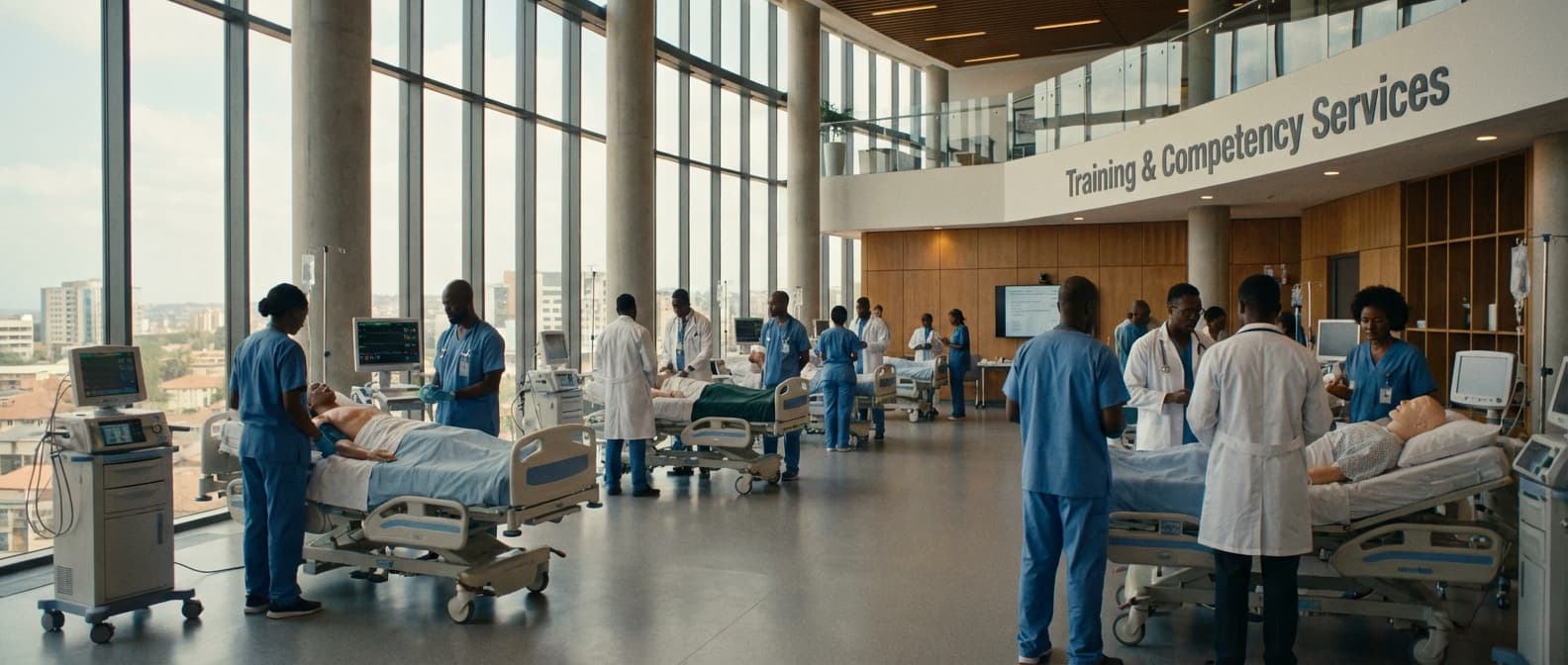
Ventilator User Training Service (Nurses) in Algeria
Engineering Excellence & Technical Support
Ventilator User Training Service (Nurses) High-standard technical execution following OEM protocols and local regulatory frameworks.
Mastering Ventilation Modes
Gain expert proficiency in operating various advanced ventilation modes (e.g., SIMV, BiPAP, Pressure Support) tailored to diverse patient conditions common in Algerian healthcare settings. Understand the physiological basis and practical application of each mode for optimal patient outcomes.
Advanced Patient Monitoring & Alarms
Develop critical skills in interpreting real-time ventilator waveforms and key parameters. Learn to proactively identify and respond to critical alarm situations, ensuring patient safety and timely intervention in the Algerian clinical environment.
Troubleshooting & Equipment Maintenance
Enhance your ability to diagnose and resolve common ventilator malfunctions and circuit issues encountered in Algerian hospitals. Understand basic preventive maintenance procedures to ensure reliable equipment performance and minimize downtime.
What Is Ventilator User Training Service (Nurses) In Algeria?
Ventilator User Training Service (Nurses) in Algeria refers to a specialized educational program designed to equip registered nurses with the knowledge and practical skills required for the safe and effective operation of mechanical ventilators within the Algerian healthcare system. This service is crucial for ensuring patient safety, optimizing ventilation strategies, and minimizing potential complications associated with mechanical ventilation. The training focuses on understanding ventilator principles, patient assessment, setting appropriate parameters, monitoring patient response, troubleshooting common issues, and managing emergent situations. It is typically delivered through a combination of theoretical lectures, hands-on simulations using actual or simulated ventilator equipment, case study analyses, and competency assessments. The objective is to empower nurses to independently manage ventilated patients under the guidance of physicians, thereby enhancing the quality of critical care services.
| Who Needs the Service | Typical Use Cases | Training Modalities |
|---|---|---|
| Registered Nurses working in Intensive Care Units (ICUs), Emergency Departments (EDs), Operating Rooms (ORs), and Post-Anesthesia Care Units (PACUs) in Algerian hospitals and healthcare facilities. | Management of patients with acute respiratory failure (e.g., ARDS, pneumonia, COPD exacerbations, post-surgical respiratory distress). | Classroom-based lectures, online modules, simulation labs, hands-on practice with ventilators, case study discussions. |
| Nurses transitioning to critical care roles or units where mechanical ventilation is frequently utilized. | Cardiopulmonary resuscitation (CPR) and advanced cardiovascular life support (ACLS) scenarios requiring respiratory support. | Competency-based assessments, practical examinations, and ongoing professional development. |
| Nurses involved in the transport of critically ill patients requiring mechanical ventilation. | Patients undergoing sedation and requiring mechanical ventilation for airway protection or respiratory support. | Certification or re-certification requirements for critical care nursing specializations. |
Key Components of Ventilator User Training Service (Nurses) in Algeria:
- Principles of Mechanical Ventilation: Understanding the physiological basis of ventilation, lung mechanics, and gas exchange.
- Ventilator Modes and Settings: Comprehensive knowledge of different ventilation modes (e.g., Volume Control, Pressure Control, SIMV, PSV) and their appropriate settings based on patient condition.
- Patient Assessment and Monitoring: Skills in assessing respiratory status, vital signs, and interpreting hemodynamic and respiratory parameters.
- Ventilator Setup and Management: Practical proficiency in connecting the ventilator to the patient, initiating ventilation, and making adjustments to prescribed settings.
- Troubleshooting and Alarm Management: Ability to identify and resolve common ventilator malfunctions and alarms.
- Weaning from Mechanical Ventilation: Understanding the principles and protocols for gradual withdrawal of ventilatory support.
- Infection Control and Hygiene: Adherence to protocols for preventing ventilator-associated pneumonia (VAP) and maintaining aseptic techniques.
- Emergency Management: Protocols for managing critical events such as respiratory arrest, tension pneumothorax, and equipment failure.
- Ethical and Legal Considerations: Awareness of patient rights, informed consent, and documentation requirements related to mechanical ventilation.
Who Needs Ventilator User Training Service (Nurses) In Algeria?
This document outlines the essential need for Ventilator User Training Services specifically for nurses in Algeria. Effective and safe operation of ventilators is critical for patient care in various medical settings. Nurses are at the forefront of patient monitoring and intervention, making comprehensive training on ventilator operation, troubleshooting, and patient management indispensable. This training ensures optimal patient outcomes, reduces the risk of complications, and promotes efficient use of this life-saving equipment.
| Customer Type | Department/Specialty | Reason for Training |
|---|---|---|
| Registered Nurses | ICU/Réanimation | Direct management and monitoring of critically ill patients requiring mechanical ventilation. |
| Licensed Practical Nurses | General Wards/Step-down Units | Assisting with basic ventilator settings, monitoring, and patient comfort under RN supervision. |
| Critical Care Nurses | ICU/Réanimation, PICU/Pédiatrie Réanimation, NICU/Néonatologie | Advanced knowledge of ventilator modes, weaning protocols, troubleshooting, and managing complex ventilatory scenarios. |
| Anesthesiology Nurses | Anesthésie-Réanimation, PACU/SSPI | Peri-operative management, initial ventilator setup, and monitoring during and after surgical procedures. |
| Emergency Room Nurses | Urgences | Rapid assessment and initiation of mechanical ventilation for acute respiratory failure. |
| Nurse Supervisors/Educators | All Relevant Departments | To train and assess other nurses, develop training protocols, and ensure competency standards are met. |
| Newly Graduated Nurses | Entry-level positions in critical care | To build fundamental skills and confidence in operating and monitoring ventilators. |
| Nurses in Public Hospitals | Nationwide ICUs/Emergency Departments | To ensure consistent high standards of care across all public healthcare facilities. |
| Nurses in Private Clinics | Specialized respiratory care units | To provide advanced and specialized ventilator management for a diverse patient population. |
Target Customers and Departments for Ventilator User Training Service (Nurses) in Algeria:
- Target Customers:
- Registered Nurses
- Licensed Practical Nurses
- Critical Care Nurses
- Anesthesiology Nurses
- Emergency Room Nurses
- Respiratory Therapists (often working alongside nurses)
- Nurse Supervisors and Educators
- Newly graduated nurses requiring foundational skills
- Experienced nurses transitioning to critical care roles
- Nurses working in public and private healthcare facilities
- Nurses in regions with high patient loads or specific respiratory disease prevalence
- Target Departments:
- Intensive Care Units (ICUs) / Réanimation
- Neonatal Intensive Care Units (NICUs) / Néonatologie
- Pediatric Intensive Care Units (PICUs) / Pédiatrie Réanimation
- Anesthesiology Departments / Anesthésie-Réanimation
- Emergency Departments / Urgences
- Respiratory Care Units / Pneumologie (especially those managing ventilated patients)
- Post-Anesthesia Care Units (PACUs) / Salle de Surveillance Post-Interventionnelle (SSPI)
- Internal Medicine Departments (managing complex respiratory cases)
- Surgical Departments (post-operative ventilation management)
Ventilator User Training Service (Nurses) Process In Algeria
This document outlines the workflow for the Ventilator User Training Service for Nurses in Algeria, detailing the process from initial inquiry to the successful execution of the training. This service aims to equip nurses with the necessary skills and knowledge to safely and effectively operate ventilators in clinical settings across Algeria.
| Phase | Key Activities | Responsible Parties |
|---|---|---|
| Inquiry and Needs Assessment | Initial contact, information gathering, understanding training needs. | Healthcare Facility/Nurses, Training Provider |
| Proposal and Agreement | Developing training proposal, negotiation, signing contract. | Training Provider, Healthcare Facility |
| Preparation and Logistics | Curriculum finalization, trainer assignment, material preparation, venue/equipment confirmation, participant registration. | Training Provider, Healthcare Facility |
| Training Execution | Theoretical sessions, hands-on practicals, case studies, Q&A. | Training Provider (Trainers), Nurses (Participants) |
| Evaluation and Certification | Formal assessment, performance review, issuance of certificates. | Training Provider (Trainers), Nurses (Participants) |
| Follow-up and Quality Assurance | Program evaluation, reporting, record keeping, continuous improvement. | Training Provider, Healthcare Facility |
Ventilator User Training Service (Nurses) Process in Algeria
- {"items":["Initial Inquiry: Healthcare facilities (hospitals, clinics, training centers) or individual nurses express interest in ventilator user training.","Contact Establishment: Designated contact person(s) from the inquiring entity reach out to the training service provider (e.g., via email, phone, or designated portal).","Information Gathering: The training provider gathers essential details, including the number of nurses to be trained, their current skill level, specific ventilator models to be covered, preferred training dates, and location (on-site at the facility or at a designated training center).","Needs Assessment: A more in-depth discussion might occur to understand specific training needs, any prior experience with ventilators, and the clinical context in which nurses will be using the equipment. This could involve a questionnaire or a brief interview."],"title":"Phase 1: Inquiry and Needs Assessment"}
- {"items":["Proposal Development: Based on the inquiry and needs assessment, the training provider prepares a detailed training proposal. This includes the curriculum, learning objectives, duration of training, methodologies (lectures, hands-on sessions, simulations), trainer qualifications, equipment requirements, and cost breakdown.","Proposal Review and Negotiation: The healthcare facility reviews the proposal. Discussions may occur to clarify aspects, adjust the content, or negotiate terms and pricing.","Formal Agreement/Contract: Once mutually agreed upon, a formal training agreement or contract is signed by both parties, outlining the scope of work, responsibilities, payment schedule, and cancellation policies."],"title":"Phase 2: Proposal and Agreement"}
- {"items":["Curriculum Customization (if applicable): Minor adjustments to the curriculum might be made based on specific facility requirements or identified needs.","Trainer Assignment: Qualified and experienced trainers are assigned to the specific training program.","Training Material Preparation: Training manuals, presentations, case studies, and assessment tools are prepared or finalized.","Equipment and Venue Confirmation: For on-site training, the facility confirms the availability of suitable training rooms, power supply, and access to the actual ventilator models to be used. For off-site training, the training provider secures the venue and ensures the availability of necessary equipment (ventilators, manikins, simulation software).","Participant Registration: The healthcare facility provides a list of registered nurses to participate in the training.","Scheduling Confirmation: Final confirmation of training dates, times, and location is communicated to all stakeholders."],"title":"Phase 3: Preparation and Logistics"}
- {"items":["Onboarding and Introduction: The training commences with an introduction to the program, its objectives, and the trainers.","Theoretical Sessions: Lectures cover ventilator principles, modes of ventilation, patient assessment, troubleshooting, alarms, and infection control measures.","Hands-on Practical Sessions: Nurses engage in practical exercises using actual ventilator units or high-fidelity simulators. This includes setting up the ventilator, initiating ventilation, adjusting parameters, responding to alarms, and managing common complications.","Case Study Analysis and Discussions: Real-world scenarios and case studies are used to enhance critical thinking and problem-solving skills.","Q&A and Feedback: Ample opportunities are provided for nurses to ask questions and receive clarification. Trainers actively solicit feedback throughout the sessions.","Skill Assessment: Throughout the training, trainers observe and assess the nurses' practical skills. This might involve checklists and direct observation."],"title":"Phase 4: Training Execution"}
- {"items":["Formal Assessment: A formal assessment, which may include a written test and a practical skills evaluation, is conducted to gauge the nurses' understanding and competency.","Performance Review: Trainers review the assessment results and provide individual feedback to the nurses.","Certification Issuance: Upon successful completion of the training and passing the assessment, participants are issued a certificate of completion. This certificate usually indicates the type of training and the duration.","Post-Training Support (optional): Some programs offer limited post-training support, such as access to online resources or a helpline for initial queries."],"title":"Phase 5: Evaluation and Certification"}
- {"items":["Program Evaluation: The training provider collects feedback from both the nurses and the participating facility to evaluate the effectiveness of the training program and identify areas for improvement.","Reporting: A summary report of the training, including attendance and assessment results, might be provided to the healthcare facility.","Record Keeping: Training records, including participant lists and certification details, are maintained by the training provider.","Continuous Improvement: Feedback and evaluation data are used to refine training content, methodologies, and delivery for future programs."],"title":"Phase 6: Follow-up and Quality Assurance"}
Ventilator User Training Service (Nurses) Cost In Algeria
This document outlines the estimated costs for Ventilator User Training services specifically for nurses in Algeria. The pricing for such specialized training is influenced by several key factors, leading to a range of potential costs. Understanding these factors is crucial for healthcare facilities to budget effectively. The training aims to equip nurses with the necessary knowledge and practical skills to safely and effectively operate and manage various types of ventilators, ensuring optimal patient care.
| Training Package Description | Estimated Cost Range (Algerian Dinar - DZD) |
|---|---|
| Basic Ventilator User Training (Introduction to principles, basic modes, and emergency procedures) - Typically 1-2 days. | 50,000 - 120,000 DZD |
| Intermediate Ventilator User Training (In-depth on common modes, patient monitoring, weaning principles) - Typically 2-3 days. | 90,000 - 200,000 DZD |
| Advanced Ventilator Management Training (Complex modes, troubleshooting, specific patient populations, ECMO basics) - Typically 3-5 days or modular approach. | 150,000 - 350,000+ DZD |
| Customized Training (Tailored to specific hospital equipment and protocols) - Varies significantly based on scope. | Negotiable, often starting from 100,000 DZD and upwards. |
Factors Influencing Ventilator User Training Costs for Nurses in Algeria
- Trainer Expertise and Qualifications: The experience, certifications, and specialized knowledge of the trainers significantly impact cost. Highly experienced trainers, often with clinical backgrounds in critical care or respiratory therapy, command higher fees.
- Training Duration and Depth: The length of the training program, from basic orientation to advanced management of complex ventilation modes, directly affects the overall price. More comprehensive programs require more time and resources.
- Training Format (On-site vs. Online/Hybrid): On-site training, which typically involves practical, hands-on sessions with actual equipment, is generally more expensive due to travel, accommodation (if applicable), and equipment utilization costs. Online or hybrid formats might offer cost savings but may have limitations for practical skill development.
- Number of Participants: While not always a direct per-person cost, group discounts are common. However, extremely small groups might incur higher per-person rates to cover the trainer's time and resources.
- Type and Number of Ventilators Used for Training: Access to a variety of ventilator models for hands-on practice can increase costs, especially if specialized simulators or specific equipment needs to be sourced. Training on a single, basic model will be less expensive than training on multiple advanced machines.
- Training Materials and Resources: The provision of high-quality training manuals, handouts, assessments, and any simulation equipment will contribute to the overall cost.
- Certification and Assessment: If the training culminates in a formal certification or requires rigorous assessments, this often adds to the price.
- Location within Algeria: Costs can vary slightly between major cities (e.g., Algiers, Oran, Constantine) and more remote areas due to travel and logistical considerations for trainers.
- Provider Reputation and Accreditation: Reputable training providers, especially those accredited by recognized medical or nursing bodies, may charge a premium for their recognized quality and expertise.
Affordable Ventilator User Training Service (Nurses) Options
This document outlines affordable ventilator user training service options specifically designed for nurses. It focuses on maximizing value through bundled services and implementing cost-saving strategies. The goal is to provide comprehensive and accessible training that enhances nursing competency in ventilator management while being budget-conscious.
| Bundle Name | Included Services | Value Proposition | Estimated Cost (per nurse) | Cost-Saving Strategies Employed |
|---|---|---|---|---|
| Foundation Essentials Bundle | Online self-paced modules covering basic principles, modes, assessment, and troubleshooting. Includes downloadable resources and quizzes. | Cost-effective foundational knowledge. Flexible learning at the nurse's own pace. Reduces instructor time. | $75 - $150 | Leverages online learning platforms, bulk licensing for digital materials, minimal instructor-led time. |
| Core Competency Bundle | Includes Foundation Essentials Bundle PLUS: Live virtual instructor-led sessions for Q&A and complex scenarios. Simulated patient case studies. | Builds on foundational knowledge with interactive learning and application. Addresses common clinical challenges. | $150 - $300 | Group virtual sessions reduce per-nurse instructor cost. Digital simulations are more cost-effective than physical mannequins for initial training. |
| Advanced Skills Bundle | Includes Core Competency Bundle PLUS: Hands-on simulation lab session (if available locally or through partnerships). Advanced ventilation techniques and case studies. | Develops practical skills and confidence in managing complex ventilator patients. Provides real-time feedback. | $300 - $500+ | Utilizes existing simulation lab resources or partners with educational institutions. Focuses on essential hands-on skills, avoiding unnecessary advanced modalities for all nurses. |
| Team Training Package | Customizable bundle for entire units or departments. Can include a mix of online, virtual, and on-site training. Focus on interdisciplinary communication and teamwork. | Ensures consistent knowledge and practice across teams. Promotes collaborative patient care. Bulk discounts available. | Varies based on scope and number of nurses | Bulk purchasing discounts. On-site training can be more efficient for larger groups. Tailored content reduces wasted training time. |
Key Training Components
- Basic Ventilator Principles and Settings
- Common Ventilator Modes and Indications
- Patient Assessment and Monitoring
- Troubleshooting and Alarms
- Weaning Strategies
- Infection Control and Safety Protocols
- Documentation and Communication
Verified Providers In Algeria
In the competitive landscape of healthcare in Algeria, identifying truly qualified and trustworthy medical providers is paramount for patients seeking the best possible care. Franance Health has established itself as a leading authority in vetting and verifying medical professionals, ensuring that their network comprises only the most competent and ethical practitioners. This rigorous credentialing process offers unparalleled assurance to individuals navigating the Algerian healthcare system, guaranteeing access to high-quality medical services. Franance Health's commitment to excellence means that when you choose a provider recommended by them, you are choosing a healthcare professional who has met the highest standards of education, experience, and ethical practice.
| Provider Type | Franance Health Verification Status | Key Credentials Verified |
|---|---|---|
| General Practitioners | Verified | Medical Degree, Algerian Medical License, Continuing Professional Development (CPD) |
| Specialist Physicians (e.g., Cardiologists, Oncologists) | Verified | Medical Degree, Specialization Certification, Algerian Medical License, Fellowship/Residency Completion |
| Surgeons | Verified | Medical Degree, Surgical Residency, Board Certification in Specialty, Algerian Medical License |
| Dentists | Verified | Dental Degree, Algerian Dental License, Specialization (if applicable) |
| Nurses (Registered & Specialized) | Verified | Nursing Diploma/Degree, Algerian Nursing License, Specialization Certifications |
Why Franance Health Credentials Matter:
- Comprehensive Background Checks: Franance Health conducts thorough investigations into a provider's educational history, professional licenses, and board certifications.
- Experience Verification: We meticulously verify the practical experience and specialization of each healthcare professional.
- Ethical Standards Assessment: Our process includes evaluating a provider's adherence to ethical guidelines and patient care best practices.
- Patient Feedback Integration: Franance Health considers patient reviews and feedback to ensure consistent quality of care and patient satisfaction.
- Up-to-Date Information: We maintain an up-to-date database, ensuring that all credentials and certifications are current.
Scope Of Work For Ventilator User Training Service (Nurses)
This Scope of Work outlines the requirements for providing comprehensive user training services for healthcare professionals, specifically nurses, on the safe and effective operation of specified ventilator models. The training aims to equip nurses with the necessary knowledge and practical skills to manage patients requiring mechanical ventilation, ensuring optimal patient outcomes and minimizing the risk of adverse events. The training will cover theoretical concepts, practical demonstrations, and hands-on practice with the ventilator equipment.
| Phase | Activity | Description | Deliverables | Standard Specifications |
|---|---|---|---|---|
| Phase 1: Preparation & Planning | Needs Assessment & Curriculum Development | Conduct a detailed assessment of the nurses' existing knowledge and identify specific learning needs related to the target ventilator models. Develop a customized training curriculum based on this assessment and the manufacturer's guidelines. | Training curriculum document, Learning objectives matrix, Pre-training assessment tools | Curriculum to be aligned with current clinical guidelines and manufacturer recommendations. Assessment tools to be validated for accuracy and relevance. |
| Phase 1: Preparation & Planning | Logistics & Scheduling | Coordinate training schedules, secure appropriate training facilities, and ensure availability of all necessary equipment and materials. Arrange for qualified trainers. | Training schedule, Venue confirmation, Equipment and materials checklist | Training sessions to be scheduled at times convenient for nursing staff. Training rooms to be equipped with adequate seating, audiovisual equipment, and a dedicated space for practical demonstration. |
| Phase 2: Training Delivery | Theoretical Session | Deliver lectures and presentations covering the fundamental principles of mechanical ventilation, ventilator components, modes of ventilation, patient assessment, and management strategies. | Presentation slides, Handouts, Q&A session summary | Content to be delivered by certified trainers with expertise in critical care and mechanical ventilation. Sessions to be interactive and encourage participant engagement. |
| Phase 2: Training Delivery | Practical Demonstration | Demonstrate the setup, operation, and troubleshooting of the specified ventilator models. This includes setting up circuits, initiating ventilation, adjusting parameters, and responding to alarms. | Live demonstration video (optional), Trainer-led equipment demonstration | Demonstrations to be conducted using the actual ventilator models. All critical functions and common scenarios to be covered. |
| Phase 2: Training Delivery | Hands-on Practice | Provide nurses with supervised hands-on practice opportunities using the ventilators. Participants will practice setting up the ventilator, selecting modes, adjusting settings, and responding to simulated scenarios. | Supervised practice sessions, Scenario-based exercises | Each participant to have adequate supervised practice time. A ratio of trainers to participants to ensure effective supervision. |
| Phase 2: Training Delivery | Alarm Management & Troubleshooting | Focus on recognizing, interpreting, and responding to various ventilator alarms. Practical exercises to simulate alarm conditions and practice troubleshooting steps. | Alarm identification exercises, Troubleshooting case studies | Training to cover both common and critical alarms. Troubleshooting scenarios to be realistic and reflect common clinical situations. |
| Phase 3: Evaluation & Follow-up | Competency Assessment | Evaluate the nurses' understanding and practical skills through written tests, practical skills checklists, and case study analysis. | Post-training assessment results, Skills competency checklists, Certificate of completion | Assessment methods to directly measure the achievement of learning objectives. Competency to be validated by observing performance in simulated scenarios. |
| Phase 3: Training Delivery | Post-Training Support | Provide ongoing support through Q&A sessions, access to training materials, and a designated contact person for immediate queries. | Training material repository, Contact list for support | Support to be available for a defined period post-training. Clear escalation pathways for complex issues. |
Training Objectives
- Understand the principles of mechanical ventilation and its applications.
- Identify common ventilator modes and their indications.
- Perform accurate setup and pre-use checks of the ventilator.
- Initiate and manage mechanical ventilation for various patient populations.
- Monitor patient response to ventilation and interpret ventilator parameters.
- Identify and troubleshoot common ventilator alarms and malfunctions.
- Perform appropriate weaning protocols and extubation procedures.
- Understand infection control practices related to ventilator use.
- Maintain accurate documentation of ventilator settings and patient status.
- Demonstrate competency in emergency procedures related to mechanical ventilation.
Service Level Agreement For Ventilator User Training Service (Nurses)
This Service Level Agreement (SLA) outlines the response times and uptime guarantees for the Ventilator User Training Service specifically tailored for nurses. The objective is to ensure timely access to training resources and continuous availability of the training platform.
| Service Component | Uptime Guarantee | Response Time (Business Hours) | Response Time (24/7/365) |
|---|---|---|---|
| Training Platform Availability | 99.5% Monthly Uptime | N/A | N/A |
| Technical Support for Platform Access | Covered by Platform Uptime | 4 Business Hours | 2 Business Hours |
| Content-Related Queries (Clarification on training material) | Covered by Platform Uptime | 8 Business Hours | 4 Business Hours |
| Urgent Issues (e.g., inability to access critical training modules) | Covered by Platform Uptime | 2 Business Hours | 1 Business Hour |
Key Definitions
- Training Platform: The online portal and associated resources used for delivering ventilator user training.
- Support Request: A query or issue submitted by a nurse regarding the training platform or content.
- Scheduled Maintenance: Planned downtime for system updates, upgrades, or essential maintenance, communicated in advance.
- Unscheduled Downtime: Any unplanned interruption to the Training Platform's availability.
- Response Time: The maximum time allowed to acknowledge a Support Request.
Frequently Asked Questions

Ready when you are
Let's scope your Ventilator User Training Service (Nurses) in Algeria project in Algeria.

Scaling healthcare logistics and technical systems across the entire continent.