
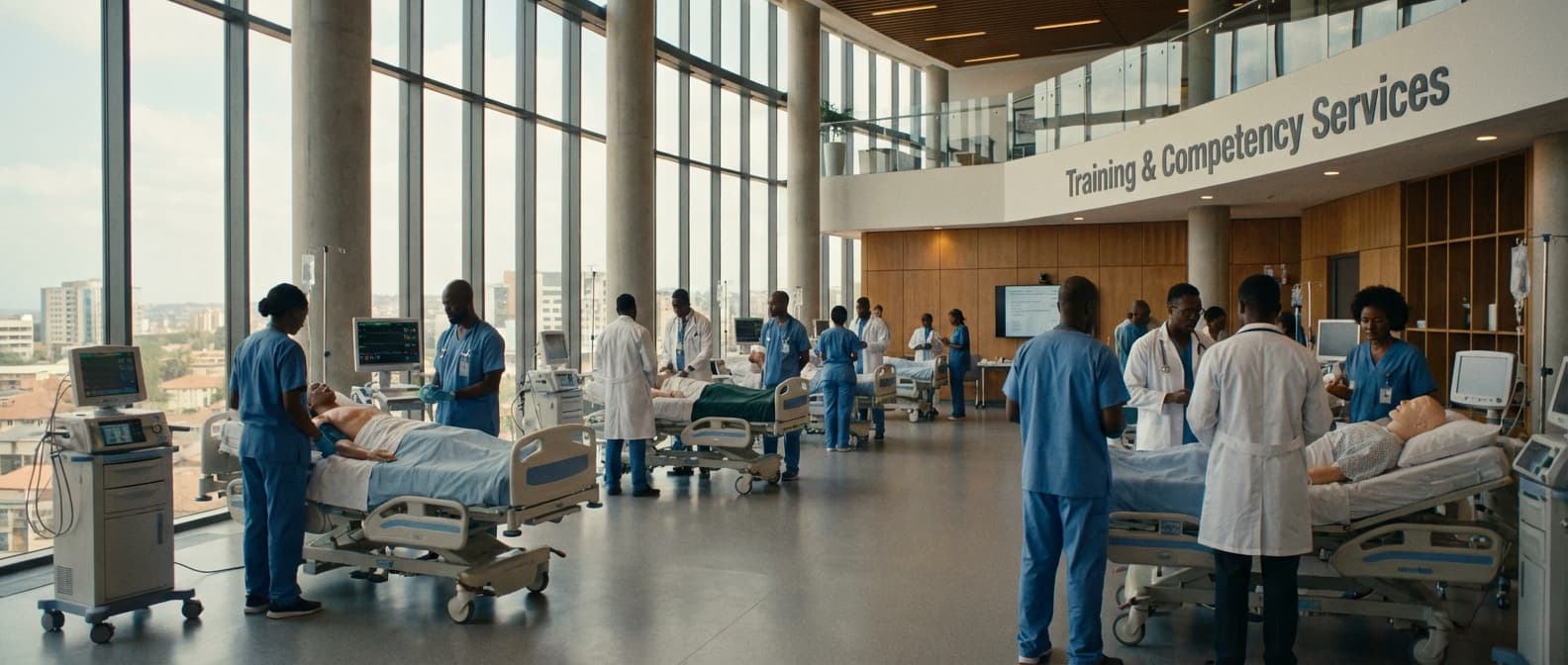
Ultrasound Application Training Service (Protocol-Based) in Algeria
Engineering Excellence & Technical Support
Ultrasound Application Training Service (Protocol-Based) High-standard technical execution following OEM protocols and local regulatory frameworks.
Master Core Ultrasound Protocols
Our training equips your Algerian medical professionals with standardized, protocol-driven ultrasound techniques for enhanced diagnostic accuracy and consistency across all essential examinations.
Expert-Led, Localized Training
Benefit from hands-on training delivered by experienced sonographers, tailored to the specific needs and common pathologies encountered in Algerian healthcare settings.
Accredited Skill Development & Certification
Achieve recognized proficiency in ultrasound imaging with our comprehensive, protocol-based training, leading to certifications that validate expertise and improve patient care in Algeria.
What Is Ultrasound Application Training Service (Protocol-based) In Algeria?
Ultrasound Application Training Service (Protocol-Based) in Algeria refers to a specialized educational offering designed to equip healthcare professionals with the knowledge and practical skills required to effectively utilize diagnostic ultrasound equipment for specific clinical applications, adhering to standardized imaging protocols. This service is distinct from general ultrasound training as it focuses on defined diagnostic pathways and established imaging sequences, ensuring reproducibility and diagnostic accuracy. The training emphasizes not only the technical operation of the ultrasound machine but also the systematic approach to acquiring diagnostic images, interpreting findings within the context of specific pathologies, and documenting results according to Algerian and international best practices. The 'protocol-based' aspect signifies a structured curriculum that guides trainees through the precise transducer manipulation, patient positioning, scanning planes, and parameter optimization necessary for each targeted ultrasound examination. This ensures that learners develop a standardized and efficient workflow, crucial for consistent and reliable diagnostic outcomes in a clinical setting.
| Target Audience | Training Needs | Typical Use Cases |
|---|---|---|
| Radiologists | To refresh and update skills on new protocols, advanced applications, or when transitioning to new equipment. To standardize practice across departments. | Abdominal ultrasound (hepatobiliary, renal, pancreatic), Pelvic ultrasound (transvaginal, transabdominal), Thyroid ultrasound, Musculoskeletal ultrasound (joint and soft tissue), Vascular ultrasound (Doppler studies for carotid, peripheral, and abdominal vessels). |
| Radiology Residents/Fellows | To build a foundational understanding of diagnostic ultrasound principles and acquire proficiency in standardized scanning protocols as part of their residency curriculum. | All core ultrasound applications within their training scope, including obstetric and gynecological imaging, pediatric imaging, and basic interventional ultrasound guidance. |
| Sonographers (Ultrasound Technologists) | To enhance their technical skills, learn new or specialized protocols, and improve diagnostic accuracy and efficiency in their practice. | Specialized cardiac ultrasound (echocardiography), Breast ultrasound, Obstetrics (first, second, and third-trimester scans, fetal anomaly screening), Gynecology, Urology, Echocardiography. |
| Other Medical Specialists (e.g., Cardiologists, Gynecologists, Surgeons) | To gain proficiency in performing point-of-care ultrasound (POCUS) or specific diagnostic ultrasound examinations relevant to their specialty, adhering to established protocols for diagnostic confirmation or procedural guidance. | Echocardiography for cardiologists, Pelvic ultrasound for gynecologists, Scrotal ultrasound for urologists, Ultrasound-guided biopsies and aspirations for surgeons and interventional radiologists. |
Key Components of Ultrasound Application Training Service (Protocol-Based) in Algeria
- Protocol Development and Dissemination: Training materials and curricula are built around established, evidence-based ultrasound protocols for various anatomical regions and clinical indications.
- Theoretical Instruction: Covers ultrasound physics, instrumentation, image optimization techniques, and the pathophysiology of common diseases as visualized by ultrasound.
- Hands-on Practical Sessions: Trainees perform supervised scans on phantoms and/or consenting patients under the guidance of experienced sonographers and radiologists, strictly following defined protocols.
- Image Acquisition and Optimization: Focuses on acquiring optimal image quality, utilizing appropriate transducer selection, frequency, gain, depth, and focusing.
- Anatomical Correlation: Emphasizes the correlation of ultrasound images with anatomical structures and expected variations.
- Pathological Recognition: Training on identifying characteristic ultrasound appearances of various pathologies within specific organ systems.
- Reporting and Documentation Standards: Instruction on accurate and concise medical reporting of ultrasound findings, adhering to regulatory and institutional guidelines.
- Case Study Analysis: Review of real-world clinical cases to reinforce learning and develop diagnostic reasoning skills.
- Continuous Assessment and Feedback: Regular evaluation of trainee performance through practical assessments and case reviews, with constructive feedback for improvement.
- Compliance with Regulatory Standards: Training aims to ensure adherence to Algerian healthcare regulations and quality assurance frameworks for diagnostic imaging.
Who Needs Ultrasound Application Training Service (Protocol-based) In Algeria?
This document outlines the critical need for protocol-based ultrasound application training services for various healthcare professionals and institutions across Algeria. Such training is essential for enhancing diagnostic accuracy, improving patient outcomes, and ensuring standardized ultrasound practices. The service focuses on equipping practitioners with the skills to effectively utilize ultrasound technology across a spectrum of clinical scenarios, adhering to established protocols and best practices.
| Target Customer Group | Specific Departments/Professionals Requiring Training |
|---|---|
| Radiologists | General Radiology, Interventional Radiology, Pediatric Radiology, Musculoskeletal Radiology, Neuroradiology |
| Gynecologists/Obstetricians | Obstetric Ultrasound (Antenatal, Fetal Well-being), Gynecological Ultrasound (Pelvic Organs, Fertility Assessment) |
| Cardiologists | Echocardiography (Adult and Pediatric), Transesophageal Echocardiography (TEE) |
| Anesthesiologists | Point-of-Care Ultrasound (POCUS) for Regional Anesthesia, Airway Management, Hemodynamic Monitoring |
| Emergency Medicine Physicians | Trauma Ultrasound (FAST/eFAST), Cardiac Ultrasound, Lung Ultrasound, Vascular Access |
| Surgeons (General, Vascular, Laparoscopic) | Intraoperative Ultrasound, Pre-operative Assessment, Vascular Access |
| Urologists | Renal, Bladder, Prostate, Scrotal Ultrasound |
| Pediatricians | Pediatric Abdominal, Cranial, Musculoskeletal, Cardiac Ultrasound |
| Sonographers/Ultrasound Technicians | All specialties, focusing on protocol adherence, image optimization, and advanced techniques |
| Medical Students and Residents | Foundation and advanced training in various ultrasound applications |
| Nurses (Critical Care, ER, Midwifery) | Point-of-Care Ultrasound (POCUS) for specific clinical scenarios |
Target Customers and Departments in Algeria:
- {"item":"Hospitals (Public and Private)"}
- {"item":"University Hospitals and Medical Schools"}
- {"item":"Specialized Clinics (e.g., Cardiology, Gynecology, Radiology)"}
- {"item":"Diagnostic Imaging Centers"}
- {"item":"Maternity and Family Planning Centers"}
- {"item":"Research Institutions"}
Ultrasound Application Training Service (Protocol-based) Process In Algeria
This document outlines the workflow for Ultrasound Application Training Services (Protocol-Based) in Algeria, detailing the process from initial inquiry to the final execution of the training.
| Stage | Description | Key Activities | Responsible Party | Output |
|---|---|---|---|---|
| The client expresses interest in ultrasound application training and provides initial details about their requirements. | Client contacts training provider, discusses general training needs, specific ultrasound applications required (e.g., obstetrics, cardiology, general imaging), target audience (e.g., radiologists, technicians, sonographers), desired learning outcomes, and preferred training dates/locations in Algeria. Provider gathers information about the client's existing equipment, skill levels, and any specific protocols they wish to focus on. | Client, Training Provider | Initial understanding of training needs, client profile. |
| Based on the needs assessment, the training provider develops and presents a detailed proposal. | Provider creates a comprehensive proposal outlining the training curriculum, specific protocols to be covered, duration, number of participants, trainer qualifications, training methodology (e.g., theoretical lectures, hands-on scanning sessions, case studies), required equipment and materials, and a detailed cost breakdown. Negotiation on scope, schedule, and pricing occurs. | Training Provider, Client | Formal training proposal, negotiated terms and conditions. |
| A formal agreement is established between the client and the training provider. | A service agreement or contract is drafted and signed, legally binding both parties. This includes all agreed-upon terms, payment schedules, confidentiality clauses, intellectual property rights, and cancellation policies. | Client, Training Provider | Signed service agreement/contract. |
| The training program is finalized and tailored to the client's specific needs and chosen protocols. | Provider refines the curriculum based on the agreed protocols and client's existing knowledge. This may involve developing specific case studies, adapting teaching materials, and confirming the availability of suitable ultrasound equipment for hands-on practice. Scheduling of trainers and participants is finalized. | Training Provider, Client (for input on customization) | Finalized training curriculum, customized materials, confirmed schedule. |
| All logistical arrangements for the training delivery are made. | This includes booking training venues in Algeria, arranging for any necessary travel and accommodation for trainers, ensuring the availability and functionality of ultrasound machines and phantoms, preparing participant handbooks and other learning materials, and communicating pre-training information to participants (e.g., prerequisites, schedule, venue details). | Training Provider, Client (for venue access/participant coordination) | Secured training venue, confirmed travel/accommodation, prepared materials, participant communication. |
| The ultrasound application training is delivered to the participants. | The training provider conducts the program according to the planned schedule and curriculum. This involves theoretical sessions, demonstrations, and extensive hands-on scanning practice on the agreed protocols. Trainers provide real-time feedback and address participant queries. Participants may be assessed through practical exercises or quizzes. | Training Provider, Participants | Delivered training sessions, hands-on practice, participant engagement. |
| The effectiveness of the training is assessed, and ongoing support is provided. | Participants complete feedback forms to evaluate the training. The provider may conduct post-training assessments or provide certificates of completion. Follow-up support can include answering queries, providing access to online resources, or offering refresher sessions as per the contract. A final report on the training's success, participant performance, and any recommendations may be provided. | Training Provider, Client, Participants | Training evaluation reports, certificates of completion, ongoing support, final training summary. |
Workflow Stages
- Inquiry and Needs Assessment
- Proposal Development and Negotiation
- Contracting and Agreement
- Training Planning and Customization
- Logistics and Preparation
- Training Execution
- Post-Training Evaluation and Support
Ultrasound Application Training Service (Protocol-based) Cost In Algeria
Understanding the cost of ultrasound application training services, particularly protocol-based training, in Algeria requires an examination of several influencing factors. These services are crucial for healthcare professionals seeking to enhance their diagnostic skills and adhere to standardized imaging protocols. The pricing is not fixed and can vary significantly based on the training provider, the specific ultrasound applications covered, the duration of the course, the level of expertise of the instructors, and the location within Algeria. The local currency is the Algerian Dinar (DZD).
| Training Scope/Level | Estimated Price Range (DZD) |
|---|---|
| Basic Ultrasound Principles & Workflow (e.g., 1-2 days) | 15,000 - 30,000 DZD |
| General Abdominal Ultrasound Protocols (e.g., 2-3 days) | 25,000 - 50,000 DZD |
| Obstetrics & Gynecology Ultrasound Protocols (e.g., 3-5 days) | 40,000 - 80,000 DZD |
| Vascular Ultrasound Protocols (e.g., 3 days) | 35,000 - 65,000 DZD |
| Advanced/Specialized Ultrasound Applications (e.g., Cardiology, Interventional, per application, 2-4 days) | 50,000 - 120,000+ DZD |
| Comprehensive Protocol Training (e.g., Multiple applications, 1-2 weeks) | 80,000 - 200,000+ DZD |
Key Pricing Factors for Ultrasound Application Training in Algeria:
- Training Provider Reputation and Expertise: Established institutions with highly qualified sonographers and a strong track record often command higher fees.
- Specificity of Ultrasound Applications: Training focused on niche or complex applications (e.g., advanced fetal echocardiography, interventional ultrasound) will generally be more expensive than general abdominal or obstetric training.
- Course Duration and Intensity: Longer and more intensive training programs with more hands-on practice will naturally incur higher costs.
- Instructor Qualifications and Experience: Training delivered by renowned specialists or international experts typically has a premium price tag.
- Location and Facility: Training conducted in major cities like Algiers, Oran, or Constantine, especially in well-equipped facilities, might be more costly than in smaller towns.
- Inclusion of Materials and Resources: Whether the training fee includes textbooks, practice materials, simulation time, or access to online resources can impact the overall cost.
- Accreditation and Certification: Training that leads to recognized certifications or accreditation by professional bodies may have a higher cost due to the associated administrative and quality assurance processes.
- Format of Training: While typically in-person, if hybrid or online components are offered, pricing might differ. However, for protocol-based ultrasound, in-person hands-on practice is paramount.
Affordable Ultrasound Application Training Service (Protocol-based) Options
Our Affordable Ultrasound Application Training Service offers a comprehensive and protocol-driven approach to equipping professionals with essential sonography skills. We understand the financial pressures faced by individuals and institutions, and have therefore developed flexible training options and cost-saving strategies to ensure high-quality education remains accessible.
| Cost-Saving Strategy | Description | Benefit |
|---|---|---|
| Early Bird Registration Discount | Register for training courses a minimum of X weeks in advance to receive a percentage off tuition. | Reduces overall training investment. |
| Bundle Discounts | Purchasing a multi-application bundle offers significant savings compared to enrolling in individual courses. | Maximizes learning for less cost. |
| Referral Program | Refer a colleague or institution who enrolls in our training, and both parties receive a discount on future courses. | Incentivizes growth and provides mutual savings. |
| Online/Blended Learning Options | Leverage our online modules and simulated scanning platforms to reduce travel and accommodation costs, with select hands-on sessions scheduled strategically. | Flexibility and reduced direct expenses. |
| Group/Institutional Pricing | Specialized pricing for groups and institutions, with discounts increasing based on the number of participants. | Cost-effective training for entire teams or departments. |
| Payment Plans | Flexible payment options are available to spread the cost of training over manageable installments. | Improves financial accessibility. |
Value Bundles:
- {"price":"$XXX","title":"Core Application Bundle","description":"Ideal for foundational learning, this bundle covers essential ultrasound applications such as Abdominal, Pelvic, and Basic Cardiac. Includes lecture modules, hands-on scanning labs with simulated patients, and protocol review."}
- {"price":"$XXX","title":"Specialty Application Bundle","description":"For those seeking advanced knowledge, this bundle focuses on specific areas like Vascular (arterial and venous), Small Parts (thyroid, breast), and Obstetrics (first, second, and third trimester). Includes advanced protocol integration and case study analysis."}
- {"price":"$XXX","title":"Comprehensive Ultrasound Mastery Bundle","description":"Our most popular option, this bundle encompasses all core and selected specialty applications, offering the most extensive training. Perfect for general sonographers aiming for broad expertise or individuals transitioning into new sonography roles."}
- {"price":"Contact for Quote","title":"Institutional/Group Training Package","description":"Tailored for hospitals, clinics, and educational institutions. We offer on-site or remote group training with customizable curricula, volume discounts, and dedicated account management."}
Verified Providers In Algeria
In Algeria's evolving healthcare landscape, identifying truly 'verified providers' is paramount for patients seeking quality and trustworthy medical services. Franance Health stands out by establishing a rigorous credentialing process that ensures its network of providers meets the highest standards of expertise, ethics, and patient care. This commitment to verification not only builds trust but also offers significant advantages to patients in terms of access to superior healthcare.
| Franance Health Verification Criteria | Benefit to Patients |
|---|---|
| Academic & Professional Qualifications | Ensures providers possess the necessary knowledge and expertise. |
| Board Certifications & Specializations | Guarantees access to highly skilled specialists for specific conditions. |
| Clinical Experience & Track Record | Provides confidence in a provider's practical ability and successful treatments. |
| Ethical Conduct & Compliance | Protects patients from malpractice and ensures respectful treatment. |
| Patient Feedback & Satisfaction Scores | Offers insights into a provider's bedside manner and patient experience. |
| Continuous Medical Education (CME) | Confirms providers are up-to-date with the latest medical advancements. |
| Licensing & Regulatory Compliance | Confirms providers meet all legal and governmental requirements to practice. |
Why Franance Health Credentials Matter:
- Rigorous Vetting Process: Franance Health goes beyond basic licensing. They meticulously assess educational backgrounds, specialized training, board certifications, and clinical experience of each provider.
- Commitment to Ethical Practice: A key component of their verification includes a thorough review of a provider's disciplinary history and a commitment to upholding ethical medical standards and patient rights.
- Quality of Care Focus: Franance Health prioritizes providers who demonstrate a consistent track record of positive patient outcomes and a dedication to evidence-based medicine.
- Ongoing Performance Monitoring: Verification isn't a one-time event. Franance Health actively monitors provider performance and patient feedback to ensure continued adherence to their high standards.
- Patient Safety Assurance: By partnering exclusively with verified providers, Franance Health significantly enhances patient safety and reduces the risk of receiving substandard care.
- Enhanced Patient Experience: Verified providers are more likely to offer a comprehensive and patient-centered approach, leading to better communication, personalized treatment plans, and improved overall satisfaction.
- Access to Specialized Expertise: The verification process helps identify and highlight providers with specific specializations, allowing patients to find the right expert for their unique needs.
- Trust and Transparency: Franance Health's transparent credentialing process builds essential trust between patients and healthcare providers, demystifying the selection process.
Scope Of Work For Ultrasound Application Training Service (Protocol-based)
This Scope of Work (SOW) outlines the requirements for a protocol-based ultrasound application training service. The service will focus on equipping trainees with the theoretical knowledge and practical skills necessary to perform specific ultrasound examinations according to established protocols. The training will cover image acquisition, optimization, interpretation basics, and report generation for a defined set of ultrasound applications.
| Section | Description | Technical Deliverables | Standard Specifications/Requirements |
|---|---|---|---|
| Development of a structured, protocol-based curriculum for selected ultrasound applications. | Detailed curriculum outline, training modules, lesson plans, and assessment strategies. | Curriculum must be based on current, evidence-based guidelines and reputable professional society standards. Each module should have defined learning objectives. |
| Instruction on ultrasound physics, instrumentation, safety, and anatomy relevant to the selected applications. Emphasis on protocol steps and rationale. | Interactive lectures, presentations, and Q&A sessions. | Sessions to be delivered by qualified and experienced sonographers or radiologists. Materials to be visually engaging and easy to understand. |
| Hands-on practice sessions utilizing ultrasound simulators or phantoms to practice image acquisition according to specific protocols. | Guided image acquisition practice, performance feedback, and skill refinement. | Adequate number of simulators/phantoms for effective hands-on practice. Supervision ratios to be maintained for effective feedback. |
| Training on the correct application of specific ultrasound protocols for each examination type. | Demonstration of protocol adherence, including probe selection, patient positioning, scanning planes, and measurement techniques. | Protocols to be clearly documented with visual aids. Emphasis on reproducible and standardized techniques. |
| Instruction on techniques for optimizing image quality and troubleshooting common artifacts. | Practical exercises in adjusting gain, depth, focal zones, and other parameters to achieve diagnostic image quality. | Standardized checklists for image quality assessment. Emphasis on achieving diagnostic clarity and minimizing artifacts. |
| Introduction to fundamental principles of ultrasound image interpretation within the context of the trained protocols. Guidance on preliminary reporting. | Case studies, review of normal and common abnormal findings, and guidance on structured reporting templates. | Interpretation content to be aligned with the scope of the training protocol. Reporting templates to be standardized and comprehensive. |
| Formal and informal assessments to evaluate trainee comprehension and practical skills. | Quizzes, practical image acquisition assessments, and final competency evaluations. | Assessment methods to be objective and directly correlate with learning objectives. Passing criteria to be clearly defined. |
| Provision of all necessary training materials and access to relevant resources. | Training manuals, protocol guides, reference images, and access to online resources. | Materials to be up-to-date, easily accessible, and professionally presented. Digital formats preferred for easy distribution. |
| The service provider must employ trainers with extensive experience in the specified ultrasound applications and protocol-driven scanning. | CVs and credentials of proposed trainers. | Trainers to possess recognized certifications and a proven track record in ultrasound education and clinical practice. |
| Regular progress reports on trainee performance and overall training effectiveness. | Summary reports, attendance records, and assessment results. | Reports to be delivered in a timely manner and in a mutually agreed-upon format. |
Key Objectives
- To provide comprehensive, protocol-driven training on selected ultrasound applications.
- To ensure trainees can acquire high-quality ultrasound images adhering to defined protocols.
- To introduce fundamental principles of ultrasound image interpretation within the context of specific protocols.
- To familiarize trainees with the documentation and reporting requirements for ultrasound examinations.
- To enhance the proficiency and confidence of ultrasound practitioners in applying learned protocols.
Service Level Agreement For Ultrasound Application Training Service (Protocol-based)
This Service Level Agreement (SLA) outlines the guaranteed response times and uptime for the Ultrasound Application Training Service (Protocol-Based). This SLA is designed to ensure a reliable and efficient training experience for all users.
| Service Metric | Target | Measurement Period | Remedy for Failure |
|---|---|---|---|
| Response Time (Critical Incident): Defined as a complete service outage preventing access to the training platform or core training functionalities. | 1 Hour | 24/7 | Refer to the Service Credits section for details on potential compensation. |
| Response Time (Non-Critical Incident): Defined as a performance degradation, a feature malfunction, or an issue affecting a subset of users. | 4 Business Hours | Business Hours (Mon-Fri, 9 AM - 5 PM Local Time) | Refer to the Service Credits section for details on potential compensation. |
| System Uptime Guarantee: Calculated as (Total Minutes in Month - Downtime Minutes) / Total Minutes in Month * 100% | 99.8% | Monthly | If uptime falls below 99.8% in a given month, the client may be eligible for service credits as outlined in the Service Credits section. |
| Scheduled Maintenance Window: Pre-announced periods for system updates and maintenance. | Maximum of 4 hours per month, scheduled with at least 7 days prior notice. Typically between 01:00 and 05:00 UTC. | Monthly | This is a planned outage and does not count towards the Uptime Guarantee. |
| Emergency Maintenance: Unplanned maintenance required to address critical security vulnerabilities or system failures. | As required to resolve critical issues. Notification will be provided as soon as reasonably possible. | As needed | The goal is to minimize downtime and restore service as quickly as possible. Does not count towards Uptime Guarantee if the maintenance is directly caused by a failure of the service provider's infrastructure. |
Key Performance Indicators (KPIs)
- Response Time for Critical Incidents: The maximum time allowed for the initial response to a reported critical incident.
- Response Time for Non-Critical Incidents: The maximum time allowed for the initial response to a reported non-critical incident.
- System Uptime Guarantee: The minimum percentage of time the Ultrasound Application Training Service will be available and operational.
- Data Backup and Recovery: Procedures and guarantees related to data integrity and availability.
Frequently Asked Questions

Ready when you are
Let's scope your Ultrasound Application Training Service (Protocol-Based) in Algeria project in Algeria.

Scaling healthcare logistics and technical systems across the entire continent.