
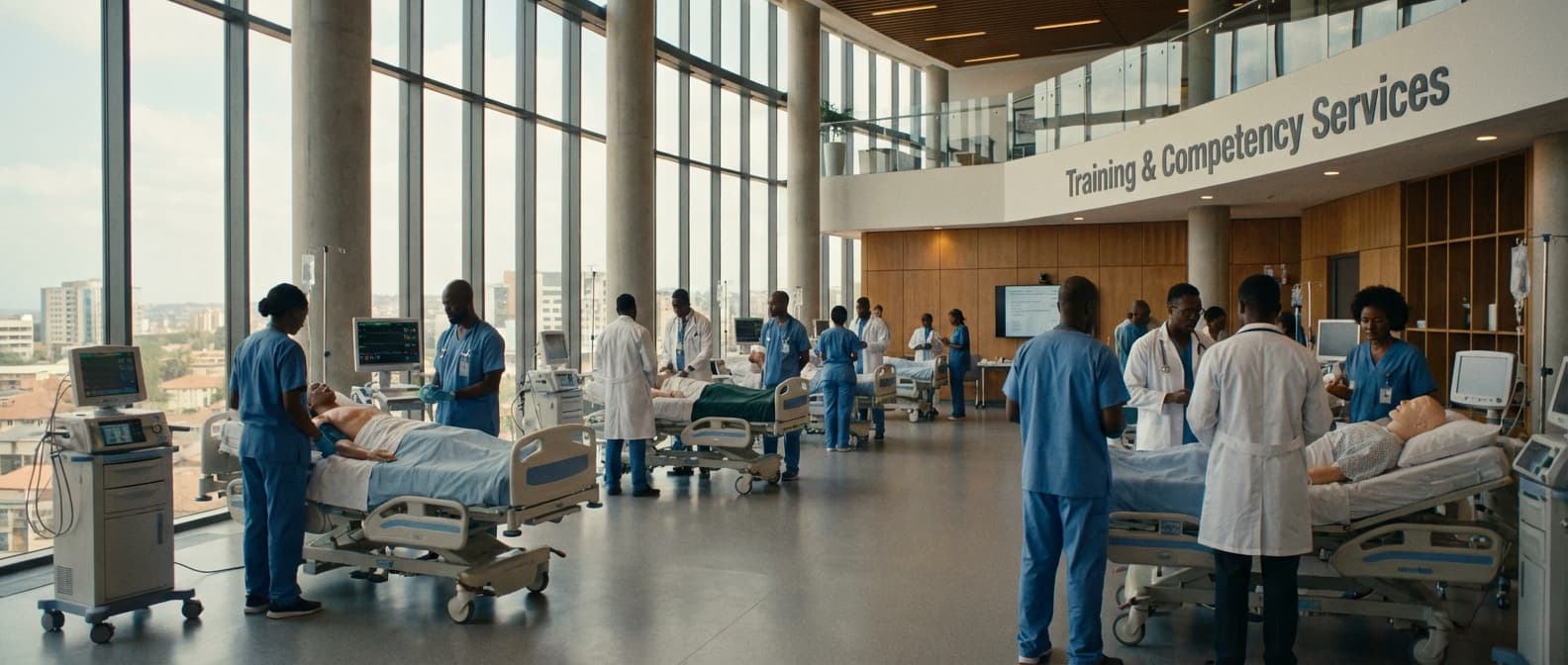
MRI Operator Training Service (Radiographers) in Algeria
Engineering Excellence & Technical Support
MRI Operator Training Service (Radiographers) High-standard technical execution following OEM protocols and local regulatory frameworks.
Advanced Neuro-Imaging Protocols
Master state-of-the-art MRI sequences for comprehensive neurological assessments, including diffusion tensor imaging (DTI) and functional MRI (fMRI), crucial for diagnosing and managing complex brain conditions prevalent in Algeria.
Optimized Contrast Agent Administration
Gain expertise in the safe and effective administration of MRI contrast agents, understanding dosage, timing, and potential contraindications to enhance diagnostic accuracy for a wide range of pathologies encountered in Algerian patient populations.
Workflow Efficiency & Patient Comfort in Algerian Healthcare Settings
Develop best practices for streamlined MRI workflows, patient preparation, and communication tailored to the Algerian healthcare environment, ensuring high-quality imaging while prioritizing patient experience and satisfaction.
What Is Mri Operator Training Service (Radiographers) In Algeria?
MRI Operator Training Service (Radiographers) in Algeria refers to specialized educational programs designed to equip radiographers with the requisite knowledge and practical skills to operate Magnetic Resonance Imaging (MRI) scanners safely and effectively within the Algerian healthcare system. This service encompasses theoretical instruction on MRI physics, image acquisition protocols, patient safety, and contraindications, complemented by hands-on training utilizing actual MRI equipment and simulated scenarios. The objective is to ensure competency in generating high-quality diagnostic images while adhering to international standards and local regulatory requirements.
| Target Audience | Rationale for Training | Typical Use Cases/Applications |
|---|---|---|
| Newly qualified radiographers in Algeria seeking specialization in MRI. | To meet the growing demand for MRI services and ensure a skilled workforce. | Initial competency building for entry-level MRI operator positions. |
| Existing radiographers transitioning to MRI departments. | To acquire the necessary skills and knowledge for a new modality and career advancement. | Upskilling for new roles in public and private healthcare facilities. |
| Radiographers from regions with limited MRI infrastructure seeking to work in Algeria. | To familiarize themselves with Algerian healthcare standards and specific equipment prevalent in the country. | International radiographers seeking employment and requiring local certification. |
| Radiographers in training programs that include MRI as a component. | To provide comprehensive education as part of a broader radiologic technology curriculum. | Academic institutions and training centers offering specialized courses. |
| MRI technologists requiring refresher courses or advanced training on new techniques or equipment. | To maintain and enhance professional skills, adapt to technological advancements, and improve diagnostic capabilities. | Continuing professional development (CPD) for experienced MRI operators. |
Key Components of MRI Operator Training Service:
- Theoretical Modules: In-depth understanding of MR physics, pulse sequences, signal generation, image reconstruction, and artifact reduction.
- Clinical Protocols: Training on standardized acquisition protocols for various anatomical regions (neurology, musculoskeletal, abdominal, cardiovascular, etc.).
- Patient Care and Safety: Emphasis on patient screening for contraindications (e.g., metallic implants), management of claustrophobia, sedation protocols, and radiation protection (though MRI is non-ionizing, strong magnetic fields pose risks).
- Equipment Operation: Hands-on proficiency in operating specific MRI scanner models, including console manipulation, patient positioning, and parameter adjustments.
- Image Quality Assurance: Techniques for optimizing image parameters to achieve diagnostic accuracy and minimize rescans.
- Troubleshooting and Maintenance: Basic understanding of common equipment malfunctions and reporting procedures.
- Anatomy and Physiology: Refresher on relevant anatomical structures and physiological processes to interpret imaging findings.
- Legal and Ethical Considerations: Awareness of patient privacy, data security, and professional responsibilities within the Algerian context.
- Certification/Credentialing: Successful completion often leads to a certificate or credential recognized by healthcare institutions and regulatory bodies in Algeria.
Who Needs Mri Operator Training Service (Radiographers) In Algeria?
This document outlines the essential need for MRI Operator Training Services specifically tailored for radiographers in Algeria. The training aims to enhance the proficiency and safety of MRI operations across various healthcare settings, addressing the increasing demand for advanced imaging techniques and ensuring competent personnel are available to operate sophisticated MRI equipment.
| Department | Role of Radiographers | Training Needs | Impact of Training |
|---|---|---|---|
| Radiology Department | Perform MRI scans, patient positioning, image acquisition, quality control. | Advanced MRI physics, protocol optimization, patient safety, contrast agent administration, artifact reduction, new imaging techniques. | Improved diagnostic accuracy, reduced scan times, enhanced patient comfort and safety, increased throughput. |
| Neurology Department | Operate MRI for brain and spinal cord imaging, assist in neurological diagnosis. | Specific neuroimaging protocols (e.g., fMRI, diffusion tensor imaging), interpretation of neurological findings relevant to MRI. | More precise diagnosis of neurological conditions, better patient management, advanced research capabilities. |
| Orthopedics Department | Utilize MRI for musculoskeletal imaging (joints, bones, soft tissues). | Musculoskeletal imaging protocols, understanding of orthopedic pathologies as visualized on MRI. | Accurate assessment of injuries and diseases, improved surgical planning, better patient outcomes. |
| Cardiology Department | Perform cardiac MRI for assessment of heart structure and function. | Cardiac MRI sequences, gating techniques, interpretation of cardiac pathologies on MRI. | Enhanced diagnosis and management of cardiovascular diseases, identification of subtle cardiac abnormalities. |
| Oncology Department | Employ MRI for tumor staging, treatment monitoring, and follow-up. | Oncology imaging protocols, understanding of tumor characteristics and response to therapy, contrast enhancement patterns. | More effective cancer diagnosis and management, precise evaluation of treatment efficacy. |
| Emergency Department | Rapid MRI acquisition for acute conditions (e.g., stroke, trauma). | Urgent MRI protocols, efficient patient workflow in emergency settings, decision-making support. | Faster diagnosis and treatment initiation for critical patients, improved survival rates. |
Target Customers and Departments Requiring MRI Operator Training in Algeria
- Hospitals (Public and Private): The primary recipients of this training are radiographers working in general hospitals, university hospitals, and specialized medical centers. These institutions are at the forefront of diagnostic imaging and require skilled operators for their MRI units.
- Radiology Clinics and Imaging Centers: Standalone radiology clinics and dedicated imaging centers that offer MRI services are key beneficiaries. These facilities often cater to a high volume of patients and rely on well-trained operators for efficient and accurate scans.
- Medical Research Institutions: While not directly patient-facing for routine diagnostics, research institutions utilizing MRI for experimental or clinical research will also benefit from advanced training to ensure data integrity and proper protocol adherence.
- Government Healthcare Agencies: Bodies responsible for overseeing public health infrastructure and setting standards for medical imaging equipment and personnel would benefit from understanding the training needs and capabilities within the Algerian healthcare system.
- Training and Educational Institutions (for Radiography Programs): Universities and vocational schools offering radiography programs can integrate specialized MRI operator training into their curriculum, ensuring graduates are job-ready and possess the latest skills.
Mri Operator Training Service (Radiographers) Process In Algeria
This document outlines the typical workflow for an MRI Operator Training Service (Radiographers) in Algeria, from the initial inquiry to the successful execution of the training program. The process is designed to be comprehensive, ensuring that training providers understand client needs and deliver effective, tailored programs.
| Stage | Key Activities | Responsible Party | Deliverables |
|---|---|---|---|
| Inquiry & Initial Contact | Client expresses interest; Provider responds. | Prospective Client, Training Provider | Initial communication, expressed interest. |
| Needs Assessment & Consultation | Discuss training needs, current skills, equipment, learning outcomes. | Training Provider, Prospective Client | Detailed understanding of training requirements. |
| Proposal Development | Outline curriculum, duration, methodology, trainers, costs. | Training Provider | Formal training proposal. |
| Contract Negotiation & Agreement | Discuss terms, conditions, pricing; Sign contract. | Training Provider, Prospective Client | Signed training contract. |
| Program Planning & Customization | Finalize curriculum, schedule, logistics; Tailor to client's equipment. | Training Provider | Detailed training plan, customized curriculum. |
| Trainer & Resource Allocation | Assign trainers; Procure/prepare materials, equipment. | Training Provider | Qualified trainers, training materials, equipment. |
| Pre-Training Communication | Inform trainees and supervisors about schedule, pre-reading, assessments. | Training Provider | Pre-training information disseminated. |
| Training Execution | Deliver lectures, demonstrations, practical sessions, case studies. | Training Provider (Trainers) | Delivered training sessions. |
| Assessment & Evaluation | Conduct quizzes, practical evaluations, final exams; Collect participant feedback. | Training Provider (Trainers), Trainees | Trainee assessment results, participant feedback forms. |
| Post-Training Support & Certification | Issue certificates; Offer follow-up support or resources. | Training Provider | Certificates of completion, post-training support. |
| Feedback Review & Program Improvement | Analyze feedback to identify areas for enhancement. | Training Provider | Analysis of feedback, recommendations for improvement. |
| Reporting & Documentation | Provide client with a comprehensive training report. | Training Provider | Final training report. |
MRI Operator Training Service (Radiographers) Process in Algeria: Workflow
- Inquiry & Initial Contact: A prospective client (e.g., a hospital, diagnostic imaging center, or Ministry of Health department) expresses interest in MRI operator training for their radiographers.
- Needs Assessment & Consultation: The training provider engages with the client to understand specific training requirements. This includes assessing the current skill level of radiographers, the types of MRI scanners in use, desired learning outcomes, and any specialized areas of focus (e.g., specific anatomical regions, advanced sequences).
- Proposal Development: Based on the needs assessment, the training provider develops a detailed proposal outlining the training program. This includes curriculum, duration, methodology, trainers' qualifications, venue/equipment requirements, and cost.
- Contract Negotiation & Agreement: The client reviews the proposal, and negotiations take place regarding terms, conditions, and pricing. A formal contract is signed upon agreement.
- Program Planning & Customization: The training provider finalizes the curriculum, schedules, and logistical arrangements. If necessary, the training is further customized to align with the client's specific MRI equipment and protocols.
- Trainer & Resource Allocation: Qualified MRI trainers are assigned to the program, and all necessary training materials, equipment (simulators if applicable), and consumables are procured or prepared.
- Pre-Training Communication: The training provider communicates with the participating radiographers and their supervisors to provide pre-training information, including schedules, required pre-reading, and any pre-assessments.
- Training Execution: The training program is delivered according to the agreed-upon schedule and curriculum. This typically involves a combination of theoretical lectures, practical demonstrations, hands-on sessions on MRI scanners (or simulators), case studies, and discussions.
- Assessment & Evaluation: Trainees are assessed throughout the program through quizzes, practical evaluations, and potentially a final examination. The training program itself is also evaluated by participants to gather feedback.
- Post-Training Support & Certification: Upon successful completion of the training and assessments, trainees receive a certificate of completion. The training provider may offer post-training support, such as follow-up consultations or access to online resources.
- Feedback Review & Program Improvement: The training provider reviews the feedback received from trainees and clients to identify areas for improvement in future training programs.
- Reporting & Documentation: A comprehensive training report is provided to the client, detailing the program's execution, trainee performance, and any recommendations.
Mri Operator Training Service (Radiographers) Cost In Algeria
The cost of MRI operator training for radiographers in Algeria can vary significantly due to a range of influencing factors. These include the reputation and accreditation of the training provider, the duration and intensity of the course, the level of specialization (e.g., general MRI, specific protocols, advanced techniques), the inclusion of hands-on practical sessions with actual MRI equipment, and the geographical location within Algeria. Training can be offered by public institutions (often more affordable, but potentially with longer waiting lists or less flexibility), private training centers (generally more expensive but offering specialized and flexible options), or even in-house training organized by larger hospitals or medical imaging groups (costs vary greatly based on internal resources). The Algerian Dinar (DZD) is the local currency, and pricing is typically presented in this denomination.
| Training Type/Duration | Estimated Cost Range (DZD) |
|---|---|
| Basic MRI Principles Workshop (1-3 days) | 30,000 - 70,000 DZD |
| General MRI Operator Certification Course (1-2 weeks) | 80,000 - 250,000 DZD |
| Advanced MRI Techniques Course (e.g., Neuro, MSK) (3-5 days) | 150,000 - 400,000 DZD |
| Comprehensive MRI Technologist Program (weeks to months, including extensive practicals) | 300,000 - 1,000,000+ DZD |
| Customized/In-house Training (per day/participant) | 20,000 - 80,000+ DZD |
Key Factors Influencing MRI Operator Training Costs in Algeria:
- Training Provider Reputation & Accreditation: Reputable and accredited institutions often command higher fees due to their perceived quality and recognition.
- Course Duration & Intensity: Longer, more comprehensive courses will naturally cost more than shorter introductory workshops.
- Level of Specialization: Training focused on advanced techniques or specific patient populations (e.g., pediatric MRI) is usually priced higher.
- Hands-on Practical Training: Access to and usage time on actual MRI scanners significantly impacts the cost.
- Training Format: In-person courses are generally more expensive than online or blended learning options.
- Location within Algeria: Major cities like Algiers might have higher training costs compared to smaller towns due to overhead expenses.
- Included Materials & Resources: The provision of study materials, textbooks, and access to online resources can influence pricing.
- Certification: Courses leading to recognized certifications might have higher fees.
Affordable Mri Operator Training Service (Radiographers) Options
This service offers comprehensive MRI operator training specifically designed for radiographers looking to enhance their skills and career prospects. We understand the importance of affordable, high-quality education in the evolving field of medical imaging. Our program focuses on practical application, theoretical understanding, and safety protocols essential for competent MRI operation. We aim to make advanced MRI training accessible and cost-effective for individuals and healthcare institutions alike.
| Training Option | Description | Value Bundle | Estimated Cost Range (USD) | Cost-Saving Strategy |
|---|---|---|---|---|
| Online Self-Paced Module | Comprehensive theoretical training accessible anytime, anywhere. | Basic Theory & Safety Module | $300 - $600 | Eliminates travel and accommodation costs; learn at your own pace. |
| In-Person Workshop (3-5 Days) | Intensive, hands-on training with expert guidance and equipment access. | Core Operator Skills Bundle (Online + Workshop) | $1,200 - $2,500 | Group discounts available for institutions; early bird registration incentives. |
| Hybrid Training Program | Combines online learning with targeted in-person practical sessions. | Advanced Techniques Module Bundle (Online + Advanced Workshop) | $800 - $1,500 | Bundled pricing for multiple modules; subscription models for ongoing access to resources. |
| Institutional Training Package | Customizable training solutions for hospitals and imaging centers, including on-site options. | Full Radiographer Competency Program (Online, Hybrid, On-site) | Customized Quote | Bulk discounts for training multiple staff; tailored curriculum to reduce unnecessary modules. |
| Refresher & Advanced Skills Course | For experienced operators seeking to update their knowledge or specialize in specific sequences. | Specialized Sequence Mastery Module | $400 - $800 | Modular approach allows trainees to pay only for the skills they need. |
Key Features of Our Affordable MRI Operator Training:
- Industry-recognized curriculum developed by experienced MRI professionals.
- Flexible learning formats including online modules, in-person workshops, and hybrid options.
- Hands-on simulation and practical scanning experience (where applicable).
- Focus on patient safety, image optimization, and quality control.
- Certification upon successful completion.
- Dedicated support from certified MRI technologists and educators.
Verified Providers In Algeria
Navigating the healthcare landscape in Algeria can be complex, especially when seeking reliable and high-quality medical services. For expatriates, tourists, and even locals, understanding which healthcare providers can be trusted is paramount. Franance Health has emerged as a critical partner in this regard, meticulously vetting and verifying medical professionals and facilities across Algeria. Their rigorous credentialing process ensures that individuals seeking care have access to a network of reputable and competent healthcare providers, offering peace of mind and a higher standard of medical attention. This commitment to quality makes Franance Health-affiliated providers the best choice for your healthcare needs in Algeria.
| Provider Type | Franance Health Verification Benefits | Why They Are the Best Choice |
|---|---|---|
| Hospitals | Verified for: Advanced medical technology, hygiene standards, experienced medical staff, emergency care readiness. | Offer comprehensive care with reliable infrastructure and a strong track record of successful treatments. Access to a wider range of specialists and facilities. |
| Specialist Clinics | Verified for: Board certification, years of practice in specialty, patient outcomes, ethical conduct. | Provide expert diagnosis and treatment for specific medical conditions. Benefit from highly focused expertise and personalized attention. |
| General Practitioners | Verified for: Medical license, continuing education, patient feedback, primary care competence. | Serve as your first point of contact for general health concerns, offering accessible and ongoing care with a trusted professional. |
| Dental Services | Verified for: Dental licensing, specialized training (e.g., orthodontics, periodontics), sterilization protocols. | Ensure safe and effective dental treatments, from routine check-ups to complex procedures, with a focus on oral health and hygiene. |
Why Franance Health Credentials Matter:
- Rigorous Verification: Franance Health employs a multi-faceted vetting process that goes beyond basic licensing. They assess qualifications, experience, specializations, and adherence to international best practices.
- Patient Safety Focus: The core of Franance Health's mission is patient safety. By verifying providers, they minimize the risk of encountering unqualified individuals or substandard facilities.
- Access to Quality Care: Their network connects you with doctors and hospitals known for their expertise, modern equipment, and patient-centric approach.
- Peace of Mind: Knowing your chosen provider is accredited by Franance Health offers significant reassurance, especially when dealing with health concerns in an unfamiliar environment.
- International Standards: Franance Health often aligns its verification criteria with international healthcare benchmarks, ensuring a higher level of service quality.
- Specialized Expertise: They help identify specialists in various fields, ensuring you receive care from the most appropriate medical professional for your condition.
Scope Of Work For Mri Operator Training Service (Radiographers)
This Scope of Work (SOW) outlines the requirements for providing comprehensive MRI Operator Training services for qualified radiographers. The training will equip participants with the theoretical knowledge and practical skills necessary to safely and effectively operate Magnetic Resonance Imaging (MRI) scanners, acquire high-quality diagnostic images, and manage patient care within the MRI environment.
| Module/Topic | Content Description | Duration (Approx.) | Delivery Method | Assessment Method |
|---|---|---|---|---|
| Introduction to MRI Physics | Basic principles of nuclear magnetic resonance, RF pulses, relaxation mechanisms (T1, T2, T2*), signal generation. | 4 hours | Lecture, Interactive Q&A | Quizzes |
| MRI Hardware and Components | Magnet, gradient coils, RF coils, shim coils, patient table, console operation. | 3 hours | Lecture, Equipment Demonstration | Practical Observation |
| Pulse Sequences and Image Acquisition | Spin echo, gradient echo, fast spin echo, inversion recovery, diffusion-weighted imaging (DWI), functional MRI (fMRI) basics. | 8 hours | Lecture, Simulation Exercises, Protocol Review | Protocol Design Exercise, Practical Scans |
| Patient Care and Safety | Screening questionnaires, contraindications (implants, pacemakers), ferromagnetic materials, emergency procedures, sedation protocols (if applicable). | 6 hours | Lecture, Case Studies, Role-Playing | Scenario-Based Assessment, Written Test |
| Contrast Agents in MRI | Types of contrast agents, administration routes, potential adverse reactions, management of reactions. | 2 hours | Lecture, Case Studies | Quizzes |
| Artifacts and Image Quality Optimization | Common artifacts (motion, susceptibility, aliasing), identification and mitigation strategies. | 4 hours | Lecture, Image Analysis Workshop | Artifact Identification Task |
| Anatomical Protocols and Applications | Overview of standard protocols for head, spine, abdomen, pelvis, musculoskeletal system, and vascular imaging. | 10 hours | Lecture, Protocol Review, Image Interpretation | Protocol Application Scenarios |
| Quality Assurance and Maintenance | Routine checks, performance testing, basic troubleshooting, regulatory compliance. | 3 hours | Lecture, Demonstration | QA Checklist Completion |
| Practical Scan Sessions | Hands-on operation of the MRI scanner under supervision, performing various protocols, patient handling. | 20 hours | Supervised Practical Training | Competency Assessment (Practical Skills) |
| Advanced Topics (Optional/As per requirement) | Specific advanced sequences (e.g., MR spectroscopy, perfusion imaging), specialized applications. | Variable | Lecture, Workshop | Case Study Analysis |
Training Objectives
- Understand the fundamental principles of Magnetic Resonance Imaging.
- Gain proficiency in operating specific MRI scanner models (as specified by the client).
- Develop expertise in patient positioning, coil selection, and artifact reduction techniques.
- Master image acquisition protocols for various anatomical regions and clinical applications.
- Understand MRI safety protocols, including screening procedures, contraindications, and emergency management.
- Learn about contrast agent administration and management in MRI.
- Develop skills in basic image post-processing and manipulation.
- Familiarize with quality assurance procedures for MRI equipment.
Service Level Agreement For Mri Operator Training Service (Radiographers)
This Service Level Agreement (SLA) outlines the guaranteed response times and uptime for the MRI Operator Training Service provided to certified radiographers. It ensures consistent quality and availability of training resources and support.
| Service Component | Response Time Guarantee | Uptime Guarantee | Description |
|---|---|---|---|
| Online Training Modules & Simulations | Immediate access | 99.5% uptime | Users will have uninterrupted access to all pre-recorded training modules and simulation environments during scheduled operating hours. |
| Technical Support (Email/Ticketing System) | Within 4 business hours | N/A (Support availability focused on response time) | Requests for technical assistance regarding platform access, navigation, or module functionality will receive an initial response within the stated timeframe. |
| Live Q&A Sessions | Scheduled availability (announced in advance) | 98.0% uptime for scheduled sessions | Live Q&A sessions will commence as scheduled. Minor unavoidable technical disruptions may occur, but sessions will be rescheduled or extended if significant issues arise. |
| Content Updates & New Module Announcements | Within 2 business days of announcement | N/A (Communication focused on timely notification) | Notifications regarding new or updated training content will be disseminated within the specified timeframe. |
Key Service Components
- On-demand access to online MRI operator training modules.
- Access to simulated MRI scan scenarios for practice.
- Live Q&A sessions with experienced MRI trainers.
- Technical support for platform access and troubleshooting.
- Regular updates and additions to training content.
Frequently Asked Questions

Ready when you are
Let's scope your MRI Operator Training Service (Radiographers) in Algeria project in Algeria.

Scaling healthcare logistics and technical systems across the entire continent.