
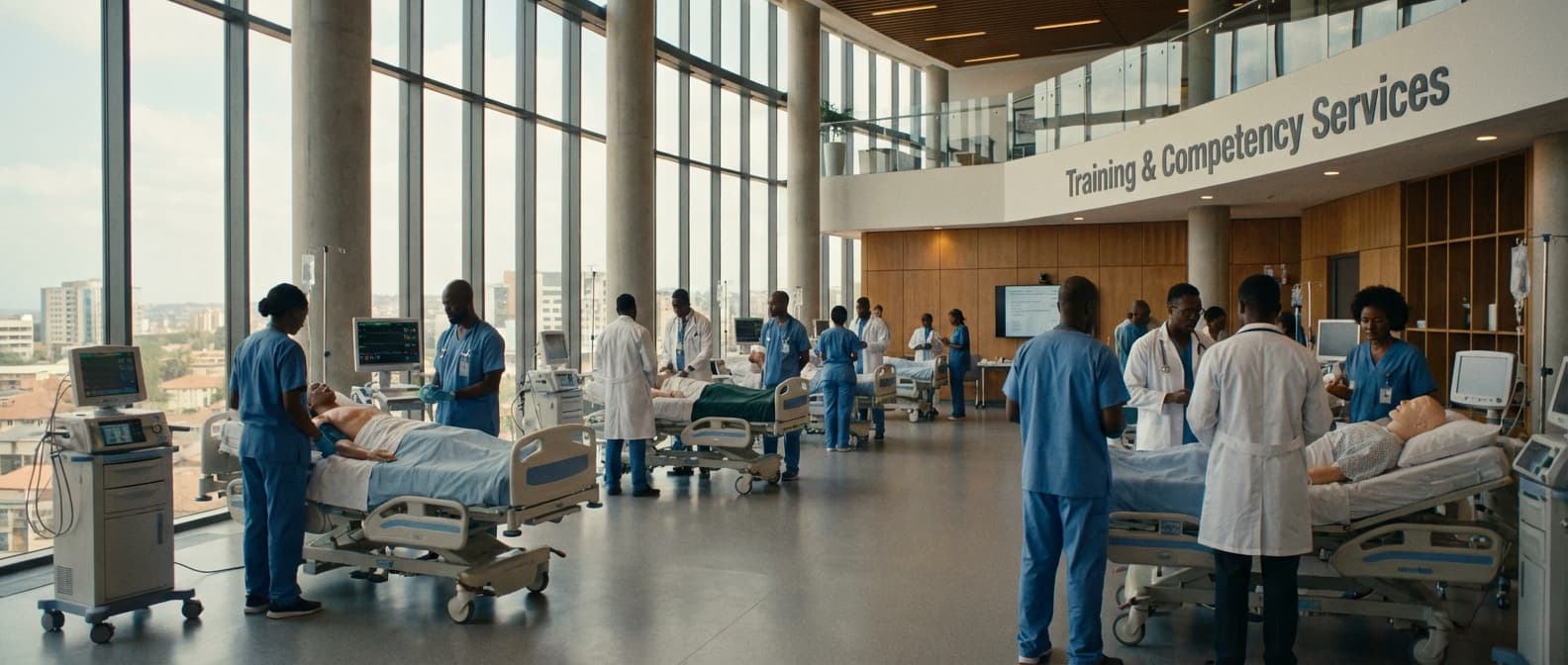
Biomedical Engineering First-Line Support Training Service in Algeria
Engineering Excellence & Technical Support
Biomedical Engineering First-Line Support Training Service High-standard technical execution following OEM protocols and local regulatory frameworks.
Expert Troubleshooting of Medical Devices
Gain hands-on proficiency in diagnosing and resolving common technical issues across a wide range of essential biomedical equipment, including imaging systems, patient monitoring devices, and laboratory analyzers, ensuring minimal downtime and continued patient care.
Medical Software & Firmware Management
Master the installation, configuration, and updating of specialized medical software and device firmware, adhering to strict cybersecurity protocols and regulatory compliance standards prevalent in Algerian healthcare facilities.
Biomedical Safety & Regulatory Compliance
Develop a deep understanding of Algerian healthcare regulations, patient safety standards, and equipment maintenance protocols, equipping you to perform installations, calibrations, and preventative maintenance with the highest level of safety and compliance.
What Is Biomedical Engineering First-line Support Training Service In Algeria?
Biomedical Engineering First-Line Support Training Service in Algeria refers to the provision of foundational technical training focused on the initial troubleshooting, basic maintenance, and operational understanding of medical devices and equipment within healthcare facilities. This service aims to equip personnel with the essential skills to address common equipment malfunctions, perform routine checks, and identify when more specialized technical intervention is required, thereby optimizing equipment uptime and ensuring patient safety. The training is tailored to the specific regulatory environment and common medical technologies prevalent in Algerian healthcare institutions.
| Target Audience | Rationale | Typical Use Cases |
|---|---|---|
| Clinical Staff (Nurses, Doctors, Technicians) | To empower frontline healthcare providers to resolve minor equipment issues independently, reducing reliance on immediate specialized support and minimizing service interruption for patient care. | Resolving an infusion pump error message (e.g., 'occlusion alarm'), recalibrating a basic vital signs monitor, replacing a consumable part on a diagnostic device, performing daily equipment checks before patient use. |
| Hospital Administrative and Logistics Personnel | To ensure efficient resource management and a basic understanding of equipment status for procurement and maintenance planning. | Documenting equipment downtime, logging maintenance requests, identifying training needs for operational staff, basic inventory management of consumables. |
| Junior Biomedical Technicians/Engineers (Pre-Specialization) | To build a foundational skill set for entry-level roles in the biomedical engineering department, preparing them for more advanced training and responsibilities. | Performing routine preventive maintenance, conducting initial assessments of reported equipment malfunctions, assisting senior engineers with complex repairs, managing basic equipment inventory and testing. |
| Medical Equipment Installation and Maintenance Contractors (Local Representatives) | To provide their field technicians with standardized, region-specific training on common equipment models and support protocols within Algerian healthcare settings. | Onboarding new field technicians, ensuring compliance with local service level agreements, performing initial troubleshooting before escalating to manufacturer support. |
Key Components of Biomedical Engineering First-Line Support Training:
- Introduction to medical device classification and safety standards relevant to Algerian healthcare.
- Principles of operation for common medical equipment (e.g., vital signs monitors, infusion pumps, basic diagnostic imaging components).
- Standard operating procedures (SOPs) for equipment usage and basic troubleshooting methodologies.
- Preventive maintenance routines and schedules.
- Identification of common failure modes and preliminary diagnostic steps.
- Safe handling and disconnection/reconnection procedures for medical devices.
- Documentation and reporting protocols for equipment issues and maintenance activities.
- Understanding of escalation pathways for complex technical problems to specialized biomedical engineering teams or external service providers.
- Basic infection control and sterilization principles as applied to medical equipment.
Who Needs Biomedical Engineering First-line Support Training Service In Algeria?
This document outlines the essential first-line support training services for biomedical engineering in Algeria, targeting key institutions and departments responsible for the operation and maintenance of medical equipment. The objective is to equip personnel with the fundamental skills to address common issues, perform basic troubleshooting, and ensure the continuous functionality of vital healthcare technology.
| Target Department | Key Responsibilities Related to Biomedical Equipment | Specific Training Needs |
|---|---|---|
| Biomedical Engineering Department | Installation, maintenance, repair, calibration, and safety testing of medical devices. | Basic troubleshooting of common equipment failures, preventive maintenance procedures, safe handling of medical devices, introduction to diagnostic tools, understanding of regulatory compliance. |
| IT Department (with medical equipment integration) | Network connectivity, data security, and integration of networked medical devices. | Understanding of medical device network protocols, basic troubleshooting of connectivity issues, awareness of cybersecurity risks related to medical devices. |
| Clinical Engineering Department (where applicable) | Oversight of the medical technology lifecycle, risk management, and ensuring clinical usability. | Understanding of the importance of first-line support, basic operational checks, reporting mechanisms for equipment malfunctions. |
| Nursing and Allied Health Professionals (requiring basic operational knowledge) | Daily operation and basic user-level checks of medical equipment. | Proper equipment usage, identification of common error messages, basic troubleshooting steps, and procedures for reporting issues to the biomedical engineering department. |
| Laboratory Technicians and Radiologists (for specialized equipment) | Operation and basic maintenance of specific laboratory and imaging equipment. | Specific operational training for their respective equipment, basic troubleshooting of common malfunctions, and understanding of when to escalate to specialized biomedical engineers. |
Target Customers
- Public Hospitals
- Private Clinics and Diagnostic Centers
- University Hospitals
- Medical Research Institutes
- Government Health Agencies
- Medical Equipment Distributors and Service Providers (for their technical staff)
Biomedical Engineering First-line Support Training Service Process In Algeria
This document outlines the standard workflow for the Biomedical Engineering First-Line Support Training Service Process in Algeria, from the initial inquiry to the final execution of the training. The process is designed to ensure efficient and effective knowledge transfer to equip personnel with the necessary skills to handle initial technical issues with biomedical equipment.
| Stage | Description | Key Activities | Responsible Parties | Deliverables/Outcomes |
|---|---|---|---|---|
| The initial contact from a healthcare facility or organization requesting first-line support training for their biomedical engineering staff. | Receive inquiry, understand training needs (equipment types, skill gaps, number of trainees), conduct preliminary discussion. | Client (Healthcare Facility), Service Provider (Training Department/Company) | Understanding of training scope, identified target audience and equipment, initial contact established. |
| Formal proposal outlining the training program, its objectives, methodology, duration, cost, and terms. | Develop detailed training proposal, present to client, negotiate terms, sign service agreement/contract. | Service Provider (Training Department/Company), Client (Healthcare Facility) | Signed service agreement, clear understanding of deliverables, scope, and financial commitment. |
| Preparation of relevant and up-to-date training materials tailored to the specific equipment and needs identified. | Develop/curate training modules, presentations, practical exercises, user manuals (if applicable), assessment tools. | Service Provider (Trainers/Technical Experts) | Comprehensive training package (manuals, slides, practical guides) ready for delivery. |
| Planning and coordination of the training sessions, including venue, equipment, and trainer availability. | Confirm training dates and times, book training venue, arrange for necessary demonstration equipment, confirm trainer availability. | Service Provider (Training Coordinator), Client (Logistics Contact) | Confirmed training schedule, secured venue and equipment, communicated logistics to trainees. |
| The actual execution of the training program, involving theoretical and practical sessions. | Conduct theoretical lectures, demonstrate practical troubleshooting procedures, facilitate hands-on exercises, answer participant questions. | Service Provider (Trainer/Facilitator) | Trained personnel, acquired knowledge and practical skills in first-line biomedical equipment support. |
| Assessing the effectiveness of the training and providing ongoing support to trainees. | Administer post-training assessments (tests, practical evaluations), gather feedback from participants and trainers, provide initial post-training support (e.g., Q&A sessions, remote assistance). | Service Provider (Trainer/Technical Support), Client (Trainees) | Evaluation reports, participant feedback summary, ongoing support mechanism established. |
| Issuing certificates of completion and maintaining records of the training. | Prepare and issue certificates of completion to successful trainees, compile training records and reports for client and internal archives. | Service Provider (Administration/Training Department) | Certificates of completion for trainees, comprehensive training documentation. |
Key Stages of the Biomedical Engineering First-Line Support Training Service Process
- Inquiry and Needs Assessment
- Service Proposal and Agreement
- Training Material Development/Customization
- Scheduling and Logistics
- Training Delivery
- Post-Training Evaluation and Support
- Certification and Documentation
Biomedical Engineering First-line Support Training Service Cost In Algeria
The cost of first-line support training services for biomedical engineering in Algeria is influenced by several factors, leading to a range of pricing. Key determinants include the reputation and experience of the training provider, the duration and intensity of the training program, the specific modules covered (e.g., basic troubleshooting, medical device safety, common equipment maintenance), the number of participants, and the location of the training (in-house vs. external facility). Additional costs may arise for training materials, certification exams, and on-site support.
Given the current economic landscape and market dynamics in Algeria, training providers often set prices in Algerian Dinars (DZD). While exact figures can fluctuate, a general range can be estimated. Basic, shorter introductory courses might start at a lower end, whereas comprehensive, multi-day workshops with hands-on practical sessions and expert trainers will command higher fees.
| Training Type/Duration | Estimated Price Range (DZD) |
|---|---|
| Basic Introduction (1-2 days) | 30,000 - 60,000 DZD per participant |
| Intermediate Workshop (3-5 days) | 70,000 - 150,000 DZD per participant |
| Comprehensive Program (5+ days, in-depth) | 150,000 - 300,000+ DZD per participant |
| On-site Group Training (Customized - Price varies significantly) | Negotiable, based on scope and number of participants |
Key Pricing Factors for Biomedical Engineering First-Line Support Training in Algeria
- Provider Reputation and Expertise
- Training Program Duration and Intensity
- Scope of Training Modules (e.g., troubleshooting, safety, maintenance)
- Number of Participants
- Training Location (In-house vs. External)
- Inclusion of Training Materials
- Certification Exam Fees
- On-site Support Options
Affordable Biomedical Engineering First-line Support Training Service Options
Acquiring competent first-line biomedical engineering support is crucial for ensuring the reliable operation of medical equipment and minimizing downtime. This training service aims to equip technical personnel with the foundational knowledge and practical skills necessary to address common equipment issues, perform routine maintenance, and escalate complex problems effectively. We offer a range of affordable training options designed to be accessible to various organizational budgets, emphasizing value through carefully curated learning experiences and cost-saving strategies.
| Cost-Saving Strategy | Description | Benefit to Your Organization |
|---|---|---|
| Group Discounts & Volume Licensing: | Reduced per-participant cost when multiple individuals from the same organization enroll or when purchasing licenses for ongoing access to training materials. | Significantly lowers the overall training expenditure for your team, making professional development more accessible. |
| Online & Blended Learning Formats: | Utilizing e-learning modules, recorded webinars, and virtual labs reduces travel time and associated costs for both trainers and trainees. | Eliminates expenses related to travel, accommodation, and lost productivity due to extended off-site training. |
| Train-the-Trainer Programs: | Empowering experienced internal staff to deliver foundational training to new hires, leveraging your existing expertise. | Creates a sustainable internal training capability, reducing reliance on external providers for recurring training needs. |
| Modular Training & Customization: | Allowing organizations to select only the modules they need, avoiding payment for irrelevant content. | Ensures that training investments are highly targeted and directly address specific skill gaps, maximizing ROI. |
| Subscription-Based Access: | Providing continuous access to updated training materials and resources for a fixed annual fee. | Offers a predictable training budget and ensures your team stays current with the latest best practices and equipment updates. |
| Early Bird Registration & Package Deals: | Incentives for early commitment to training programs and bundled offerings that provide added value at a reduced combined price. | Encourages proactive planning and offers additional savings for forward-thinking institutions. |
Value Bundles for Comprehensive Training
- Core Fundamentals Bundle: Covers essential principles of biomedical equipment operation, basic troubleshooting methodologies, safety protocols, and regulatory compliance. Ideal for new technicians or those transitioning into a support role.
- Equipment-Specific Essentials Bundle: Focuses on the common issues and maintenance procedures for a defined set of frequently encountered medical devices within a healthcare facility. This bundle can be customized to align with your institution's prevalent equipment inventory.
- Preventive Maintenance Mastery Bundle: Deep dives into scheduled maintenance routines, calibration techniques, and asset management best practices to proactively prevent equipment failures and extend lifespan.
- Safety & Compliance Focus Bundle: Emphasizes critical safety standards, infection control procedures related to equipment handling, and the importance of accurate documentation for regulatory audits.
- All-Inclusive Professional Development Bundle: A comprehensive package combining elements from all other bundles, offering a well-rounded training program for a highly proficient first-line support team. This is our most cost-effective option per module when purchased as a complete set.
Verified Providers In Algeria
In Algeria's evolving healthcare landscape, the distinction of 'Verified Providers' is crucial for ensuring access to quality medical services. Franance Health has established itself as a leading authority in this domain, offering a rigorous credentialing process that guarantees the competence and reliability of its network. Understanding what makes a provider 'verified' by Franance Health, and why this designation is paramount for patients, is essential for making informed healthcare decisions.
| Feature | Franance Health Verified Provider | General Provider |
|---|---|---|
| Credibility & Trust | High - Backed by a comprehensive verification process. | Variable - Relies heavily on personal recommendations and general reputation. |
| Quality Assurance | Guaranteed adherence to strict medical and ethical standards. | Inconsistent - May vary widely in terms of quality and ethical practice. |
| Patient Safety | Enhanced by verified qualifications and adherence to best practices. | Potentially compromised if providers lack proper credentials or oversight. |
| Peace of Mind | Patients can be confident in the competence and reliability of their chosen provider. | May require extensive personal research and vetting. |
| Access to Expertise | Direct access to a curated network of highly qualified specialists. | Can be challenging to identify and confirm specialized expertise. |
What Makes a Provider 'Verified' by Franance Health?
- Rigorous Professional Qualification Checks: Verification involves a deep dive into the medical licenses, certifications, and educational backgrounds of practitioners, ensuring they meet all national and international standards.
- Experience and Specialization Validation: Franance Health scrutinizes the practical experience and specific areas of expertise of each provider, confirming their proficiency in their chosen medical fields.
- Adherence to Ethical Standards: A key component of verification is the assessment of a provider's commitment to ethical medical practice, patient confidentiality, and professional conduct.
- Facility and Equipment Assessment (where applicable): For clinics and hospitals, Franance Health evaluates the quality of infrastructure, diagnostic tools, and medical equipment to ensure they meet high operational standards.
- Continuous Professional Development: Verified providers are expected to engage in ongoing learning and training to stay abreast of the latest medical advancements and best practices.
Scope Of Work For Biomedical Engineering First-line Support Training Service
This Scope of Work (SOW) outlines the requirements for a Biomedical Engineering First-Line Support Training Service. The objective is to equip a designated team with the foundational knowledge and practical skills necessary to effectively perform initial troubleshooting, diagnostics, and basic maintenance of biomedical equipment. This service will ensure prompt and efficient resolution of common technical issues, minimizing equipment downtime and supporting clinical operations. The training will cover a range of common biomedical devices, emphasizing safety protocols, diagnostic procedures, and escalation criteria. Standard specifications for technical deliverables are detailed below, ensuring a consistent and measurable outcome.
| Deliverable | Description | Specification | Format | Acceptance Criteria |
|---|---|---|---|---|
| Training Curriculum Outline | Detailed breakdown of training modules, topics, and learning objectives. | Aligned with the Key Training Objectives. Includes theoretical and practical components. Covers core biomedical device categories (e.g., patient monitoring, infusion pumps, diagnostic imaging basics). | PDF Document | Curriculum covers all specified objectives and device categories. Approved by client's Biomedical Engineering Department Lead. |
| Training Materials (Participant Handouts) | Comprehensive written and visual materials for trainees. | Includes slides, cheat sheets, troubleshooting flowcharts, and safety checklists. Content is clear, concise, and technically accurate. | Digital (PDF, editable formats like DOCX) and/or Printed Copies | Materials are well-organized, error-free, and directly support the curriculum. Minimum of one set per participant. |
| Practical Training Sessions/Simulations | Hands-on exercises and simulated scenarios for skill development. | Includes guided practice on representative equipment (or simulators). Focus on common failure modes and troubleshooting steps. Minimum X hours of supervised practical time per trainee. | Live Demonstration and Observation | Trainees demonstrate proficiency in performing assigned tasks. Successful completion of simulated diagnostic and maintenance procedures. Positive feedback from instructors. |
| Competency Assessment Tools | Methods to evaluate trainee understanding and skill acquisition. | Includes written quizzes, practical skill assessments, and scenario-based evaluations. Pass/fail criteria clearly defined. | Digital (e.g., online forms, spreadsheets) and/or Printed Assessments | Assessment tools accurately measure achievement of learning objectives. Results provided for each trainee. Minimum passing score of X% for all assessments. |
| Post-Training Report | Summary of training conducted, trainee performance, and recommendations. | Includes total number of trainees, attendance records, assessment results, and any identified areas for further development. Recommendations for ongoing support and advanced training. | PDF Document | Report accurately reflects training delivery and outcomes. Provides actionable insights. Submitted within X business days of training completion. |
| Trainer Qualification Documentation | Verification of trainer expertise and experience. | Resumes, certifications, and relevant experience statements for all assigned trainers. Demonstrates expertise in biomedical engineering and adult learning principles. | PDF Document | Trainer qualifications meet or exceed specified requirements. Approved by client's HR and Biomedical Engineering Departments. |
Key Training Objectives
- Understanding of fundamental biomedical engineering principles.
- Proficiency in identifying common equipment malfunctions.
- Ability to perform basic troubleshooting and diagnostic procedures.
- Competency in executing routine preventative maintenance tasks.
- Knowledge of safety regulations and best practices in biomedical equipment handling.
- Effective documentation of service requests and resolutions.
- Clear understanding of escalation pathways for complex issues.
- Familiarity with the organization's asset management and service ticketing systems.
Service Level Agreement For Biomedical Engineering First-line Support Training Service
This Service Level Agreement (SLA) outlines the terms and conditions for the Biomedical Engineering First-Line Support Training Service. It defines the expected response times and uptime guarantees provided by the training provider to ensure timely and effective support for trainees.
| Service Area | Target Response Time | Maximum Response Time | Uptime Guarantee | Escalation Procedure |
|---|---|---|---|---|
| Training Inquiry (e.g., course content, scheduling, registration) | Within 4 business hours | Within 8 business hours | N/A (Inquiry-based) | If not acknowledged within 8 business hours, escalate to Training Manager. |
| Technical Issues during Live Training Sessions (e.g., platform access, audio/video problems) | Within 15 minutes | Within 30 minutes | N/A (Session-based) | If not resolved within 30 minutes, offer alternative access or reschedule session. Escalate to Technical Support Lead. |
| Technical Issues with Training Platform (e.g., LMS access, resource availability) | Within 2 business hours | Within 4 business hours | 99.5% (scheduled maintenance excluded) | If platform is down for more than 1 hour, notify all affected users within 30 minutes. Escalate to IT Infrastructure Team. |
| Requests for Training Materials/Resources | Within 4 business hours | Within 8 business hours | N/A (Resource-based) | If not provided within 8 business hours, escalate to Training Coordinator. |
Key Performance Indicators (KPIs)
- Response Time to Training Inquiry
- Resolution Time for Technical Issues during Training
- Availability of Training Platform (Uptime Guarantee)
Frequently Asked Questions

Ready when you are
Let's scope your Biomedical Engineering First-Line Support Training Service in Algeria project in Algeria.

Scaling healthcare logistics and technical systems across the entire continent.