
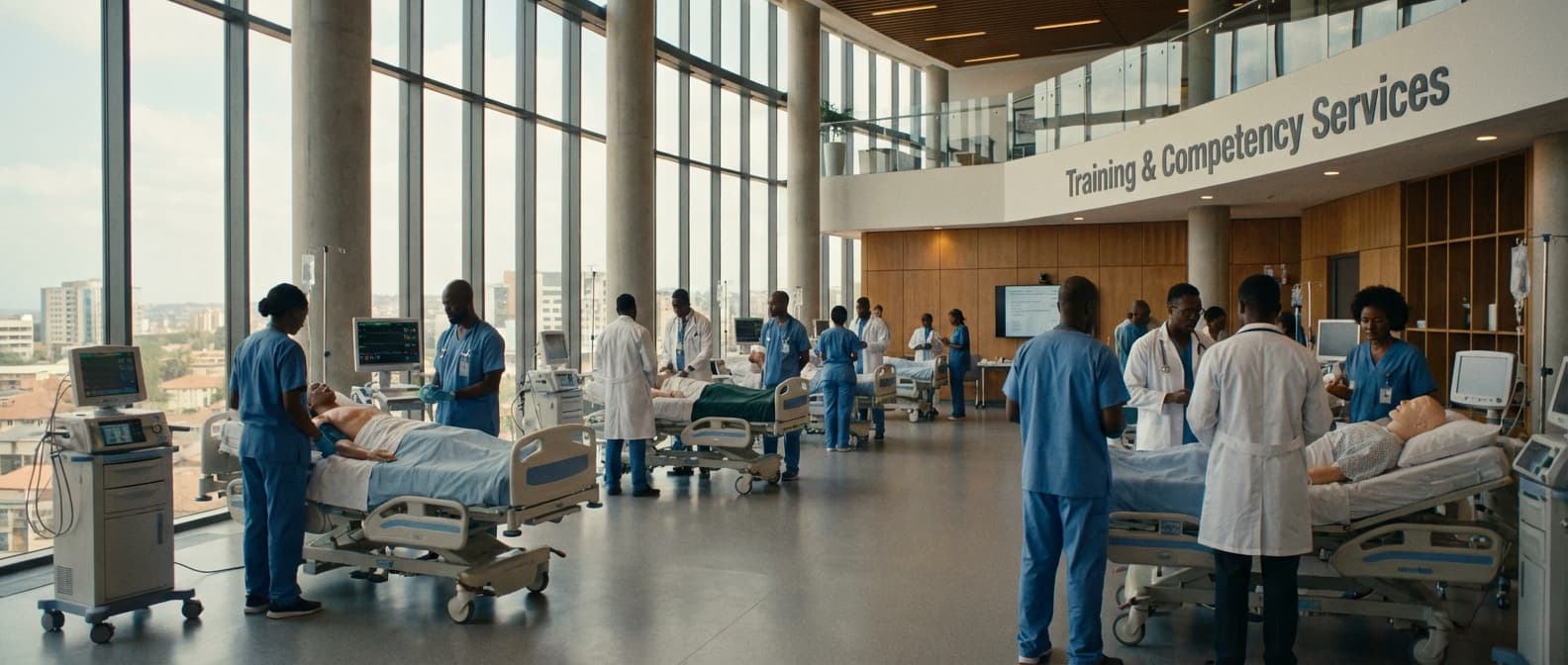
Anesthesia Workstation User Training Service in Algeria
Engineering Excellence & Technical Support
Anesthesia Workstation User Training Service High-standard technical execution following OEM protocols and local regulatory frameworks.
Seamless Anesthesia Workstation Integration
Master the setup and calibration of your anesthesia workstation for optimal patient monitoring and drug delivery. Our training ensures quick and secure integration with existing hospital systems, minimizing downtime and maximizing efficiency.
Advanced Ventilation Mode Mastery
Gain expert proficiency in utilizing all ventilation modes offered by your anesthesia workstation. From basic volume and pressure control to advanced modes like APV and PAV, our training empowers clinicians to provide tailored respiratory support with confidence.
Automated Drug Delivery Optimization
Unlock the full potential of your anesthesia workstation's automated drug delivery systems. Learn precise programming, real-time monitoring, and troubleshooting techniques to ensure accurate and safe administration of anesthetic agents, enhancing patient safety and clinical outcomes.
What Is Anesthesia Workstation User Training Service In Algeria?
Anesthesia Workstation User Training Service in Algeria refers to a specialized educational program designed to equip healthcare professionals with the comprehensive knowledge and practical skills required for the safe and effective operation of anesthesia workstations. This service is crucial for optimizing patient safety, ensuring procedural efficiency, and maximizing the utilization of advanced anesthesia delivery and monitoring equipment within Algerian healthcare facilities. The training typically covers the fundamental principles of anesthesia delivery, the specific functionalities of various anesthesia workstation models, critical patient monitoring parameters, troubleshooting common issues, and adherence to best practice protocols and regulatory requirements in Algeria.
| Target Audience | Primary Need | Typical Use Cases |
|---|---|---|
| Anesthesiologists | To ensure safe and precise delivery of anesthetic agents and ventilation, optimize patient outcomes, and utilize advanced monitoring capabilities. | Routine surgical procedures across all specialties, complex surgical interventions (e.g., cardiac, neurosurgery), long-duration surgeries, and critical care settings. |
| Anesthesia Residents and Trainees | To build foundational knowledge and practical skills in operating anesthesia workstations under supervision, adhering to established safety protocols. | Educational settings within teaching hospitals, simulation-based training exercises, and supervised clinical practice. |
| Nurse Anesthetists (where applicable) | To provide competent assistance in anesthesia delivery, manage patient monitoring, and operate equipment effectively within their scope of practice. | Assisting anesthesiologists in various surgical settings, independent anesthetic practice in certain contexts, and emergency response situations. |
| Biomedical Engineers and Technicians | To understand the technical intricacies of anesthesia workstations for routine maintenance, calibration, repair, and troubleshooting. | Preventive maintenance schedules, on-demand repairs, installation of new equipment, and ensuring compliance with manufacturer specifications. |
| Hospital Administrators and Department Heads | To ensure compliance with safety standards, optimize equipment utilization, and maintain a high level of patient care through well-trained staff. | Procurement decisions for new equipment, development of in-service training programs, and quality assurance initiatives. |
Key Components of Anesthesia Workstation User Training:
- System Architecture and Components: Detailed explanation of the anesthesia workstation's design, including gas delivery systems (e.g., flow meters, vaporizers, ventilators), ventilation modes, patient monitoring interfaces (e.g., capnography, spirometry, oxygen monitoring), and anesthetic gas scavenging systems (AGSS).
- Pre-use System Checks and Calibration: Hands-on training on performing rigorous pre-anesthetic machine checks (e.g., leak tests, flow control checks, alarm system verification) and ensuring proper calibration of all integrated monitoring modules.
- Anesthetic Gas Delivery and Control: Instruction on accurate setting and adjustment of fresh gas flow, precise concentration control of volatile anesthetics using integrated vaporizers, and understanding the pharmacokinetics and pharmacodynamics related to gas delivery.
- Ventilation Management: Comprehensive training on various ventilation modes (e.g., volume control, pressure control, pressure support, SIMV), tidal volume and respiratory rate settings, inspiratory and expiratory management, and management of different patient populations (e.g., pediatric, adult, bariatric).
- Patient Monitoring and Alarm Management: Proficient use of integrated patient monitors for vital signs (e.g., ECG, SpO2, NIBP, invasive blood pressure), end-tidal CO2 monitoring, and understanding the interpretation of waveform data. Emphasis on effective alarm identification, prioritization, and response.
- Emergency Procedures and Troubleshooting: Training on recognizing and responding to critical equipment malfunctions, alarm fatigue, and common troubleshooting scenarios, including circuit leaks, airway obstruction, and ventilator failures. Development of contingency plans.
- Infection Control and Sterilization: Guidelines and protocols for cleaning, disinfection, and sterilization of anesthesia workstation components to prevent cross-contamination and maintain sterile environments.
- Software and Interface Navigation: Proficiency in navigating the workstation's user interface, accessing system settings, recording data, and utilizing advanced features or software updates.
- Regulatory Compliance and Documentation: Familiarization with Algerian healthcare regulations, safety standards, and best practices related to anesthesia delivery and equipment use. Guidance on proper documentation of anesthesia records.
Who Needs Anesthesia Workstation User Training Service In Algeria?
In Algeria, anesthesia workstation user training services are crucial for ensuring the safe and effective operation of advanced medical equipment. This training is vital for healthcare professionals who directly interact with these sophisticated devices, ultimately impacting patient care and safety within operating rooms and intensive care units.
| Department | Role | Training Need |
|---|---|---|
| Anesthesiology Department | Anesthesiologists | Comprehensive training on all functionalities, ventilation modes, drug delivery systems, patient monitoring integration, troubleshooting, and emergency procedures. |
| Anesthesiology Department | Certified Registered Nurse Anesthetists (CRNAs) / Nurse Anesthetists | In-depth training on routine operation, patient setup, monitoring, alarm management, basic troubleshooting, and integration with other anesthetic equipment. |
| Operating Room (OR) Nursing Staff | OR Nurses | Familiarization with workstation setup, connection to patients, basic monitoring functions, alarm recognition, and emergency response protocols related to the workstation. |
| Intensive Care Unit (ICU) | Intensivists / Critical Care Physicians | Training on advanced ventilation strategies, weaning protocols, hemodynamic monitoring integration, and long-term management using the workstation's capabilities. |
| Intensive Care Unit (ICU) | ICU Nurses | Focus on monitoring, ventilator management, alarm management, drug administration, and troubleshooting within the ICU environment. |
| Biomedical Engineering / Clinical Engineering Department | Biomedical Engineers / Technicians | Detailed training on maintenance, calibration, repair, software updates, and advanced troubleshooting of anesthesia workstations for optimal performance and longevity. |
| Training & Education Departments | Clinical Educators / Simulation Specialists | To enable them to conduct in-house training and simulations for new and existing staff, ensuring ongoing competency and familiarization. |
Target Customers & Departments for Anesthesia Workstation User Training in Algeria
- Hospitals (Public and Private)
- University Teaching Hospitals
- Specialized Clinics (e.g., cardiac, neurosurgery)
- Emergency Medical Services (EMS) with advanced capabilities
Anesthesia Workstation User Training Service Process In Algeria
This document outlines the comprehensive workflow for providing Anesthesia Workstation User Training services in Algeria. The process is designed to be transparent, efficient, and cater to the specific needs of healthcare facilities requiring specialized training for their medical staff on anesthesia workstations. The service encompasses initial inquiry, needs assessment, proposal development, scheduling, training execution, and post-training support.
| Stage | Key Activities | Responsible Party | Deliverables |
|---|---|---|---|
| Inquiry & Initial Contact | Client expresses interest; initial discussions about training needs. | Client, Training Service Provider | Initial request for information |
| Needs Assessment | Detailed consultation to understand workstation models, trainee numbers, skill levels, objectives. | Training Service Provider, Client | Needs assessment report/summary |
| Proposal Development | Creation of a tailored training proposal with scope, curriculum, costs. | Training Service Provider | Training proposal document |
| Proposal Review & Agreement | Client reviews proposal; negotiation (if needed); signing of contract/SLA. | Client, Training Service Provider | Signed contract/SLA |
| Curriculum Customization & Material Preparation | Finalizing curriculum; developing/adapting training materials. | Training Service Provider | Customized curriculum, training materials |
| Trainer Assignment & Logistics | Assigning trainers; arranging travel, accommodation, equipment. | Training Service Provider | Confirmed trainer(s), logistical arrangements |
| Scheduling & Confirmation | Agreeing on training dates and times; formal confirmation. | Training Service Provider, Client | Confirmed training schedule |
| Pre-Training Communication | Sending agenda, prerequisites, and preparatory materials to client and trainees. | Training Service Provider | Pre-training information pack |
| Training Execution | Conducting theoretical and practical training sessions. | Trainer(s) | Delivered training sessions |
| Practical Assessments & Feedback | Evaluating trainee proficiency; providing immediate feedback. | Trainer(s) | Assessment results, individual feedback |
| Post-Training Evaluation | Gathering feedback from trainees and the client on training effectiveness. | Client, Trainees, Training Service Provider | Post-training evaluation forms/summary |
| Certification & Reporting | Issuing certificates to successful trainees; submitting a comprehensive training report. | Training Service Provider | Certificates, Training completion report |
| Follow-up & Support | Providing ongoing assistance, troubleshooting, or access to resources. | Training Service Provider | Post-training support services |
| Invoicing & Payment | Issuing final invoice; processing payment as per agreement. | Training Service Provider, Client | Paid invoice |
Anesthesia Workstation User Training Service Process in Algeria
- Inquiry & Initial Contact: The process begins when a healthcare facility in Algeria expresses interest in anesthesia workstation user training.
- Needs Assessment: A detailed understanding of the facility's requirements is gathered, including the specific anesthesia workstation models, the number of trainees, their existing skill levels, and any particular training objectives.
- Proposal Development: Based on the needs assessment, a tailored training proposal is created, outlining the scope of training, curriculum, duration, trainers' qualifications, venue requirements, and associated costs.
- Proposal Review & Agreement: The proposal is presented to the client for review. Upon agreement, a formal contract or service level agreement (SLA) is signed.
- Curriculum Customization & Material Preparation: The training curriculum is finalized, and all necessary training materials (presentations, manuals, practical exercises, assessment tools) are prepared or customized.
- Trainer Assignment & Logistics: Qualified and experienced trainers are assigned to the engagement. All logistical arrangements, including travel, accommodation (if applicable), and equipment for the training, are confirmed.
- Scheduling & Confirmation: Training dates and times are mutually agreed upon and formally confirmed with the client.
- Pre-Training Communication: The client and trainees receive pre-training information, including the agenda, pre-requisites, and any materials to review beforehand.
- Training Execution: The on-site or remote training sessions are conducted by the certified trainers, covering theoretical knowledge and practical application of the anesthesia workstation.
- Practical Assessments & Feedback: Trainees undergo practical assessments to evaluate their understanding and proficiency. Immediate feedback is provided.
- Post-Training Evaluation: A post-training evaluation is conducted to gather feedback from both trainees and the client regarding the effectiveness of the training program.
- Certification & Reporting: Upon successful completion of the training and assessments, certificates are issued to the trainees. A comprehensive training report is submitted to the client, summarizing the training outcomes and any recommendations.
- Follow-up & Support: Post-training support is offered, which may include troubleshooting assistance, refresher courses, or access to a knowledge base.
- Invoicing & Payment: Final invoicing is issued according to the agreed-upon payment terms, and payment is processed.
Anesthesia Workstation User Training Service Cost In Algeria
Providing user training for anesthesia workstations in Algeria involves several key pricing factors. These typically include the complexity and specific model of the workstation, the duration of the training program, the number of participants, the qualifications and experience of the trainers, and whether the training is conducted on-site at a hospital or facility, or remotely. Additional costs may arise for training materials, travel and accommodation for trainers if applicable, and any certification or assessment processes. The Algerian market for such specialized training can be influenced by the availability of local trainers versus the need to import expertise, as well as the overall demand from public and private healthcare institutions.
| Training Type/Scope | Estimated Price Range (DZD) - Per Participant/Session |
|---|---|
| Basic User Familiarization (e.g., 1-day, single model) | 20,000 - 40,000 |
| Standard User Training (e.g., 2-3 days, multiple features) | 40,000 - 75,000 |
| Advanced/Specialized Training (e.g., troubleshooting, specific applications, 4+ days) | 75,000 - 150,000+ |
| On-site Training (Additional per day/per trainer) | 15,000 - 30,000 |
| Group Discounts (Variable, typically 10-20% for larger groups) |
Key Pricing Factors for Anesthesia Workstation User Training in Algeria
- Anesthesia Workstation Model & Complexity
- Training Duration and Depth
- Number of Participants
- Trainer Expertise and Qualifications
- Training Location (On-site vs. Remote)
- Training Materials and Resources
- Travel and Accommodation (if applicable)
- Certification and Assessment Fees
- Market Demand and Provider Availability
Affordable Anesthesia Workstation User Training Service Options
Providing effective and affordable user training for anesthesia workstations is crucial for patient safety and operational efficiency. This service aims to equip healthcare professionals with the necessary knowledge and skills to operate anesthesia equipment confidently and competently. We offer a range of training options designed to be cost-effective and flexible, catering to the diverse needs of healthcare facilities. Understanding our value bundles and employing strategic cost-saving measures can significantly enhance the return on investment for your anesthesia workstation training.
| Bundle Type | Key Features | Typical Duration | Cost-Saving Benefit |
|---|---|---|---|
| Core Competency Bundle | Online modules, Virtual Live Session, User Manual | 2-4 hours | Reduced travel/venue costs, efficient knowledge transfer |
| Advanced Features Bundle | Virtual/In-person simulations, Case Studies | 4-8 hours | Enhanced skill development, reduced risk of errors |
| Train-the-Trainer Bundle | In-depth curriculum, Teaching methodologies, Certification | 1-2 days | Significant long-term cost reduction, internal expertise |
| Comprehensive Facility Package | Tailored curriculum, On-site/Virtual options, Ongoing support | Customizable | Maximized ROI, holistic solution, predictable budgeting |
Cost-Saving Strategies for Anesthesia Workstation Training
- Leverage E-Learning Modules: Utilize self-paced online modules for foundational knowledge, reducing the need for dedicated instructor time and travel expenses.
- Group Training Sessions: Schedule training for multiple users simultaneously to optimize instructor time and reduce per-person costs.
- Virtual Instructor-Led Training (VILT): Opt for virtual sessions over in-person training to eliminate travel, accommodation, and venue rental costs. This also offers greater scheduling flexibility.
- Train-the-Trainer Programs: Invest in training your own staff to become internal trainers, significantly reducing recurring training costs for new hires or refreshers.
- Phased Training Approach: Break down training into manageable modules, allowing staff to learn at their own pace and integrate knowledge into practice before moving to the next level. This can spread costs over time and improve knowledge retention.
- Bulk Purchase Discounts: Inquire about discounts for purchasing multiple training bundles or for training a large number of staff members at once.
- Subscription Models: Explore subscription-based training services that offer ongoing access to updated content, new features, and support at a predictable annual cost.
- Customized Training Plans: Work with us to design a training plan that precisely meets your needs, avoiding unnecessary modules and optimizing resource allocation.
- Utilize Existing Resources: Integrate training with existing simulation labs or equipment if available to reduce the need for specialized training environments.
- Focus on Essential Skills: Prioritize training on the most critical functions and safety features first, ensuring immediate impact and gradually introducing more complex topics.
Verified Providers In Algeria
In Algeria's evolving healthcare landscape, identifying trusted and qualified medical professionals is paramount. Franance Health stands out as a leading platform dedicated to connecting individuals with verified healthcare providers. This commitment to quality assurance ensures that patients receive the highest standard of care. Franance Health's rigorous credentialing process sets them apart, guaranteeing that all listed providers meet stringent professional and ethical benchmarks. By choosing Franance Health, you are not just finding a doctor or specialist; you are accessing a network of esteemed professionals who have undergone thorough vetting, providing peace of mind and confidence in your healthcare journey.
| Credential Type | Franance Health Verification Standard | Importance for Patients |
|---|---|---|
| Medical Licenses | Verified active and valid medical license from the Algerian Ministry of Health. | Ensures the provider is legally authorized to practice medicine in Algeria. |
| Specialty Certifications | Confirmed completion of recognized residency programs and board certifications in their respective specialties. | Guarantees specialized knowledge and advanced training in a particular field of medicine. |
| Professional Experience | Reviewed documented professional history and years of practice. | Indicates a proven track record and practical expertise in patient care. |
| Continuing Medical Education (CME) | Confirmation of participation in ongoing professional development activities. | Ensures providers stay updated with the latest medical advancements and best practices. |
| Reputation and Peer Review | While not always publicly available, Franance Health considers professional standing and feedback where possible. | Adds an extra layer of assurance regarding the provider's ethical conduct and patient satisfaction. |
Why Franance Health Credentials Matter:
- Rigorous Vetting Process: Franance Health meticulously verifies the educational background, licenses, certifications, and professional experience of every provider.
- Commitment to Quality: We prioritize patient safety and well-being by ensuring all listed professionals adhere to the highest ethical and medical standards.
- Transparency and Trust: Our verification process provides a transparent and reliable way for patients to identify qualified healthcare professionals.
- Access to Expertise: Franance Health grants access to a comprehensive network of specialists and general practitioners, covering a wide range of medical needs.
- Enhanced Patient Confidence: By choosing a Franance Health verified provider, patients can be assured they are receiving care from competent and reputable individuals.
Scope Of Work For Anesthesia Workstation User Training Service
This Scope of Work (SOW) outlines the requirements for providing comprehensive Anesthesia Workstation User Training services. The training aims to ensure that healthcare professionals are proficient in the safe, effective, and efficient operation of anesthesia workstations, maximizing patient safety and procedural success. The training will cover foundational knowledge, practical operation, troubleshooting, and best practices.
| Deliverable | Description | Standard Specification |
|---|---|---|
| Training Curriculum Document | A comprehensive document detailing the learning objectives, modules, content outline, duration, and assessment methods for each training program. | Must be reviewed and approved by the client prior to commencement of training. Content should be evidence-based and aligned with current clinical guidelines. |
| Trainer Qualifications | Experienced and certified anesthesia professionals or biomedical engineers with proven expertise in anesthesia workstation operation and adult education. | Minimum of 3 years of direct clinical experience with the specific anesthesia workstation model. Certified educator designation or equivalent pedagogical training is preferred. |
| Training Materials | High-quality, up-to-date training materials including presentations, user manuals, quick reference guides, case studies, and practical exercise protocols. | Materials should be in English, clearly written, and visually engaging. Electronic and/or printed copies to be provided. |
| Hands-on Training Equipment | Access to functional anesthesia workstations (either the client's own equipment or vendor-provided simulators) for practical training sessions. | Sufficient workstations and accessories (e.g., mannequins, breathing circuits) to ensure a low participant-to-station ratio for effective hands-on learning. Equipment must be in good working order. |
| Training Delivery Modes | Training can be delivered in various formats, including on-site at the client's facility, remotely via virtual platforms, or a hybrid approach. | Virtual training sessions must utilize robust video conferencing software with screen sharing and interactive capabilities. On-site training requires travel and accommodation arrangements as per client policy. |
| Participant Assessment | Methods to evaluate participant comprehension and proficiency, including written tests, practical skills assessments, and post-training surveys. | Assessment tools should be standardized for consistent evaluation. A passing score or satisfactory demonstration of skills will be required for completion. |
| Training Completion Certificate | A certificate of completion issued to each participant who successfully completes the training program. | Certificates must include the participant's name, training title, date of completion, and the trainer/organization's name and signature. |
| Post-Training Support | Limited post-training support for participants to address immediate follow-up questions or clarifications. | Availability for email or phone support for a defined period (e.g., 2 weeks) post-training. Escalation procedures for complex issues should be outlined. |
| Training Report | A comprehensive report summarizing the training conducted, including attendee lists, assessment results, feedback received, and any recommendations. | Report to be submitted to the client within 5 business days of training completion. |
| Compliance with Regulations | All training content and delivery must adhere to relevant local, national, and international healthcare regulations and standards. | Training should align with guidelines from organizations such as ASA (American Society of Anesthesiologists), ESAIC (European Society of Anaesthesiology and Intensive Care), and applicable medical device regulations. |
Key Areas of Training Coverage
- Anesthesia Workstation Fundamentals: Basic principles of anesthesia delivery, gas flow, ventilation modes, and monitoring.
- Workstation Components and Functions: Detailed explanation of all hardware and software components, including vaporizers, ventilators, gas delivery systems, and user interface.
- Pre-use Checks and Setup: Standardized procedures for system checks, circuit setup, and patient connection.
- Ventilation Modes and Settings: In-depth understanding and practical application of various ventilation modes (e.g., Volume Control, Pressure Control, Pressure Support, SIMV, PSVPro), including appropriate parameter selection.
- Anesthetic Vaporizer Operation: Safe handling, filling, and calibration of vaporizers, with a focus on accurate anesthetic agent delivery.
- Monitoring and Alarms: Interpretation of displayed parameters, understanding alarm triggers, and appropriate alarm management strategies.
- Low Flow and Minimal Flow Anesthesia Techniques: Principles, benefits, and practical implementation.
- Advanced Features and Optional Modules: Training on specialized features such as integrated capnography, spirometry, and drug calculations.
- Troubleshooting and Problem Solving: Identification and resolution of common operational issues and error messages.
- Maintenance and Cleaning Protocols: Understanding of routine maintenance, disinfection, and sterilization procedures to ensure system integrity and infection control.
- Patient Safety Considerations: Emphasis on risk mitigation, closed-loop systems, and human factors in anesthesia delivery.
- Hands-on Practical Sessions: Simulated patient scenarios and practical exercises using actual or simulated anesthesia workstations.
Service Level Agreement For Anesthesia Workstation User Training Service
This Service Level Agreement (SLA) outlines the guaranteed response times and uptime for the Anesthesia Workstation User Training Service provided by [Your Company Name]. This SLA aims to ensure that users receive timely support and can access training resources when needed, minimizing disruption to their learning and operational efficiency.
| Service Component | Uptime Guarantee | Response Time (Incident Acknowledgment) | Target Resolution Time (Severity Dependent) |
|---|---|---|---|
| Anesthesia Workstation Training Platform Availability | 99.5% Monthly Uptime | N/A (Continuous availability expected) | N/A |
| Live Virtual Training Session Access | 99.0% Availability (excluding user-side connectivity issues) | N/A (Sessions scheduled) | N/A |
| Technical Support (Access/Platform Issues) | Covered under Platform Availability | Tier 1: 4 Business Hours | Tier 1: 8 Business Hours; Tier 2: 24 Business Hours; Tier 3: 48 Business Hours |
| Training Content Access (Modules, Videos) | Covered under Platform Availability | N/A (Continuous availability expected) | N/A |
Key Service Components
- Scope of Service: This SLA covers the provision of online training modules, live virtual training sessions, and technical support for accessing and navigating the Anesthesia Workstation training platform.
- Target Audience: All authorized personnel requiring training on the Anesthesia Workstation.
- Service Hours: Training resources and technical support are available 24 hours a day, 7 days a week, except for scheduled maintenance periods.
- User Responsibilities: Users are responsible for having a stable internet connection, compatible hardware and software as specified for the training platform, and for reporting issues promptly.
- Service Definitions:
- Downtime: Any period during which the Anesthesia Workstation Training Service is unavailable to users due to issues with the training platform, its hosting, or supporting infrastructure, excluding scheduled maintenance.
- Incident: An event that causes the Anesthesia Workstation Training Service to be unavailable or degraded.
- Response Time: The time taken from when an incident is reported or detected until the [Your Company Name] support team acknowledges the issue and begins active investigation.
- Resolution Time: The time taken from when an incident is acknowledged until it is resolved and the service is restored to normal functionality. (Note: Resolution times are targets and not strictly guaranteed due to the complexity of some issues.)
- Scheduled Maintenance: Pre-announced periods during which the training platform may be unavailable for updates, upgrades, or system maintenance. Users will be notified at least [e.g., 48 hours] in advance of scheduled maintenance.
Frequently Asked Questions

Ready when you are
Let's scope your Anesthesia Workstation User Training Service in Algeria project in Algeria.

Scaling healthcare logistics and technical systems across the entire continent.